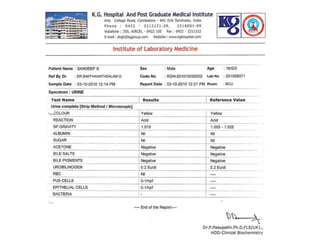
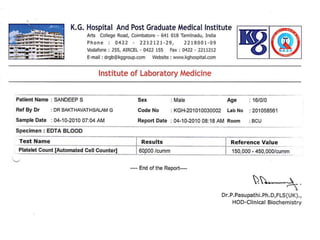
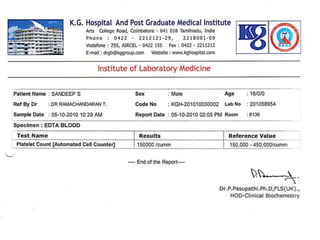
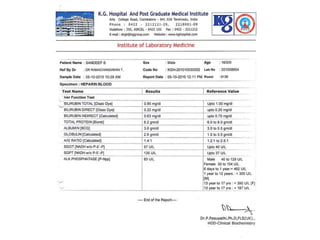
Why ????
• Break bone fever
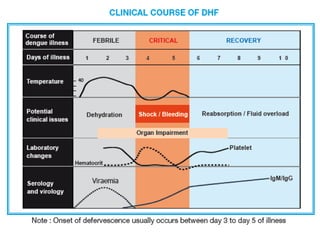
• Biphasic fever
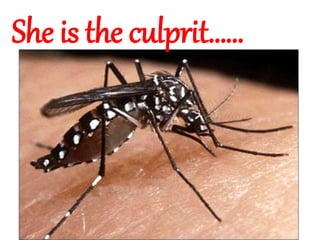
She is the culprit……
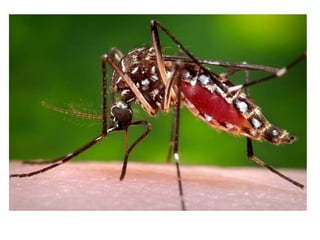
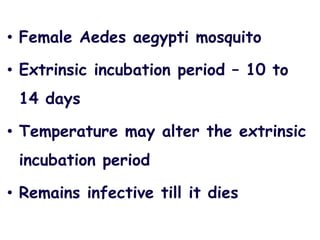
• Female Aedes aegypti mosquito
• Extrinsic incubation period – 10 to
14 days
• Temperature may alter the extrinsic
incubation period
• Remains infective till it dies
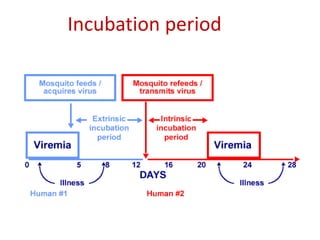
Incubation period
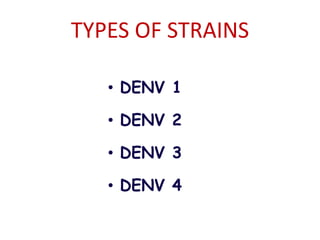
TYPES OF STRAINS
• DENV 1
• DENV 2
• DENV 3
• DENV 4
PATHOGENESIS
• Primary
• Secondary (anamnestic)
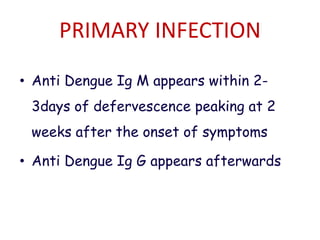
PRIMARY INFECTION
• Anti Dengue Ig M appears within 2-
3days of defervescence peaking at 2
weeks after the onset of symptoms
• Anti Dengue Ig G appears afterwards
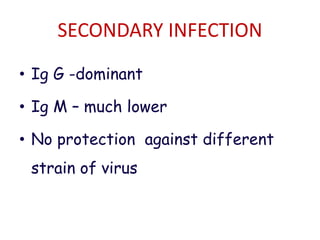
SECONDARY INFECTION
• Ig G -dominant
• Ig M – much lower
• No protection against different
strain of virus
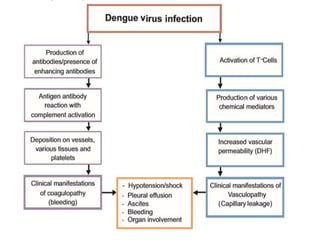
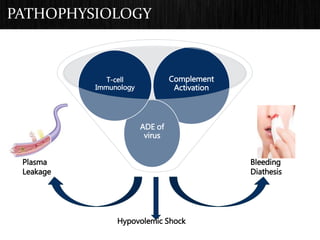
PATHOPHYSIOLOGY
Complement
Activation
ADE of
virus
T-cell
Immunology
Plasma
Leakage
Bleeding
Diathesis
Hypovolemic Shock
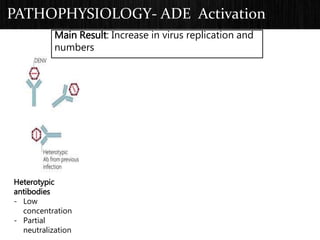
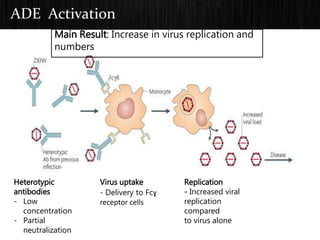
PATHOPHYSIOLOGY- ADE Activation
Heterotypic
antibodies
- Low
concentration
- Partial
neutralization
Main Result: Increase in virus replication and
numbers
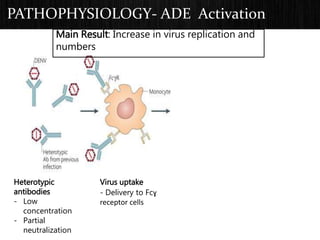
PATHOPHYSIOLOGY- ADE Activation
Heterotypic
antibodies
- Low
concentration
- Partial
neutralization
Virus uptake
- Delivery to Fcɣ
receptor cells
Main Result: Increase in virus replication and
numbers
ADE Activation
Heterotypic
antibodies
- Low
concentration
- Partial
neutralization
Virus uptake
- Delivery to Fcɣ
receptor cells
Replication
- Increased viral
replication
compared
to virus alone
Main Result: Increase in virus replication and
numbers
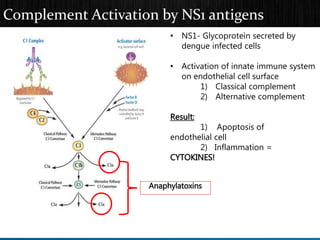
Complement Activation by NS1 antigens
Anaphylatoxins
• NS1- Glycoprotein secreted by
dengue infected cells
• Activation of innate immune system
on endothelial cell surface
1) Classical complement
2) Alternative complement
Result:
1) Apoptosis of
endothelial cell
2) Inflammation =
CYTOKINES!
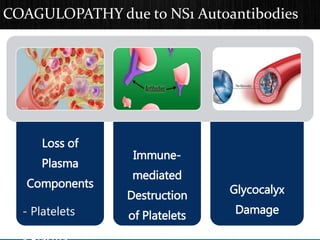
COAGULOPATHY due to NS1 Autoantibodies
Loss of
Plasma
Components
- Platelets
Immune-
mediated
Destruction
of Platelets
Glycocalyx
Damage
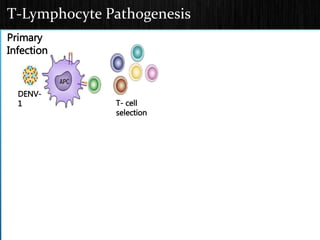
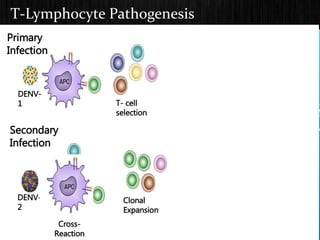
T-Lymphocyte Pathogenesis
Primary
Infection
DENV-
1 T- cell
selection
T-Lymphocyte Pathogenesis
Primary
Infection
Secondary
Infection
DENV-
1 T- cell
selection
DENV-
2
Clonal
Expansion
Cross-
Reaction
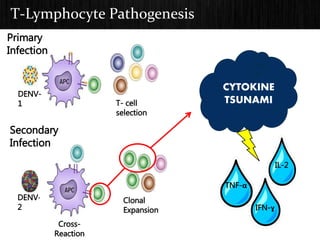
T-Lymphocyte Pathogenesis
Primary
Infection
Secondary
Infection
DENV-
1 T- cell
selection
DENV-
2
Clonal
Expansion
Cross-
Reaction
TNF-α
IFN-ɣ
IL-2
CYTOKINE
TSUNAMI
PATHOPHYSIOLOGY
• VASCULOPATHY
• COAGULOPATHY
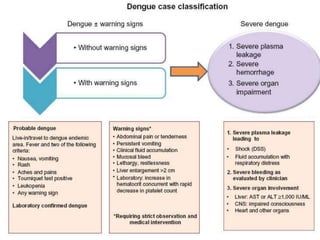
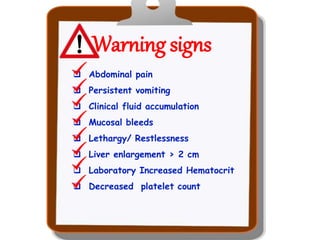
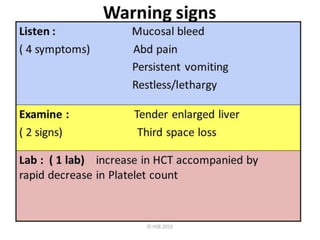
Warning signs
 Abdominal pain
 Persistent vomiting
 Clinical fluid accumulation
 Mucosal bleeds
 Lethargy/ Restlessness
 Liver enlargement > 2 cm
 Laboratory Increased Hematocrit
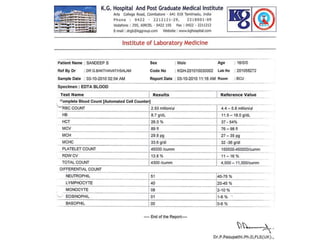
 Decreased platelet count
LAB STUDIES
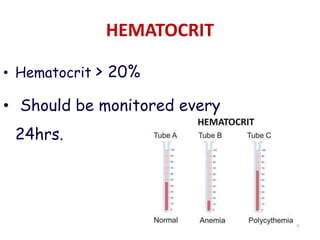
HEMATOCRIT
• Hematocrit > 20%
• Should be monitored every
24hrs.
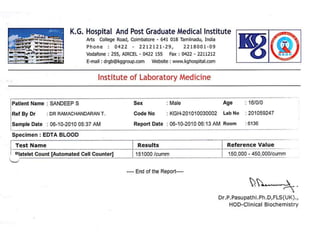
THROMBOCYTOPENIA
• Less than 1lakh cells / cu.mm in onset of
critical phase.

• Platelet level should be monitored every
24hrs.
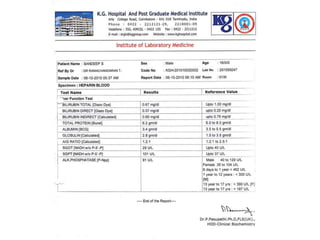
Biochemical profile
• PT prolonged
• aPTT prolonged
• Hyponatremia in critical phase
• Low serum albumin levels indicates
hemoconcentration
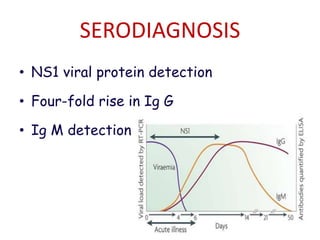
SERODIAGNOSIS
• NS1 viral protein detection
• Four-fold rise in Ig G
• Ig M detection
MANAGEMENT
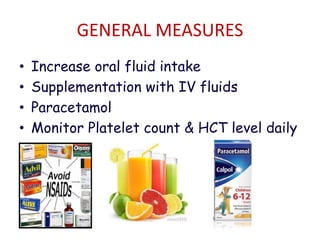
GENERAL MEASURES
• Increase oral fluid intake
• Supplementation with IV fluids
• Paracetamol
• Monitor Platelet count & HCT level daily
STEPS INVOLVED
• Step 1:Overall assessment
• Step 2:Diagnosis & severity assessment
• Step 3:Categorizing into group A,B,C
STEP 1
• Warning signs assessment
• Physical examination on haemodynamics
• Investigations:
Haematocrit
Platelet count
WBC count
• Additional test:
 LFT & RFT
 X-ray
 USG abdomen
STEP 2
Admission Criteria:
 Any warning sign
 Hypotension symptoms
 Bleeding from any site
 Renal ,Hepatic or CNS involvement
 Pleural effusion or Ascites
 Hematocrit rise
 Platelet count < 50,000 / cu.mm
STEP 3
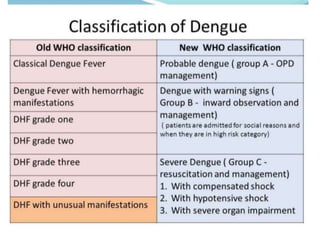
• Categorising into groups:
Group A
Group B
Group C
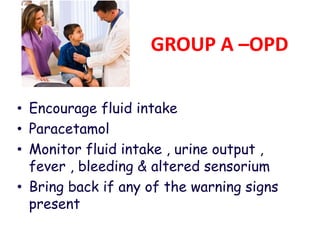
GROUP A –OPD
• Encourage fluid intake
• Paracetamol
• Monitor fluid intake , urine output ,
fever , bleeding & altered sensorium
• Bring back if any of the warning signs
present
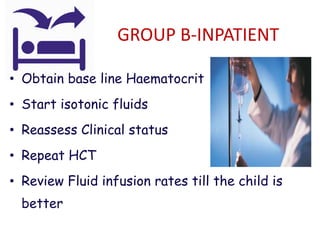
GROUP B-INPATIENT
• Obtain base line Haematocrit
• Start isotonic fluids
• Reassess Clinical status
• Repeat HCT
• Review Fluid infusion rates till the child is
better
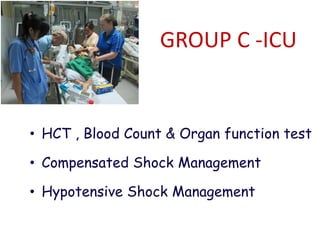
GROUP C -ICU
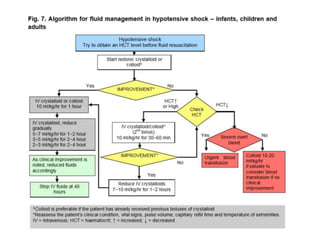
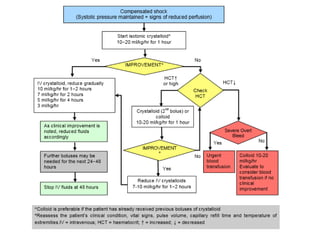
• HCT , Blood Count & Organ function test
• Compensated Shock Management
• Hypotensive Shock Management
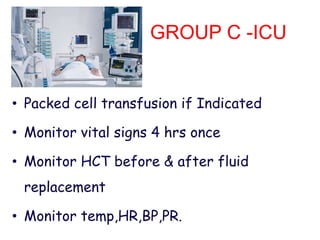
GROUP C -ICU
• Packed cell transfusion if Indicated
• Monitor vital signs 4 hrs once
• Monitor HCT before & after fluid
replacement
• Monitor temp,HR,BP,PR.
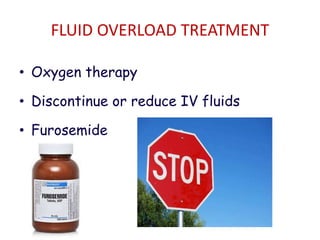
FLUID OVERLOAD TREATMENT
• Oxygen therapy
• Discontinue or reduce IV fluids
• Furosemide
DISCHARGE CRITERIA
• Afebrile atleast 24 hrs
• Passing urine normally
• Improved appetite
• No respiratory distress
• Platelet count > 50,000 / cu.mm
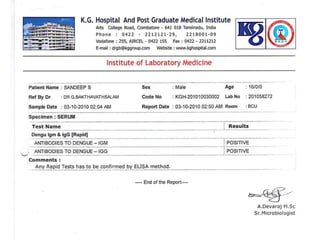
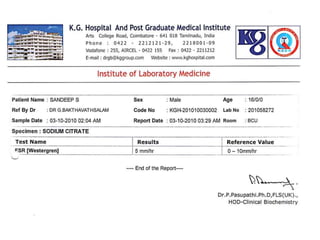
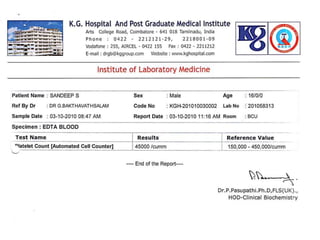
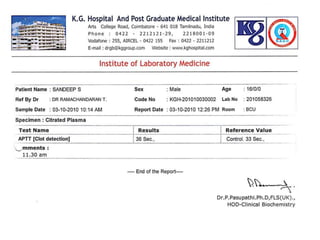
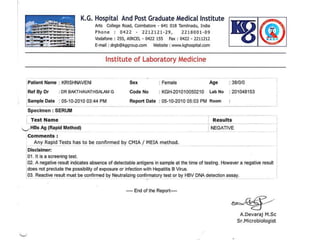
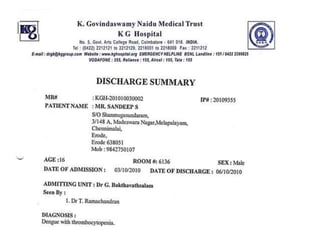
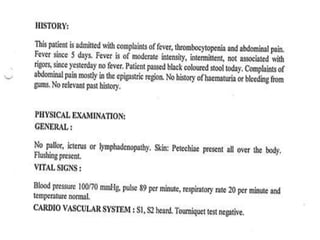
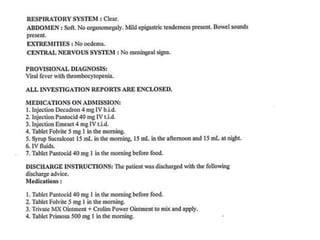
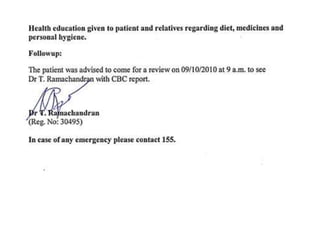
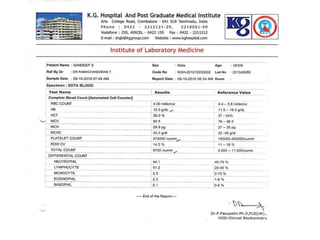
CLINICAl CASE
Dengue fever -more than enough information and what you need to know

Dengue fever -more than enough information and what you need to know

Editor's Notes

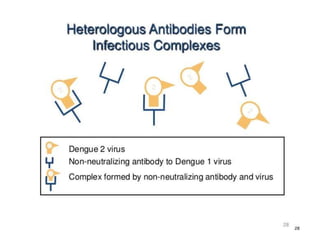
  • #17 Antibody- dependent enhacement of dengue virus Enhanced virus replication in monocytes in presence of subneutralizing levels IN asymptomatic dengue infection= host develops immunity to serotype of infecting strain Cross-protective antibodies don’t neutralize but help viral uptake with Fcgamma receptor (expressed on monocytes and macrophages) in monocytes (Textbook of critical care) After initial infection : homotypic and neterotypic neutralizing antibodies are produced Over time, heterotypic decrease and homotypic increase Production of heterotypic antibodies that neutralize virus partially Deliver virus to cells in the compartment where it is not destroyed, instead it replicates Response dominated by antibodies to structural precursor-membrane protein (prM) At high concentration, cannot neutralize and highly cross reactive (Cross-reacting antibodies enhance dengue firus infection in humans) (Intrinsic antibody-dependent ehancement of microbial infection in macrophages: disease regulation by immune complexes) (Enhancing cross-reactive anti-prM dominates the human antibody response in dengue infection)
  • #18  Antibody- dependent enhacement of dengue virus Enhanced virus replication in monocytes in presence of subneutralizing levels IN asymptomatic dengue infection= host develops immunity to serotype of infecting strain Cross-protective antibodies don’t neutralize but help viral uptake with Fcgamma receptor (expressed on monocytes and macrophages) in monocytes (Textbook of critical care) After initial infection : homotypic and neterotypic neutralizing antibodies are produced Over time, heterotypic decrease and homotypic increase Production of heterotypic antibodies that neutralize virus partially Deliver virus to cells in the compartment where it is not destroyed, instead it replicates Response dominated by antibodies to structural precursor-membrane protein (prM) At high concentration, cannot neutralize and highly cross reactive (Cross-reacting antibodies enhance dengue firus infection in humans) (Intrinsic antibody-dependent ehancement of microbial infection in macrophages: disease regulation by immune complexes) (Enhancing cross-reactive anti-prM dominates the human antibody response in dengue infection)
  • #19 Antibody- dependent enhacement of dengue virus Enhanced virus replication in monocytes in presence of subneutralizing levels IN asymptomatic dengue infection= host develops immunity to serotype of infecting strain Cross-protective antibodies don’t neutralize but help viral uptake with Fcgamma receptor (expressed on monocytes and macrophages) in monocytes (Textbook of critical care) After initial infection : homotypic and neterotypic neutralizing antibodies are produced Over time, heterotypic decrease and homotypic increase Production of heterotypic antibodies that neutralize virus partially Deliver virus to cells in the compartment where it is not destroyed, instead it replicates Response dominated by antibodies to structural precursor-membrane protein (prM) At high concentration, cannot neutralize and highly cross reactive (Cross-reacting antibodies enhance dengue firus infection in humans) (Intrinsic antibody-dependent ehancement of microbial infection in macrophages: disease regulation by immune complexes) (Enhancing cross-reactive anti-prM dominates the human antibody response in dengue infection)
  • #20 NS1 antigen = glyprotein secreted from dengue-infected cells , necessary for viral replication NS1 binds to heparan sulphate on microvascular endothelial cell = facillitates immune complex formation and complement activation ( Secreted NS1 of dengue virus attaches to the surface of cells via interactions with heparan sulfate and chondroitin sulfate) (Vascular leakage in severe degue virus infections: a potential role for the nonstructural viral protein NS1 and complement) Cross-reactive antibodies to the dengue virus can acivate complement on the surface of endothelial cells Release of C3a and C5a anaphylatoxins has been associated with leakage and shock NS1 = disease severity Able to activate complement leading to local and systemic production of C5a and Sc5n-9 complexes Detected in patients with severe degue NS1= complement attenuation as well through classical and lectin pathways, reduce capacity of C$ = LOCAL activation of complement = activatin of endothelial cells = vascular leakage
  • #22 Monocytes – most susceptible cell population to dengue virus infection Production of TNF alpha resulting in endothelial cell activation PRODUCTION OF VASOACTIVE FACTORS T lymphocytes may also exacerbate tissue injury (relevant during secondary dengue infection Found that T cross-reactive memory T lympcytes induced by primary dengue virus infection proliferate more rapidly during secondary exposure to dengue virus (can react to many flavivirus epitopes and other straings of degue) Activation of dengue specific T lymphocytes = increased permeability 1) CD4+ T cell = IFN-gamma, IL2, TNF alpha, TNF B TNF alpha =plasmal leakge and shock IL-2 = induce plasma leakage IFN- gamma = increase TNF alpha production by activating monocytes, interacts with TNF alpha to activate endo cells, enhance the presentation of viral antigens to T cells (in crease expression of II HLA antigens and increased expression of IGG receptors augments uptake of virus in monocytes) Activated T cells – target cell lysis, able to lyse dengue virus-infected cells, lysed infected autologous cells, also lyse uninfected cells by interaction between FasL on T cell and Fas on target cell) TNF alpha with more severe disease IFN-gamma elevation more frequently seen in DHF Soluable CD4, CD8, and IL2 receptors and TNF receptors in plasma = immune activation Saw elevation two days before plasma leakage
  • #23 Monocytes – most susceptible cell population to dengue virus infection Production of TNF alpha resulting in endothelial cell activation PRODUCTION OF VASOACTIVE FACTORS T lymphocytes may also exacerbate tissue injury (relevant during secondary dengue infection Found that T cross-reactive memory T lympcytes induced by primary dengue virus infection proliferate more rapidly during secondary exposure to dengue virus (can react to many flavivirus epitopes and other straings of degue) Activation of dengue specific T lymphocytes = increased permeability 1) CD4+ T cell = IFN-gamma, IL2, TNF alpha, TNF B TNF alpha =plasmal leakge and shock IL-2 = induce plasma leakage IFN- gamma = increase TNF alpha production by activating monocytes, interacts with TNF alpha to activate endo cells, enhance the presentation of viral antigens to T cells (in crease expression of II HLA antigens and increased expression of IGG receptors augments uptake of virus in monocytes) Activated T cells – target cell lysis, able to lyse dengue virus-infected cells, lysed infected autologous cells, also lyse uninfected cells by interaction between FasL on T cell and Fas on target cell) TNF alpha with more severe disease IFN-gamma elevation more frequently seen in DHF Soluable CD4, CD8, and IL2 receptors and TNF receptors in plasma = immune activation Saw elevation two days before plasma leakage
  • #24 (Original antigenic sin in dengue revisited) Monocytes – most susceptible cell population to dengue virus infection Production of TNF alpha resulting in endothelial cell activation PRODUCTION OF VASOACTIVE FACTORS T lymphocytes may also exacerbate tissue injury (relevant during secondary dengue infection Found that T cross-reactive memory T lympcytes induced by primary dengue virus infection proliferate more rapidly during secondary exposure to dengue virus (can react to many flavivirus epitopes and other straings of degue) Activation of dengue specific T lymphocytes = increased permeability 1) CD4+ T cell = IFN-gamma, IL2, TNF alpha, TNF B TNF alpha =plasmal leakge and shock IL-2 = induce plasma leakage IFN- gamma = increase TNF alpha production by activating monocytes, interacts with TNF alpha to activate endo cells, enhance the presentation of viral antigens to T cells (in crease expression of II HLA antigens and increased expression of IGG receptors augments uptake of virus in monocytes) Activated T cells – target cell lysis, able to lyse dengue virus-infected cells, lysed infected autologous cells, also lyse uninfected cells by interaction between FasL on T cell and Fas on target cell) TNF alpha with more severe disease IFN-gamma elevation more frequently seen in DHF Soluable CD4, CD8, and IL2 receptors and TNF receptors in plasma = immune activation Saw elevation two days before plasma leakage