GP Presentation:
Dementia Update
Belinda McCall
Consultant in Elderly Medicine
Trust lead for Dementia
Lewisham and Greenwich NHS Trust
Scope of the problem
What is dementia
Early diagnosis
Treatment
Behavioural and psychological symptoms of dementia and
Antipsychotics
The Lewisham Memory Service
The future
Outline
∗ 6% of individuals over 651
∗ 20% of individuals over 80
∗ 850,000 cases in UK currently2
∗ Current cost of dementia £14.3bn – more than
stroke, heart disease and cancer combined
∗ Number of people with dementia will increase
by 40% in next 15 years
1. Lobo et al 2001
2. Alzheimer’s research UK 2015
Dementia
epidemiology
∗ 2/3 people with dementia are at home
∗ Unpaid carers save the tax payer £5.4 billion a year
∗ Annual economic burden of late onset dementia is £14.3
billion-most falls on families
∗ The National Audit Office estimated the xs cost at more
than £6 million / yr in an average general hospital.
∗ NHS care £1.17 billion a year
Costs of dementia
Alzheimer's and other
dementias
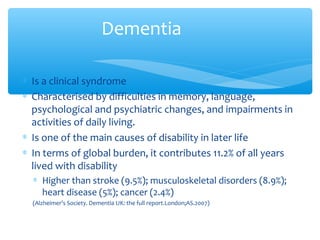
∗ Is a clinical syndrome
∗ Characterised by difficulties in memory, language,
psychological and psychiatric changes, and impairments in
activities of daily living.
∗ Is one of the main causes of disability in later life
∗ In terms of global burden, it contributes 11.2% of all years
lived with disability
∗ Higher than stroke (9.5%); musculoskeletal disorders (8.9%);
heart disease (5%); cancer (2.4%)
(Alzheimer’s Society. Dementia UK: the full report.London;AS.2007)
Dementia
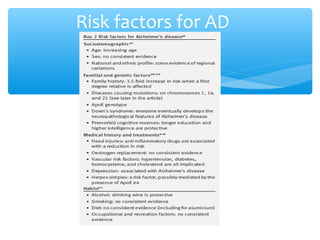
Risk factors for AD
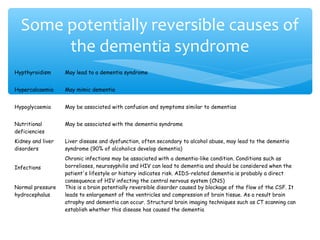
Hypthyroidism May lead to a dementia syndrome
Hypercalcaemia May mimic dementia
Hypoglycaemia May be associated with confusion and symptoms similar to dementias
Nutritional
deficiencies
May be associated with the dementia syndrome
Kidney and liver
disorders
Liver disease and dysfunction, often secondary to alcohol abuse, may lead to the dementia
syndrome (90% of alcoholics develop dementia)
Infections
Chronic infections may be associated with a dementia-like condition. Conditions such as
borrelioses, neurosyphilis and HIV can lead to dementia and should be considered when the
patient's lifestyle or history indicates risk. AIDS-related dementia is probably a direct
consequence of HIV infecting the central nervous system (CNS)
Normal pressure
hydrocephalus
This is a brain potentially reversible disorder caused by blockage of the flow of the CSF. It
leads to enlargement of the ventricles and compression of brain tissue. As a result brain
atrophy and dementia can occur. Structural brain imaging techniques such as CT scanning can
establish whether this disease has caused the dementia
Some potentially reversible causes of
the dementia syndrome
∗ Cognitive function
∗ Progressive loss of short-term memory
∗ Difficulty in registration and recall of new information
∗ Language problems e.g. repetition
∗ Poor or reduced judgement
∗ Behavioural changes
∗ Aggression, disinhibition, social withdrawal, wandering,
disorientation
∗ Inability to perform usual activities of daily living
∗ Psychiatric problems
∗ Associated mood disorder
∗ Delusions/hallucinations
∗ Physical debility
∗ Self-neglect
∗ Incontinence
∗ Falls
Clinical Presentation
Common types of dementia:
1. Alzheimer’s dementia (60% cases)
2. Vascular dementia (20% cases)
3. Lewy body dementia (15% cases)
4. Frontotemporal dementia (FTD) – 20% cases below 65yrs
5. Rarer causes:
∗ Hypothyroidism
∗ Normal pressure hydrocephalus
∗ Dementia in movement disorders e.g. PD, PSP
∗ Vitamin B12/folate deficiency
∗ Wernicke-Korsakoff dementia
∗ Neurosyphilis
∗ HIV/AIDS dementia
∗ Huntington’s disease
∗ Hypercalcemia
∗ Creutzfield-Jacob disease (CJD)
Prevalence of Dementia Sub types
∗ Characterised by 3 groups of symptoms
∗ Cognitive dysfunction
∗ Memory loss, language difficulties, executive function (loss of higher
level planning, intellectual coordination skills), visuospatial skills,
attention
∗ Psychiatric symptoms & behavioural disturbances
∗ Depression, anxiety, delusions, agitation
∗ Difficulties performing ADLs
∗ Complex activities: driving, shopping
∗ Basic activities: dressing, eating unaided
∗ A person with AD is 30% more likely to display clinical features of
dementia if they have coexisting symptoms of vascular disease
(JAMA 1997;277:813-7)
Alzheimer’s Disease (AD)
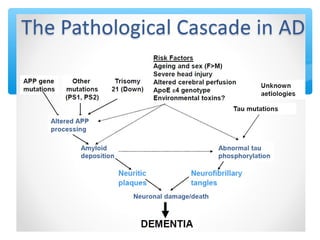
The pathogenesis of AD is poorly understood
Pathways believed to contribute to neuronal dysfunction and death include:
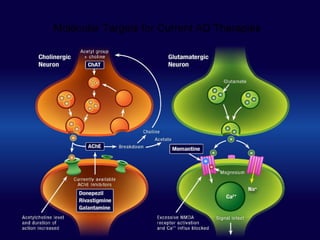
–Decreased acetylcholine synthesis and impaired cholinergic function
–Glutamatergic excitotoxicity
–Direct toxicity of β−amyloid peptide
–Mitochondrial dysfunction
–Increased oxidative stress
–Activation of apoptotic pathways
–Release of inflammatory mediators
–Impaired calcium signalling and regulation
•These pathways represent targets for existing and novel AD therapies
Pathogenesis of Alzheimer’s Disease
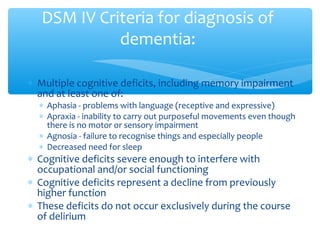
∗ Multiple cognitive deficits, including memory impairment
and at least one of:
∗ Aphasia - problems with language (receptive and expressive)
∗ Apraxia - inability to carry out purposeful movements even though
there is no motor or sensory impairment
∗ Agnosia - failure to recognise things and especially people
∗ Decreased need for sleep
∗ Cognitive deficits severe enough to interfere with
occupational and/or social functioning
∗ Cognitive deficits represent a decline from previously
higher function
∗ These deficits do not occur exclusively during the course
of delirium
DSM IV Criteria for diagnosis of
dementia:
Molecular Targets for Current AD Therapies
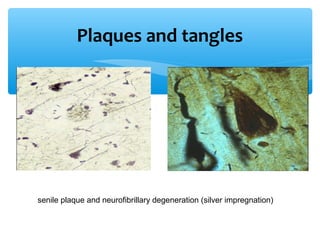
Plaques and tangles
senile plaque and neurofibrillary degeneration (silver impregnation)
MCI vs. Alzheimer’s Disease
∗ Criteria for diagnosis:
∗ Memory complaints, preferably corroborated by an informant
∗ Impaired memory function for age and education
∗ Preserved general cognitive function
∗ Intact activities of daily living
∗ No evidence of dementia
∗ Prospective studies have shown that people with amnestic
mild cognitive impairment are up to 15 times more likely to
have developed dementia at follow-up
Mild Cognitive Impairment
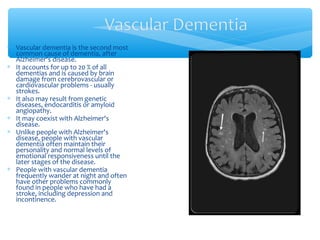
∗ Vascular dementia is the second most
common cause of dementia, after
Alzheimer's disease.
∗ It accounts for up to 20 % of all
dementias and is caused by brain
damage from cerebrovascular or
cardiovascular problems - usually
strokes.
∗ It also may result from genetic
diseases, endocarditis or amyloid
angiopathy.
∗ It may coexist with Alzheimer's
disease.
∗ Unlike people with Alzheimer's
disease, people with vascular
dementia often maintain their
personality and normal levels of
emotional responsiveness until the
later stages of the disease.
∗ People with vascular dementia
frequently wander at night and often
have other problems commonly
found in people who have had a
stroke, including depression and
incontinence.
 In Lewy body dementia, cells die in the brain's
cortex , and the substantia nigra. Many of the
remaining nerve cells in the substantia nigra
contain abnormal structures called Lewy
bodies that are the hallmark of the disease.
 The symptoms of Lewy body dementia
overlap with Alzheimer's disease in many ways
and may include memory impairment, poor
judgment, and confusion.
 Lewy body dementia typically also includes
visual hallucinations, parkinsonian symptoms
such as a shuffling gait (walk) and flexed
posture, and day-to-day fluctuations in the
severity of symptoms.
 Patients with Lewy body dementia live an
average of 7 years after symptoms begin.
 There is no cure for Lewy body dementia, and
treatments are aimed at controlling the
parkinsonian and psychiatric symptoms of the
disorder.
 Rivastigmine can be used to manage
symptoms.
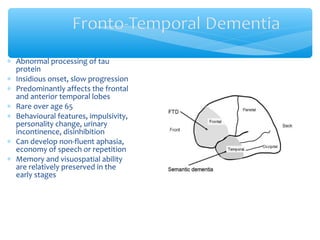
∗ Abnormal processing of tau
protein
∗ Insidious onset, slow progression
∗ Predominantly affects the frontal
and anterior temporal lobes
∗ Rare over age 65
∗ Behavioural features, impulsivity,
personality change, urinary
incontinence, disinhibition
∗ Can develop non-fluent aphasia,
economy of speech or repetition
∗ Memory and visuospatial ability
are relatively preserved in the
early stages
Early diagnosis
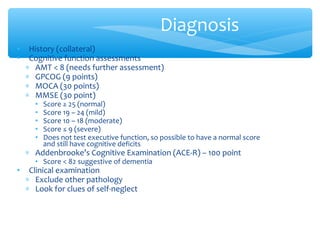
• History (collateral)
• Cognitive function assessments
∗ AMT < 8 (needs further assessment)
∗ GPCOG (9 points)
∗ MOCA (30 points)
∗ MMSE (30 point)
• Score ≥ 25 (normal)
• Score 19 – 24 (mild)
• Score 10 – 18 (moderate)
• Score ≤ 9 (severe)
• Does not test executive function, so possible to have a normal score
and still have cognitive deficits
∗ Addenbrooke’s Cognitive Examination (ACE-R) – 100 point
• Score < 82 suggestive of dementia
• Clinical examination
∗ Exclude other pathology
∗ Look for clues of self-neglect
Diagnosis
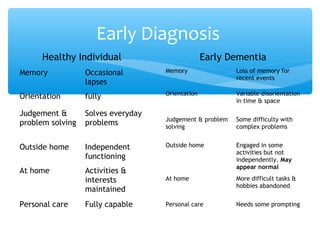
Early Diagnosis
Healthy Individual
Memory Occasional
lapses
Orientation fully
Judgement &
problem solving
Solves everyday
problems
Outside home Independent
functioning
At home Activities &
interests
maintained
Personal care Fully capable
Early Dementia
Memory Loss of memory for
recent events
Orientation Variable disorientation
in time & space
Judgement & problem
solving
Some difficulty with
complex problems
Outside home Engaged in some
activities but not
independently. May
appear normal
At home More difficult tasks &
hobbies abandoned
Personal care Needs some prompting
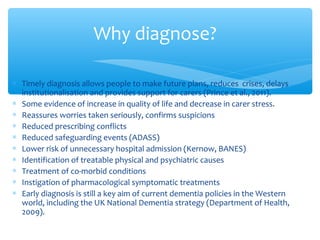
∗ Timely diagnosis allows people to make future plans, reduces crises, delays
institutionalisation and provides support for carers (Prince et al., 2011).
∗ Some evidence of increase in quality of life and decrease in carer stress.
∗ Reassures worries taken seriously, confirms suspicions
∗ Reduced prescribing conflicts
∗ Reduced safeguarding events (ADASS)
∗ Lower risk of unnecessary hospital admission (Kernow, BANES)
∗ Identification of treatable physical and psychiatric causes
∗ Treatment of co-morbid conditions
∗ Instigation of pharmacological symptomatic treatments
∗ Early diagnosis is still a key aim of current dementia policies in the Western
world, including the UK National Dementia strategy (Department of Health,
2009).
Why diagnose?
∗ No disease-modifying treatments or evidence about risks of
diagnosis. There is ongoing debate about the benefits of
diagnosing dementia (Fox et al., 2013, Carol Brayne ).
∗ BUT autonomy is a high ethical standard. Doctors have given
up deciding whether competent patients should know their
diagnosis for other illnesses.
Why not diagnose?
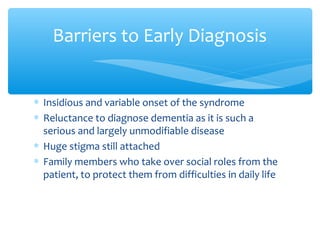
∗ Insidious and variable onset of the syndrome
∗ Reluctance to diagnose dementia as it is such a
serious and largely unmodifiable disease
∗ Huge stigma still attached
∗ Family members who take over social roles from the
patient, to protect them from difficulties in daily life
Barriers to Early Diagnosis
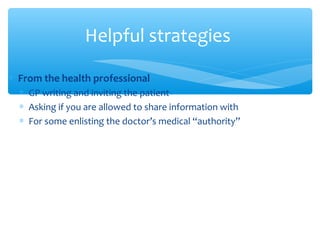
∗ From the health professional
∗ GP writing and inviting the patient
∗ Asking if you are allowed to share information with
∗ For some enlisting the doctor’s medical “authority”
Helpful strategies
∗ GP education increases the number of suspected dementia
cases but not accurate or earlier dementia diagnoses. (Two
RCTs)
∗ Six home visits from a specialist geriatric nurse over 30months 
increased the rate of accurately diagnosed dementia (One
RCT).
∗ Preliminary evidence from non-randomised studies that
memory clinics increase timely diagnosis, but not that they
increase the overall diagnosis rate.
∗ One non-randomised study of leaflets in community places eg
library, found diagnosis rate increased less in intervention
borough
The evidence
∗ Often difficult process
∗ Problems can be because of professionals, patients
and families
∗ Still less than 50% ever – those with a timely diagnosis
must be less
∗ Even harder for BME
∗ Increasing diagnosis in UK in recent years
∗ Trying to develop and test evidence based
interventions
Experience of gaining a dementia
diagnosis
In primary care
∗ Blood tests:
∗ full blood count,
∗ erythrocyte sedimentation rate,
∗ urea and electrolytes
∗ LFTs,
∗ thyroid function tests
∗ Vitamin B12 and Folate
∗ Syphilis serology is not recommended as a routine test
but can be justified if the apparent course of the
syndrome or the presentation is atypical.
Investigations
∗ CT (to exclude intracranial lesions; cerebral infarction and
haemorrhage; extradural and subdural haematomas; normal
pressure hydrocephalus)
∗ MRI (sensitive indicator of cerebrovascular disease, higher
resolution to detect focal atrophy—for example, in hippocampal
area)
∗ SPECT (to assess regional blood flow and dopamine scan to
detect Lewy body disease)
∗ PET CT
∗ Carotid ultrasonography (if large vessel atherosclerosis is
suspected)
∗ Electroencephalography is not part of routine investigations but
can be useful if epilepsy or an encephalopathy is suspected
In secondary care
treatments
∗ Non-pharmacological
∗ Assistance with ADLs
∗ Psychological interventions include cognitive, behavioural and emotion focused
approaches
∗ Assistive technology
∗ Reduction of carer burden through education and support (respite)
∗ Driving
∗ Pharmacological
∗ Anticholinesterase inhibitors (Donepezil, Galantamine, Rivastigmine)
∗ Enhance cholinergic neurotransmission by delaying breakdown of Ach
∗ Licensed for mild to moderate AD
∗ Side effects: GI upset, GI ulceration, headache, sleep disturbance, bradycardias
∗ Memantine
∗ Excessive activation of the NMDA (N-methyl-D-aspartate) receptor by glutamate may contribute
to destruction of cholinergic neurones
∗ NMDA antagonist
∗ Licensed for moderate to severe AD
∗ Side effects: headaches, fatigue, hallucinations, constipation
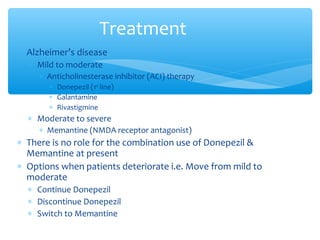
∗ Alzheimer’s disease
∗ Mild to moderate
∗ Anticholinesterase inhibitor (ACI) therapy
∗ Donepezil (1st
line)
∗ Galantamine
∗ Rivastigmine
∗ Moderate to severe
∗ Memantine (NMDA receptor antagonist)
∗ There is no role for the combination use of Donepezil &
Memantine at present
∗ Options when patients deteriorate i.e. Move from mild to
moderate
∗ Continue Donepezil
∗ Discontinue Donepezil
∗ Switch to Memantine
Treatment
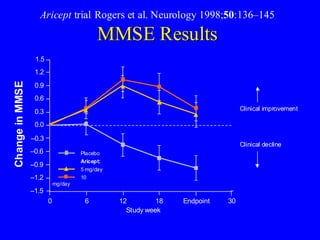
1.5
1.2
0.9
0.6
0.3
0.0
–0.3
–0.6
–0.9
–1.2
–1.5
0 6 12 18 Endpoint 30
Study week
ChangeinMMSE
Clinical improvement
Clinical decline
Placebo
Aricept:
5 mg/day
10
mg/day
AriceptAricept trialtrial Rogers et al. Neurology 1998;50:136–145
MMSE ResultsMMSE Results
∗ Over the past 12 years, there have been few candidate drugs for AD
and other dementias and frequent failures
∗ Most approaches have targeted amyloid but increasingly anti-tau
therapies are being developed
∗ More accurate diagnosis of early AD should improve the
development of new treatment options
∗ There are many challenges with clinical trials in (early) AD and
different study designs and assessment tools may be needed
∗ In the absence of a cure, treatments targeted at specific behaviours
and preventative strategies will be important
∗ Combination approaches may be more productive for cognition,
behaviour and to target multiple pathologies beyond amyloid and
tau
In development….
Same as cardiovascular prevention but emphasise:
∗Regular exercise
∗Stop smoking
∗Lose weight
∗Social interaction
∗Part of HealthCheck
Especially useful to advise:
∗At risk groups (DES)
∗Worried well
∗Those diagnosed with MCI
Prevention
Behavioural and Psychological
symptoms of dementias (BPSD)
Definition
Signs and symptoms of disturbed perception,
thought content, mood or behaviour that
frequently occur in patients with dementia
1996 International Psychogeriatric Association Consensus
Behavioural and Psychological
(Signs and) Symptoms of Dementia – BP(S)SD
∗ Depression
∗ Anxiety
∗ Delusions
∗ Hallucinations
∗ Paranoid ideas
∗ Misidentification
∗ Agitation
∗ Aggression
∗ Wandering
∗ Sleep disturbances
∗ Changes in, or
inappropriate
eating behaviour
∗ Inappropriate
sexual behaviour
Behavioural disturbances Psychiatric symptoms
Ask yourself – how many times have you seen these symptoms in
someone with dementia? Remember, dementia is not just having a ‘poor
memory’!
Non-cognitive symptoms of dementia
11 recommendations
• Reducing use is a priority backed up by
audit and explicit goals
• Curricula needed
• In reach to homes
• Care Quality Commission
• Access to Psychological Therapies
Programme
• People with dementia in their own homes.
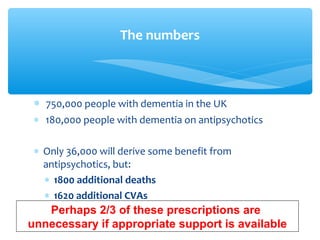
∗ 750,000 people with dementia in the UK
∗ 180,000 people with dementia on antipsychotics
∗ Only 36,000 will derive some benefit from
antipsychotics, but:
∗ 1800 additional deaths
∗ 1620 additional CVAs
The numbers
Perhaps 2/3 of these prescriptions are
unnecessary if appropriate support is available
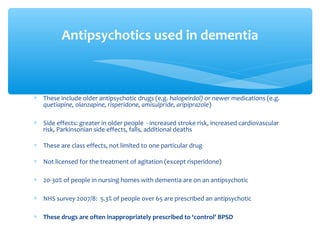
∗ These include older antipsychotic drugs (e.g. halopeirdol) or newer medications (e.g.
quetiapine, olanzapine, risperidone, amisulpride, aripiprazole)
∗ Side effects: greater in older people - increased stroke risk, increased cardiovascular
risk, Parkinsonian side effects, falls, additional deaths
∗ These are class effects, not limited to one particular drug
∗ Not licensed for the treatment of agitation (except risperidone)
∗ 20-30% of people in nursing homes with dementia are on an antipsychotic
∗ NHS survey 2007/8: 5.3% of people over 65 are prescribed an antipsychotic
∗ These drugs are often inappropriately prescribed to ‘control’ BPSD
Antipsychotics used in dementia
∗ Collateral history is extremely helpful
∗ Your clinical assessment:
∗ Behavioural assessment – ABC
∗ Antecedents
∗ Behaviour
∗ Consequences
∗ Physical assessment, e.g. are they in pain?
∗ Mental state assessment to consider
alternative causes and treatments, e.g. for
depression or sleep disturbance
∗ Look at the mnemonic opposite as a guide
for assessing causes of symptoms in
people with dementia
∗ Refer if necessary to community mental
health team
Think ‘PINCH ME’ to
identify any treatable
causes of symptoms
• Pain
• Infection
• Constipation
• Hydration
• Medication
• Environmental
Simple patient-centred care plans can help prevent and soothe behavioural and
psychological symptoms in patients with dementia:
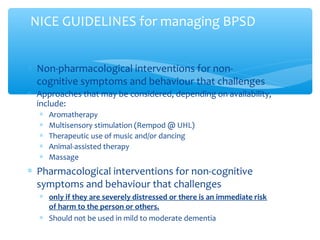
∗ Non-pharmacological interventions for non-
cognitive symptoms and behaviour that challenges
∗ Approaches that may be considered, depending on availability,
include:
∗ Aromatherapy
∗ Multisensory stimulation (Rempod @ UHL)
∗ Therapeutic use of music and/or dancing
∗ Animal-assisted therapy
∗ Massage
∗ Pharmacological interventions for non-cognitive
symptoms and behaviour that challenges
∗ only if they are severely distressed or there is an immediate risk
of harm to the person or others.
∗ Should not be used in mild to moderate dementia
NICE GUIDELINES for managing BPSD
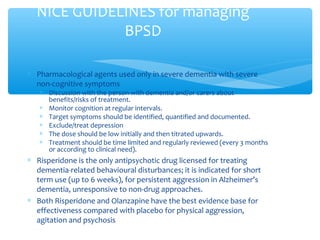
∗ Pharmacological agents used only in severe dementia with severe
non-cognitive symptoms
∗ Discussion with the person with dementia and/or carers about
benefits/risks of treatment.
∗ Monitor cognition at regular intervals.
∗ Target symptoms should be identified, quantified and documented.
∗ Exclude/treat depression
∗ The dose should be low initially and then titrated upwards.
∗ Treatment should be time limited and regularly reviewed (every 3 months
or according to clinical need).
∗ Risperidone is the only antipsychotic drug licensed for treating
dementia-related behavioural disturbances; it is indicated for short
term use (up to 6 weeks), for persistent aggression in Alzheimer’s
dementia, unresponsive to non-drug approaches.
∗ Both Risperidone and Olanzapine have the best evidence base for
effectiveness compared with placebo for physical aggression,
agitation and psychosis
NICE GUIDELINES for managing
BPSD
∗ Should always be considered before drug
interventions for BPSD
∗ Difficult to evaluate rigorously
∗ Often anecdotal, relatively non-specific and
rely on enthusiasts
∗ May improve QoL through increased
stimulation or increased enthusiasm among
staff and caregivers
Non-drug Interventions
∗ Antipsychotics have a focused but limited role in the
short term management of severe aggression and
psychosis.
∗ The best evidence base for pharmacological
treatment is for short term treatment with
risperidone as a treatment for aggression.
∗ The evidence base supports the value of simple non
drug interventions and intensive staff training in
care homes
∗ Recent evidence re-inforces the potential value of
analgesia
Lewisham memory service
Commissioned from South London and Maudsley NHS
Foundation Trust (SLaM) and Lewisham HealthCare NHS Trust.
The main purpose of the services will be to provide:
Single point of access referral point for a single seamless service
Early identification of people with a possible diagnosis of dementia
A high quality service for the assessment, diagnosis and
management of dementia until end of life
Support and advice for carers and patients about dementia and the
range of services available within the borough
Assessments available at GP surgeries, home, hospital outpatients
and Community Mental Health Team base
Nearly 400 referrals in the first nine months of the service (average
of ten per week)
Assessment, Diagnosis and
Treatment service
Multi-disciplinary from statutory and non statutory providers:
Administrator (South London and Maudsley NHS Foundation Trust (SLaM))
Team manager (SLaM)
2 x band 6 community practitioners (SLaM)
Consultant psychiatrist (SLaM)
Consultant geriatrician (Lewisham HealthCare Trust)
Assistive technology Occupational Therapist (SLaM)
5 x Dementia advisors (MindCare)
Carer Support Worker (Carers Lewisham)
Pharmacist (NHS Lewisham
Social Workers (London Borough of Lewisham and SLaM)
GP lead (NHS Lewisham)
Rest of the Memory team is under the existing Community Mental Health Teams
(CMHTs)
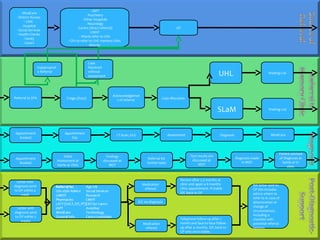
The Assessment Team
- MindCare
- District Nurses
- LINK
- Hospital
- Social Services
- Health-Checks
- Family
- Carers
- IAPT
- Psychiatry
- Other Hospitals
- Neurology
- Carers (direct referral)
-CMHT
-- Wards refer to UHL
- GPs to refer to UHL memory clinic
directly
GP
Referral to SPA Case Allocation
SLaM
UHL
Acknowledgemen
t of referral
Triage (Duty)
Waiting-List
Waiting-List
Case
Resolved
without
assessment
Inappropriat
e Referral
Appointment
booked
Appointment
Booked
Initial
Assessment at
home or clinic
Appointment
Day
CT-Scan, ECG Assessment Diagnosis MindCare
Findings
discussed at
MDT
Referral for
further tests
Test results are
discussed at
MDT
Diagnosis made
in MDT
Patient advised
of Diagnosis at
home or in
clinic
Letter with
diagnosis send
to GP within a
week
D/C letter sent to
GP this includes
advice where to
refer to in case of
deterioration or
change of
circumstances.
Including a
checklist with
potential referral
options.
Medication
offered
D/C no diagnosis
Letter with
diagnosis send
to GP within 2
weeks
Medication
offered
Telephone follow-up after 1
month and face-to-face follow-
up after 4 months. D/C back to
GP only once stable.
Review after 2-3 months at
clinic and again a 6 months
clinic appointment. If stable
D/C back to GP
∗ People with cognitive impairment on their screening
test
∗ Anyone worried about their memory
∗ Younger patients with a family history of AD
∗ Patients with cognitive impairment and behavioural
symptoms should be referred to CMHT
Who should be referred?
Inpatient Services at UHL
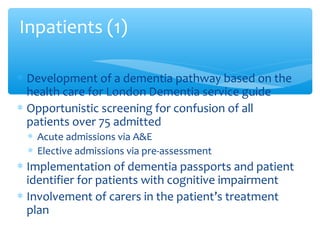
∗ Development of a dementia pathway based on the
health care for London Dementia service guide
∗ Opportunistic screening for confusion of all
patients over 75 admitted
∗ Acute admissions via A&E
∗ Elective admissions via pre-assessment
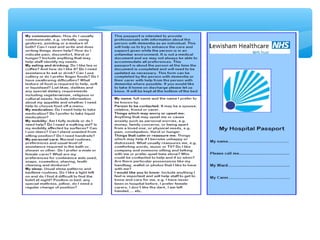
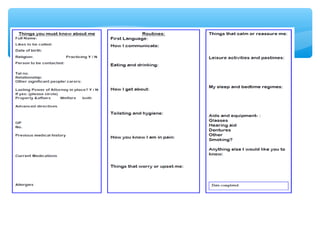
∗ Implementation of dementia passports and patient
identifier for patients with cognitive impairment
∗ Involvement of carers in the patient’s treatment
plan
Inpatients (1)
∗ Staff training
∗ Development of ward dementia champions
∗ Review of antipsychotic use in patients admitted
with dementia
∗ Participation in National Dementia Audit
∗ Guidelines for management of delirium
∗ Protocol for the management of patients with
challenging behaviour
∗ End of life care for advanced dementia (PEACE plan)
Inpatients (2)
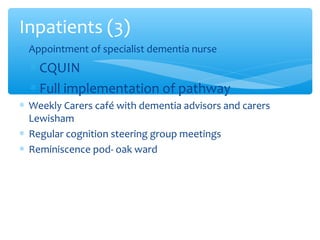
∗ Appointment of specialist dementia nurse
∗ CQUIN
∗ Full implementation of pathway
∗ Weekly Carers café with dementia advisors and carers
Lewisham
∗ Regular cognition steering group meetings
∗ Reminiscence pod- oak ward
Inpatients (3)
The future
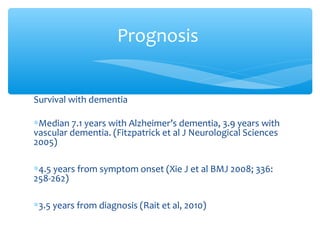
Survival with dementia
∗Median 7.1 years with Alzheimer’s dementia, 3.9 years with
vascular dementia. (Fitzpatrick et al J Neurological Sciences
2005)
∗4.5 years from symptom onset (Xie J et al BMJ 2008; 336:
258-262)
∗3.5 years from diagnosis (Rait et al, 2010)
Prognosis
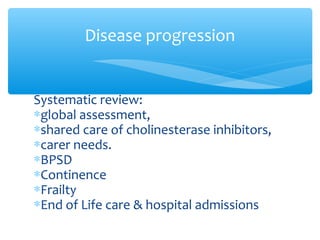
Systematic review:
∗global assessment,
∗shared care of cholinesterase inhibitors,
∗carer needs.
∗BPSD
∗Continence
∗Frailty
∗End of Life care & hospital admissions
Disease progression
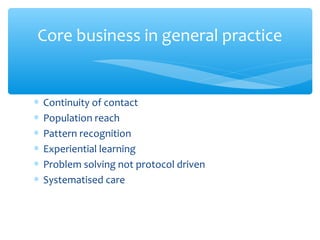
∗ Continuity of contact
∗ Population reach
∗ Pattern recognition
∗ Experiential learning
∗ Problem solving not protocol driven
∗ Systematised care
Core business in general practice
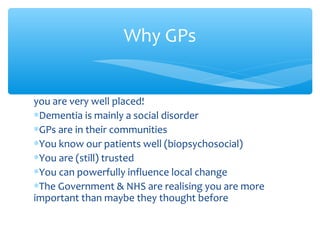
you are very well placed!
∗Dementia is mainly a social disorder
∗GPs are in their communities
∗You know our patients well (biopsychosocial)
∗You are (still) trusted
∗You can powerfully influence local change
∗The Government & NHS are realising you are more
important than maybe they thought before
Why GPs
GPs are trusted and therefore in an ideal position to:
∗Discuss the possibility of having dementia
∗Discuss driving
∗Encourage LPA or ACP
∗Review medication (reduce anti-cholinergic burden,
de-escalate)
∗Discuss sharing of information
∗Remind patients/carers about local services
Review
Post diagnosis treatment and co-ordination of care for
patients with dementia by GPs
∗ BMJ 2012;344:e3086
∗ 175 patients with mild – moderate dementia
∗ Assessed the quality of life of patients and caregivers
∗ Memory clinics are effective diagnostic facilities
∗ Memory clinics were not more effective than GPs in
regard to post diagnosis treatment and care co-
ordination for patients with dementia
The Future?
GPs are good at end of life care for cancer……
…so you can apply those skills to dementia:
∗Quality capacity check and documentation
∗Best Interest Decision-making
∗OOH/EPaCCS handover
∗Careful use of DNR forms
∗Involvement of palliative care services
∗Predicting death is more difficult, mistakes normal
End of Life Care
∗ Occasional lapses of memory are common, especially in
the presence of physical illness or stress—if in doubt, offer
to see someone again in three months
∗ If you ask a patient a simple question and they immediately
turn their head to the spouse, suspect dementia
∗ If you suspect dementia, take a history from an informant
∗ Have a low threshold for referring someone to a memory
clinic if you suspect he or she may have dementia
∗ Always consider dementia when seeing a patient,
especially an older patient who complains of memory
problems
∗ Generally, memory problems developing over days are
due to vascular disease, over weeks are due to depression,
and over months are due to dementia
TIPS FOR NON-SPECIALISTS
∗ http://www.england.nhs.uk/wp-
content/uploads/2014/09/dementia-revealed-
toolkit.pdf
resources
Any questions………………….?
Thank you for listening and

Dementia Care

  • 1.
    GP Presentation: Dementia Update BelindaMcCall Consultant in Elderly Medicine Trust lead for Dementia Lewisham and Greenwich NHS Trust
  • 2.
    Scope of theproblem What is dementia Early diagnosis Treatment Behavioural and psychological symptoms of dementia and Antipsychotics The Lewisham Memory Service The future Outline
  • 3.
    ∗ 6% ofindividuals over 651 ∗ 20% of individuals over 80 ∗ 850,000 cases in UK currently2 ∗ Current cost of dementia £14.3bn – more than stroke, heart disease and cancer combined ∗ Number of people with dementia will increase by 40% in next 15 years 1. Lobo et al 2001 2. Alzheimer’s research UK 2015 Dementia epidemiology
  • 4.
    ∗ 2/3 peoplewith dementia are at home ∗ Unpaid carers save the tax payer £5.4 billion a year ∗ Annual economic burden of late onset dementia is £14.3 billion-most falls on families ∗ The National Audit Office estimated the xs cost at more than £6 million / yr in an average general hospital. ∗ NHS care £1.17 billion a year Costs of dementia
  • 5.
  • 6.
    ∗ Is aclinical syndrome ∗ Characterised by difficulties in memory, language, psychological and psychiatric changes, and impairments in activities of daily living. ∗ Is one of the main causes of disability in later life ∗ In terms of global burden, it contributes 11.2% of all years lived with disability ∗ Higher than stroke (9.5%); musculoskeletal disorders (8.9%); heart disease (5%); cancer (2.4%) (Alzheimer’s Society. Dementia UK: the full report.London;AS.2007) Dementia
  • 7.
  • 8.
    Hypthyroidism May leadto a dementia syndrome Hypercalcaemia May mimic dementia Hypoglycaemia May be associated with confusion and symptoms similar to dementias Nutritional deficiencies May be associated with the dementia syndrome Kidney and liver disorders Liver disease and dysfunction, often secondary to alcohol abuse, may lead to the dementia syndrome (90% of alcoholics develop dementia) Infections Chronic infections may be associated with a dementia-like condition. Conditions such as borrelioses, neurosyphilis and HIV can lead to dementia and should be considered when the patient's lifestyle or history indicates risk. AIDS-related dementia is probably a direct consequence of HIV infecting the central nervous system (CNS) Normal pressure hydrocephalus This is a brain potentially reversible disorder caused by blockage of the flow of the CSF. It leads to enlargement of the ventricles and compression of brain tissue. As a result brain atrophy and dementia can occur. Structural brain imaging techniques such as CT scanning can establish whether this disease has caused the dementia Some potentially reversible causes of the dementia syndrome
  • 9.
    ∗ Cognitive function ∗Progressive loss of short-term memory ∗ Difficulty in registration and recall of new information ∗ Language problems e.g. repetition ∗ Poor or reduced judgement ∗ Behavioural changes ∗ Aggression, disinhibition, social withdrawal, wandering, disorientation ∗ Inability to perform usual activities of daily living ∗ Psychiatric problems ∗ Associated mood disorder ∗ Delusions/hallucinations ∗ Physical debility ∗ Self-neglect ∗ Incontinence ∗ Falls Clinical Presentation
  • 10.
    Common types ofdementia: 1. Alzheimer’s dementia (60% cases) 2. Vascular dementia (20% cases) 3. Lewy body dementia (15% cases) 4. Frontotemporal dementia (FTD) – 20% cases below 65yrs 5. Rarer causes: ∗ Hypothyroidism ∗ Normal pressure hydrocephalus ∗ Dementia in movement disorders e.g. PD, PSP ∗ Vitamin B12/folate deficiency ∗ Wernicke-Korsakoff dementia ∗ Neurosyphilis ∗ HIV/AIDS dementia ∗ Huntington’s disease ∗ Hypercalcemia ∗ Creutzfield-Jacob disease (CJD)
  • 11.
  • 12.
    ∗ Characterised by3 groups of symptoms ∗ Cognitive dysfunction ∗ Memory loss, language difficulties, executive function (loss of higher level planning, intellectual coordination skills), visuospatial skills, attention ∗ Psychiatric symptoms & behavioural disturbances ∗ Depression, anxiety, delusions, agitation ∗ Difficulties performing ADLs ∗ Complex activities: driving, shopping ∗ Basic activities: dressing, eating unaided ∗ A person with AD is 30% more likely to display clinical features of dementia if they have coexisting symptoms of vascular disease (JAMA 1997;277:813-7) Alzheimer’s Disease (AD)
  • 13.
    The pathogenesis ofAD is poorly understood Pathways believed to contribute to neuronal dysfunction and death include: –Decreased acetylcholine synthesis and impaired cholinergic function –Glutamatergic excitotoxicity –Direct toxicity of β−amyloid peptide –Mitochondrial dysfunction –Increased oxidative stress –Activation of apoptotic pathways –Release of inflammatory mediators –Impaired calcium signalling and regulation •These pathways represent targets for existing and novel AD therapies Pathogenesis of Alzheimer’s Disease
  • 15.
    ∗ Multiple cognitivedeficits, including memory impairment and at least one of: ∗ Aphasia - problems with language (receptive and expressive) ∗ Apraxia - inability to carry out purposeful movements even though there is no motor or sensory impairment ∗ Agnosia - failure to recognise things and especially people ∗ Decreased need for sleep ∗ Cognitive deficits severe enough to interfere with occupational and/or social functioning ∗ Cognitive deficits represent a decline from previously higher function ∗ These deficits do not occur exclusively during the course of delirium DSM IV Criteria for diagnosis of dementia:
  • 16.
    Molecular Targets forCurrent AD Therapies
  • 17.
    Plaques and tangles senileplaque and neurofibrillary degeneration (silver impregnation)
  • 18.
  • 19.
    ∗ Criteria fordiagnosis: ∗ Memory complaints, preferably corroborated by an informant ∗ Impaired memory function for age and education ∗ Preserved general cognitive function ∗ Intact activities of daily living ∗ No evidence of dementia ∗ Prospective studies have shown that people with amnestic mild cognitive impairment are up to 15 times more likely to have developed dementia at follow-up Mild Cognitive Impairment
  • 20.
    ∗ Vascular dementiais the second most common cause of dementia, after Alzheimer's disease. ∗ It accounts for up to 20 % of all dementias and is caused by brain damage from cerebrovascular or cardiovascular problems - usually strokes. ∗ It also may result from genetic diseases, endocarditis or amyloid angiopathy. ∗ It may coexist with Alzheimer's disease. ∗ Unlike people with Alzheimer's disease, people with vascular dementia often maintain their personality and normal levels of emotional responsiveness until the later stages of the disease. ∗ People with vascular dementia frequently wander at night and often have other problems commonly found in people who have had a stroke, including depression and incontinence.
  • 21.
     In Lewybody dementia, cells die in the brain's cortex , and the substantia nigra. Many of the remaining nerve cells in the substantia nigra contain abnormal structures called Lewy bodies that are the hallmark of the disease.  The symptoms of Lewy body dementia overlap with Alzheimer's disease in many ways and may include memory impairment, poor judgment, and confusion.  Lewy body dementia typically also includes visual hallucinations, parkinsonian symptoms such as a shuffling gait (walk) and flexed posture, and day-to-day fluctuations in the severity of symptoms.  Patients with Lewy body dementia live an average of 7 years after symptoms begin.  There is no cure for Lewy body dementia, and treatments are aimed at controlling the parkinsonian and psychiatric symptoms of the disorder.  Rivastigmine can be used to manage symptoms.
  • 22.
    ∗ Abnormal processingof tau protein ∗ Insidious onset, slow progression ∗ Predominantly affects the frontal and anterior temporal lobes ∗ Rare over age 65 ∗ Behavioural features, impulsivity, personality change, urinary incontinence, disinhibition ∗ Can develop non-fluent aphasia, economy of speech or repetition ∗ Memory and visuospatial ability are relatively preserved in the early stages
  • 23.
  • 25.
    • History (collateral) •Cognitive function assessments ∗ AMT < 8 (needs further assessment) ∗ GPCOG (9 points) ∗ MOCA (30 points) ∗ MMSE (30 point) • Score ≥ 25 (normal) • Score 19 – 24 (mild) • Score 10 – 18 (moderate) • Score ≤ 9 (severe) • Does not test executive function, so possible to have a normal score and still have cognitive deficits ∗ Addenbrooke’s Cognitive Examination (ACE-R) – 100 point • Score < 82 suggestive of dementia • Clinical examination ∗ Exclude other pathology ∗ Look for clues of self-neglect Diagnosis
  • 26.
    Early Diagnosis Healthy Individual MemoryOccasional lapses Orientation fully Judgement & problem solving Solves everyday problems Outside home Independent functioning At home Activities & interests maintained Personal care Fully capable Early Dementia Memory Loss of memory for recent events Orientation Variable disorientation in time & space Judgement & problem solving Some difficulty with complex problems Outside home Engaged in some activities but not independently. May appear normal At home More difficult tasks & hobbies abandoned Personal care Needs some prompting
  • 27.
    ∗ Timely diagnosisallows people to make future plans, reduces crises, delays institutionalisation and provides support for carers (Prince et al., 2011). ∗ Some evidence of increase in quality of life and decrease in carer stress. ∗ Reassures worries taken seriously, confirms suspicions ∗ Reduced prescribing conflicts ∗ Reduced safeguarding events (ADASS) ∗ Lower risk of unnecessary hospital admission (Kernow, BANES) ∗ Identification of treatable physical and psychiatric causes ∗ Treatment of co-morbid conditions ∗ Instigation of pharmacological symptomatic treatments ∗ Early diagnosis is still a key aim of current dementia policies in the Western world, including the UK National Dementia strategy (Department of Health, 2009). Why diagnose?
  • 28.
    ∗ No disease-modifyingtreatments or evidence about risks of diagnosis. There is ongoing debate about the benefits of diagnosing dementia (Fox et al., 2013, Carol Brayne ). ∗ BUT autonomy is a high ethical standard. Doctors have given up deciding whether competent patients should know their diagnosis for other illnesses. Why not diagnose?
  • 29.
    ∗ Insidious andvariable onset of the syndrome ∗ Reluctance to diagnose dementia as it is such a serious and largely unmodifiable disease ∗ Huge stigma still attached ∗ Family members who take over social roles from the patient, to protect them from difficulties in daily life Barriers to Early Diagnosis
  • 30.
    ∗ From thehealth professional ∗ GP writing and inviting the patient ∗ Asking if you are allowed to share information with ∗ For some enlisting the doctor’s medical “authority” Helpful strategies
  • 31.
    ∗ GP educationincreases the number of suspected dementia cases but not accurate or earlier dementia diagnoses. (Two RCTs) ∗ Six home visits from a specialist geriatric nurse over 30months  increased the rate of accurately diagnosed dementia (One RCT). ∗ Preliminary evidence from non-randomised studies that memory clinics increase timely diagnosis, but not that they increase the overall diagnosis rate. ∗ One non-randomised study of leaflets in community places eg library, found diagnosis rate increased less in intervention borough The evidence
  • 32.
    ∗ Often difficultprocess ∗ Problems can be because of professionals, patients and families ∗ Still less than 50% ever – those with a timely diagnosis must be less ∗ Even harder for BME ∗ Increasing diagnosis in UK in recent years ∗ Trying to develop and test evidence based interventions Experience of gaining a dementia diagnosis
  • 33.
    In primary care ∗Blood tests: ∗ full blood count, ∗ erythrocyte sedimentation rate, ∗ urea and electrolytes ∗ LFTs, ∗ thyroid function tests ∗ Vitamin B12 and Folate ∗ Syphilis serology is not recommended as a routine test but can be justified if the apparent course of the syndrome or the presentation is atypical. Investigations
  • 34.
    ∗ CT (toexclude intracranial lesions; cerebral infarction and haemorrhage; extradural and subdural haematomas; normal pressure hydrocephalus) ∗ MRI (sensitive indicator of cerebrovascular disease, higher resolution to detect focal atrophy—for example, in hippocampal area) ∗ SPECT (to assess regional blood flow and dopamine scan to detect Lewy body disease) ∗ PET CT ∗ Carotid ultrasonography (if large vessel atherosclerosis is suspected) ∗ Electroencephalography is not part of routine investigations but can be useful if epilepsy or an encephalopathy is suspected In secondary care
  • 35.
  • 36.
    ∗ Non-pharmacological ∗ Assistancewith ADLs ∗ Psychological interventions include cognitive, behavioural and emotion focused approaches ∗ Assistive technology ∗ Reduction of carer burden through education and support (respite) ∗ Driving ∗ Pharmacological ∗ Anticholinesterase inhibitors (Donepezil, Galantamine, Rivastigmine) ∗ Enhance cholinergic neurotransmission by delaying breakdown of Ach ∗ Licensed for mild to moderate AD ∗ Side effects: GI upset, GI ulceration, headache, sleep disturbance, bradycardias ∗ Memantine ∗ Excessive activation of the NMDA (N-methyl-D-aspartate) receptor by glutamate may contribute to destruction of cholinergic neurones ∗ NMDA antagonist ∗ Licensed for moderate to severe AD ∗ Side effects: headaches, fatigue, hallucinations, constipation
  • 37.
    ∗ Alzheimer’s disease ∗Mild to moderate ∗ Anticholinesterase inhibitor (ACI) therapy ∗ Donepezil (1st line) ∗ Galantamine ∗ Rivastigmine ∗ Moderate to severe ∗ Memantine (NMDA receptor antagonist) ∗ There is no role for the combination use of Donepezil & Memantine at present ∗ Options when patients deteriorate i.e. Move from mild to moderate ∗ Continue Donepezil ∗ Discontinue Donepezil ∗ Switch to Memantine Treatment
  • 38.
    1.5 1.2 0.9 0.6 0.3 0.0 –0.3 –0.6 –0.9 –1.2 –1.5 0 6 1218 Endpoint 30 Study week ChangeinMMSE Clinical improvement Clinical decline Placebo Aricept: 5 mg/day 10 mg/day AriceptAricept trialtrial Rogers et al. Neurology 1998;50:136–145 MMSE ResultsMMSE Results
  • 39.
    ∗ Over thepast 12 years, there have been few candidate drugs for AD and other dementias and frequent failures ∗ Most approaches have targeted amyloid but increasingly anti-tau therapies are being developed ∗ More accurate diagnosis of early AD should improve the development of new treatment options ∗ There are many challenges with clinical trials in (early) AD and different study designs and assessment tools may be needed ∗ In the absence of a cure, treatments targeted at specific behaviours and preventative strategies will be important ∗ Combination approaches may be more productive for cognition, behaviour and to target multiple pathologies beyond amyloid and tau In development….
  • 40.
    Same as cardiovascularprevention but emphasise: ∗Regular exercise ∗Stop smoking ∗Lose weight ∗Social interaction ∗Part of HealthCheck Especially useful to advise: ∗At risk groups (DES) ∗Worried well ∗Those diagnosed with MCI Prevention
  • 41.
  • 42.
    Definition Signs and symptomsof disturbed perception, thought content, mood or behaviour that frequently occur in patients with dementia 1996 International Psychogeriatric Association Consensus Behavioural and Psychological (Signs and) Symptoms of Dementia – BP(S)SD
  • 43.
    ∗ Depression ∗ Anxiety ∗Delusions ∗ Hallucinations ∗ Paranoid ideas ∗ Misidentification ∗ Agitation ∗ Aggression ∗ Wandering ∗ Sleep disturbances ∗ Changes in, or inappropriate eating behaviour ∗ Inappropriate sexual behaviour Behavioural disturbances Psychiatric symptoms Ask yourself – how many times have you seen these symptoms in someone with dementia? Remember, dementia is not just having a ‘poor memory’! Non-cognitive symptoms of dementia
  • 44.
    11 recommendations • Reducinguse is a priority backed up by audit and explicit goals • Curricula needed • In reach to homes • Care Quality Commission • Access to Psychological Therapies Programme • People with dementia in their own homes.
  • 45.
    ∗ 750,000 peoplewith dementia in the UK ∗ 180,000 people with dementia on antipsychotics ∗ Only 36,000 will derive some benefit from antipsychotics, but: ∗ 1800 additional deaths ∗ 1620 additional CVAs The numbers Perhaps 2/3 of these prescriptions are unnecessary if appropriate support is available
  • 46.
    ∗ These includeolder antipsychotic drugs (e.g. halopeirdol) or newer medications (e.g. quetiapine, olanzapine, risperidone, amisulpride, aripiprazole) ∗ Side effects: greater in older people - increased stroke risk, increased cardiovascular risk, Parkinsonian side effects, falls, additional deaths ∗ These are class effects, not limited to one particular drug ∗ Not licensed for the treatment of agitation (except risperidone) ∗ 20-30% of people in nursing homes with dementia are on an antipsychotic ∗ NHS survey 2007/8: 5.3% of people over 65 are prescribed an antipsychotic ∗ These drugs are often inappropriately prescribed to ‘control’ BPSD Antipsychotics used in dementia
  • 47.
    ∗ Collateral historyis extremely helpful ∗ Your clinical assessment: ∗ Behavioural assessment – ABC ∗ Antecedents ∗ Behaviour ∗ Consequences ∗ Physical assessment, e.g. are they in pain? ∗ Mental state assessment to consider alternative causes and treatments, e.g. for depression or sleep disturbance ∗ Look at the mnemonic opposite as a guide for assessing causes of symptoms in people with dementia ∗ Refer if necessary to community mental health team Think ‘PINCH ME’ to identify any treatable causes of symptoms • Pain • Infection • Constipation • Hydration • Medication • Environmental Simple patient-centred care plans can help prevent and soothe behavioural and psychological symptoms in patients with dementia:
  • 48.
    ∗ Non-pharmacological interventionsfor non- cognitive symptoms and behaviour that challenges ∗ Approaches that may be considered, depending on availability, include: ∗ Aromatherapy ∗ Multisensory stimulation (Rempod @ UHL) ∗ Therapeutic use of music and/or dancing ∗ Animal-assisted therapy ∗ Massage ∗ Pharmacological interventions for non-cognitive symptoms and behaviour that challenges ∗ only if they are severely distressed or there is an immediate risk of harm to the person or others. ∗ Should not be used in mild to moderate dementia NICE GUIDELINES for managing BPSD
  • 49.
    ∗ Pharmacological agentsused only in severe dementia with severe non-cognitive symptoms ∗ Discussion with the person with dementia and/or carers about benefits/risks of treatment. ∗ Monitor cognition at regular intervals. ∗ Target symptoms should be identified, quantified and documented. ∗ Exclude/treat depression ∗ The dose should be low initially and then titrated upwards. ∗ Treatment should be time limited and regularly reviewed (every 3 months or according to clinical need). ∗ Risperidone is the only antipsychotic drug licensed for treating dementia-related behavioural disturbances; it is indicated for short term use (up to 6 weeks), for persistent aggression in Alzheimer’s dementia, unresponsive to non-drug approaches. ∗ Both Risperidone and Olanzapine have the best evidence base for effectiveness compared with placebo for physical aggression, agitation and psychosis NICE GUIDELINES for managing BPSD
  • 50.
    ∗ Should alwaysbe considered before drug interventions for BPSD ∗ Difficult to evaluate rigorously ∗ Often anecdotal, relatively non-specific and rely on enthusiasts ∗ May improve QoL through increased stimulation or increased enthusiasm among staff and caregivers Non-drug Interventions
  • 51.
    ∗ Antipsychotics havea focused but limited role in the short term management of severe aggression and psychosis. ∗ The best evidence base for pharmacological treatment is for short term treatment with risperidone as a treatment for aggression. ∗ The evidence base supports the value of simple non drug interventions and intensive staff training in care homes ∗ Recent evidence re-inforces the potential value of analgesia
  • 52.
  • 53.
    Commissioned from SouthLondon and Maudsley NHS Foundation Trust (SLaM) and Lewisham HealthCare NHS Trust. The main purpose of the services will be to provide: Single point of access referral point for a single seamless service Early identification of people with a possible diagnosis of dementia A high quality service for the assessment, diagnosis and management of dementia until end of life Support and advice for carers and patients about dementia and the range of services available within the borough Assessments available at GP surgeries, home, hospital outpatients and Community Mental Health Team base Nearly 400 referrals in the first nine months of the service (average of ten per week) Assessment, Diagnosis and Treatment service
  • 54.
    Multi-disciplinary from statutoryand non statutory providers: Administrator (South London and Maudsley NHS Foundation Trust (SLaM)) Team manager (SLaM) 2 x band 6 community practitioners (SLaM) Consultant psychiatrist (SLaM) Consultant geriatrician (Lewisham HealthCare Trust) Assistive technology Occupational Therapist (SLaM) 5 x Dementia advisors (MindCare) Carer Support Worker (Carers Lewisham) Pharmacist (NHS Lewisham Social Workers (London Borough of Lewisham and SLaM) GP lead (NHS Lewisham) Rest of the Memory team is under the existing Community Mental Health Teams (CMHTs) The Assessment Team
  • 55.
    - MindCare - DistrictNurses - LINK - Hospital - Social Services - Health-Checks - Family - Carers - IAPT - Psychiatry - Other Hospitals - Neurology - Carers (direct referral) -CMHT -- Wards refer to UHL - GPs to refer to UHL memory clinic directly GP Referral to SPA Case Allocation SLaM UHL Acknowledgemen t of referral Triage (Duty) Waiting-List Waiting-List Case Resolved without assessment Inappropriat e Referral Appointment booked Appointment Booked Initial Assessment at home or clinic Appointment Day CT-Scan, ECG Assessment Diagnosis MindCare Findings discussed at MDT Referral for further tests Test results are discussed at MDT Diagnosis made in MDT Patient advised of Diagnosis at home or in clinic Letter with diagnosis send to GP within a week D/C letter sent to GP this includes advice where to refer to in case of deterioration or change of circumstances. Including a checklist with potential referral options. Medication offered D/C no diagnosis Letter with diagnosis send to GP within 2 weeks Medication offered Telephone follow-up after 1 month and face-to-face follow- up after 4 months. D/C back to GP only once stable. Review after 2-3 months at clinic and again a 6 months clinic appointment. If stable D/C back to GP
  • 56.
    ∗ People withcognitive impairment on their screening test ∗ Anyone worried about their memory ∗ Younger patients with a family history of AD ∗ Patients with cognitive impairment and behavioural symptoms should be referred to CMHT Who should be referred?
  • 57.
  • 58.
    ∗ Development ofa dementia pathway based on the health care for London Dementia service guide ∗ Opportunistic screening for confusion of all patients over 75 admitted ∗ Acute admissions via A&E ∗ Elective admissions via pre-assessment ∗ Implementation of dementia passports and patient identifier for patients with cognitive impairment ∗ Involvement of carers in the patient’s treatment plan Inpatients (1)
  • 62.
    ∗ Staff training ∗Development of ward dementia champions ∗ Review of antipsychotic use in patients admitted with dementia ∗ Participation in National Dementia Audit ∗ Guidelines for management of delirium ∗ Protocol for the management of patients with challenging behaviour ∗ End of life care for advanced dementia (PEACE plan) Inpatients (2)
  • 63.
    ∗ Appointment ofspecialist dementia nurse ∗ CQUIN ∗ Full implementation of pathway ∗ Weekly Carers café with dementia advisors and carers Lewisham ∗ Regular cognition steering group meetings ∗ Reminiscence pod- oak ward Inpatients (3)
  • 64.
  • 65.
    Survival with dementia ∗Median7.1 years with Alzheimer’s dementia, 3.9 years with vascular dementia. (Fitzpatrick et al J Neurological Sciences 2005) ∗4.5 years from symptom onset (Xie J et al BMJ 2008; 336: 258-262) ∗3.5 years from diagnosis (Rait et al, 2010) Prognosis
  • 66.
    Systematic review: ∗global assessment, ∗sharedcare of cholinesterase inhibitors, ∗carer needs. ∗BPSD ∗Continence ∗Frailty ∗End of Life care & hospital admissions Disease progression
  • 67.
    ∗ Continuity ofcontact ∗ Population reach ∗ Pattern recognition ∗ Experiential learning ∗ Problem solving not protocol driven ∗ Systematised care Core business in general practice
  • 68.
    you are verywell placed! ∗Dementia is mainly a social disorder ∗GPs are in their communities ∗You know our patients well (biopsychosocial) ∗You are (still) trusted ∗You can powerfully influence local change ∗The Government & NHS are realising you are more important than maybe they thought before Why GPs
  • 69.
    GPs are trustedand therefore in an ideal position to: ∗Discuss the possibility of having dementia ∗Discuss driving ∗Encourage LPA or ACP ∗Review medication (reduce anti-cholinergic burden, de-escalate) ∗Discuss sharing of information ∗Remind patients/carers about local services Review
  • 70.
    Post diagnosis treatmentand co-ordination of care for patients with dementia by GPs ∗ BMJ 2012;344:e3086 ∗ 175 patients with mild – moderate dementia ∗ Assessed the quality of life of patients and caregivers ∗ Memory clinics are effective diagnostic facilities ∗ Memory clinics were not more effective than GPs in regard to post diagnosis treatment and care co- ordination for patients with dementia The Future?
  • 71.
    GPs are goodat end of life care for cancer…… …so you can apply those skills to dementia: ∗Quality capacity check and documentation ∗Best Interest Decision-making ∗OOH/EPaCCS handover ∗Careful use of DNR forms ∗Involvement of palliative care services ∗Predicting death is more difficult, mistakes normal End of Life Care
  • 72.
    ∗ Occasional lapsesof memory are common, especially in the presence of physical illness or stress—if in doubt, offer to see someone again in three months ∗ If you ask a patient a simple question and they immediately turn their head to the spouse, suspect dementia ∗ If you suspect dementia, take a history from an informant ∗ Have a low threshold for referring someone to a memory clinic if you suspect he or she may have dementia ∗ Always consider dementia when seeing a patient, especially an older patient who complains of memory problems ∗ Generally, memory problems developing over days are due to vascular disease, over weeks are due to depression, and over months are due to dementia TIPS FOR NON-SPECIALISTS
  • 73.
  • 74.