Medicines Support Solutions
Jo Kiangala
LIMOS Pharmacist
July 2015
Supporting People to get
the most from their
medicines
Patient centred approach
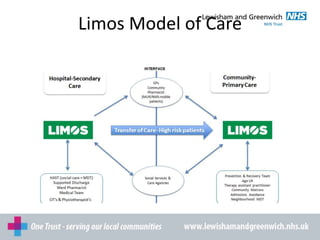
Limos Model of Care
Which patients does LIMOS target?
Have admission / readmissions to hospital
- ? meds related
Adherence problems - intentional or non-intentional
Social Care Package for medicines support
Mental Health Issues
Housebound
What we do
Visit patient in own home or in hospital:
• Support patients with LTCs to manage their medicines
enabling them to stay in their own homes
• Improve access to personalised support for medication
use
• Address adherence issues – intentional & unintentional
• Support carers - assist / administer meds
• Follow up patient across the interface if required
Communicate with all those involved in agreed patient centred
pharmaceutical care plan
Medicines adherence
• Failure to fill or refill a prescription
• Taking the incorrect medication
• Omitting one or multiple doses
• Taking more medicines than prescribed
• Inappropriate use of devices such as inhalers or
eye drops
• Prematurely taking or discontinuing medicines
• Taking medicines that have expired , damaged or
stored improperly
Categories of community support services
• Level 1: requires help ordering and collecting
prescriptions and advice on safe storage
• Level 2:all level 1 +supervision with self
medication or assistance to open containers
and remind to take medicines
• Level 3:requires total medication
management. The care worker has full
responsibility
Barriers to medicines adherence
• Following education, motivation and support these barriers can be
overcome
What are the barriers
Mobility
Manual dexterity
Physical co-ordination
Speech, hearing or eyesight
Memory
Literacy skills
Cognitive impairment
Ability to lift, carry or move everyday objects
Medicines Support Assessment
Tool
• Access Issues
• Compliance and Day to Day Management
issues
• Unintentional & Intentional
• Clinical Issues
• Action Plan
• Re-assessment and follow up.
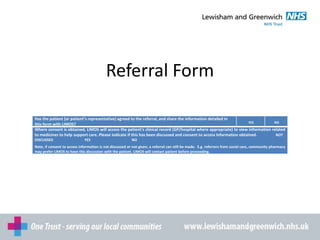
Referral Form
Has the patient (or patient’s representative) agreed to the referral, and share the information detailed in
this form with LIMOS? YES NO
Where consent is obtained, LIMOS will access the patient’s clinical record (GP/hospital where appropriate) to view information related
to medicines to help support care. Please indicate if this has been discussed and consent to access information obtained. NOT
DISCUSSED YES NO
Note, if consent to access information is not discussed or not given, a referral can still be made. E.g. referrers from social care, community pharmacy
may prefer LIMOS to have this discussion with the patient. LIMOS will contact patient before proceeding.
Scenarios
• Patient with MS and lives alone.
• He is finding it difficult to get his tablets out
of their blister pack and using his eye drops
• He wants to remain independent
Scenarios
• Patient has significant visual impairment . He
is able to take care of all his personal needs
and would like to remain independent with his
medicines
Examples of strategies to assist with common causes
of medicines non-adherence
• Dexterity
 Remove tablets for the patients or suggest a device to aid
removal
 Supply screw caps
 Supply device to aid medication e.g. aid for instilling eye
drops, haleraid etc.
 Supply 20ml measuring cup instead of 5ml spoon
• Vision impairment
 Use larger fonts
 Symbols
 Rubber bands
 Magnifying lens
Any questions

Medicine Support Solutions LIMOS

  • 1.
    Medicines Support Solutions JoKiangala LIMOS Pharmacist July 2015
  • 2.
    Supporting People toget the most from their medicines Patient centred approach
  • 3.
  • 4.
    Which patients doesLIMOS target? Have admission / readmissions to hospital - ? meds related Adherence problems - intentional or non-intentional Social Care Package for medicines support Mental Health Issues Housebound
  • 5.
    What we do Visitpatient in own home or in hospital: • Support patients with LTCs to manage their medicines enabling them to stay in their own homes • Improve access to personalised support for medication use • Address adherence issues – intentional & unintentional • Support carers - assist / administer meds • Follow up patient across the interface if required Communicate with all those involved in agreed patient centred pharmaceutical care plan
  • 6.
    Medicines adherence • Failureto fill or refill a prescription • Taking the incorrect medication • Omitting one or multiple doses • Taking more medicines than prescribed • Inappropriate use of devices such as inhalers or eye drops • Prematurely taking or discontinuing medicines • Taking medicines that have expired , damaged or stored improperly
  • 7.
    Categories of communitysupport services • Level 1: requires help ordering and collecting prescriptions and advice on safe storage • Level 2:all level 1 +supervision with self medication or assistance to open containers and remind to take medicines • Level 3:requires total medication management. The care worker has full responsibility
  • 8.
    Barriers to medicinesadherence • Following education, motivation and support these barriers can be overcome What are the barriers Mobility Manual dexterity Physical co-ordination Speech, hearing or eyesight Memory Literacy skills Cognitive impairment Ability to lift, carry or move everyday objects
  • 9.
    Medicines Support Assessment Tool •Access Issues • Compliance and Day to Day Management issues • Unintentional & Intentional • Clinical Issues • Action Plan • Re-assessment and follow up.
  • 10.
    Referral Form Has thepatient (or patient’s representative) agreed to the referral, and share the information detailed in this form with LIMOS? YES NO Where consent is obtained, LIMOS will access the patient’s clinical record (GP/hospital where appropriate) to view information related to medicines to help support care. Please indicate if this has been discussed and consent to access information obtained. NOT DISCUSSED YES NO Note, if consent to access information is not discussed or not given, a referral can still be made. E.g. referrers from social care, community pharmacy may prefer LIMOS to have this discussion with the patient. LIMOS will contact patient before proceeding.
  • 11.
    Scenarios • Patient withMS and lives alone. • He is finding it difficult to get his tablets out of their blister pack and using his eye drops • He wants to remain independent
  • 12.
    Scenarios • Patient hassignificant visual impairment . He is able to take care of all his personal needs and would like to remain independent with his medicines
  • 13.
    Examples of strategiesto assist with common causes of medicines non-adherence • Dexterity  Remove tablets for the patients or suggest a device to aid removal  Supply screw caps  Supply device to aid medication e.g. aid for instilling eye drops, haleraid etc.  Supply 20ml measuring cup instead of 5ml spoon • Vision impairment  Use larger fonts  Symbols  Rubber bands  Magnifying lens
  • 14.

Editor's Notes

  • #7 At least about 30-50% of patients do not take their meds as intended. Medicine adherence is the key importance in optimising overall effectiveness of their healthcare.
  • #8 Confirm level of support from the patient or their carers.
  • #9 LIMOS aims to support patients to remain independent at home as long as possible. The first step is addressing unintentional non-adherence is getting patients to talk about their medicines.
  • #12 Ordinary tops, remove meds from foils, winged caps, eye drop aids e.g. Autodrop, use of spacers and haleraids, pill extractors, blister popping devices or pill presses. Measure out liquids in caps instead of spoons
  • #13 Coloured labels, stickers, rubber bands, coloured dots, magnifying lens, big font labels, questions to ask are you able to read the labels on the packaging. Do you have problems identifying the tabs by colours.
  • #15 Remember RPS guidance says MCA generally unsuitable for patients who are physically and cognitively able, those who are cognitively impaired with no carers and those who have carers and are physically impaired