
▪
▪
▪
▪
▪
▪
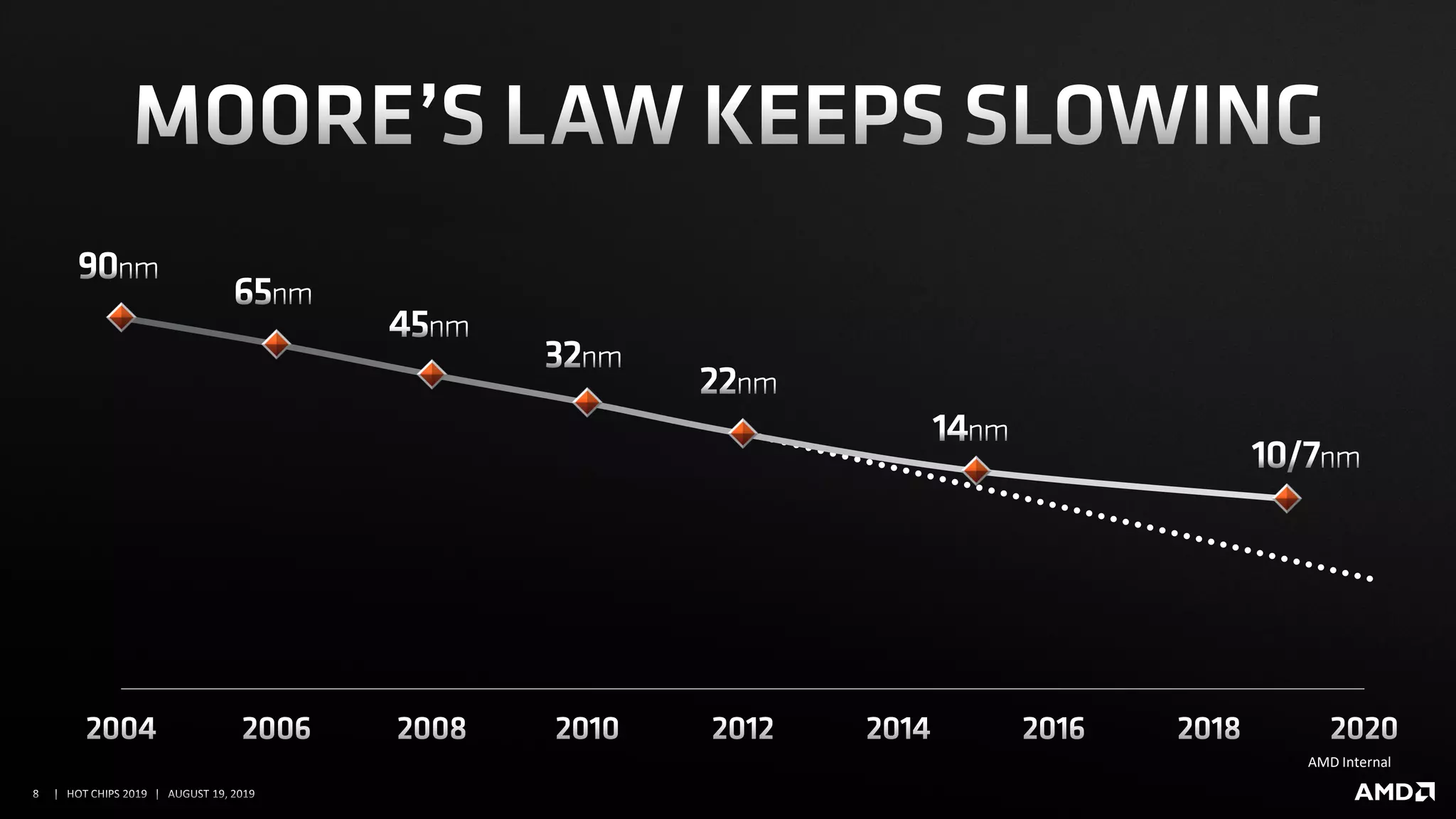
 AMD Internal
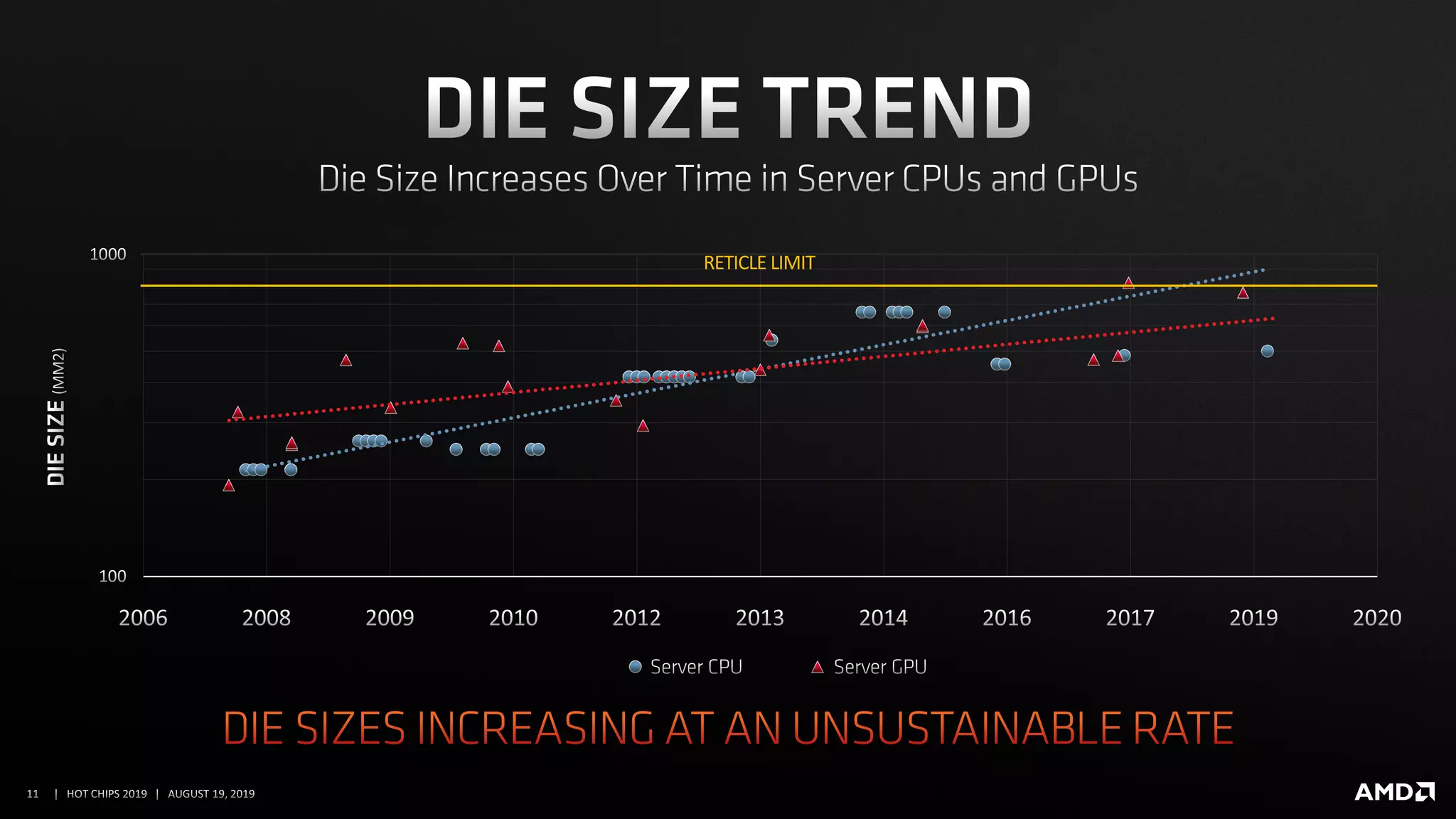
RETICLE LIMIT
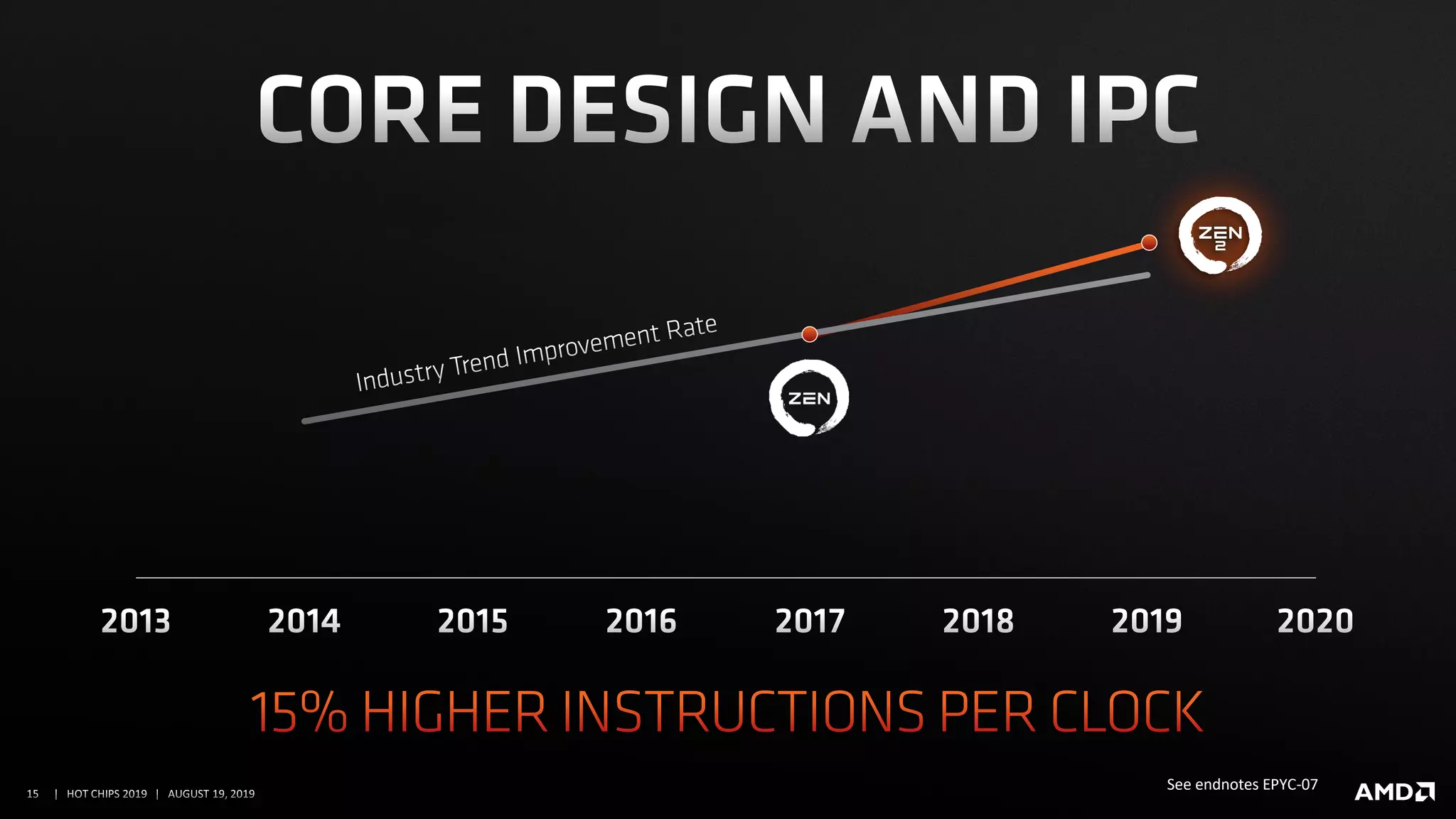
 See endnotes EPYC-07
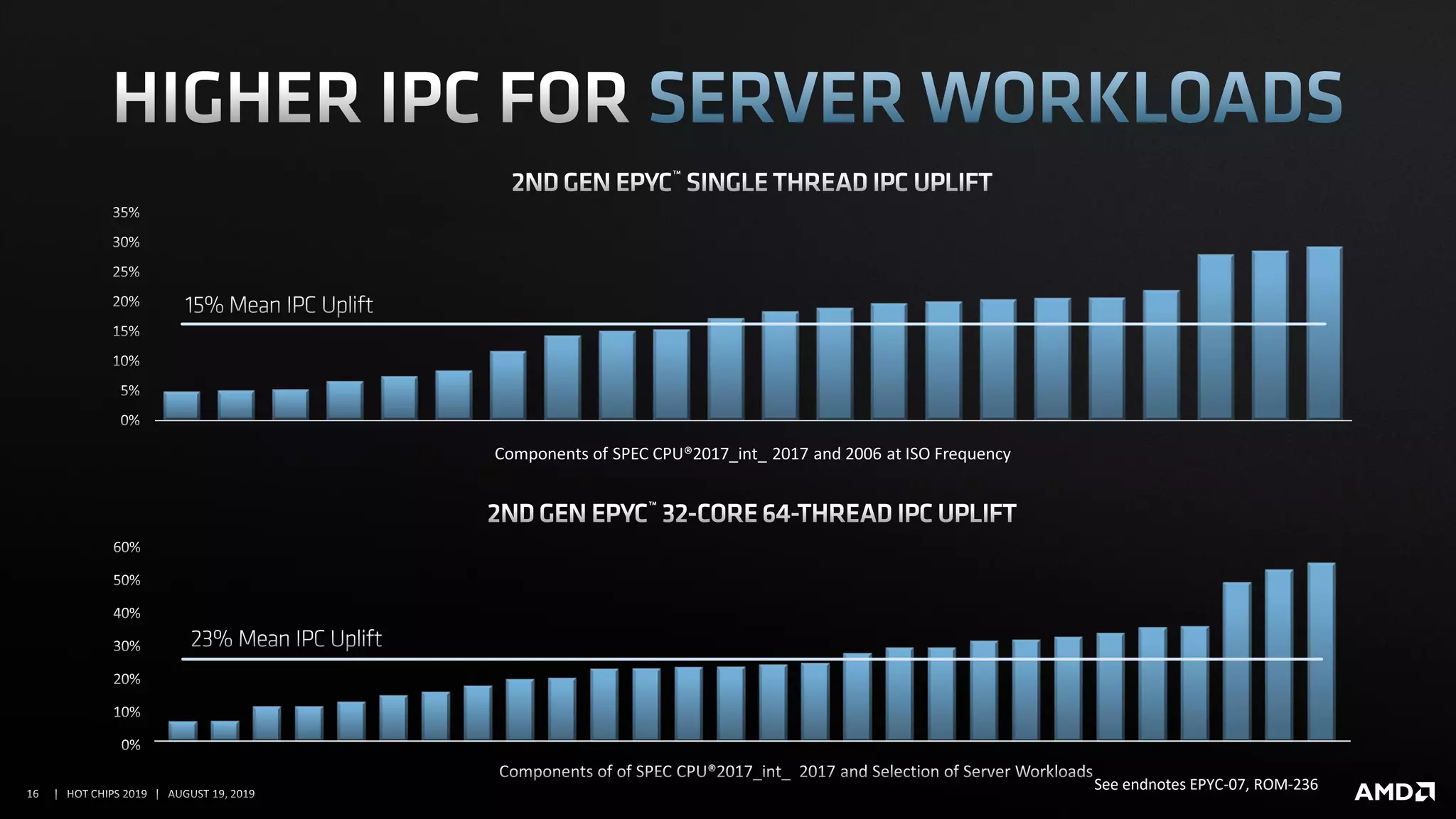
Components of SPEC CPU®2017_int_ 2017 and 2006 at ISO Frequency
 See endnotes EPYC-07, ROM-236
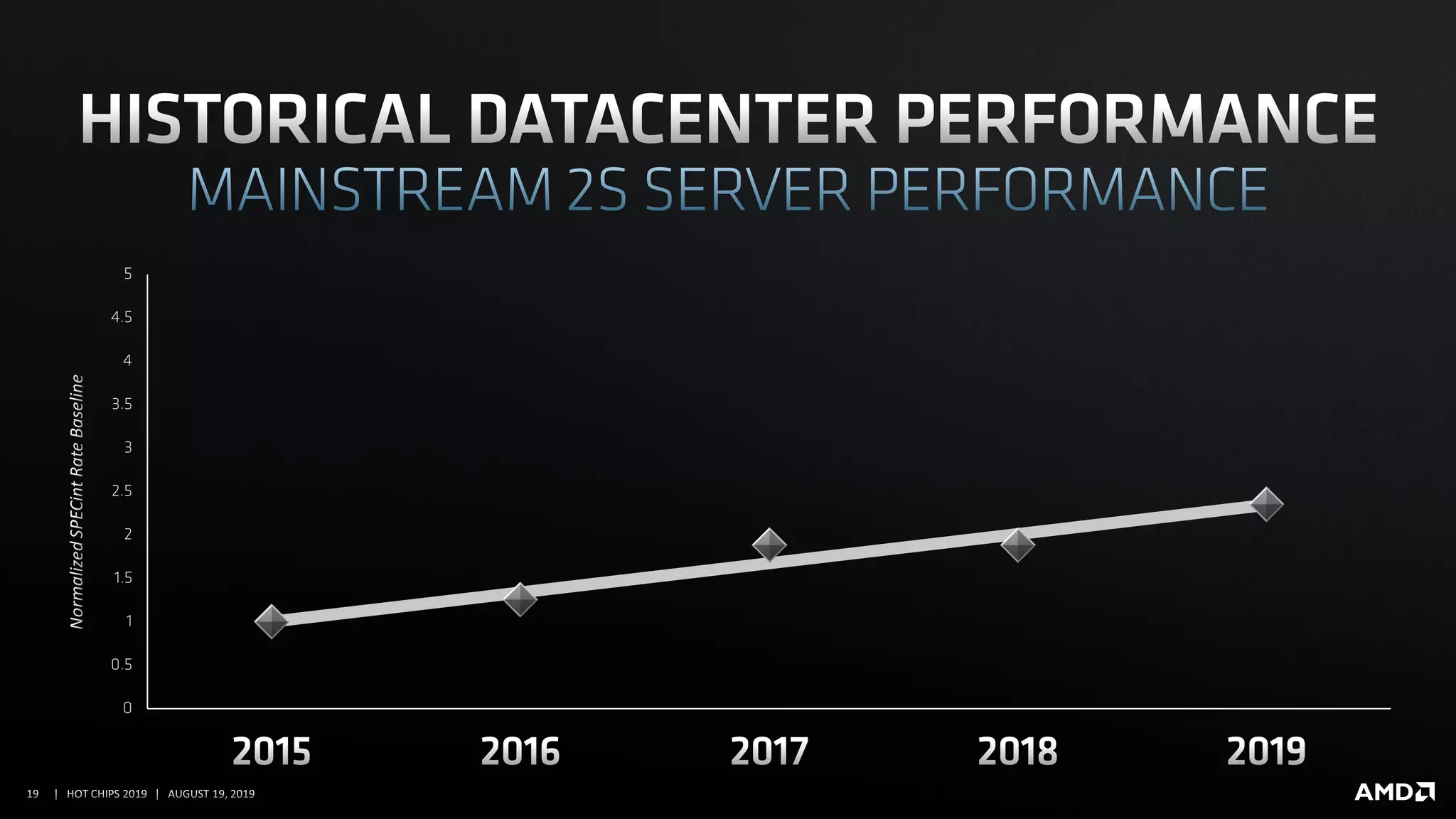
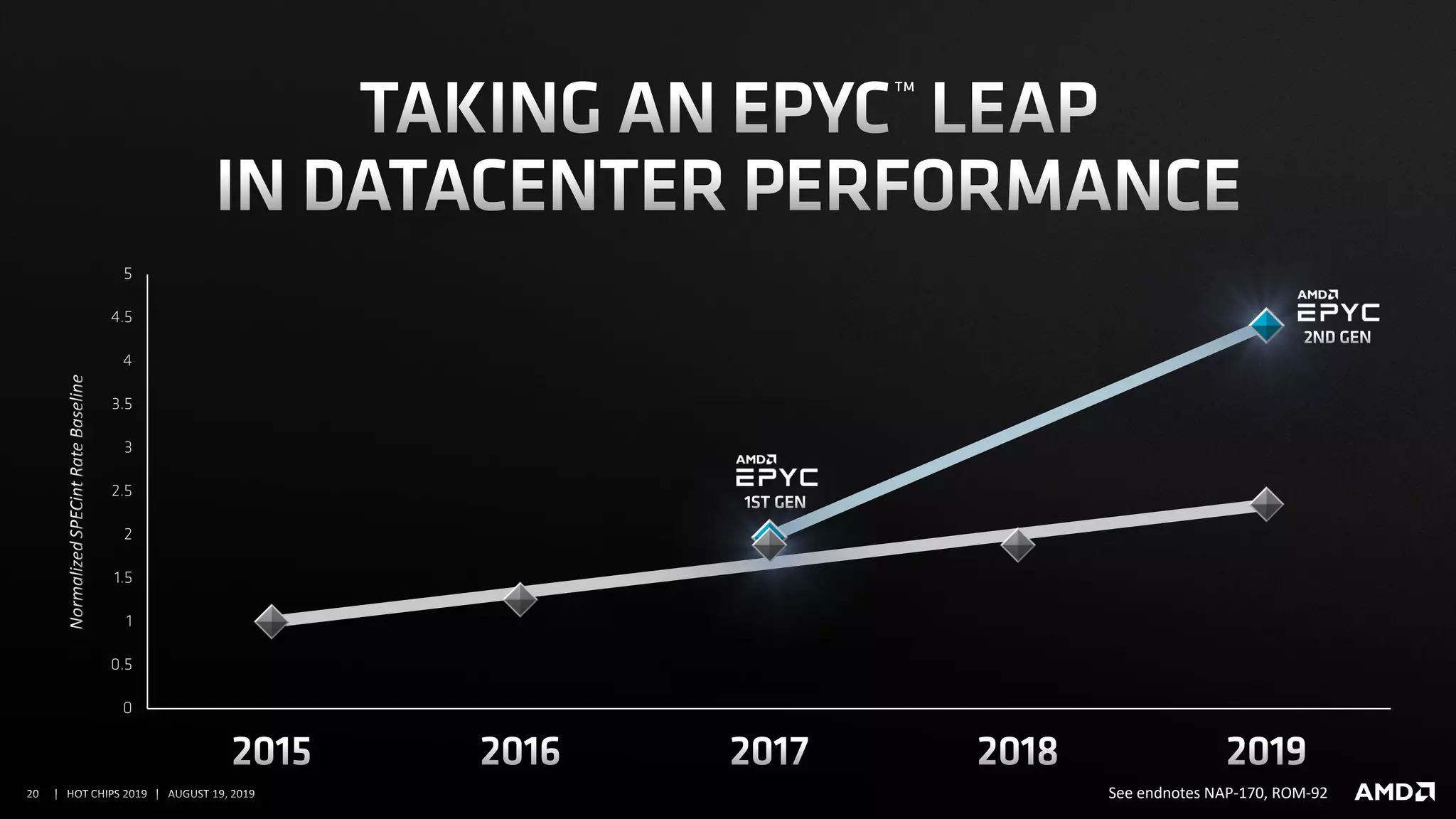
 See endnotes NAP-170, ROM-92
▪
▪
▪
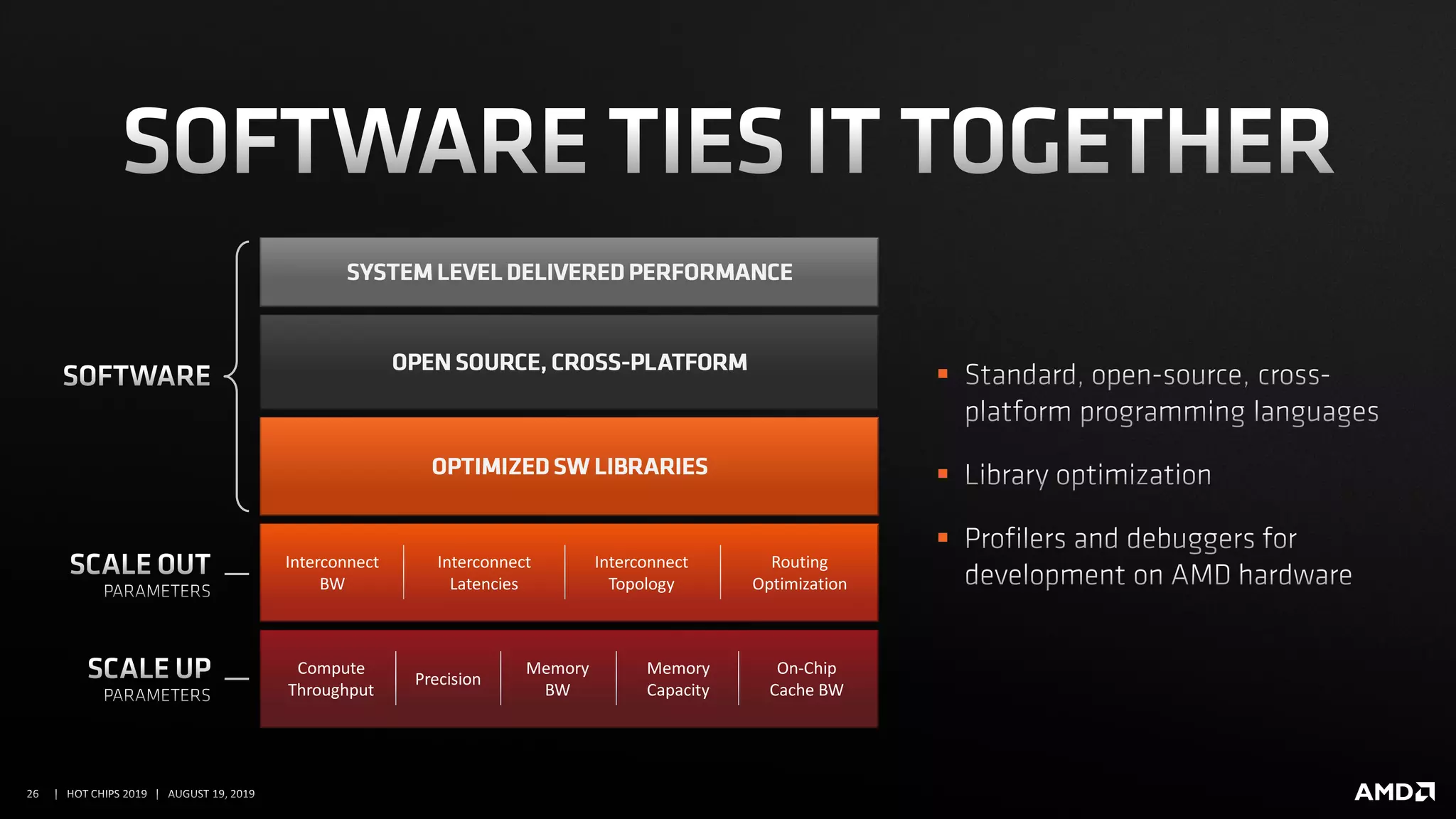
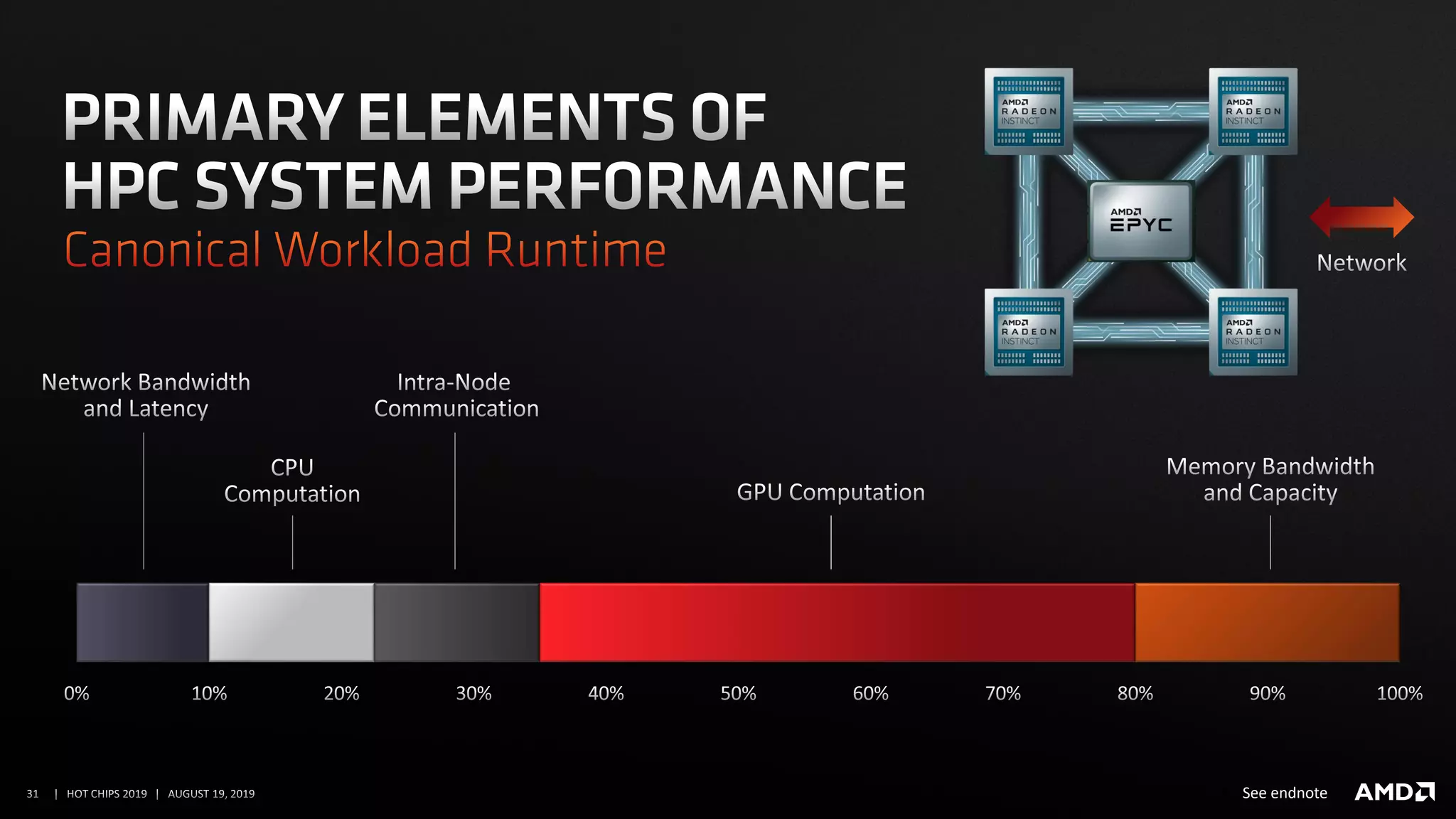
Interconnect
BW
Interconnect
Latencies
Interconnect
Topology
Routing
Optimization
Precision
Memory
BW
Memory
Capacity
On-Chip
Cache BW
Compute
Throughput
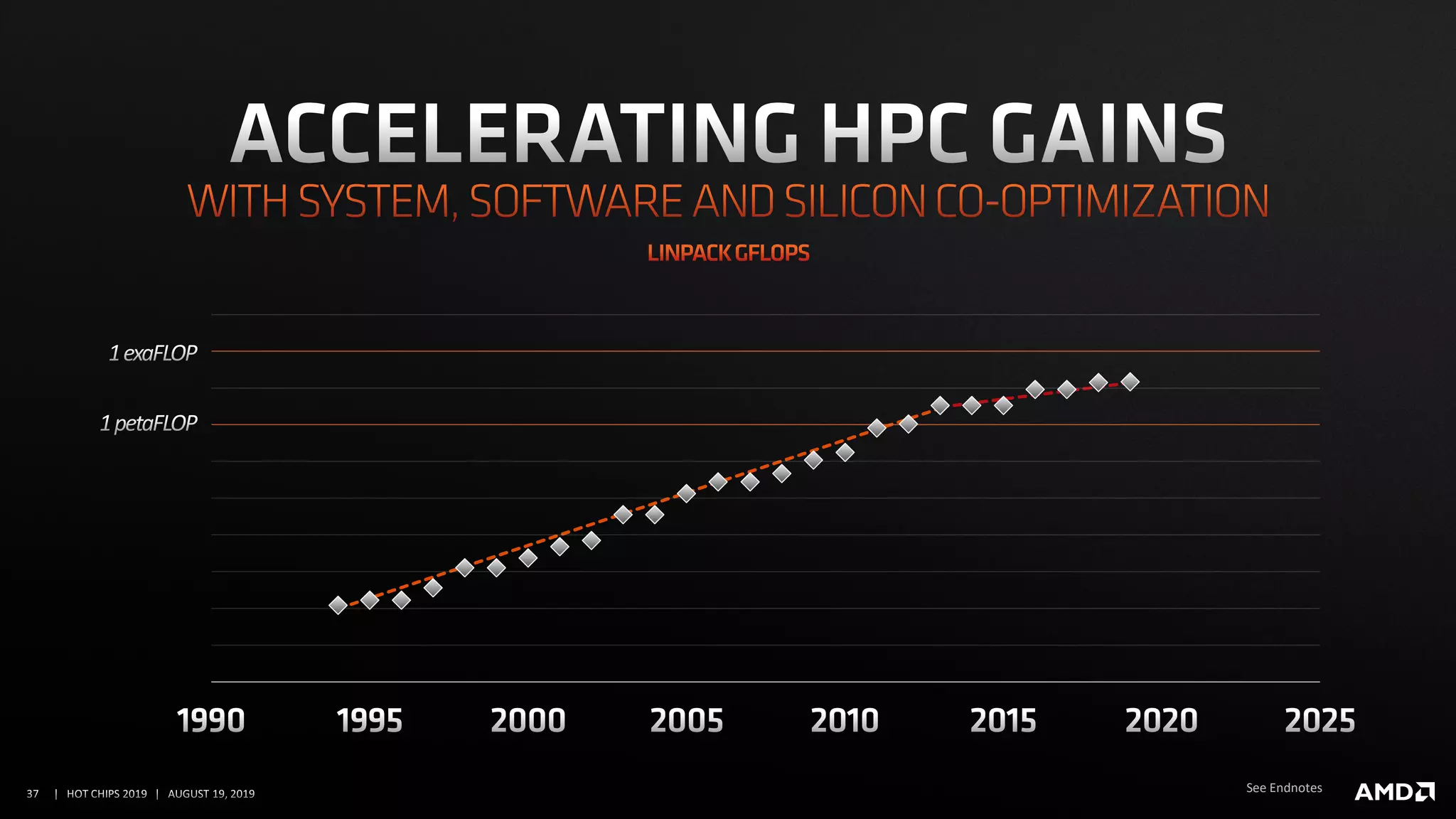
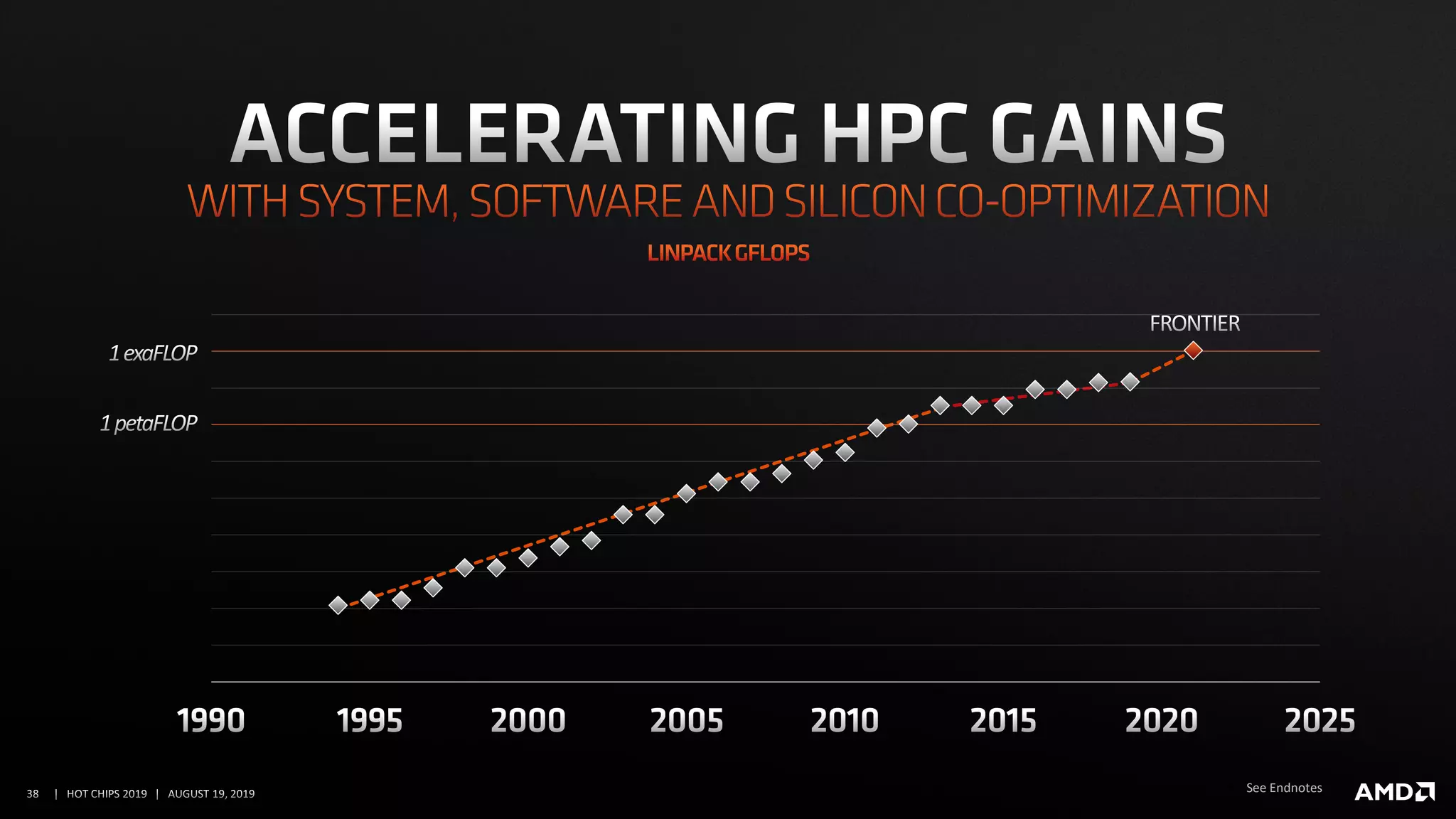
 See Endnotes
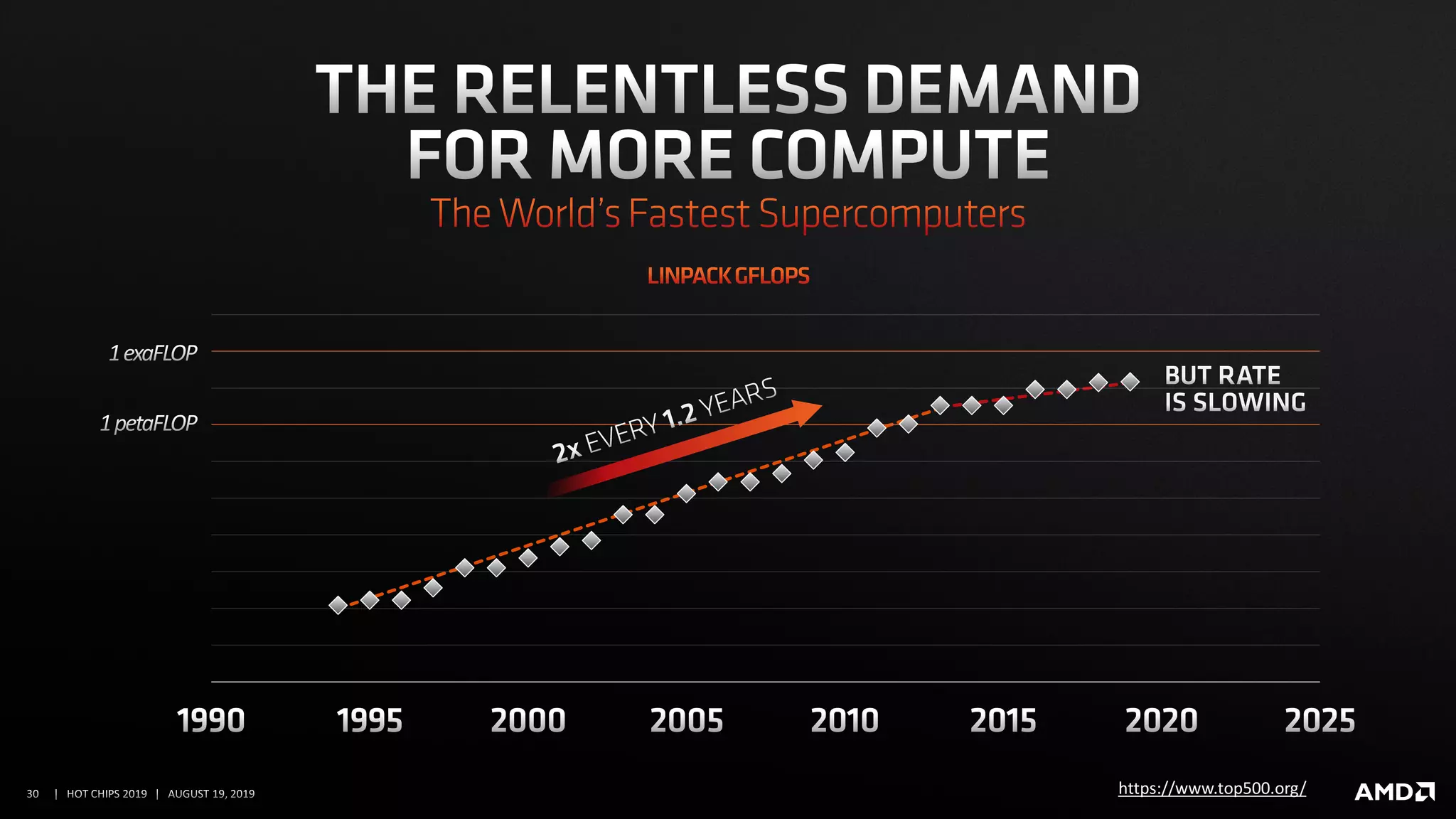
https://www.top500.org/
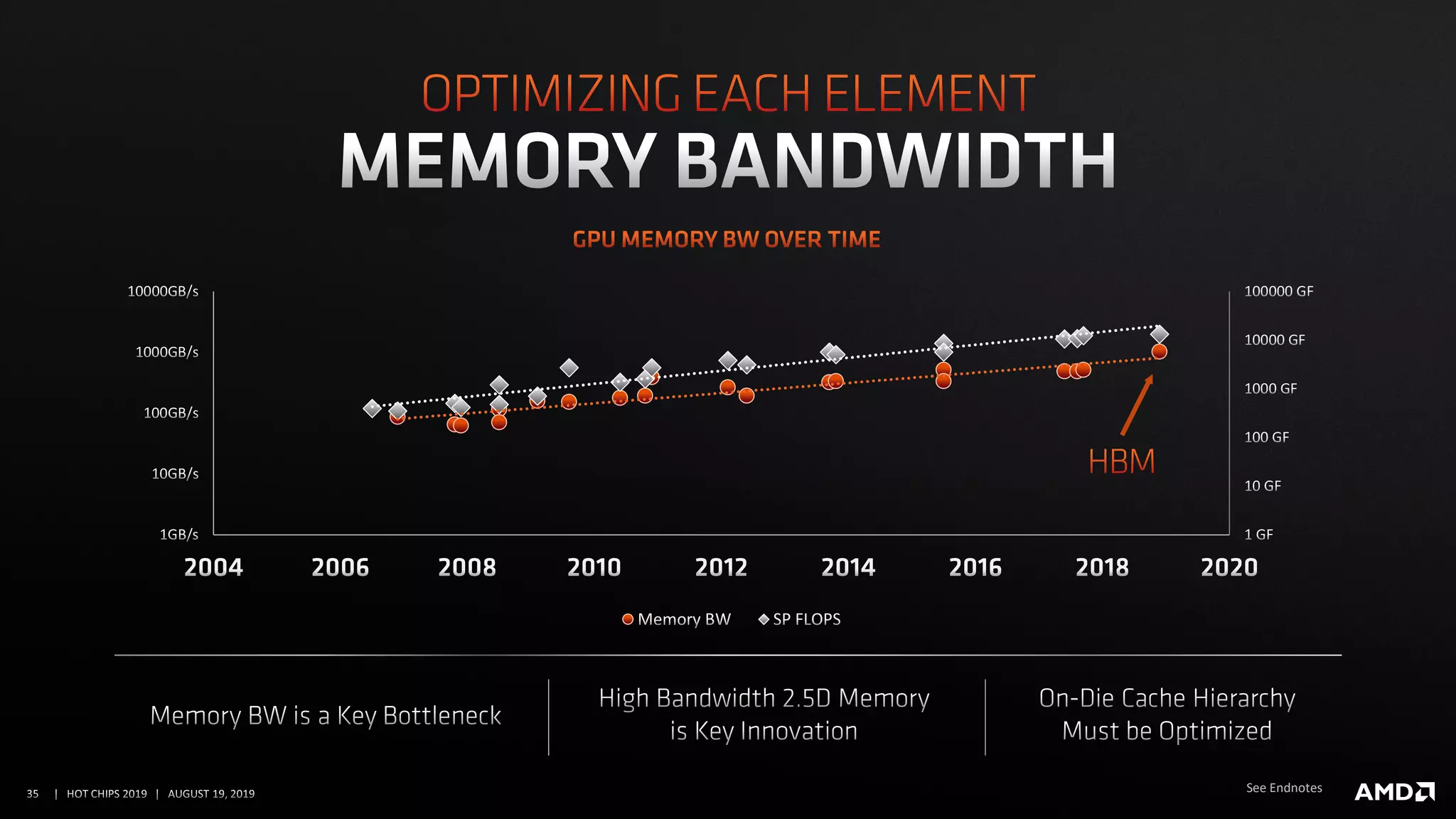
 See endnote
 See endnote
▪
▪
▪
 See Endnotes
 See Endnotes
▪
▪
 See Endnotes
 See Endnotes
 See Endnotes
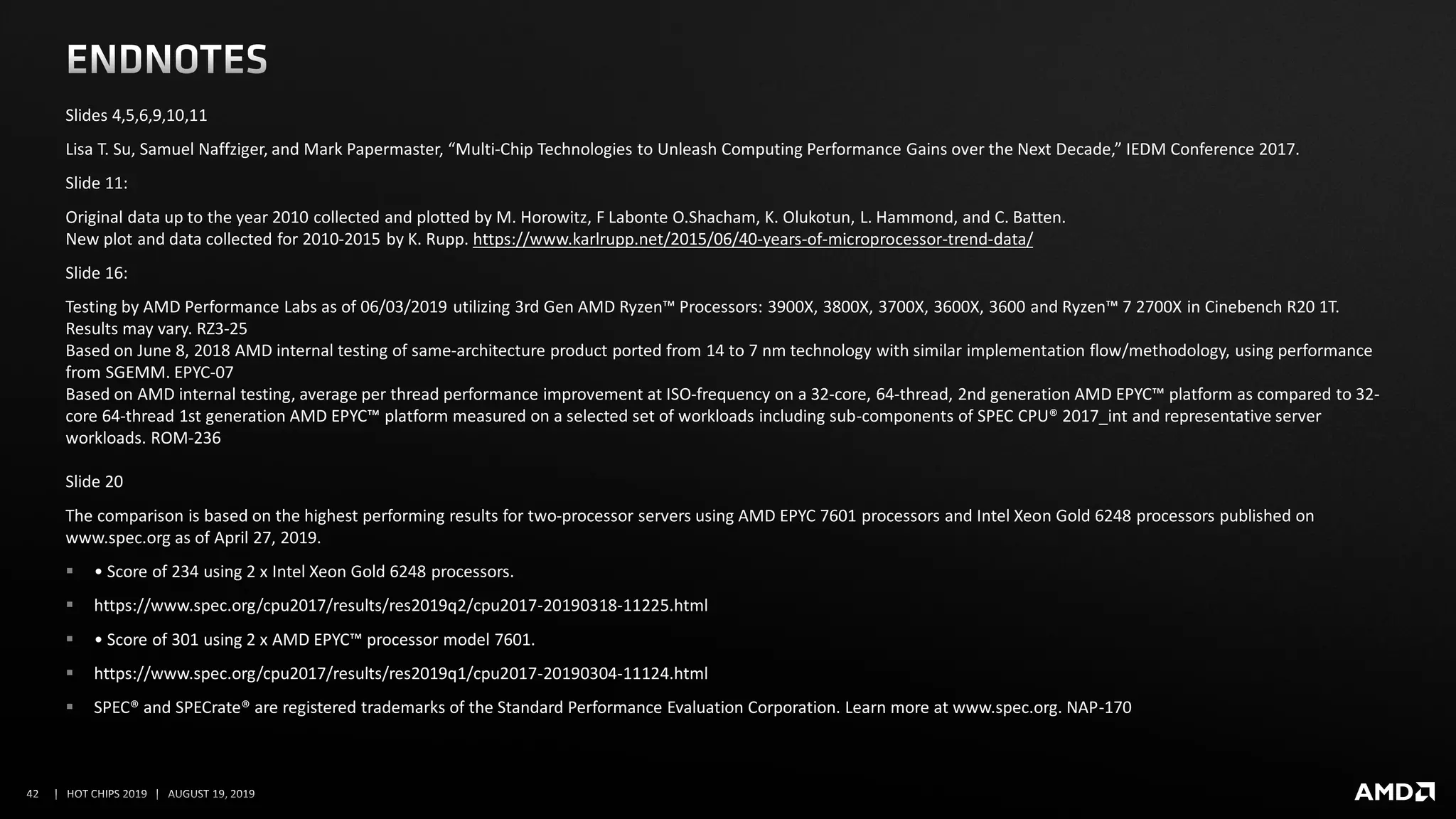
Slides 4,5,6,9,10,11
Lisa T. Su, Samuel Naffziger, and Mark Papermaster, “Multi-Chip Technologies to Unleash Computing Performance Gains over the Next Decade,” IEDM Conference 2017.
Slide 11:
Original data up to the year 2010 collected and plotted by M. Horowitz, F Labonte O.Shacham, K. Olukotun, L. Hammond, and C. Batten.
New plot and data collected for 2010-2015 by K. Rupp. https://www.karlrupp.net/2015/06/40-years-of-microprocessor-trend-data/
Slide 16:
Testing by AMD Performance Labs as of 06/03/2019 utilizing 3rd Gen AMD Ryzen™ Processors: 3900X, 3800X, 3700X, 3600X, 3600 and Ryzen™ 7 2700X in Cinebench R20 1T.
Results may vary. RZ3-25
Based on June 8, 2018 AMD internal testing of same-architecture product ported from 14 to 7 nm technology with similar implementation flow/methodology, using performance
from SGEMM. EPYC-07
Based on AMD internal testing, average per thread performance improvement at ISO-frequency on a 32-core, 64-thread, 2nd generation AMD EPYC™ platform as compared to 32-
core 64-thread 1st generation AMD EPYC™ platform measured on a selected set of workloads including sub-components of SPEC CPU® 2017_int and representative server
workloads. ROM-236
Slide 20
The comparison is based on the highest performing results for two-processor servers using AMD EPYC 7601 processors and Intel Xeon Gold 6248 processors published on
www.spec.org as of April 27, 2019.
▪ • Score of 234 using 2 x Intel Xeon Gold 6248 processors.
▪ https://www.spec.org/cpu2017/results/res2019q2/cpu2017-20190318-11225.html
▪ • Score of 301 using 2 x AMD EPYC™ processor model 7601.
▪ https://www.spec.org/cpu2017/results/res2019q1/cpu2017-20190304-11124.html
▪ SPEC® and SPECrate® are registered trademarks of the Standard Performance Evaluation Corporation. Learn more at www.spec.org. NAP-170
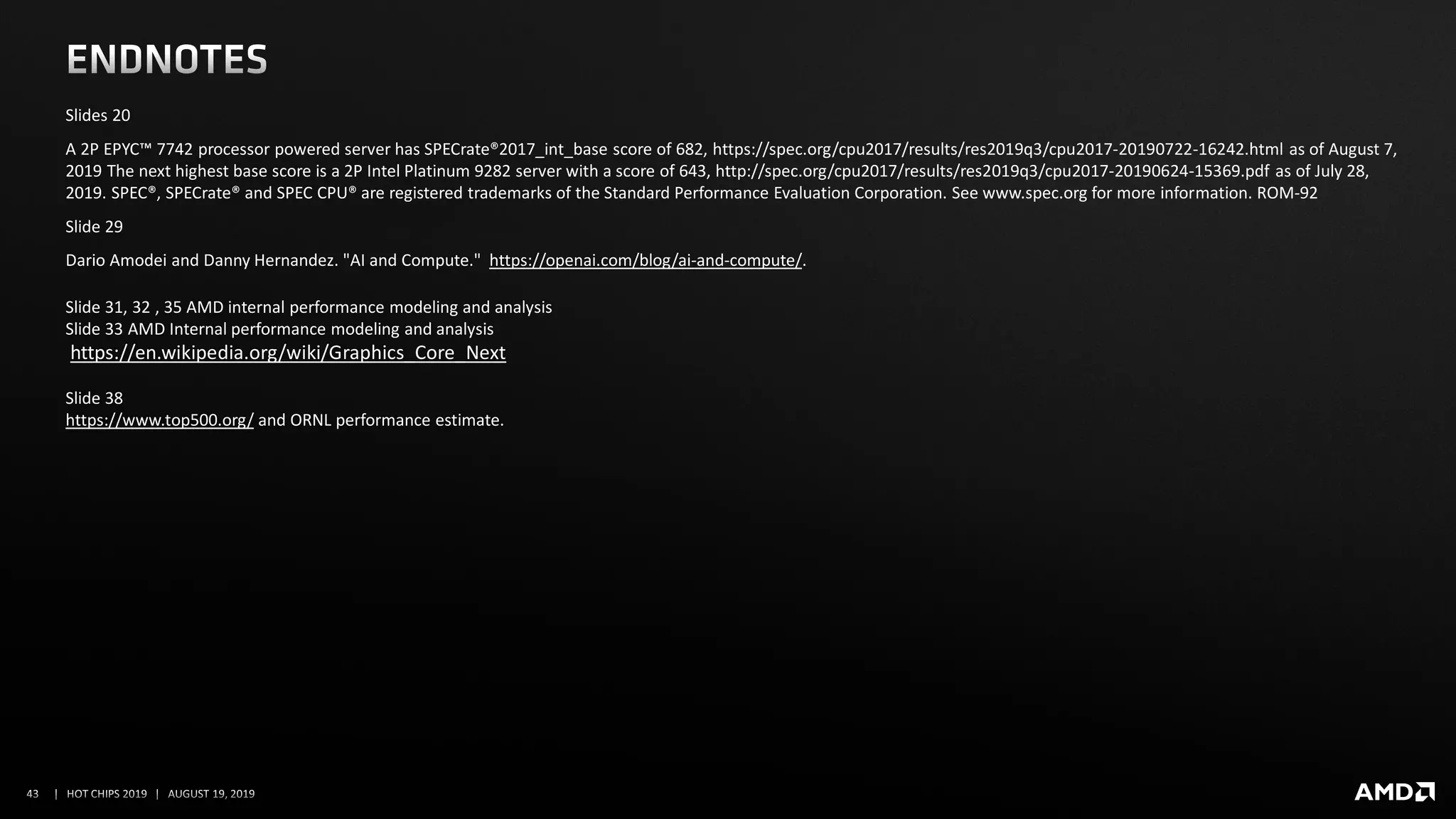
Slides 20
A 2P EPYC™ 7742 processor powered server has SPECrate®2017_int_base score of 682, https://spec.org/cpu2017/results/res2019q3/cpu2017-20190722-16242.html as of August 7,
2019 The next highest base score is a 2P Intel Platinum 9282 server with a score of 643, http://spec.org/cpu2017/results/res2019q3/cpu2017-20190624-15369.pdf as of July 28,
2019. SPEC®, SPECrate® and SPEC CPU® are registered trademarks of the Standard Performance Evaluation Corporation. See www.spec.org for more information. ROM-92
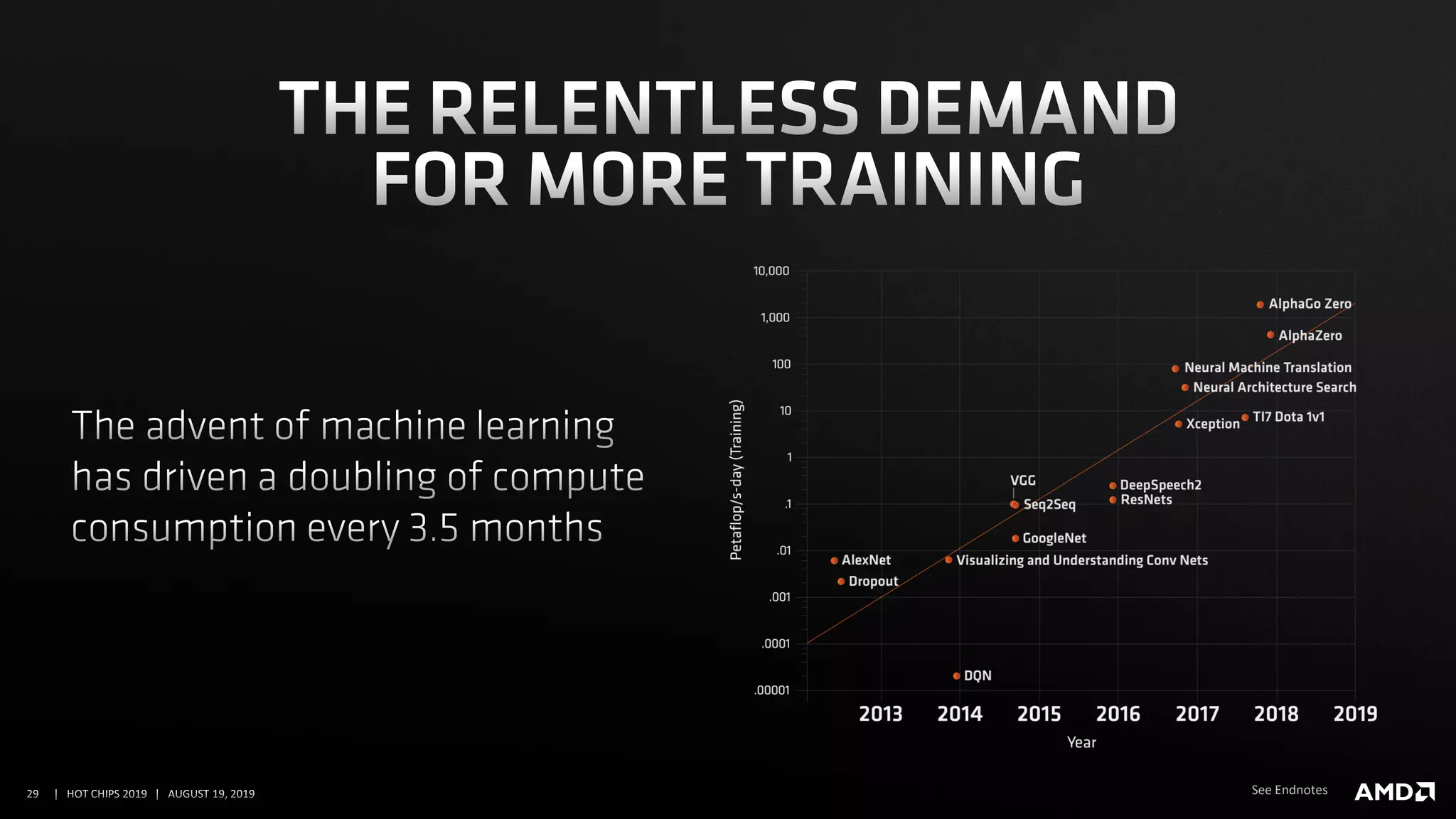
Slide 29
Dario Amodei and Danny Hernandez. "AI and Compute." https://openai.com/blog/ai-and-compute/.
Slide 31, 32 , 35 AMD internal performance modeling and analysis
Slide 33 AMD Internal performance modeling and analysis
https://en.wikipedia.org/wiki/Graphics_Core_Next
Slide 38
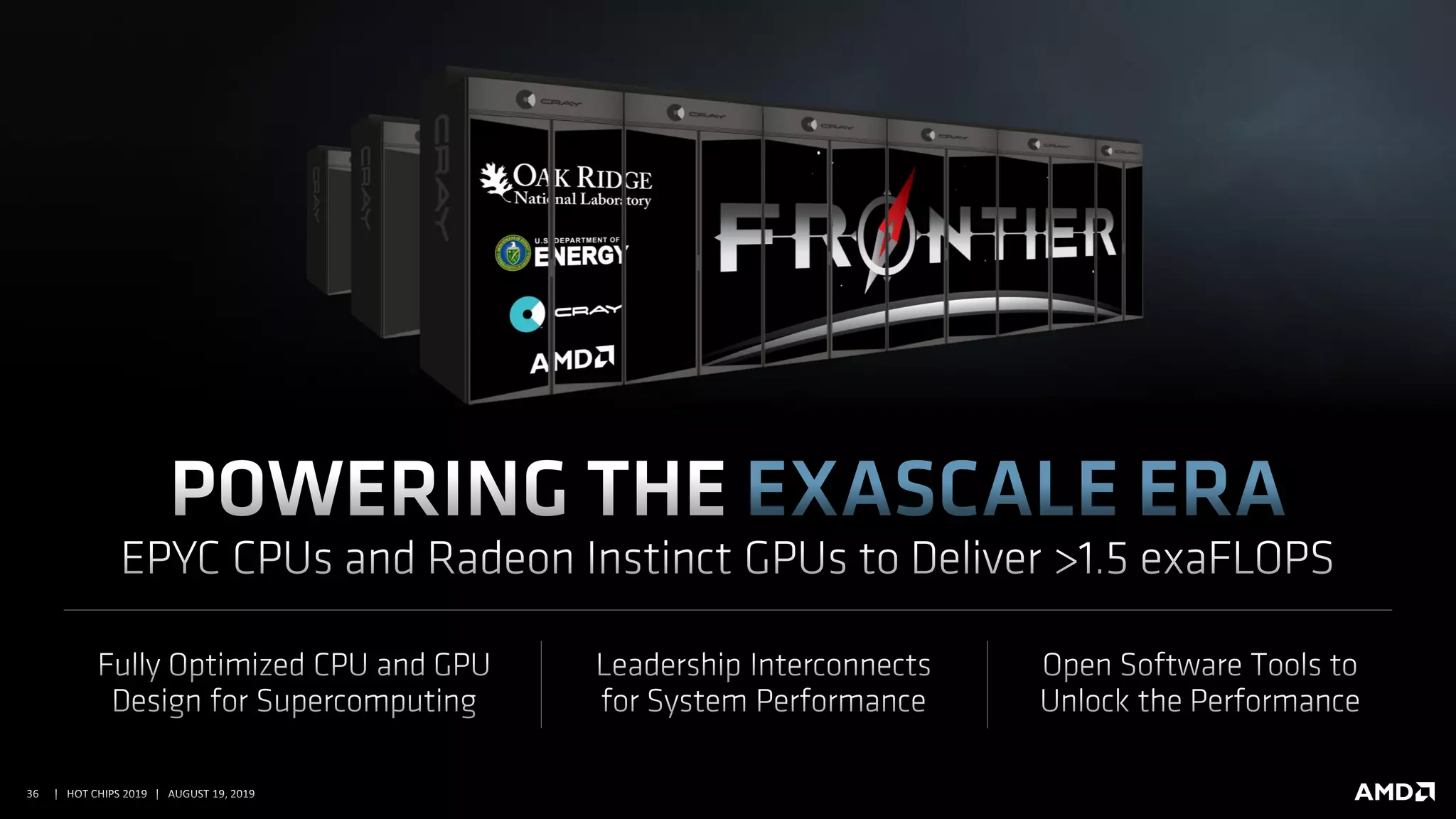
https://www.top500.org/ and ORNL performance estimate.

Delivering the Future of High-Performance Computing

  • 6.
  • 8.
  • 11.
  • 15.
  • 16.
    Components of SPECCPU®2017_int_ 2017 and 2006 at ISO Frequency  See endnotes EPYC-07, ROM-236
  • 20.
     See endnotesNAP-170, ROM-92
  • 26.
  • 29.
  • 30.
  • 31.
  • 32.
  • 33.
  • 34.
  • 35.
  • 37.
  • 38.
  • 42.
    Slides 4,5,6,9,10,11 Lisa T.Su, Samuel Naffziger, and Mark Papermaster, “Multi-Chip Technologies to Unleash Computing Performance Gains over the Next Decade,” IEDM Conference 2017. Slide 11: Original data up to the year 2010 collected and plotted by M. Horowitz, F Labonte O.Shacham, K. Olukotun, L. Hammond, and C. Batten. New plot and data collected for 2010-2015 by K. Rupp. https://www.karlrupp.net/2015/06/40-years-of-microprocessor-trend-data/ Slide 16: Testing by AMD Performance Labs as of 06/03/2019 utilizing 3rd Gen AMD Ryzen™ Processors: 3900X, 3800X, 3700X, 3600X, 3600 and Ryzen™ 7 2700X in Cinebench R20 1T. Results may vary. RZ3-25 Based on June 8, 2018 AMD internal testing of same-architecture product ported from 14 to 7 nm technology with similar implementation flow/methodology, using performance from SGEMM. EPYC-07 Based on AMD internal testing, average per thread performance improvement at ISO-frequency on a 32-core, 64-thread, 2nd generation AMD EPYC™ platform as compared to 32- core 64-thread 1st generation AMD EPYC™ platform measured on a selected set of workloads including sub-components of SPEC CPU® 2017_int and representative server workloads. ROM-236 Slide 20 The comparison is based on the highest performing results for two-processor servers using AMD EPYC 7601 processors and Intel Xeon Gold 6248 processors published on www.spec.org as of April 27, 2019. ▪ • Score of 234 using 2 x Intel Xeon Gold 6248 processors. ▪ https://www.spec.org/cpu2017/results/res2019q2/cpu2017-20190318-11225.html ▪ • Score of 301 using 2 x AMD EPYC™ processor model 7601. ▪ https://www.spec.org/cpu2017/results/res2019q1/cpu2017-20190304-11124.html ▪ SPEC® and SPECrate® are registered trademarks of the Standard Performance Evaluation Corporation. Learn more at www.spec.org. NAP-170
  • 43.
    Slides 20 A 2PEPYC™ 7742 processor powered server has SPECrate®2017_int_base score of 682, https://spec.org/cpu2017/results/res2019q3/cpu2017-20190722-16242.html as of August 7, 2019 The next highest base score is a 2P Intel Platinum 9282 server with a score of 643, http://spec.org/cpu2017/results/res2019q3/cpu2017-20190624-15369.pdf as of July 28, 2019. SPEC®, SPECrate® and SPEC CPU® are registered trademarks of the Standard Performance Evaluation Corporation. See www.spec.org for more information. ROM-92 Slide 29 Dario Amodei and Danny Hernandez. "AI and Compute." https://openai.com/blog/ai-and-compute/. Slide 31, 32 , 35 AMD internal performance modeling and analysis Slide 33 AMD Internal performance modeling and analysis https://en.wikipedia.org/wiki/Graphics_Core_Next Slide 38 https://www.top500.org/ and ORNL performance estimate.