

Oral Defense Presentations
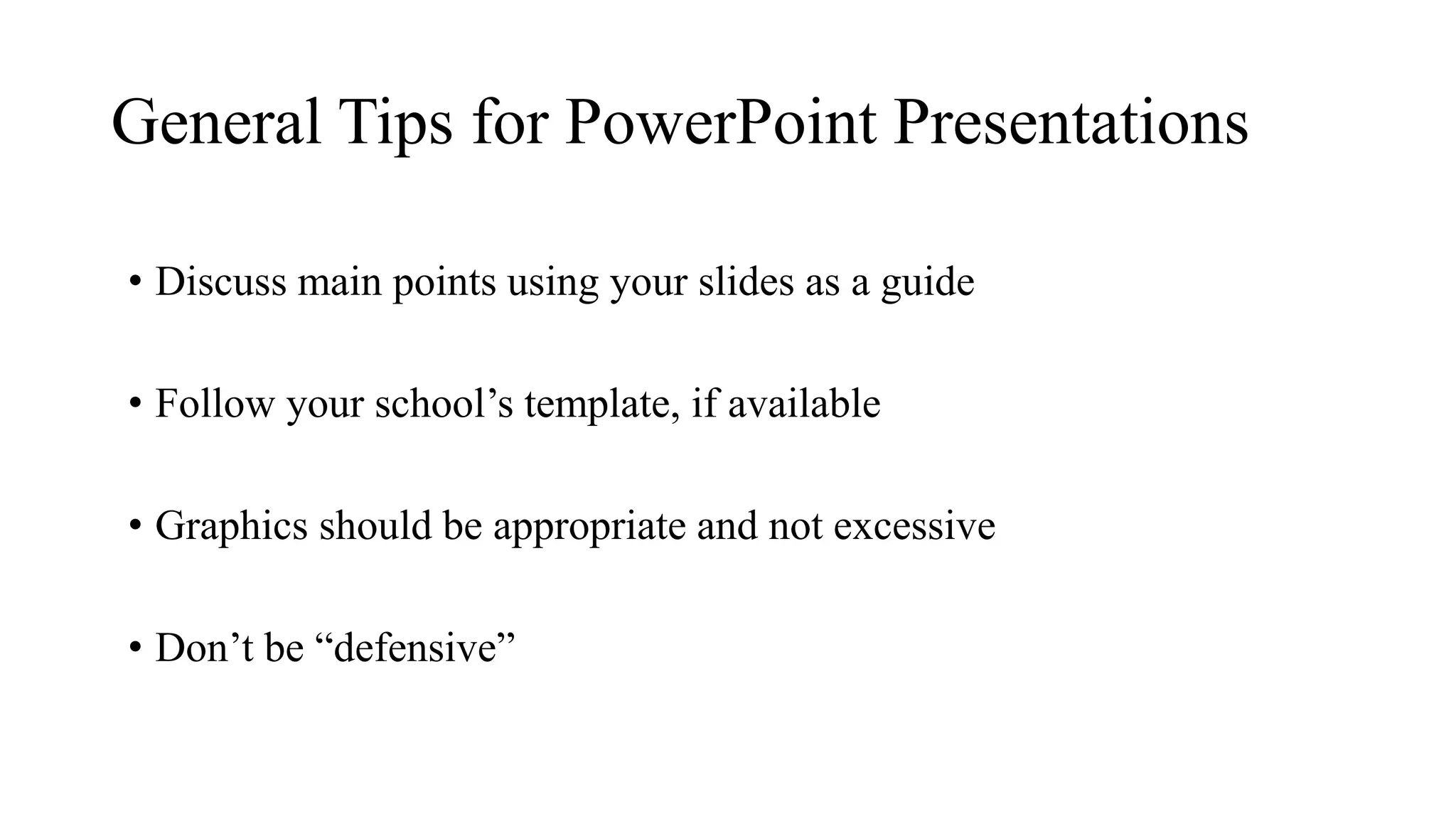
General Tips for PowerPoint Presentations
• Oral Defense Presentations are typically around 20 minutes
• Followed by 20-30 minutes of questions from committee members
• Do not simply read your slides
• Use bullets with phrases and key terms
General Tips for PowerPoint Presentations
• Discuss main points using your slides as a guide
• Follow your school’s template, if available
• Graphics should be appropriate and not excessive
• Don’t be “defensive”
Title of Paper
(Identify if Proposal or Final
Defense)
Name
School
Date of defense
For Proposal Defense
• The following material should appear on Proposal Defense slides
Thank You!
• Thank all committee members and reviewers by name
• At the beginning or end of the presentation
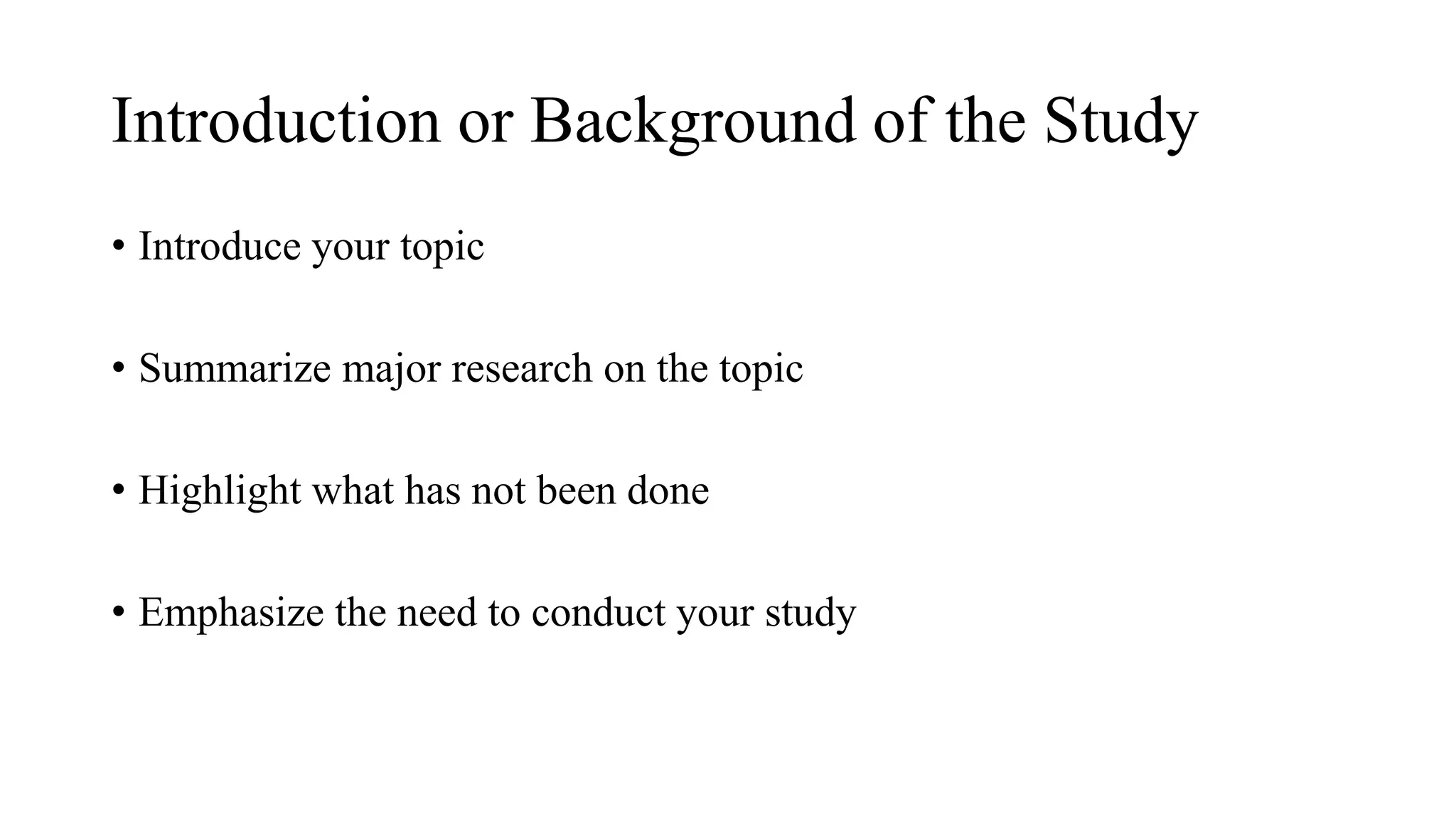
Introduction or Background of the Study
• Introduce your topic
• Summarize major research on the topic
• Highlight what has not been done
• Emphasize the need to conduct your study
Problem Statement
• Directly state the Research Problem your study is designed to address
Purpose Statement
• Directly state the Purpose of your study
Research Question(s)
• Research Question 1
• Research Question 2
• Etc.
Hypotheses (for quantitative studies only)
• H1o
• H1a
Theoretical Framework
• Name of theory
• Theory developed by
• Theory used for
• How does the theory interface with your study
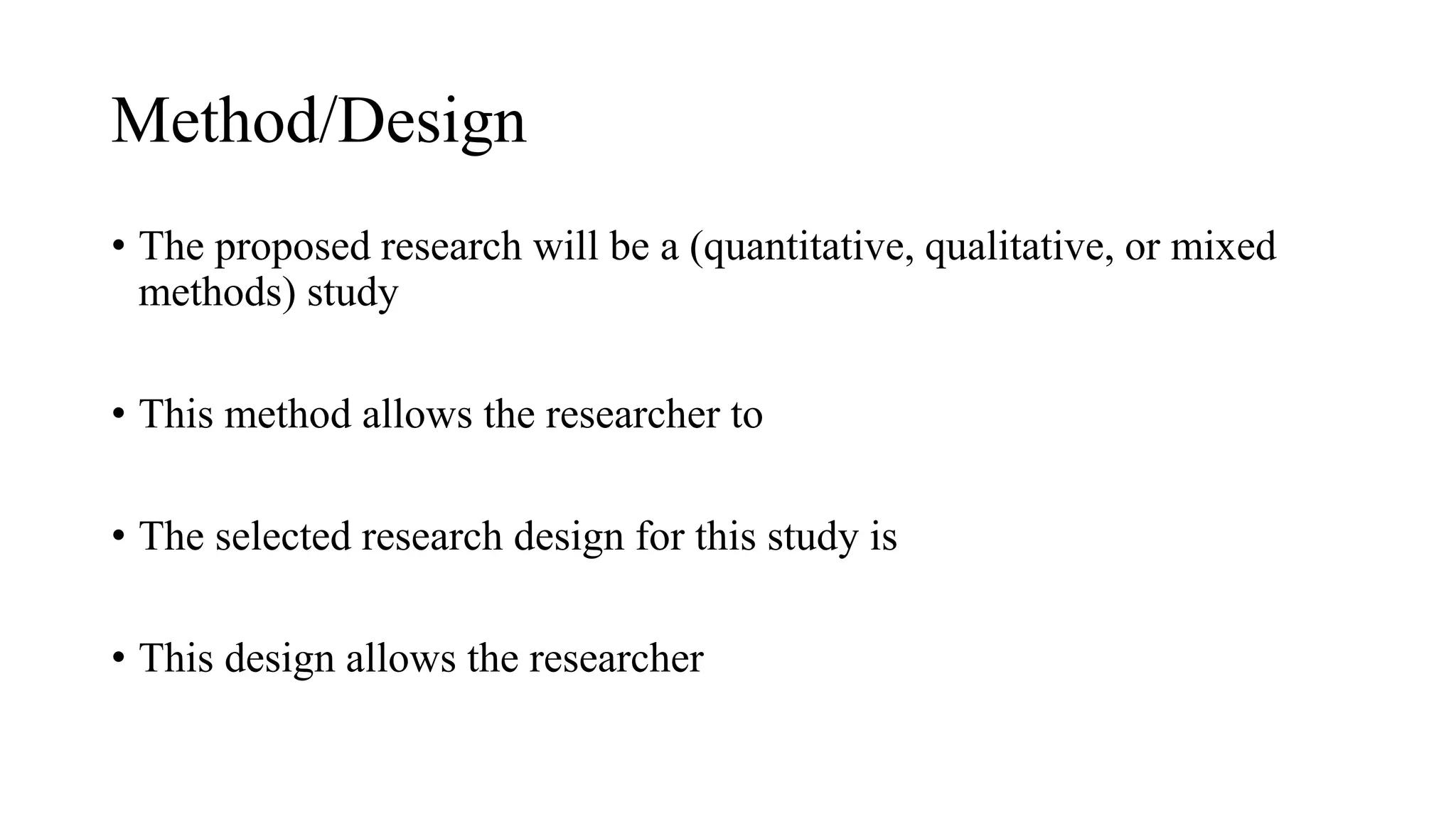
Method/Design
• The proposed research will be a (quantitative, qualitative, or mixed
methods) study
• This method allows the researcher to
• The selected research design for this study is
• This design allows the researcher
Participants and Sample Size
• The population from which the sample will be drawn
• The sample size will consist of xx participants
• This number is based on ???
Data Source and Collection Technique Plans
(think recipe fashion)
1.
2.
3.
Data Analysis
• How do you plan to analyze data
• Describe in recipe card type fashion
• See IRB form
Summary
• Recap major points of the proposal presentation
Closing
• Thank your professors and reviewers here
• if you did not do so at the beginning of the presentation
• This concludes my defense presentation
• I now invite your questions
Final Doctoral Study Defense
• Provide key points from proposal defense (not the entire presentation)
• briefly remind the audience of your topic
• why you conducted the study
• how you conducted it
• Continue with the following slides for the final defense
Results
• List each research question and hypotheses (for quantitative studies)
• Summarize results for each RQ
• include whether hypotheses were supported for quantitative studies
• include themes for qualitative studies
Interpretation of Findings
• How do findings relate to previous research
• support
• not support
• partially support
• or add something new to previous research
• Conclusions
• How do findings relate to the theoretical framework (if applicable)
Limitations of the study
• List weaknesses or shortcomings that may have affected the results
• Generalizability of findings
Recommendations for Practice
• How do data relate to or inform professional practice
• Implications for practice
• Recommendations for practice
Recommendations for Further Research
• List recommendations for further research
• Recommendations based on findings
• Recommendations based on limitations
Thank You and Questions
• Thank your committee members and reviewers by name
• This concludes my presentation; I now invite your questions
References
• References used for presentation
• Or: “Available upon request”

Defense Preparation

  • 1.
  • 2.
    General Tips forPowerPoint Presentations • Oral Defense Presentations are typically around 20 minutes • Followed by 20-30 minutes of questions from committee members • Do not simply read your slides • Use bullets with phrases and key terms
  • 3.
    General Tips forPowerPoint Presentations • Discuss main points using your slides as a guide • Follow your school’s template, if available • Graphics should be appropriate and not excessive • Don’t be “defensive”
  • 4.
    Title of Paper (Identifyif Proposal or Final Defense) Name School Date of defense
  • 5.
    For Proposal Defense •The following material should appear on Proposal Defense slides
  • 6.
    Thank You! • Thankall committee members and reviewers by name • At the beginning or end of the presentation
  • 7.
    Introduction or Backgroundof the Study • Introduce your topic • Summarize major research on the topic • Highlight what has not been done • Emphasize the need to conduct your study
  • 8.
    Problem Statement • Directlystate the Research Problem your study is designed to address
  • 9.
    Purpose Statement • Directlystate the Purpose of your study
  • 10.
    Research Question(s) • ResearchQuestion 1 • Research Question 2 • Etc.
  • 11.
    Hypotheses (for quantitativestudies only) • H1o • H1a
  • 12.
    Theoretical Framework • Nameof theory • Theory developed by • Theory used for • How does the theory interface with your study
  • 13.
    Method/Design • The proposedresearch will be a (quantitative, qualitative, or mixed methods) study • This method allows the researcher to • The selected research design for this study is • This design allows the researcher
  • 14.
    Participants and SampleSize • The population from which the sample will be drawn • The sample size will consist of xx participants • This number is based on ???
  • 15.
    Data Source andCollection Technique Plans (think recipe fashion) 1. 2. 3.
  • 16.
    Data Analysis • Howdo you plan to analyze data • Describe in recipe card type fashion • See IRB form
  • 17.
    Summary • Recap majorpoints of the proposal presentation
  • 18.
    Closing • Thank yourprofessors and reviewers here • if you did not do so at the beginning of the presentation • This concludes my defense presentation • I now invite your questions
  • 19.
    Final Doctoral StudyDefense • Provide key points from proposal defense (not the entire presentation) • briefly remind the audience of your topic • why you conducted the study • how you conducted it • Continue with the following slides for the final defense
  • 20.
    Results • List eachresearch question and hypotheses (for quantitative studies) • Summarize results for each RQ • include whether hypotheses were supported for quantitative studies • include themes for qualitative studies
  • 21.
    Interpretation of Findings •How do findings relate to previous research • support • not support • partially support • or add something new to previous research • Conclusions • How do findings relate to the theoretical framework (if applicable)
  • 22.
    Limitations of thestudy • List weaknesses or shortcomings that may have affected the results • Generalizability of findings
  • 23.
    Recommendations for Practice •How do data relate to or inform professional practice • Implications for practice • Recommendations for practice
  • 24.
    Recommendations for FurtherResearch • List recommendations for further research • Recommendations based on findings • Recommendations based on limitations
  • 25.
    Thank You andQuestions • Thank your committee members and reviewers by name • This concludes my presentation; I now invite your questions
  • 26.
    References • References usedfor presentation • Or: “Available upon request”