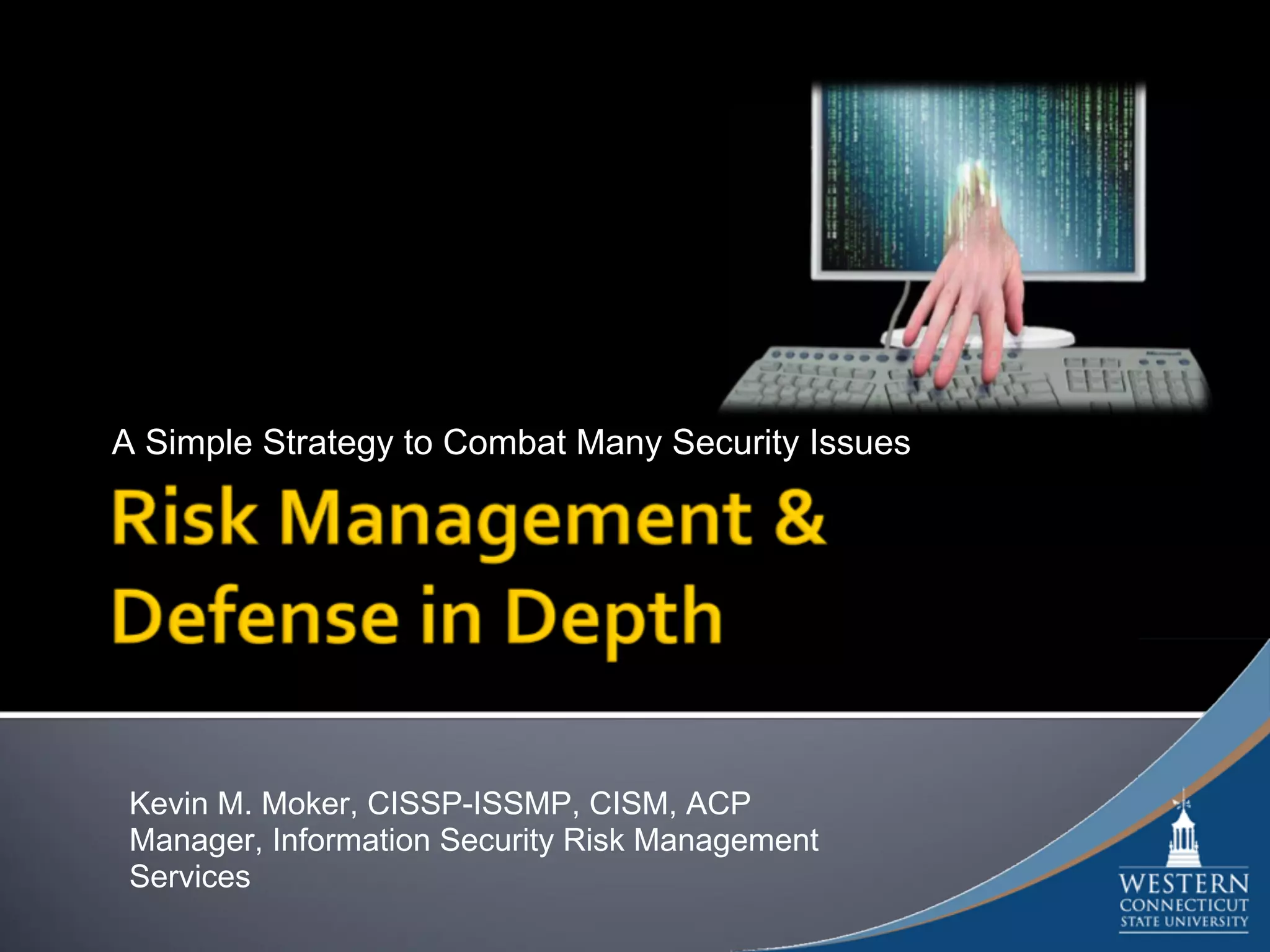
A Simple Strategy to Combat Many Security Issues


 Kevin M. Moker, CISSP-ISSMP, CISM, ACP
 Manager, Information Security Risk Management
 Services
What is Risk Management
What is Defense In Depth
Questions & Answer Session
What is Risk?
  Risk is the potential loss from a threat-source
  attacking a vulnerability.
     Example:
        Joe Cracker (threat-source) knows that an online
        banking company has not patched (vulnerability) their
        backend databases. Joe Cracker exploits (loss) the
        system and steals money.
Target Audience
  Senior Management
  Middle Management
  Technology Management
Risk Integration into the SDLC
Risk Assessment
  Identifying risk
Risk Mitigation
  Figuring out how to control the risk
Controls Evaluation
  Control recommendations – what should be
  used to control the risk
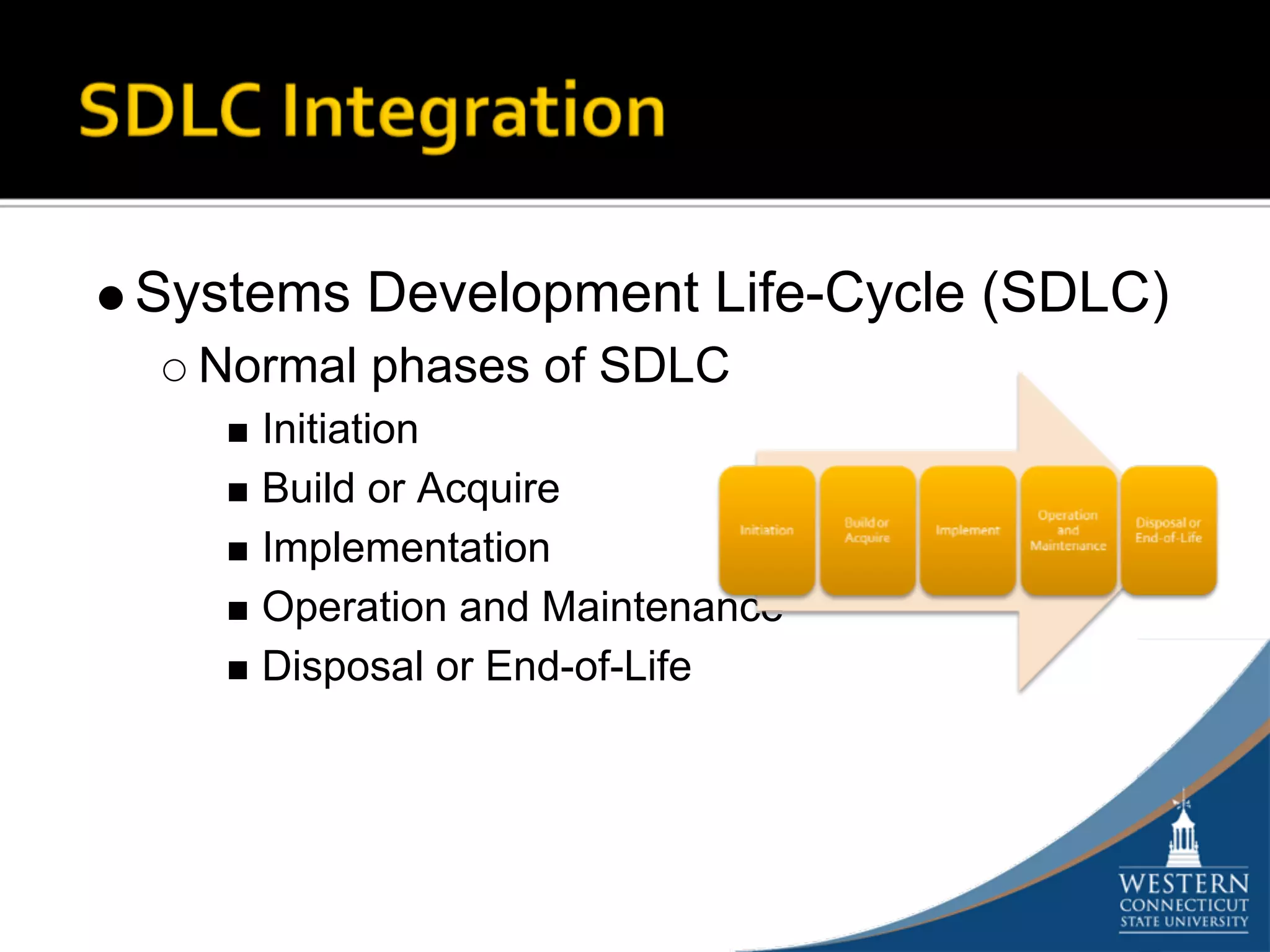
Systems Development Life-Cycle (SDLC)
  Normal phases of SDLC
    Initiation
    Build or Acquire
    Implementation
    Operation and Maintenance
    Disposal or End-of-Life
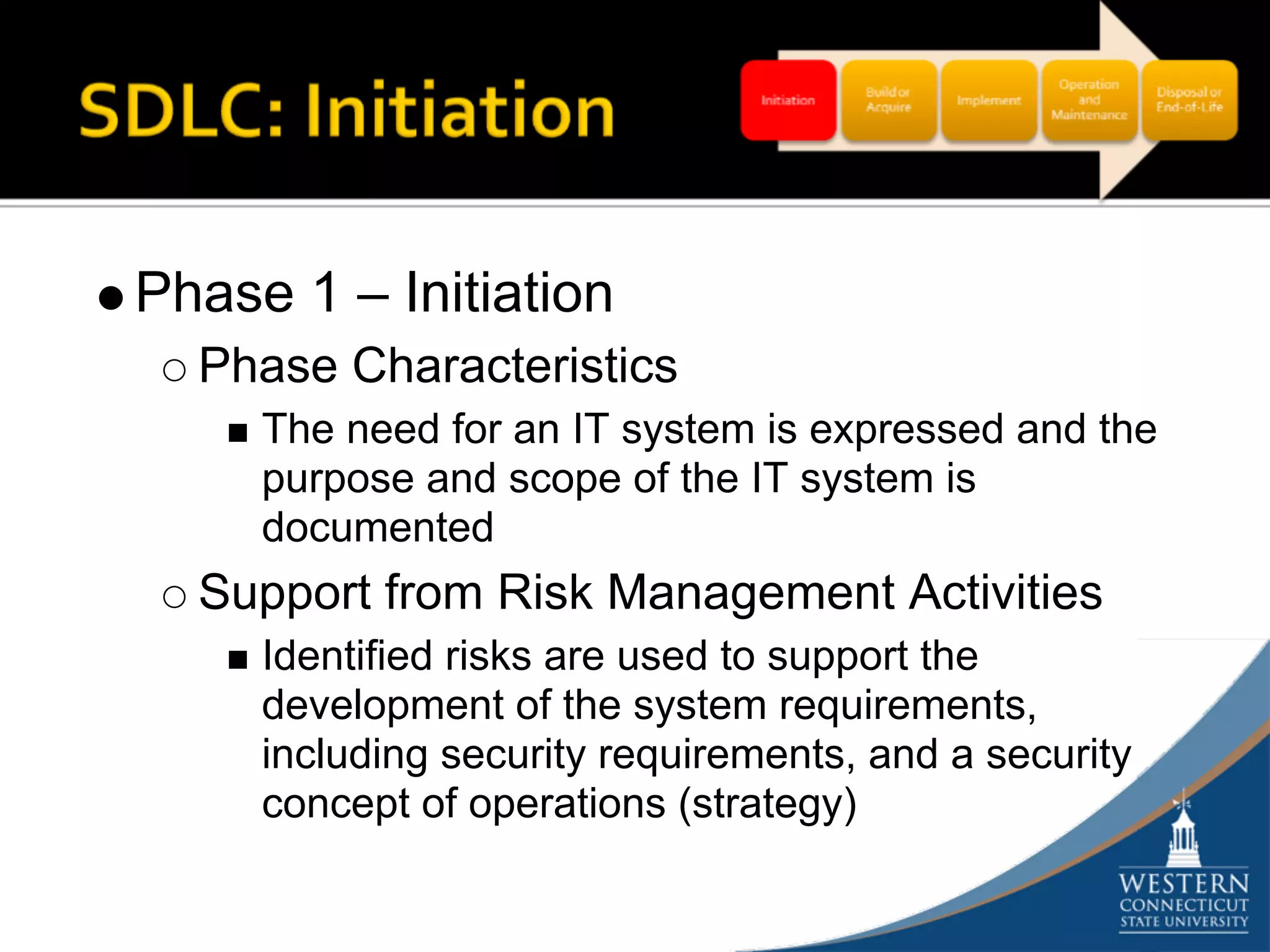
Phase 1 – Initiation
  Phase Characteristics
     The need for an IT system is expressed and the
     purpose and scope of the IT system is
     documented
  Support from Risk Management Activities
     Identified risks are used to support the
     development of the system requirements,
     including security requirements, and a security
     concept of operations (strategy)
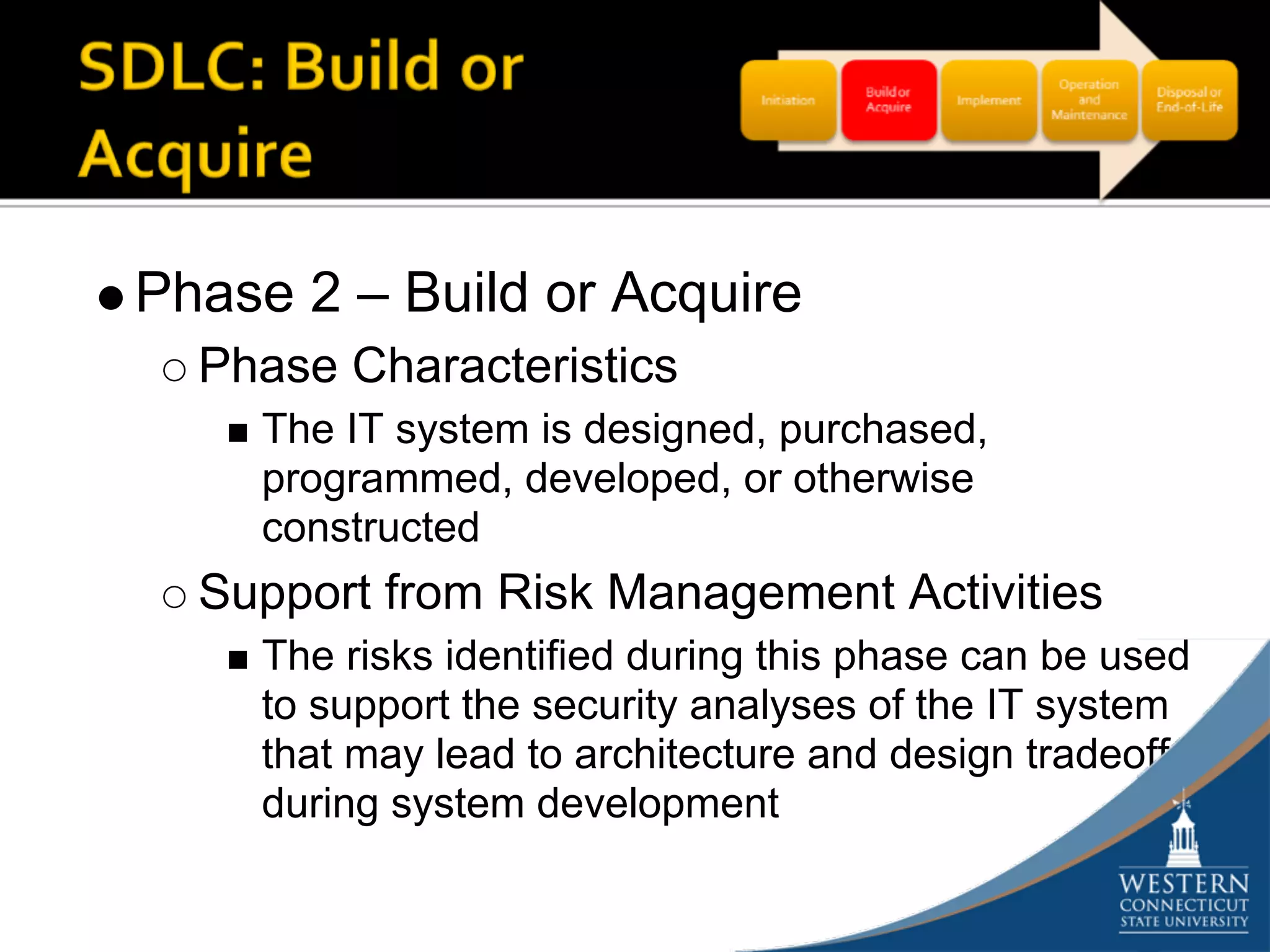
Phase 2 – Build or Acquire
  Phase Characteristics
    The IT system is designed, purchased,
    programmed, developed, or otherwise
    constructed
  Support from Risk Management Activities
    The risks identified during this phase can be used
    to support the security analyses of the IT system
    that may lead to architecture and design tradeoffs
    during system development
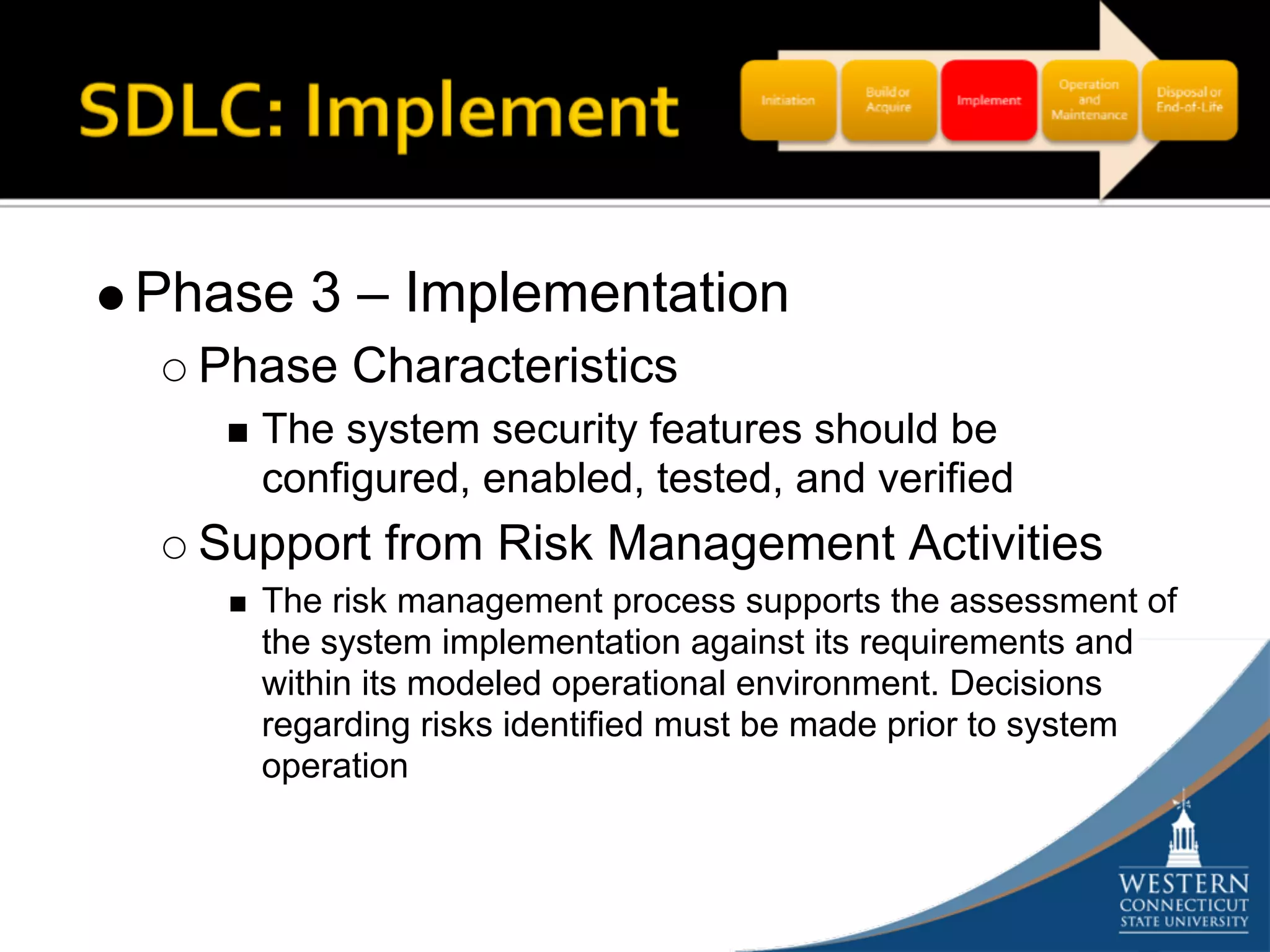
Phase 3 – Implementation
  Phase Characteristics
    The system security features should be
    configured, enabled, tested, and verified
  Support from Risk Management Activities
    The risk management process supports the assessment of
    the system implementation against its requirements and
    within its modeled operational environment. Decisions
    regarding risks identified must be made prior to system
    operation
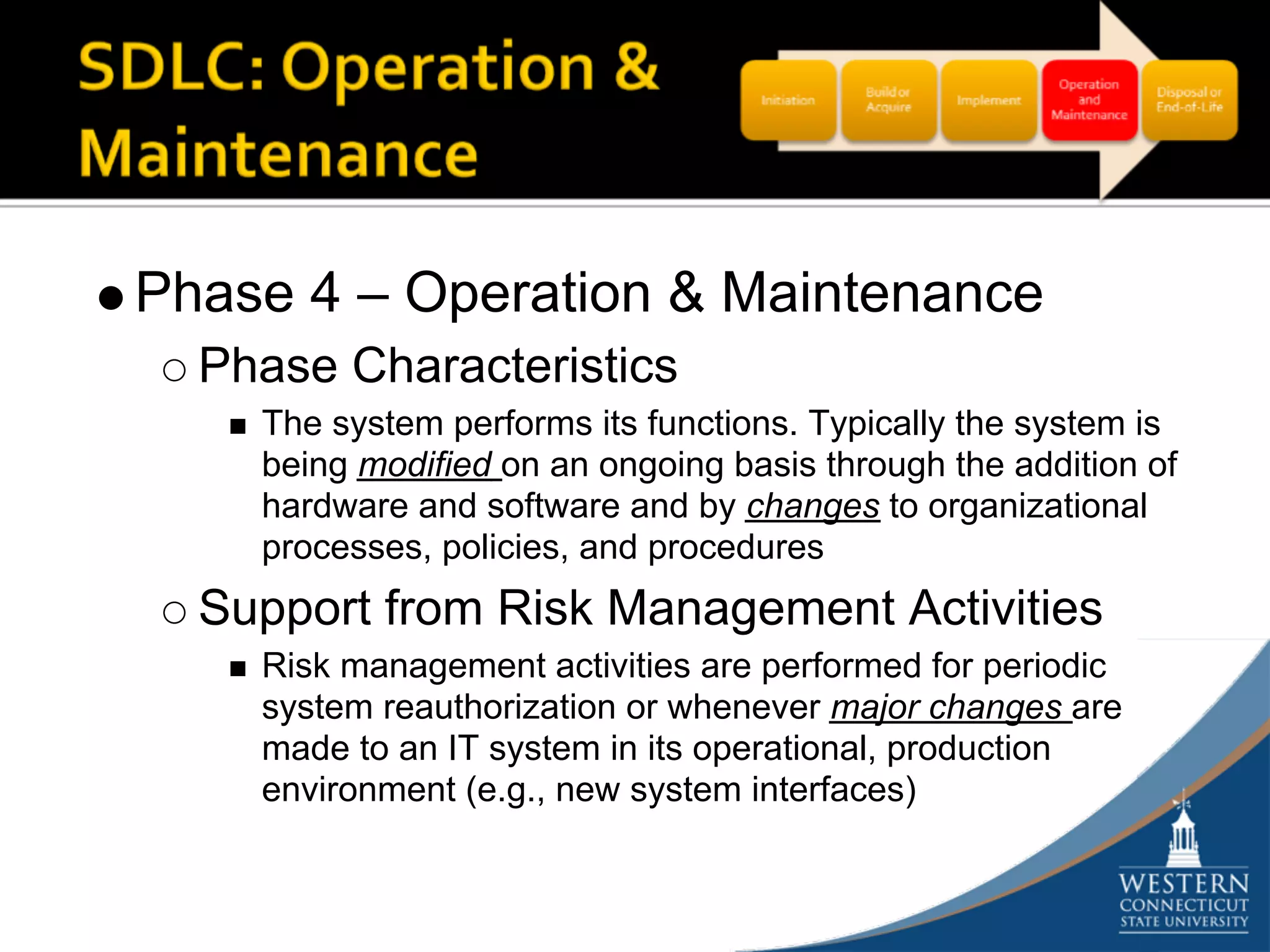
Phase 4 – Operation & Maintenance
  Phase Characteristics
    The system performs its functions. Typically the system is
    being modified on an ongoing basis through the addition of
    hardware and software and by changes to organizational
    processes, policies, and procedures
  Support from Risk Management Activities
    Risk management activities are performed for periodic
    system reauthorization or whenever major changes are
    made to an IT system in its operational, production
    environment (e.g., new system interfaces)
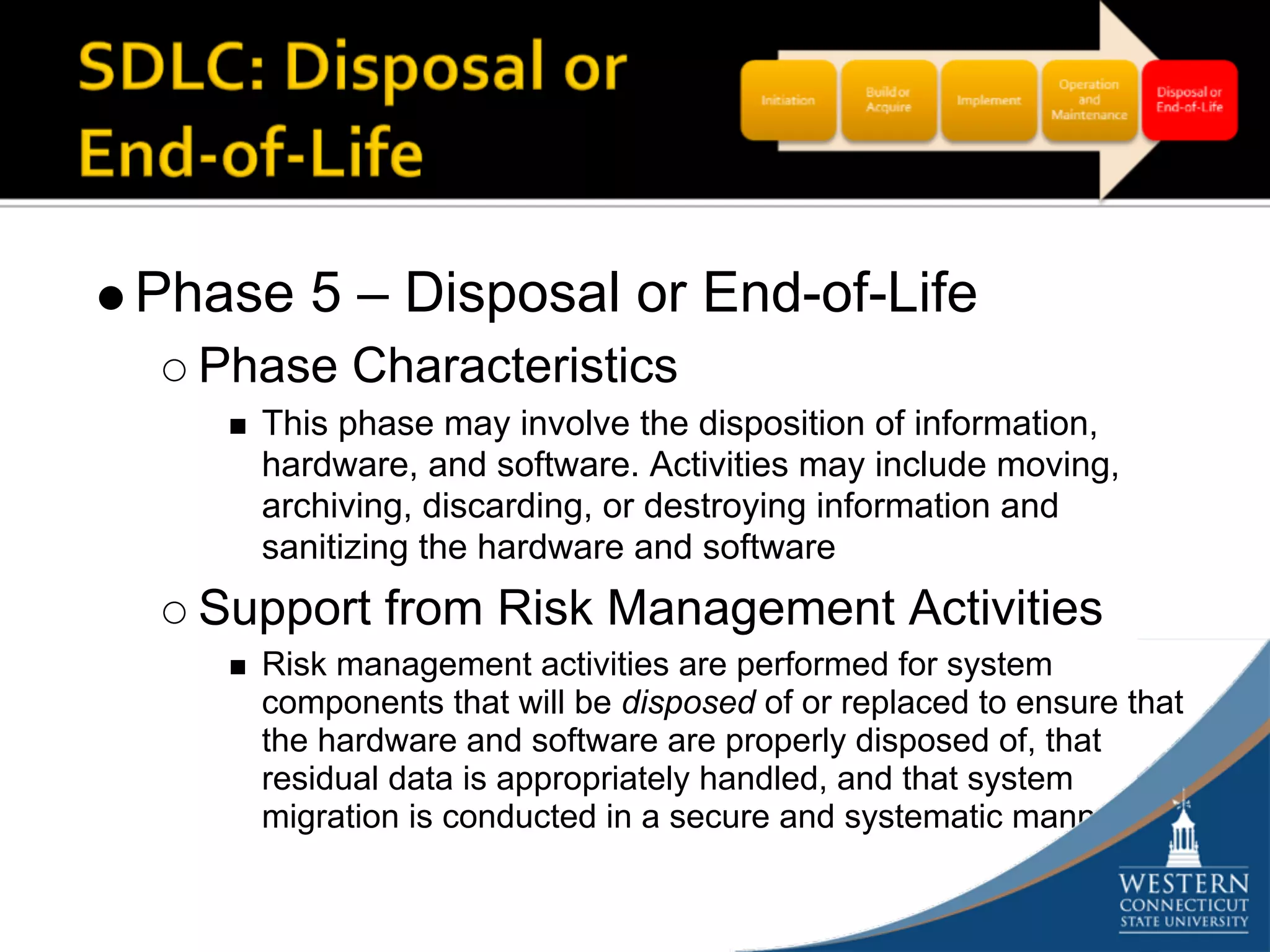
Phase 5 – Disposal or End-of-Life
  Phase Characteristics
    This phase may involve the disposition of information,
    hardware, and software. Activities may include moving,
    archiving, discarding, or destroying information and
    sanitizing the hardware and software
  Support from Risk Management Activities
    Risk management activities are performed for system
    components that will be disposed of or replaced to ensure that
    the hardware and software are properly disposed of, that
    residual data is appropriately handled, and that system
    migration is conducted in a secure and systematic manner
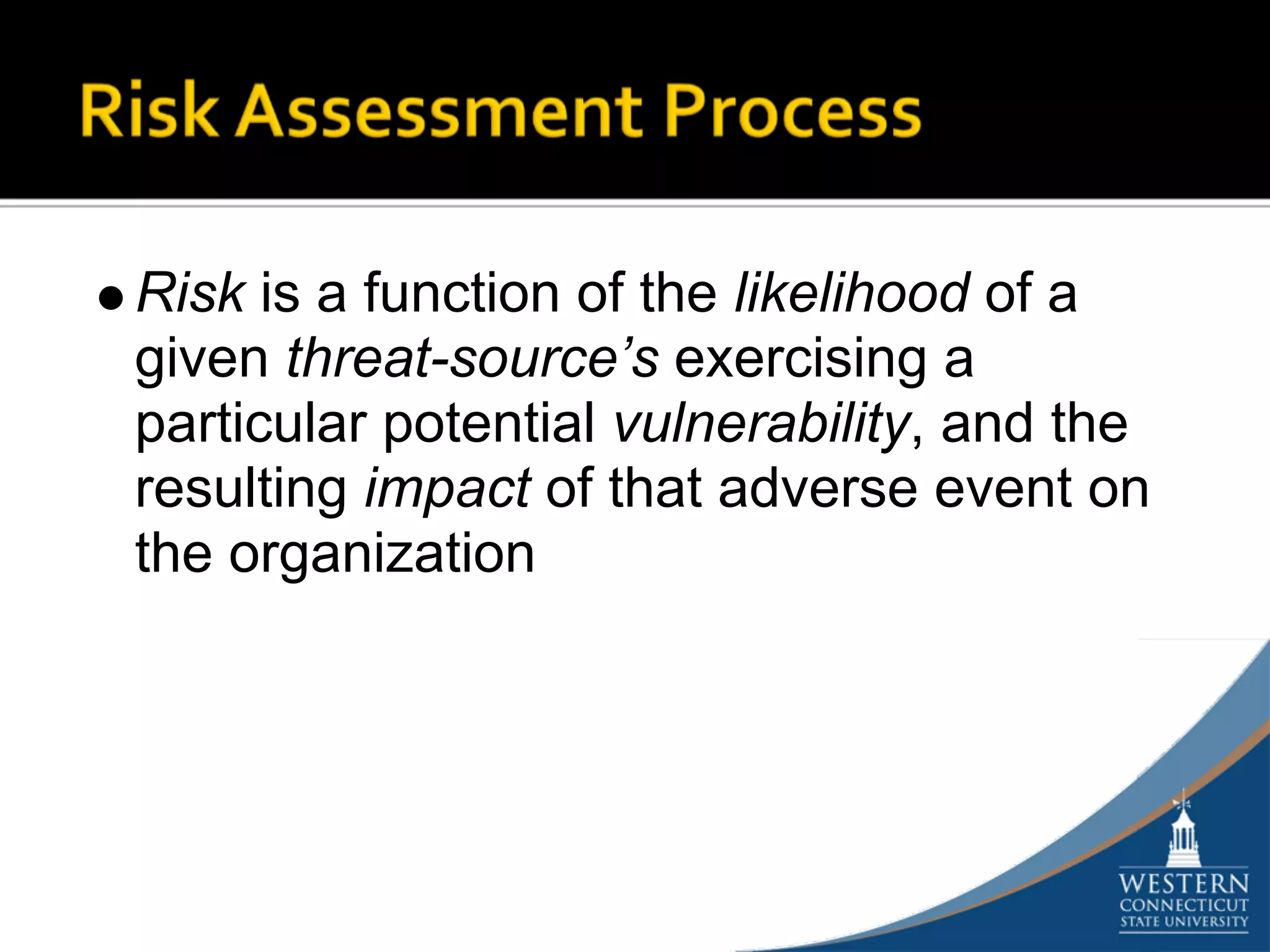
Risk is a function of the likelihood of a
given threat-source’s exercising a
particular potential vulnerability, and the
resulting impact of that adverse event on
the organization
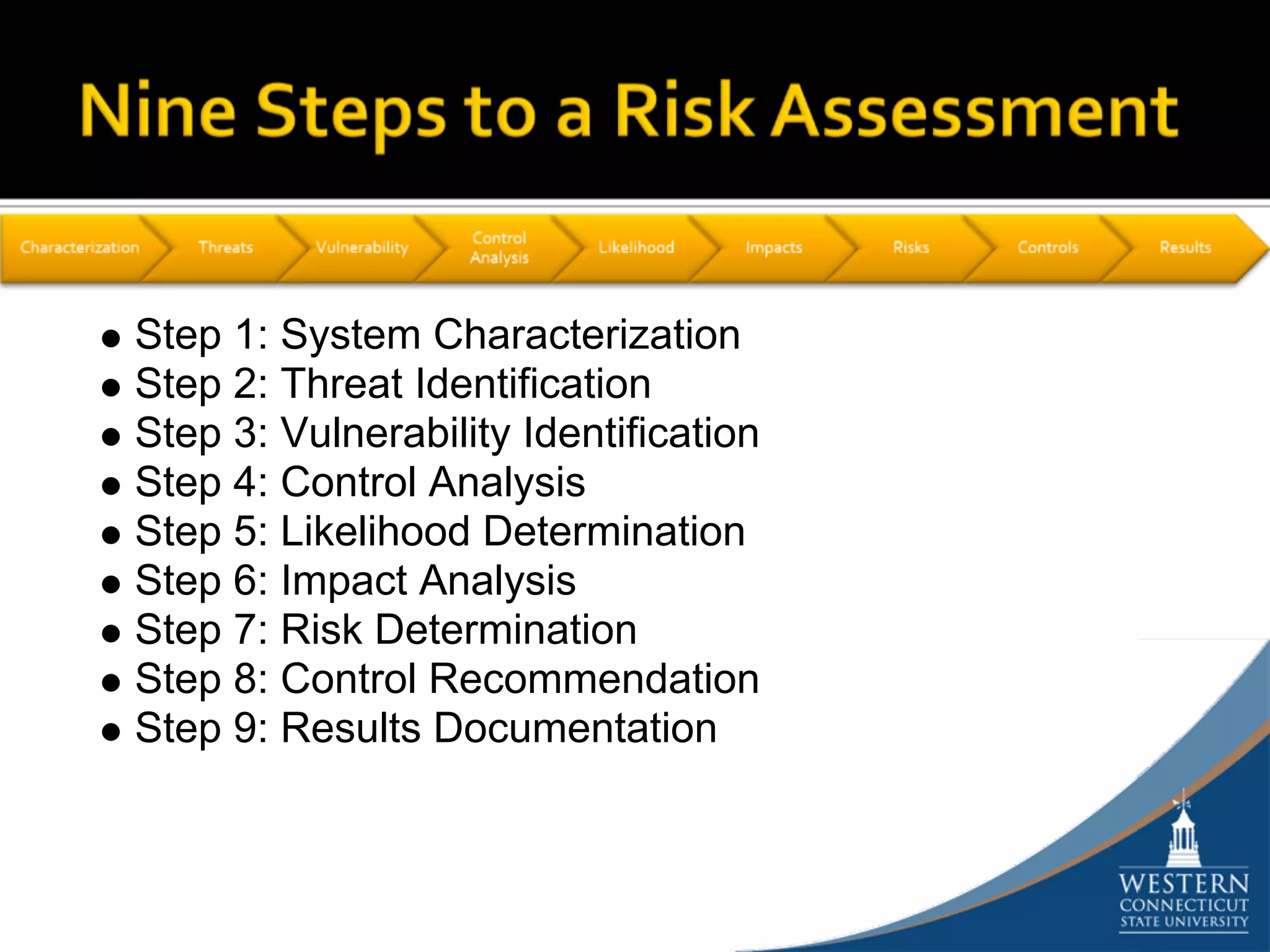
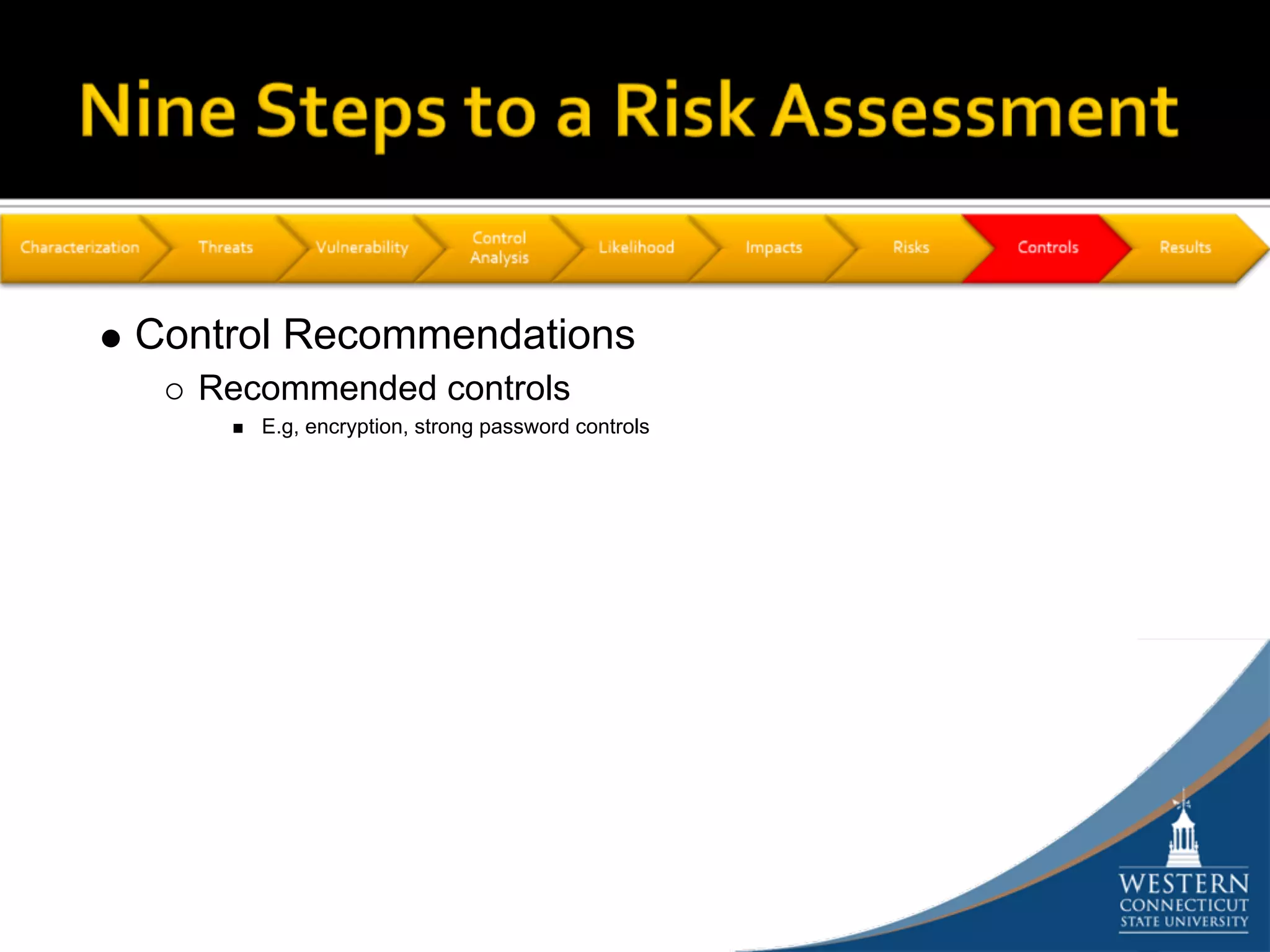
Step 1: System Characterization
Step 2: Threat Identification
Step 3: Vulnerability Identification
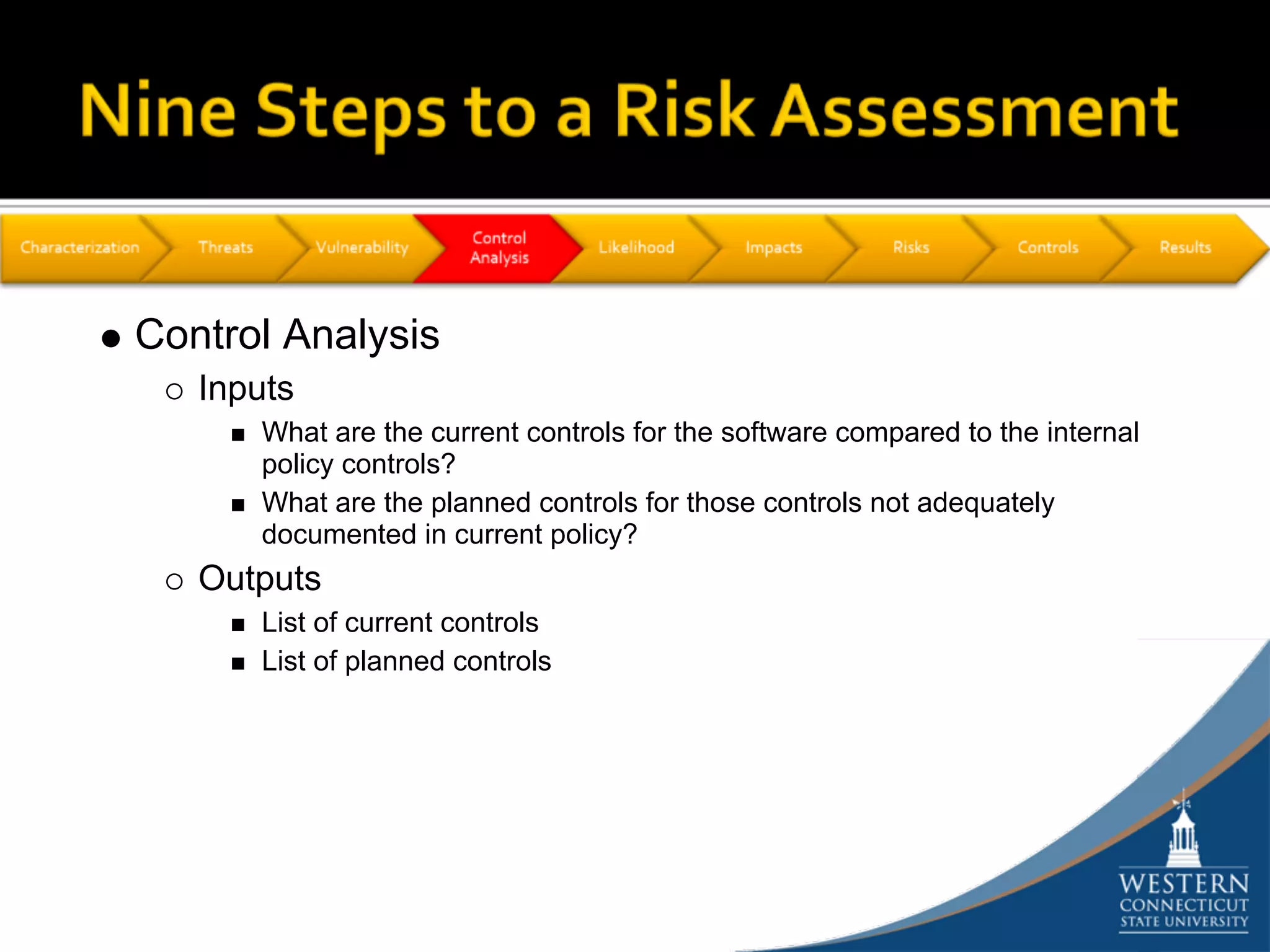
Step 4: Control Analysis
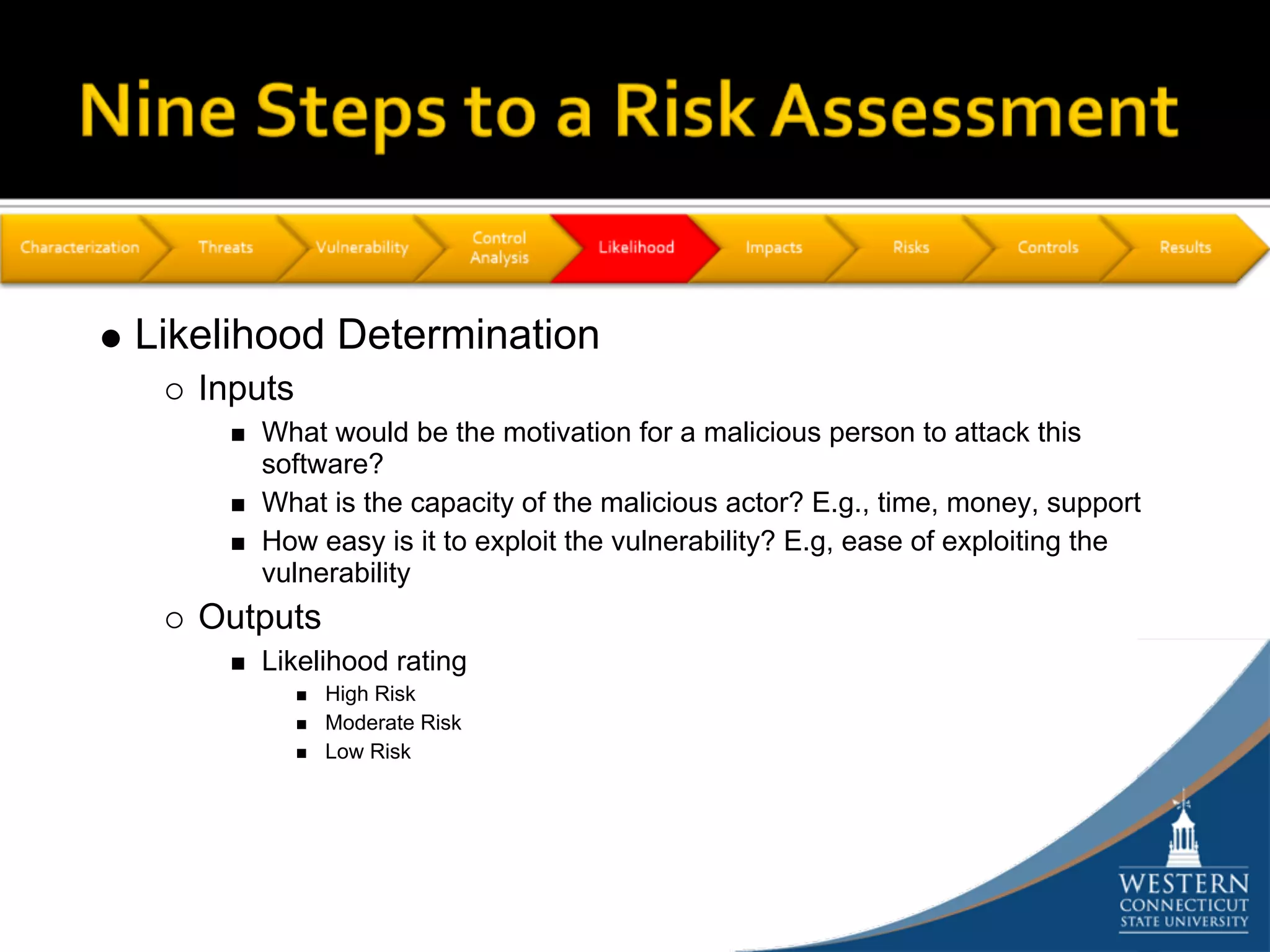
Step 5: Likelihood Determination
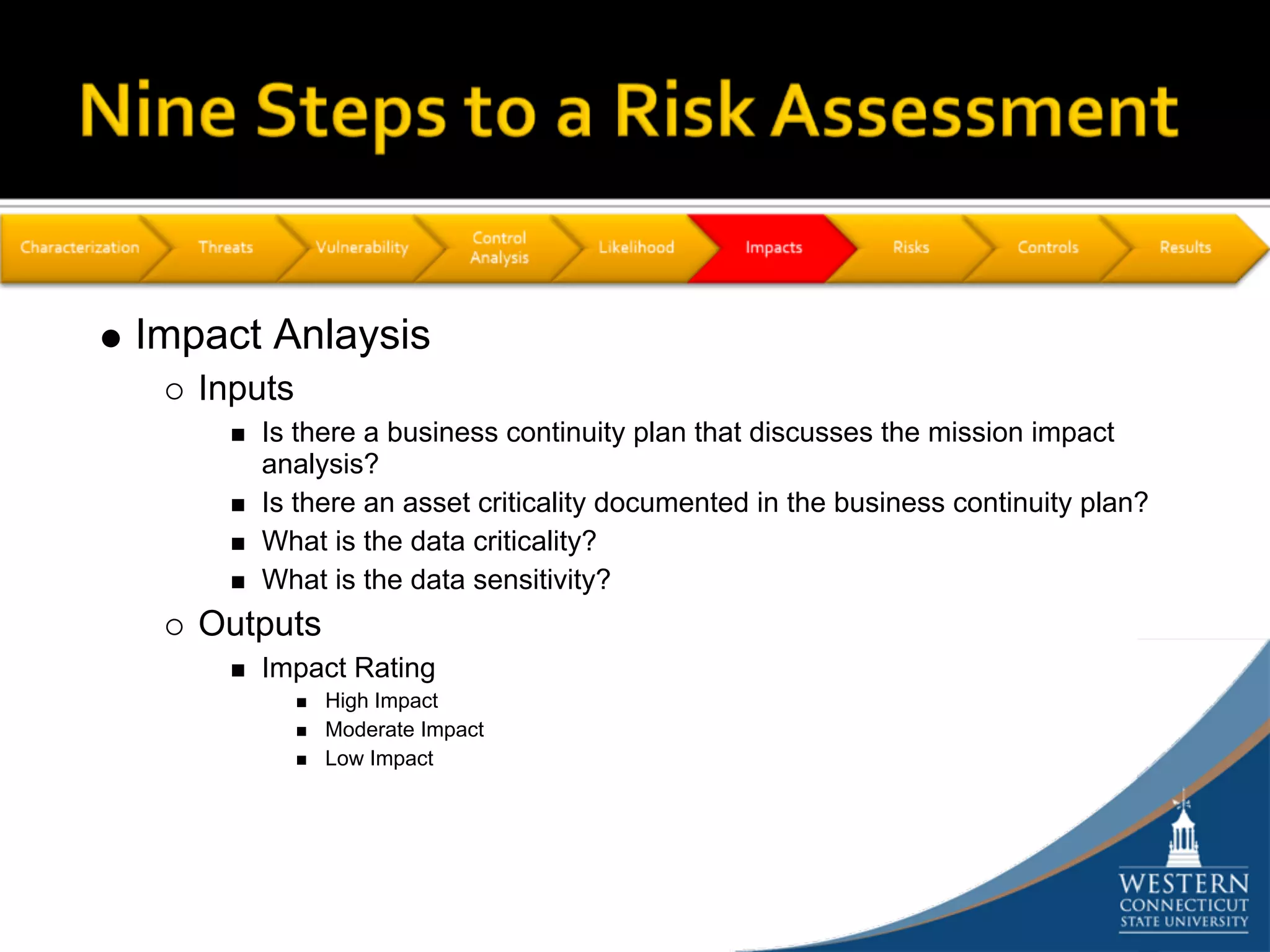
Step 6: Impact Analysis
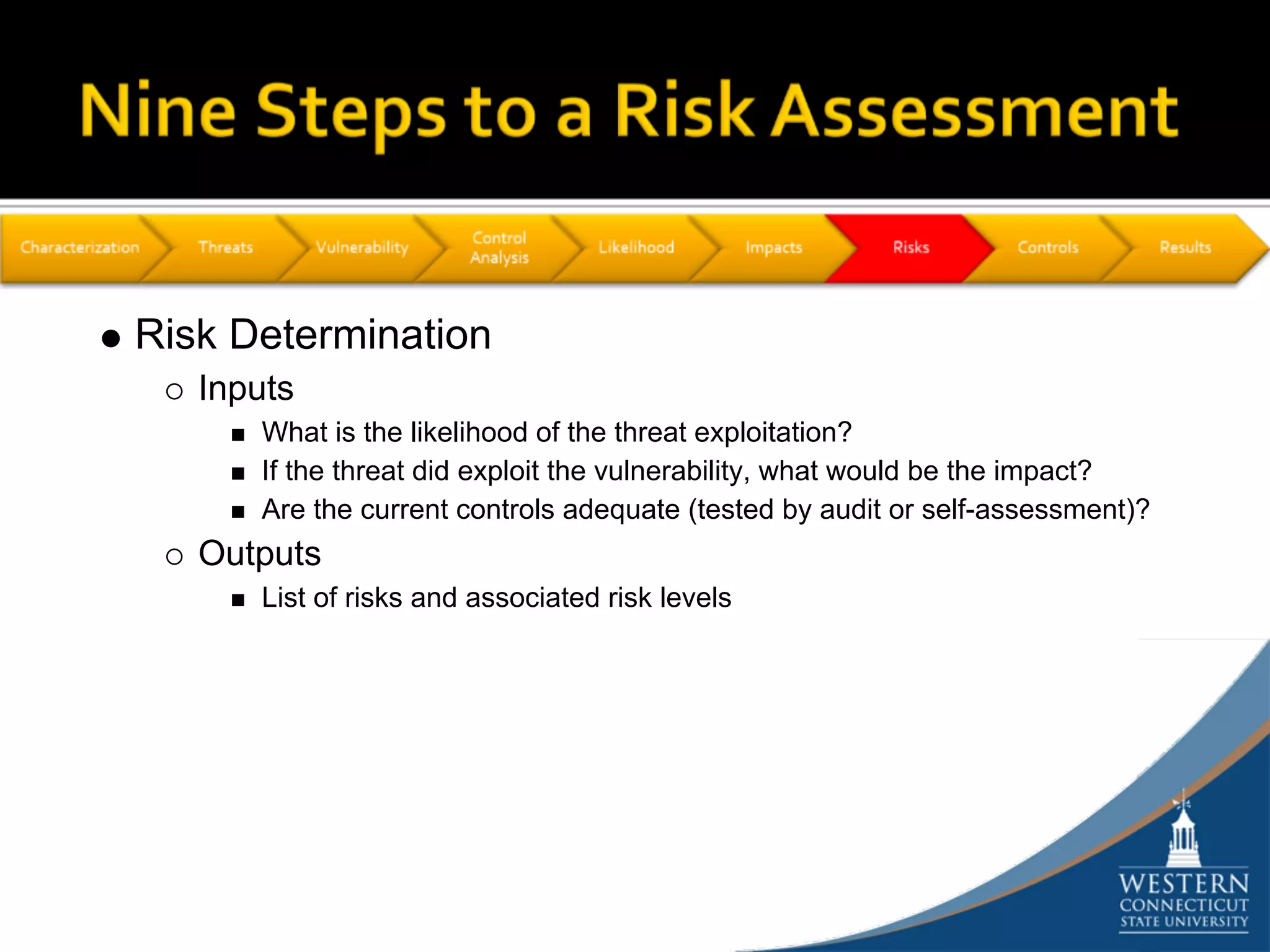
Step 7: Risk Determination
Step 8: Control Recommendation
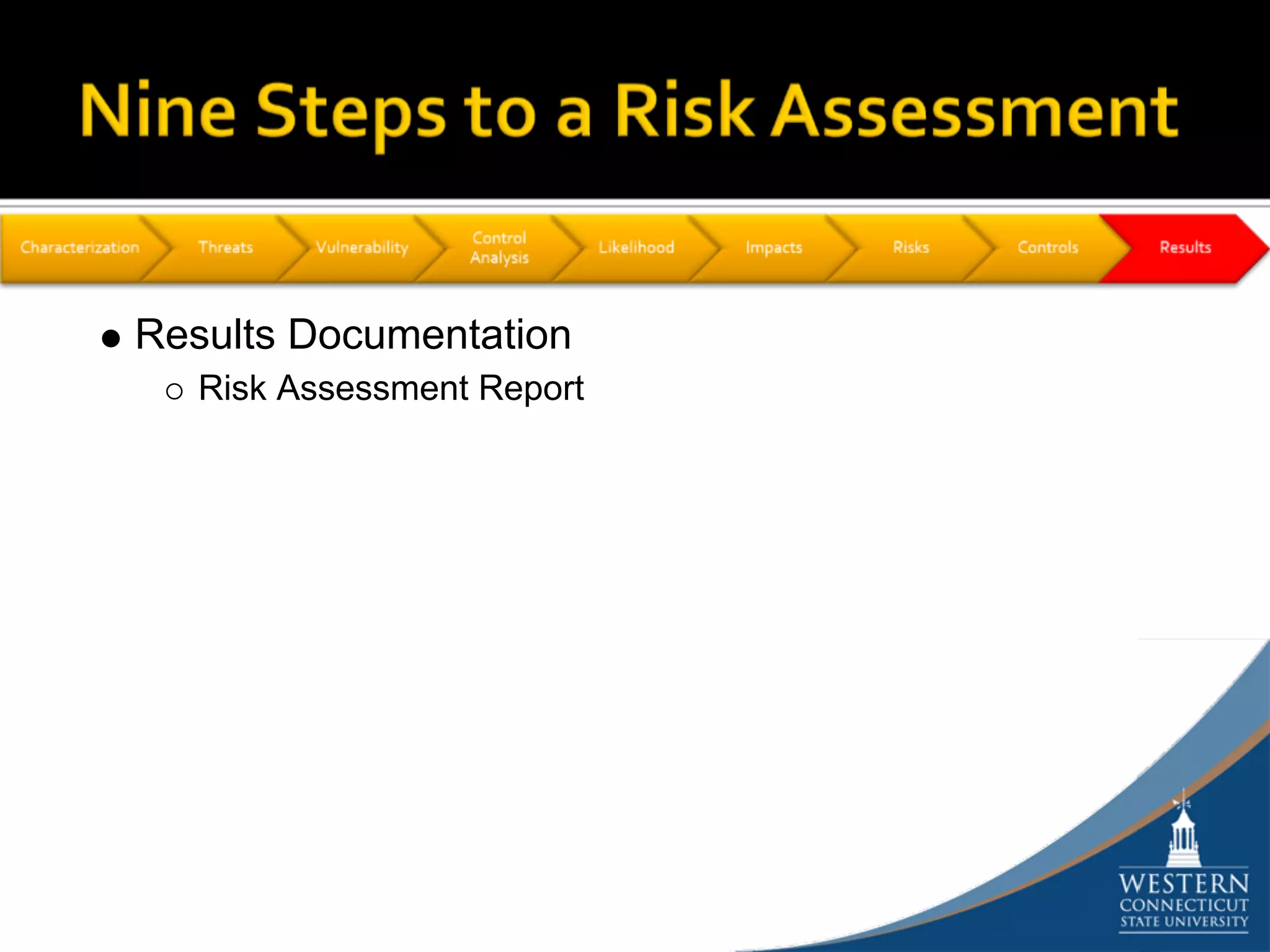
Step 9: Results Documentation
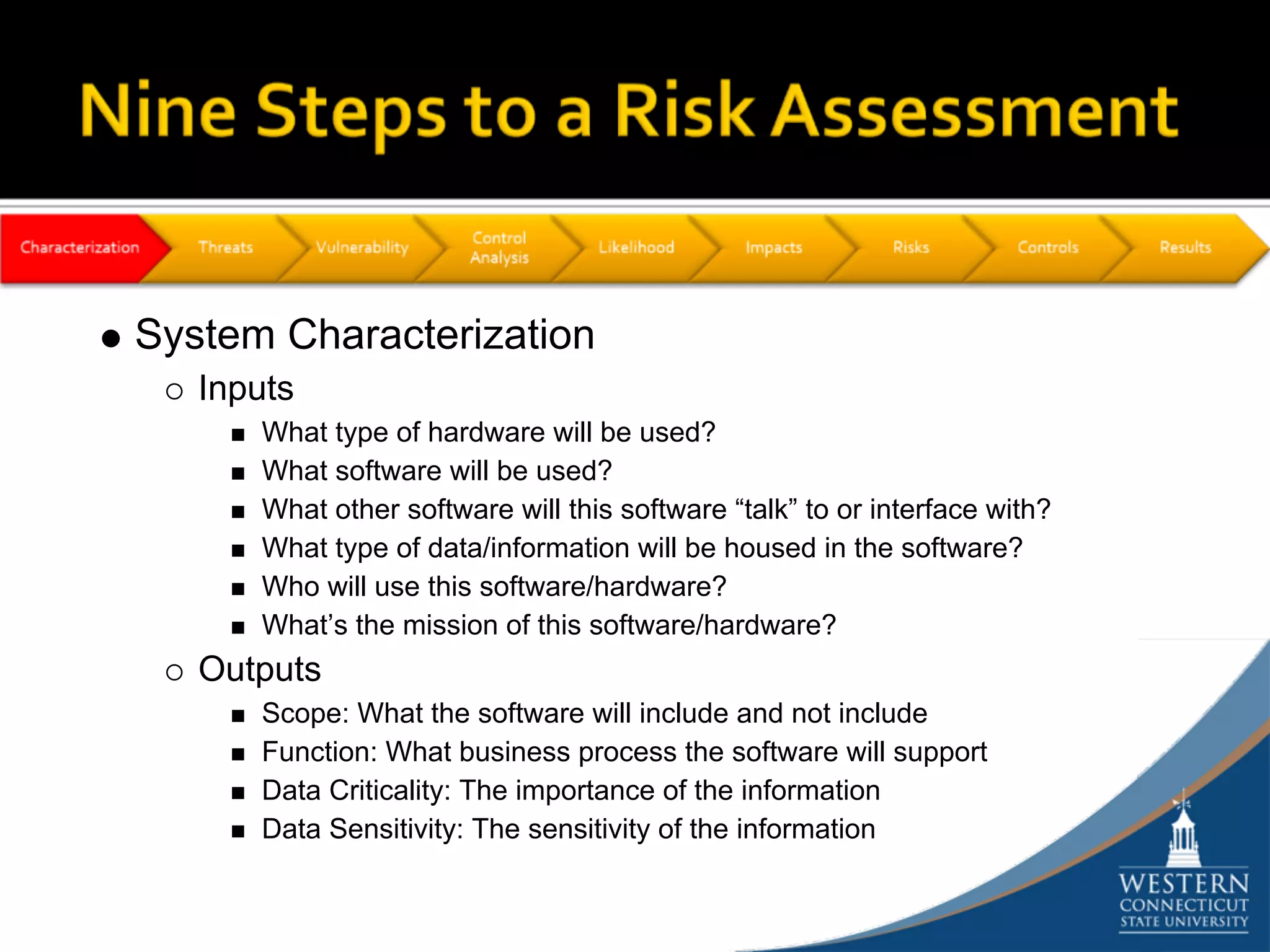
System Characterization
   Inputs
      What type of hardware will be used?
      What software will be used?
      What other software will this software “talk” to or interface with?
      What type of data/information will be housed in the software?
      Who will use this software/hardware?
      What’s the mission of this software/hardware?
   Outputs
      Scope: What the software will include and not include
      Function: What business process the software will support
      Data Criticality: The importance of the information
      Data Sensitivity: The sensitivity of the information
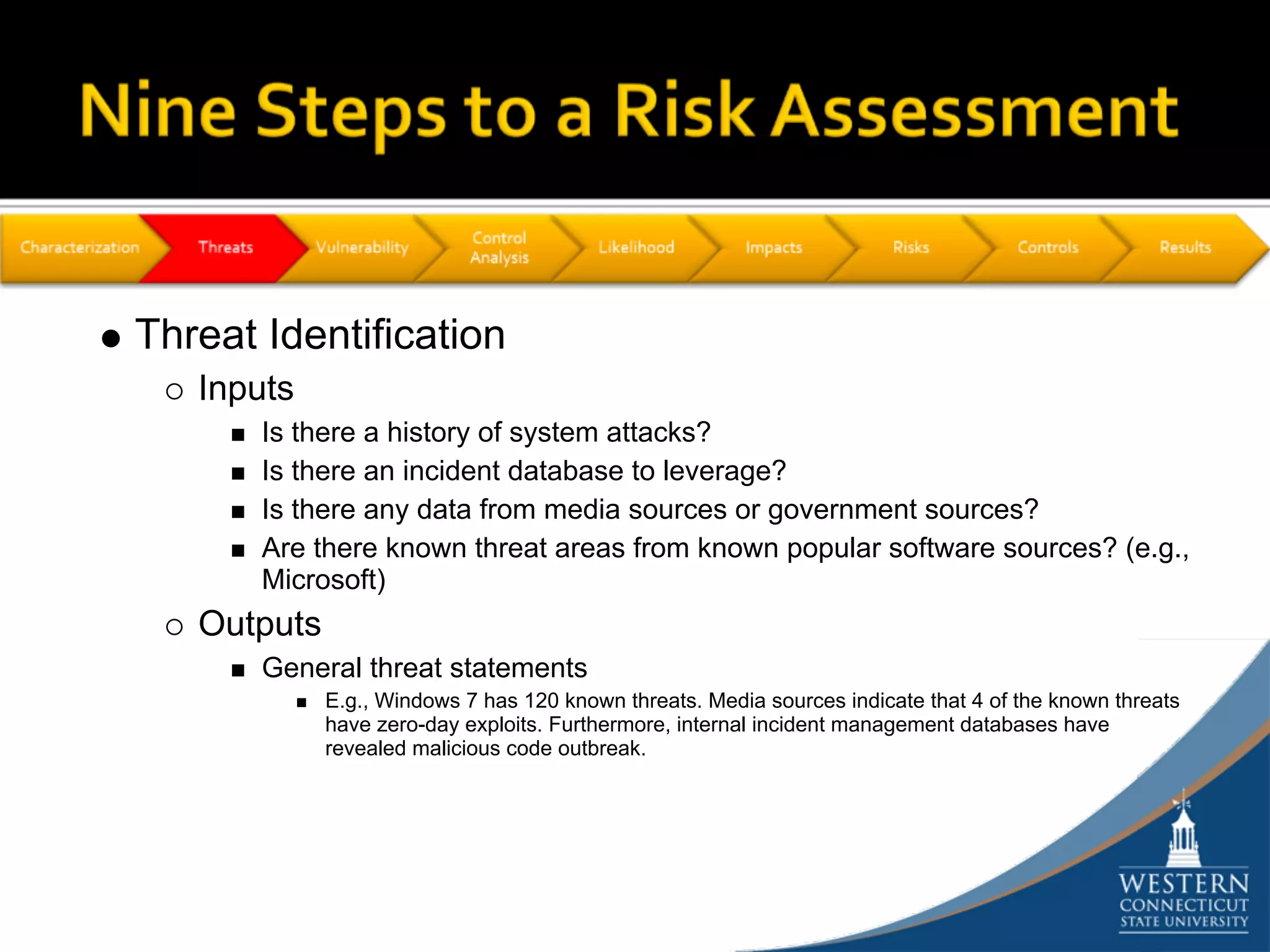
Threat Identification
   Inputs
       Is there a history of system attacks?
       Is there an incident database to leverage?
       Is there any data from media sources or government sources?
       Are there known threat areas from known popular software sources? (e.g.,
       Microsoft)
   Outputs
       General threat statements
             E.g., Windows 7 has 120 known threats. Media sources indicate that 4 of the known threats
             have zero-day exploits. Furthermore, internal incident management databases have
             revealed malicious code outbreak.
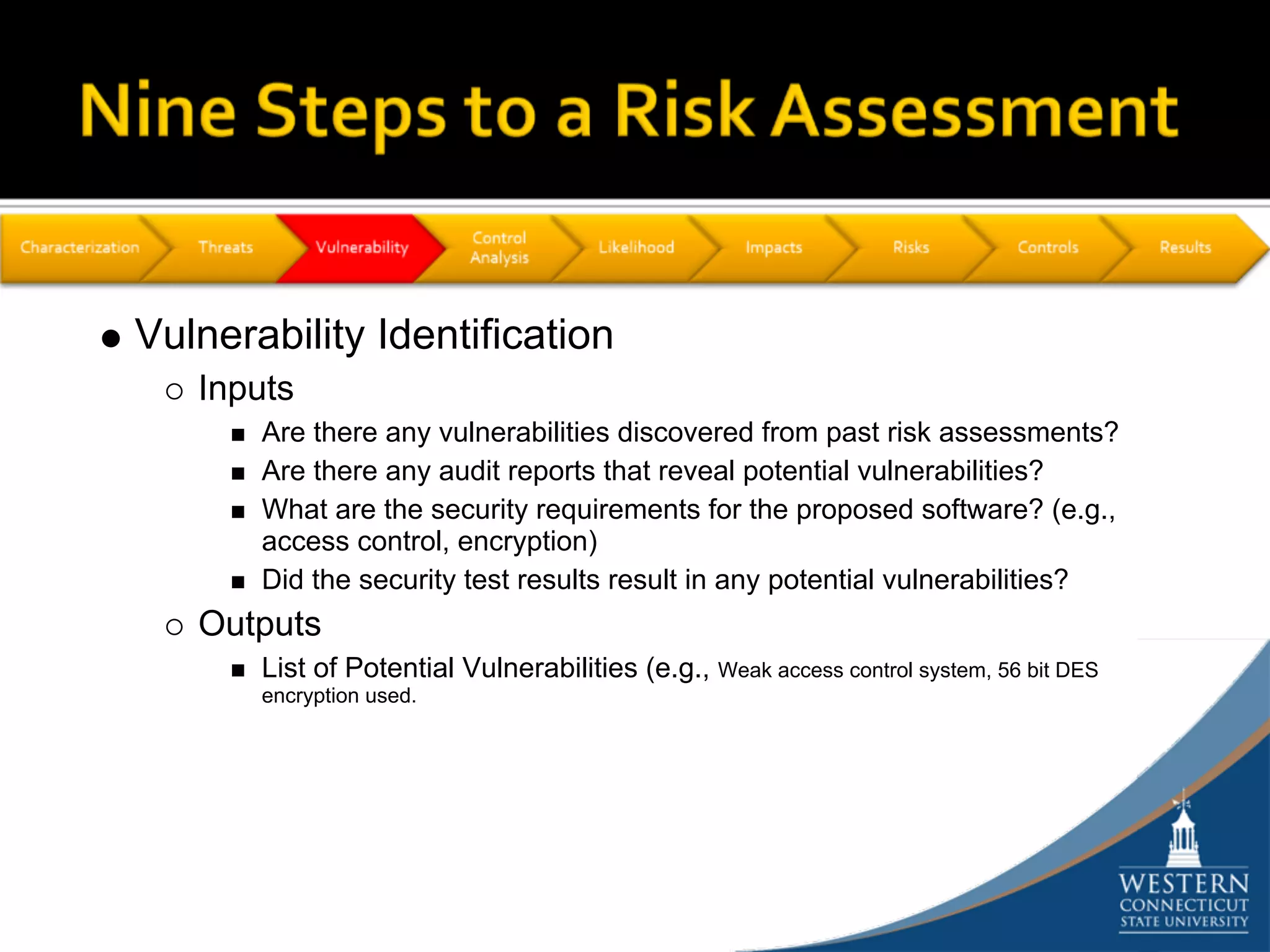
Vulnerability Identification
   Inputs
       Are there any vulnerabilities discovered from past risk assessments?
       Are there any audit reports that reveal potential vulnerabilities?
       What are the security requirements for the proposed software? (e.g.,
       access control, encryption)
       Did the security test results result in any potential vulnerabilities?
   Outputs
       List of Potential Vulnerabilities (e.g., Weak access control system, 56 bit DES
       encryption used.
Control Analysis
   Inputs
      What are the current controls for the software compared to the internal
      policy controls?
      What are the planned controls for those controls not adequately
      documented in current policy?
   Outputs
      List of current controls
      List of planned controls
Likelihood Determination
   Inputs
      What would be the motivation for a malicious person to attack this
      software?
      What is the capacity of the malicious actor? E.g., time, money, support
      How easy is it to exploit the vulnerability? E.g, ease of exploiting the
      vulnerability
   Outputs
      Likelihood rating
             High Risk
             Moderate Risk
             Low Risk
Impact Anlaysis
   Inputs
      Is there a business continuity plan that discusses the mission impact
      analysis?
      Is there an asset criticality documented in the business continuity plan?
      What is the data criticality?
      What is the data sensitivity?
   Outputs
      Impact Rating
             High Impact
             Moderate Impact
             Low Impact
Risk Determination
   Inputs
      What is the likelihood of the threat exploitation?
      If the threat did exploit the vulnerability, what would be the impact?
      Are the current controls adequate (tested by audit or self-assessment)?
   Outputs
      List of risks and associated risk levels
Control Recommendations
  Recommended controls
     E.g, encryption, strong password controls
Results Documentation
   Risk Assessment Report
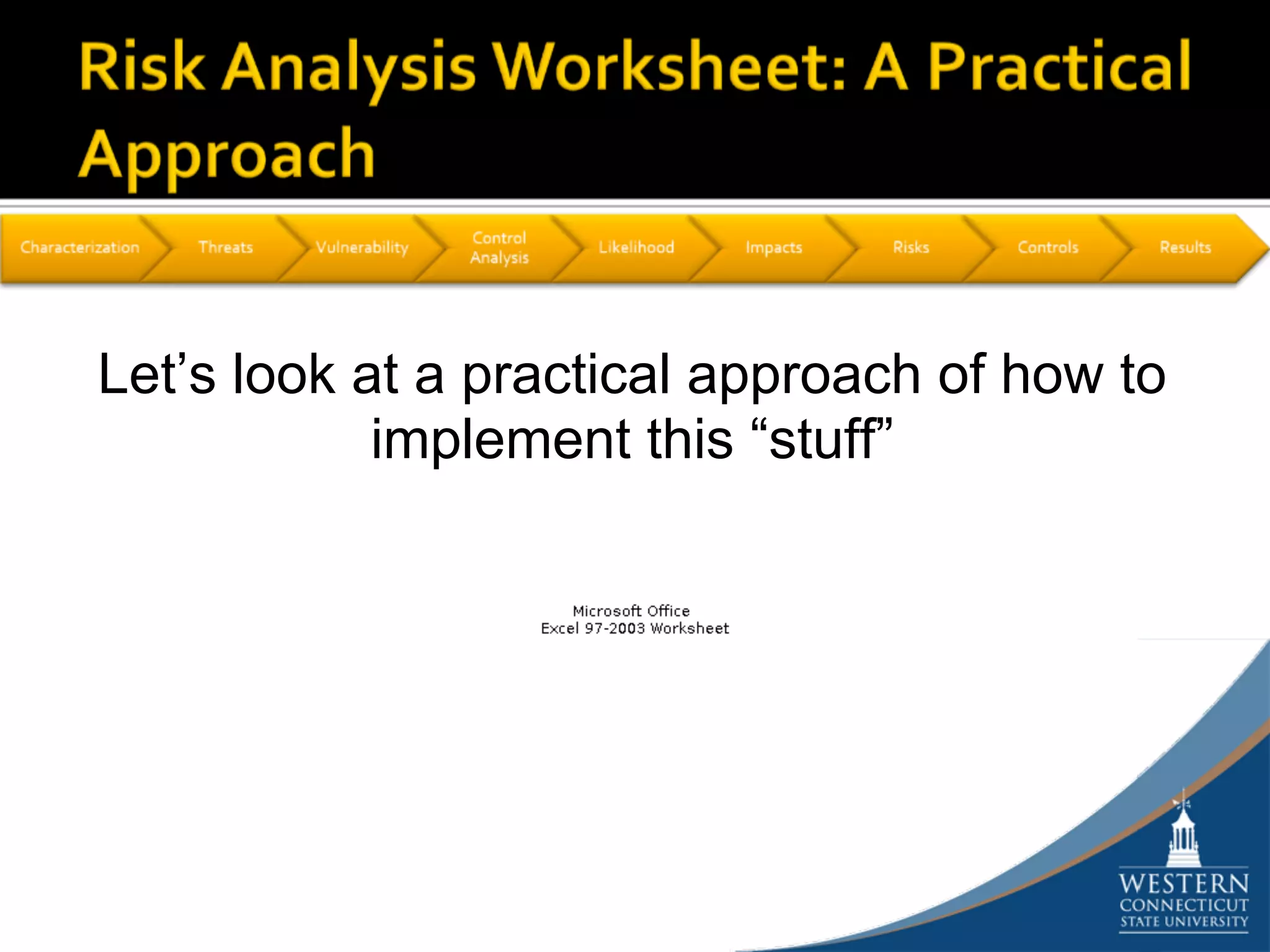
Let’s look at a practical approach of how to
            implement this “stuff”
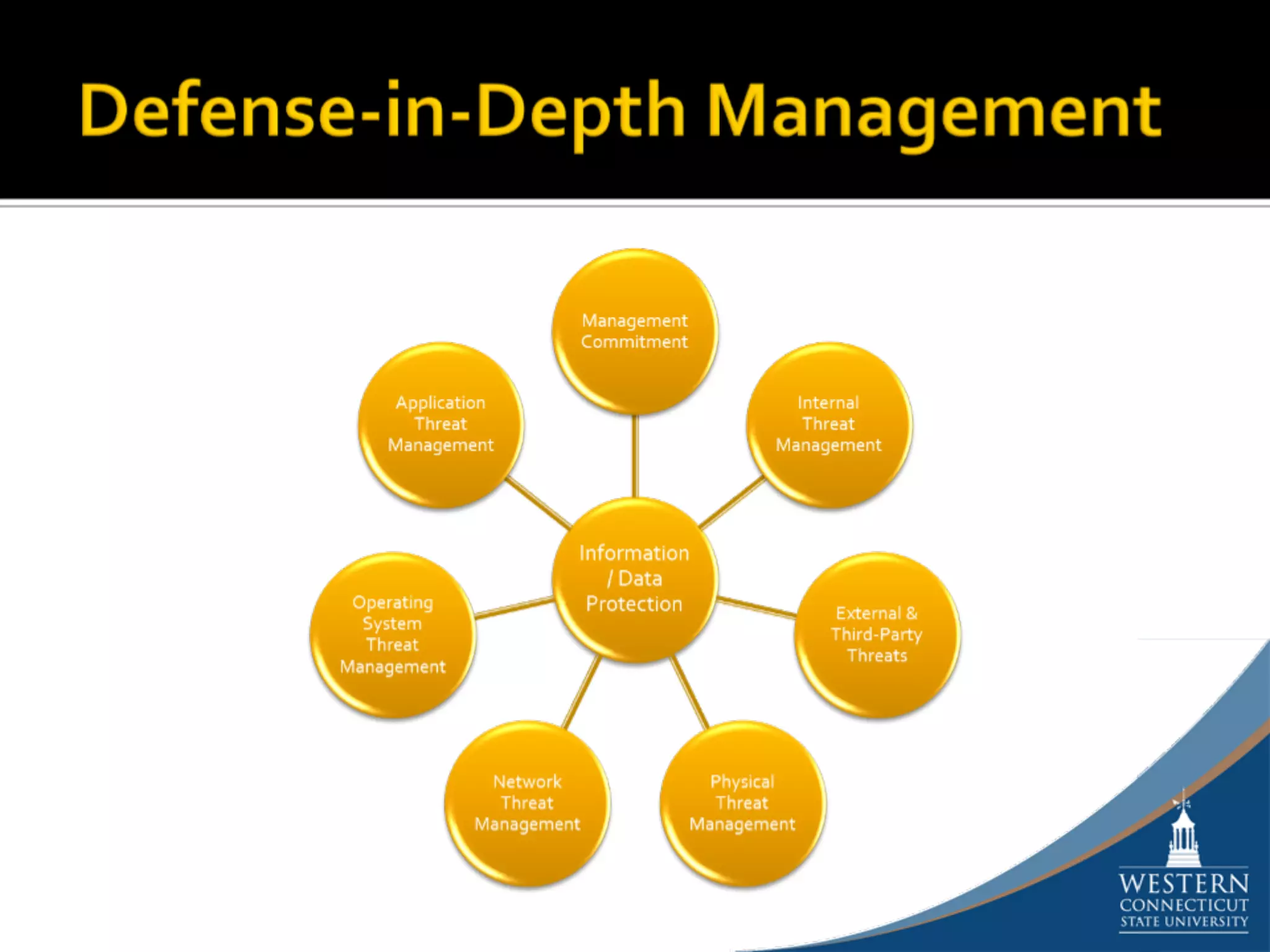
Let’s explore the defense-in-depth strategy
    to understand where risk should be
                addressed.
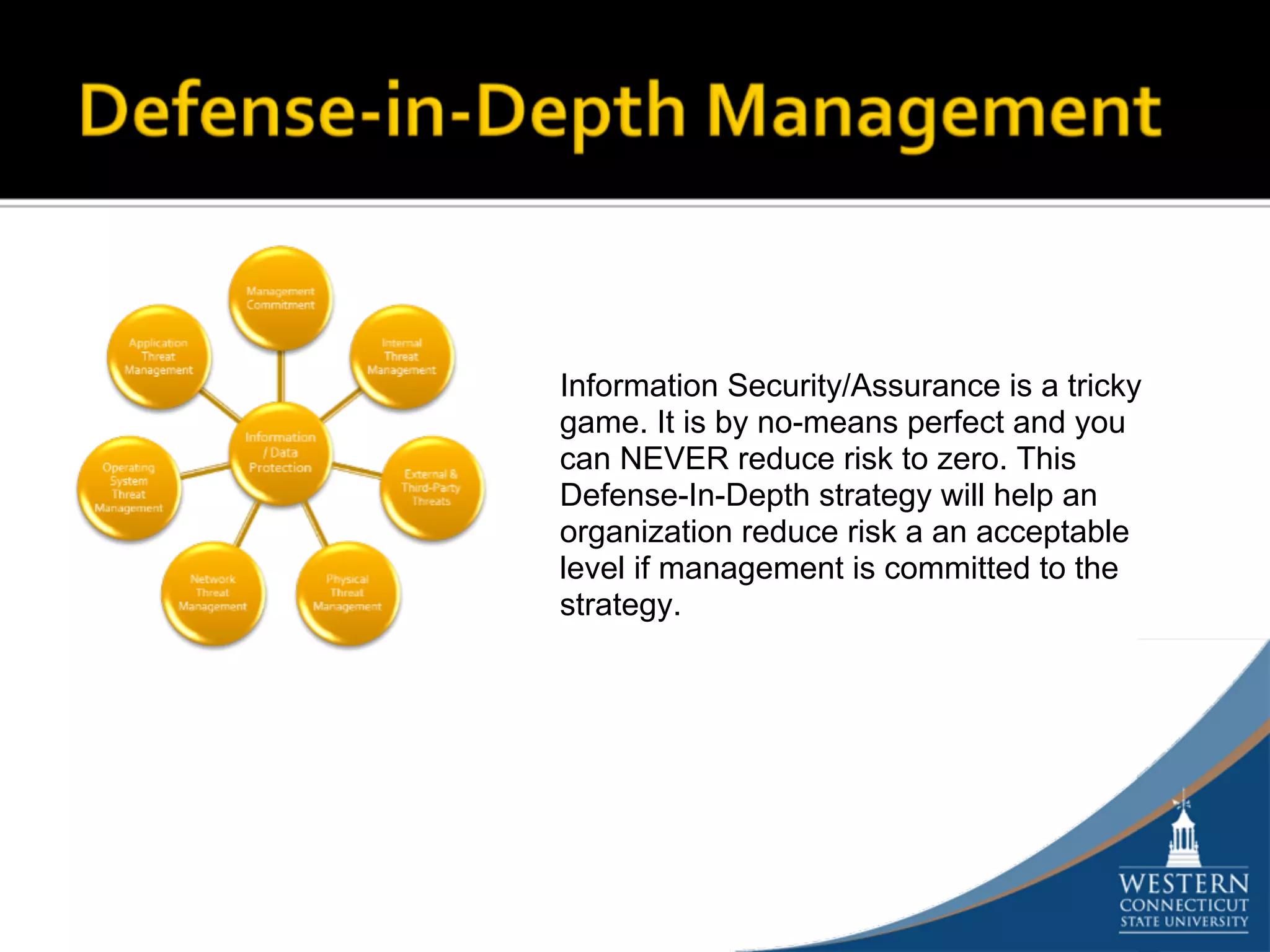
Information Security/Assurance is a tricky
game. It is by no-means perfect and you
can NEVER reduce risk to zero. This
Defense-In-Depth strategy will help an
organization reduce risk a an acceptable
level if management is committed to the
strategy.
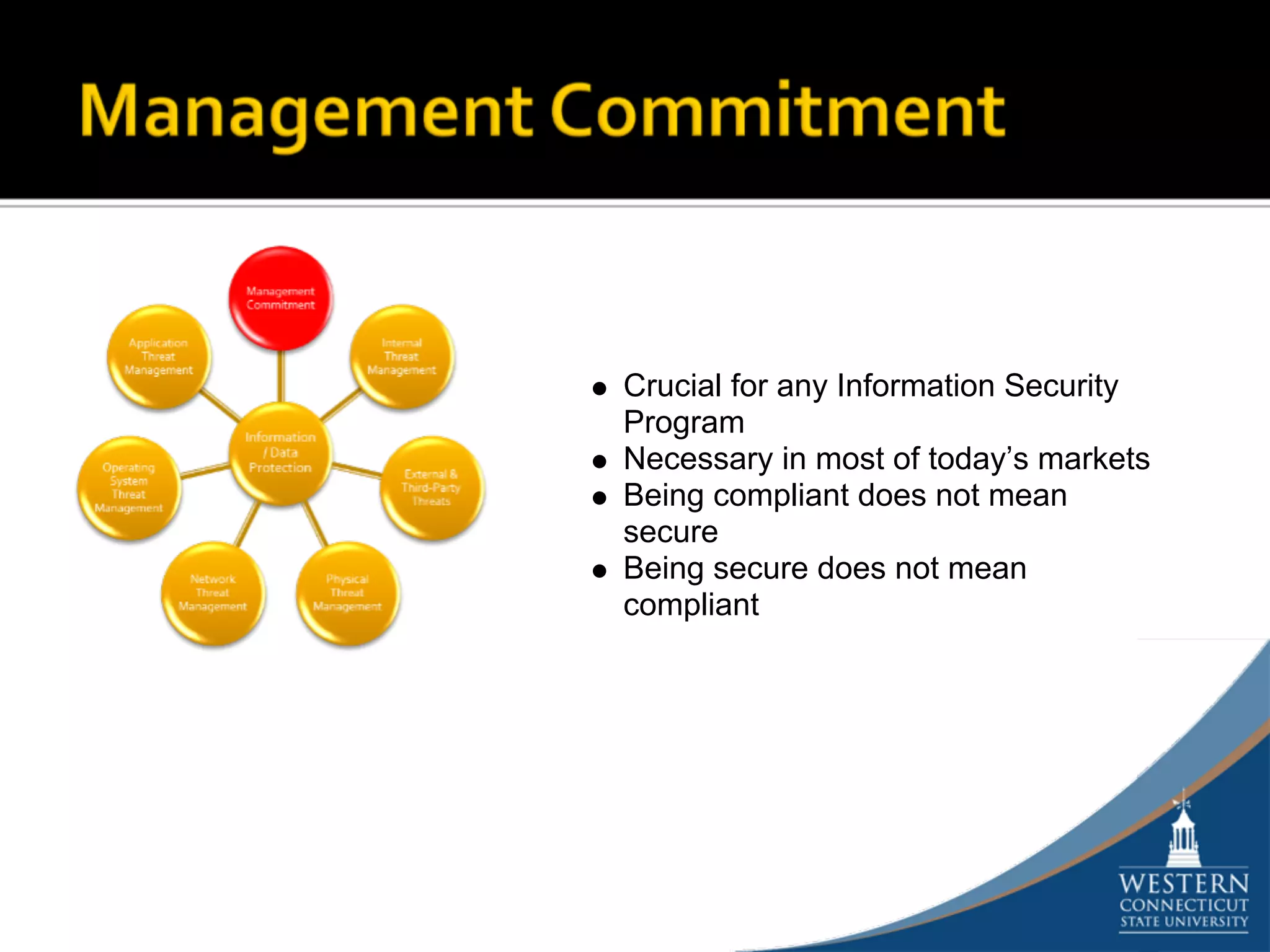
Crucial for any Information Security
Program
Necessary in most of today’s markets
Being compliant does not mean
secure
Being secure does not mean
compliant
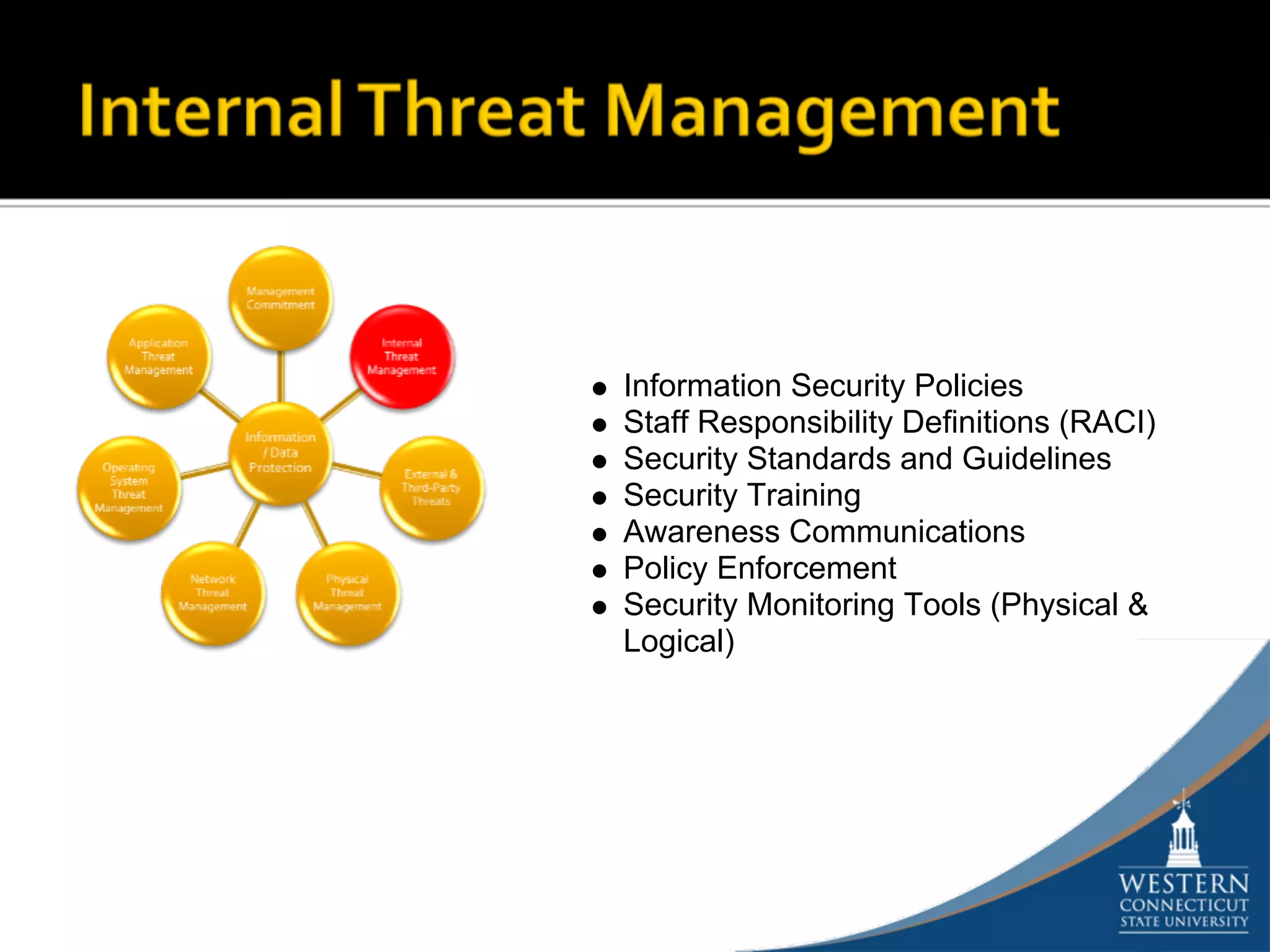
Information Security Policies
Staff Responsibility Definitions (RACI)
Security Standards and Guidelines
Security Training
Awareness Communications
Policy Enforcement
Security Monitoring Tools (Physical &
Logical)
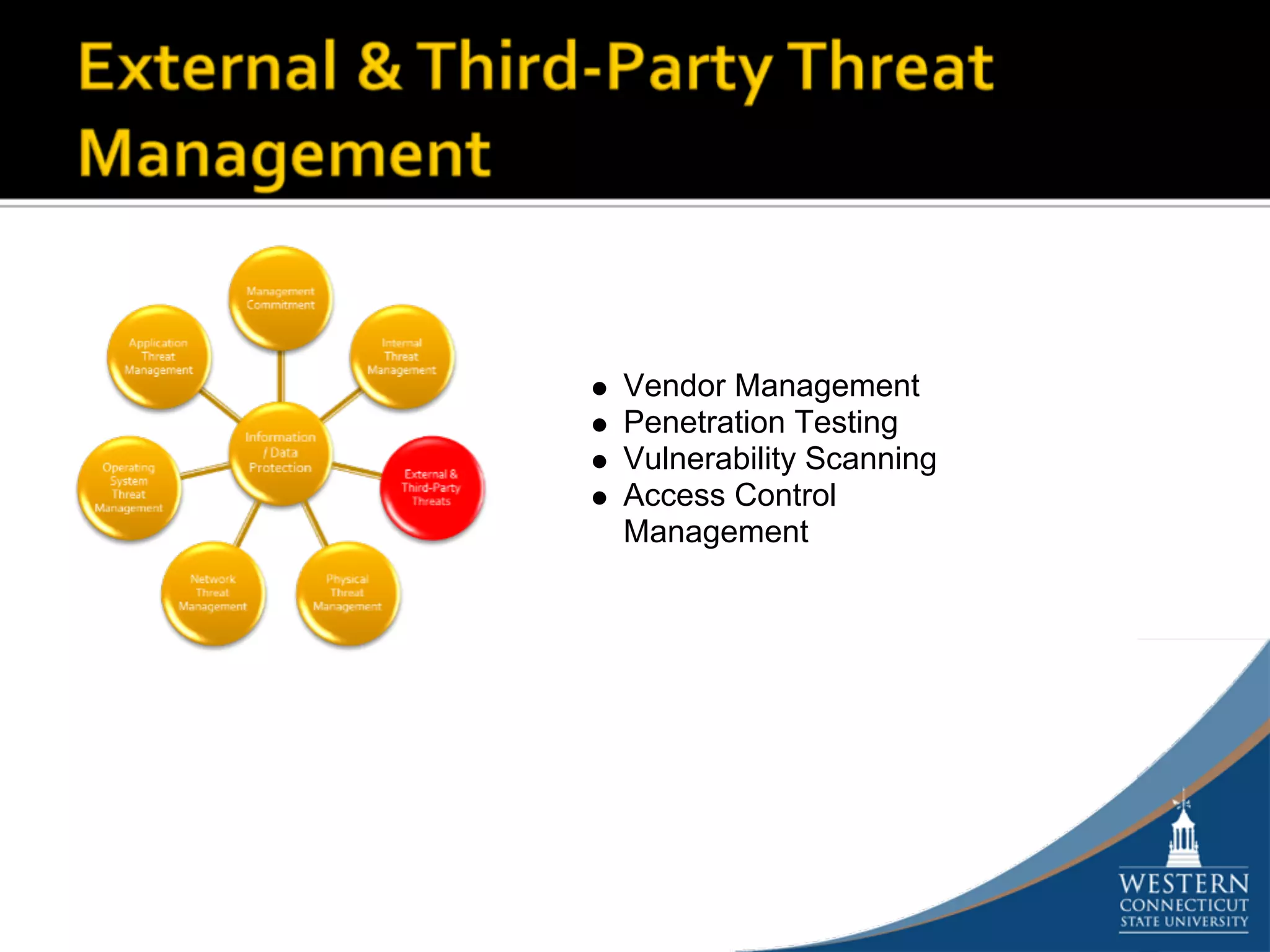
Vendor Management
Penetration Testing
Vulnerability Scanning
Access Control
Management
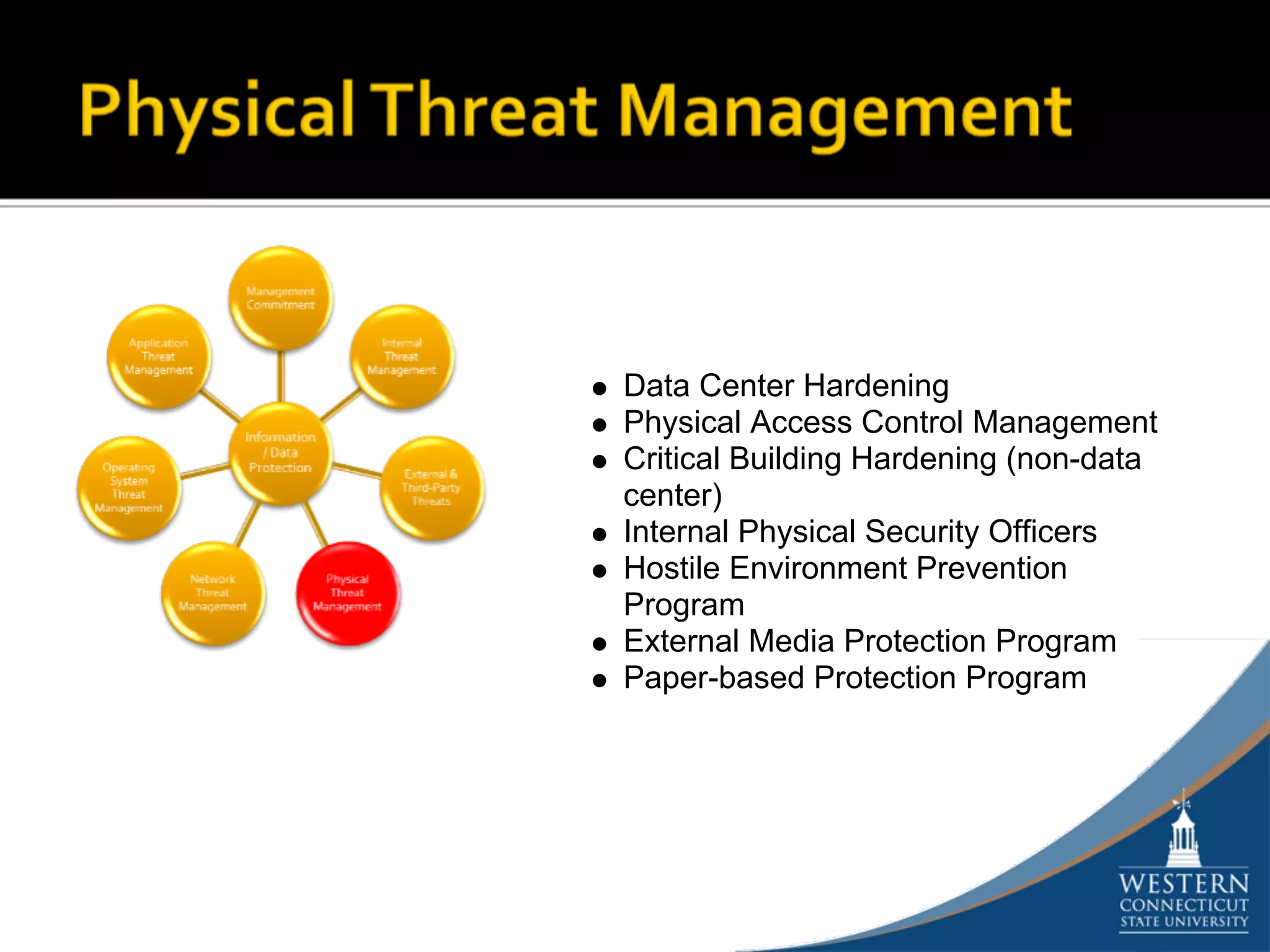
Data Center Hardening
Physical Access Control Management
Critical Building Hardening (non-data
center)
Internal Physical Security Officers
Hostile Environment Prevention
Program
External Media Protection Program
Paper-based Protection Program
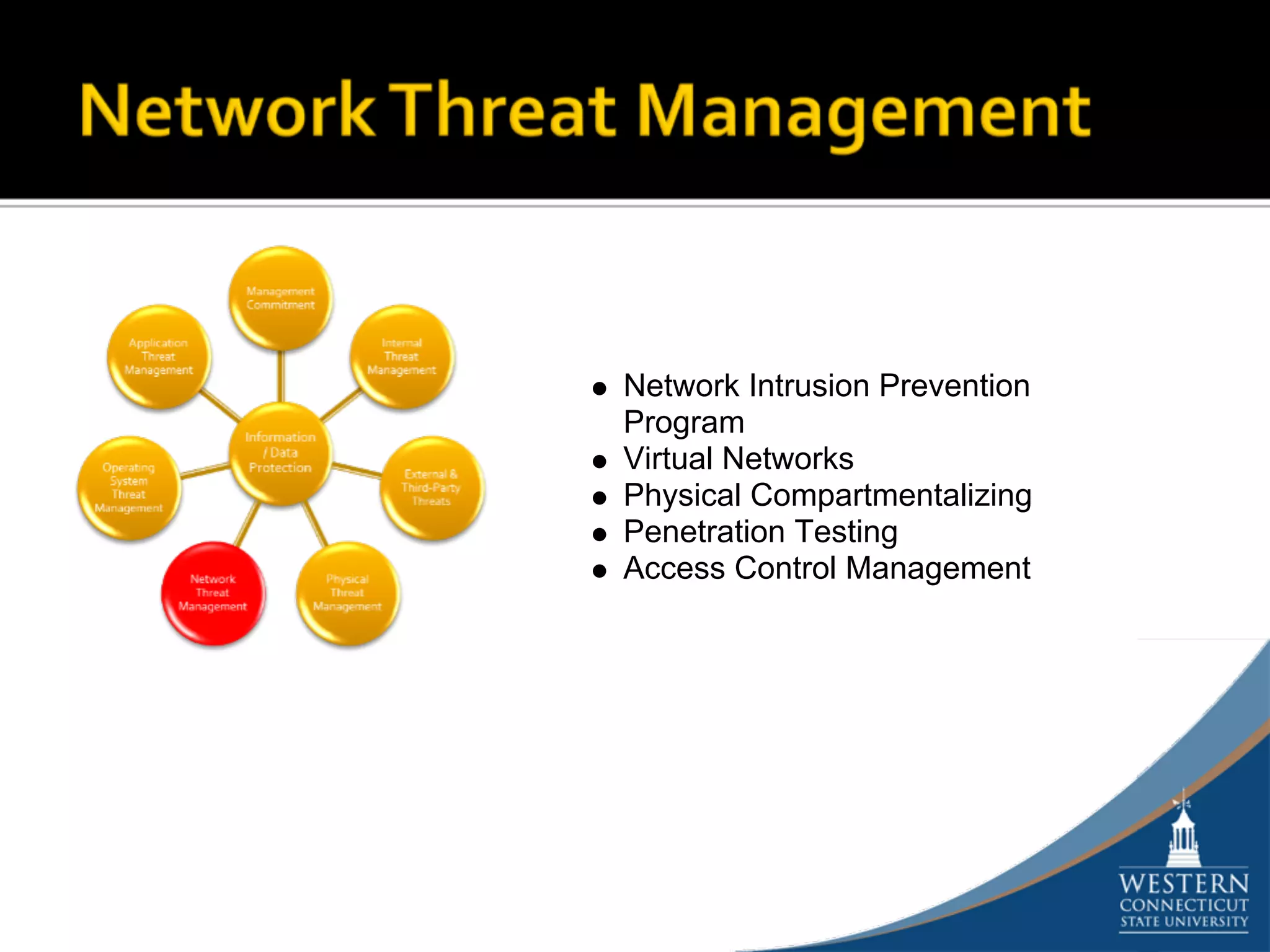
Network Intrusion Prevention
Program
Virtual Networks
Physical Compartmentalizing
Penetration Testing
Access Control Management
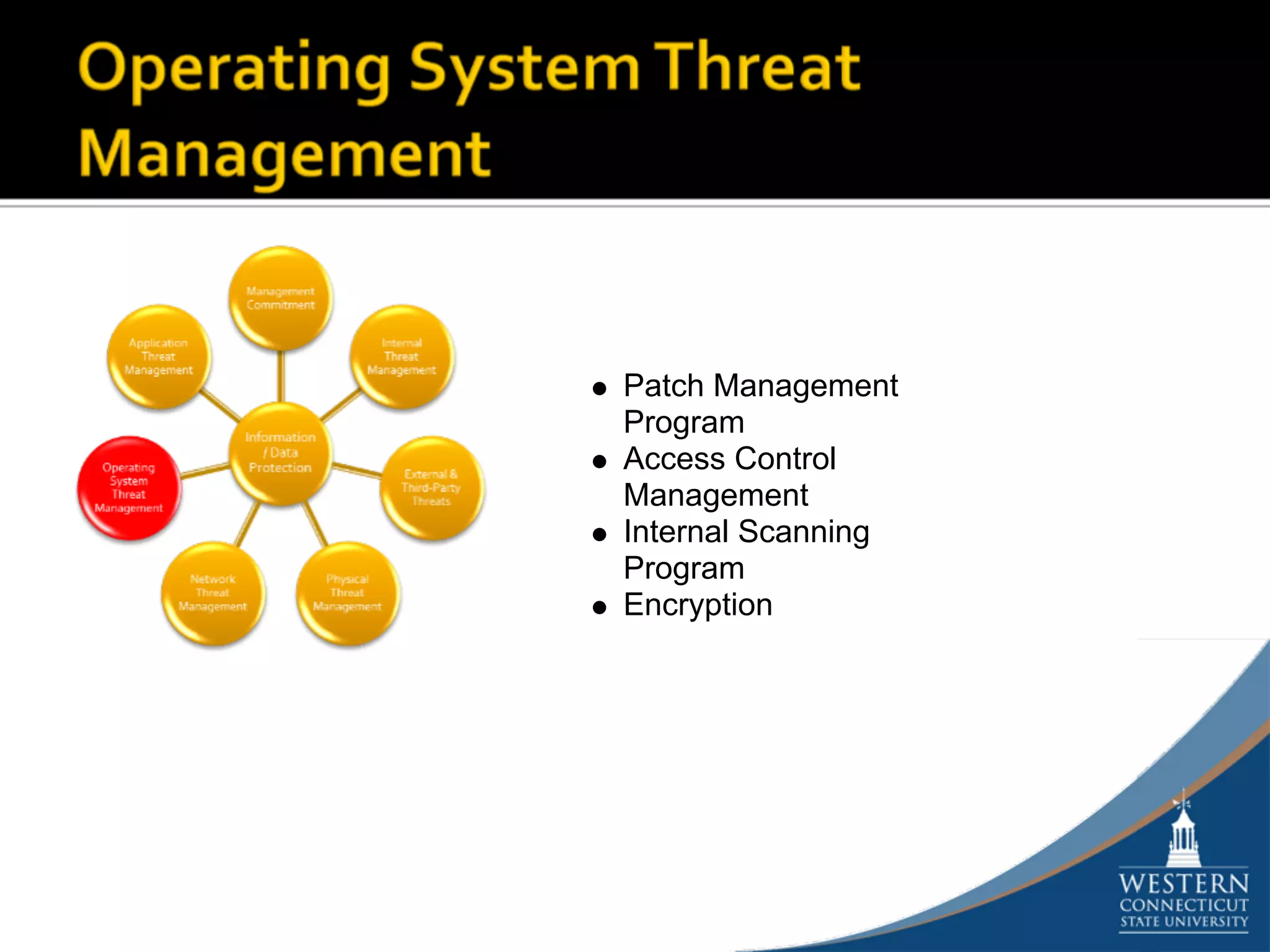
Patch Management
Program
Access Control
Management
Internal Scanning
Program
Encryption
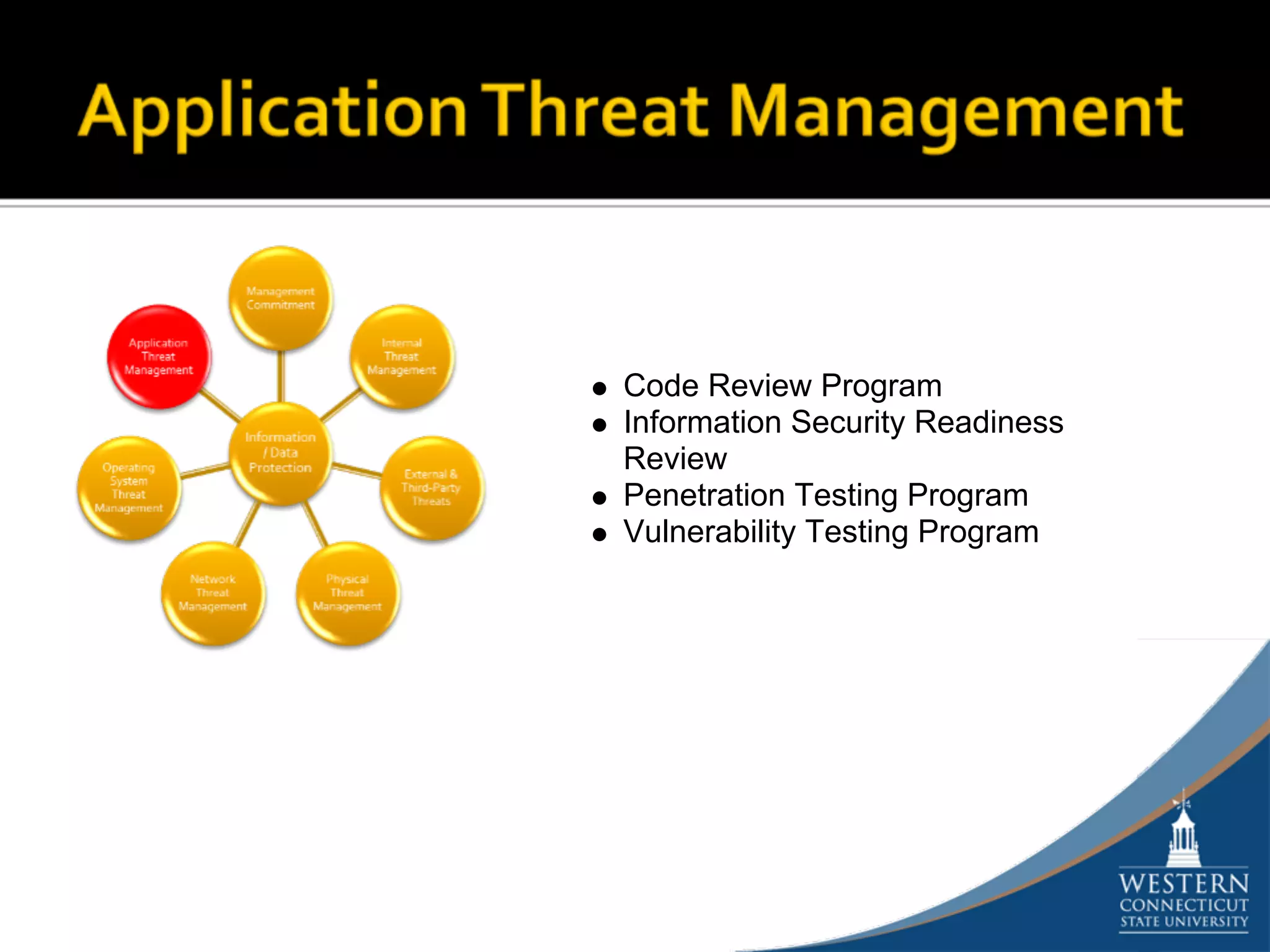
Code Review Program
Information Security Readiness
Review
Penetration Testing Program
Vulnerability Testing Program
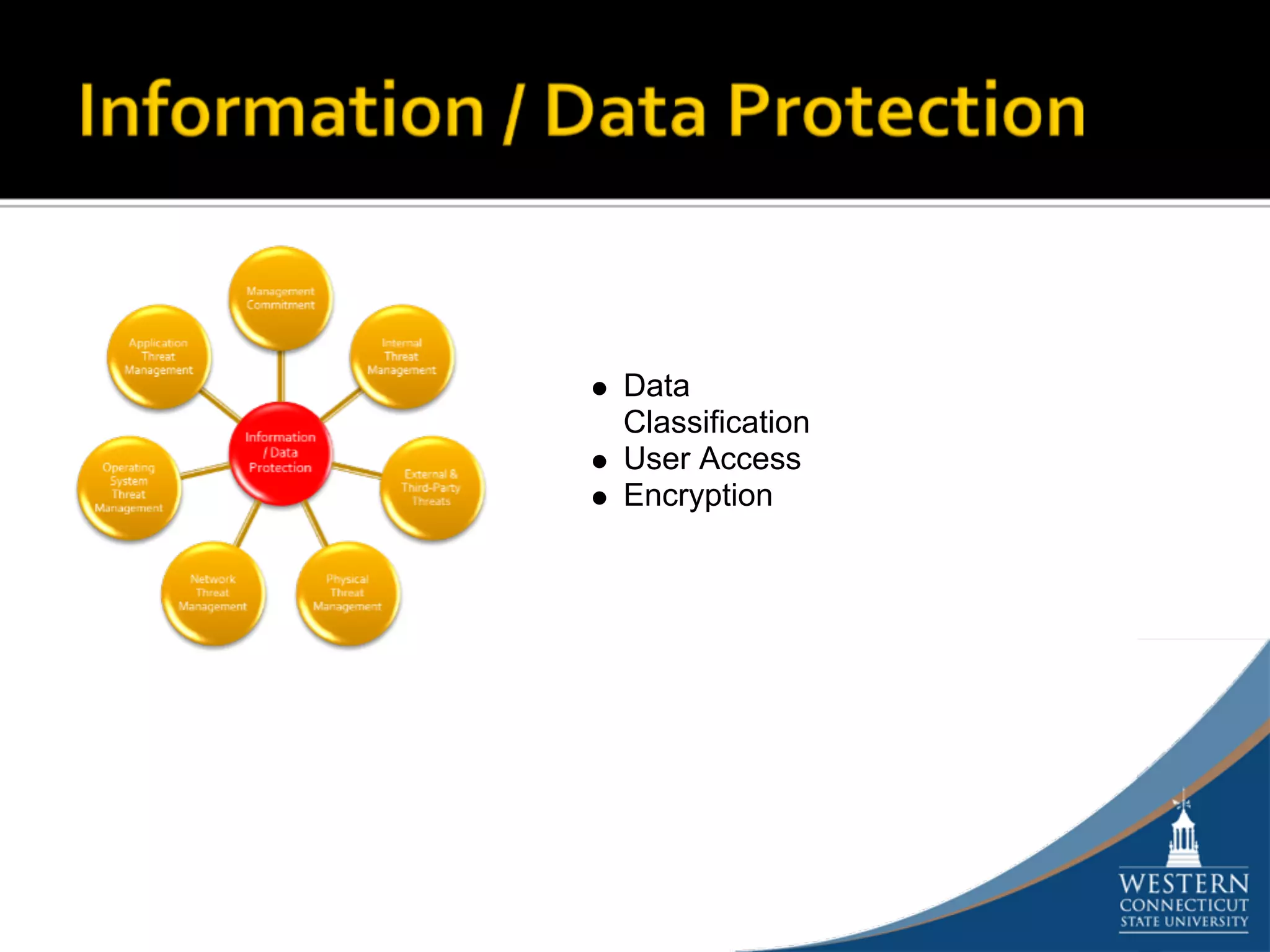
Data
Classification
User Access
Encryption
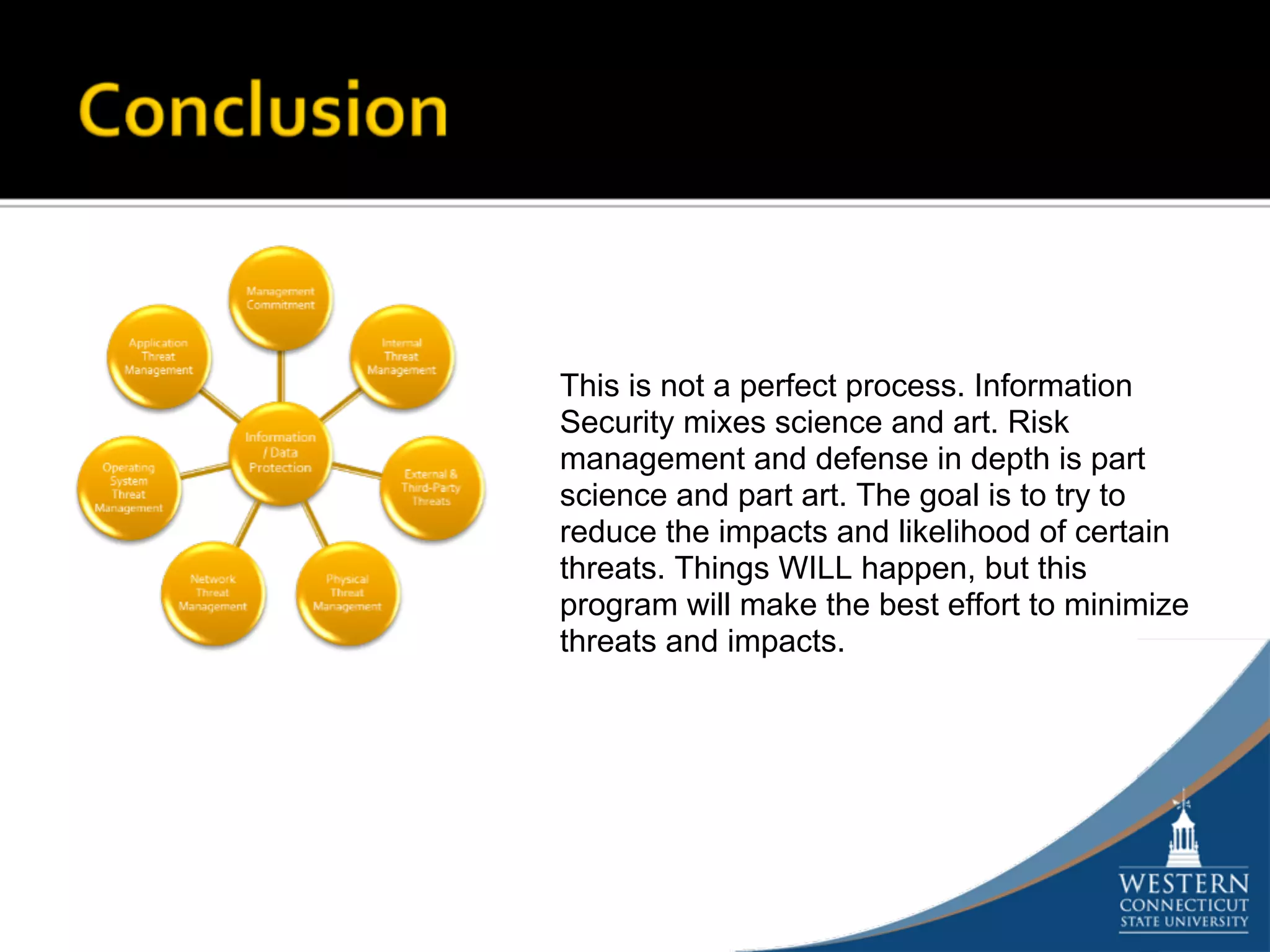
This is not a perfect process. Information
Security mixes science and art. Risk
management and defense in depth is part
science and part art. The goal is to try to
reduce the impacts and likelihood of certain
threats. Things WILL happen, but this
program will make the best effort to minimize
threats and impacts.
What did you get from this presentation?
Do you think that this information is
useful?
Do you think you could apply this to your
life and not just systems?

Defense In Depth Using NIST 800-30

  • 1.
    A Simple Strategyto Combat Many Security Issues Kevin M. Moker, CISSP-ISSMP, CISM, ACP Manager, Information Security Risk Management Services
  • 2.
    What is RiskManagement What is Defense In Depth Questions & Answer Session
  • 3.
    What is Risk? Risk is the potential loss from a threat-source attacking a vulnerability. Example: Joe Cracker (threat-source) knows that an online banking company has not patched (vulnerability) their backend databases. Joe Cracker exploits (loss) the system and steals money.
  • 4.
    Target Audience Senior Management Middle Management Technology Management
  • 5.
    Risk Integration intothe SDLC Risk Assessment Identifying risk Risk Mitigation Figuring out how to control the risk Controls Evaluation Control recommendations – what should be used to control the risk
  • 6.
    Systems Development Life-Cycle(SDLC) Normal phases of SDLC Initiation Build or Acquire Implementation Operation and Maintenance Disposal or End-of-Life
  • 7.
    Phase 1 –Initiation Phase Characteristics The need for an IT system is expressed and the purpose and scope of the IT system is documented Support from Risk Management Activities Identified risks are used to support the development of the system requirements, including security requirements, and a security concept of operations (strategy)
  • 8.
    Phase 2 –Build or Acquire Phase Characteristics The IT system is designed, purchased, programmed, developed, or otherwise constructed Support from Risk Management Activities The risks identified during this phase can be used to support the security analyses of the IT system that may lead to architecture and design tradeoffs during system development
  • 9.
    Phase 3 –Implementation Phase Characteristics The system security features should be configured, enabled, tested, and verified Support from Risk Management Activities The risk management process supports the assessment of the system implementation against its requirements and within its modeled operational environment. Decisions regarding risks identified must be made prior to system operation
  • 10.
    Phase 4 –Operation & Maintenance Phase Characteristics The system performs its functions. Typically the system is being modified on an ongoing basis through the addition of hardware and software and by changes to organizational processes, policies, and procedures Support from Risk Management Activities Risk management activities are performed for periodic system reauthorization or whenever major changes are made to an IT system in its operational, production environment (e.g., new system interfaces)
  • 11.
    Phase 5 –Disposal or End-of-Life Phase Characteristics This phase may involve the disposition of information, hardware, and software. Activities may include moving, archiving, discarding, or destroying information and sanitizing the hardware and software Support from Risk Management Activities Risk management activities are performed for system components that will be disposed of or replaced to ensure that the hardware and software are properly disposed of, that residual data is appropriately handled, and that system migration is conducted in a secure and systematic manner
  • 12.
    Risk is afunction of the likelihood of a given threat-source’s exercising a particular potential vulnerability, and the resulting impact of that adverse event on the organization
  • 13.
    Step 1: SystemCharacterization Step 2: Threat Identification Step 3: Vulnerability Identification Step 4: Control Analysis Step 5: Likelihood Determination Step 6: Impact Analysis Step 7: Risk Determination Step 8: Control Recommendation Step 9: Results Documentation
  • 14.
    System Characterization Inputs What type of hardware will be used? What software will be used? What other software will this software “talk” to or interface with? What type of data/information will be housed in the software? Who will use this software/hardware? What’s the mission of this software/hardware? Outputs Scope: What the software will include and not include Function: What business process the software will support Data Criticality: The importance of the information Data Sensitivity: The sensitivity of the information
  • 15.
    Threat Identification Inputs Is there a history of system attacks? Is there an incident database to leverage? Is there any data from media sources or government sources? Are there known threat areas from known popular software sources? (e.g., Microsoft) Outputs General threat statements E.g., Windows 7 has 120 known threats. Media sources indicate that 4 of the known threats have zero-day exploits. Furthermore, internal incident management databases have revealed malicious code outbreak.
  • 16.
    Vulnerability Identification Inputs Are there any vulnerabilities discovered from past risk assessments? Are there any audit reports that reveal potential vulnerabilities? What are the security requirements for the proposed software? (e.g., access control, encryption) Did the security test results result in any potential vulnerabilities? Outputs List of Potential Vulnerabilities (e.g., Weak access control system, 56 bit DES encryption used.
  • 17.
    Control Analysis Inputs What are the current controls for the software compared to the internal policy controls? What are the planned controls for those controls not adequately documented in current policy? Outputs List of current controls List of planned controls
  • 18.
    Likelihood Determination Inputs What would be the motivation for a malicious person to attack this software? What is the capacity of the malicious actor? E.g., time, money, support How easy is it to exploit the vulnerability? E.g, ease of exploiting the vulnerability Outputs Likelihood rating High Risk Moderate Risk Low Risk
  • 19.
    Impact Anlaysis Inputs Is there a business continuity plan that discusses the mission impact analysis? Is there an asset criticality documented in the business continuity plan? What is the data criticality? What is the data sensitivity? Outputs Impact Rating High Impact Moderate Impact Low Impact
  • 20.
    Risk Determination Inputs What is the likelihood of the threat exploitation? If the threat did exploit the vulnerability, what would be the impact? Are the current controls adequate (tested by audit or self-assessment)? Outputs List of risks and associated risk levels
  • 21.
    Control Recommendations Recommended controls E.g, encryption, strong password controls
  • 22.
    Results Documentation Risk Assessment Report
  • 23.
    Let’s look ata practical approach of how to implement this “stuff”
  • 24.
    Let’s explore thedefense-in-depth strategy to understand where risk should be addressed.
  • 26.
    Information Security/Assurance isa tricky game. It is by no-means perfect and you can NEVER reduce risk to zero. This Defense-In-Depth strategy will help an organization reduce risk a an acceptable level if management is committed to the strategy.
  • 27.
    Crucial for anyInformation Security Program Necessary in most of today’s markets Being compliant does not mean secure Being secure does not mean compliant
  • 28.
    Information Security Policies StaffResponsibility Definitions (RACI) Security Standards and Guidelines Security Training Awareness Communications Policy Enforcement Security Monitoring Tools (Physical & Logical)
  • 29.
    Vendor Management Penetration Testing VulnerabilityScanning Access Control Management
  • 30.
    Data Center Hardening PhysicalAccess Control Management Critical Building Hardening (non-data center) Internal Physical Security Officers Hostile Environment Prevention Program External Media Protection Program Paper-based Protection Program
  • 31.
    Network Intrusion Prevention Program VirtualNetworks Physical Compartmentalizing Penetration Testing Access Control Management
  • 32.
  • 33.
    Code Review Program InformationSecurity Readiness Review Penetration Testing Program Vulnerability Testing Program
  • 34.
  • 35.
    This is nota perfect process. Information Security mixes science and art. Risk management and defense in depth is part science and part art. The goal is to try to reduce the impacts and likelihood of certain threats. Things WILL happen, but this program will make the best effort to minimize threats and impacts.
  • 36.
    What did youget from this presentation? Do you think that this information is useful? Do you think you could apply this to your life and not just systems?