



A PRESENTATION
ON
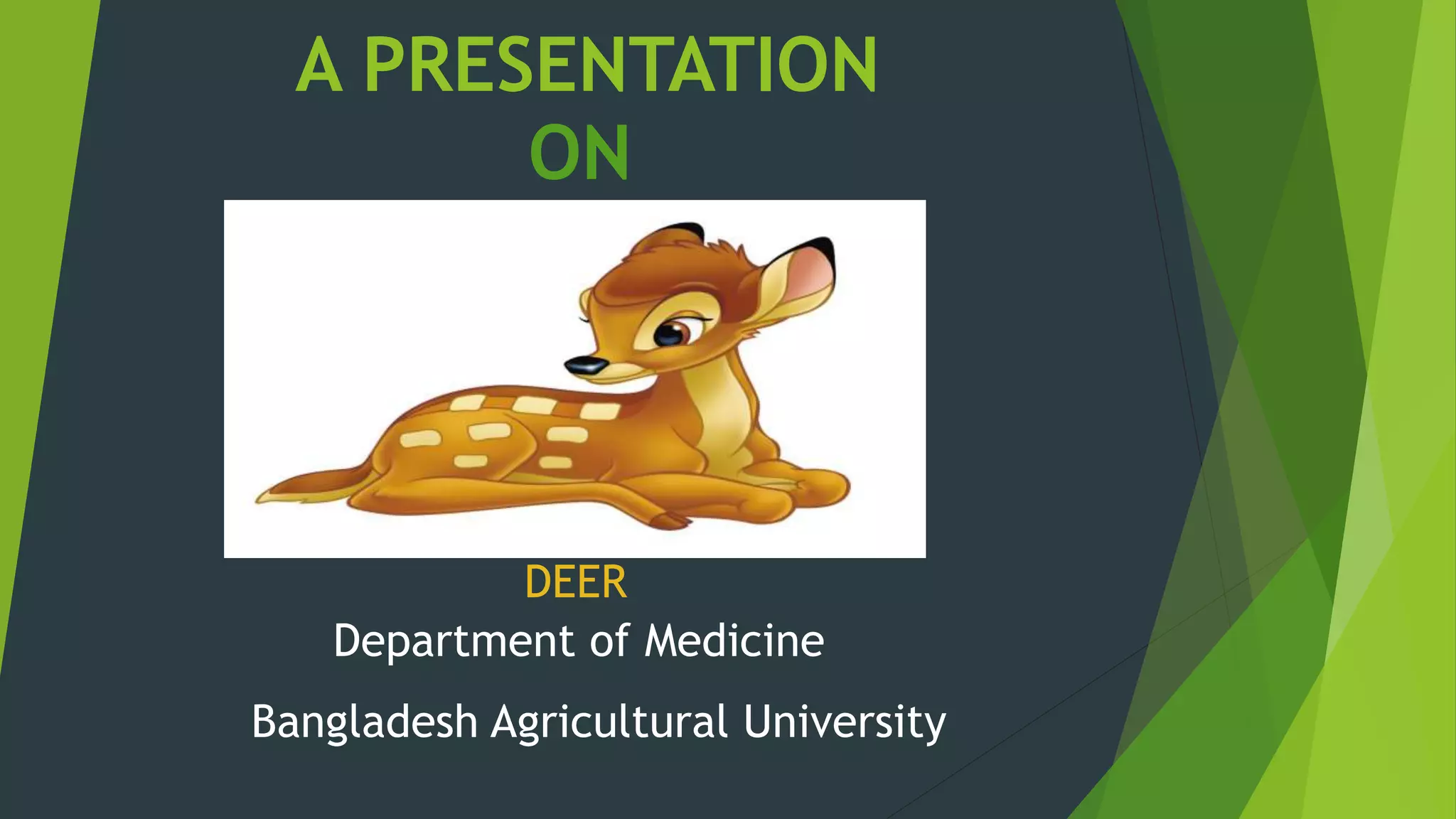
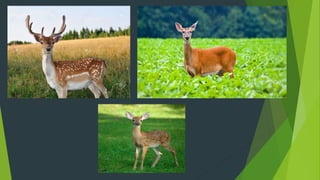
DEER
Department of Medicine
Bangladesh Agricultural University
Introduction
 Deer are even-toed ungulate mammals
 They form the family cervidae
 Wild deer have been present in the British
isles since pre-history
 There are about 60 species
 Six species(Red,Roe,Fallow,Sika,Muntjac &
Chinese water deer) living in the British isles
Taxonomy
Kingdom: Animalia
Phylum : Chordata
Class : Mammalia
Order : Artiodactyla
Infraoder : Pecora
Family : cervidae
Subfamilies : -Capreolinae
-Cervinae
-Hydropotinae
Antlers
 Only males have antler
 The antlers are deciduous and drop off after mating season
 Male use it during the rutting season
 A bucks antlers are covered with “velvet” while they are
growing.
http://www.deerhunting.ws/deeraging.htm
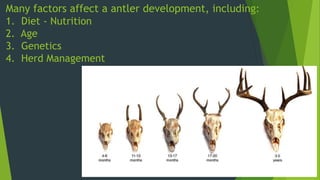
Many factors affect a antler development, including:
1. Diet - Nutrition
2. Age
3. Genetics
4. Herd Management
Behaviour
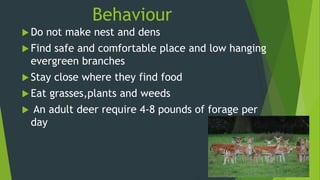
 Do not make nest and dens
 Find safe and comfortable place and low hanging
evergreen branches
 Stay close where they find food
 Eat grasses,plants and weeds
 An adult deer require 4-8 pounds of forage per
day
Charecteristics
 Cud chewing animal
 Four chambered of stomach
 Vision is best at night
 Coat is reddish brown in summer and turn to gray
brown in winter
 Have excellent smell and hearing capacity
 Can run 40 miles/hour
 Attractiveness power of spotted deer known as
chital in india
Restraining
 Minimum two people are required for handling
 Cover the eyes to calm the animal
 Antlers may be used for holding the head
 Roe deer may require sadation/general anesthesia
 “Walk-towards”net may also used for small deer
Reproduction
 The doe usually 1 or 2 fawns
 Most fawns are born during may and june
 The fawn can stand immediately after birth
Predators:
-Tiger
-wolves
-cougar
-Dogs
-people
Economics importance
 Meat
 Skin
 Antlers
 Hooves
 Horns
Bacterial disease
Tuberculosis
Johne”s Disease
Yersinosis
Leptospirosis
Brucellosis
Pasteurellosis
Anthrax
Salmonellosis and
Colibacilosis.
Viral diseases:
HS-white tailed deer
brain abscess
Blue tongue virus
chronic wastage disease ete.
Zoonotic disease:
Anaplasmosis
Brucellosis
Babesiosis
Cryptosporidiosis
Deer Paramyxovirus.
Drug used for treatment
 Enrofloxacin
 Oxytetracycline
 Trimethoprim sulfa
 Diazepam
 Xylazine
 Ketamin
 Ivermectin
 Dexamethasone
 caprofen
Deer
Deer

Deer

  • 1.
    A PRESENTATION ON DEER Department ofMedicine Bangladesh Agricultural University
  • 2.
    Introduction  Deer areeven-toed ungulate mammals  They form the family cervidae  Wild deer have been present in the British isles since pre-history  There are about 60 species  Six species(Red,Roe,Fallow,Sika,Muntjac & Chinese water deer) living in the British isles
  • 4.
    Taxonomy Kingdom: Animalia Phylum :Chordata Class : Mammalia Order : Artiodactyla Infraoder : Pecora Family : cervidae Subfamilies : -Capreolinae -Cervinae -Hydropotinae
  • 5.
    Antlers  Only maleshave antler  The antlers are deciduous and drop off after mating season  Male use it during the rutting season  A bucks antlers are covered with “velvet” while they are growing.
  • 6.
    http://www.deerhunting.ws/deeraging.htm Many factors affecta antler development, including: 1. Diet - Nutrition 2. Age 3. Genetics 4. Herd Management
  • 7.
    Behaviour  Do notmake nest and dens  Find safe and comfortable place and low hanging evergreen branches  Stay close where they find food  Eat grasses,plants and weeds  An adult deer require 4-8 pounds of forage per day
  • 8.
    Charecteristics  Cud chewinganimal  Four chambered of stomach  Vision is best at night  Coat is reddish brown in summer and turn to gray brown in winter  Have excellent smell and hearing capacity  Can run 40 miles/hour  Attractiveness power of spotted deer known as chital in india
  • 9.
    Restraining  Minimum twopeople are required for handling  Cover the eyes to calm the animal  Antlers may be used for holding the head  Roe deer may require sadation/general anesthesia  “Walk-towards”net may also used for small deer
  • 10.
    Reproduction  The doeusually 1 or 2 fawns  Most fawns are born during may and june  The fawn can stand immediately after birth Predators: -Tiger -wolves -cougar -Dogs -people
  • 11.
    Economics importance  Meat Skin  Antlers  Hooves  Horns
  • 12.
  • 13.
    Viral diseases: HS-white taileddeer brain abscess Blue tongue virus chronic wastage disease ete. Zoonotic disease: Anaplasmosis Brucellosis Babesiosis Cryptosporidiosis Deer Paramyxovirus.
  • 14.
    Drug used fortreatment  Enrofloxacin  Oxytetracycline  Trimethoprim sulfa  Diazepam  Xylazine  Ketamin  Ivermectin  Dexamethasone  caprofen

Editor's Notes

  • #7  Antler size development is affected by nutrition, age, genetics, and herd management. Nutritional intake is used for antler growth only after the body growth requirements are met Most deer don’t produce their largest set of antlers until after 41/2 years of age. To ensure an abundance of high quality food, herd size must be kept in balance with the habitat. This often requires the harvest of does.