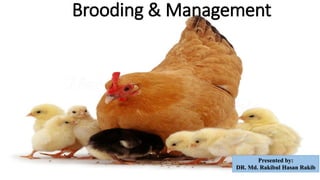
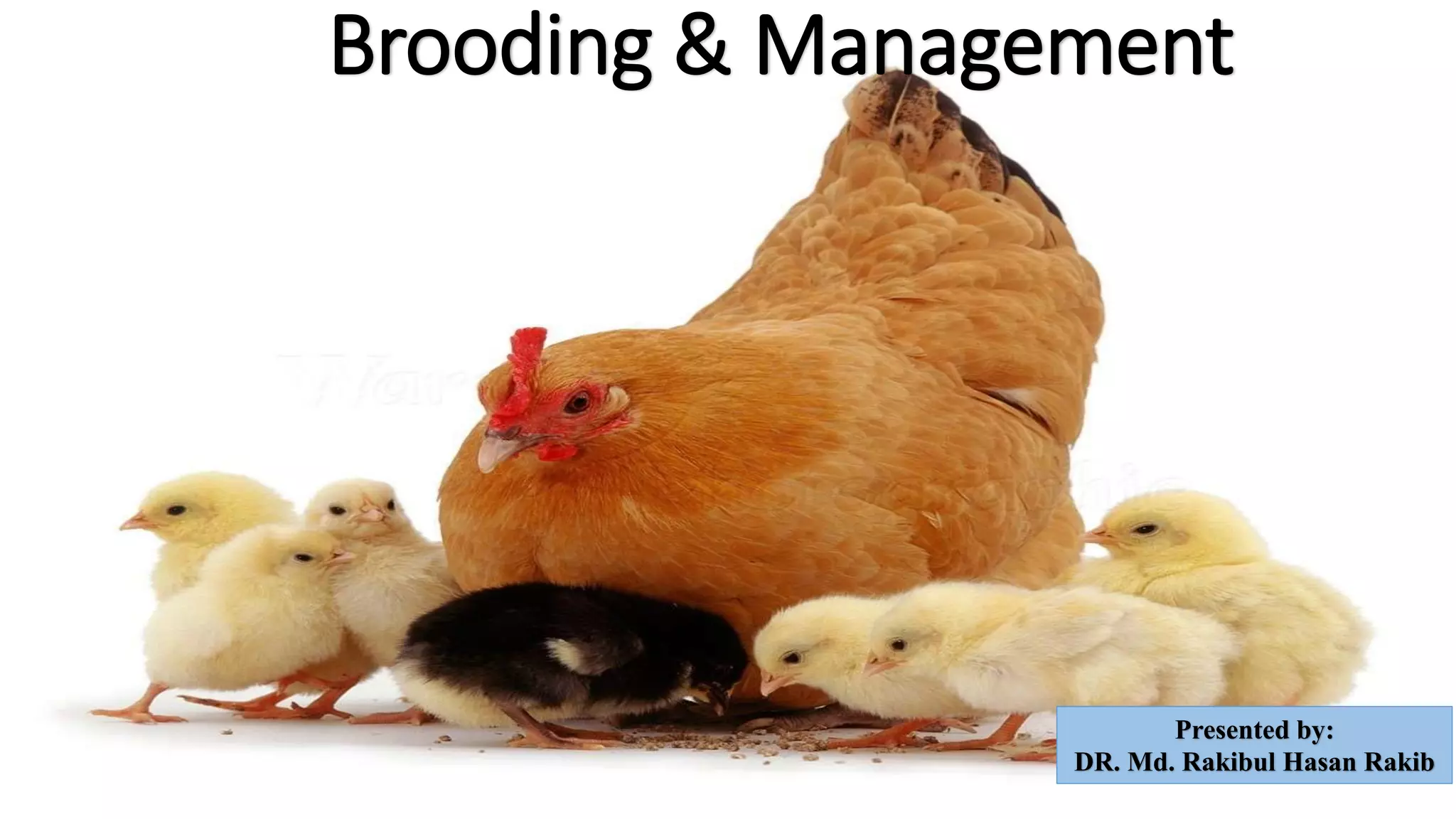






Brooding & Management
Presented by:
DR. Md. Rakibul Hasan Rakib
– Introduction
– Aims
– System of Brooding
– Good Chicks
– Brooder House
– Lighting
– Management
– Post Operative Care
– Resources
– Acknowledgement
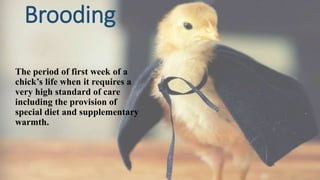
Brooding
The period of first week of a
chick’s life when it requires a
very high standard of care
including the provision of
special diet and supplementary
warmth.
Benifits
• To maintain Body temperature.
• To accelerate growth rate in the first week.
• To enhancce structural development and
feed capacity intake.
• Allow good development of internal organs.
• Ensure early uniformity.
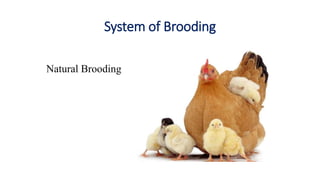
System of Brooding
Natural Brooding
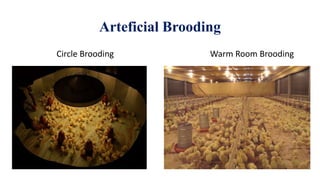
Arteficial Brooding
Circle Brooding Warm Room Brooding
Quality of good chick
• Birds Should be Active
• Average weight 36-38 gm (Layer)
38-42 gm (Broiler)
• Height 17.5 cm
• Clean eye
• Abdomen should be soft and firm
• Naval area should be dry
• Free from any abnormality
Pre Brooding
Litter remove Cleaning New Litter placement
Fumigation Disinfectanat
Check list Before Chick Arrival
•Litter
•Temperature
•Humidity
•Water
•Feed
•Light
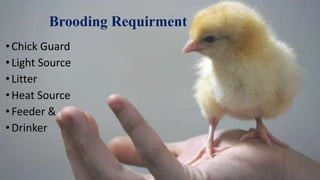
Brooding Requirment
• Chick Guard
• Light Source
• Litter
• Heat Source
• Feeder &
• Drinker
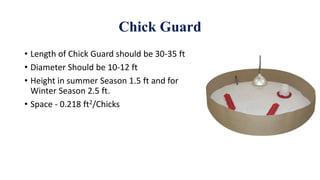
Chick Guard
• Length of Chick Guard should be 30-35 ft
• Diameter Should be 10-12 ft
• Height in summer Season 1.5 ft and for
Winter Season 2.5 ft.
• Space - 0.218 ft2/Chicks
Light
 In Summer season 2-3 Watt/Chicks
 In winter season 4-6 Watt/Chicks
 Brooding 25-30 Lux Minimum
 Grower to sell out 5-10 lux minimum
 Time of lighting 23 hours at first day
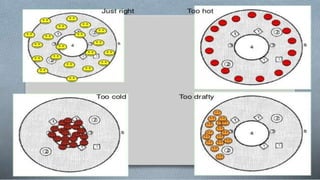
Temperature
• Summer season - 600 Watt
• Winter Season - 800 to 1000 Watt
• Pre heating minimum 3 hours before chick placement at the Tm of 29 to 31 °C
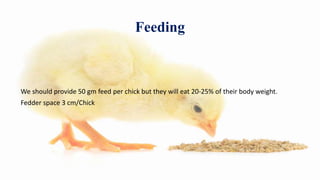
Feeding
We should provide 50 gm feed per chick but they will eat 20-25% of their body weight.
Fedder space 3 cm/Chick
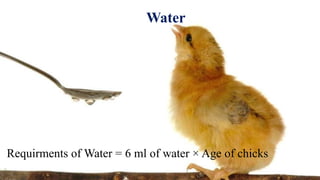
Water
Requirments of Water = 6 ml of water × Age of chicks
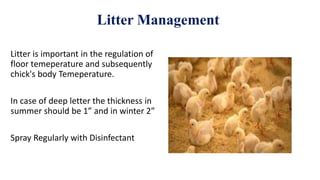
Litter Management
Litter is important in the regulation of
floor temeperature and subsequently
chick's body Temeperature.
In case of deep letter the thickness in
summer should be 1” and in winter 2”
Spray Regularly with Disinfectant
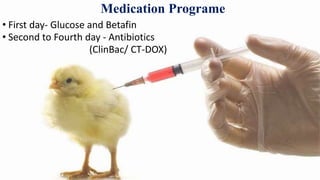
Medication Programe
• First day- Glucose and Betafin
• Second to Fourth day - Antibiotics
(ClinBac/ CT-DOX)
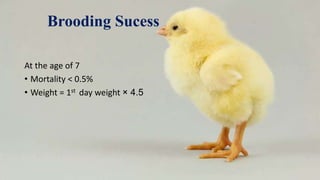
Brooding Sucess
At the age of 7
• Mortality < 0.5%
• Weight = 1st day weight × 4.5
Thanks For
Attention

Basic Brooding house management

  • 1.
    Brooding & Management Presentedby: DR. Md. Rakibul Hasan Rakib
  • 2.
    – Introduction – Aims –System of Brooding – Good Chicks – Brooder House – Lighting – Management – Post Operative Care – Resources – Acknowledgement
  • 3.
    Brooding The period offirst week of a chick’s life when it requires a very high standard of care including the provision of special diet and supplementary warmth.
  • 4.
    Benifits • To maintainBody temperature. • To accelerate growth rate in the first week. • To enhancce structural development and feed capacity intake. • Allow good development of internal organs. • Ensure early uniformity.
  • 5.
  • 6.
  • 7.
    Quality of goodchick • Birds Should be Active • Average weight 36-38 gm (Layer) 38-42 gm (Broiler) • Height 17.5 cm • Clean eye • Abdomen should be soft and firm • Naval area should be dry • Free from any abnormality
  • 8.
    Pre Brooding Litter removeCleaning New Litter placement Fumigation Disinfectanat
  • 9.
    Check list BeforeChick Arrival •Litter •Temperature •Humidity •Water •Feed •Light
  • 10.
    Brooding Requirment • ChickGuard • Light Source • Litter • Heat Source • Feeder & • Drinker
  • 11.
    Chick Guard • Lengthof Chick Guard should be 30-35 ft • Diameter Should be 10-12 ft • Height in summer Season 1.5 ft and for Winter Season 2.5 ft. • Space - 0.218 ft2/Chicks
  • 12.
    Light  In Summerseason 2-3 Watt/Chicks  In winter season 4-6 Watt/Chicks  Brooding 25-30 Lux Minimum  Grower to sell out 5-10 lux minimum  Time of lighting 23 hours at first day
  • 13.
    Temperature • Summer season- 600 Watt • Winter Season - 800 to 1000 Watt • Pre heating minimum 3 hours before chick placement at the Tm of 29 to 31 °C
  • 15.
    Feeding We should provide50 gm feed per chick but they will eat 20-25% of their body weight. Fedder space 3 cm/Chick
  • 16.
    Water Requirments of Water= 6 ml of water × Age of chicks
  • 17.
    Litter Management Litter isimportant in the regulation of floor temeperature and subsequently chick's body Temeperature. In case of deep letter the thickness in summer should be 1” and in winter 2” Spray Regularly with Disinfectant
  • 18.
    Medication Programe • Firstday- Glucose and Betafin • Second to Fourth day - Antibiotics (ClinBac/ CT-DOX)
  • 19.
    Brooding Sucess At theage of 7 • Mortality < 0.5% • Weight = 1st day weight × 4.5
  • 20.

Editor's Notes

  • #5 1.Thermoregulatory sytem.2. Immuno system 3. Digestive 4. Feathering 5. Learning to eat and drinks.