Decision Making
Prepared By
Kindly restrict the use of slides for personal purpose.
Please seek permission to reproduce the same in public forms and presentations.
Manu Melwin Joy
Assistant Professor
Ilahia School of Management Studies
Kerala, India.
Phone – 9744551114
Mail – manu_melwinjoy@yahoo.com
Agenda
• Decision Making.
• Individual Decision making
1. Pareto’s principle by Vilfredo Pareto.
2. Urgent/Important matrix by Stephen covey.
3. ABCD method by Brian Tracy.
4. Grid Analysis
5. Star bursting.
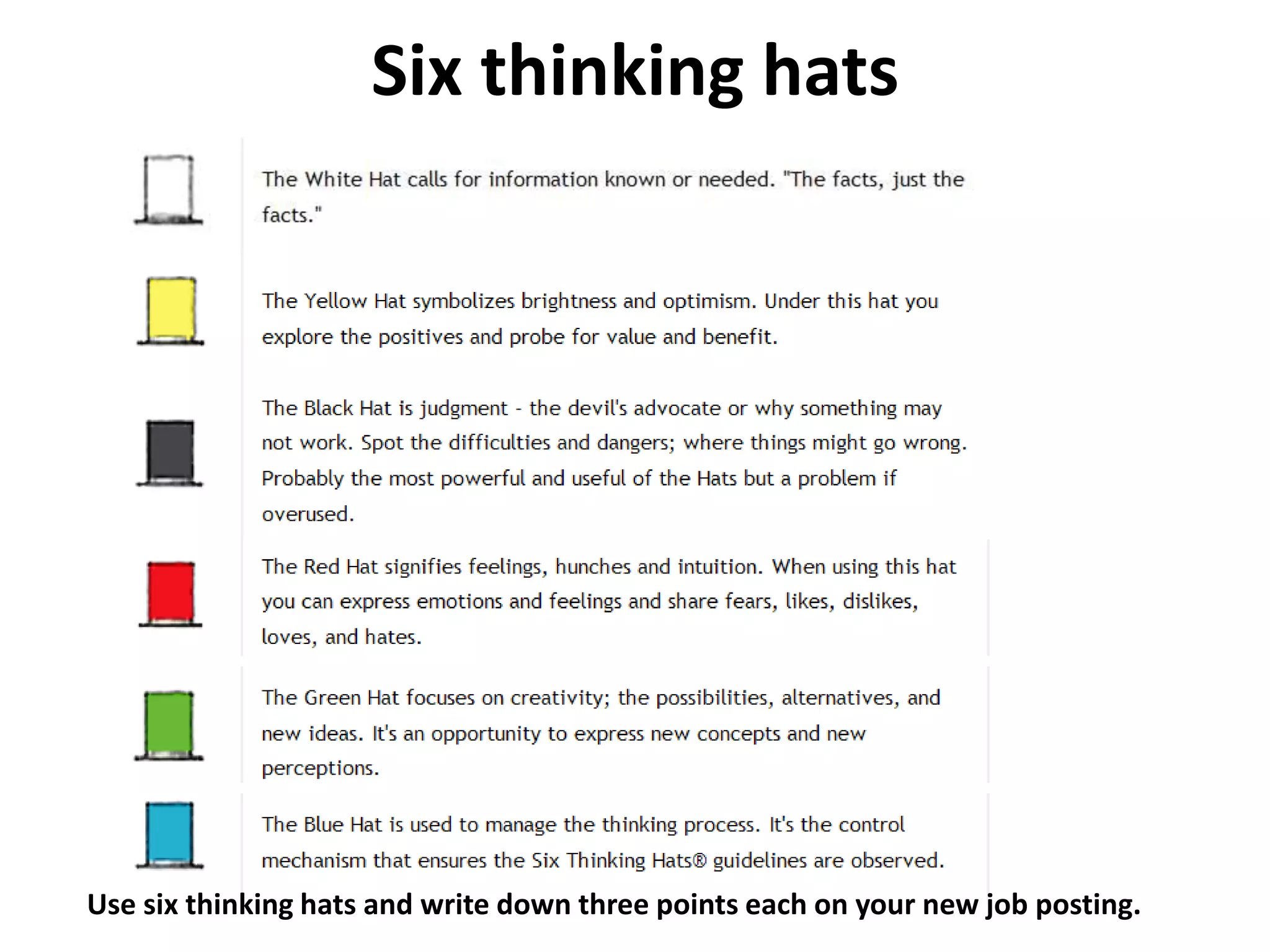
6. Six thinking hat by Edward De Bono.
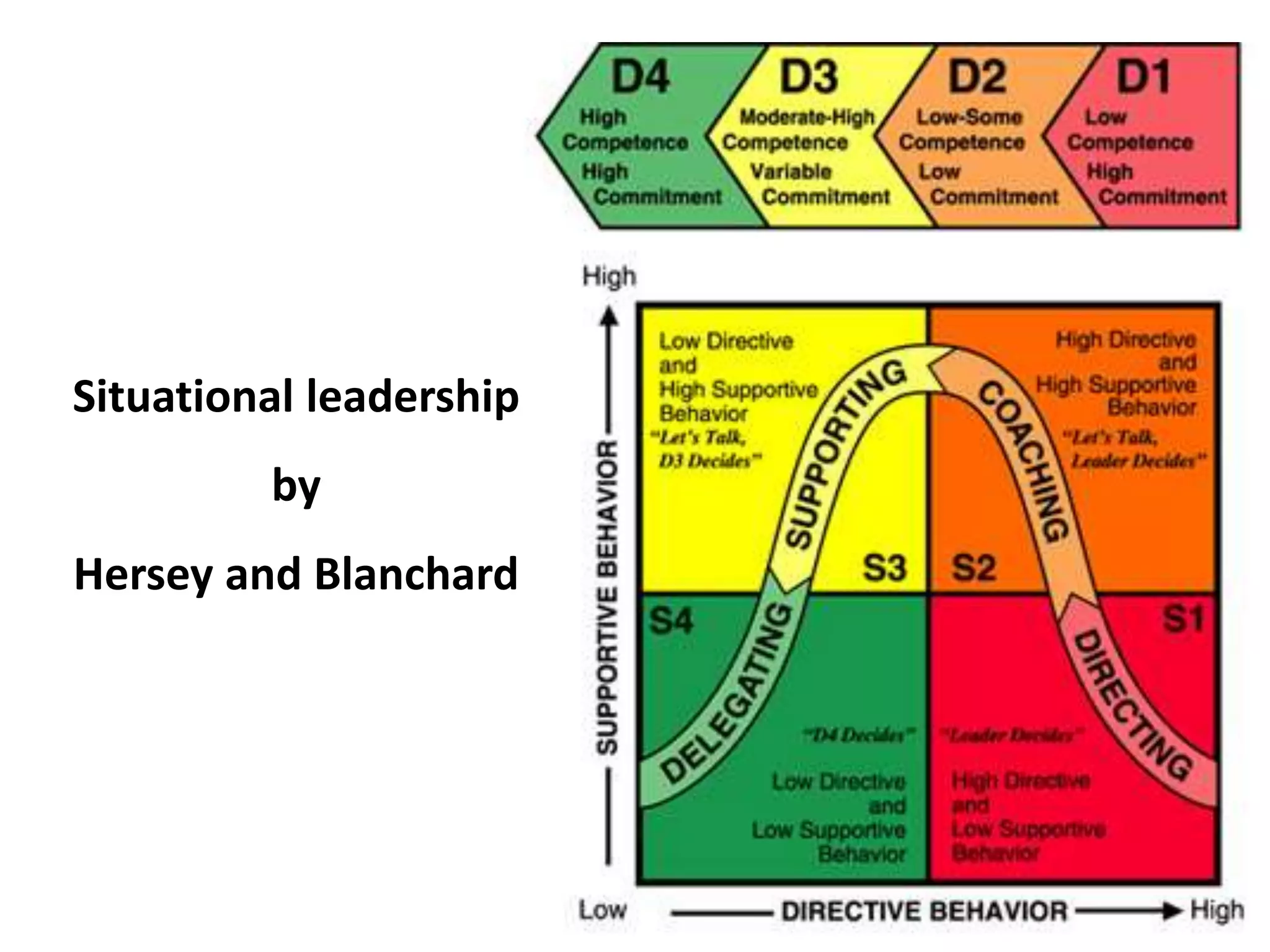
7. Situational leadership by Hersey and Blanchard
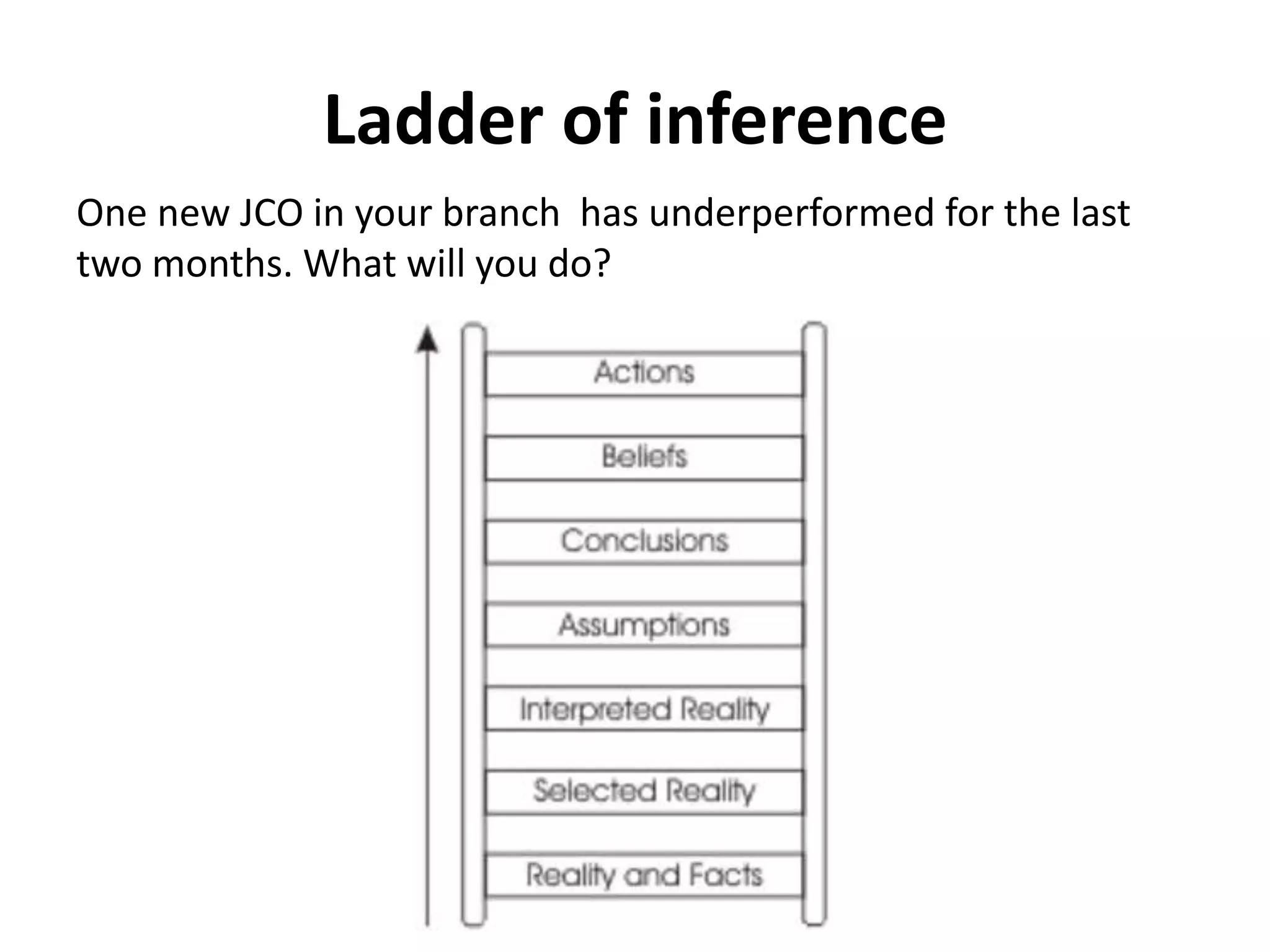
8. Ladder of inference by Chris Argyris.
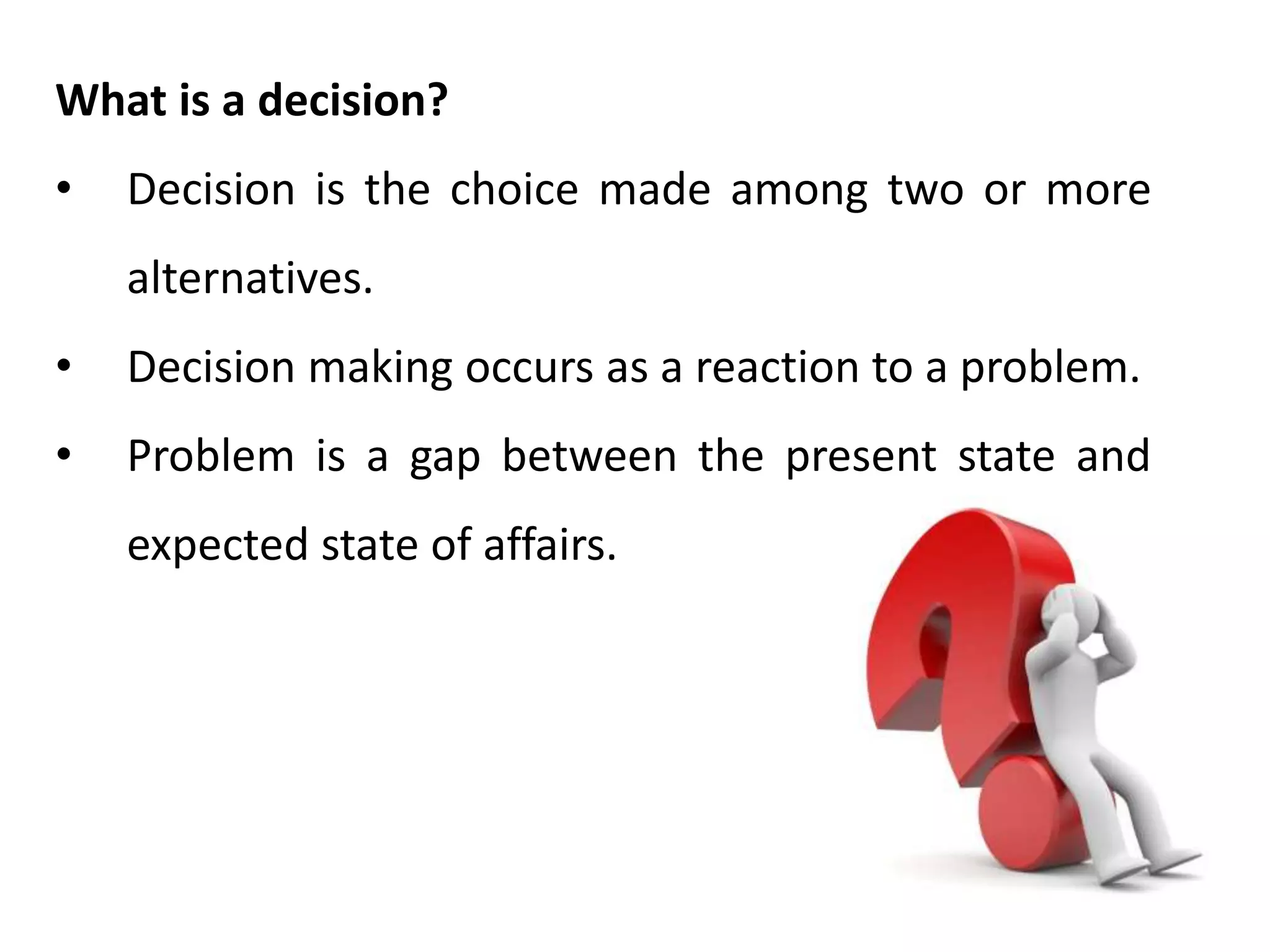
What is a decision?
• Decision is the choice made among two or more
alternatives.
• Decision making occurs as a reaction to a problem.
• Problem is a gap between the present state and
expected state of affairs.
Write down one difficult decision you have
taken in your life.
• What
• Why
• How
• Result
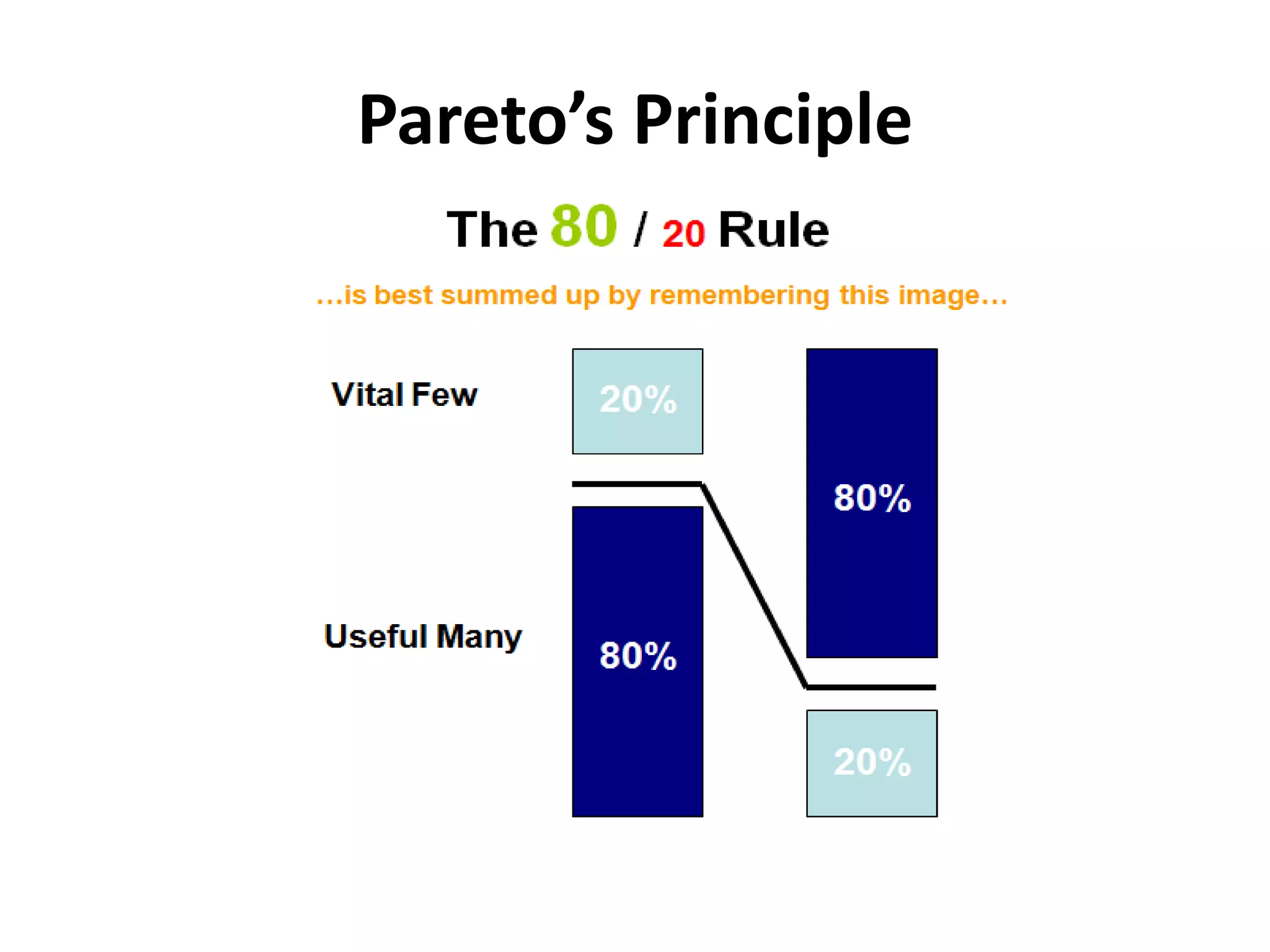
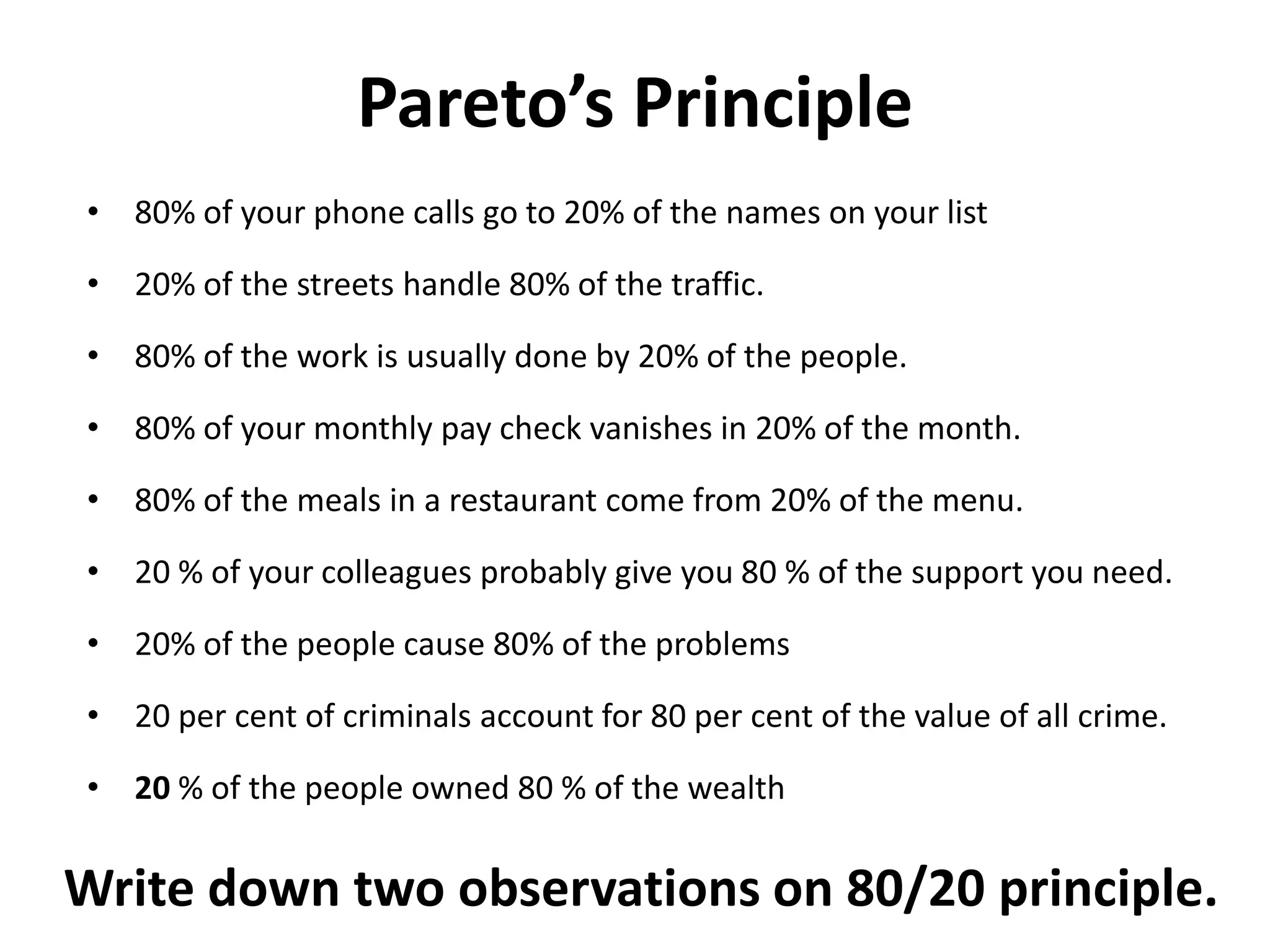
Pareto’s Principle
Pareto’s Principle
• 80% of your phone calls go to 20% of the names on your list
• 20% of the streets handle 80% of the traffic.
• 80% of the work is usually done by 20% of the people.
• 80% of your monthly pay check vanishes in 20% of the month.
• 80% of the meals in a restaurant come from 20% of the menu.
• 20 % of your colleagues probably give you 80 % of the support you need.
• 20% of the people cause 80% of the problems
• 20 per cent of criminals account for 80 per cent of the value of all crime.
• 20 % of the people owned 80 % of the wealth
Write down two observations on 80/20 principle.
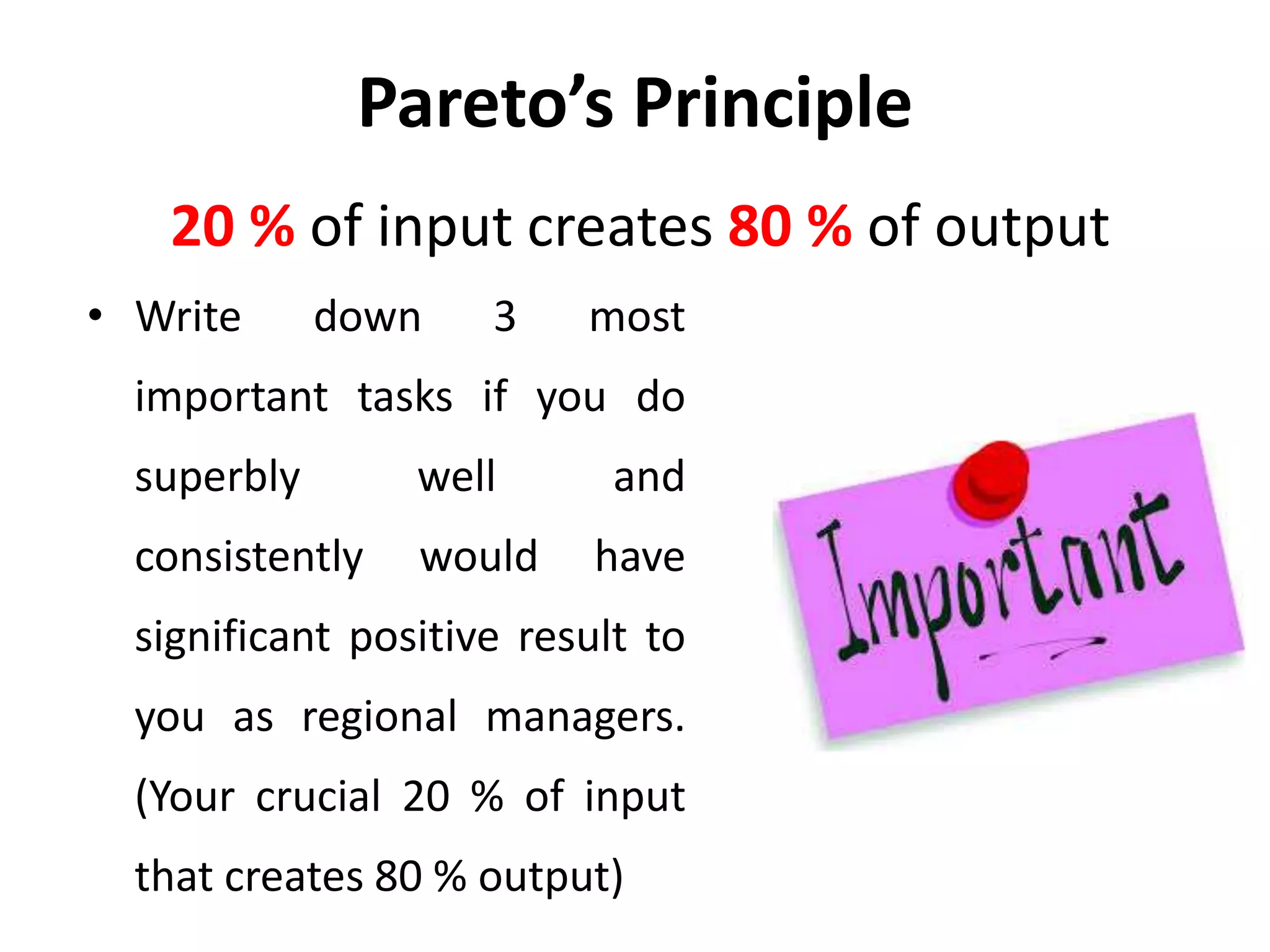
Pareto’s Principle
• Write down 3 most
important tasks if you do
superbly well and
consistently would have
significant positive result to
you as regional managers.
(Your crucial 20 % of input
that creates 80 % output)
20 % of input creates 80 % of output
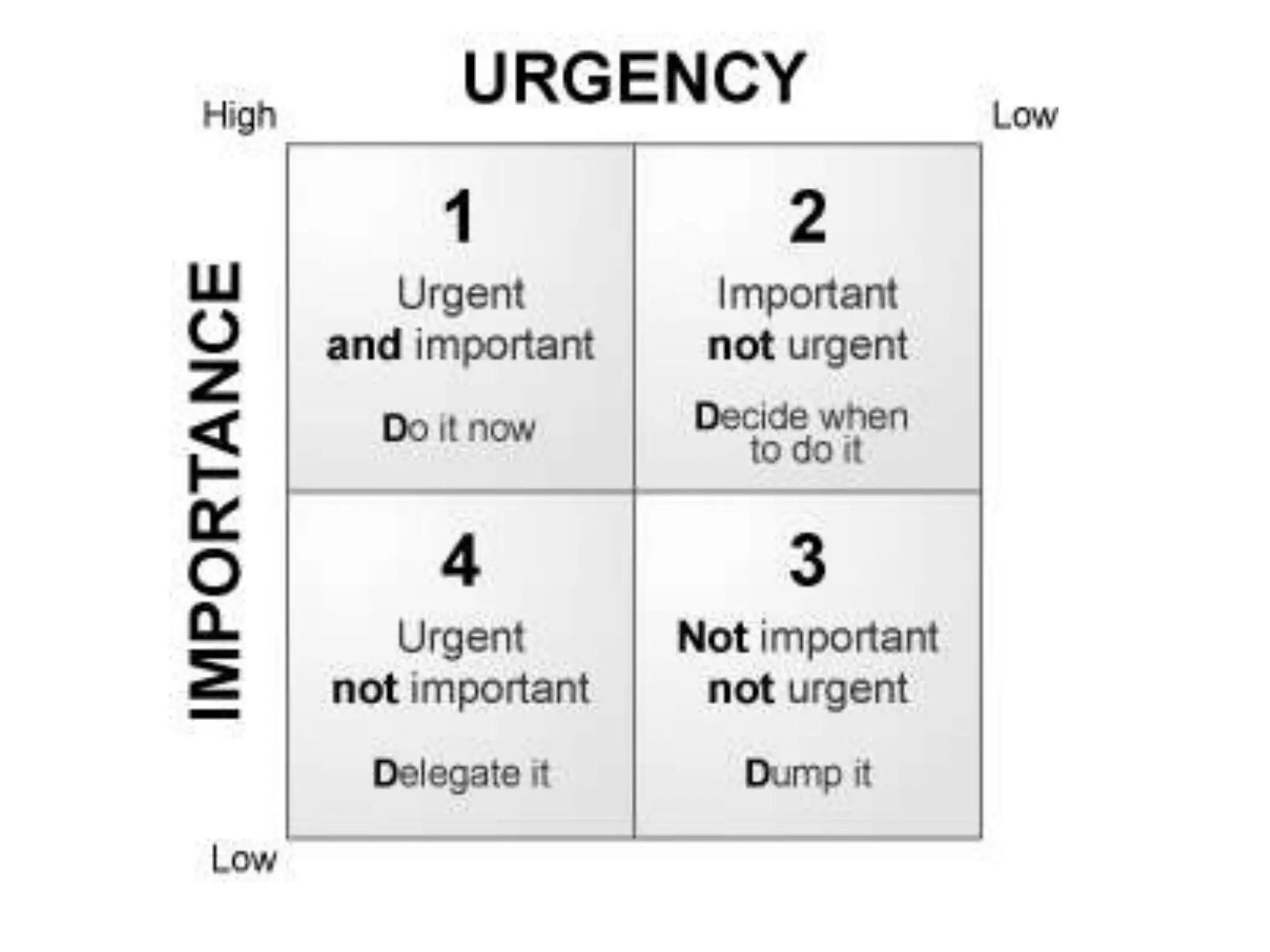
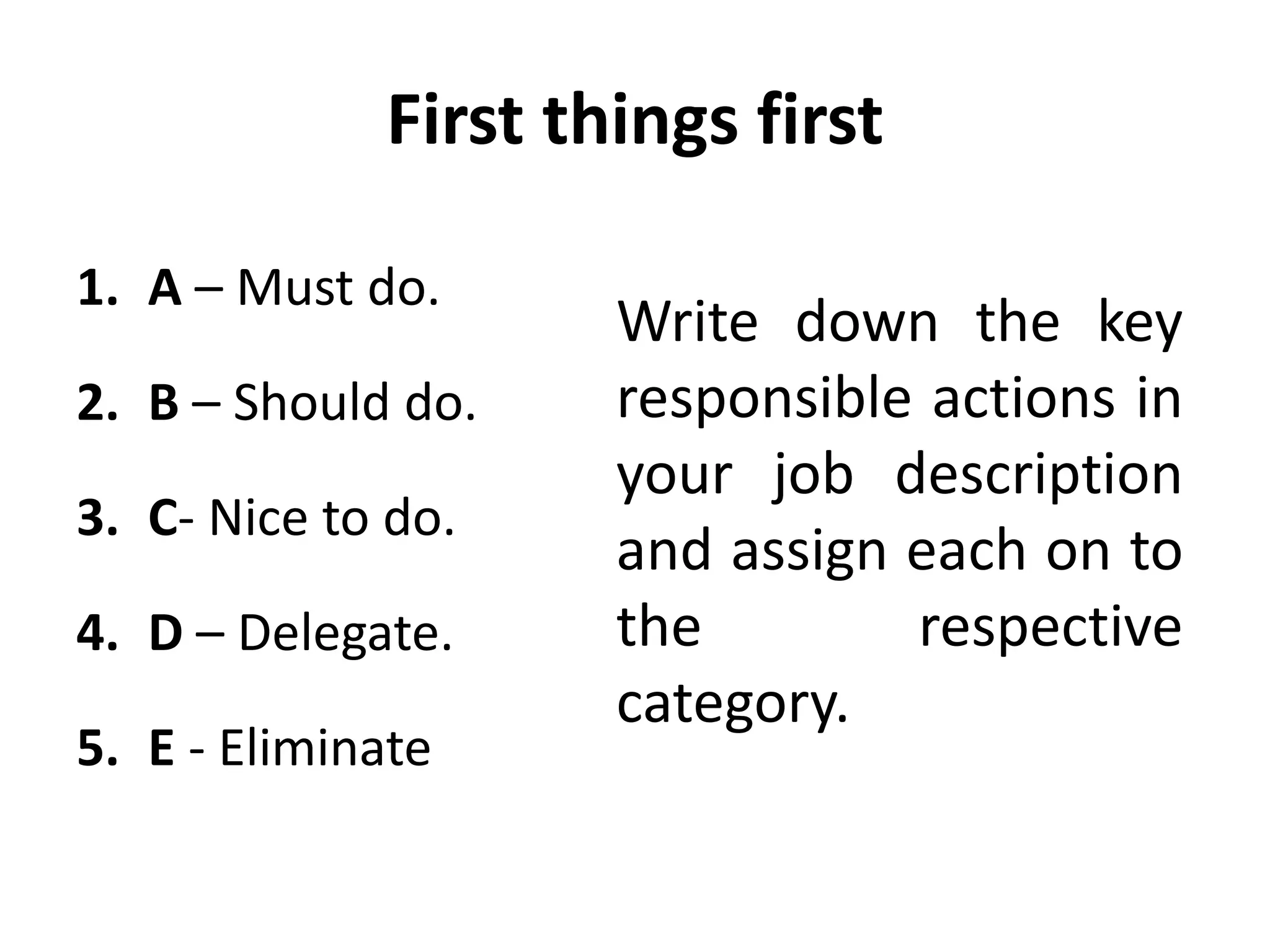
First things first
1. A – Must do.
2. B – Should do.
3. C- Nice to do.
4. D – Delegate.
5. E - Eliminate
Write down the key
responsible actions in
your job description
and assign each on to
the respective
category.
Pareto’s Principle
• What are the 3 most
important tasks that a
BMs/ ABMs/COs should
do?
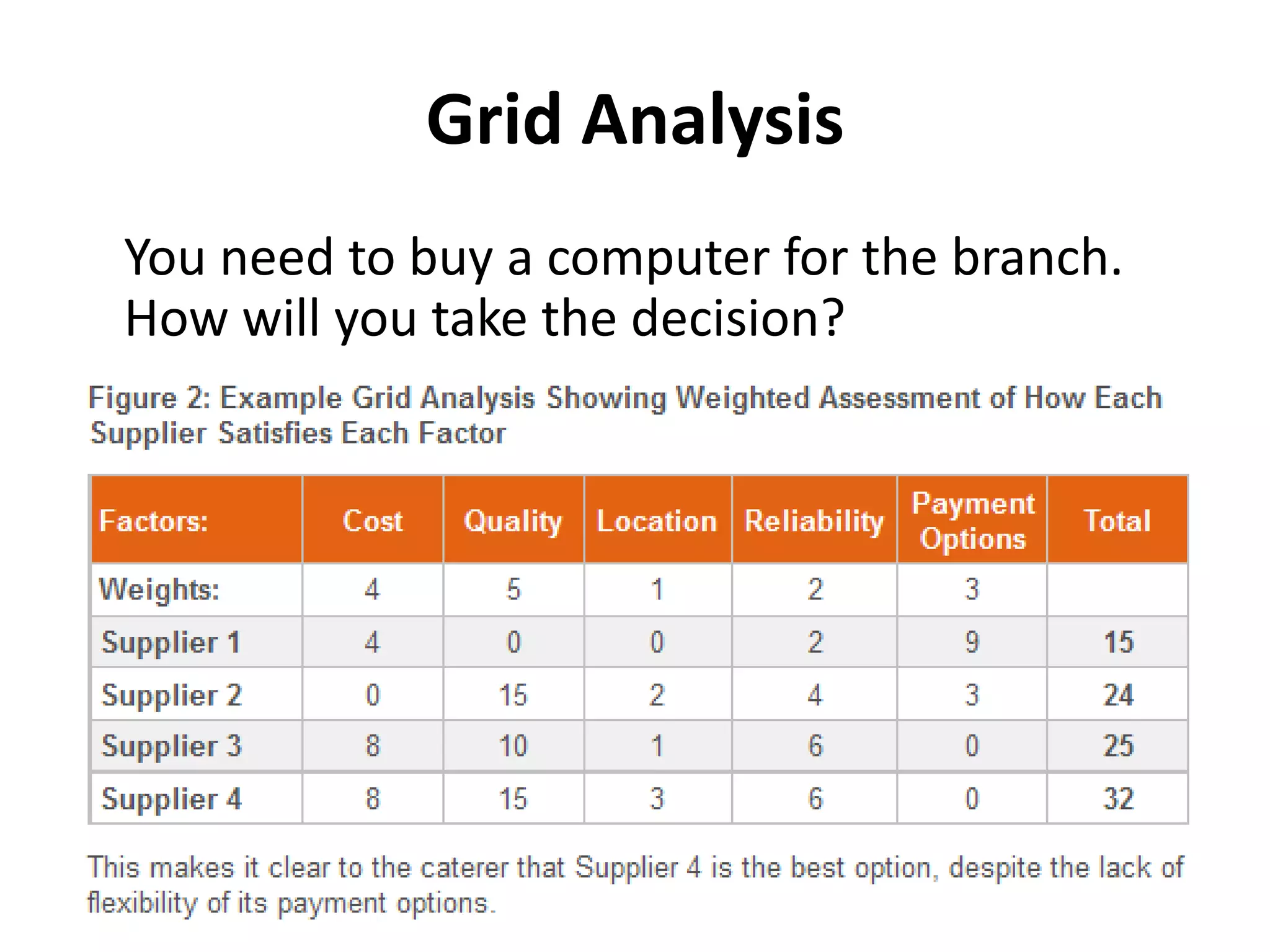
Grid Analysis
You need to buy a computer for the branch.
How will you take the decision?
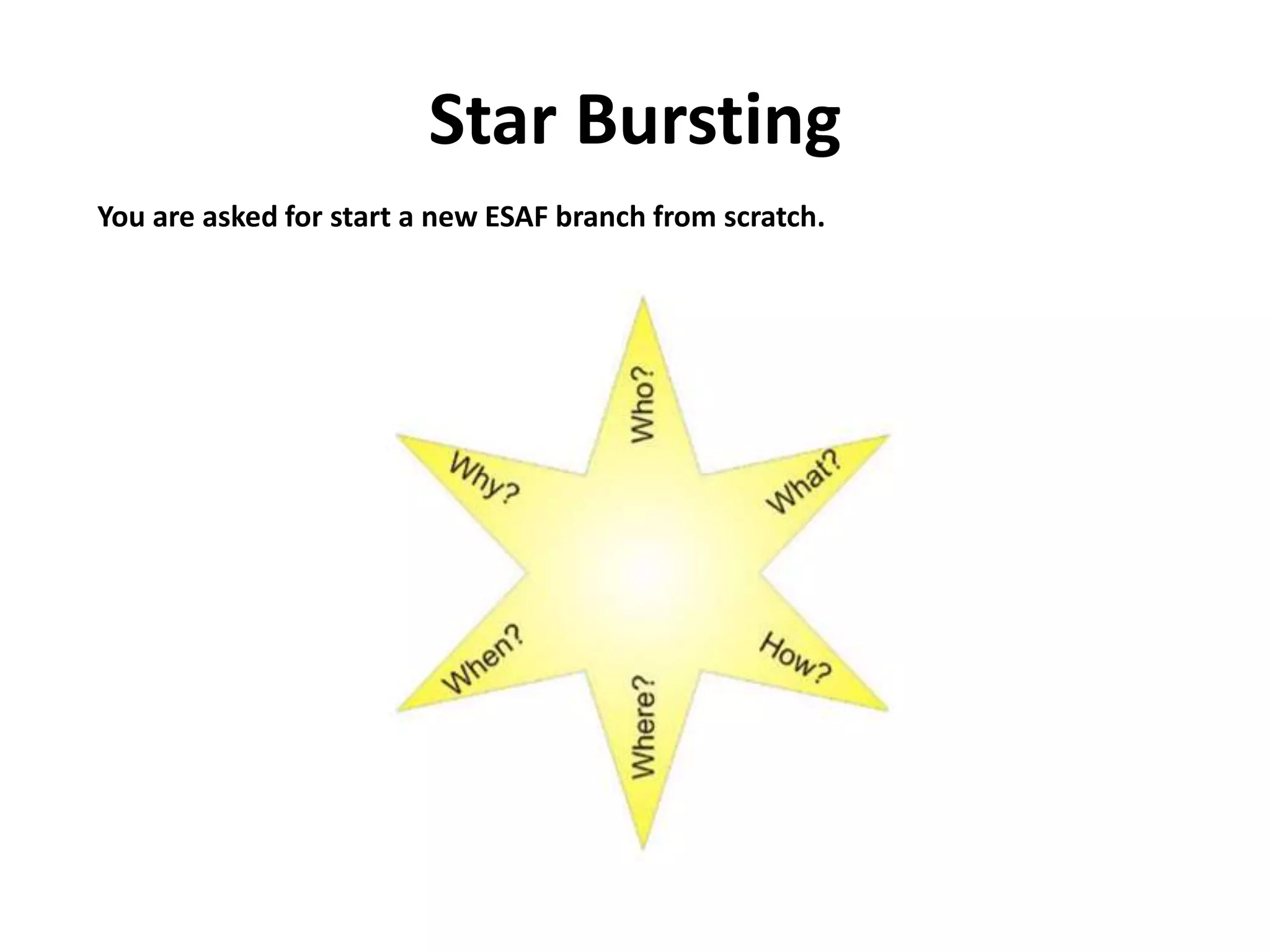
Star Bursting
You are asked for start a new ESAF branch from scratch.
Six thinking hats
Use six thinking hats and write down three points each on your new job posting.
Situational leadership
by
Hersey and Blanchard
Ladder of inference
One new JCO in your branch has underperformed for the last
two months. What will you do?
Recap of main points
Decision Making.
1. Pareto’s principle by Vilfredo Pareto.
2. Urgent/Important matrix by Stephen covey.
3. ABCD method by Brian Tracy
4. Grid Analysis.
5. Star bursting.
6. Six thinking hats by Edward D Bono.
7. Situational leadership by Hersey and Blanchard
8. Ladder of inference by Chris Argyris.
Decision making - Management Concepts - Manu Melwin Joy - Training Tools - Conceptual Skills

Decision making - Management Concepts - Manu Melwin Joy - Training Tools - Conceptual Skills

  • 1.
  • 2.
    Prepared By Kindly restrictthe use of slides for personal purpose. Please seek permission to reproduce the same in public forms and presentations. Manu Melwin Joy Assistant Professor Ilahia School of Management Studies Kerala, India. Phone – 9744551114 Mail – manu_melwinjoy@yahoo.com
  • 3.
    Agenda • Decision Making. •Individual Decision making 1. Pareto’s principle by Vilfredo Pareto. 2. Urgent/Important matrix by Stephen covey. 3. ABCD method by Brian Tracy. 4. Grid Analysis 5. Star bursting. 6. Six thinking hat by Edward De Bono. 7. Situational leadership by Hersey and Blanchard 8. Ladder of inference by Chris Argyris.
  • 4.
    What is adecision? • Decision is the choice made among two or more alternatives. • Decision making occurs as a reaction to a problem. • Problem is a gap between the present state and expected state of affairs.
  • 5.
    Write down onedifficult decision you have taken in your life. • What • Why • How • Result
  • 6.
  • 7.
    Pareto’s Principle • 80%of your phone calls go to 20% of the names on your list • 20% of the streets handle 80% of the traffic. • 80% of the work is usually done by 20% of the people. • 80% of your monthly pay check vanishes in 20% of the month. • 80% of the meals in a restaurant come from 20% of the menu. • 20 % of your colleagues probably give you 80 % of the support you need. • 20% of the people cause 80% of the problems • 20 per cent of criminals account for 80 per cent of the value of all crime. • 20 % of the people owned 80 % of the wealth Write down two observations on 80/20 principle.
  • 8.
    Pareto’s Principle • Writedown 3 most important tasks if you do superbly well and consistently would have significant positive result to you as regional managers. (Your crucial 20 % of input that creates 80 % output) 20 % of input creates 80 % of output
  • 11.
    First things first 1.A – Must do. 2. B – Should do. 3. C- Nice to do. 4. D – Delegate. 5. E - Eliminate Write down the key responsible actions in your job description and assign each on to the respective category.
  • 12.
    Pareto’s Principle • Whatare the 3 most important tasks that a BMs/ ABMs/COs should do?
  • 13.
    Grid Analysis You needto buy a computer for the branch. How will you take the decision?
  • 14.
    Star Bursting You areasked for start a new ESAF branch from scratch.
  • 15.
    Six thinking hats Usesix thinking hats and write down three points each on your new job posting.
  • 16.
  • 17.
    Ladder of inference Onenew JCO in your branch has underperformed for the last two months. What will you do?
  • 18.
    Recap of mainpoints Decision Making. 1. Pareto’s principle by Vilfredo Pareto. 2. Urgent/Important matrix by Stephen covey. 3. ABCD method by Brian Tracy 4. Grid Analysis. 5. Star bursting. 6. Six thinking hats by Edward D Bono. 7. Situational leadership by Hersey and Blanchard 8. Ladder of inference by Chris Argyris.