Data vs. Information
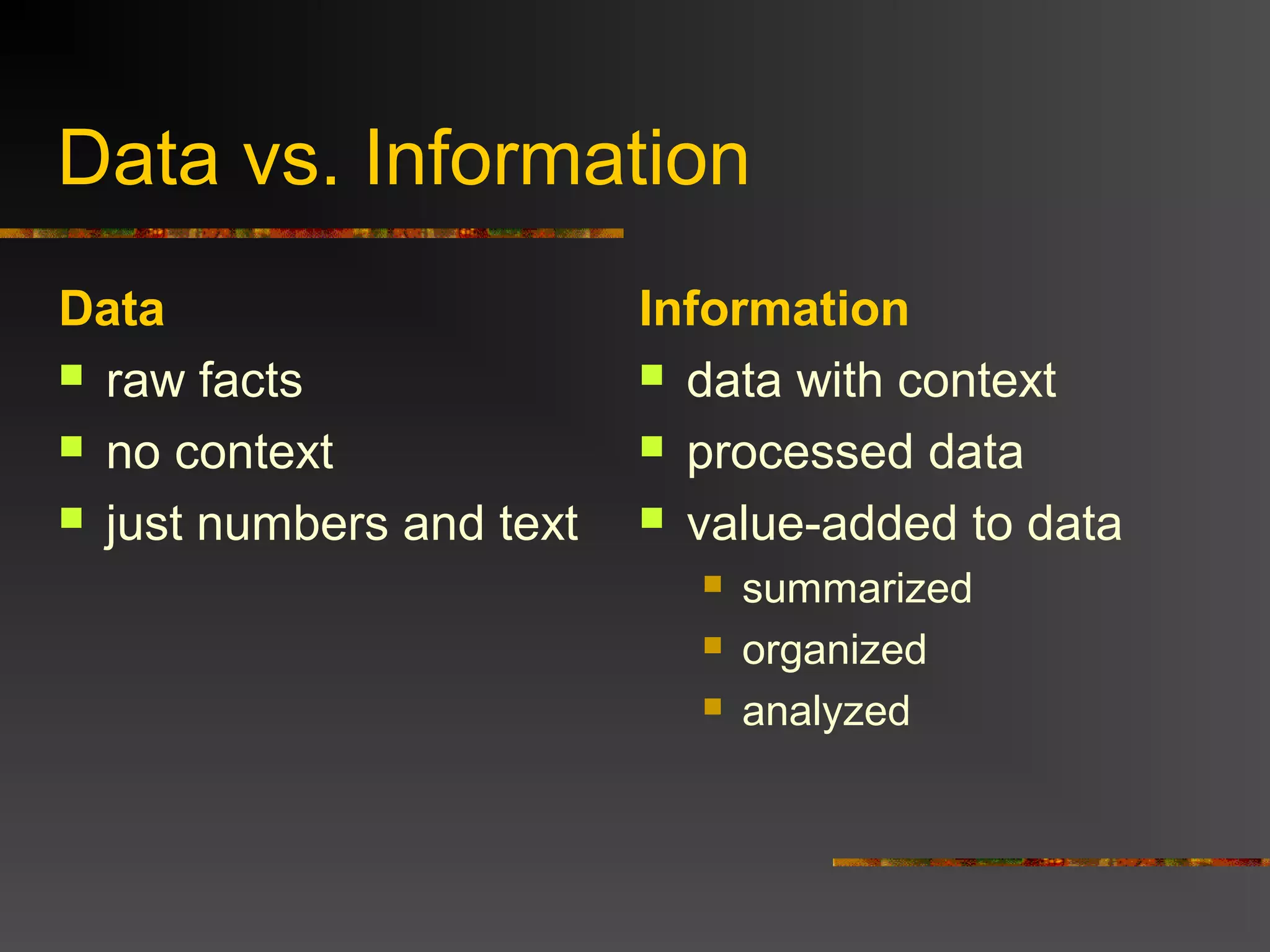
Data                      Information
 raw facts                data with context

 no context               processed data

 just numbers and text    value-added to data
                               summarized
                               organized
                               analyzed
Data vs. Information
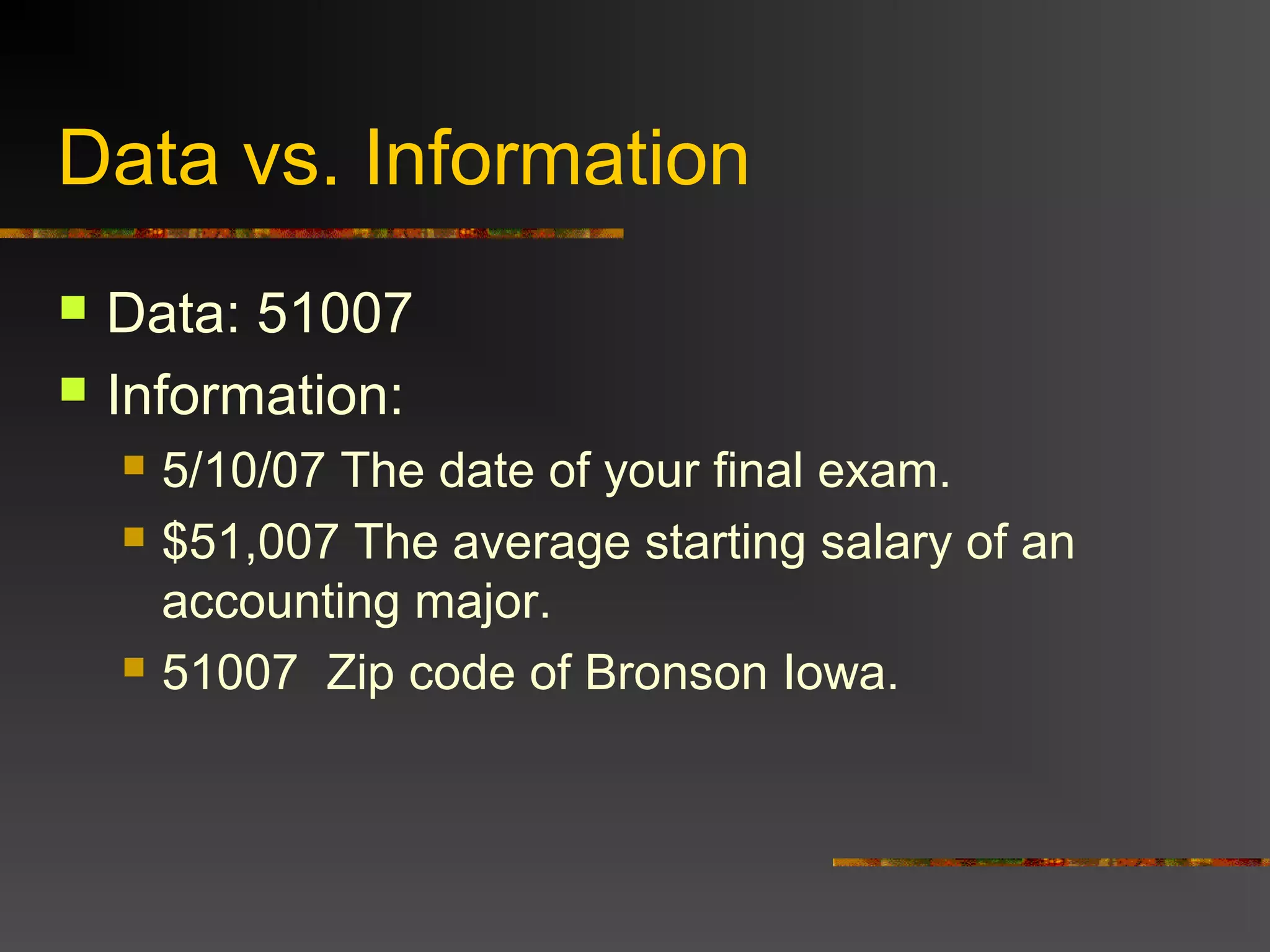
   Data: 51007
   Information:
       5/10/07 The date of your final exam.
       $51,007 The average starting salary of an
        accounting major.
       51007 Zip code of Bronson Iowa.
Data vs. Information
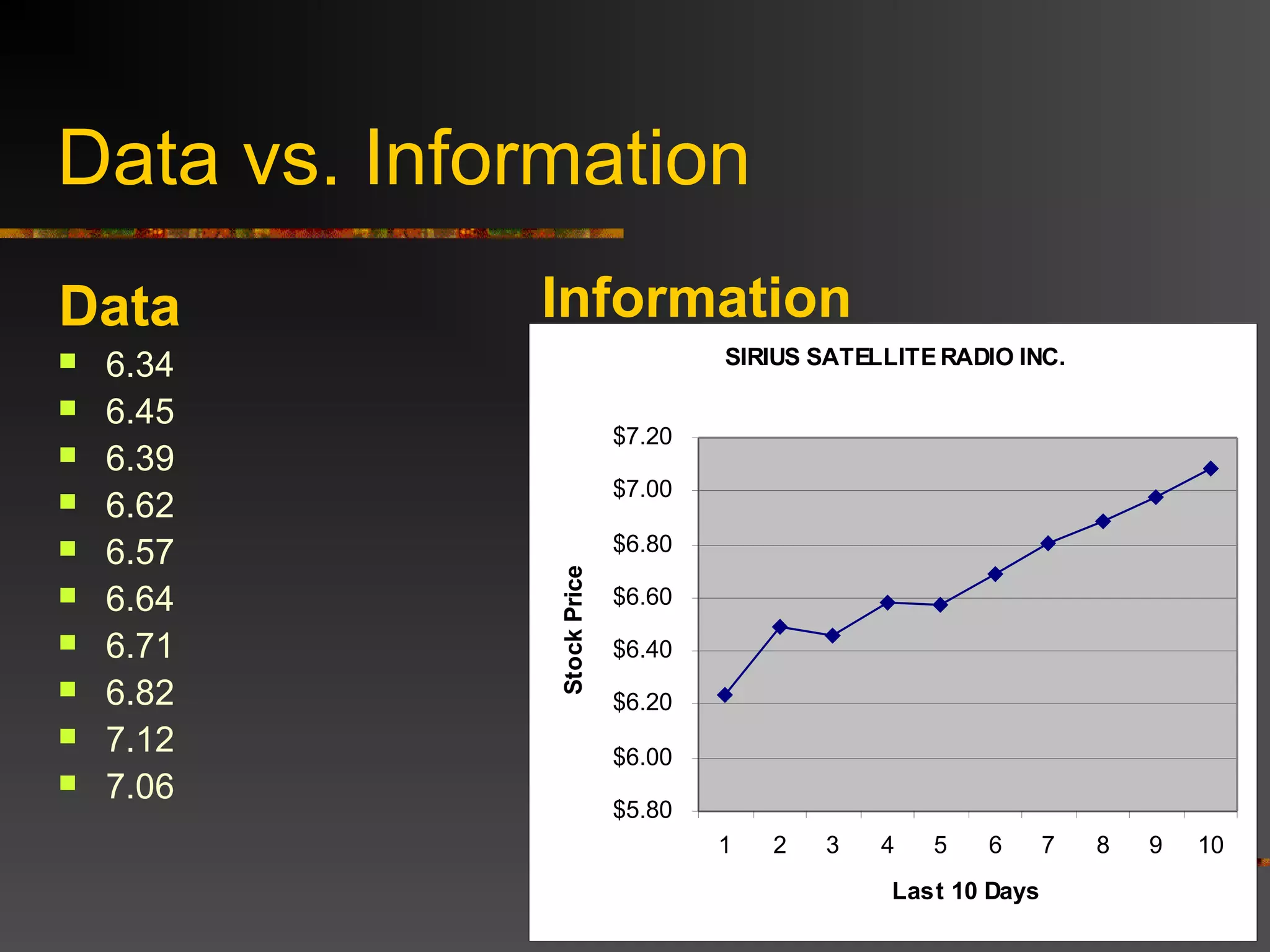
Data         Information
   6.34                            SIRIUS SATELLITE RADIO INC.

   6.45
                            $7.20
   6.39
                            $7.00
   6.62
   6.57                    $6.80
              Stock Price
   6.64                    $6.60
   6.71                    $6.40
   6.82                    $6.20
   7.12                    $6.00
   7.06
                            $5.80
                                    1   2   3   4   5   6       7   8   9   10
                                                 Last 10 Days
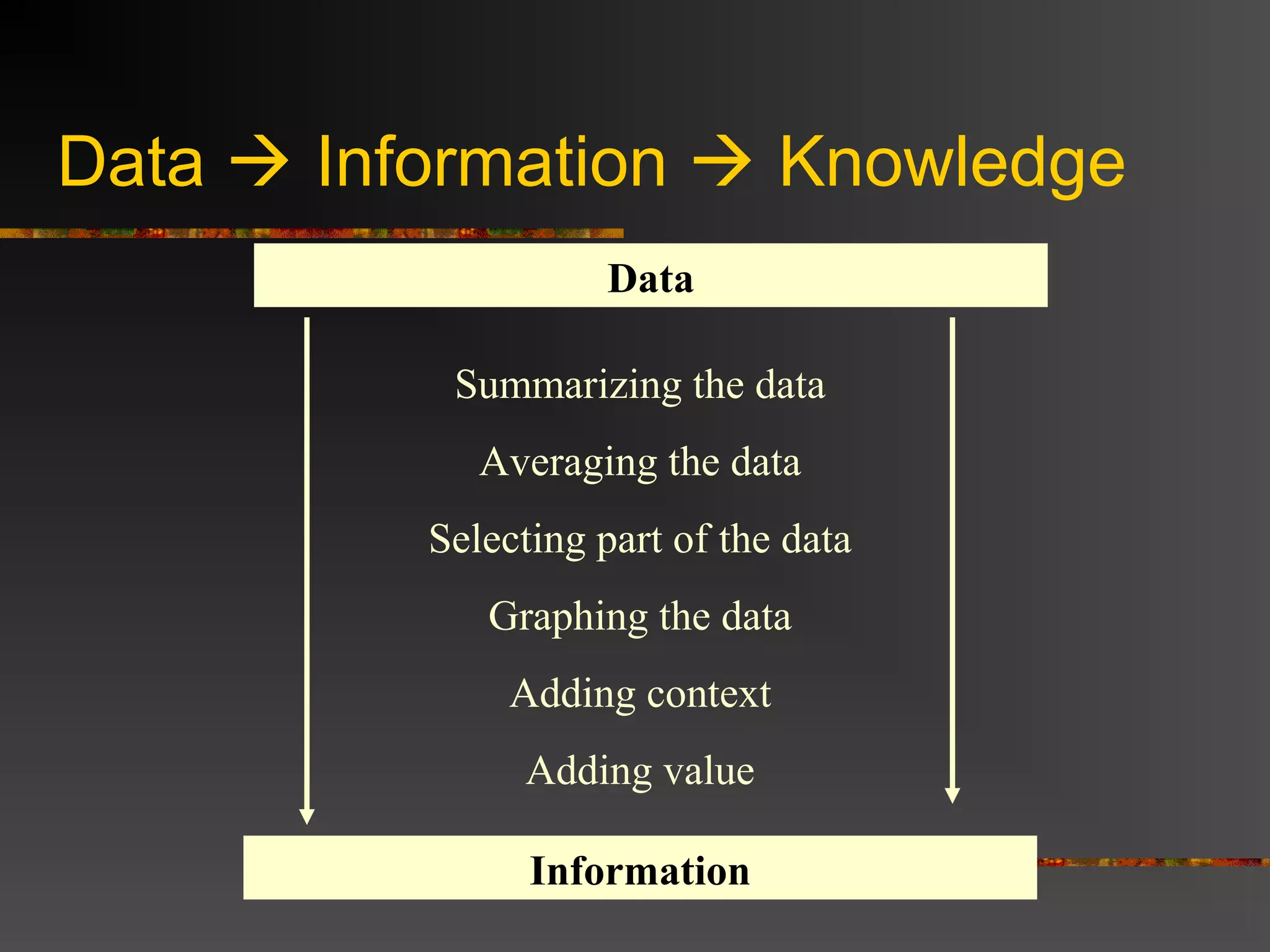
Data  Information  Knowledge
                    Data

           Summarizing the data
             Averaging the data
          Selecting part of the data
             Graphing the data
              Adding context
               Adding value

                Information
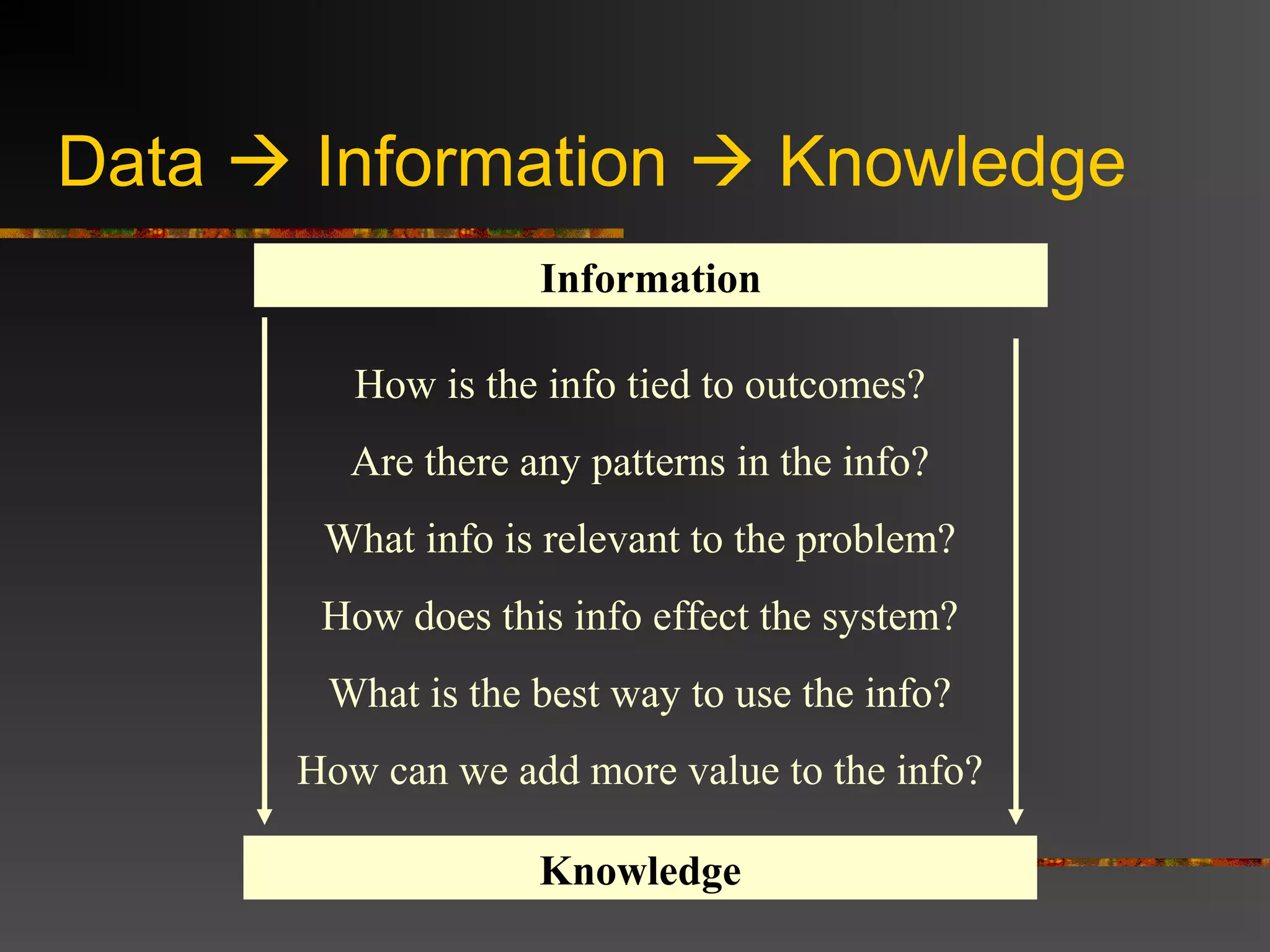
Data  Information  Knowledge
                   Information

         How is the info tied to outcomes?
        Are there any patterns in the info?
       What info is relevant to the problem?
       How does this info effect the system?
       What is the best way to use the info?
      How can we add more value to the info?

                   Knowledge
Information Systems
Generic Goal:
 Transform Data into Information


     At the Core of an Information System is a
      Database (raw data).
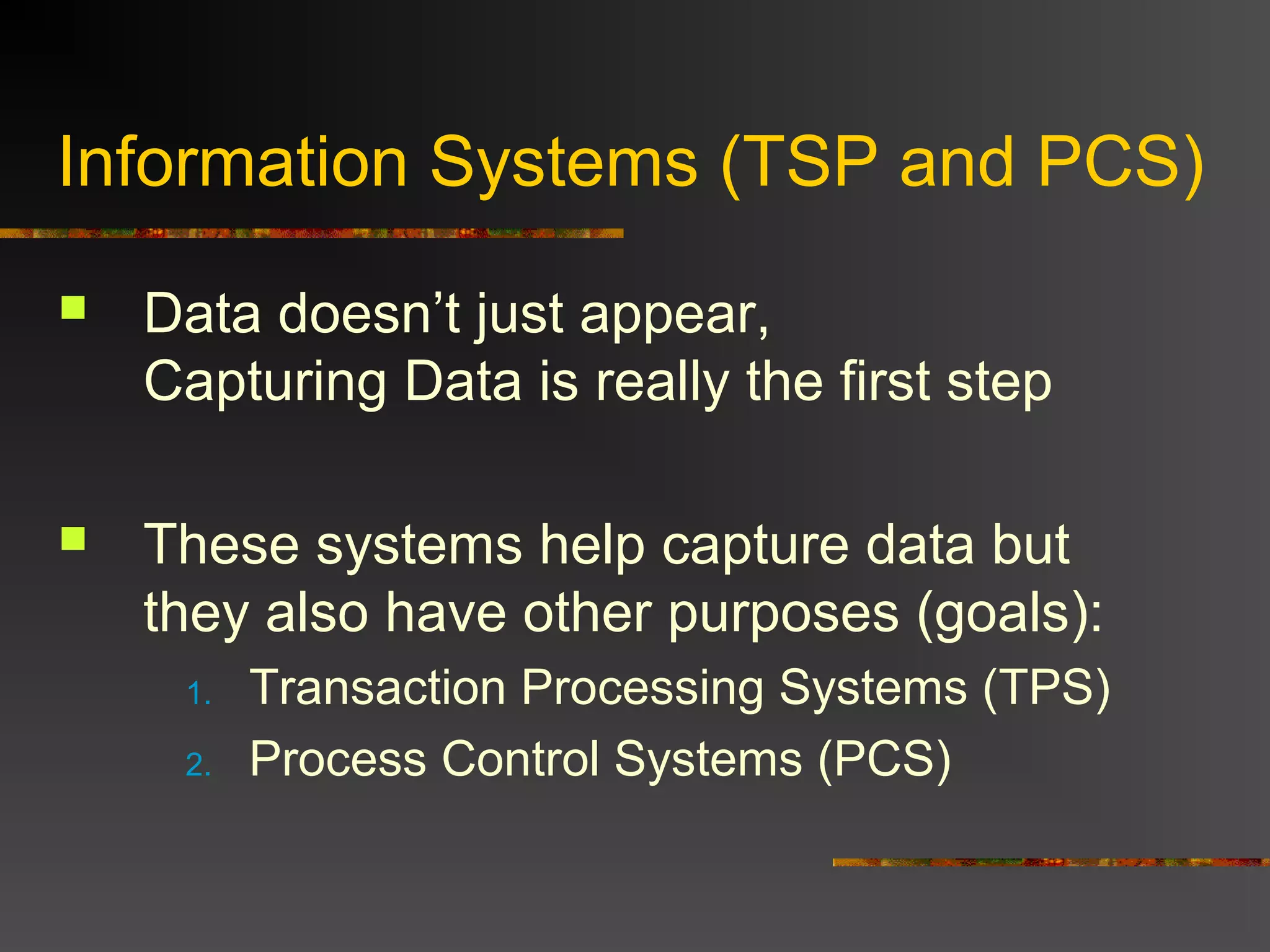
Information Systems (TSP and PCS)
   Data doesn’t just appear,
    Capturing Data is really the first step

   These systems help capture data but
    they also have other purposes (goals):
     1.   Transaction Processing Systems (TPS)
     2.   Process Control Systems (PCS)
Capturing Data
   What are some examples of real TPS’s?

   What kind of data is being capture?

   How is this data transformed into
    Information?
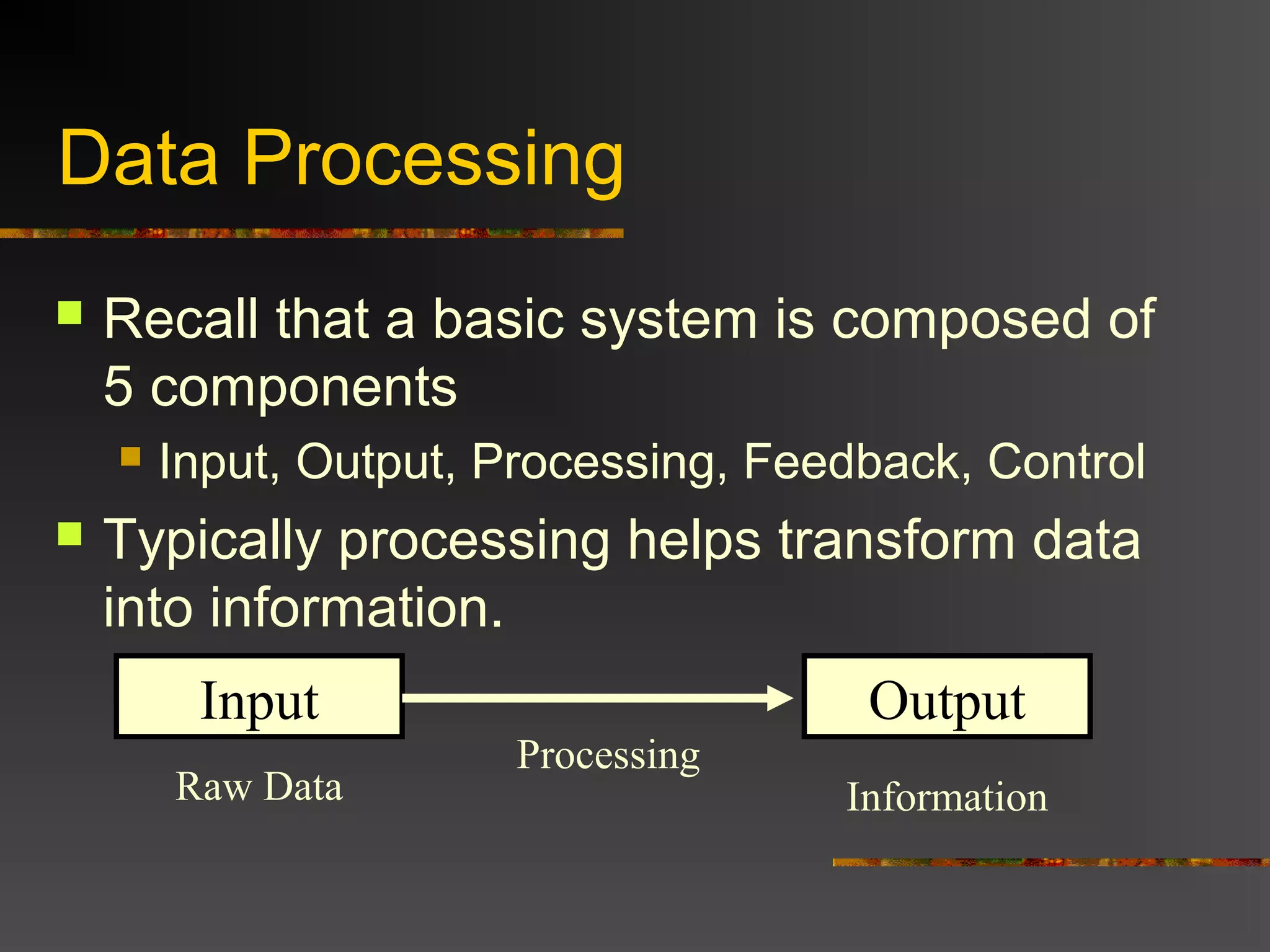
Data Processing
   Recall that a basic system is composed of
    5 components
       Input, Output, Processing, Feedback, Control
   Typically processing helps transform data
    into information.
         Input                         Output
                       Processing
        Raw Data                      Information
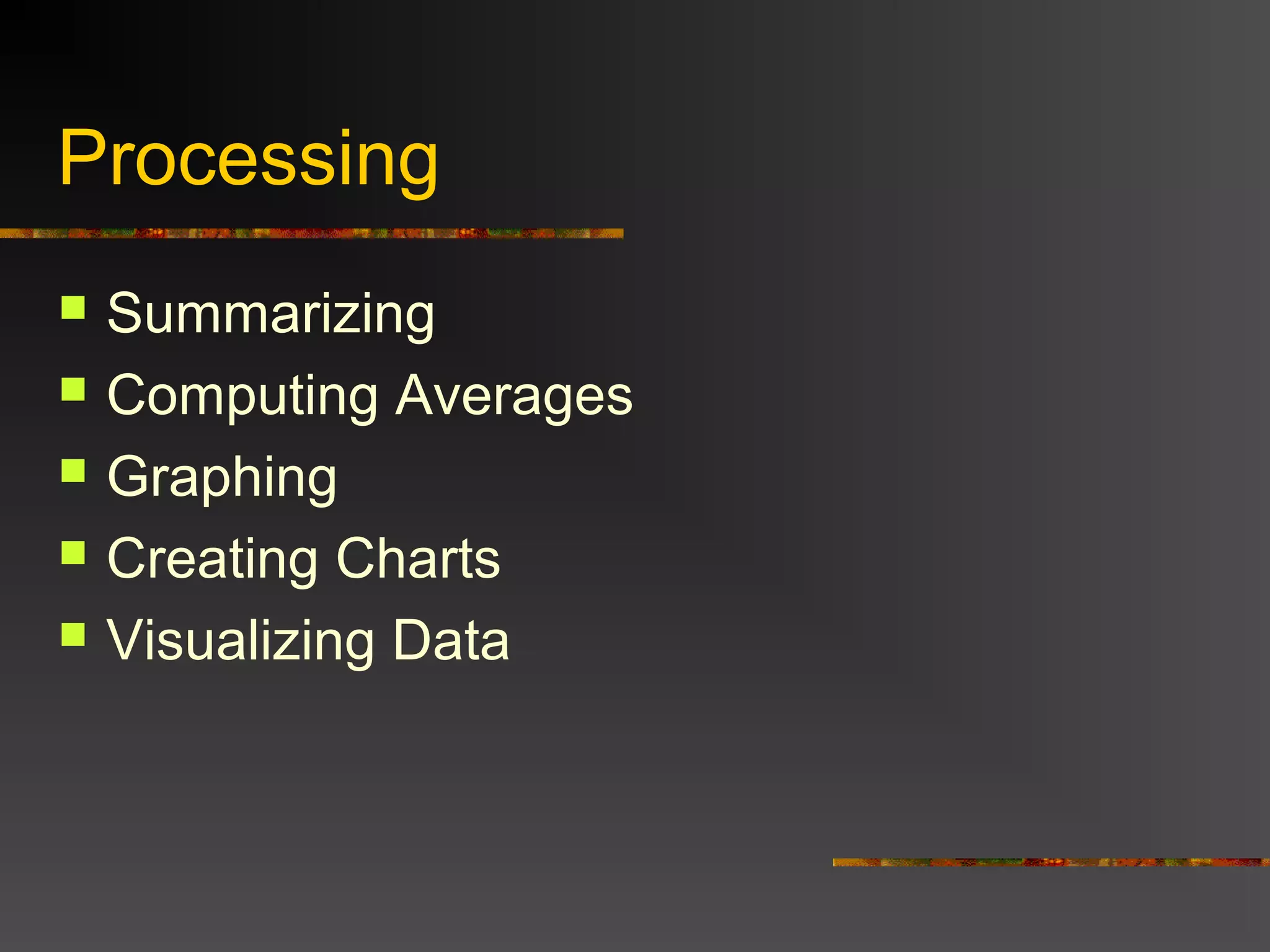
Processing
   Summarizing
   Computing Averages
   Graphing
   Creating Charts
   Visualizing Data

Data vs. information

  • 1.
    Data vs. Information Data Information  raw facts  data with context  no context  processed data  just numbers and text  value-added to data  summarized  organized  analyzed
  • 2.
    Data vs. Information  Data: 51007  Information:  5/10/07 The date of your final exam.  $51,007 The average starting salary of an accounting major.  51007 Zip code of Bronson Iowa.
  • 3.
    Data vs. Information Data Information  6.34 SIRIUS SATELLITE RADIO INC.  6.45 $7.20  6.39 $7.00  6.62  6.57 $6.80 Stock Price  6.64 $6.60  6.71 $6.40  6.82 $6.20  7.12 $6.00  7.06 $5.80 1 2 3 4 5 6 7 8 9 10 Last 10 Days
  • 4.
    Data  Information Knowledge Data Summarizing the data Averaging the data Selecting part of the data Graphing the data Adding context Adding value Information
  • 5.
    Data  Information Knowledge Information How is the info tied to outcomes? Are there any patterns in the info? What info is relevant to the problem? How does this info effect the system? What is the best way to use the info? How can we add more value to the info? Knowledge
  • 6.
    Information Systems Generic Goal: Transform Data into Information  At the Core of an Information System is a Database (raw data).
  • 7.
    Information Systems (TSPand PCS)  Data doesn’t just appear, Capturing Data is really the first step  These systems help capture data but they also have other purposes (goals): 1. Transaction Processing Systems (TPS) 2. Process Control Systems (PCS)
  • 8.
    Capturing Data  What are some examples of real TPS’s?  What kind of data is being capture?  How is this data transformed into Information?
  • 9.
    Data Processing  Recall that a basic system is composed of 5 components  Input, Output, Processing, Feedback, Control  Typically processing helps transform data into information. Input Output Processing Raw Data Information
  • 10.
    Processing  Summarizing  Computing Averages  Graphing  Creating Charts  Visualizing Data