
6/27/12	


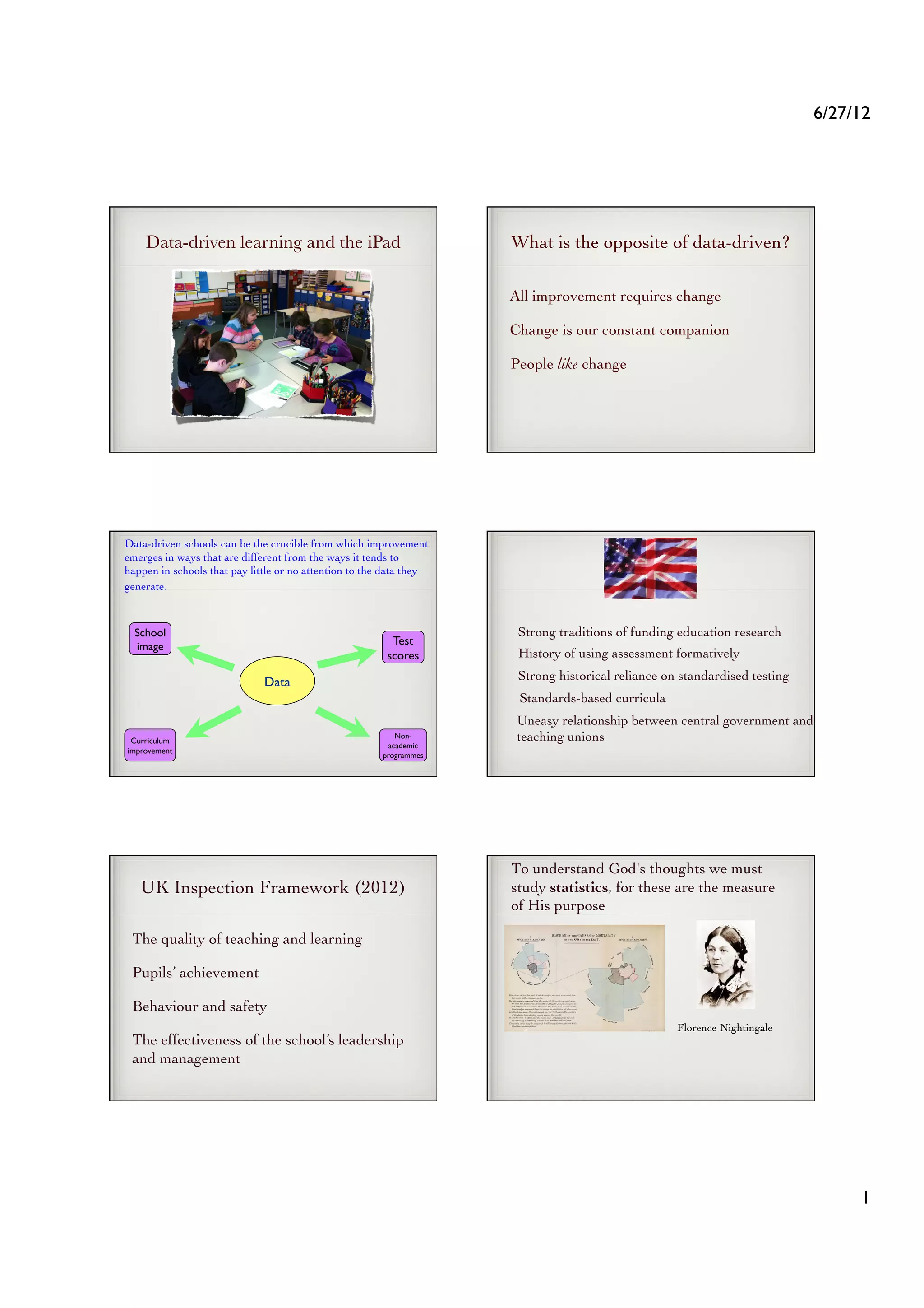
     Data-driven learning and the iPad
                                 What is the opposite of data-driven?	


                                                                        All improvement requires change	


                                                                        Change is our constant companion	


                                                                        People like change 	


Data-driven schools can be the crucible from which improvement
emerges in ways that are different from the ways it tends to
happen in schools that pay little or no attention to the data they
generate. 	


  School                                                                 Strong traditions of funding education research	

  image	

                                                Test
                                                         scores	

       History of using assessment formatively	


                              Data	

                                    Strong historical reliance on standardised testing	

                                                                         Standards-based curricula 	

                                                                         Uneasy relationship between central government and
 Curriculum
                                                           Non-          teaching unions	

                                                         academic
improvement	

                                                        programmes	


                                                                        To understand God's thoughts we must
   UK Inspection Framework (2012)	

                                    study statistics, for these are the measure
                                                                        of His purpose	


 The quality of teaching and learning	


 Pupils’ achievement	


 Behaviour and safety	

                                                                                                         Florence Nightingale	

 The effectiveness of the school’s leadership
 and management	


                                                                                                                                          1
6/27/12	


                                                        OECD and CERI (2008)
Bambi Betts - four types of data (2003)	

                                                Schooling for Tomorrow (draft document)	


    demographic data	

    data about school processes	

     learning data	

     perception data	


                                                               Bush  Cameron (2012) 
Four desirable traits of the 2020 learner	

                   - Pepperdine University, CA	


problem solving in teams	

                                                               Marks, McPhee, Cremin, Laxton, 
innovation	

                                                  Sneider  Marks (2011)	

                                                               - Cedars School of Excellence, UK	

systems thinking	

perseverance	

                                                                Bebell, Dorris  Muir (2012)
                                                                - Auburn School District, MN	


Bebell, Dorris  Muir (2012)                    Bebell, Dorris  Muir (2012)
Auburn, MN	

                                      Auburn, MN	


                                               Too many innovative programs don't prioritize their own
                                               research, and even if they collect observations and stories
                                               later, they don't make the effort to do a randomized
                                               control trial, like we did. We wanted to make sure we
                                               could objectively examine the contribution of the iPads.	


                                               - Dr. Mike Muir, Auburn School Department's Multiple
                                               Pathways Leader	


                                                                                                                    2
6/27/12	


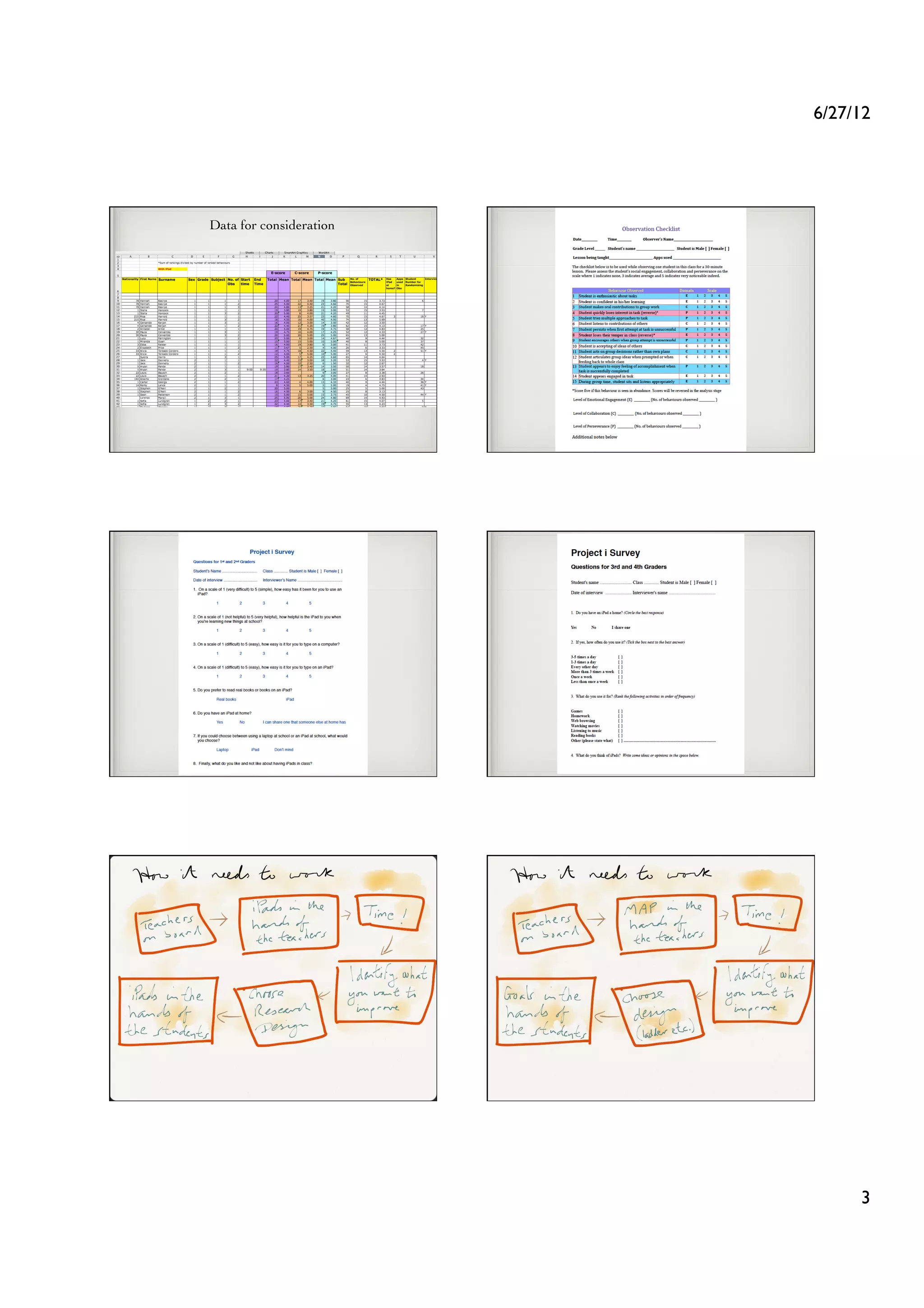
Data for consideration	


                                   3
6/27/12	


 We did not find a single case in the literature where
 student learning increased but had not been a
 central goal.	


 Joyce, Wolf and Calhoun
 The Self-Renewing School (1993). 	

                                                                    1. Teacher knowledge (incl. triangulation and
                                                                    steering the process of turning RIT scores and
                                                                    DesCartes statements into meaningful interventions)	

                                                                    2. Student commitment – the “buy in” 	

                                                                    3. Clear timetable - including criteria for success
                                                                    and regular conferencing.	


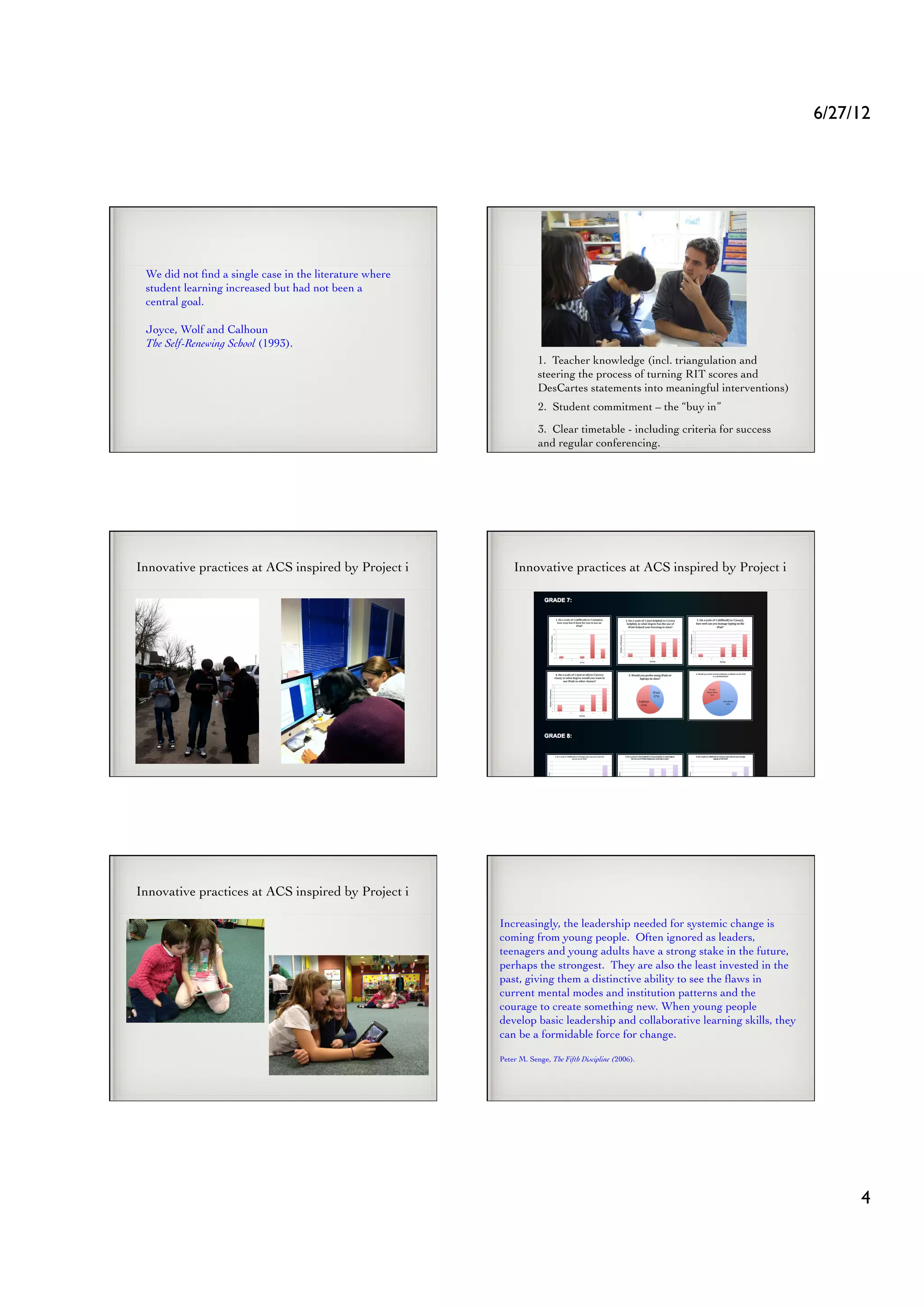
Innovative practices at ACS inspired by Project i	

        Innovative practices at ACS inspired by Project i	


Innovative practices at ACS inspired by Project i	


                                                        Increasingly, the leadership needed for systemic change is
                                                        coming from young people. Often ignored as leaders,
                                                        teenagers and young adults have a strong stake in the future,
                                                        perhaps the strongest. They are also the least invested in the
                                                        past, giving them a distinctive ability to see the flaws in
                                                        current mental modes and institution patterns and the
                                                        courage to create something new. When young people
                                                        develop basic leadership and collaborative learning skills, they
                                                        can be a formidable force for change.	


                                                        Peter M. Senge, The Fifth Discipline (2006).	


                                                                                                                                    4
6/27/12	


         Risa Harrold	

                                 Central thesis	

               (aged 7)	


2023: High School Graduation	

       iPads provide a genuine and intriguing unknown in an
                                      area of education that appears to be one we have a moral
2027: Graduate from college	

                                      imperative to explore. 	

2070: Retirement?	

January 1st, 2101: 95 years old!	

   The move to iPads is a significant enough investment on
                                      the part of schools to demand the most rigorous
                                      consideration possible of its cost/benefit balance. 	


                                      Data-driven schools using MAP have a ready-to-hand
                                      model for this, and an invaluable resource in the form of a
                                      faculty used to and adept at understanding what
                                      observation data is telling us and is not telling us.	


                                                                                                           5

Data Driven Learning and the iPad

  • 1.
    6/27/12 Data-driven learning and the iPad What is the opposite of data-driven? All improvement requires change Change is our constant companion People like change Data-driven schools can be the crucible from which improvement emerges in ways that are different from the ways it tends to happen in schools that pay little or no attention to the data they generate. School Strong traditions of funding education research image Test scores History of using assessment formatively Data Strong historical reliance on standardised testing Standards-based curricula Uneasy relationship between central government and Curriculum Non- teaching unions academic improvement programmes To understand God's thoughts we must UK Inspection Framework (2012) study statistics, for these are the measure of His purpose The quality of teaching and learning Pupils’ achievement Behaviour and safety Florence Nightingale The effectiveness of the school’s leadership and management 1
  • 2.
    6/27/12 OECD and CERI (2008) Bambi Betts - four types of data (2003) Schooling for Tomorrow (draft document) demographic data data about school processes learning data perception data Bush Cameron (2012) Four desirable traits of the 2020 learner - Pepperdine University, CA problem solving in teams Marks, McPhee, Cremin, Laxton, innovation Sneider Marks (2011) - Cedars School of Excellence, UK systems thinking perseverance Bebell, Dorris Muir (2012) - Auburn School District, MN Bebell, Dorris Muir (2012) Bebell, Dorris Muir (2012) Auburn, MN Auburn, MN Too many innovative programs don't prioritize their own research, and even if they collect observations and stories later, they don't make the effort to do a randomized control trial, like we did. We wanted to make sure we could objectively examine the contribution of the iPads. - Dr. Mike Muir, Auburn School Department's Multiple Pathways Leader 2
  • 3.
  • 4.
    6/27/12 We didnot find a single case in the literature where student learning increased but had not been a central goal. Joyce, Wolf and Calhoun The Self-Renewing School (1993). 1. Teacher knowledge (incl. triangulation and steering the process of turning RIT scores and DesCartes statements into meaningful interventions) 2. Student commitment – the “buy in” 3. Clear timetable - including criteria for success and regular conferencing. Innovative practices at ACS inspired by Project i Innovative practices at ACS inspired by Project i Innovative practices at ACS inspired by Project i Increasingly, the leadership needed for systemic change is coming from young people. Often ignored as leaders, teenagers and young adults have a strong stake in the future, perhaps the strongest. They are also the least invested in the past, giving them a distinctive ability to see the flaws in current mental modes and institution patterns and the courage to create something new. When young people develop basic leadership and collaborative learning skills, they can be a formidable force for change. Peter M. Senge, The Fifth Discipline (2006). 4
  • 5.
    6/27/12 Risa Harrold Central thesis (aged 7) 2023: High School Graduation iPads provide a genuine and intriguing unknown in an area of education that appears to be one we have a moral 2027: Graduate from college imperative to explore. 2070: Retirement? January 1st, 2101: 95 years old! The move to iPads is a significant enough investment on the part of schools to demand the most rigorous consideration possible of its cost/benefit balance. Data-driven schools using MAP have a ready-to-hand model for this, and an invaluable resource in the form of a faculty used to and adept at understanding what observation data is telling us and is not telling us. 5