Putting Data Analysis to WorkUsing data analysis to answer the questions, “What do the data tell us about our students’ learning and what do we do next?” Presented by:  Ginny Huckaba
NORMSBe timely, present and participatory
Phones on silent
Minimize bird walking (M. Hunter)
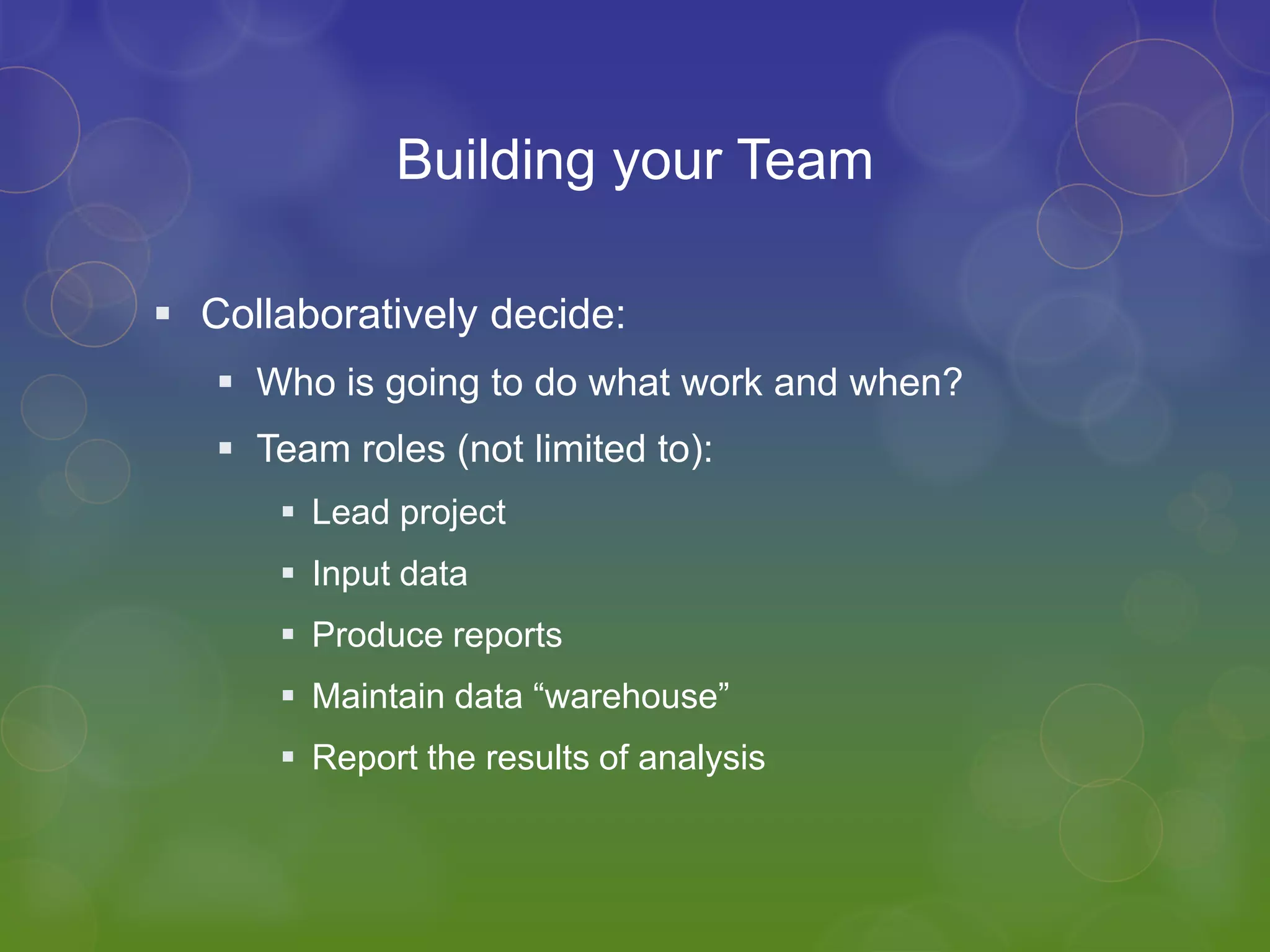
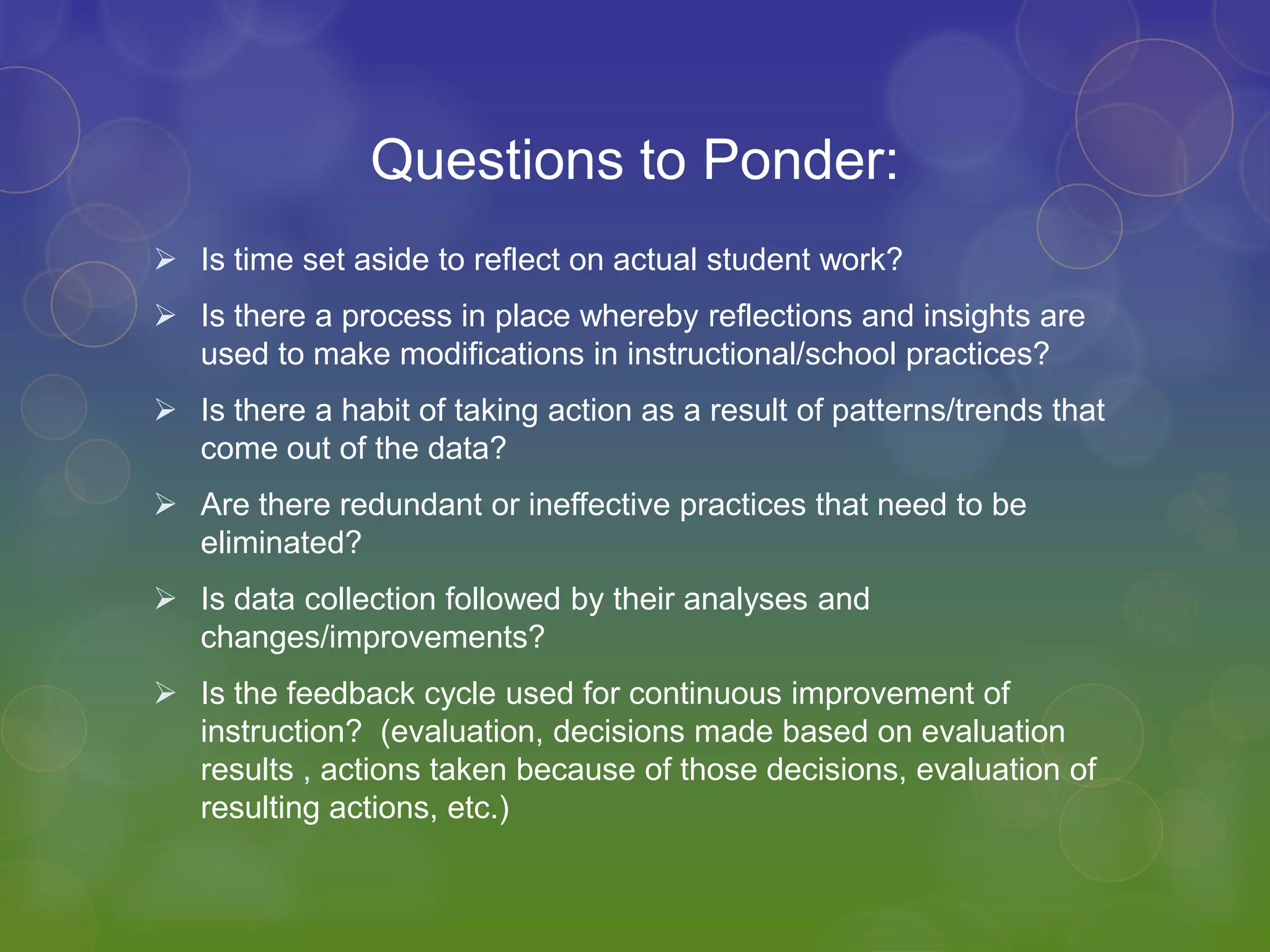
Return from breakGoalsAt the end of this session, participants will:Have knowledge of the process of data analysisBe able to use HIVE site to analyze student performance dataHave templates to use to perform item trend analysesBe able to serve as a resource of information to other educatorsHave developed a plan for taking the knowledge back to colleagues
AGENDAWelcome, Introduction, GoalsGroup dynamicsWhat do you already know?What do you want to know (goals)?Using Data to Enhance & Improve Student LearningHIVEItem & Trend AnalysisData analysis-needs assessmentPlanning for Back-home Colleagues/PDClose
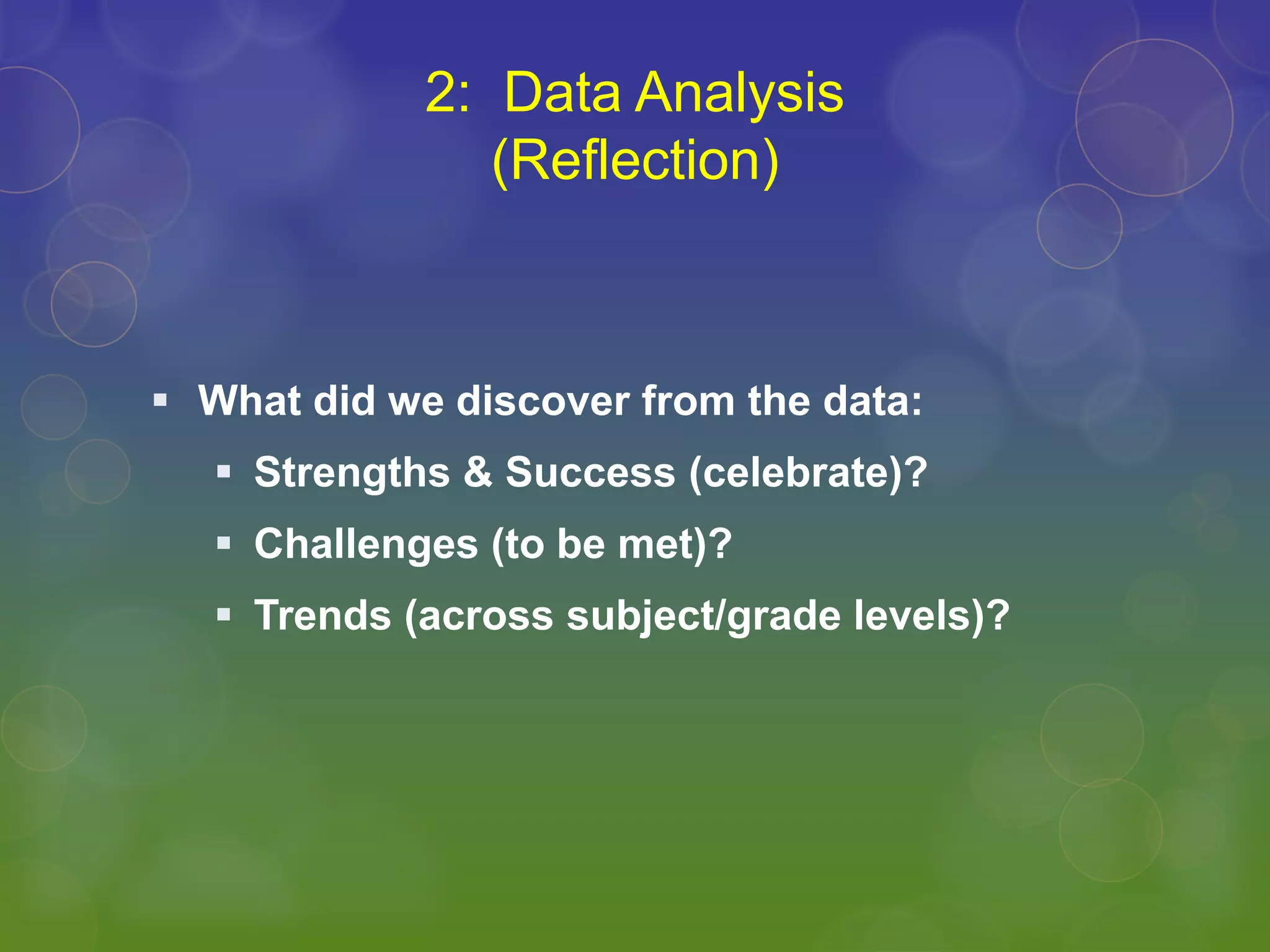
What is Data Analysis?The breaking (“unwrapping” per Ainsworth) of a whole into its parts and looking for relationships and functions.  In the educational setting, it provides clarity for what students must know and be able to do.
It is NOT data disaggregation (that stops at the breaking-down stage)
Analyzing data requires:
looking at data closely and objectively.
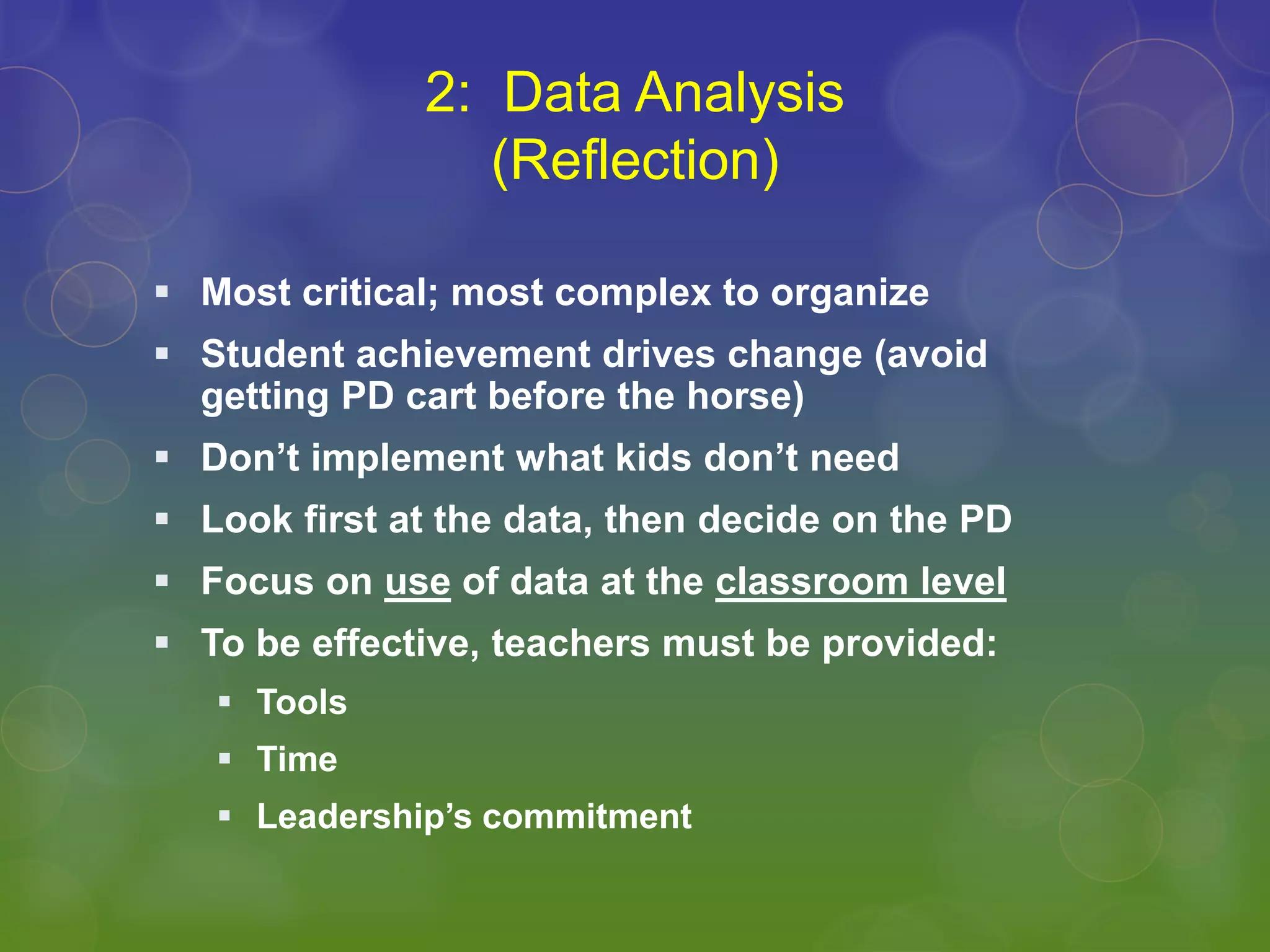
using it to make improvements.
halting the gathering of it if you don’t use it!Analyzing the DataWhat is the function (the purpose) of data analysis?
What does “it” measure and how is that information used?
What is the best use for assessments?  What are the relationships between interim assessment data, progress reports/report cards and criterion-referenced tests?Common reasons for Data Analysis:Improve student learning and achievement
Improve teachers’ instruction
Provide students with feedback on proficiency
Get a common understanding of exemplary performance/work and how to achieve it
Measuring program effectiveness
Rescuing kids who are falling through the cracks
Learn what programs are yielding desired results
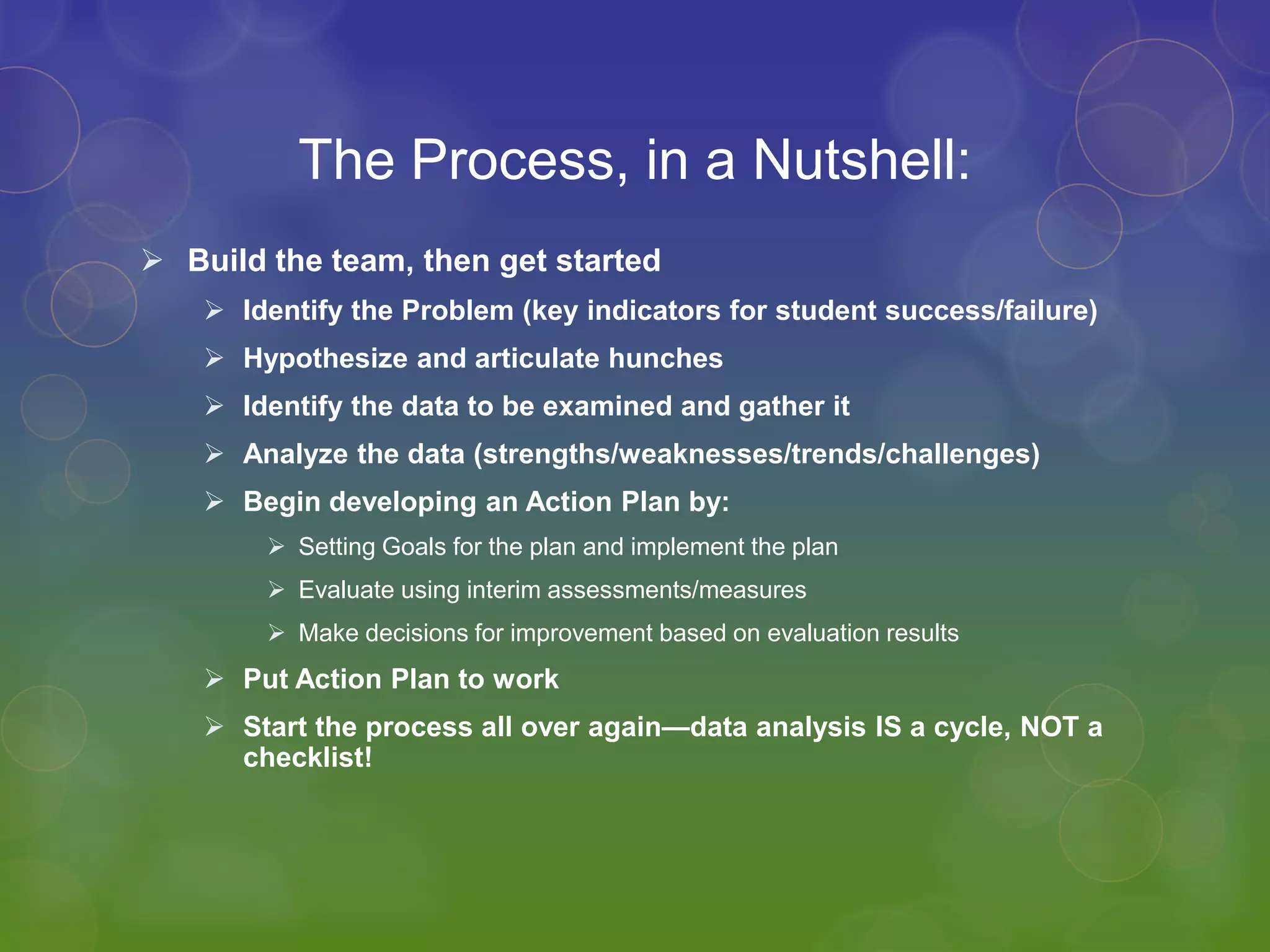
Getting to the root cause of a problem
Accountability
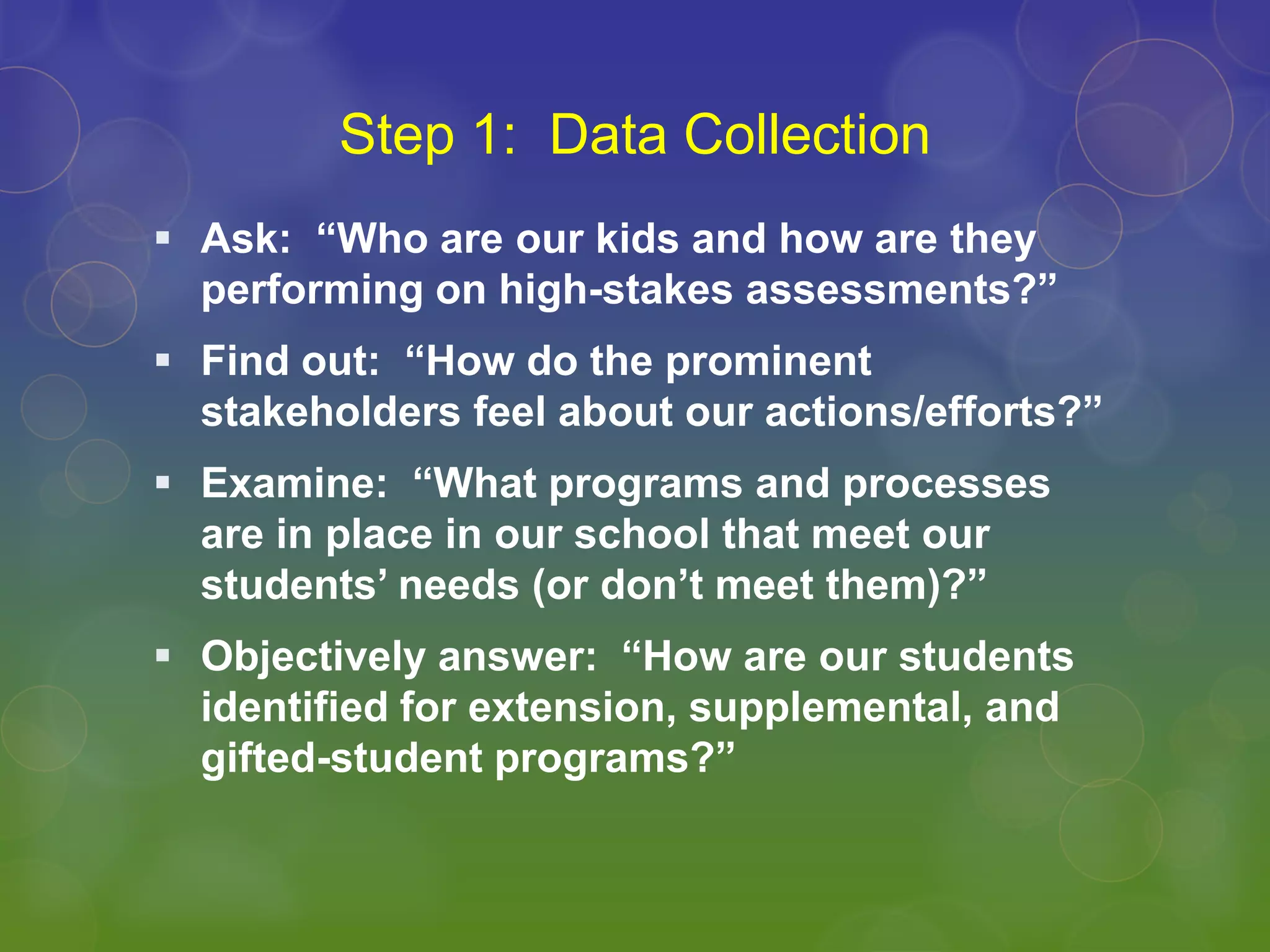
Guide curricular revisions/development4 Data Lenses through which to look:Demographics ( sources:  test scores, APSCN)Student learning (sources:  state, school, class levels)School process data (sources:  special programs, finance, transportation, professional learning)Perceptions (public/stakeholders; sources--surveys)
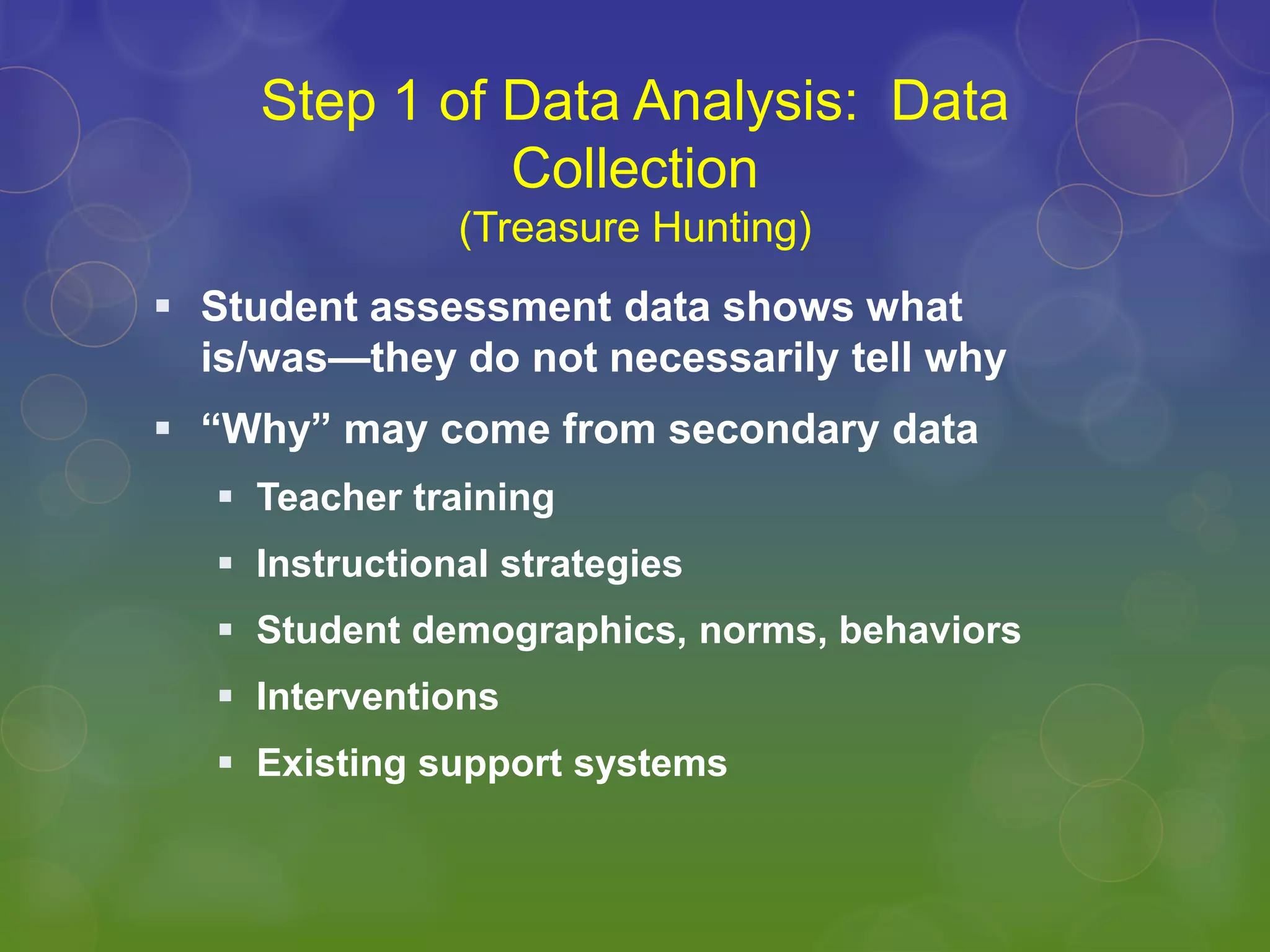
Step 1 of Data Analysis:  Data Collection(Treasure Hunting)Student assessment data shows what is/was—they do not necessarily tell why

Data analysis 2011