INTERNAL
ASSESSMENT &
FORMATIVE
ASSESSMENT
LEARNING OBJECTIVE
 AT THE END OF TALK, THE PARTICIPATING FACULTY MUST BE ABLE
TO
 1. DEFINE & DISTINGUISH INTERNAL ASSESSMENT & FORMATIVE
ASSESSMENT
 2. IDENTIFY THE KEY FEATURES & NEED OF THESE ASSESSMENTS
 3. IDENTIFY THE TOOLS TO PERFORM THEM & WHAT TO ASSESS
 4. SHORTCOMINGS OF INTERNAL ASSESSMENT & STRATEGIES TO
IMPROVE THEM
 4. DEVELOP A PLAN FOR THESE ASSESSMENTS FOR THEIR
SUBJECT
ASSESSMENT VS EVALUATION
 ASSESSMENT – ONGOING, FEEDBACK, SELF REFLECTION,
IMPROVE QUALITY, MEASURES LEARNING OUTCOMES
 EVALUATION – JUDGEMENTAL, JUDGES QUALITY, MEASURES
COURSE OUTCOMES,SOMETHING TO DO TO STUDENTS
 Exam fear
 “ Mugging 1 year syllabus tonight”
 “Guess work”
 “Book marking” – what a teacher wants
 Assessment - ”Assidare” – to sit beside,SOMEHING TO DO WITH FOR
STUDENTS
EXAM FEAR
FORMATIVE vs SUMMATIVE
 FORMATIVE – Assessment for learning – decide where the learner stands,
where they intend to go and how to reach there
 During learning, more than once, throughout the year to enhance learning
 Feedback & Self reflection, motivation, sets high standards
 Check all competencies, involve students, no fear/ stress
 SUMMATIVE – Assessment of learning, judgemental, end of course,
comparison with peers, perform on given day, limited syllabus, limited
competencies covered, aim to pass not learn - CERTIFICATION
 FORMATIVE ASSESSMENT - CLASS ROOM ASSIGNMENTS, END
POSTING TEST,LOG BOOK,QUIZES, END TOPIC TEST
 SUMMATIVE ASSESSMENT - TEST, PERFORMANCES, EXAMS,
PROJECTS
INTERNAL ASSESSMENT
 Process used by teachers and student to recognise and respond to
student learning, done during learning to enhance learning
 No external
 Assess all competencies
 Throughout year - Regular periodic exams
 Involve all teachers of the subject
 Track the progress of learner
 Feedback & remedial measures – extra classes, tests
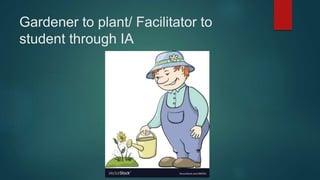
Gardener to plant/ Facilitator to
student through IA
NEW CBME
 50% IA must – Qualifying criteria
 Log book – to certify all required competencies
 Marks not added to university exams
 Separate marks added on the marks sheet
 Feedback – structured/ unstructured
 Source data has to be shared with students
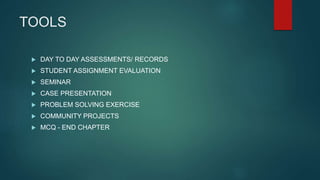
TOOLS
 DAY TO DAY ASSESSMENTS/ RECORDS
 STUDENT ASSIGNMENT EVALUATION
 SEMINAR
 CASE PRESENTATION
 PROBLEM SOLVING EXERCISE
 COMMUNITY PROJECTS
 MCQ - END CHAPTER
ACTIVITY
TOOLS FOR
INTERNAL
ASSESSMENT
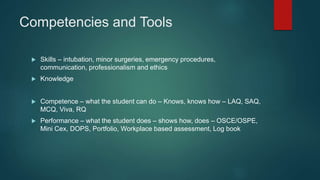
Competencies and Tools
 Skills – intubation, minor surgeries, emergency procedures,
communication, professionalism and ethics
 Knowledge
 Competence – what the student can do – Knows, knows how – LAQ, SAQ,
MCQ, Viva, RQ
 Performance – what the student does – shows how, does – OSCE/OSPE,
Mini Cex, DOPS, Portfolio, Workplace based assessment, Log book
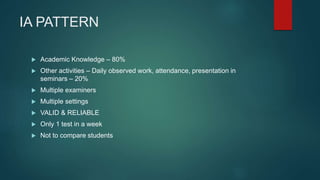
IA PATTERN
 Academic Knowledge – 80%
 Other activities – Daily observed work, attendance, presentation in
seminars – 20%
 Multiple examiners
 Multiple settings
 VALID & RELIABLE
 Only 1 test in a week
 Not to compare students
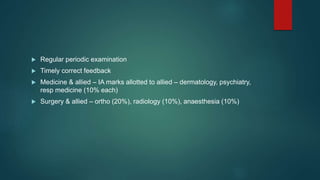
 Regular periodic examination
 Timely correct feedback
 Medicine & allied – IA marks allotted to allied – dermatology, psychiatry,
resp medicine (10% each)
 Surgery & allied – ortho (20%), radiology (10%), anaesthesia (10%)
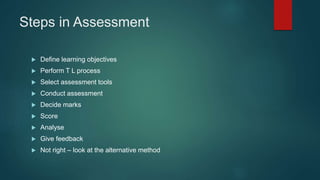
Steps in Assessment
 Define learning objectives
 Perform T L process
 Select assessment tools
 Conduct assessment
 Decide marks
 Score
 Analyse
 Give feedback
 Not right – look at the alternative method
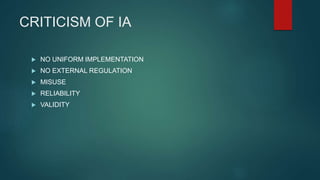
CRITICISM OF IA
 NO UNIFORM IMPLEMENTATION
 NO EXTERNAL REGULATION
 MISUSE
 RELIABILITY
 VALIDITY
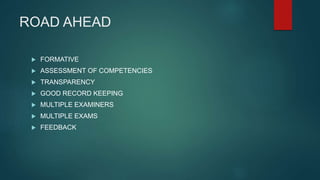
ROAD AHEAD
 FORMATIVE
 ASSESSMENT OF COMPETENCIES
 TRANSPARENCY
 GOOD RECORD KEEPING
 MULTIPLE EXAMINERS
 MULTIPLE EXAMS
 FEEDBACK
THANK YOU

Internal assessment & formative assessment

  • 1.
  • 2.
    LEARNING OBJECTIVE  ATTHE END OF TALK, THE PARTICIPATING FACULTY MUST BE ABLE TO  1. DEFINE & DISTINGUISH INTERNAL ASSESSMENT & FORMATIVE ASSESSMENT  2. IDENTIFY THE KEY FEATURES & NEED OF THESE ASSESSMENTS  3. IDENTIFY THE TOOLS TO PERFORM THEM & WHAT TO ASSESS  4. SHORTCOMINGS OF INTERNAL ASSESSMENT & STRATEGIES TO IMPROVE THEM  4. DEVELOP A PLAN FOR THESE ASSESSMENTS FOR THEIR SUBJECT
  • 3.
    ASSESSMENT VS EVALUATION ASSESSMENT – ONGOING, FEEDBACK, SELF REFLECTION, IMPROVE QUALITY, MEASURES LEARNING OUTCOMES  EVALUATION – JUDGEMENTAL, JUDGES QUALITY, MEASURES COURSE OUTCOMES,SOMETHING TO DO TO STUDENTS  Exam fear  “ Mugging 1 year syllabus tonight”  “Guess work”  “Book marking” – what a teacher wants  Assessment - ”Assidare” – to sit beside,SOMEHING TO DO WITH FOR STUDENTS
  • 4.
  • 5.
    FORMATIVE vs SUMMATIVE FORMATIVE – Assessment for learning – decide where the learner stands, where they intend to go and how to reach there  During learning, more than once, throughout the year to enhance learning  Feedback & Self reflection, motivation, sets high standards  Check all competencies, involve students, no fear/ stress  SUMMATIVE – Assessment of learning, judgemental, end of course, comparison with peers, perform on given day, limited syllabus, limited competencies covered, aim to pass not learn - CERTIFICATION
  • 6.
     FORMATIVE ASSESSMENT- CLASS ROOM ASSIGNMENTS, END POSTING TEST,LOG BOOK,QUIZES, END TOPIC TEST  SUMMATIVE ASSESSMENT - TEST, PERFORMANCES, EXAMS, PROJECTS
  • 7.
    INTERNAL ASSESSMENT  Processused by teachers and student to recognise and respond to student learning, done during learning to enhance learning  No external  Assess all competencies  Throughout year - Regular periodic exams  Involve all teachers of the subject  Track the progress of learner  Feedback & remedial measures – extra classes, tests
  • 8.
    Gardener to plant/Facilitator to student through IA
  • 9.
    NEW CBME  50%IA must – Qualifying criteria  Log book – to certify all required competencies  Marks not added to university exams  Separate marks added on the marks sheet  Feedback – structured/ unstructured  Source data has to be shared with students
  • 10.
    TOOLS  DAY TODAY ASSESSMENTS/ RECORDS  STUDENT ASSIGNMENT EVALUATION  SEMINAR  CASE PRESENTATION  PROBLEM SOLVING EXERCISE  COMMUNITY PROJECTS  MCQ - END CHAPTER
  • 11.
  • 12.
    Competencies and Tools Skills – intubation, minor surgeries, emergency procedures, communication, professionalism and ethics  Knowledge  Competence – what the student can do – Knows, knows how – LAQ, SAQ, MCQ, Viva, RQ  Performance – what the student does – shows how, does – OSCE/OSPE, Mini Cex, DOPS, Portfolio, Workplace based assessment, Log book
  • 13.
    IA PATTERN  AcademicKnowledge – 80%  Other activities – Daily observed work, attendance, presentation in seminars – 20%  Multiple examiners  Multiple settings  VALID & RELIABLE  Only 1 test in a week  Not to compare students
  • 14.
     Regular periodicexamination  Timely correct feedback  Medicine & allied – IA marks allotted to allied – dermatology, psychiatry, resp medicine (10% each)  Surgery & allied – ortho (20%), radiology (10%), anaesthesia (10%)
  • 15.
    Steps in Assessment Define learning objectives  Perform T L process  Select assessment tools  Conduct assessment  Decide marks  Score  Analyse  Give feedback  Not right – look at the alternative method
  • 16.
    CRITICISM OF IA NO UNIFORM IMPLEMENTATION  NO EXTERNAL REGULATION  MISUSE  RELIABILITY  VALIDITY
  • 17.
    ROAD AHEAD  FORMATIVE ASSESSMENT OF COMPETENCIES  TRANSPARENCY  GOOD RECORD KEEPING  MULTIPLE EXAMINERS  MULTIPLE EXAMS  FEEDBACK
  • 18.