Coping with the daily
stress
Dr. shewikar El bakry
Lecturer of Neuropsychiatry
Banha University
RECOGNIZING STRESS
Stress Is the…
 •Boss
 •Airports
 •Finances
•Car breaking down
 •Weather
 •Illness
 Stress occurs when we tell ourselves something
negative about ourselves and our ability to cope with
a particular stressor.
Every day
stressors and
hassles can be a
source of
distress for you!
TIME, MONEY, AND
RELATIONSHIPS ENSURE
THAT STRESS WILL
ALWAYS BE WITH US
Stressors Types
•Brief –When we slam on the brakes to avoid
something in the road
•Periodic–When we gear up for
intermittent deadlines at work
•Acute–Being witness to a traumatic
event (only happens once)
CAUSES OF STRESS FALL INTO
TWO CATEGORIES:
 EXTERNAL
 INTERNAL
Stressors
are
situation,
conditions,
people, or
things that
have the
potential to
trigger the
stress
response in
Symptoms and Illnesses of
Stress
•Behavioral
 􀀹Avoidance
 􀀹Fidgeting
 􀀹Sleep problems
 •Cognitive
 􀀹Easily distracted
 􀀹Confusion
 􀀹Fearful thoughts
 •Emotional
 􀀹Anger
 􀀹Worry
 􀀹Tension
◦ •Cardiovascular
 􀀹Chest pains
 􀀹Cold hand/feet
 􀀹Sweaty palms/increase
perspiration
 •Muscular
 􀀹Tension headaches
 􀀹Pacing
 􀀹Shaky/strained voice
 •Skin
 􀀹Pale face
 􀀹Hives
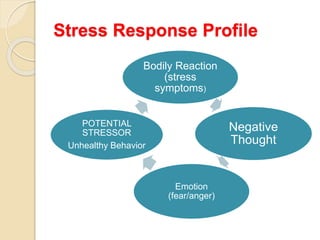
Stress Response Profile
Bodily Reaction
(stress
symptoms)
Negative
Thought
Emotion
(fear/anger)
POTENTIAL
STRESSOR
Unhealthy Behavior
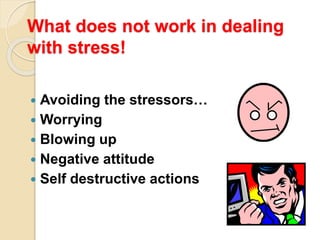
What does not work in dealing
with stress!
 Avoiding the stressors…
 Worrying
 Blowing up
 Negative attitude
 Self destructive actions
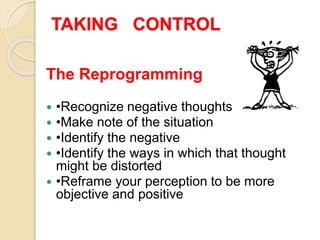
TAKING CONTROL
The Reprogramming
 •Recognize negative thoughts
 •Make note of the situation
 •Identify the negative
 •Identify the ways in which that thought
might be distorted
 •Reframe your perception to be more
objective and positive
Stress Problem
Solving Strategies
 Having a Plan!
 Obtaining Social Support!
 Using Effective Coping Skills
 A Positive and Optimistic Attitude!
 Learning from mistakes
9
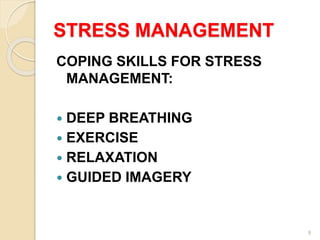
STRESS MANAGEMENT
COPING SKILLS FOR STRESS
MANAGEMENT:
 DEEP BREATHING
 EXERCISE
 RELAXATION
 GUIDED IMAGERY
10
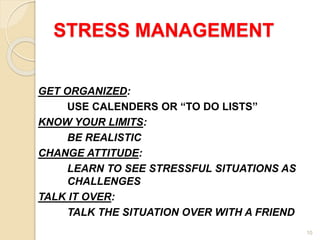
STRESS MANAGEMENT
GET ORGANIZED:
USE CALENDERS OR “TO DO LISTS”
KNOW YOUR LIMITS:
BE REALISTIC
CHANGE ATTITUDE:
LEARN TO SEE STRESSFUL SITUATIONS AS
CHALLENGES
TALK IT OVER:
TALK THE SITUATION OVER WITH A FRIEND
11
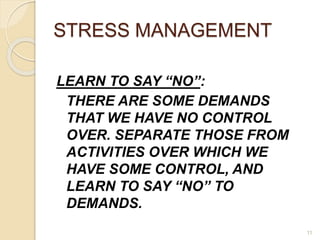
STRESS MANAGEMENT
LEARN TO SAY “NO”:
THERE ARE SOME DEMANDS
THAT WE HAVE NO CONTROL
OVER. SEPARATE THOSE FROM
ACTIVITIES OVER WHICH WE
HAVE SOME CONTROL, AND
LEARN TO SAY “NO” TO
DEMANDS.
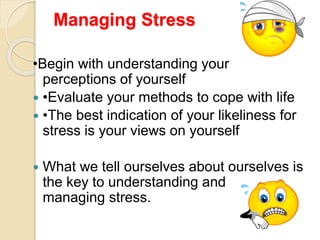
Managing Stress
•Begin with understanding your
perceptions of yourself
 •Evaluate your methods to cope with life
 •The best indication of your likeliness for
stress is your views on yourself
 What we tell ourselves about ourselves is
the key to understanding and
managing stress.
Relax Your
Emotions
 •Communicate
 •Cry
 •Journal
 •Laugh
 •Do something you love
Think Differently
 •Awareness is the key
to managing stress
 •Everyone has their
own unique:
 􀀹Responses to stress
 􀀹Potential stressors
 􀀹Thoughts and
subsequent feelings
associated with those
stressors
 􀀹Symptoms that
follow
Here and Now:
 The Top Stress
Reducer
 Stop feeling guilty
about the past,
 And live in the
Present!
 Stop worrying about
the future,
 Other Stress
Reducers
 •Daily program routine
 •Focused breathing
 •Peaceful wake-up call
 •Meditation/relaxation
 •Mind/body check
 •Medication
 􀀹Only controls the
symptoms; does not
address the cause of
the symptoms
Negative Self-
Talk
 •I should always be
perfect and do
everything perfectly
 •I should never make
mistakes
 •I should always be in
control
 •I should always put
the needs of others
before mine; otherwise
I am being selfish
Positive Self-
Talk
 •I am calm and
relaxed
 •I feel peaceful and
centered
 •My breathing is deep
and regular
 •I have control over
how I react to
stressful situations in
my life
 •I am worthy and
deserving of
happiness
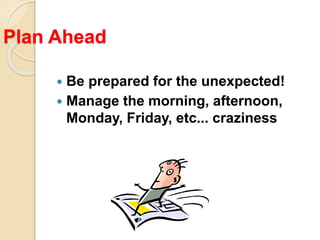
Plan Ahead
 Be prepared for the unexpected!
 Manage the morning, afternoon,
Monday, Friday, etc... craziness
Planning
 How will you manage the am/pm
rush hours?
 How are you prepared for the daily
crisis?
Commuting
 Do you get frustrated and freak
out?
 Get tense and uptight?
 Drive like a nut?
 Enjoy the ride?
Relax
 How do I stay calm
and cool?
 How do I chill out?
 When do I use my
relaxing skills?
Humor is life’s
greatest
lubricant
Slow deep
breathing is
probably the
single best anti-
stress medicine
we have
Work Stress
 Deadlines and pressures
 Surprises
 Interpersonal difficulties
 Role and rank issues
 Environmental stressors
How do I effectively
cope with-
 Unexpected tasks and duties?
 Pressures?
 Long hours?
 Interpersonal difficulties?
Schedule
daily
breaks
in your
life!
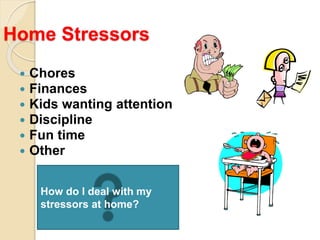
Home Stressors
 Chores
 Finances
 Kids wanting attention
 Discipline
 Fun time
 Other
How do I deal with my
stressors at home?
Coping with
Techno
Stressors
Techno Stress
E-mail and computers
T.V.
Phone
Pagers
Fax
Others
Dealing with Information
Overload
Turn off daily
Tune out more often
Answer e-mails, calls at
set times
Love Relationships
 Strained?
 Stressed?
 Distant?
 Great?
 How do I plan for-
 Fun?
 Together time?
 Intimacy?
 Sharing?
Balancing a Full Platter
Balance is experienced differently by
everyone and can be identified by
some or all of the following feelings:
•Make time for family and work
•Make sure life flows
•Cope with life’s curves
•You are on the right path –personally
and professionally
26
STRESS MANAGEMENT
LOVE, PRAY, FORGIVE
REALIZE THAT MOST STRESS
COMES FROM WITHIN, NOT
WITHOUT.
TAKE TIME TO SMELL THE
FLOWERS AND TASTE THE
STRAWBERRIES.
Summary
 Be Prepared!
 Develop a stress busting plan that
works for you!
 You can control your responses
to stressors!
How can I
manage
them?
(before they
manage me?)
THANK YOU VERY MUCH
FOR YOUR
ATTENTIVENESS

coping with daily stress

  • 1.
    Coping with thedaily stress Dr. shewikar El bakry Lecturer of Neuropsychiatry Banha University
  • 2.
    RECOGNIZING STRESS Stress Isthe…  •Boss  •Airports  •Finances •Car breaking down  •Weather  •Illness  Stress occurs when we tell ourselves something negative about ourselves and our ability to cope with a particular stressor. Every day stressors and hassles can be a source of distress for you! TIME, MONEY, AND RELATIONSHIPS ENSURE THAT STRESS WILL ALWAYS BE WITH US
  • 3.
    Stressors Types •Brief –Whenwe slam on the brakes to avoid something in the road •Periodic–When we gear up for intermittent deadlines at work •Acute–Being witness to a traumatic event (only happens once) CAUSES OF STRESS FALL INTO TWO CATEGORIES:  EXTERNAL  INTERNAL Stressors are situation, conditions, people, or things that have the potential to trigger the stress response in
  • 4.
    Symptoms and Illnessesof Stress •Behavioral  􀀹Avoidance  􀀹Fidgeting  􀀹Sleep problems  •Cognitive  􀀹Easily distracted  􀀹Confusion  􀀹Fearful thoughts  •Emotional  􀀹Anger  􀀹Worry  􀀹Tension ◦ •Cardiovascular  􀀹Chest pains  􀀹Cold hand/feet  􀀹Sweaty palms/increase perspiration  •Muscular  􀀹Tension headaches  􀀹Pacing  􀀹Shaky/strained voice  •Skin  􀀹Pale face  􀀹Hives
  • 5.
    Stress Response Profile BodilyReaction (stress symptoms) Negative Thought Emotion (fear/anger) POTENTIAL STRESSOR Unhealthy Behavior
  • 6.
    What does notwork in dealing with stress!  Avoiding the stressors…  Worrying  Blowing up  Negative attitude  Self destructive actions
  • 7.
    TAKING CONTROL The Reprogramming •Recognize negative thoughts  •Make note of the situation  •Identify the negative  •Identify the ways in which that thought might be distorted  •Reframe your perception to be more objective and positive
  • 8.
    Stress Problem Solving Strategies Having a Plan!  Obtaining Social Support!  Using Effective Coping Skills  A Positive and Optimistic Attitude!  Learning from mistakes
  • 9.
    9 STRESS MANAGEMENT COPING SKILLSFOR STRESS MANAGEMENT:  DEEP BREATHING  EXERCISE  RELAXATION  GUIDED IMAGERY
  • 10.
    10 STRESS MANAGEMENT GET ORGANIZED: USECALENDERS OR “TO DO LISTS” KNOW YOUR LIMITS: BE REALISTIC CHANGE ATTITUDE: LEARN TO SEE STRESSFUL SITUATIONS AS CHALLENGES TALK IT OVER: TALK THE SITUATION OVER WITH A FRIEND
  • 11.
    11 STRESS MANAGEMENT LEARN TOSAY “NO”: THERE ARE SOME DEMANDS THAT WE HAVE NO CONTROL OVER. SEPARATE THOSE FROM ACTIVITIES OVER WHICH WE HAVE SOME CONTROL, AND LEARN TO SAY “NO” TO DEMANDS.
  • 12.
    Managing Stress •Begin withunderstanding your perceptions of yourself  •Evaluate your methods to cope with life  •The best indication of your likeliness for stress is your views on yourself  What we tell ourselves about ourselves is the key to understanding and managing stress.
  • 13.
    Relax Your Emotions  •Communicate •Cry  •Journal  •Laugh  •Do something you love Think Differently  •Awareness is the key to managing stress  •Everyone has their own unique:  􀀹Responses to stress  􀀹Potential stressors  􀀹Thoughts and subsequent feelings associated with those stressors  􀀹Symptoms that follow
  • 14.
    Here and Now: The Top Stress Reducer  Stop feeling guilty about the past,  And live in the Present!  Stop worrying about the future,  Other Stress Reducers  •Daily program routine  •Focused breathing  •Peaceful wake-up call  •Meditation/relaxation  •Mind/body check  •Medication  􀀹Only controls the symptoms; does not address the cause of the symptoms
  • 15.
    Negative Self- Talk  •Ishould always be perfect and do everything perfectly  •I should never make mistakes  •I should always be in control  •I should always put the needs of others before mine; otherwise I am being selfish Positive Self- Talk  •I am calm and relaxed  •I feel peaceful and centered  •My breathing is deep and regular  •I have control over how I react to stressful situations in my life  •I am worthy and deserving of happiness
  • 16.
    Plan Ahead  Beprepared for the unexpected!  Manage the morning, afternoon, Monday, Friday, etc... craziness
  • 17.
    Planning  How willyou manage the am/pm rush hours?  How are you prepared for the daily crisis?
  • 18.
    Commuting  Do youget frustrated and freak out?  Get tense and uptight?  Drive like a nut?  Enjoy the ride?
  • 19.
    Relax  How doI stay calm and cool?  How do I chill out?  When do I use my relaxing skills? Humor is life’s greatest lubricant Slow deep breathing is probably the single best anti- stress medicine we have
  • 20.
    Work Stress  Deadlinesand pressures  Surprises  Interpersonal difficulties  Role and rank issues  Environmental stressors
  • 21.
    How do Ieffectively cope with-  Unexpected tasks and duties?  Pressures?  Long hours?  Interpersonal difficulties? Schedule daily breaks in your life!
  • 22.
    Home Stressors  Chores Finances  Kids wanting attention  Discipline  Fun time  Other How do I deal with my stressors at home?
  • 23.
    Coping with Techno Stressors Techno Stress E-mailand computers T.V. Phone Pagers Fax Others Dealing with Information Overload Turn off daily Tune out more often Answer e-mails, calls at set times
  • 24.
    Love Relationships  Strained? Stressed?  Distant?  Great?  How do I plan for-  Fun?  Together time?  Intimacy?  Sharing?
  • 25.
    Balancing a FullPlatter Balance is experienced differently by everyone and can be identified by some or all of the following feelings: •Make time for family and work •Make sure life flows •Cope with life’s curves •You are on the right path –personally and professionally
  • 26.
    26 STRESS MANAGEMENT LOVE, PRAY,FORGIVE REALIZE THAT MOST STRESS COMES FROM WITHIN, NOT WITHOUT. TAKE TIME TO SMELL THE FLOWERS AND TASTE THE STRAWBERRIES.
  • 27.
    Summary  Be Prepared! Develop a stress busting plan that works for you!  You can control your responses to stressors! How can I manage them? (before they manage me?)
  • 28.
    THANK YOU VERYMUCH FOR YOUR ATTENTIVENESS