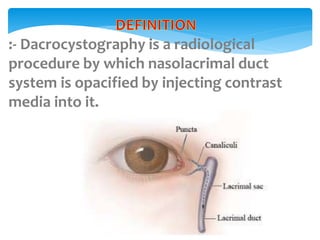
:- Dacrocystography is a radiological
procedure by which nasolacrimal duct
system is opacified by injecting contrast
media into it.
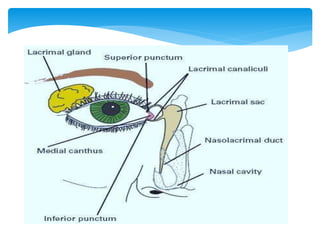
 Tears (lacrimal fluid) are produced by the
lacrimal gland which is located at the
supero-lateral aspect of the orbit
 Drainage of the lacrimal fluid is achieved
by the lacrimal canaliculi , lacrimal sac and
nasolacrimal duct
 The lacrimal fluid drains from the
nasolacrimal duct into the nasal cavity via
the inferior meatus
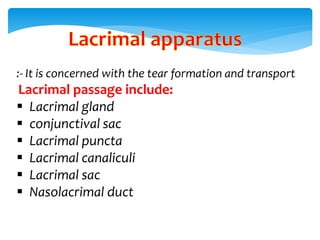
:- It is concerned with the tear formation and transport
Lacrimal passage include:
 Lacrimal gland
 conjunctival sac
 Lacrimal puncta
 Lacrimal canaliculi
 Lacrimal sac
 Nasolacrimal duct
 Epiphoria
 Fistula
 Tumors
 Diverticula
 Dacrolith
 Lacrimal duct obstruction
 Chronic dacrocystitis
 Before any intervention to
nasolacrimal tract
 Contrast media allergy
 Pregnancy
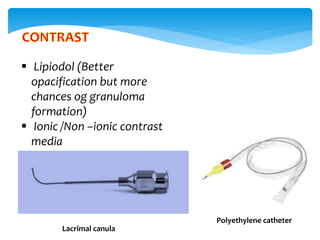
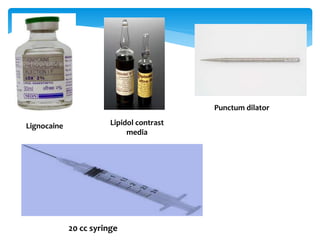
 Lipiodol (Better
opacification but more
chances og granuloma
formation)
 Ionic /Non –ionic contrast
media
Lacrimal canula
Polyethylene catheter
Lignocaine Lipidol contrast
media
Punctum dilator
20 cc syringe
Lacrimal canula
18G blunt needle with polyethylene
catheter
20 cc syringe
Cotton tipped applicator
punctum dialator (Nettleship dilator)
Local anaesthetic drops –Lignocaine
4%
 Take patient history
 Completed consent form
 No diet restrictions
 Explain the procedure
 Advice to remove his metallic object
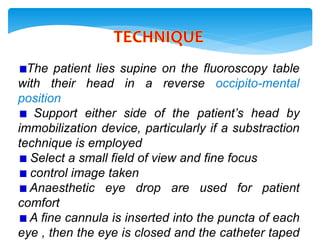
The patient lies supine on the fluoroscopy table
with their head in a reverse occipito-mental
position
Support either side of the patient’s head by
immobilization device, particularly if a substraction
technique is employed
Select a small field of view and fine focus
control image taken
Anaesthetic eye drop are used for patient
comfort
A fine cannula is inserted into the puncta of each
eye , then the eye is closed and the catheter taped
.
 It may necessary to dilate the puncta to facilitate
insertion of the cannula
 After the mask is required ,commence injection
 Images are taken immediately after injection
 A drainage image can be taken after 15 minutes if
considered necessary
 Anteroposterior
 Lateral
 Oblique views
 5- 30 min late films
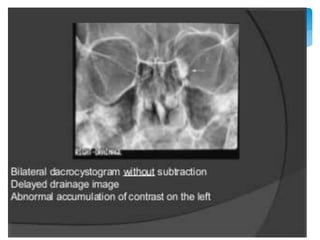
Normal dacrocystogram show complete filling of
superior and inferior punctal ampullae, ascending and
descending canaliculi, common duct , lacrimal sac and
nasolacrimal duct
 Macro Dacro Cystography (0.3 mm focal spot for enlarging the
image)
 Digital substraction dacrocystography
 CT dacrocystography
 Contrast extravasation
 Granuloma formation (with lipidol)
 Injury to canaliculus (perforation)
 Infection

Dacrocystography

  • 2.
    :- Dacrocystography isa radiological procedure by which nasolacrimal duct system is opacified by injecting contrast media into it.
  • 3.
     Tears (lacrimalfluid) are produced by the lacrimal gland which is located at the supero-lateral aspect of the orbit  Drainage of the lacrimal fluid is achieved by the lacrimal canaliculi , lacrimal sac and nasolacrimal duct  The lacrimal fluid drains from the nasolacrimal duct into the nasal cavity via the inferior meatus
  • 5.
    :- It isconcerned with the tear formation and transport Lacrimal passage include:  Lacrimal gland  conjunctival sac  Lacrimal puncta  Lacrimal canaliculi  Lacrimal sac  Nasolacrimal duct
  • 9.
     Epiphoria  Fistula Tumors  Diverticula  Dacrolith  Lacrimal duct obstruction  Chronic dacrocystitis  Before any intervention to nasolacrimal tract
  • 10.
     Contrast mediaallergy  Pregnancy
  • 11.
     Lipiodol (Better opacificationbut more chances og granuloma formation)  Ionic /Non –ionic contrast media Lacrimal canula Polyethylene catheter
  • 12.
  • 13.
    Lacrimal canula 18G bluntneedle with polyethylene catheter 20 cc syringe Cotton tipped applicator punctum dialator (Nettleship dilator) Local anaesthetic drops –Lignocaine 4%
  • 14.
     Take patienthistory  Completed consent form  No diet restrictions  Explain the procedure  Advice to remove his metallic object
  • 15.
    The patient liessupine on the fluoroscopy table with their head in a reverse occipito-mental position Support either side of the patient’s head by immobilization device, particularly if a substraction technique is employed Select a small field of view and fine focus control image taken Anaesthetic eye drop are used for patient comfort A fine cannula is inserted into the puncta of each eye , then the eye is closed and the catheter taped
  • 16.
    .  It maynecessary to dilate the puncta to facilitate insertion of the cannula  After the mask is required ,commence injection  Images are taken immediately after injection  A drainage image can be taken after 15 minutes if considered necessary
  • 17.
     Anteroposterior  Lateral Oblique views  5- 30 min late films Normal dacrocystogram show complete filling of superior and inferior punctal ampullae, ascending and descending canaliculi, common duct , lacrimal sac and nasolacrimal duct
  • 19.
     Macro DacroCystography (0.3 mm focal spot for enlarging the image)  Digital substraction dacrocystography  CT dacrocystography
  • 20.
     Contrast extravasation Granuloma formation (with lipidol)  Injury to canaliculus (perforation)  Infection