+


    B9 and D2
    Respiration and Antacids
    Raj Sikaria and not Casey Ste. Claire
+
    B.9 Respiration

       B.9.1. Compare aerobic and anaerobic respiration of glucose in
        terms of oxidation/reduction and energy released.

       B.9.2. Outline the role of copper ions in electron transport and
        iron ions in oxygen transport.
+
    B.9.1

       Shared characteristics of aerobic and anaerobic respiration:
           Produce ATP (chemical energy)
           Glycolysis (converting glucose to pyruvate)
           Oxidation reaction
           Pyruvate (CH3COCOOH)
           Exothermic
+
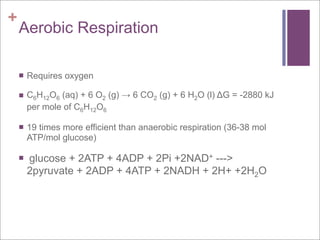
    Aerobic Respiration

       Requires oxygen

       C6H12O6 (aq) + 6 O2 (g) → 6 CO2 (g) + 6 H2O (l) ΔG = -2880 kJ
        per mole of C6H12O6

       19 times more efficient than anaerobic respiration (36-38 mol
        ATP/mol glucose)

       glucose + 2ATP + 4ADP + 2Pi +2NAD+ --->
        2pyruvate + 2ADP + 4ATP + 2NADH + 2H+ +2H2O
+
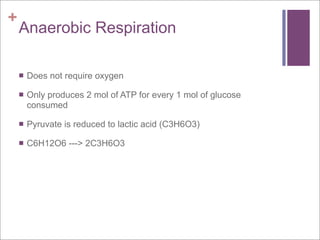
    Anaerobic Respiration

       Does not require oxygen

       Only produces 2 mol of ATP for every 1 mol of glucose
        consumed

       Pyruvate is reduced to lactic acid (C3H6O3)

       C6H12O6 ---> 2C3H6O3
+
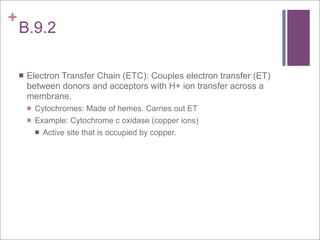
    B.9.2

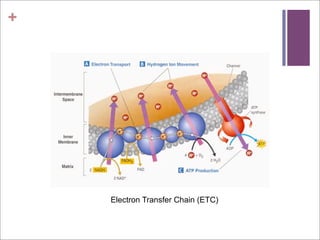
       Electron Transfer Chain (ETC): Couples electron transfer (ET)
        between donors and acceptors with H+ ion transfer across a
        membrane.
           Cytochromes: Made of hemes. Carries out ET
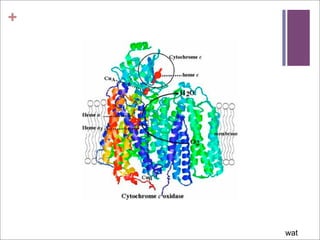
           Example: Cytochrome c oxidase (copper ions)
             Active site that is occupied by copper.
+


    Electron Transfer Chain (ETC)
+


    wat
+
    B.9.2

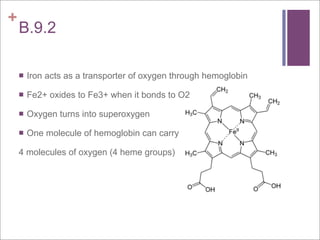
       Iron acts as a transporter of oxygen through hemoglobin

       Fe2+ oxides to Fe3+ when it bonds to O2

       Oxygen turns into superoxygen

       One molecule of hemoglobin can carry

    4 molecules of oxygen (4 heme groups)
+
    B.9.2

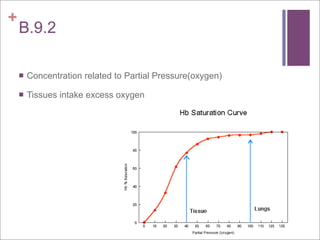
       Concentration related to Partial Pressure(oxygen)

       Tissues intake excess oxygen
+
    D.2.1

       D.2.1. State and explain how excess acidity in the stomach can
        be reduced by the use of different bases.
+
    Gastric Acid

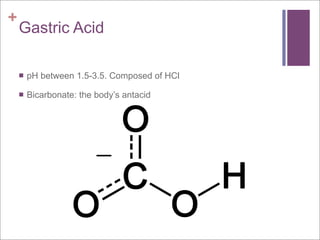
       pH between 1.5-3.5. Composed of HCl

       Bicarbonate: the body’s antacid
+
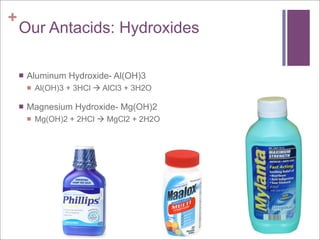
    Our Antacids: Hydroxides

       Aluminum Hydroxide- Al(OH)3
           Al(OH)3 + 3HCl  AlCl3 + 3H2O

       Magnesium Hydroxide- Mg(OH)2
           Mg(OH)2 + 2HCl  MgCl2 + 2H2O
+
    Our Antacids: Carbonates

       Magnesium Carbonate: MgCO3
           MgCO3 + 2HCl  MgCl2 + CO2 + H2O

       Sodium Hydrogencarbonate: NaHCO3
           NaHCO3 + HCl  NaCl + CO2 + H2O


        •General Finding: Basic Neutralization Reactions Occur!
+
    D.2.1

       Antacids can be combined with other compounds
           Alginates
           Anti-foaming agents


        Alginates prevent heartburn by creating a neutralizing layer that
          prevents acid reflux


        Anti-foaming agents like dimethicone help relieve bloating which is a
          symptom of acid reflux
                       -Maalox would be an example

D2 presentation

  • 1.
    + B9 and D2 Respiration and Antacids Raj Sikaria and not Casey Ste. Claire
  • 2.
    + B.9 Respiration  B.9.1. Compare aerobic and anaerobic respiration of glucose in terms of oxidation/reduction and energy released.  B.9.2. Outline the role of copper ions in electron transport and iron ions in oxygen transport.
  • 3.
    + B.9.1  Shared characteristics of aerobic and anaerobic respiration:  Produce ATP (chemical energy)  Glycolysis (converting glucose to pyruvate)  Oxidation reaction  Pyruvate (CH3COCOOH)  Exothermic
  • 4.
    + Aerobic Respiration  Requires oxygen  C6H12O6 (aq) + 6 O2 (g) → 6 CO2 (g) + 6 H2O (l) ΔG = -2880 kJ per mole of C6H12O6  19 times more efficient than anaerobic respiration (36-38 mol ATP/mol glucose)  glucose + 2ATP + 4ADP + 2Pi +2NAD+ ---> 2pyruvate + 2ADP + 4ATP + 2NADH + 2H+ +2H2O
  • 5.
    + Anaerobic Respiration  Does not require oxygen  Only produces 2 mol of ATP for every 1 mol of glucose consumed  Pyruvate is reduced to lactic acid (C3H6O3)  C6H12O6 ---> 2C3H6O3
  • 6.
    + B.9.2  Electron Transfer Chain (ETC): Couples electron transfer (ET) between donors and acceptors with H+ ion transfer across a membrane.  Cytochromes: Made of hemes. Carries out ET  Example: Cytochrome c oxidase (copper ions)  Active site that is occupied by copper.
  • 7.
    + Electron Transfer Chain (ETC)
  • 8.
    + wat
  • 9.
    + B.9.2  Iron acts as a transporter of oxygen through hemoglobin  Fe2+ oxides to Fe3+ when it bonds to O2  Oxygen turns into superoxygen  One molecule of hemoglobin can carry 4 molecules of oxygen (4 heme groups)
  • 10.
    + B.9.2  Concentration related to Partial Pressure(oxygen)  Tissues intake excess oxygen
  • 11.
    + D.2.1  D.2.1. State and explain how excess acidity in the stomach can be reduced by the use of different bases.
  • 12.
    + Gastric Acid  pH between 1.5-3.5. Composed of HCl  Bicarbonate: the body’s antacid
  • 13.
    + Our Antacids: Hydroxides  Aluminum Hydroxide- Al(OH)3  Al(OH)3 + 3HCl  AlCl3 + 3H2O  Magnesium Hydroxide- Mg(OH)2  Mg(OH)2 + 2HCl  MgCl2 + 2H2O
  • 14.
    + Our Antacids: Carbonates  Magnesium Carbonate: MgCO3  MgCO3 + 2HCl  MgCl2 + CO2 + H2O  Sodium Hydrogencarbonate: NaHCO3  NaHCO3 + HCl  NaCl + CO2 + H2O •General Finding: Basic Neutralization Reactions Occur!
  • 15.
    + D.2.1  Antacids can be combined with other compounds  Alginates  Anti-foaming agents Alginates prevent heartburn by creating a neutralizing layer that prevents acid reflux Anti-foaming agents like dimethicone help relieve bloating which is a symptom of acid reflux -Maalox would be an example