Strange Meeting
    By Wilfred Owen

Hannah, Drew, and Danny
Overview
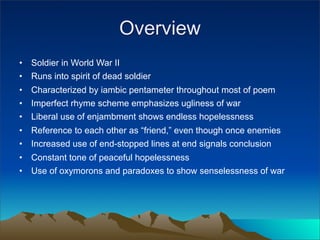
•   Soldier in World War II
•   Runs into spirit of dead soldier
•   Characterized by iambic pentameter throughout most of poem
•   Imperfect rhyme scheme emphasizes ugliness of war
•   Liberal use of enjambment shows endless hopelessness
•   Reference to each other as “friend,” even though once enemies
•   Increased use of end-stopped lines at end signals conclusion
•   Constant tone of peaceful hopelessness
•   Use of oxymorons and paradoxes to show senselessness of war
Salvation,
Archetypal image of death:                                                  Biblical
tunnel with light at the end                                                reference

                  It seemed that out of the battle I escaped
                  Down some profound dull tunnel, long since scooped
 Reflection       Through granites which titanic wars had groined.                  ESL
 on
 numerous         Yet also there encumbered sleepers groaned,
 deaths           Too fast in thought or death to be bestirred.               ESL
                  Then, as I probed them, one sprang up, and stared
  Are both
  of them         With piteous recognition in fixed eyes,
  dead, or
  just one?       Lifting distressful hands as if to bless.          ESL
                  And by his smile, I knew that sullen hall;
                                                                           Parallel structure
                  By his dead smile I knew we stood in Hell.
                                                                           ESL
                                            Description of
                                            soldier like that of a
                                            mummy
Hyperbole shows
              devastation of war
                                                                                    ESL
Seems
peaceful          With a thousand pains that vision’s face was grained;
                                                                                      Repetition of
compared to                                                                           “moan”
outside war       Yet no blood reached there from the upper ground,
                                                                                      emphasizes
                  And no guns thumped, or down the flues made moan.                   dreary tone

Ironic to say     “Strange friend,” I said, “here is no cause to mourn.”             ESL
that Hell is                                                                     Begins very
                  “None,” said the other, “save the undone years,
more peaceful                                                                    long speech
than war          The hopelessness. Whatever hope is yours,
                                                                                  Death equalizes
Includes          Was my life also; I went hunting wild                           everyone
perspective                                                        Repetition of
                  After the wildest beauty in the world,           “wild,” alliteration
of former
enemy             Which lies not calm in eyes, or braided hair,
                  But mocks the steady running of the hour,              Even time behaves
Place devoid                                                             strangely here
of emotion        And if it grieves, grieves richlier than here.
                                                                            Carpe Diem, focus
                                                                            on the important
                                                            ESL             things in life
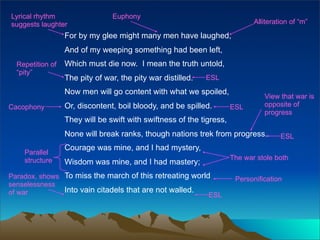
Lyrical rhythm                  Euphony
suggests laughter                                                            Alliteration of “m”

                  For by my glee might many men have laughed,
                  And of my weeping something had been left,
  Repetition of   Which must die now. I mean the truth untold,
  “pity”
                  The pity of war, the pity war distilled.   ESL

                  Now men will go content with what we spoiled,
                                                                                View that war is
Cacophony         Or, discontent, boil bloody, and be spilled.        ESL       opposite of
                                                                                progress
                  They will be swift with swiftness of the tigress,
                  None will break ranks, though nations trek from progress.           ESL
                  Courage was mine, and I had mystery,
    Parallel
    structure                                                         The war stole both
                  Wisdom was mine, and I had mastery;
Paradox, shows To miss the march of this retreating world              Personification
senselessness
of war         Into vain citadels that are not walled.
                                                         ESL
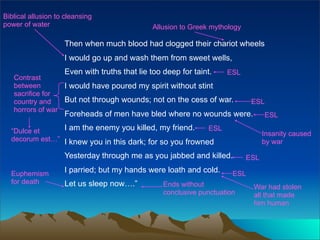
Biblical allusion to cleansing
power of water                                Allusion to Greek mythology

                    Then when much blood had clogged their chariot wheels
                    I would go up and wash them from sweet wells,
                    Even with truths that lie too deep for taint.
                                                               ESL
   Contrast
   between        I would have poured my spirit without stint
   sacrifice for
   country and    But not through wounds; not on the cess of war.            ESL
   horrors of war
                    Foreheads of men have bled where no wounds were.              ESL

  “Dulce et     I am the enemy you killed, my friend.     ESL
                                                                                  Insanity caused
  decorum est…” I knew you in this dark; for so you frowned                       by war

                    Yesterday through me as you jabbed and killed.          ESL

  Euphemism         I parried; but my hands were loath and cold.       ESL
  for death         Let us sleep now….”           Ends without               War had stolen
                                                  conclusive punctuation     all that made
                                                                             him human

Strange Meeting Olympians

  • 2.
    Strange Meeting By Wilfred Owen Hannah, Drew, and Danny
  • 4.
    Overview • Soldier in World War II • Runs into spirit of dead soldier • Characterized by iambic pentameter throughout most of poem • Imperfect rhyme scheme emphasizes ugliness of war • Liberal use of enjambment shows endless hopelessness • Reference to each other as “friend,” even though once enemies • Increased use of end-stopped lines at end signals conclusion • Constant tone of peaceful hopelessness • Use of oxymorons and paradoxes to show senselessness of war
  • 6.
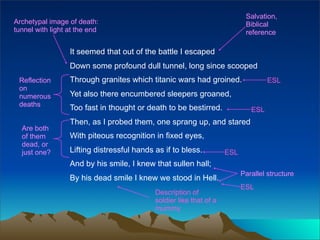
    Salvation, Archetypal image ofdeath: Biblical tunnel with light at the end reference It seemed that out of the battle I escaped Down some profound dull tunnel, long since scooped Reflection Through granites which titanic wars had groined. ESL on numerous Yet also there encumbered sleepers groaned, deaths Too fast in thought or death to be bestirred. ESL Then, as I probed them, one sprang up, and stared Are both of them With piteous recognition in fixed eyes, dead, or just one? Lifting distressful hands as if to bless. ESL And by his smile, I knew that sullen hall; Parallel structure By his dead smile I knew we stood in Hell. ESL Description of soldier like that of a mummy
  • 8.
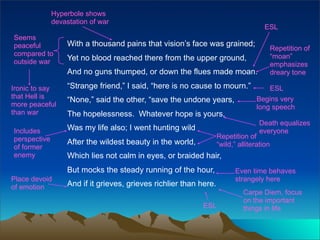
    Hyperbole shows devastation of war ESL Seems peaceful With a thousand pains that vision’s face was grained; Repetition of compared to “moan” outside war Yet no blood reached there from the upper ground, emphasizes And no guns thumped, or down the flues made moan. dreary tone Ironic to say “Strange friend,” I said, “here is no cause to mourn.” ESL that Hell is Begins very “None,” said the other, “save the undone years, more peaceful long speech than war The hopelessness. Whatever hope is yours, Death equalizes Includes Was my life also; I went hunting wild everyone perspective Repetition of After the wildest beauty in the world, “wild,” alliteration of former enemy Which lies not calm in eyes, or braided hair, But mocks the steady running of the hour, Even time behaves Place devoid strangely here of emotion And if it grieves, grieves richlier than here. Carpe Diem, focus on the important ESL things in life
  • 10.
    Lyrical rhythm Euphony suggests laughter Alliteration of “m” For by my glee might many men have laughed, And of my weeping something had been left, Repetition of Which must die now. I mean the truth untold, “pity” The pity of war, the pity war distilled. ESL Now men will go content with what we spoiled, View that war is Cacophony Or, discontent, boil bloody, and be spilled. ESL opposite of progress They will be swift with swiftness of the tigress, None will break ranks, though nations trek from progress. ESL Courage was mine, and I had mystery, Parallel structure The war stole both Wisdom was mine, and I had mastery; Paradox, shows To miss the march of this retreating world Personification senselessness of war Into vain citadels that are not walled. ESL
  • 12.
    Biblical allusion tocleansing power of water Allusion to Greek mythology Then when much blood had clogged their chariot wheels I would go up and wash them from sweet wells, Even with truths that lie too deep for taint. ESL Contrast between I would have poured my spirit without stint sacrifice for country and But not through wounds; not on the cess of war. ESL horrors of war Foreheads of men have bled where no wounds were. ESL “Dulce et I am the enemy you killed, my friend. ESL Insanity caused decorum est…” I knew you in this dark; for so you frowned by war Yesterday through me as you jabbed and killed. ESL Euphemism I parried; but my hands were loath and cold. ESL for death Let us sleep now….” Ends without War had stolen conclusive punctuation all that made him human