

2014
Edu ision
 What is Cyber-Security (CS) Education?
 Why should we provide this Education?
 Who is the target audience ?
 Curriculum for Cyber-Security
 Limitations of a Cyber-Security Curriculum
 Conclusion
 Future Work
 Education
Learning that enables
 Cyber-Security
Protection computers, networks, programs and data
from unintended or unauthorized access, change or
destruction, i.e. enforcing Confidentiality, Integrity,
Access (C.I.A) for the Internet.
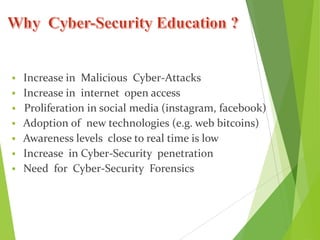
 Increase in Malicious Cyber-Attacks
 Increase in internet open access
 Proliferation in social media (instagram, facebook)
 Adoption of new technologies (e.g. web bitcoins)
 Awareness levels close to real time is low
 Increase in Cyber-Security penetration
 Need for Cyber-Security Forensics
 Primary School Education
 High School Education
 College /Tertiary Education
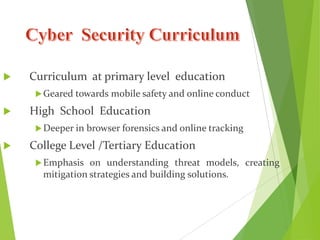
 Curriculum at primary level education
Geared towards mobile safety and online conduct
 High School Education
Deeper in browser forensics and online tracking
 College Level /Tertiary Education
Emphasis on understanding threat models, creating
mitigation strategies and building solutions.
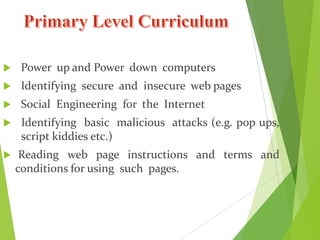
 Power up and Power down computers
 Identifying secure and insecure web pages
 Social Engineering for the Internet
 Identifying basic malicious attacks (e.g. pop ups,
script kiddies etc.)
 Reading web page instructions and terms and
conditions for using such pages.
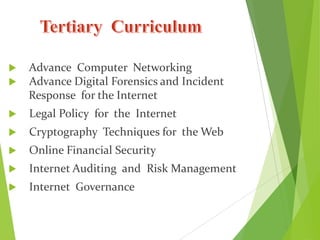
 Advance Computer Networking
 Advance Digital Forensics and Incident
Response for the Internet
 Legal Policy for the Internet
 Cryptography Techniques for the Web
 Online Financial Security
 Internet Auditing and Risk Management
 Internet Governance
 Security is an interdisciplinary field
(many skills to hone)
 Policy adoption on security education
 Human Talent Pool of Educational Security
Experts at all levels of curriculum
 Technology Adoption
 Cyber-Security transformation education
initiatives at all levels of the curriculum required
 Existing National ICT initiatives lack the adequate
pool expertise at all requisite levels of curricula.
 As Internet penetration increases - a global intiative
on Cyber-Security is imperative and the Jamaican
context requirement is no less.
 Tertiary Level training to inform tertiary level
training and lower level curricula is required.
 Cyber-Security transformation education
initiatives at all levels of the curriculum required
 National ICT security policy initiatives that speak to
skills based initiatives to provide short term,
medium term and long term Security Talent
Management Pools
 Tertiary Level training to inform tertiary and lower
level curricula
?
Thank You

Cyber-Security in Education

  • 1.
  • 2.
     What isCyber-Security (CS) Education?  Why should we provide this Education?  Who is the target audience ?  Curriculum for Cyber-Security  Limitations of a Cyber-Security Curriculum  Conclusion  Future Work
  • 3.
     Education Learning thatenables  Cyber-Security Protection computers, networks, programs and data from unintended or unauthorized access, change or destruction, i.e. enforcing Confidentiality, Integrity, Access (C.I.A) for the Internet.
  • 4.
     Increase inMalicious Cyber-Attacks  Increase in internet open access  Proliferation in social media (instagram, facebook)  Adoption of new technologies (e.g. web bitcoins)  Awareness levels close to real time is low  Increase in Cyber-Security penetration  Need for Cyber-Security Forensics
  • 5.
     Primary SchoolEducation  High School Education  College /Tertiary Education
  • 6.
     Curriculum atprimary level education Geared towards mobile safety and online conduct  High School Education Deeper in browser forensics and online tracking  College Level /Tertiary Education Emphasis on understanding threat models, creating mitigation strategies and building solutions.
  • 7.
     Power upand Power down computers  Identifying secure and insecure web pages  Social Engineering for the Internet  Identifying basic malicious attacks (e.g. pop ups, script kiddies etc.)  Reading web page instructions and terms and conditions for using such pages.
  • 8.
     Advance ComputerNetworking  Advance Digital Forensics and Incident Response for the Internet  Legal Policy for the Internet  Cryptography Techniques for the Web  Online Financial Security  Internet Auditing and Risk Management  Internet Governance
  • 9.
     Security isan interdisciplinary field (many skills to hone)  Policy adoption on security education  Human Talent Pool of Educational Security Experts at all levels of curriculum  Technology Adoption
  • 10.
     Cyber-Security transformationeducation initiatives at all levels of the curriculum required  Existing National ICT initiatives lack the adequate pool expertise at all requisite levels of curricula.  As Internet penetration increases - a global intiative on Cyber-Security is imperative and the Jamaican context requirement is no less.  Tertiary Level training to inform tertiary level training and lower level curricula is required.
  • 11.
     Cyber-Security transformationeducation initiatives at all levels of the curriculum required  National ICT security policy initiatives that speak to skills based initiatives to provide short term, medium term and long term Security Talent Management Pools  Tertiary Level training to inform tertiary and lower level curricula
  • 12.