2013 Global Information Security Workforce 
An increasing number of cyber attacks on public and private sector 
organizations has created an economic “ripple effect” across the 
globe. To solve this urgent issue, organizations need to recruit, build 
and train a cyber security workforce of IT professionals that can keep 
up with sophisticated security threats. 
What can large and 
small businesses do? 
Acknowledge that security is an 
organization-wide issue, not an IT issue 
Incorporate security into all aspects of the 
business through processes and technologies 
Allocate sufficient budget to employ, train and 
certify IT security staff 
Help build the workforce through next 
generation, mentoring and internship programs 
What can global 
governments do? 
Support core education programs by bringing 
cyber security into K-12 classrooms 
Create and link to scholarship programs for 
those interested in the profession 
Support STEM education programs to create 
early industry awareness 
Assess current staff to find, train and retrain 
additional talent for cyber security 
What can academic 
institutions do? 
Integrate basic cyber safety education into 
elementary school curriculum 
Expand information security curriculum at 
secondary and undergraduate levels 
Increase scholarships to motivate students to 
pursue an information security education 
What can individuals 
and families do? 
Learn about cyber security/safety basics 
Keep computers, tablets and mobile phones secure 
Check credit reports regularly and enlist in credit 
monitoring services 
Be cautious when sharing information through 
email and social media platforms 
Information security is a stable and growing 
profession, but there are not enough skilled 
professionals to protect against the growing list of 
security threats and vulnerabilities. 
Security is an organization-wide, societal problem. To 
address it, we must understand cyber security issues, 
speak with one voice to raise awareness among top 
talent about field and career outlook and create 
opportunities and incentives to help cultivate the next 
Skills in 
demand: 
Broad understanding of 
the security field 
Communication skills 
Technical knowledge 
Awareness and 
understanding of the 
latest security threats 
Hiring 
roadblocks: 
Business conditions 
Executives not 
understanding the 
security need 
Inability to locate 
qualified professionals 
Industries 
with greatest 
shortages: 
Education 
Healthcare 
Manufacturing 
Retail & Wholesale 
HELP 
WANTED 
More Security 
Professionals 
Needed NOW! 
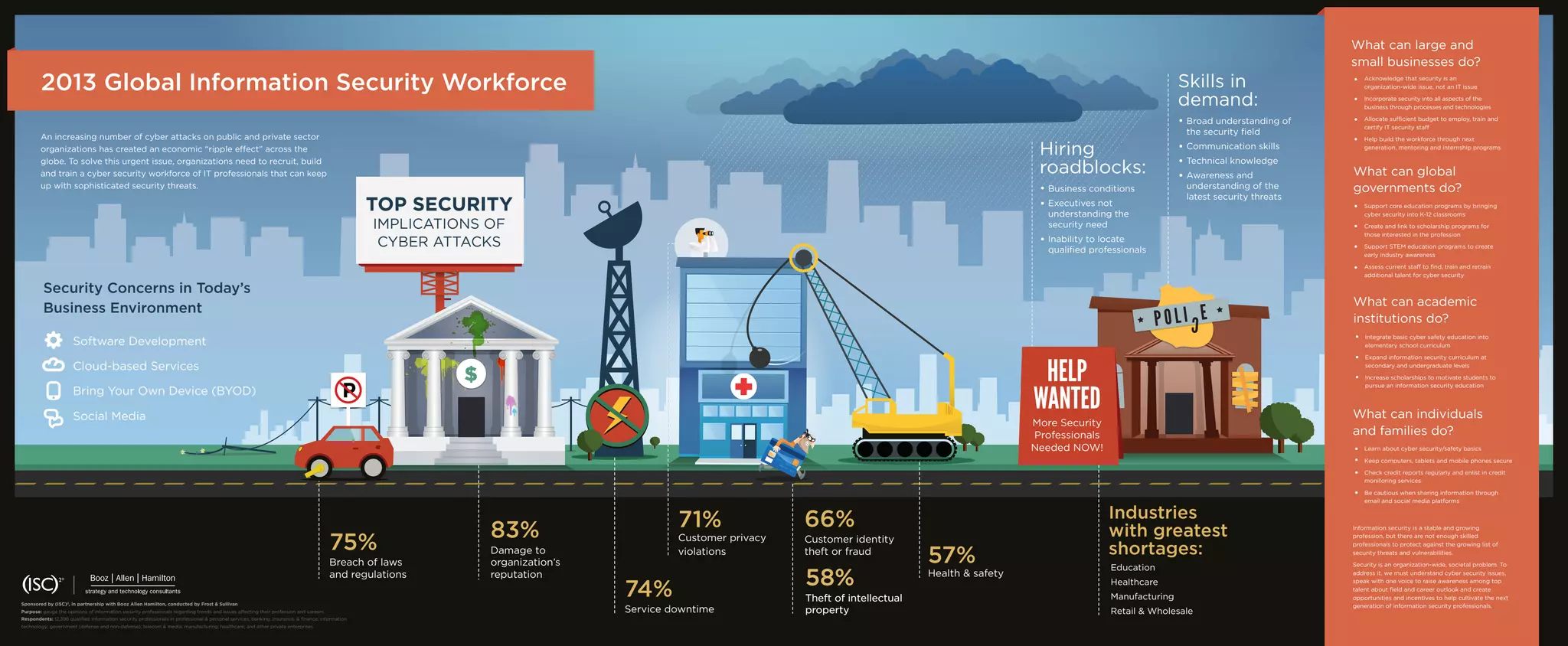
TOP SECURITY 
IMPLICATIONS OF 
CYBER ATTACKS 
66% 
Customer identity 
theft or fraud 75% 
Breach of laws 
and regulations 
83% 
Damage to 
organization’s 
reputation 
71% 
Customer privacy 
violations 
74% 
Service downtime 
58% 
Theft of intellectual 
property 
Security Concerns in Today’s 
Business Environment 
Software Development 
Cloud-based Services 
Bring Your Own Device (BYOD) 
Social Media 
57% 
Health & safety 
Sponsored by (ISC)2, in partnership with Booz Allen Hamilton, conducted by Frost & Sullivan generation of information security professionals. 
Purpose: gauge the opinions of information security professionals regarding trends and issues affecting their profession and careers. 
Respondents: 12,396 qualified information security professionals in professional & personal services; banking, insurance, & finance; information 
technology; government (defense and non-defense); telecom & media; manufacturing; healthcare; and other private enterprises.

Cyber Security Infographic

  • 1.
    2013 Global InformationSecurity Workforce An increasing number of cyber attacks on public and private sector organizations has created an economic “ripple effect” across the globe. To solve this urgent issue, organizations need to recruit, build and train a cyber security workforce of IT professionals that can keep up with sophisticated security threats. What can large and small businesses do? Acknowledge that security is an organization-wide issue, not an IT issue Incorporate security into all aspects of the business through processes and technologies Allocate sufficient budget to employ, train and certify IT security staff Help build the workforce through next generation, mentoring and internship programs What can global governments do? Support core education programs by bringing cyber security into K-12 classrooms Create and link to scholarship programs for those interested in the profession Support STEM education programs to create early industry awareness Assess current staff to find, train and retrain additional talent for cyber security What can academic institutions do? Integrate basic cyber safety education into elementary school curriculum Expand information security curriculum at secondary and undergraduate levels Increase scholarships to motivate students to pursue an information security education What can individuals and families do? Learn about cyber security/safety basics Keep computers, tablets and mobile phones secure Check credit reports regularly and enlist in credit monitoring services Be cautious when sharing information through email and social media platforms Information security is a stable and growing profession, but there are not enough skilled professionals to protect against the growing list of security threats and vulnerabilities. Security is an organization-wide, societal problem. To address it, we must understand cyber security issues, speak with one voice to raise awareness among top talent about field and career outlook and create opportunities and incentives to help cultivate the next Skills in demand: Broad understanding of the security field Communication skills Technical knowledge Awareness and understanding of the latest security threats Hiring roadblocks: Business conditions Executives not understanding the security need Inability to locate qualified professionals Industries with greatest shortages: Education Healthcare Manufacturing Retail & Wholesale HELP WANTED More Security Professionals Needed NOW! TOP SECURITY IMPLICATIONS OF CYBER ATTACKS 66% Customer identity theft or fraud 75% Breach of laws and regulations 83% Damage to organization’s reputation 71% Customer privacy violations 74% Service downtime 58% Theft of intellectual property Security Concerns in Today’s Business Environment Software Development Cloud-based Services Bring Your Own Device (BYOD) Social Media 57% Health & safety Sponsored by (ISC)2, in partnership with Booz Allen Hamilton, conducted by Frost & Sullivan generation of information security professionals. Purpose: gauge the opinions of information security professionals regarding trends and issues affecting their profession and careers. Respondents: 12,396 qualified information security professionals in professional & personal services; banking, insurance, & finance; information technology; government (defense and non-defense); telecom & media; manufacturing; healthcare; and other private enterprises.