Cutting Temperature


        Dr Jose Mathew
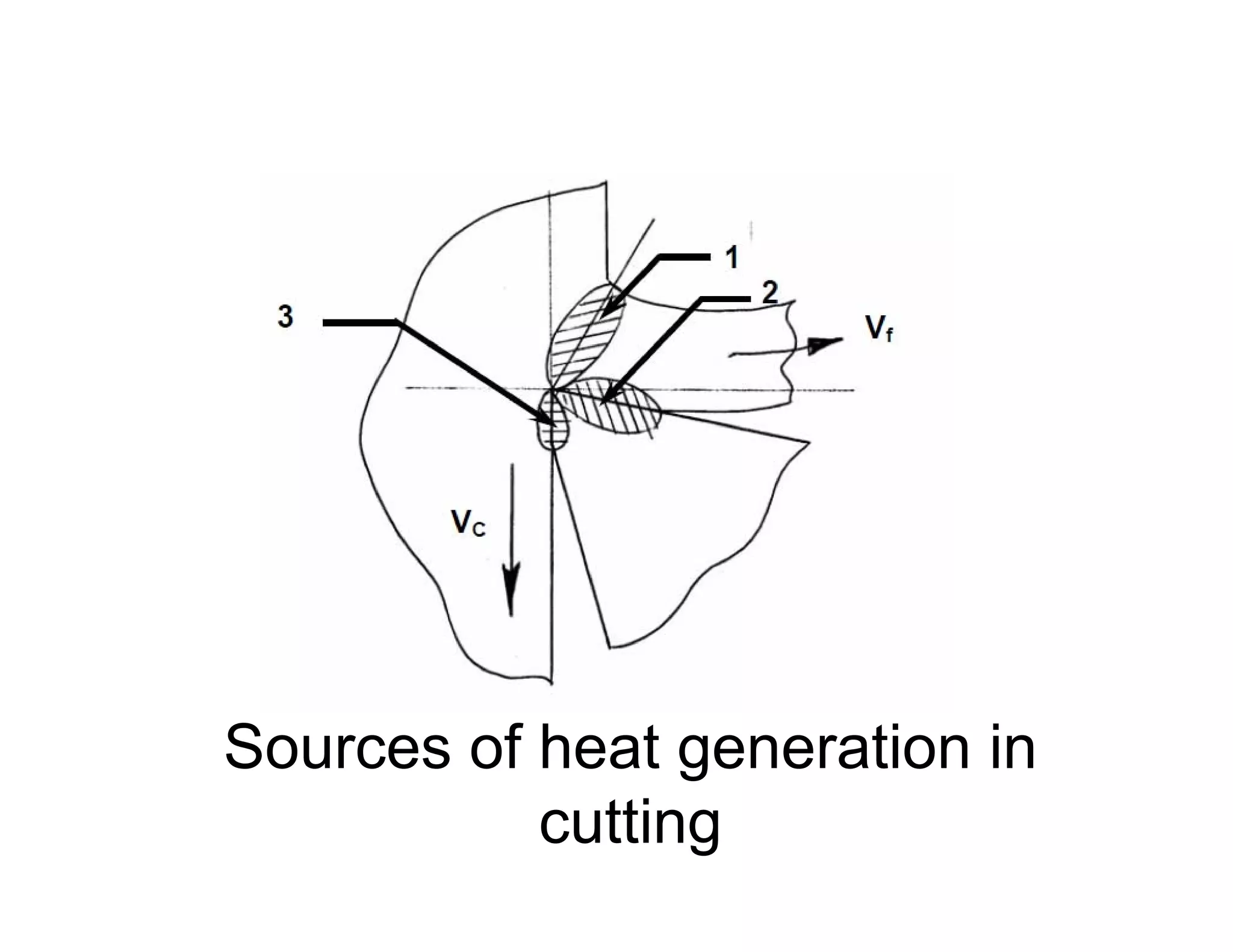
Sources of heat generation in
           cutting
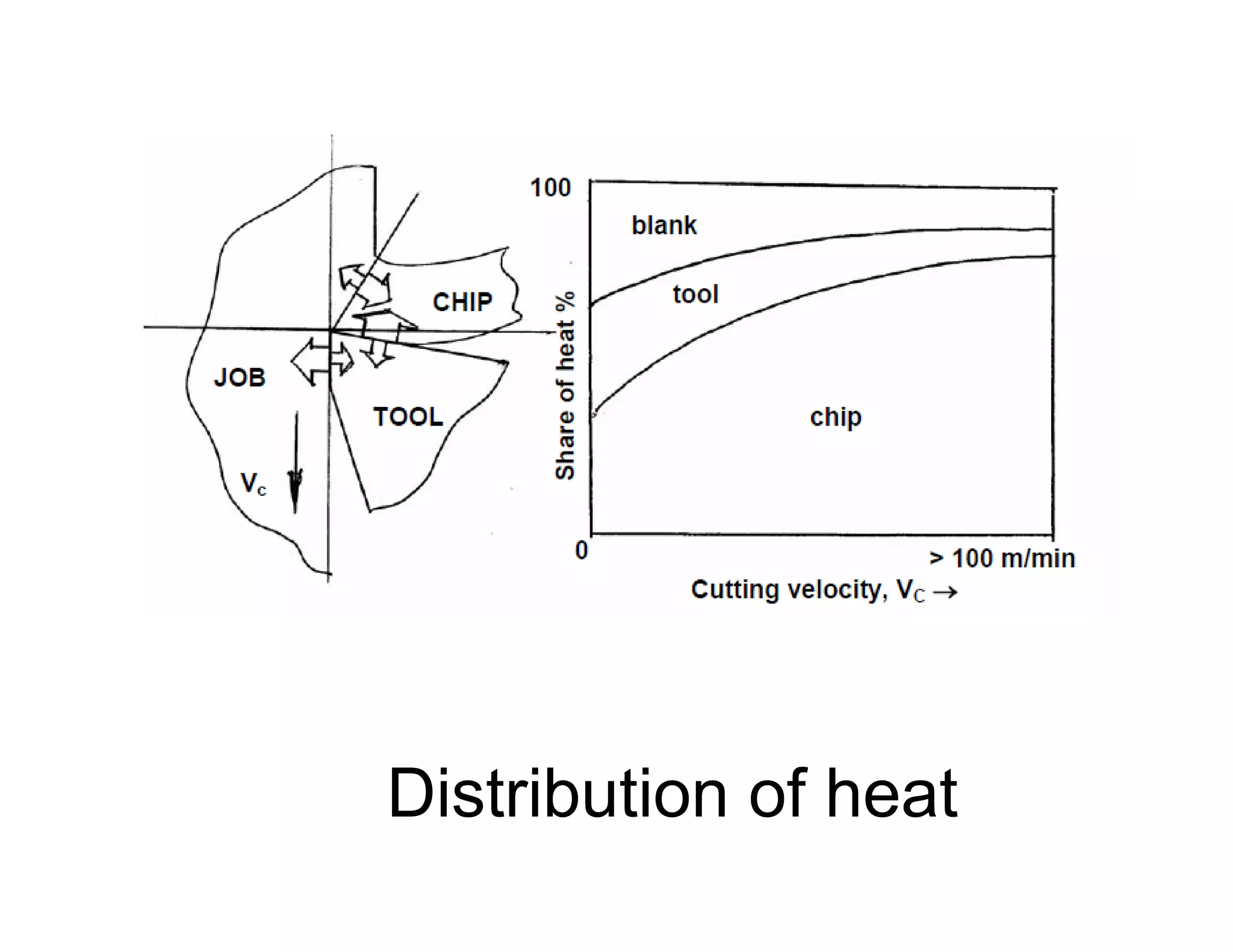
Distribution of heat
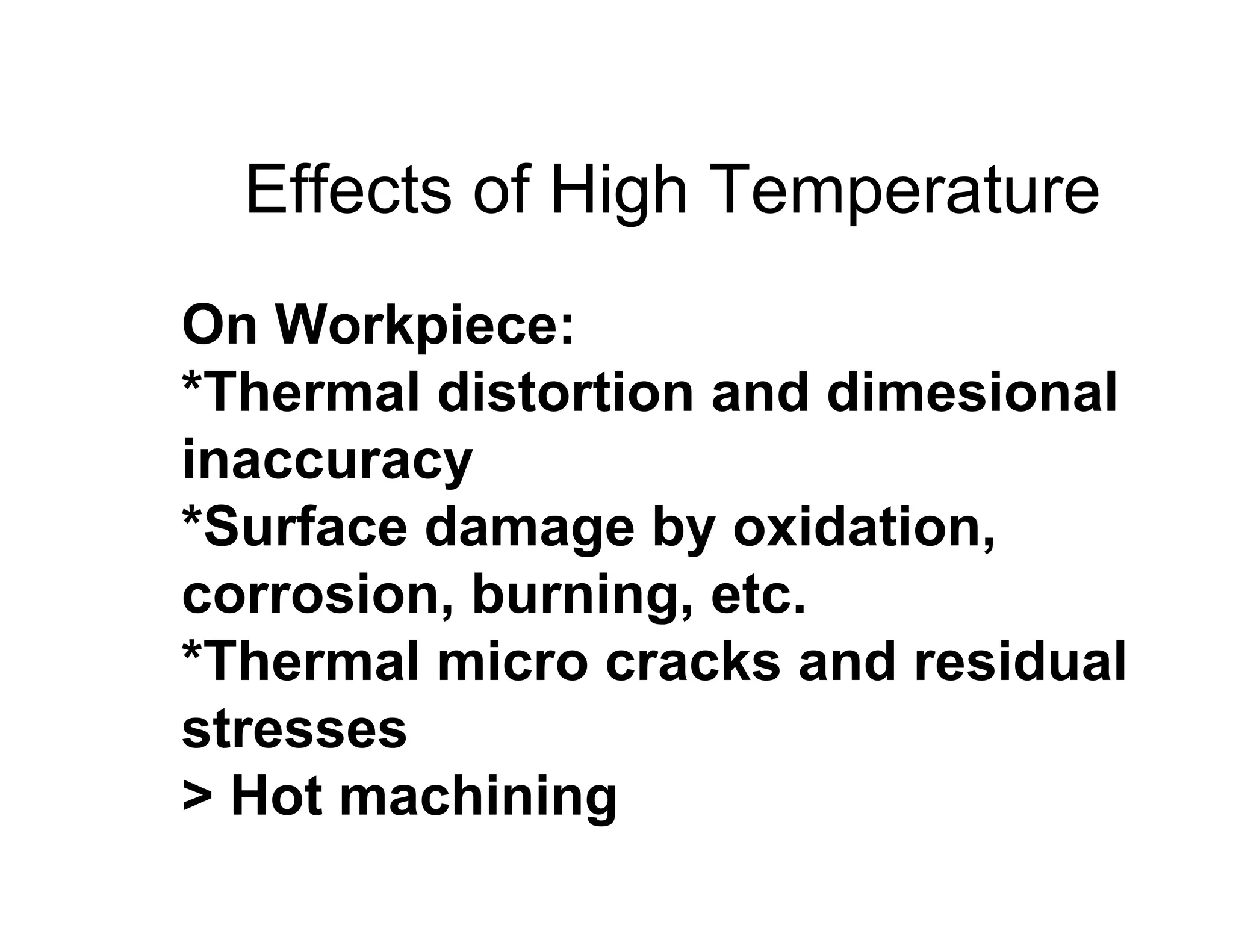
Effects of High Temperature

On Tool:
Rapid Tool wear
Plastic deformation of edge
Thermal flaking and
deformation
BUE formation
Effects of High Temperature
On Workpiece:
*Thermal distortion and dimesional
inaccuracy
*Surface damage by oxidation,
corrosion, burning, etc.
*Thermal micro cracks and residual
stresses
> Hot machining
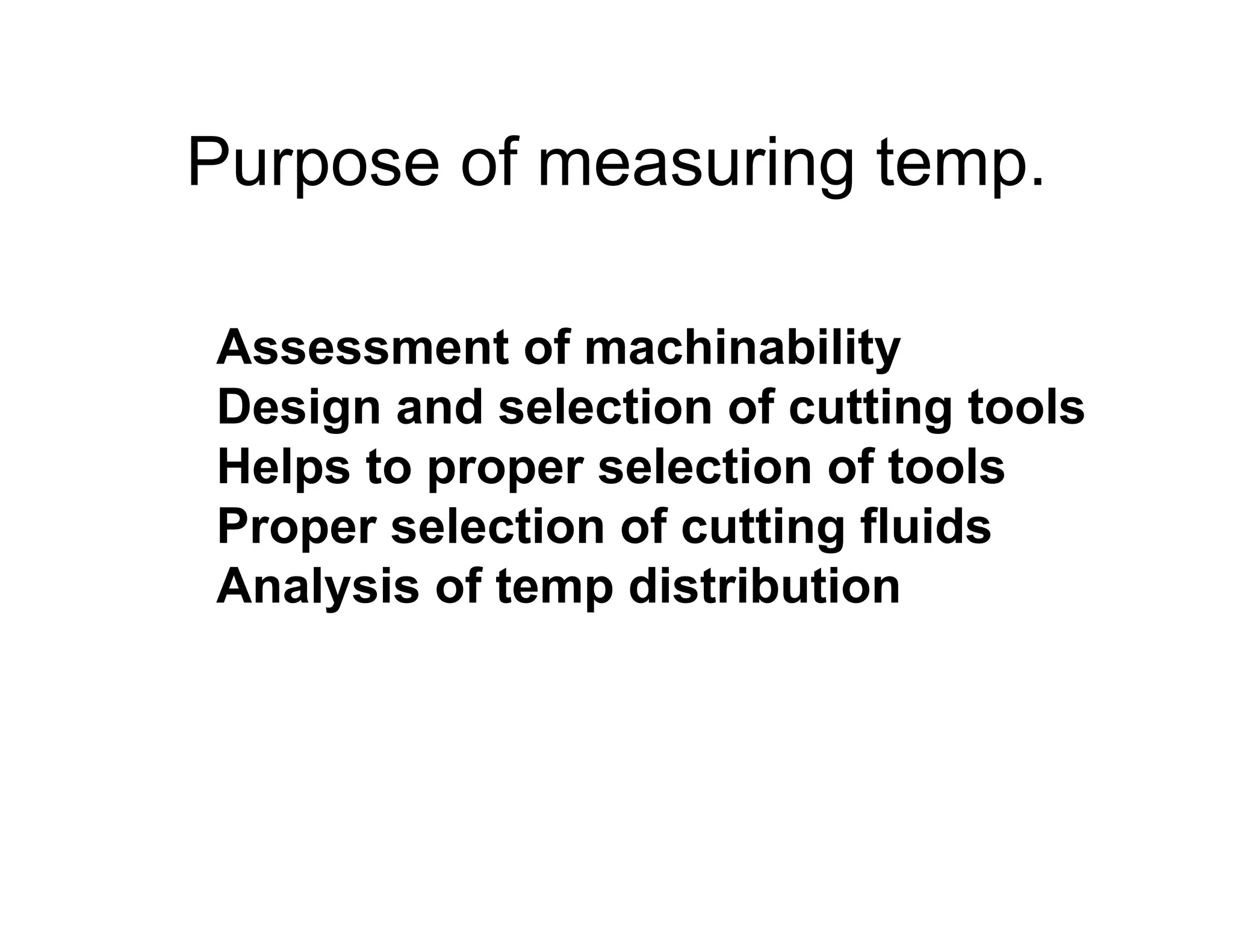
Purpose of measuring temp.

Assessment of machinability
Design and selection of cutting tools
Helps to proper selection of tools
Proper selection of cutting fluids
Analysis of temp distribution
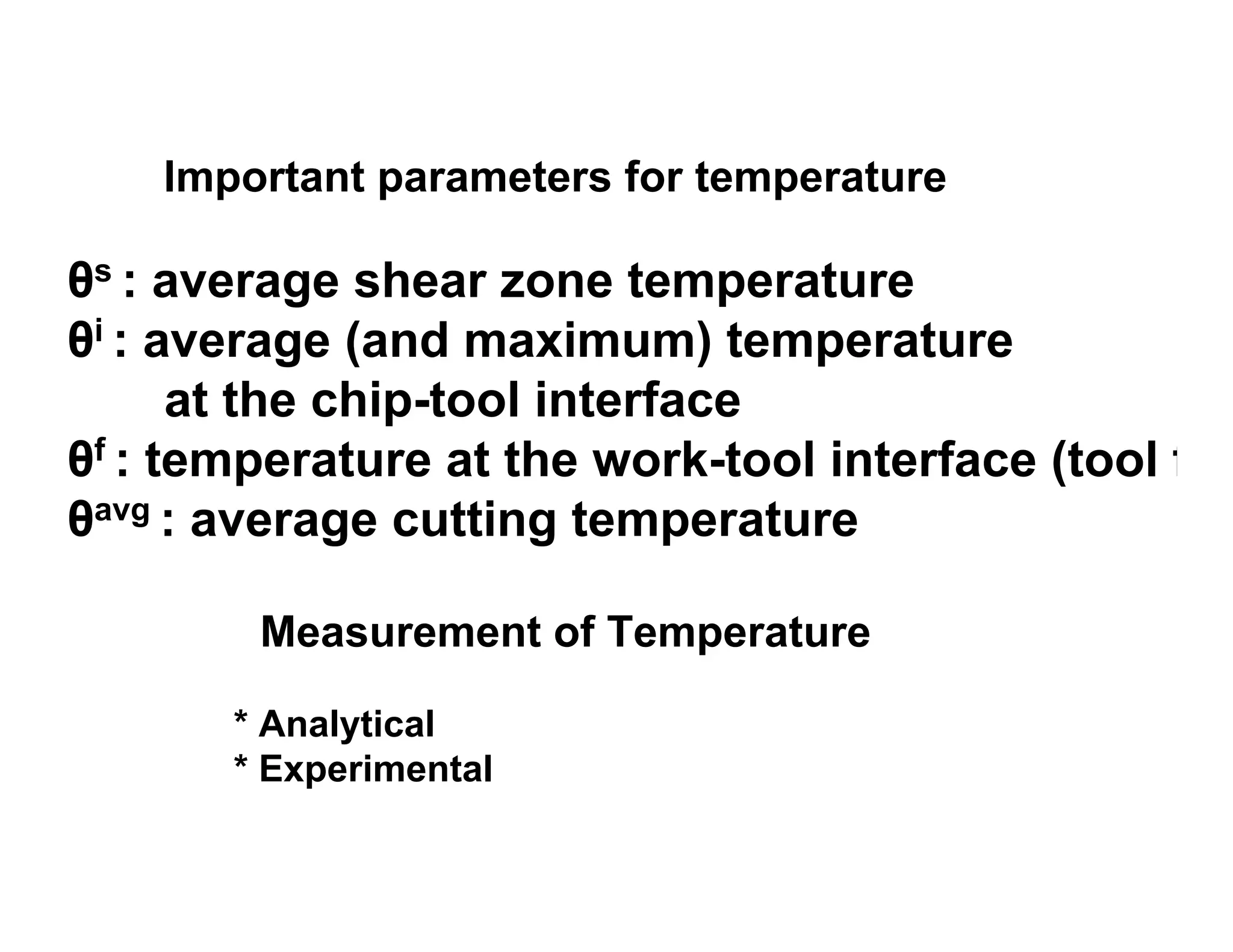
Important parameters for temperature

θs : average shear zone temperature
θi : average (and maximum) temperature
      at the chip-tool interface
θf : temperature at the work-tool interface (tool f
θavg : average cutting temperature

        Measurement of Temperature

       * Analytical
       * Experimental
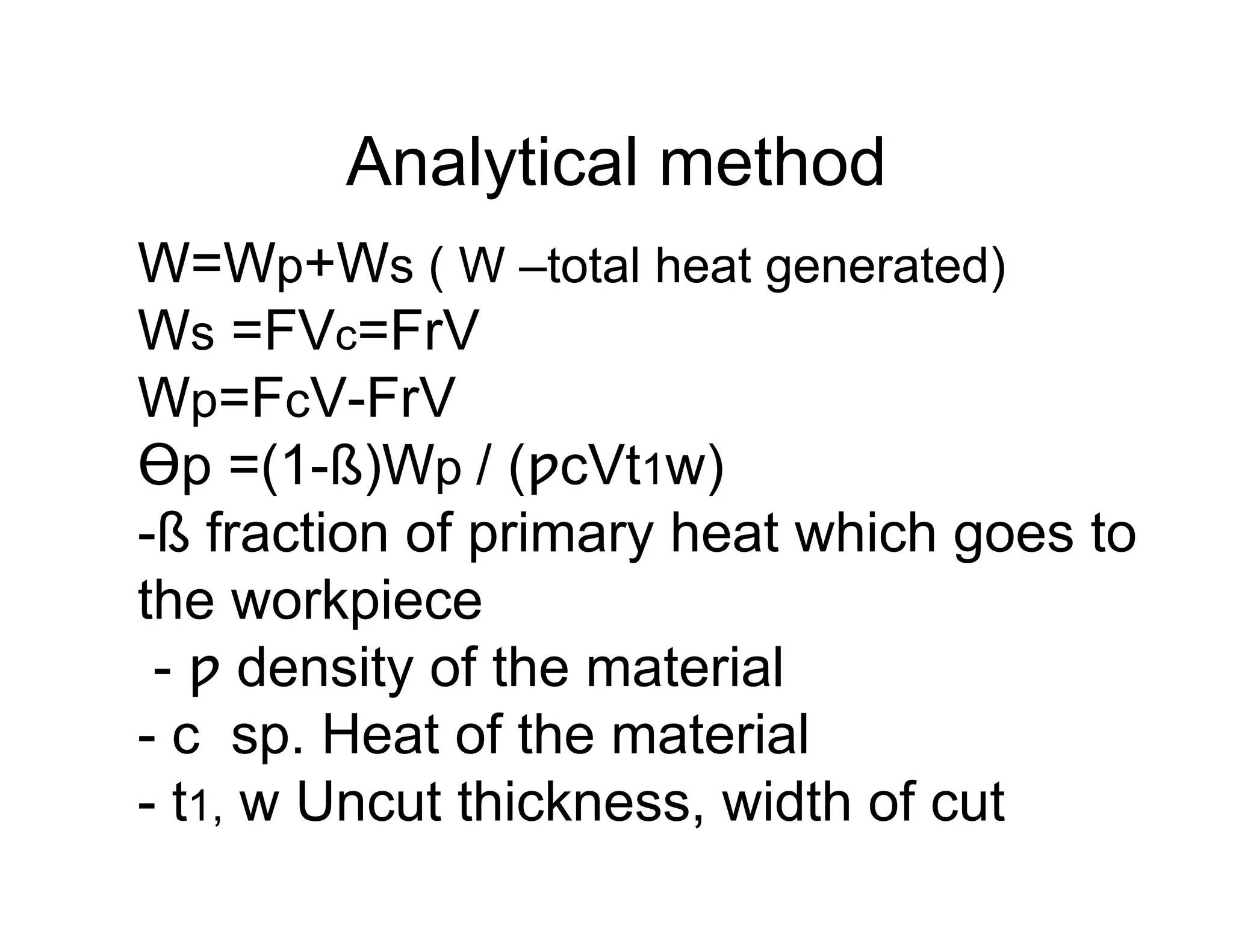
Analytical method
W=Wp+Ws ( W –total heat generated)
Ws =FVc=FrV
Wp=FcV-FrV
Ɵp =(1-ß)Wp / (ƿcVt1w)
-ß fraction of primary heat which goes to
the workpiece
 - ƿ density of the material
- c sp. Heat of the material
- t1, w Uncut thickness, width of cut
is a function of shear angle Φ
and non dimesional quantity Ə
Ə= ƿcVt1/k
k-thermal conductivity of the material
    ß =0.15 ln (27.5/ Ə tan Φ)


              √
ƟS + 1.13 [ (Ət2/l)(Ws/ƿcvwt1)]
l - length of contact bet.tool and chip
Ɵs av = Ws/ƿcvwt1

         l/t2 = [1+tan (Φ -α )]


Ɵs=1.13 √(1/ƿcvt1k[1+tan (Φ -α )] (Ws/w)


         Ɵ= Ɵ0+ Ɵp +ƟS
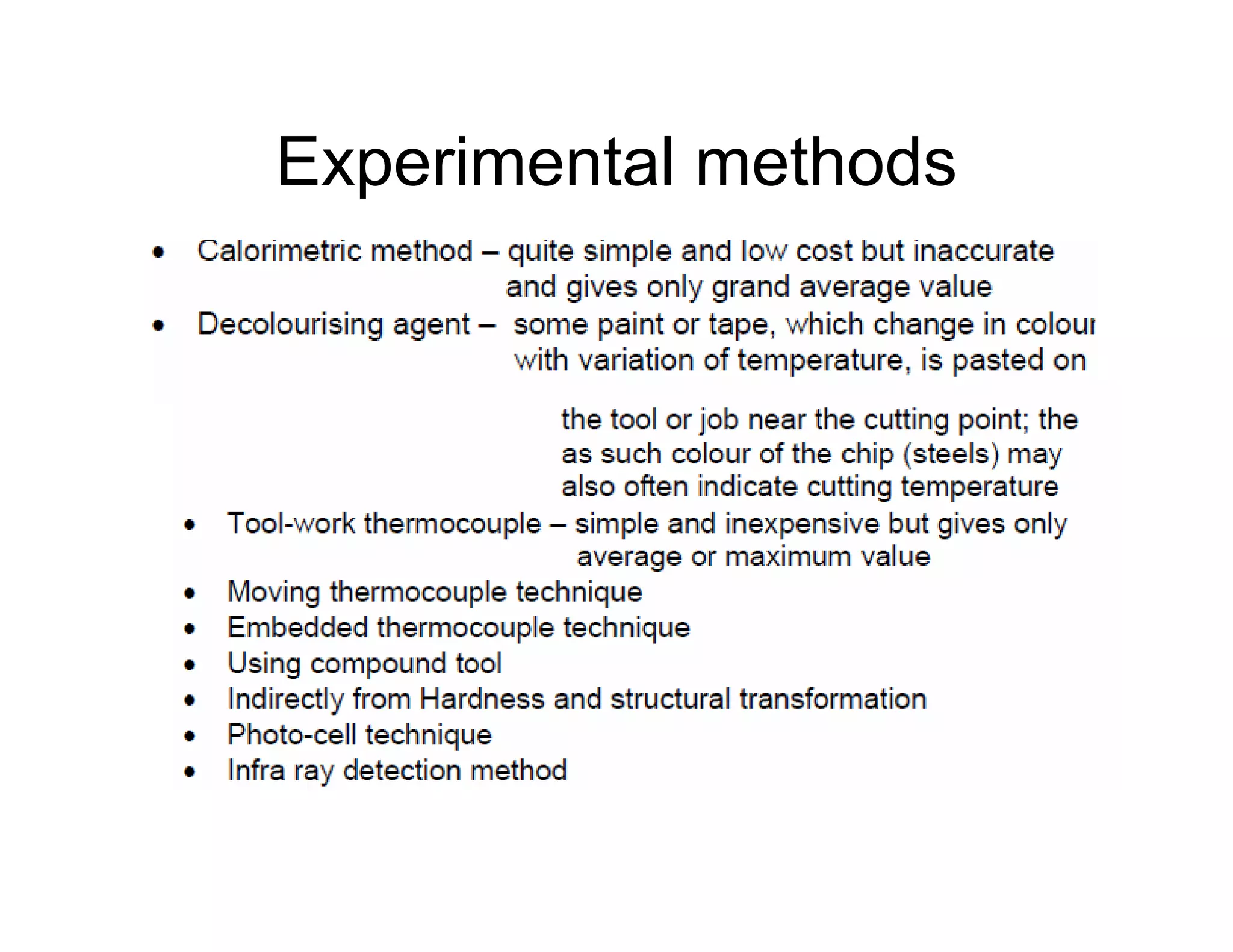
Experimental methods
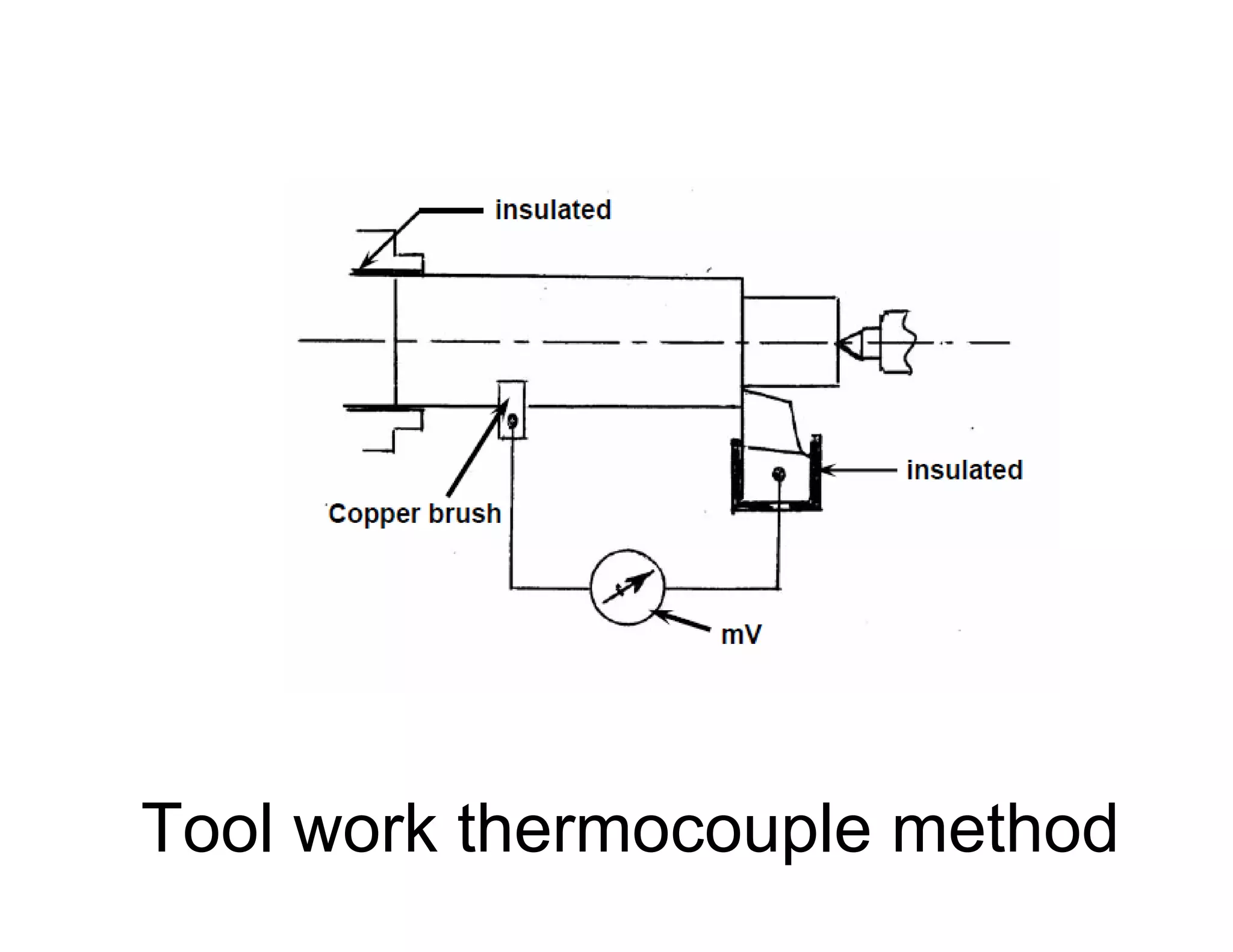
Tool work thermocouple method
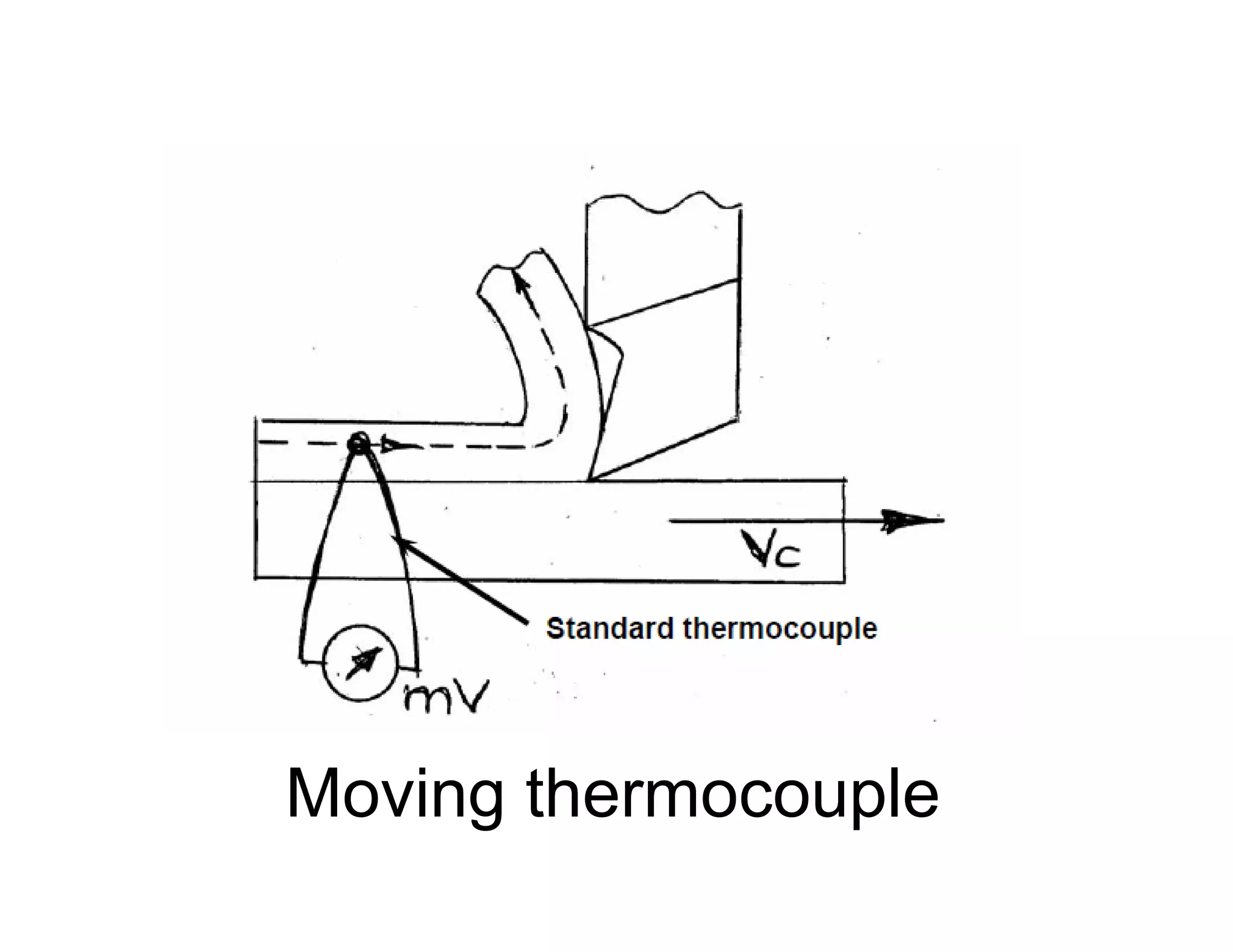
Moving thermocouple
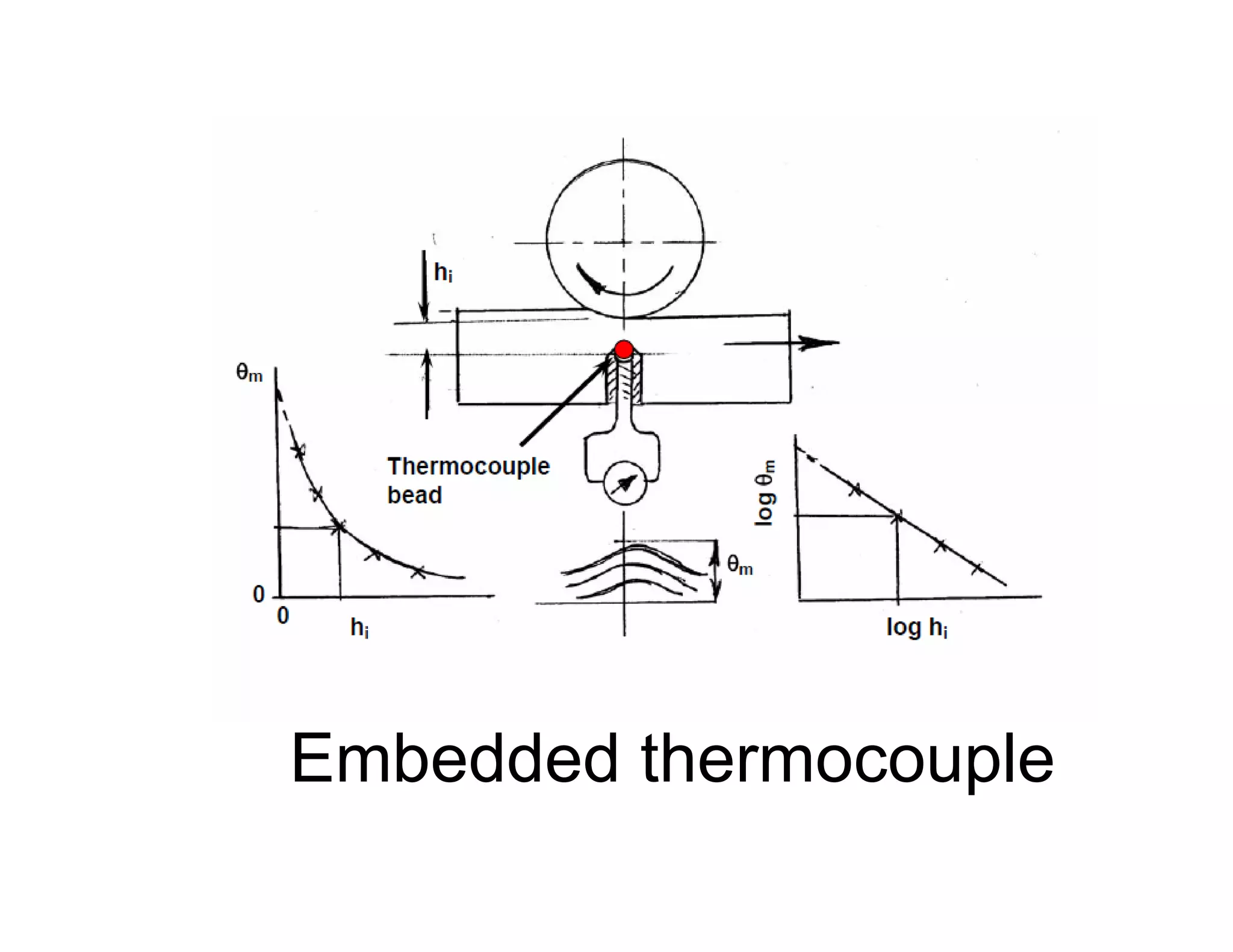
Embedded thermocouple
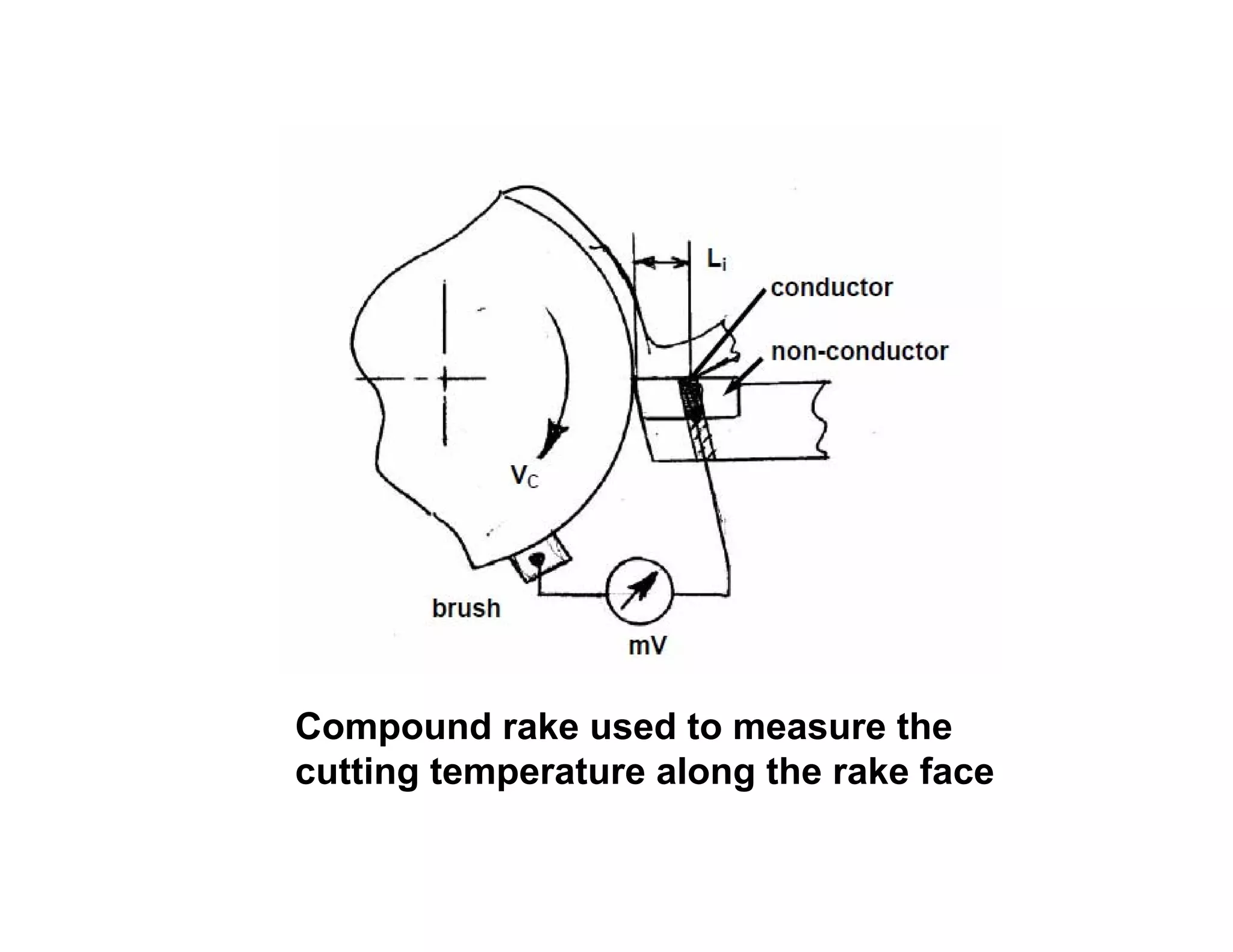
Compound rake used to measure the
cutting temperature along the rake face
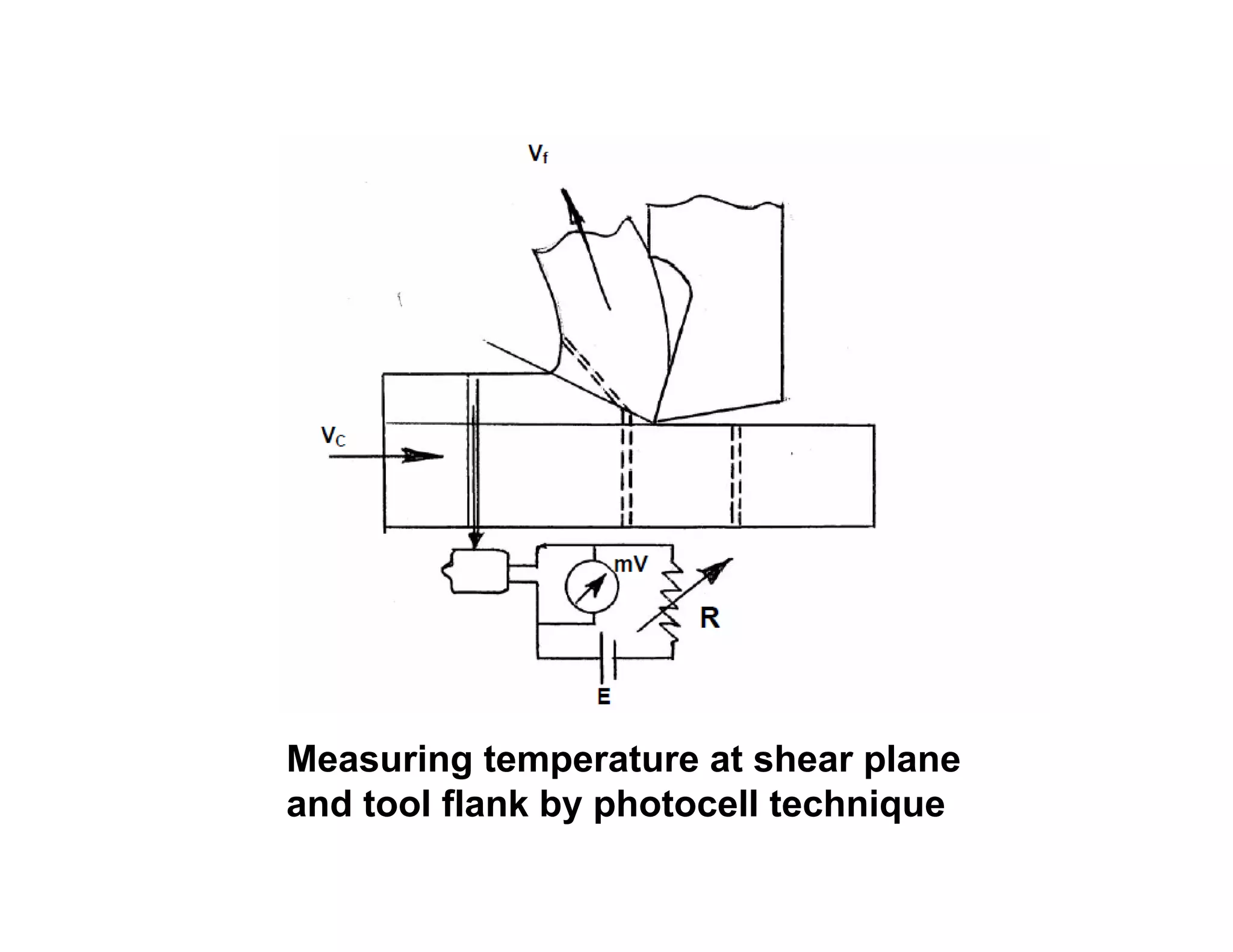
Measuring temperature at shear plane
and tool flank by photocell technique
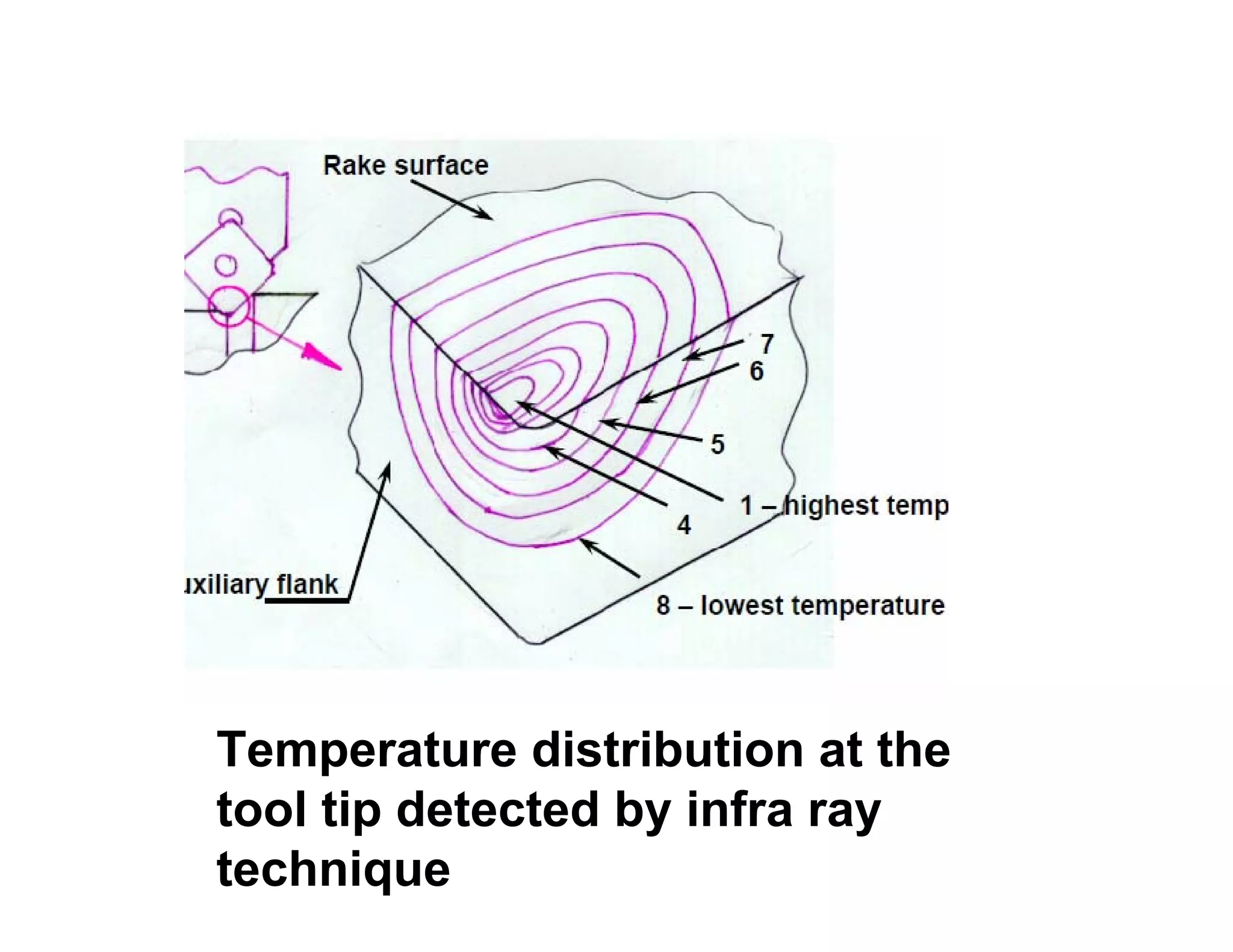
Temperature distribution at the
tool tip detected by infra ray
technique
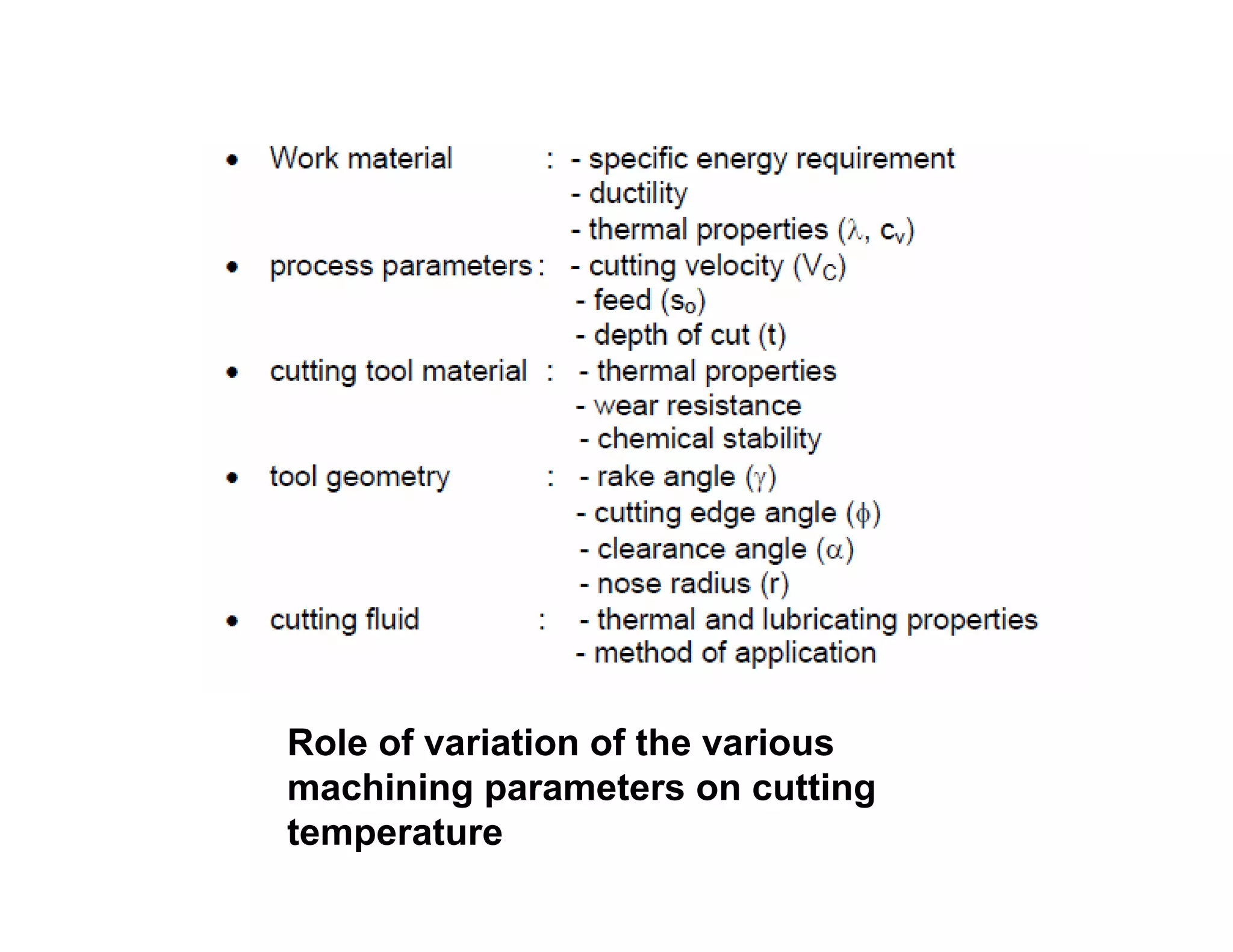
Role of variation of the various
machining parameters on cutting
temperature

Cutting temperature

  • 1.
    Cutting Temperature Dr Jose Mathew
  • 2.
    Sources of heatgeneration in cutting
  • 3.
  • 4.
    Effects of HighTemperature On Tool: Rapid Tool wear Plastic deformation of edge Thermal flaking and deformation BUE formation
  • 5.
    Effects of HighTemperature On Workpiece: *Thermal distortion and dimesional inaccuracy *Surface damage by oxidation, corrosion, burning, etc. *Thermal micro cracks and residual stresses > Hot machining
  • 6.
    Purpose of measuringtemp. Assessment of machinability Design and selection of cutting tools Helps to proper selection of tools Proper selection of cutting fluids Analysis of temp distribution
  • 7.
    Important parameters fortemperature θs : average shear zone temperature θi : average (and maximum) temperature at the chip-tool interface θf : temperature at the work-tool interface (tool f θavg : average cutting temperature Measurement of Temperature * Analytical * Experimental
  • 8.
    Analytical method W=Wp+Ws (W –total heat generated) Ws =FVc=FrV Wp=FcV-FrV Ɵp =(1-ß)Wp / (ƿcVt1w) -ß fraction of primary heat which goes to the workpiece - ƿ density of the material - c sp. Heat of the material - t1, w Uncut thickness, width of cut
  • 9.
    is a functionof shear angle Φ and non dimesional quantity Ə Ə= ƿcVt1/k k-thermal conductivity of the material ß =0.15 ln (27.5/ Ə tan Φ) √ ƟS + 1.13 [ (Ət2/l)(Ws/ƿcvwt1)] l - length of contact bet.tool and chip
  • 10.
    Ɵs av =Ws/ƿcvwt1 l/t2 = [1+tan (Φ -α )] Ɵs=1.13 √(1/ƿcvt1k[1+tan (Φ -α )] (Ws/w) Ɵ= Ɵ0+ Ɵp +ƟS
  • 11.
  • 12.
  • 13.
  • 14.
  • 15.
    Compound rake usedto measure the cutting temperature along the rake face
  • 16.
    Measuring temperature atshear plane and tool flank by photocell technique
  • 17.
    Temperature distribution atthe tool tip detected by infra ray technique
  • 18.
    Role of variationof the various machining parameters on cutting temperature