Curves in epidemiology
Life path is full of Curves thus the Epidemiology too.
Dr. Bhoj R Singh
Act. Head of Division of Epidemiology
Indian Veterinary Research Institute, Izatnagar-243122, India
Email: brs1762@ivri.res.in
Curves
• Depiction of frequency distribution in
graphical format is a curve.
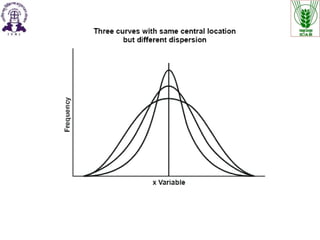
Characteristics of frequency distribution:
• Central value (most common: the arithmetic
mean, the median, and the mode.
Rare: the midrange and the geometric mean)
• Variance (the range, variance, and the
standard deviation)
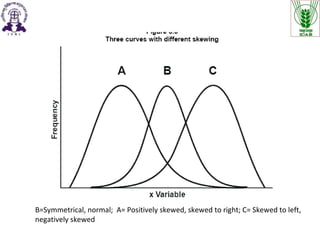
• Shape (Symmetric, Skewed)
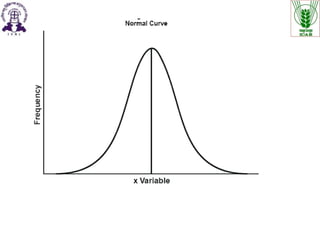
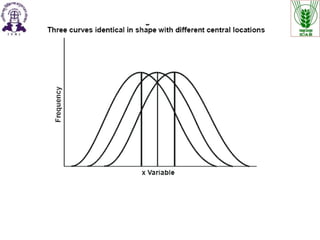
B=Symmetrical, normal; A= Positively skewed, skewed to right; C= Skewed to left,
negatively skewed
Types of Curves
• Epidemic curves
• Survival curves
• Cumulative frequency (incidence curves)
• Distribution curves
Epidemic curve
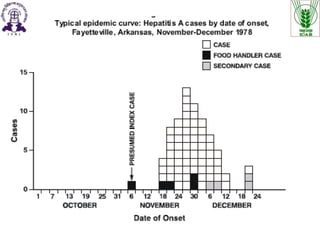
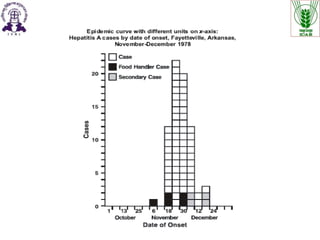
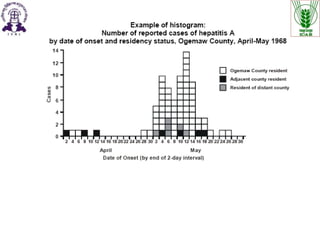
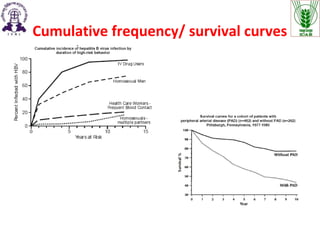
• An epidemic curve isn’t a curve at all, but a
histogram that shows cases of disease during
a disease outbreak or epidemic by their date
of onset.
• the number of cases on the vertical axis and
time on the horizontal axis (The duration of
the epidemic is shown along the x-axis in
equal time periods).
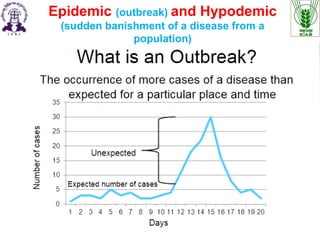
Epidemic (outbreak) and Hypodemic
(sudden banishment of a disease from a
population)
The X axis
• Time line
• Intervals are decided on the basis of incubation period
and length of illness.
• Hours for an outbreak of C. perfringens gastroenteritis,
or 3-5 days for an outbreak of hepatitis A. As a general
rule, we make the intervals less than one-fourth of the
incubation period of the disease shown. The x axis
begins before the first case of the outbreak, and show
any cases of the same disease which occurred during
the pre-epidemic period. These cases may represent
background or unrelated cases.
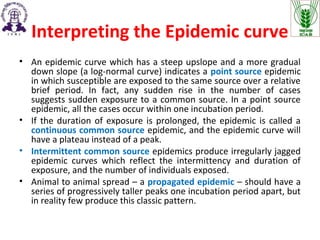
Cumulative frequency/ survival curves
Interpreting the Epidemic curve
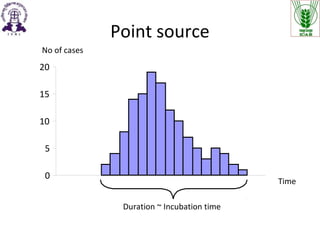
• An epidemic curve which has a steep upslope and a more gradual
down slope (a log-normal curve) indicates a point source epidemic
in which susceptible are exposed to the same source over a relative
brief period. In fact, any sudden rise in the number of cases
suggests sudden exposure to a common source. In a point source
epidemic, all the cases occur within one incubation period.
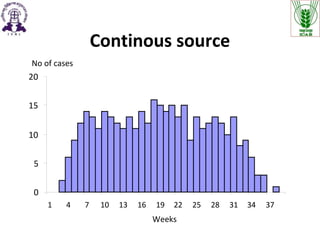
• If the duration of exposure is prolonged, the epidemic is called a
continuous common source epidemic, and the epidemic curve will
have a plateau instead of a peak.
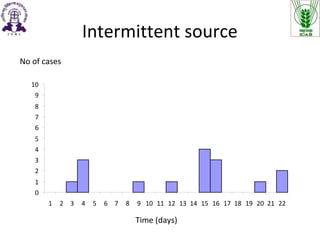
• Intermittent common source epidemics produce irregularly jagged
epidemic curves which reflect the intermittency and duration of
exposure, and the number of individuals exposed.
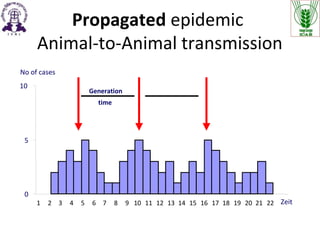
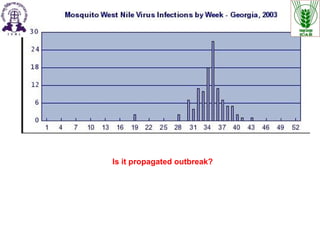
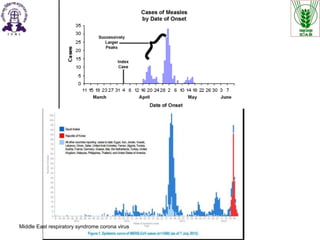
• Animal to animal spread – a propagated epidemic – should have a
series of progressively taller peaks one incubation period apart, but
in reality few produce this classic pattern.
Point source
0
5
10
15
20
No of cases
Time
Duration ~ Incubation time
Continous source
Mean IP
0
5
10
15
20
1 4 7 10 13 16 19 22 25 28 31 34 37
No of cases
Weeks
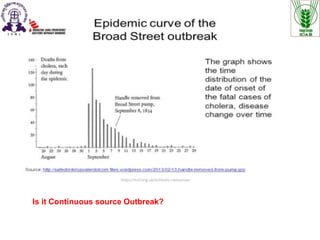
Is it Continuous source Outbreak?
Intermittent source
No of cases
Time (days)
0
1
2
3
4
5
6
7
8
9
10
1 2 3 4 5 6 7 8 9 10 11 12 13 14 15 16 17 18 19 20 21 22
Propagated epidemic
Animal-to-Animal transmission
0
5
10
Zeit
No of cases
Generation
time
1 2 3 4 5 6 7 8 9 10 11 12 13 14 15 16 17 18 19 20 21 22
Is it propagated outbreak?
Middle East respiratory syndrome corona virus
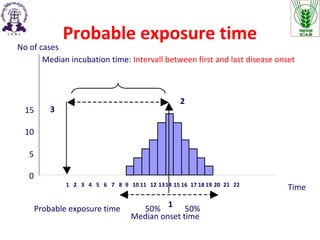
Probable exposure time
0
5
10
15
Time
1
Median onset time
2
3
50% 50%Probable exposure time
Median incubation time: Intervall between first and last disease onset
No of cases
1 2 3 4 5 6 7 8 9 10 11 12 1314 15 16 17 18 19 20 21 22
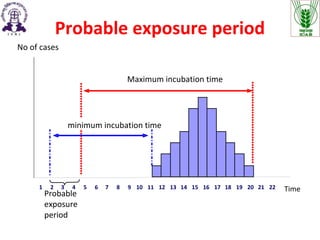
Probable exposure period
1 3 5 7 9 11 13 15 17 19 21 23 25 27 29 31 Time
Probable
exposure
period
minimum incubation time
Maximum incubation time
No of cases
1 2 3 4 5 6 7 8 9 10 11 12 13 14 15 16 17 18 19 20 21 22
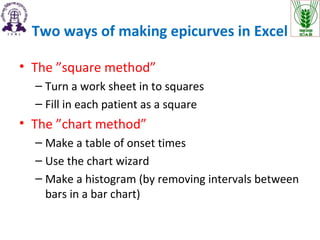
Two ways of making epicurves in Excel
• The ”square method”
– Turn a work sheet in to squares
– Fill in each patient as a square
• The ”chart method”
– Make a table of onset times
– Use the chart wizard
– Make a histogram (by removing intervals between
bars in a bar chart)
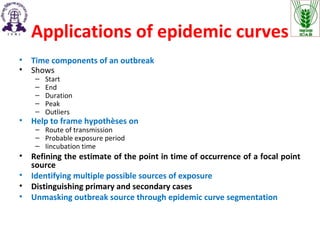
Applications of epidemic curves
• Time components of an outbreak
• Shows
– Start
– End
– Duration
– Peak
– Outliers
• Help to frame hypothèses on
– Route of transmission
– Probable exposure period
– Iincubation time
• Refining the estimate of the point in time of occurrence of a focal point
source
• Identifying multiple possible sources of exposure
• Distinguishing primary and secondary cases
• Unmasking outbreak source through epidemic curve segmentation

Curves in epidemiology: An overview

  • 1.
    Curves in epidemiology Lifepath is full of Curves thus the Epidemiology too. Dr. Bhoj R Singh Act. Head of Division of Epidemiology Indian Veterinary Research Institute, Izatnagar-243122, India Email: brs1762@ivri.res.in
  • 2.
    Curves • Depiction offrequency distribution in graphical format is a curve. Characteristics of frequency distribution: • Central value (most common: the arithmetic mean, the median, and the mode. Rare: the midrange and the geometric mean) • Variance (the range, variance, and the standard deviation) • Shape (Symmetric, Skewed)
  • 6.
    B=Symmetrical, normal; A=Positively skewed, skewed to right; C= Skewed to left, negatively skewed
  • 7.
    Types of Curves •Epidemic curves • Survival curves • Cumulative frequency (incidence curves) • Distribution curves
  • 8.
    Epidemic curve • Anepidemic curve isn’t a curve at all, but a histogram that shows cases of disease during a disease outbreak or epidemic by their date of onset. • the number of cases on the vertical axis and time on the horizontal axis (The duration of the epidemic is shown along the x-axis in equal time periods).
  • 9.
    Epidemic (outbreak) andHypodemic (sudden banishment of a disease from a population)
  • 13.
    The X axis •Time line • Intervals are decided on the basis of incubation period and length of illness. • Hours for an outbreak of C. perfringens gastroenteritis, or 3-5 days for an outbreak of hepatitis A. As a general rule, we make the intervals less than one-fourth of the incubation period of the disease shown. The x axis begins before the first case of the outbreak, and show any cases of the same disease which occurred during the pre-epidemic period. These cases may represent background or unrelated cases.
  • 15.
  • 16.
    Interpreting the Epidemiccurve • An epidemic curve which has a steep upslope and a more gradual down slope (a log-normal curve) indicates a point source epidemic in which susceptible are exposed to the same source over a relative brief period. In fact, any sudden rise in the number of cases suggests sudden exposure to a common source. In a point source epidemic, all the cases occur within one incubation period. • If the duration of exposure is prolonged, the epidemic is called a continuous common source epidemic, and the epidemic curve will have a plateau instead of a peak. • Intermittent common source epidemics produce irregularly jagged epidemic curves which reflect the intermittency and duration of exposure, and the number of individuals exposed. • Animal to animal spread – a propagated epidemic – should have a series of progressively taller peaks one incubation period apart, but in reality few produce this classic pattern.
  • 17.
    Point source 0 5 10 15 20 No ofcases Time Duration ~ Incubation time
  • 18.
    Continous source Mean IP 0 5 10 15 20 14 7 10 13 16 19 22 25 28 31 34 37 No of cases Weeks
  • 19.
    Is it Continuoussource Outbreak?
  • 20.
    Intermittent source No ofcases Time (days) 0 1 2 3 4 5 6 7 8 9 10 1 2 3 4 5 6 7 8 9 10 11 12 13 14 15 16 17 18 19 20 21 22
  • 21.
    Propagated epidemic Animal-to-Animal transmission 0 5 10 Zeit Noof cases Generation time 1 2 3 4 5 6 7 8 9 10 11 12 13 14 15 16 17 18 19 20 21 22
  • 22.
  • 23.
    Middle East respiratorysyndrome corona virus
  • 24.
    Probable exposure time 0 5 10 15 Time 1 Medianonset time 2 3 50% 50%Probable exposure time Median incubation time: Intervall between first and last disease onset No of cases 1 2 3 4 5 6 7 8 9 10 11 12 1314 15 16 17 18 19 20 21 22
  • 25.
    Probable exposure period 13 5 7 9 11 13 15 17 19 21 23 25 27 29 31 Time Probable exposure period minimum incubation time Maximum incubation time No of cases 1 2 3 4 5 6 7 8 9 10 11 12 13 14 15 16 17 18 19 20 21 22
  • 26.
    Two ways ofmaking epicurves in Excel • The ”square method” – Turn a work sheet in to squares – Fill in each patient as a square • The ”chart method” – Make a table of onset times – Use the chart wizard – Make a histogram (by removing intervals between bars in a bar chart)
  • 27.
    Applications of epidemiccurves • Time components of an outbreak • Shows – Start – End – Duration – Peak – Outliers • Help to frame hypothèses on – Route of transmission – Probable exposure period – Iincubation time • Refining the estimate of the point in time of occurrence of a focal point source • Identifying multiple possible sources of exposure • Distinguishing primary and secondary cases • Unmasking outbreak source through epidemic curve segmentation

Editor's Notes

  • #18 Einmalige Exposition+gemeinsame Quelle
  • #25 Punktquelle