
Culture and Management
2 from 26 
Table of Contents 
– What is culture? 
– Why studying OB across culture? 
– Level of Analysis Issues 
– Why using cultural dimensions? 
– Values across culture (Hofstede’s Studies) 
– Emic and Etic Approches 
– GLOBE Studies
3 from 26 
What is culture? 
social pattern including shared beliefs, norms, 
and values 
a multi-layer phenomenon, and people’s 
assumptions and values are at the centre of the 
phenomenon.
Why studying OB across cultures? 
4 from 26
5 from 26 
Level of analysis issue 
– comparing cultures 
– Comparing individuals
Why using cultural dimensions? 
6 from 26
7 from 26 
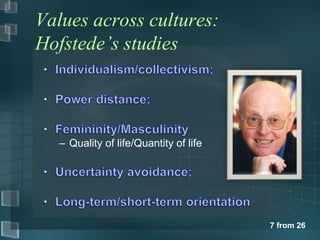
Values across cultures: 
Hofstede’s studies 
– Quality of life/Quantity of life
8 from 26 
1. Individualism/Collectivism 
the degree to which individuals are supposed to 
look after themselves or remain integrated into 
in-groups. 
Hedonism, independence, and freedom 
interdependence, self-sacrificing, and loyalty
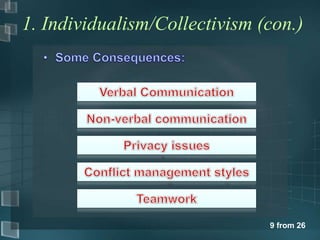
1. Individualism/Collectivism (con.) 
9 from 26
10 from 26 
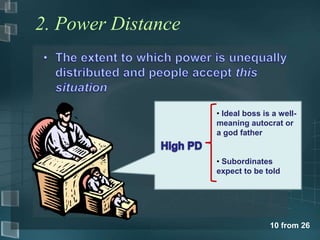
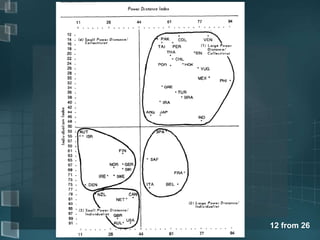
2. Power Distance 
• Ideal boss is a well-meaning 
autocrat or 
a god father 
• Subordinates 
expect to be told
11 from 26
12 from 26
13 from 26 
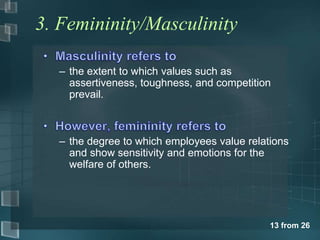
3. Femininity/Masculinity 
– the extent to which values such as 
assertiveness, toughness, and competition 
prevail. 
– the degree to which employees value relations 
and show sensitivity and emotions for the 
welfare of others.
14 from 26 
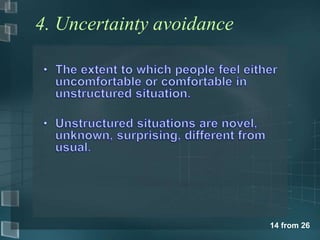
4. Uncertainty avoidance
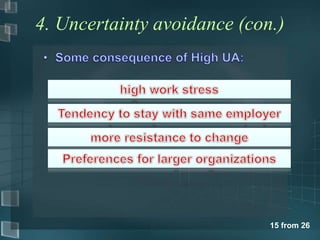
4. Uncertainty avoidance (con.) 
15 from 26
16 from 26 
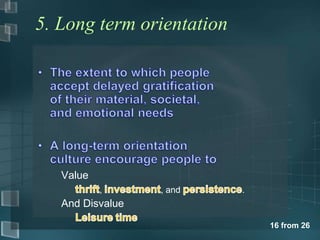
5. Long term orientation 
Value 
, , and . 
And Disvalue
17 from 26 
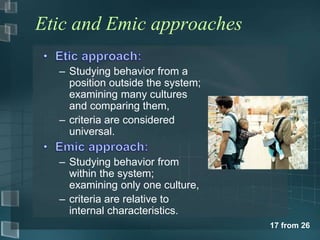
Etic and Emic approaches 
– Studying behavior from a 
position outside the system; 
examining many cultures 
and comparing them, 
– criteria are considered 
universal. 
– Studying behavior from 
within the system; 
examining only one culture, 
– criteria are relative to 
internal characteristics.
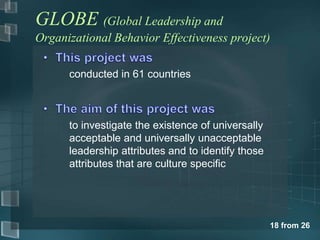
GLOBE (Global Leadership and 
Organizational Behavior Effectiveness project) 
18 from 26 
conducted in 61 countries 
to investigate the existence of universally 
acceptable and universally unacceptable 
leadership attributes and to identify those 
attributes that are culture specific
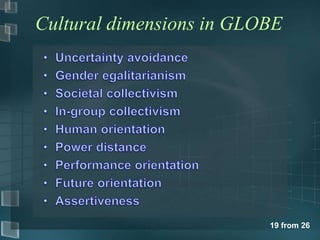
Cultural dimensions in GLOBE 
19 from 26
20 from 26 
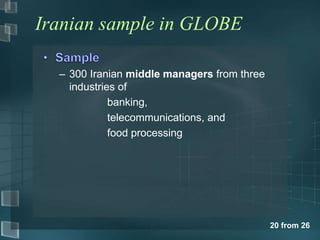
Iranian sample in GLOBE 
– 300 Iranian middle managers from three 
industries of 
banking, 
telecommunications, and 
food processing
21 from 26 
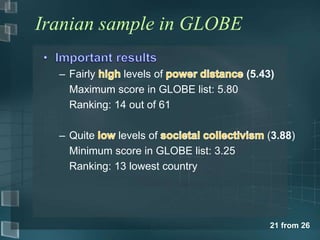
Iranian sample in GLOBE 
– Fairly levels of (5.43) 
Maximum score in GLOBE list: 5.80 
Ranking: 14 out of 61 
– Quite levels of (3.88) 
Minimum score in GLOBE list: 3.25 
Ranking: 13 lowest country
22 from 26 
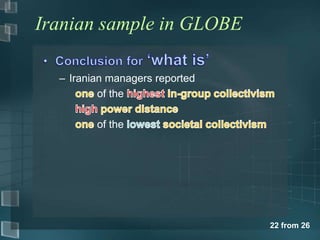
Iranian sample in GLOBE 
– Iranian managers reported 
of the 
of the
23 from 26 
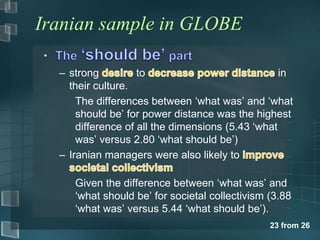
Iranian sample in GLOBE 
– strong to in 
their culture. 
The differences between ‘what was’ and ‘what 
should be’ for power distance was the highest 
difference of all the dimensions (5.43 ‘what 
was’ versus 2.80 ‘what should be’) 
– Iranian managers were also likely to 
Given the difference between ‘what was’ and 
‘what should be’ for societal collectivism (3.88 
‘what was’ versus 5.44 ‘what should be’).
24 from 26 
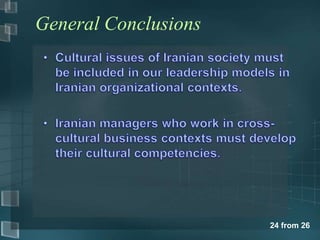
General Conclusions

Culture and management

  • 1.
  • 2.
    2 from 26 Table of Contents – What is culture? – Why studying OB across culture? – Level of Analysis Issues – Why using cultural dimensions? – Values across culture (Hofstede’s Studies) – Emic and Etic Approches – GLOBE Studies
  • 3.
    3 from 26 What is culture? social pattern including shared beliefs, norms, and values a multi-layer phenomenon, and people’s assumptions and values are at the centre of the phenomenon.
  • 4.
    Why studying OBacross cultures? 4 from 26
  • 5.
    5 from 26 Level of analysis issue – comparing cultures – Comparing individuals
  • 6.
    Why using culturaldimensions? 6 from 26
  • 7.
    7 from 26 Values across cultures: Hofstede’s studies – Quality of life/Quantity of life
  • 8.
    8 from 26 1. Individualism/Collectivism the degree to which individuals are supposed to look after themselves or remain integrated into in-groups. Hedonism, independence, and freedom interdependence, self-sacrificing, and loyalty
  • 9.
  • 10.
    10 from 26 2. Power Distance • Ideal boss is a well-meaning autocrat or a god father • Subordinates expect to be told
  • 11.
  • 12.
  • 13.
    13 from 26 3. Femininity/Masculinity – the extent to which values such as assertiveness, toughness, and competition prevail. – the degree to which employees value relations and show sensitivity and emotions for the welfare of others.
  • 14.
    14 from 26 4. Uncertainty avoidance
  • 15.
    4. Uncertainty avoidance(con.) 15 from 26
  • 16.
    16 from 26 5. Long term orientation Value , , and . And Disvalue
  • 17.
    17 from 26 Etic and Emic approaches – Studying behavior from a position outside the system; examining many cultures and comparing them, – criteria are considered universal. – Studying behavior from within the system; examining only one culture, – criteria are relative to internal characteristics.
  • 18.
    GLOBE (Global Leadershipand Organizational Behavior Effectiveness project) 18 from 26 conducted in 61 countries to investigate the existence of universally acceptable and universally unacceptable leadership attributes and to identify those attributes that are culture specific
  • 19.
    Cultural dimensions inGLOBE 19 from 26
  • 20.
    20 from 26 Iranian sample in GLOBE – 300 Iranian middle managers from three industries of banking, telecommunications, and food processing
  • 21.
    21 from 26 Iranian sample in GLOBE – Fairly levels of (5.43) Maximum score in GLOBE list: 5.80 Ranking: 14 out of 61 – Quite levels of (3.88) Minimum score in GLOBE list: 3.25 Ranking: 13 lowest country
  • 22.
    22 from 26 Iranian sample in GLOBE – Iranian managers reported of the of the
  • 23.
    23 from 26 Iranian sample in GLOBE – strong to in their culture. The differences between ‘what was’ and ‘what should be’ for power distance was the highest difference of all the dimensions (5.43 ‘what was’ versus 2.80 ‘what should be’) – Iranian managers were also likely to Given the difference between ‘what was’ and ‘what should be’ for societal collectivism (3.88 ‘what was’ versus 5.44 ‘what should be’).
  • 24.
    24 from 26 General Conclusions