Downloaded 18 times


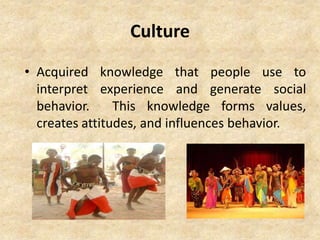

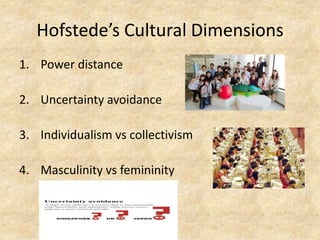
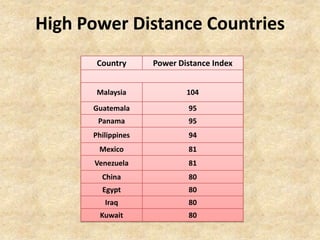

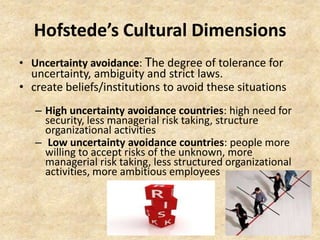
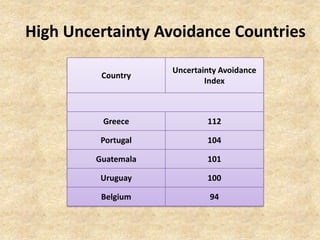
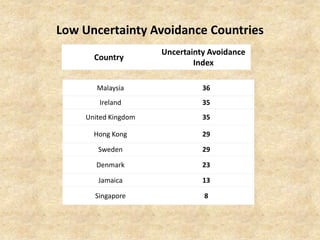
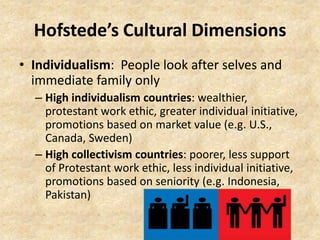
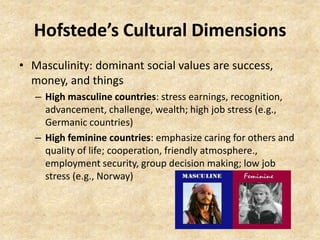


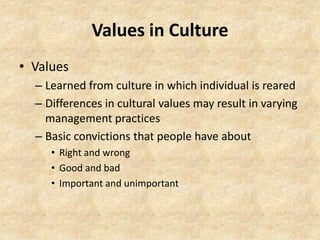
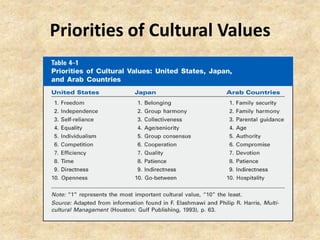








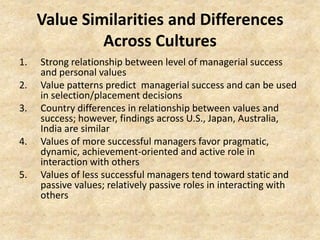

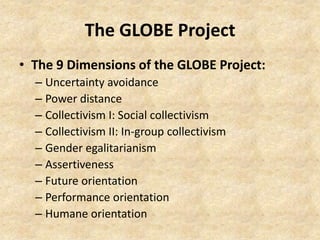
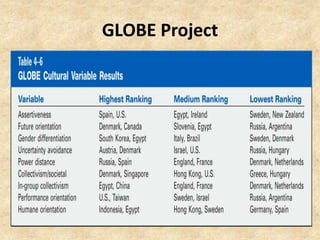


This document discusses culture and its role in multinational operations. It defines culture as acquired knowledge that people use to interpret experiences and generate social behavior. The nature of culture is that it is learned, shared, trans-generational, symbolic, and patterned. Hofstede's cultural dimensions of power distance, uncertainty avoidance, individualism vs collectivism, and masculinity vs femininity are explained. Country scores on these dimensions are provided. Trompenaars' additional cultural dimensions of universalism vs particularism, individualism vs communitarianism, neutral vs emotional, specific vs diffuse, achievement vs ascription, time orientation, and environment are defined. The document discusses how cultural values affect managerial approaches in areas


