
DETERMINATION OF HAEMOGLOBIN
GENOTYPE USING CELLULOSE
ACETATE ELECTROPHORESIS
BY
DAVID, TERNA AGATSA
BSU/SC/BIO/12/16667
SIWES REPORT
MAY, 2016
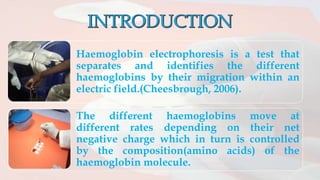
Haemoglobin electrophoresis is a test that
separates and identifies the different
haemoglobins by their migration within an
electric field.(Cheesbrough, 2006).
The different haemoglobins move at
different rates depending on their net
negative charge which in turn is controlled
by the composition(amino acids) of the
haemoglobin molecule.
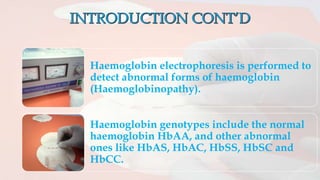
Haemoglobin electrophoresis is performed to
detect abnormal forms of haemoglobin
(Haemoglobinopathy).
Haemoglobin genotypes include the normal
haemoglobin HbAA, and other abnormal
ones like HbAS, HbAC, HbSS, HbSC and
HbCC.
AIM
• To determine haemoglobin genotype using cellulose
acetate electrophoresis.
OBJECTIVE
 To understand the principle of cellulose acetate
electrophoresis.
 To determine haemoglobin genotype using cellulose
acetate electrophoresis.
 To determine the most prevalent haemoglobin variant.
PRINCIPLE
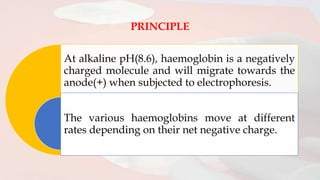
At alkaline pH(8.6), haemoglobin is a negatively
charged molecule and will migrate towards the
anode(+) when subjected to electrophoresis.
The various haemoglobins move at different
rates depending on their net negative charge.
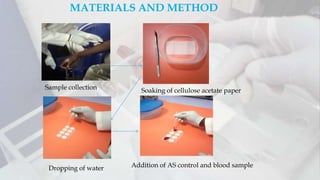
MATERIALS AND METHOD
Sample collection Soaking of cellulose acetate paper
Dropping of water Addition of AS control and blood sample
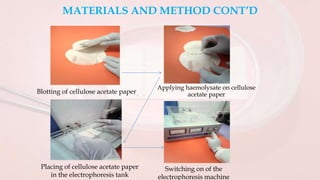
MATERIALS AND METHOD CONT’D
Blotting of cellulose acetate paper
Applying haemolysate on cellulose
acetate paper
Placing of cellulose acetate paper
in the electrophoresis tank
Switching on of the
electrophoresis machine
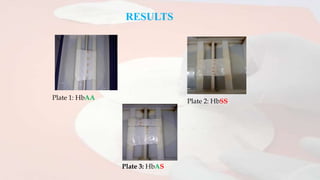
RESULTS
Plate 1: HbAA
Plate 2: HbSS
Plate 3: HbAS
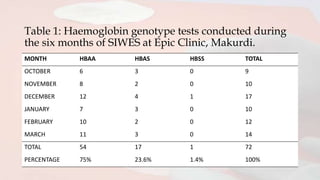
Table 1: Haemoglobin genotype tests conducted during
the six months of SIWES at Epic Clinic, Makurdi.
MONTH HBAA HBAS HBSS TOTAL
OCTOBER 6 3 0 9
NOVEMBER 8 2 0 10
DECEMBER 12 4 1 17
JANUARY 7 3 0 10
FEBRUARY 10 2 0 12
MARCH 11 3 0 14
TOTAL 54 17 1 72
PERCENTAGE 75% 23.6% 1.4% 100%
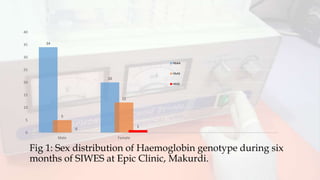
Fig 1: Sex distribution of Haemoglobin genotype during six
months of SIWES at Epic Clinic, Makurdi.
34
20
5
12
0
1
0
5
10
15
20
25
30
35
40
Male Female
HbAA
HbAS
HbSS
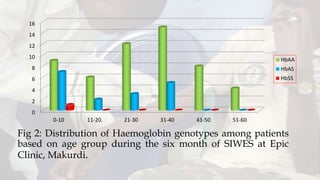
Fig 2: Distribution of Haemoglobin genotypes among patients
based on age group during the six month of SIWES at Epic
Clinic, Makurdi.
0
2
4
6
8
10
12
14
16
0-10 11-20. 21-30 31-40 41-50 51-60
HbAA
HbAS
HbSS
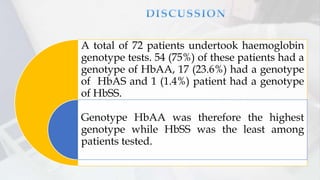
A total of 72 patients undertook haemoglobin
genotype tests. 54 (75%) of these patients had a
genotype of HbAA, 17 (23.6%) had a genotype
of HbAS and 1 (1.4%) patient had a genotype
of HbSS.
Genotype HbAA was therefore the highest
genotype while HbSS was the least among
patients tested.
CONCLUSI
ON
•The sickling gene is rare among the inhabitants of
Makurdi due to the number of patients with the HbSS
genotype.
CONCLUSI
ON
•The sickle cell trait (HbAS) is the largest haemoglobin
variant (23.6%) in our population.
RECOMME
NDATION
•It is therefore recommended that mandatory
haemoglobin screening be demanded for all intending
couples in order to reduce the sickling gene pool.
Haemoglobin Genotype

Haemoglobin Genotype

  • 1.
    DETERMINATION OF HAEMOGLOBIN GENOTYPEUSING CELLULOSE ACETATE ELECTROPHORESIS BY DAVID, TERNA AGATSA BSU/SC/BIO/12/16667 SIWES REPORT MAY, 2016
  • 2.
    Haemoglobin electrophoresis isa test that separates and identifies the different haemoglobins by their migration within an electric field.(Cheesbrough, 2006). The different haemoglobins move at different rates depending on their net negative charge which in turn is controlled by the composition(amino acids) of the haemoglobin molecule.
  • 3.
    Haemoglobin electrophoresis isperformed to detect abnormal forms of haemoglobin (Haemoglobinopathy). Haemoglobin genotypes include the normal haemoglobin HbAA, and other abnormal ones like HbAS, HbAC, HbSS, HbSC and HbCC.
  • 4.
    AIM • To determinehaemoglobin genotype using cellulose acetate electrophoresis. OBJECTIVE  To understand the principle of cellulose acetate electrophoresis.  To determine haemoglobin genotype using cellulose acetate electrophoresis.  To determine the most prevalent haemoglobin variant.
  • 5.
    PRINCIPLE At alkaline pH(8.6),haemoglobin is a negatively charged molecule and will migrate towards the anode(+) when subjected to electrophoresis. The various haemoglobins move at different rates depending on their net negative charge.
  • 6.
    MATERIALS AND METHOD Samplecollection Soaking of cellulose acetate paper Dropping of water Addition of AS control and blood sample
  • 7.
    MATERIALS AND METHODCONT’D Blotting of cellulose acetate paper Applying haemolysate on cellulose acetate paper Placing of cellulose acetate paper in the electrophoresis tank Switching on of the electrophoresis machine
  • 8.
    RESULTS Plate 1: HbAA Plate2: HbSS Plate 3: HbAS
  • 9.
    Table 1: Haemoglobingenotype tests conducted during the six months of SIWES at Epic Clinic, Makurdi. MONTH HBAA HBAS HBSS TOTAL OCTOBER 6 3 0 9 NOVEMBER 8 2 0 10 DECEMBER 12 4 1 17 JANUARY 7 3 0 10 FEBRUARY 10 2 0 12 MARCH 11 3 0 14 TOTAL 54 17 1 72 PERCENTAGE 75% 23.6% 1.4% 100%
  • 10.
    Fig 1: Sexdistribution of Haemoglobin genotype during six months of SIWES at Epic Clinic, Makurdi. 34 20 5 12 0 1 0 5 10 15 20 25 30 35 40 Male Female HbAA HbAS HbSS
  • 11.
    Fig 2: Distributionof Haemoglobin genotypes among patients based on age group during the six month of SIWES at Epic Clinic, Makurdi. 0 2 4 6 8 10 12 14 16 0-10 11-20. 21-30 31-40 41-50 51-60 HbAA HbAS HbSS
  • 12.
    A total of72 patients undertook haemoglobin genotype tests. 54 (75%) of these patients had a genotype of HbAA, 17 (23.6%) had a genotype of HbAS and 1 (1.4%) patient had a genotype of HbSS. Genotype HbAA was therefore the highest genotype while HbSS was the least among patients tested.
  • 13.
    CONCLUSI ON •The sickling geneis rare among the inhabitants of Makurdi due to the number of patients with the HbSS genotype. CONCLUSI ON •The sickle cell trait (HbAS) is the largest haemoglobin variant (23.6%) in our population. RECOMME NDATION •It is therefore recommended that mandatory haemoglobin screening be demanded for all intending couples in order to reduce the sickling gene pool.