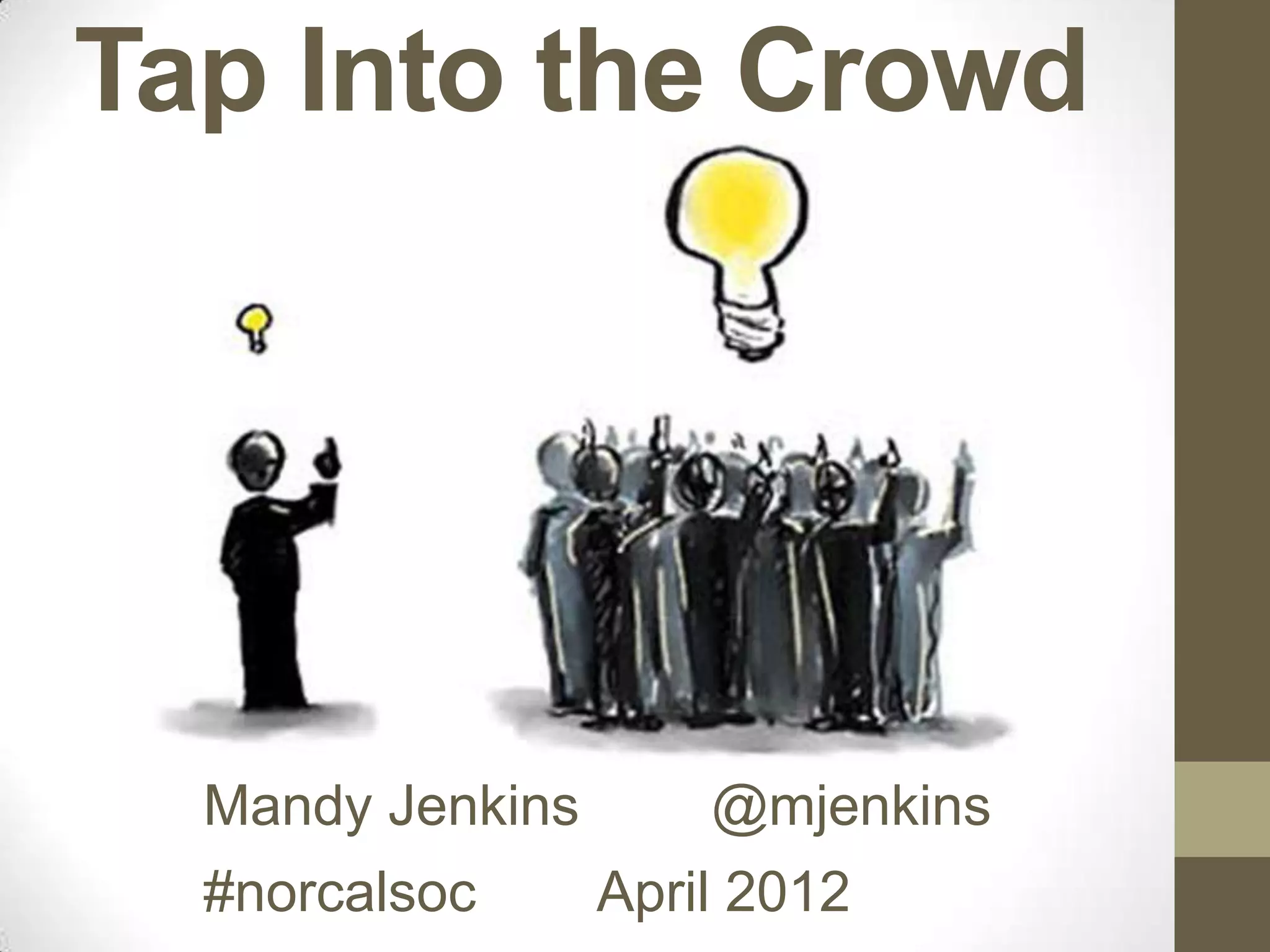
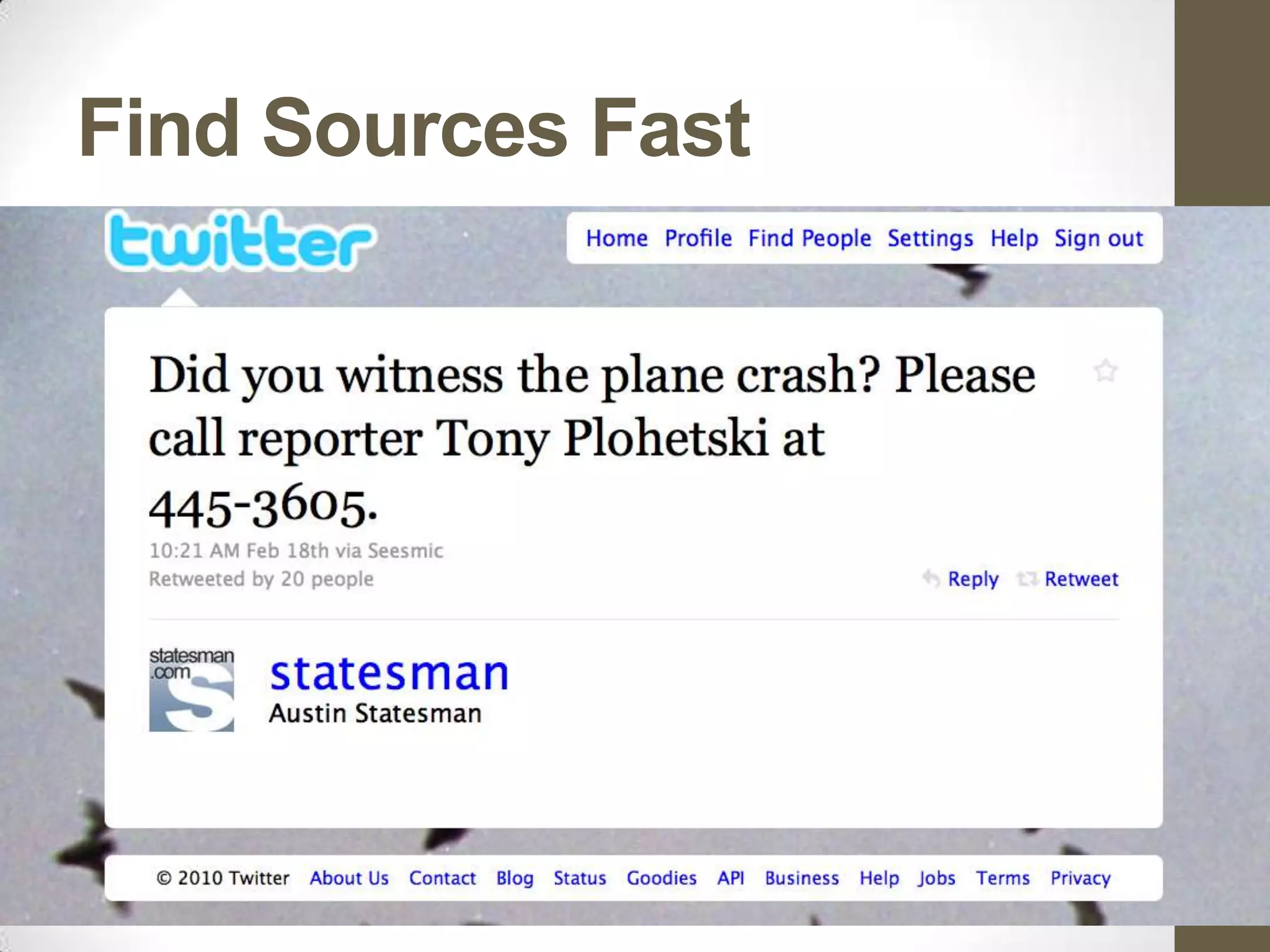




Tap Into the Crowd


  Mandy Jenkins       @mjenkins
  #norcalsoc      April 2012
What is Crowdsourcing?
• When you call on your
  readers/followers to contribute to a
  story
• Calls for content, news tips and story
  sources
• Can be breaking or long-term
• Involve a little or a lot of information
Before Crowdsourcing
•Build engaged community (follow people,
converse with them)
•Build Twitter lists of key sources for
breaking situations
•Plan ahead when you can, have a plan for
when you can’t
•Include crowdsourcing in story-planning
During Breaking News
• Open keyword searches
• Monitor key Twitter lists
• Have reporter or news org start tweeting
  live to get and share info
Find Sources Fast
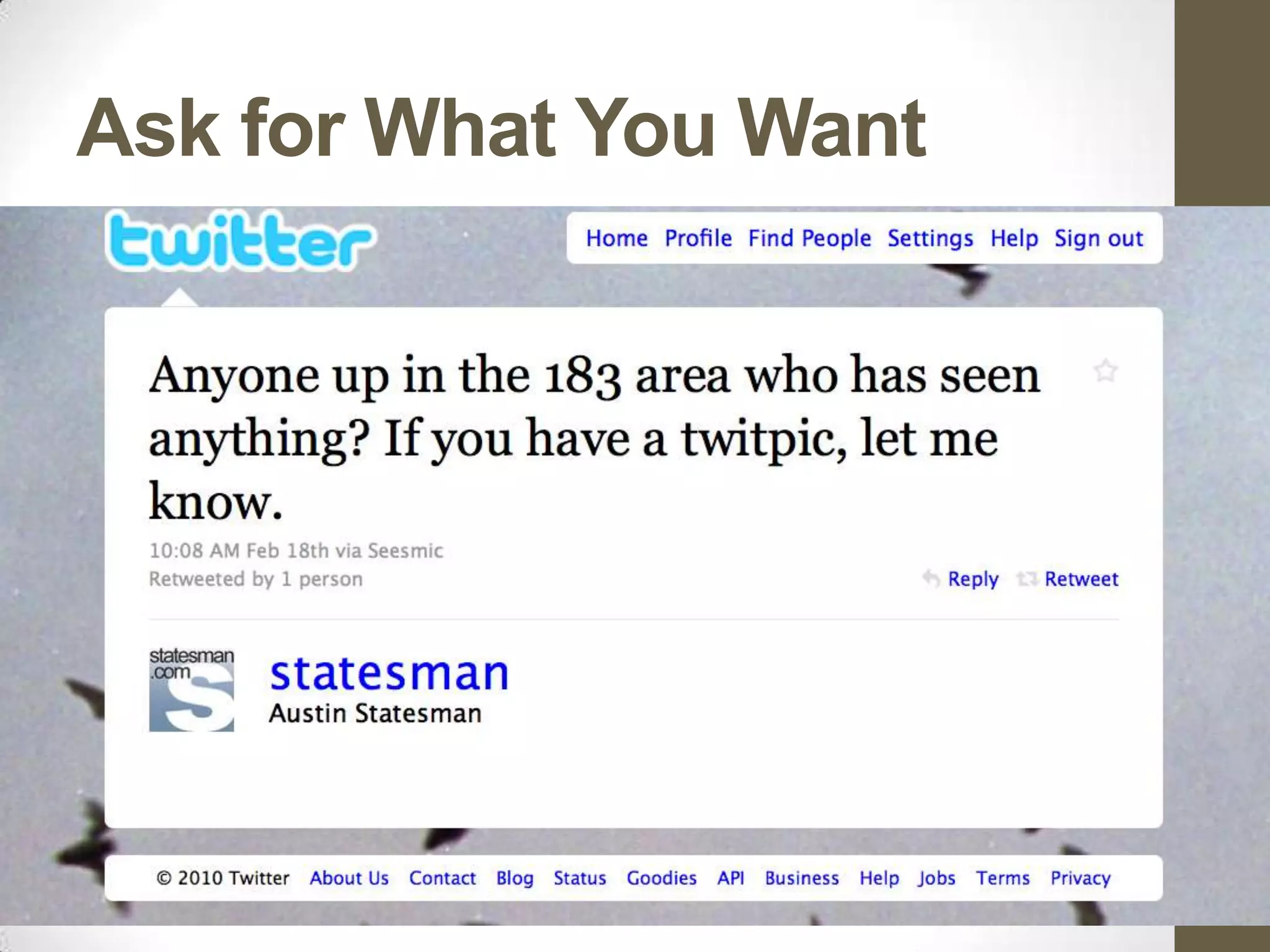
Ask for What You Want
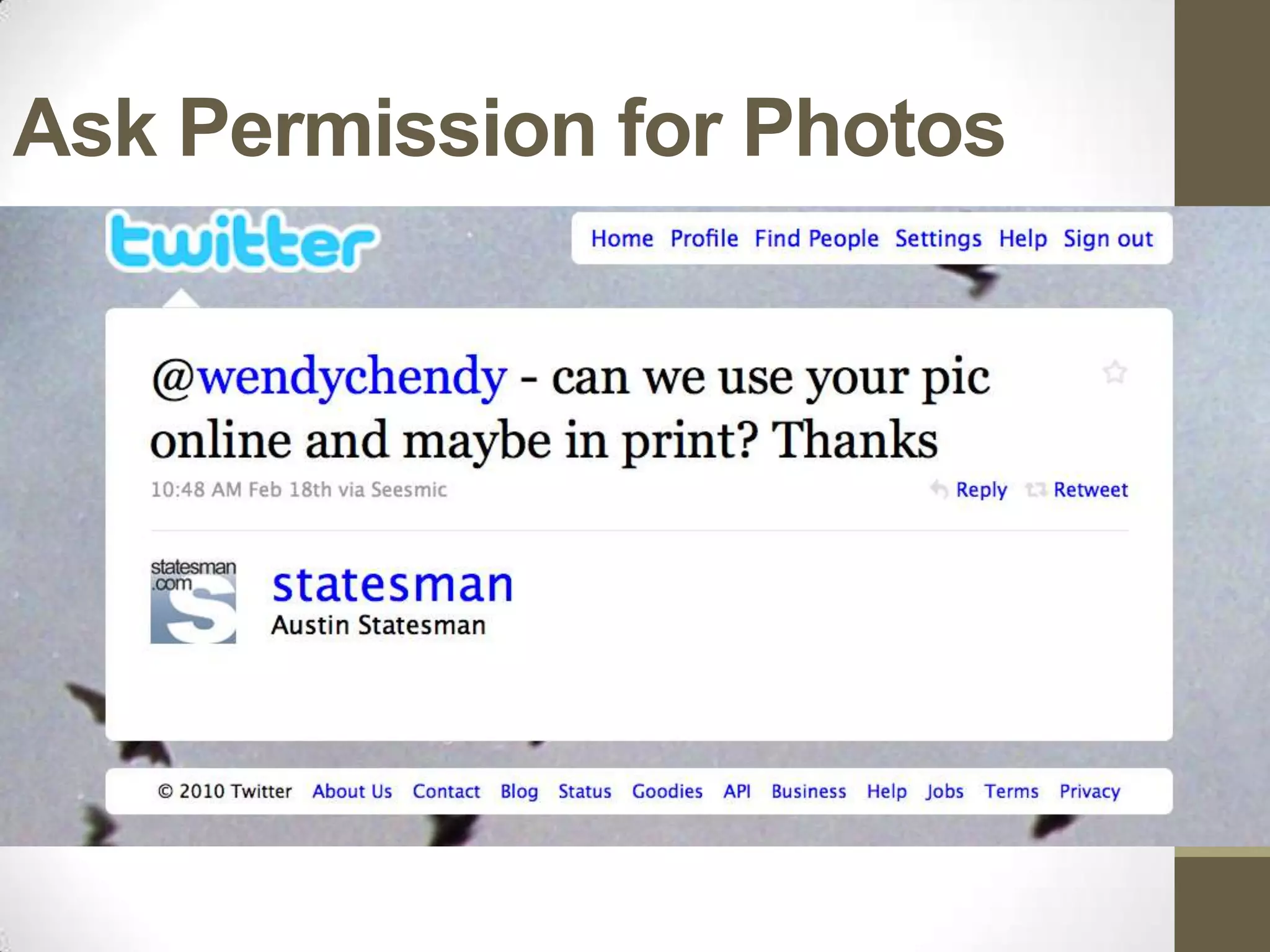
Ask Permission for Photos
Breaking News
Crowdsourcing
•Say what you know
•Say what you don’t know
•Say what you want/need to know
•Don’t spread rumors
•Vet sources & information
•Ask questions as you gather info
•RT with context, note if it's verified
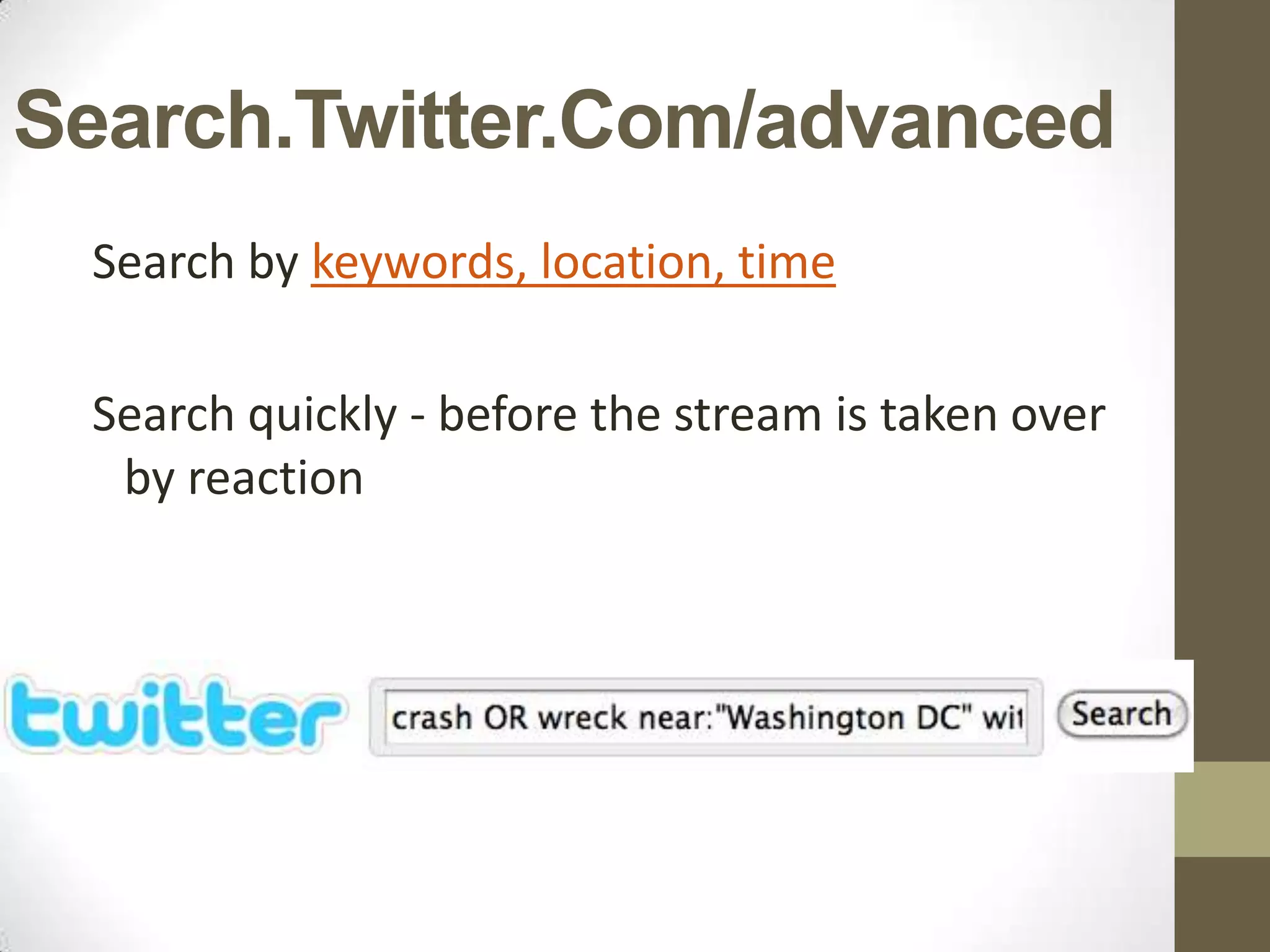
Search.Twitter.Com/advanced
 Search by keywords, location, time

 Search quickly - before the stream is taken over
  by reaction
When You Find Leads
• Connect with eyewitnesses, get
  contact info

• Have them wait for a reporter on
  scene

• Verify!
• Search venues on Foursquare.com
• “Mayor” is great source for info
  about a business or venue
  (employee or regular customer)
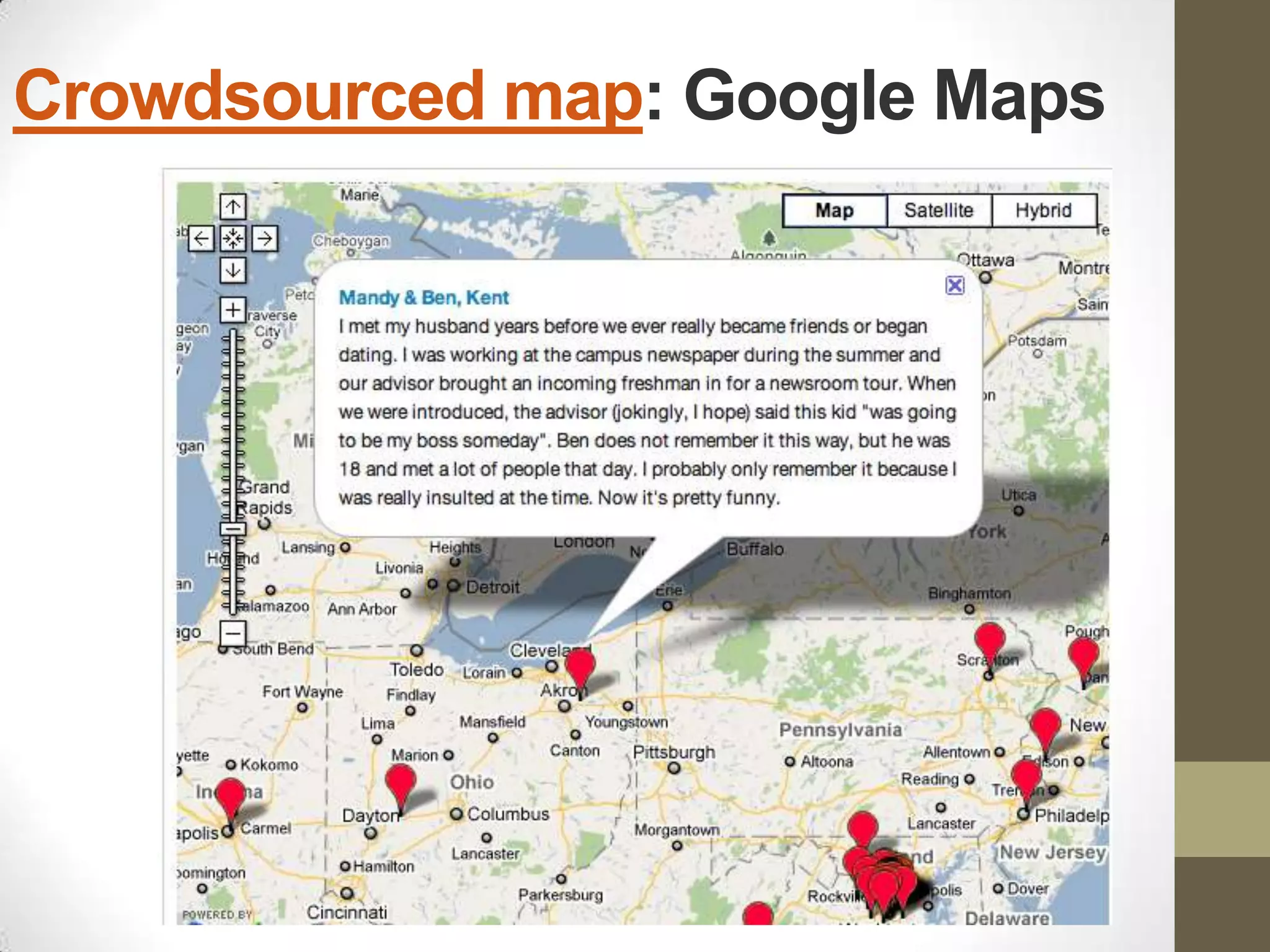
Crowdsourcing Everyday
Crowdsourced map: Google Maps
Ask Everywhere
• Print callouts (Tell Us Your Story)
• Social media promotion (reporter and
  papers’ accounts)
• Embeds into online stories
• Word-of-mouth, IRL on the beat
Crowdsourcing Ideas
• Ask for archival photos/stories
  from community anniversaries
• Is it raining/snowing/earthquaking
  near you?
• Build a source database for
  recurring themes (foreclosures,
  veterans, lost jobs, etc.)
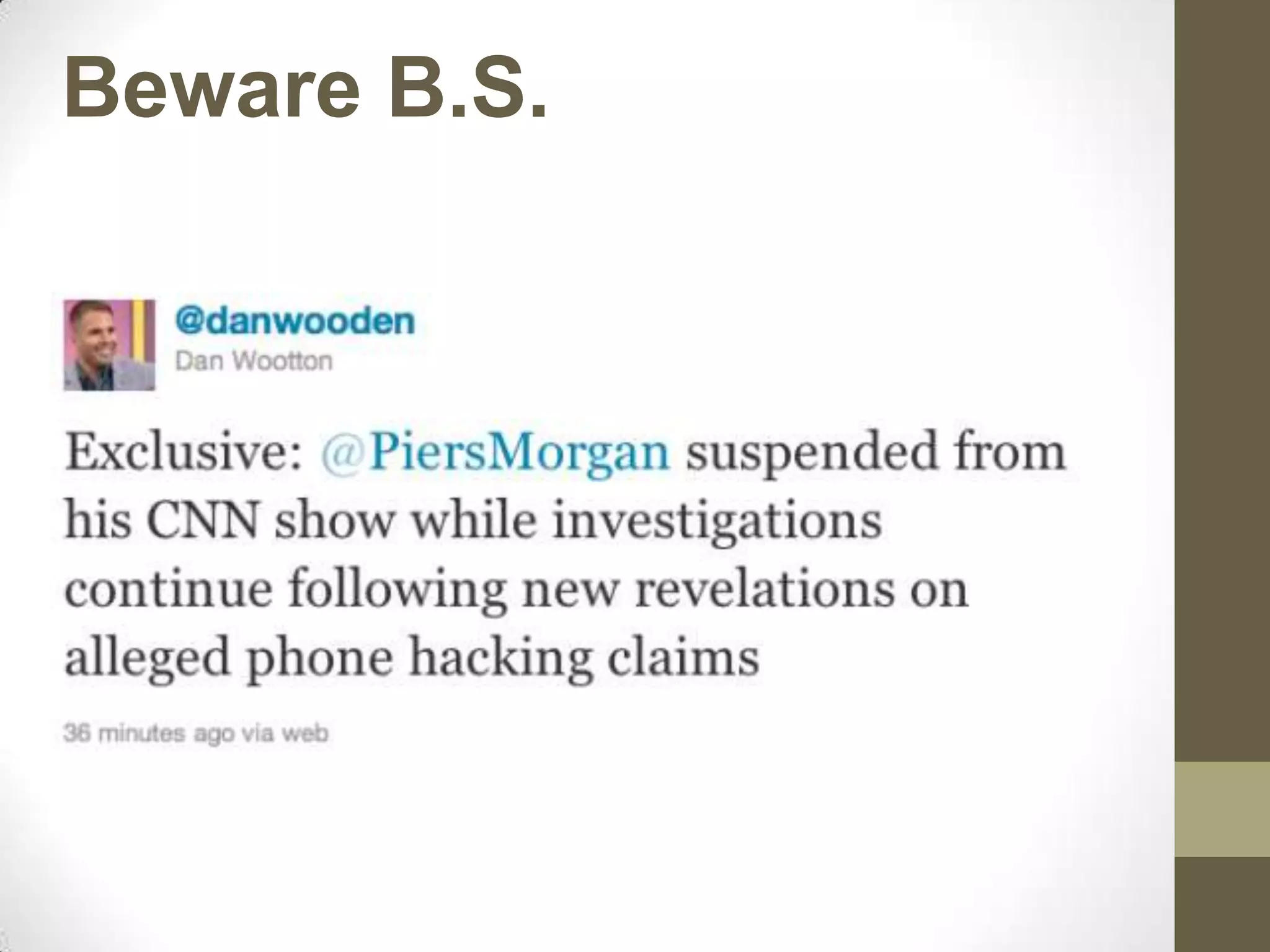
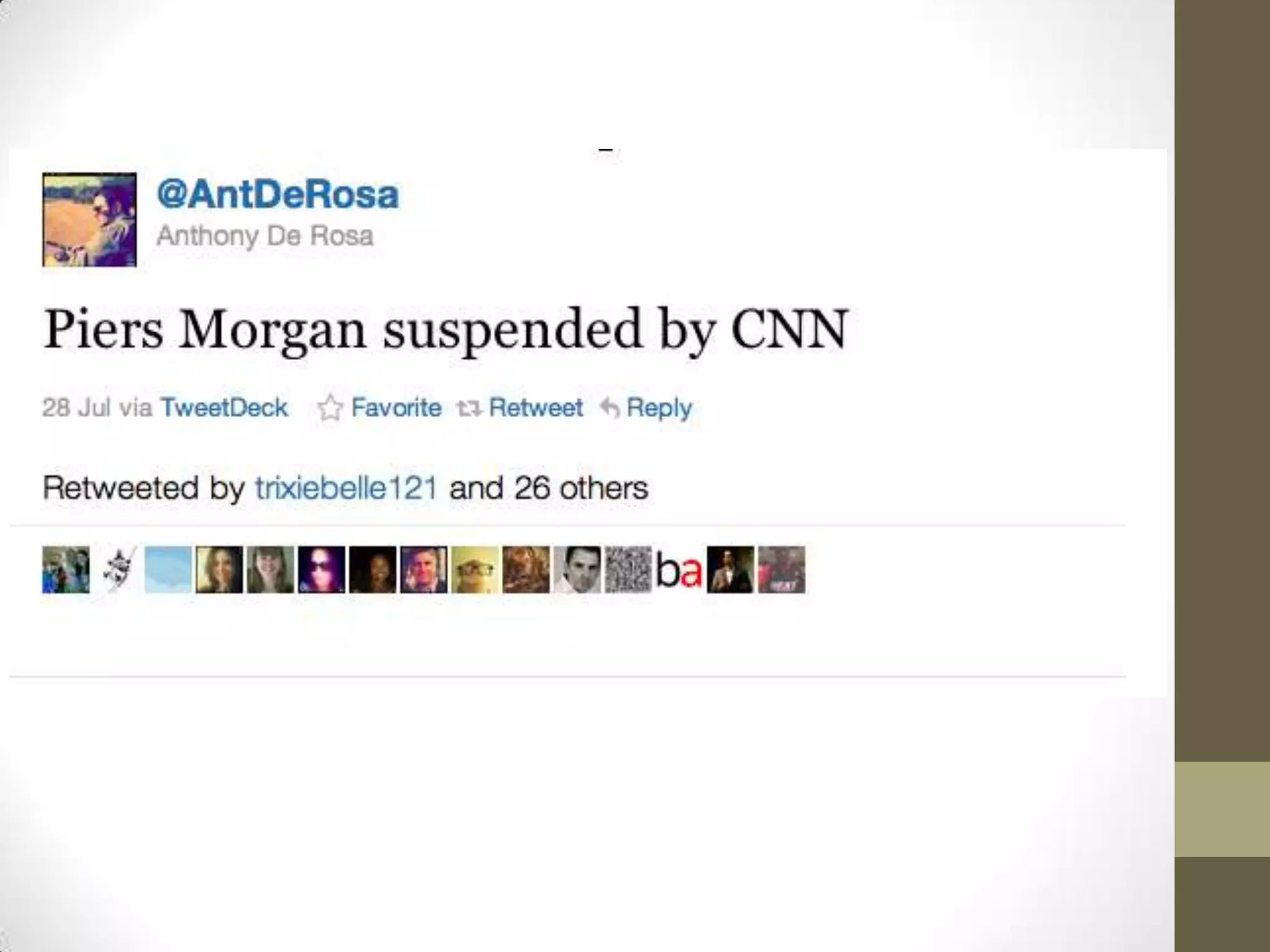
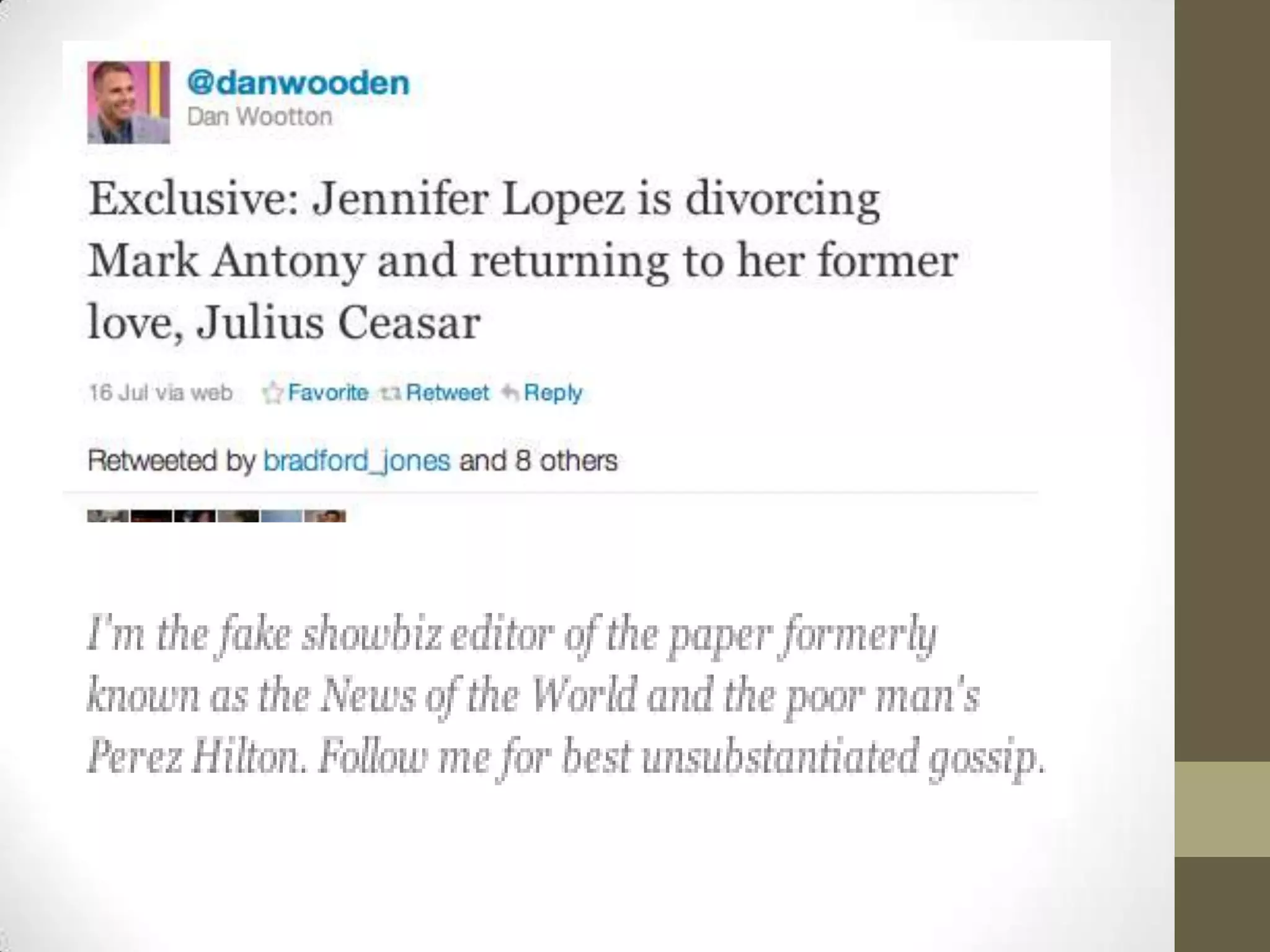
Beware B.S.
Check the person's credibility
• Check when account was created.
• How frequent are updates?
• Do they have a photo?
• Do they have friends/followers? Do they
  follow?
• Check bio, links
• Check Klout score
• Google name and scam, spammer
• Contact & interview
Follow up on the tip
• Ask for a phone number and call the person.

• Ask if they witnessed first-hand or heard
  about it.

• Ask exactly what they witnessed, how they
  saw it and when.

• Ask who else may have the same info.
Check credibility of the info
• Check earlier tweets/updates: Anything leading
 up to the tip that makes sense?

• Do follow up tweets/updates make sense in
  context?

• Does it read authentically? Misspellings, bad
  grammar, typos can also be a sign of a real
  person.

• Corroborate the info
Evaluate your options
• How urgent is this information?

• How important is the tip to the overall
  story? Is there a story without it?

• Is it worth the risk if it is wrong?
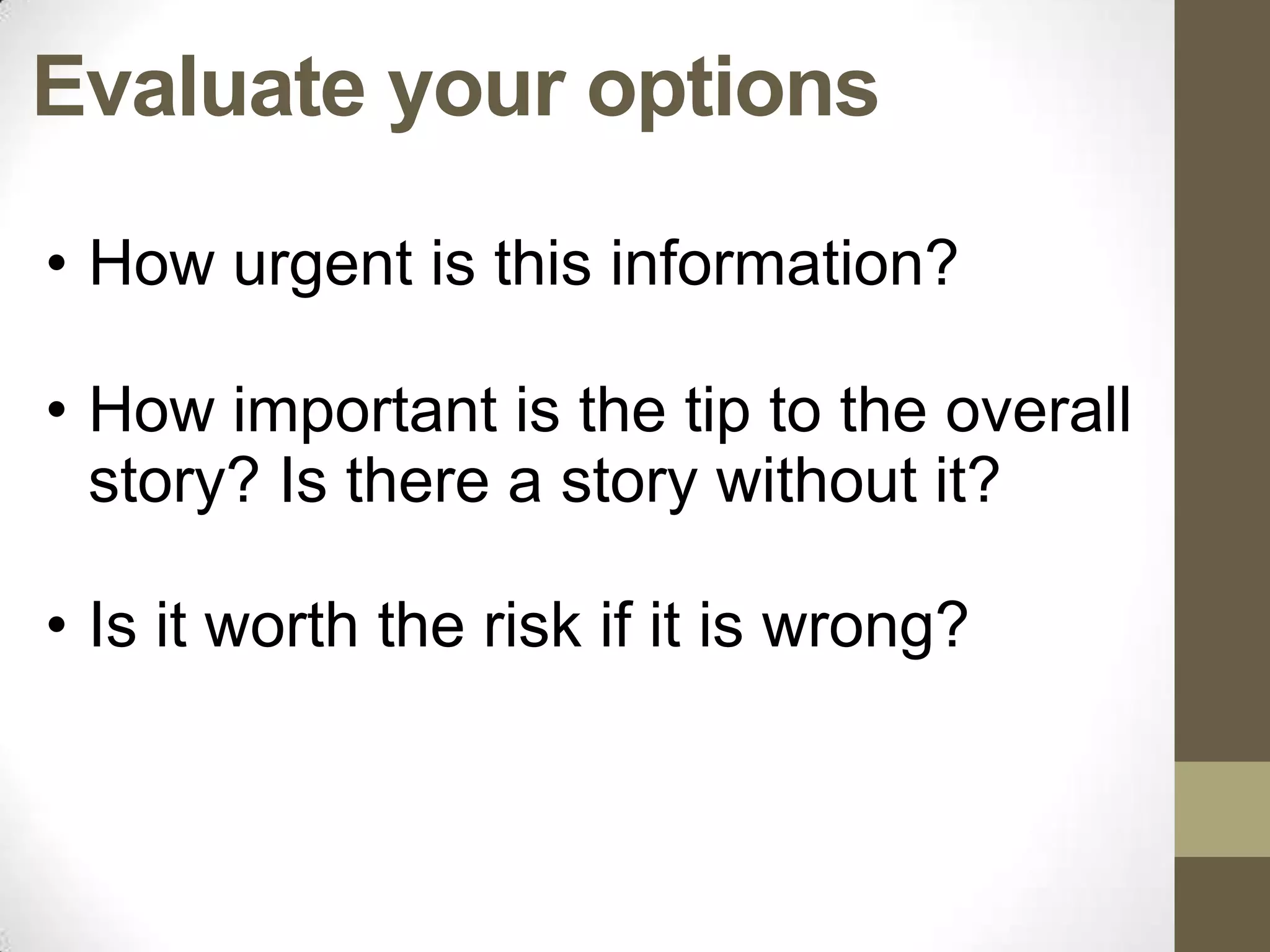
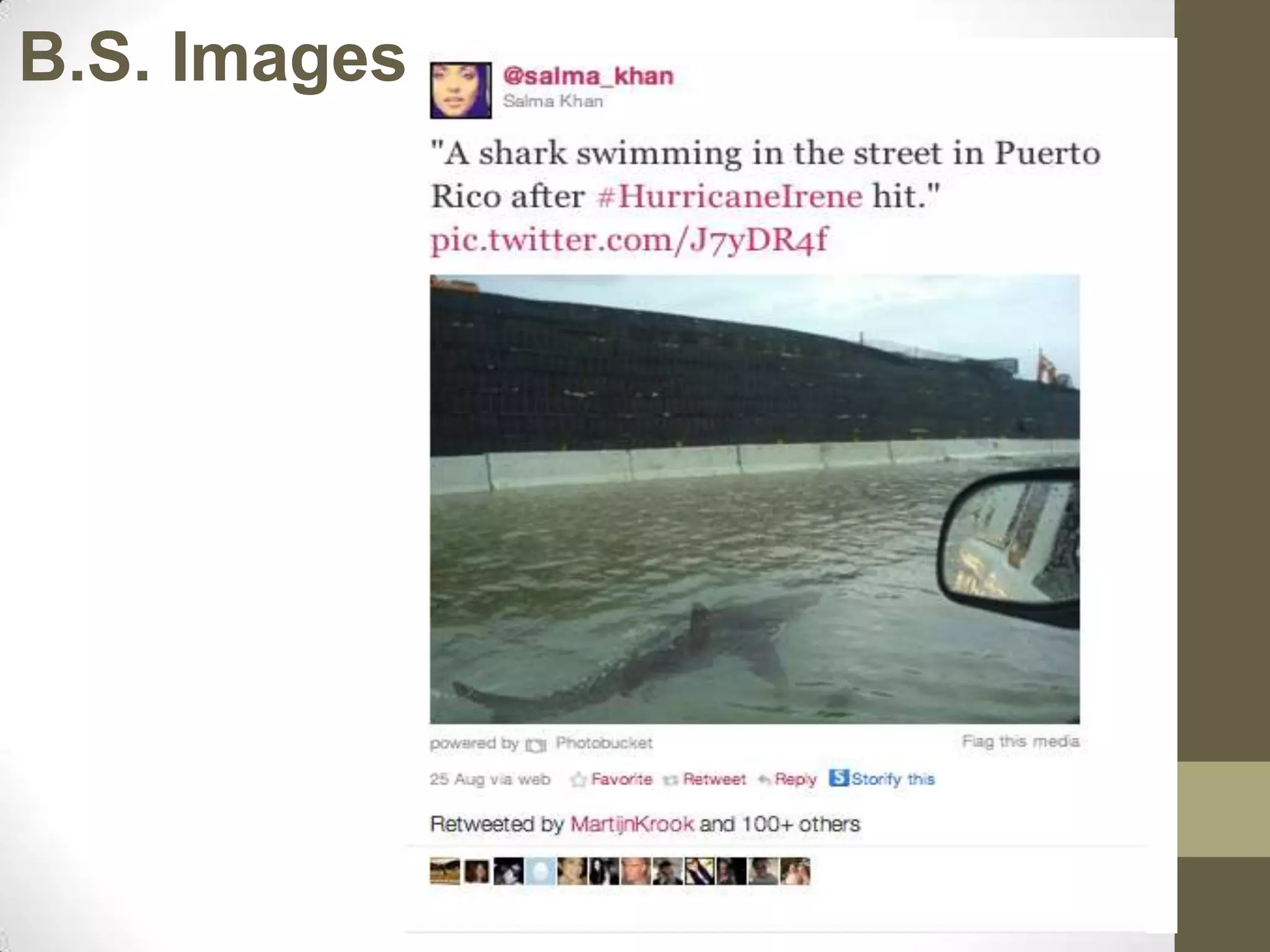
B.S. Images
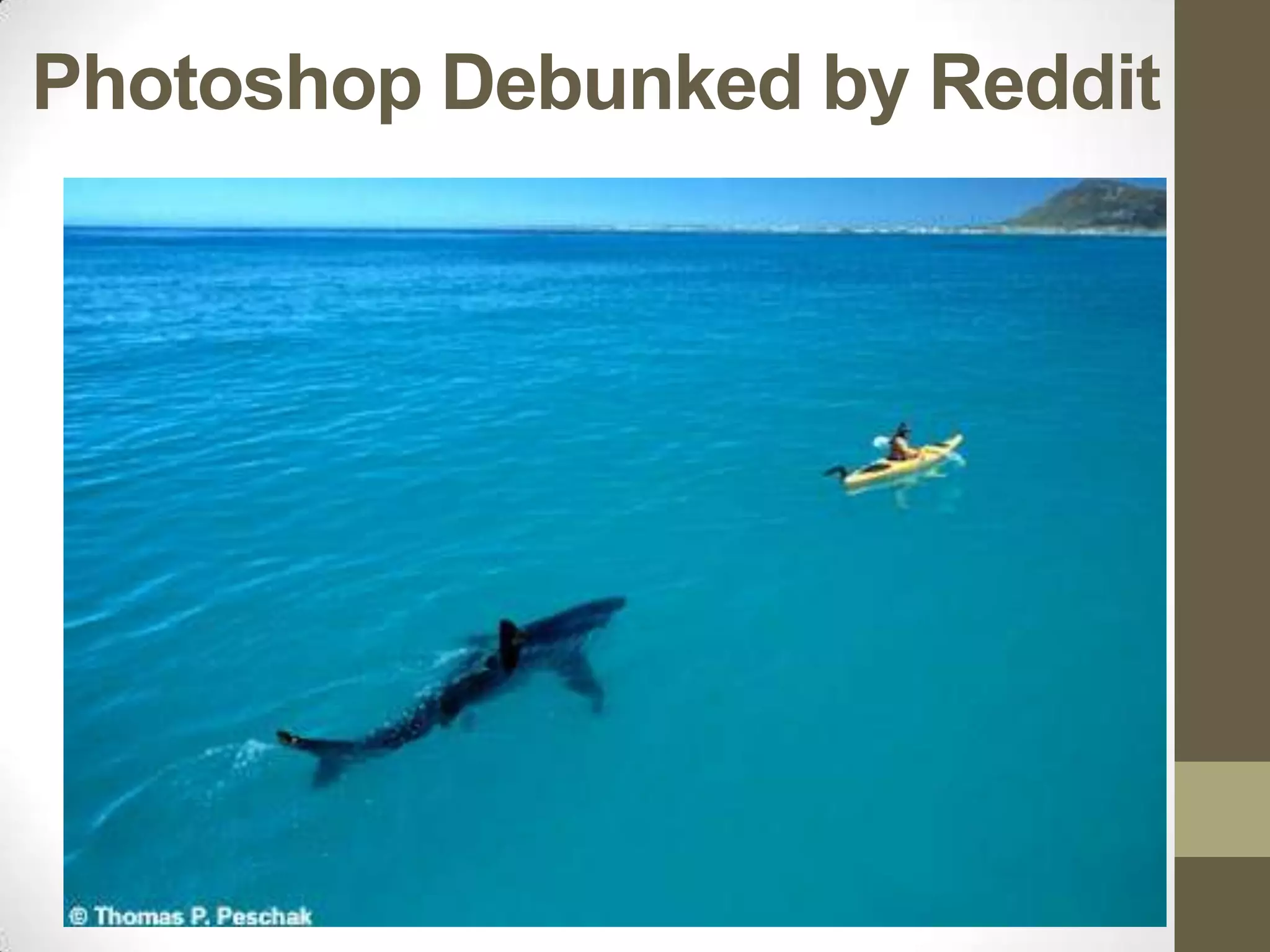
Photoshop Debunked by Reddit
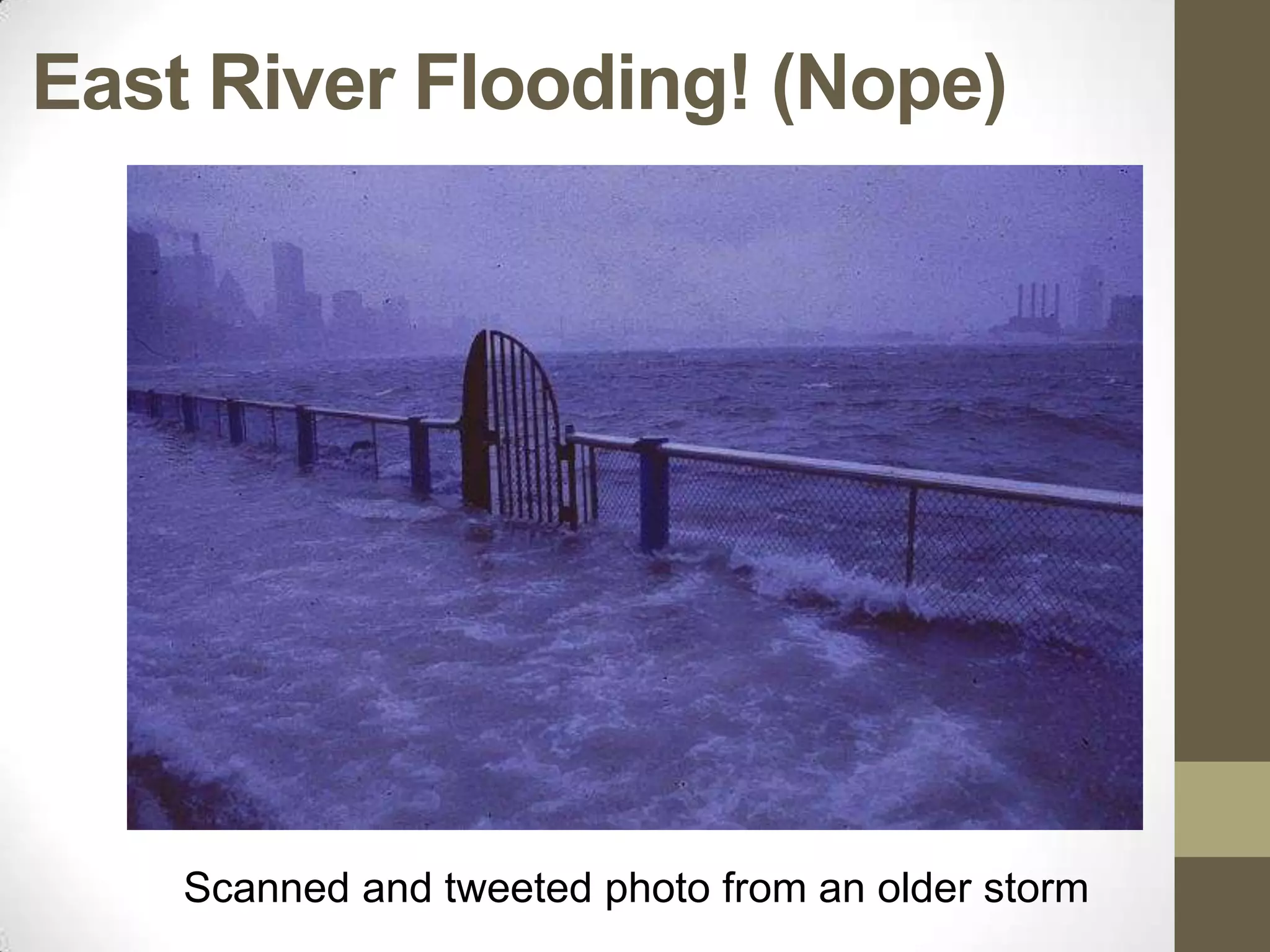
East River Flooding! (Nope)


    Scanned and tweeted photo from an older storm
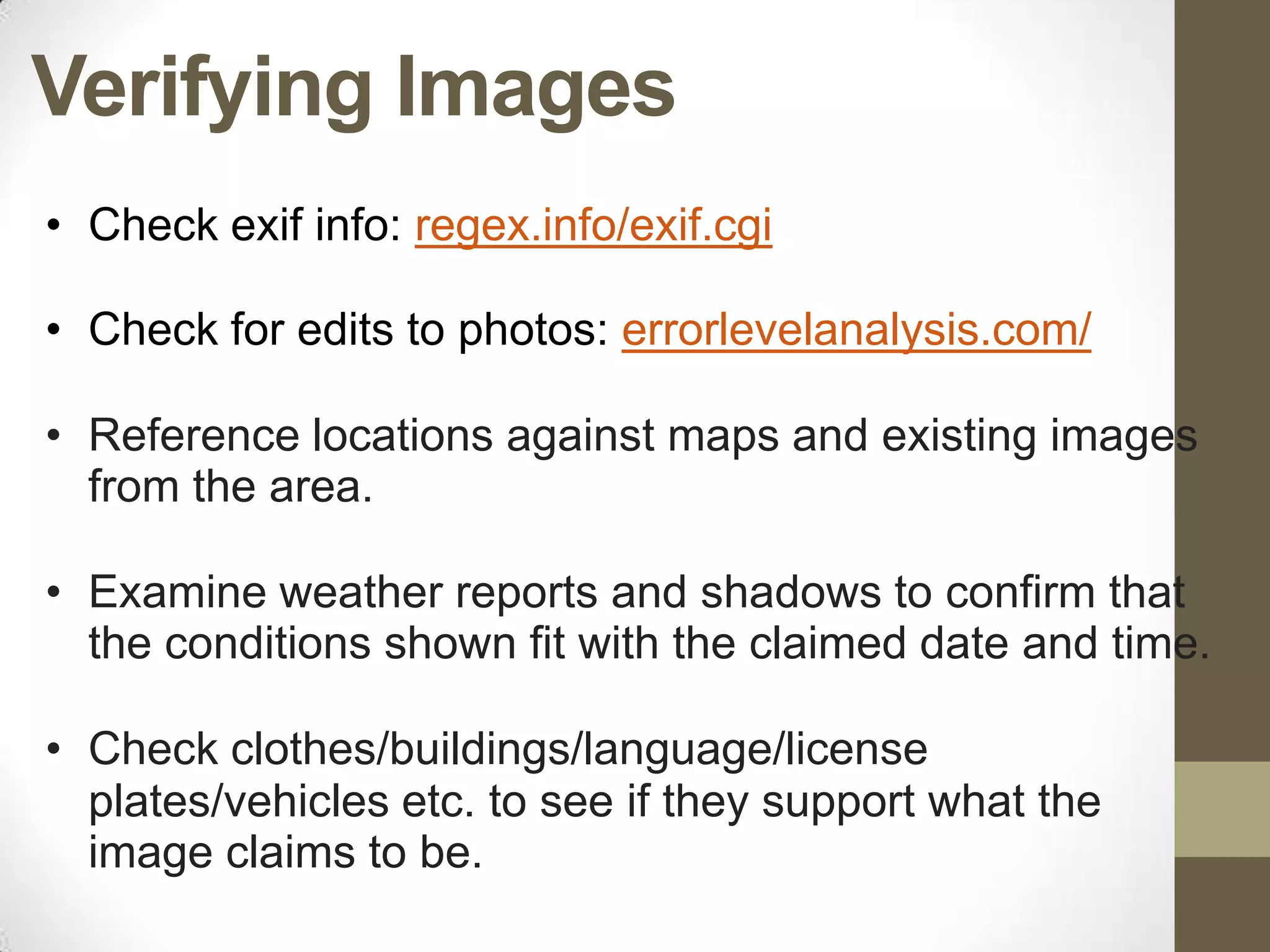
Verifying Images
• Check exif info: regex.info/exif.cgi

• Check for edits to photos: errorlevelanalysis.com/

• Reference locations against maps and existing images
  from the area.

• Examine weather reports and shadows to confirm that
  the conditions shown fit with the claimed date and time.

• Check clothes/buildings/language/license
  plates/vehicles etc. to see if they support what the
  image claims to be.
THANKS!
     Mandy Jenkins
mjenkins@digitalfirstmedia.com
         @mjenkins
 Blog: Zombiejournalism.com
    These slides & more at
 slideshare.net/mandyjenkins

Crowdsourcing and Verification For Journalists

  • 1.
    Tap Into theCrowd Mandy Jenkins @mjenkins #norcalsoc April 2012
  • 2.
    What is Crowdsourcing? •When you call on your readers/followers to contribute to a story • Calls for content, news tips and story sources • Can be breaking or long-term • Involve a little or a lot of information
  • 3.
    Before Crowdsourcing •Build engagedcommunity (follow people, converse with them) •Build Twitter lists of key sources for breaking situations •Plan ahead when you can, have a plan for when you can’t •Include crowdsourcing in story-planning
  • 4.
    During Breaking News •Open keyword searches • Monitor key Twitter lists • Have reporter or news org start tweeting live to get and share info
  • 5.
  • 6.
    Ask for WhatYou Want
  • 7.
  • 8.
    Breaking News Crowdsourcing •Say whatyou know •Say what you don’t know •Say what you want/need to know •Don’t spread rumors •Vet sources & information •Ask questions as you gather info •RT with context, note if it's verified
  • 9.
    Search.Twitter.Com/advanced Search bykeywords, location, time Search quickly - before the stream is taken over by reaction
  • 10.
    When You FindLeads • Connect with eyewitnesses, get contact info • Have them wait for a reporter on scene • Verify!
  • 11.
    • Search venueson Foursquare.com • “Mayor” is great source for info about a business or venue (employee or regular customer)
  • 12.
  • 14.
  • 17.
    Ask Everywhere • Printcallouts (Tell Us Your Story) • Social media promotion (reporter and papers’ accounts) • Embeds into online stories • Word-of-mouth, IRL on the beat
  • 18.
    Crowdsourcing Ideas • Askfor archival photos/stories from community anniversaries • Is it raining/snowing/earthquaking near you? • Build a source database for recurring themes (foreclosures, veterans, lost jobs, etc.)
  • 19.
  • 22.
    Check the person'scredibility • Check when account was created. • How frequent are updates? • Do they have a photo? • Do they have friends/followers? Do they follow? • Check bio, links • Check Klout score • Google name and scam, spammer • Contact & interview
  • 23.
    Follow up onthe tip • Ask for a phone number and call the person. • Ask if they witnessed first-hand or heard about it. • Ask exactly what they witnessed, how they saw it and when. • Ask who else may have the same info.
  • 24.
    Check credibility ofthe info • Check earlier tweets/updates: Anything leading up to the tip that makes sense? • Do follow up tweets/updates make sense in context? • Does it read authentically? Misspellings, bad grammar, typos can also be a sign of a real person. • Corroborate the info
  • 25.
    Evaluate your options •How urgent is this information? • How important is the tip to the overall story? Is there a story without it? • Is it worth the risk if it is wrong?
  • 26.
  • 27.
  • 28.
    East River Flooding!(Nope) Scanned and tweeted photo from an older storm
  • 29.
    Verifying Images • Checkexif info: regex.info/exif.cgi • Check for edits to photos: errorlevelanalysis.com/ • Reference locations against maps and existing images from the area. • Examine weather reports and shadows to confirm that the conditions shown fit with the claimed date and time. • Check clothes/buildings/language/license plates/vehicles etc. to see if they support what the image claims to be.
  • 30.
    THANKS! Mandy Jenkins mjenkins@digitalfirstmedia.com @mjenkins Blog: Zombiejournalism.com These slides & more at slideshare.net/mandyjenkins

Editor's Notes

  • #6 Newest updates first
  • #20 Whenever there’s a recurring topic, include form for readers to add themselves for followup stories
  • #26 Check scanner, police sources to verify.Back it up on a Twitter search to see if other social accounts are reporting.Ask followers if they can help verify (a.k.a. The 'Andy Carvin method').