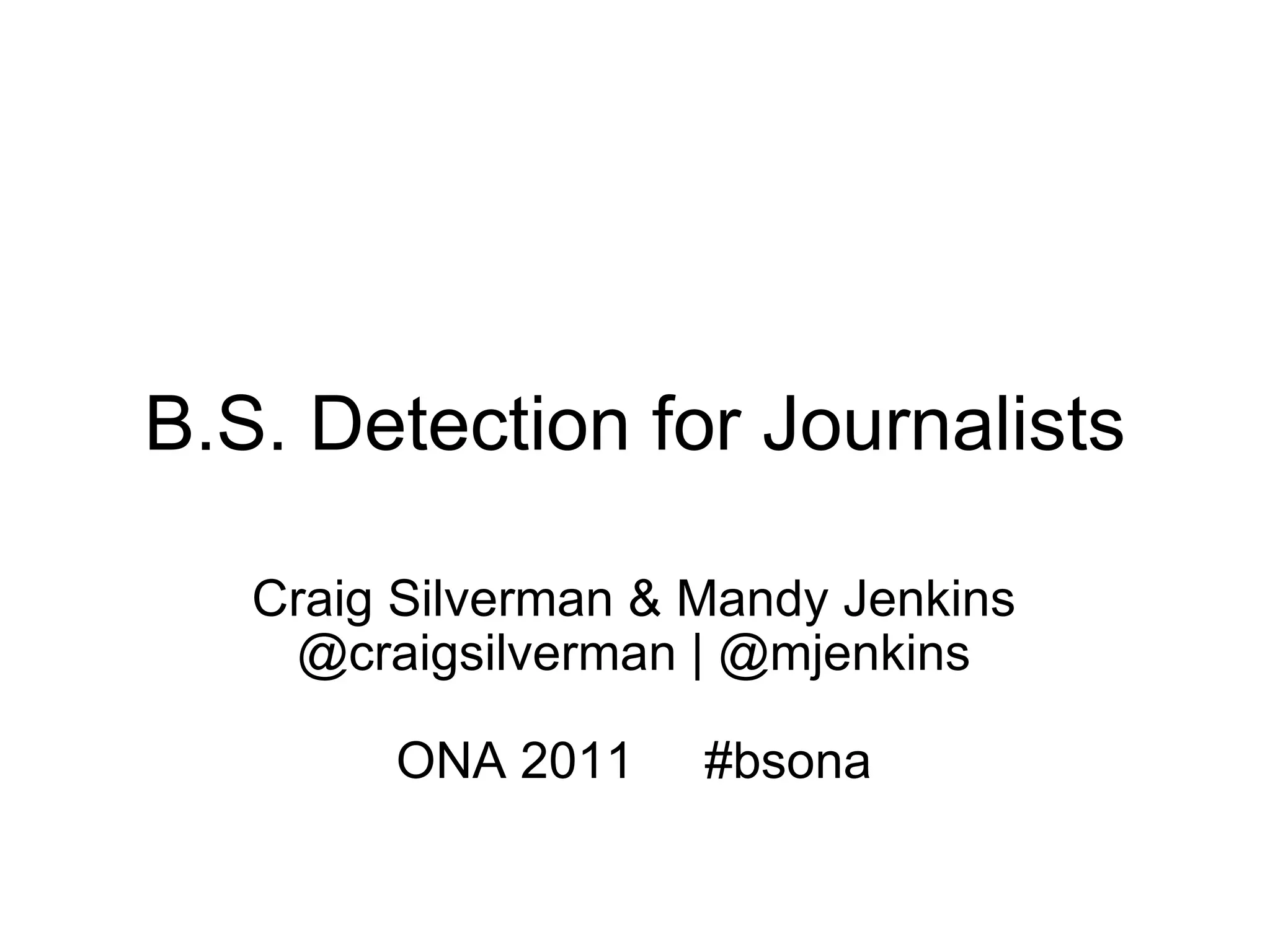
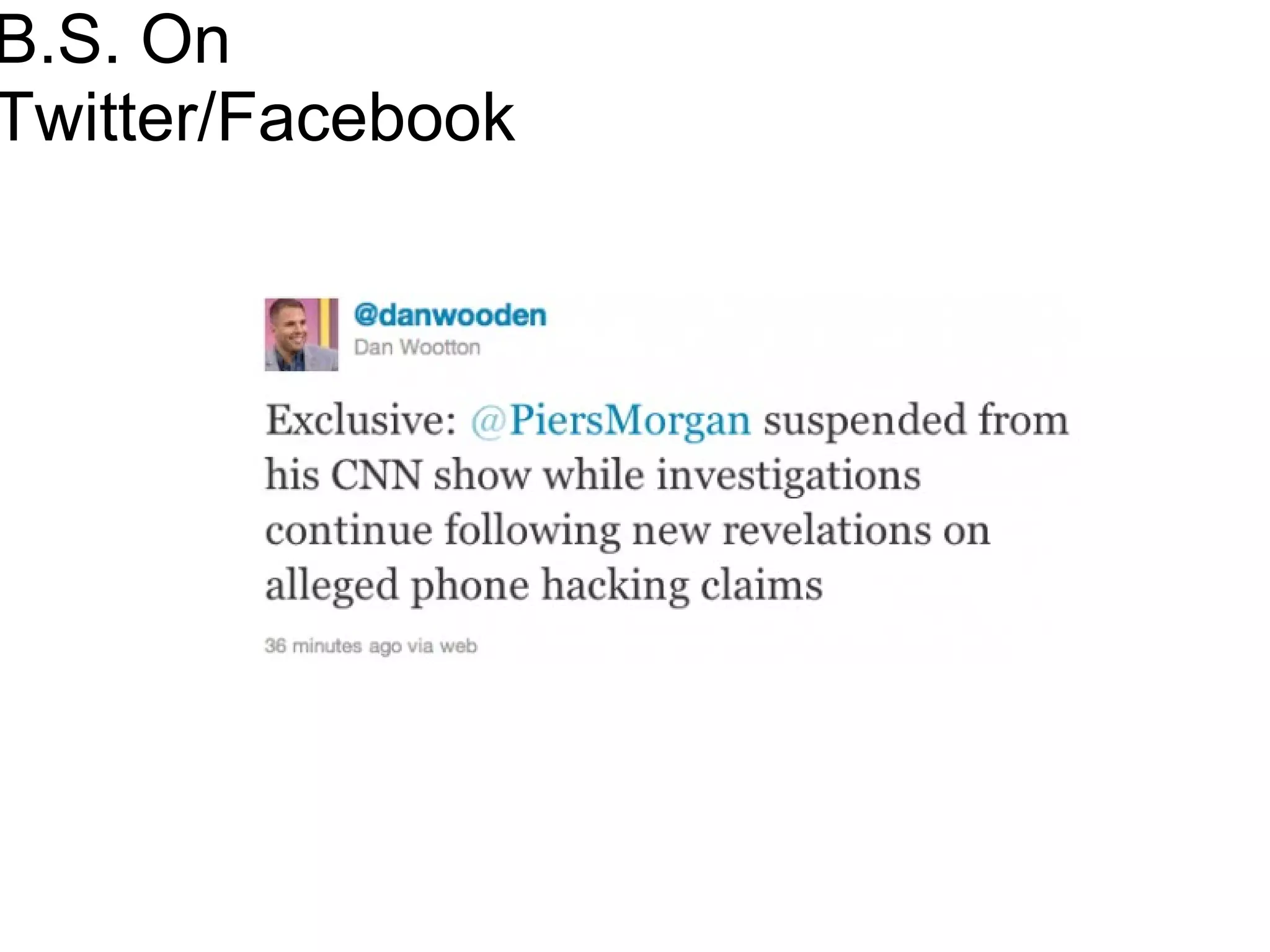
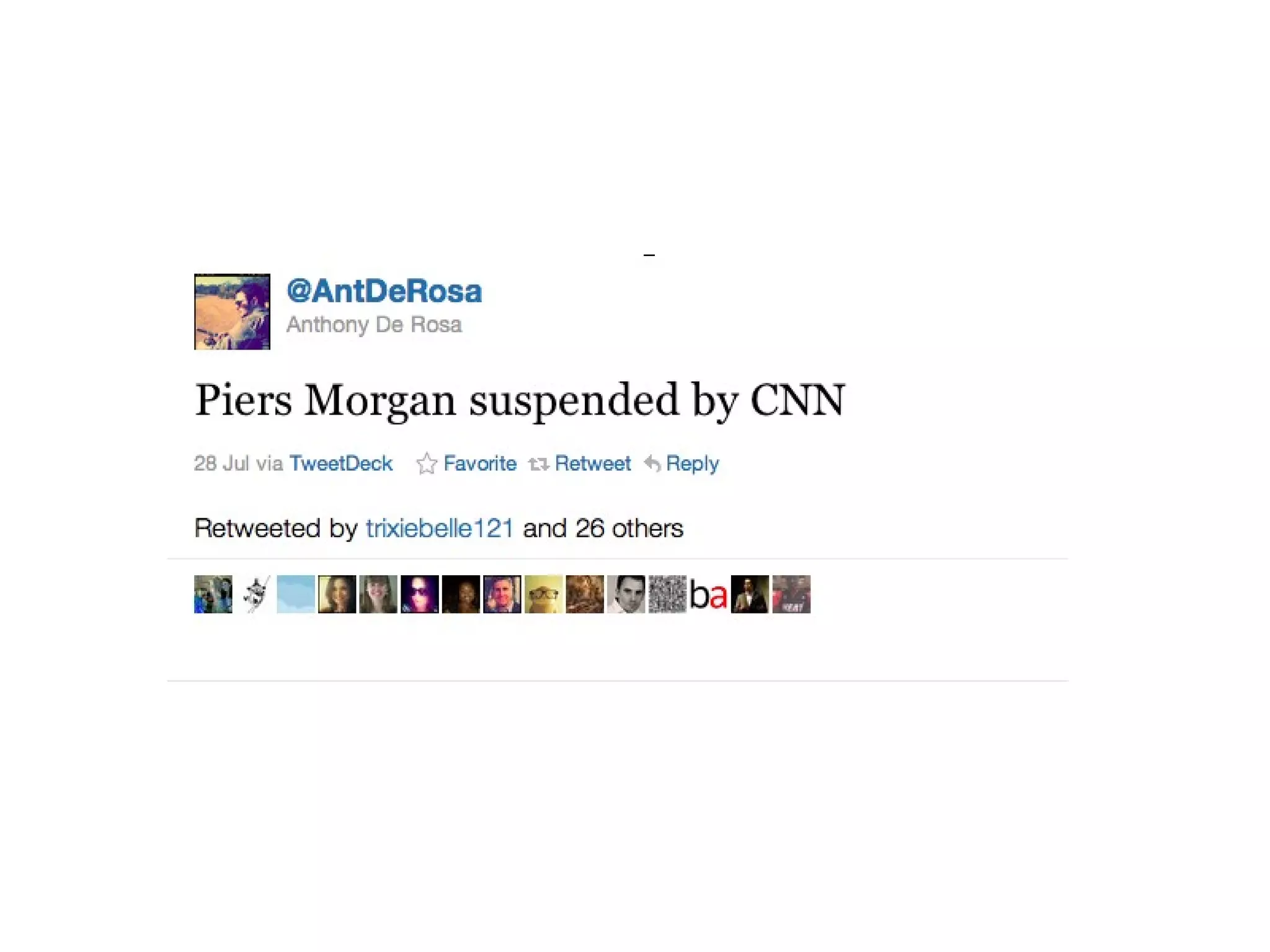
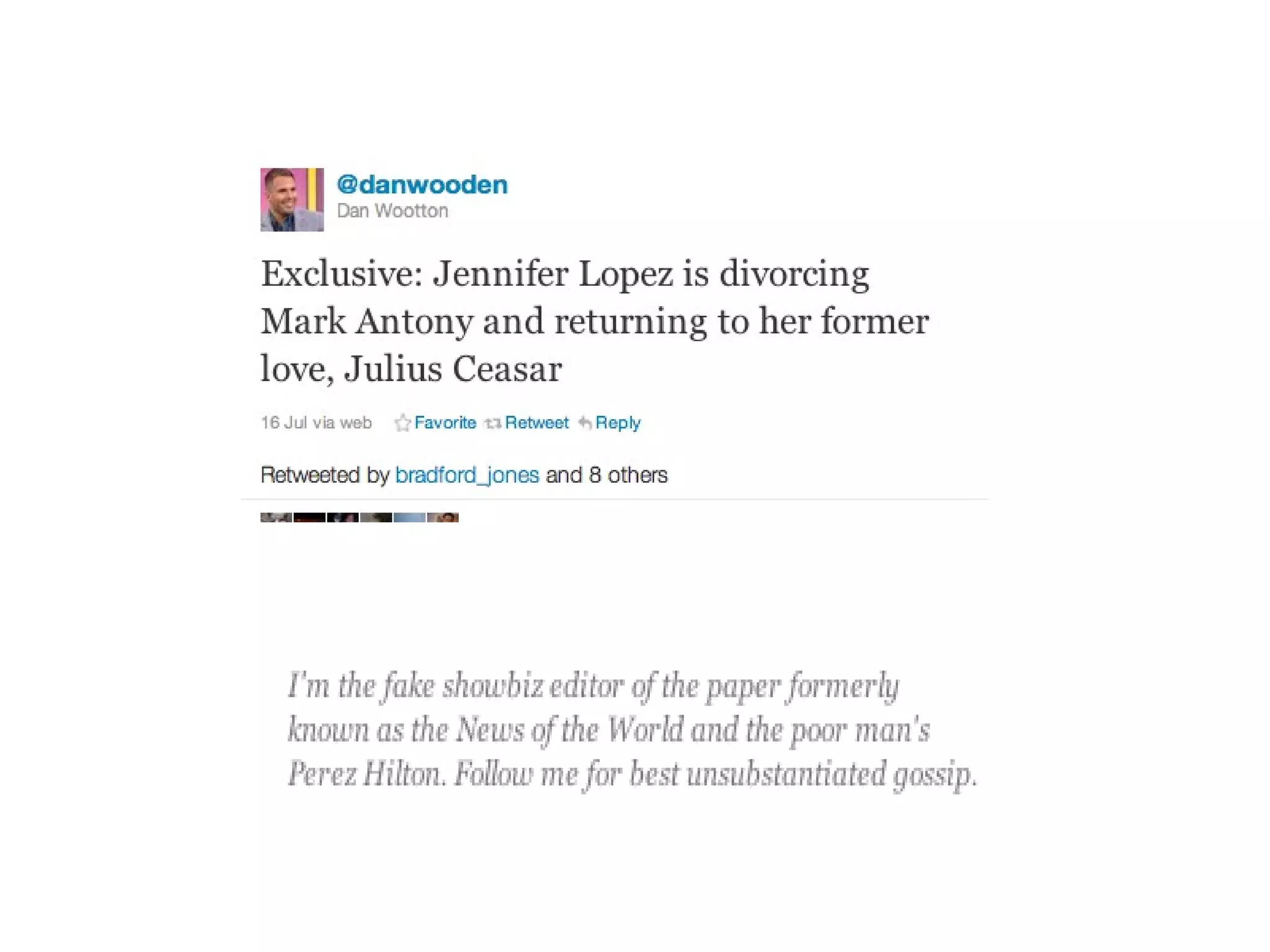
The document outlines a comprehensive guide for journalists on how to verify information found on social media. It includes steps for checking the credibility of sources, corroborating stories, and verifying images and web content. The guide emphasizes the importance of thorough investigation and critical evaluation to avoid spreading misinformation.
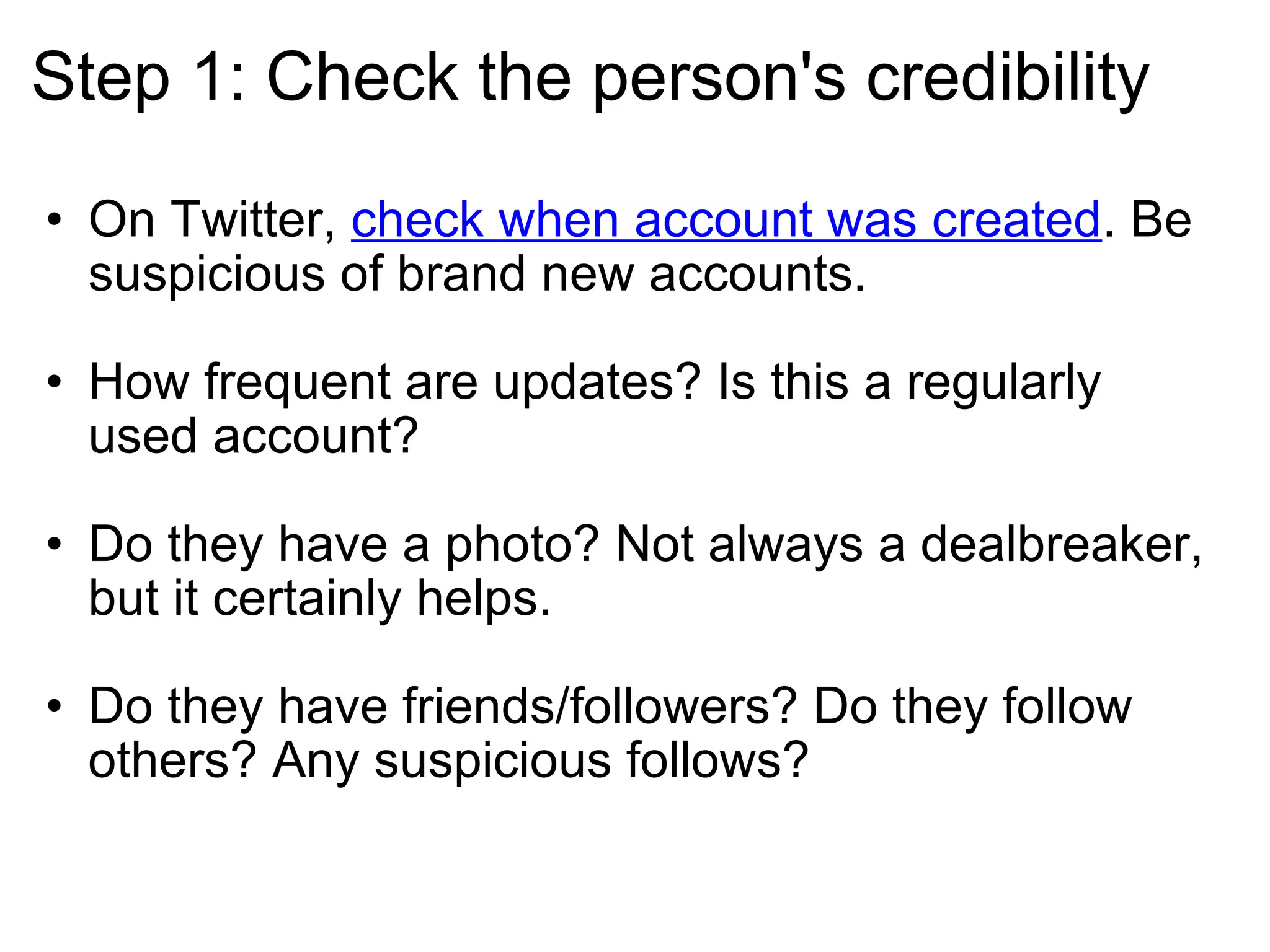
Step 1: Checkthe person's credibility On Twitter, check when account was created . Be suspicious of brand new accounts. How frequent are updates? Is this a regularly used account? Do they have a photo? Not always a dealbreaker, but it certainly helps. Do they have friends/followers? Do they follow others? Any suspicious follows?
7.
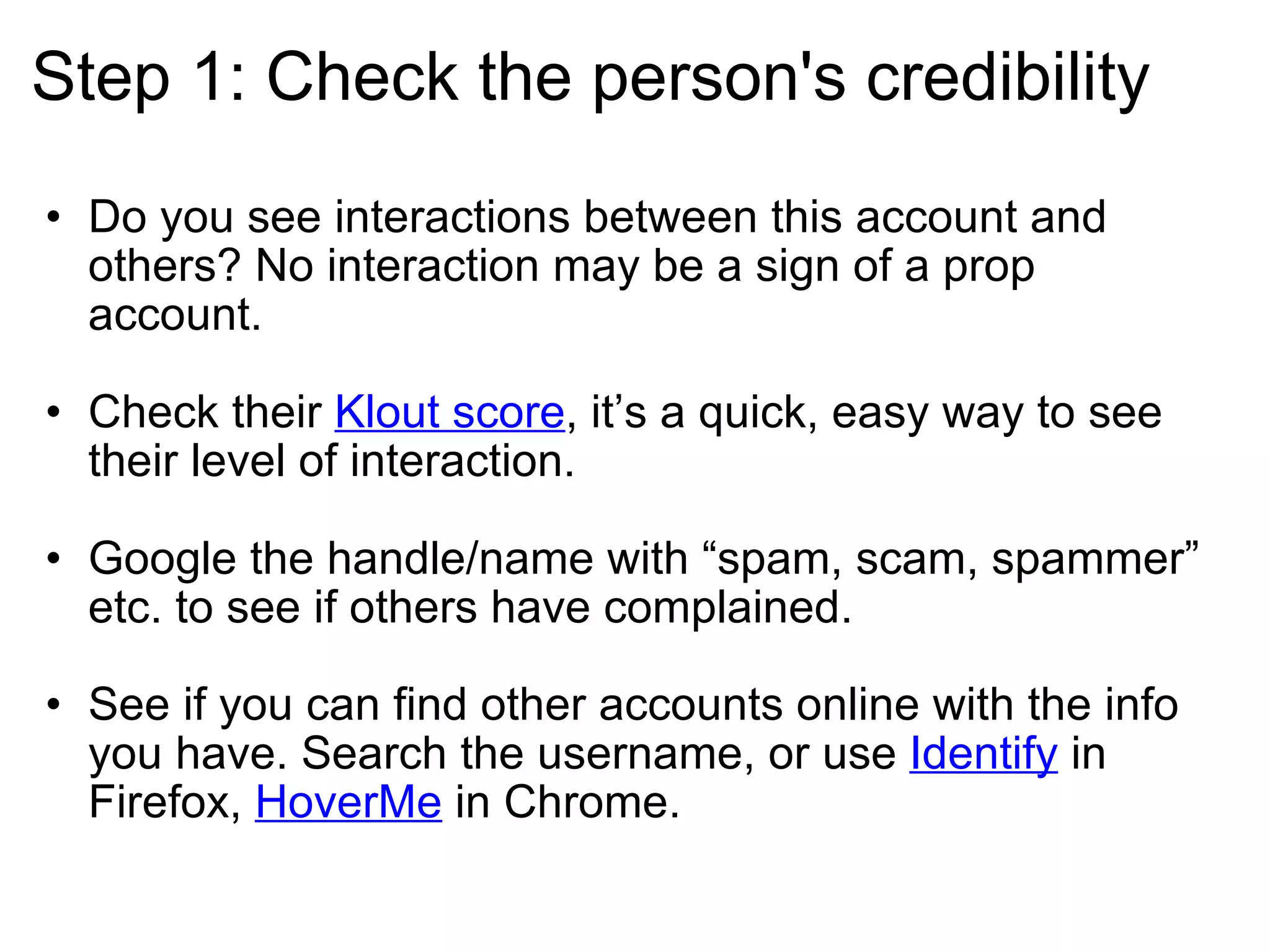
Step 1: Checkthe person's credibility Do you see interactions between this account and others? No interaction may be a sign of a prop account. Check their Klout score , it’s a quick, easy way to see their level of interaction. Google the handle/name with “spam, scam, spammer” etc. to see if others have complained. See if you can find other accounts online with the info you have. Search the username, or use Identify in Firefox, HoverMe in Chrome.
8.
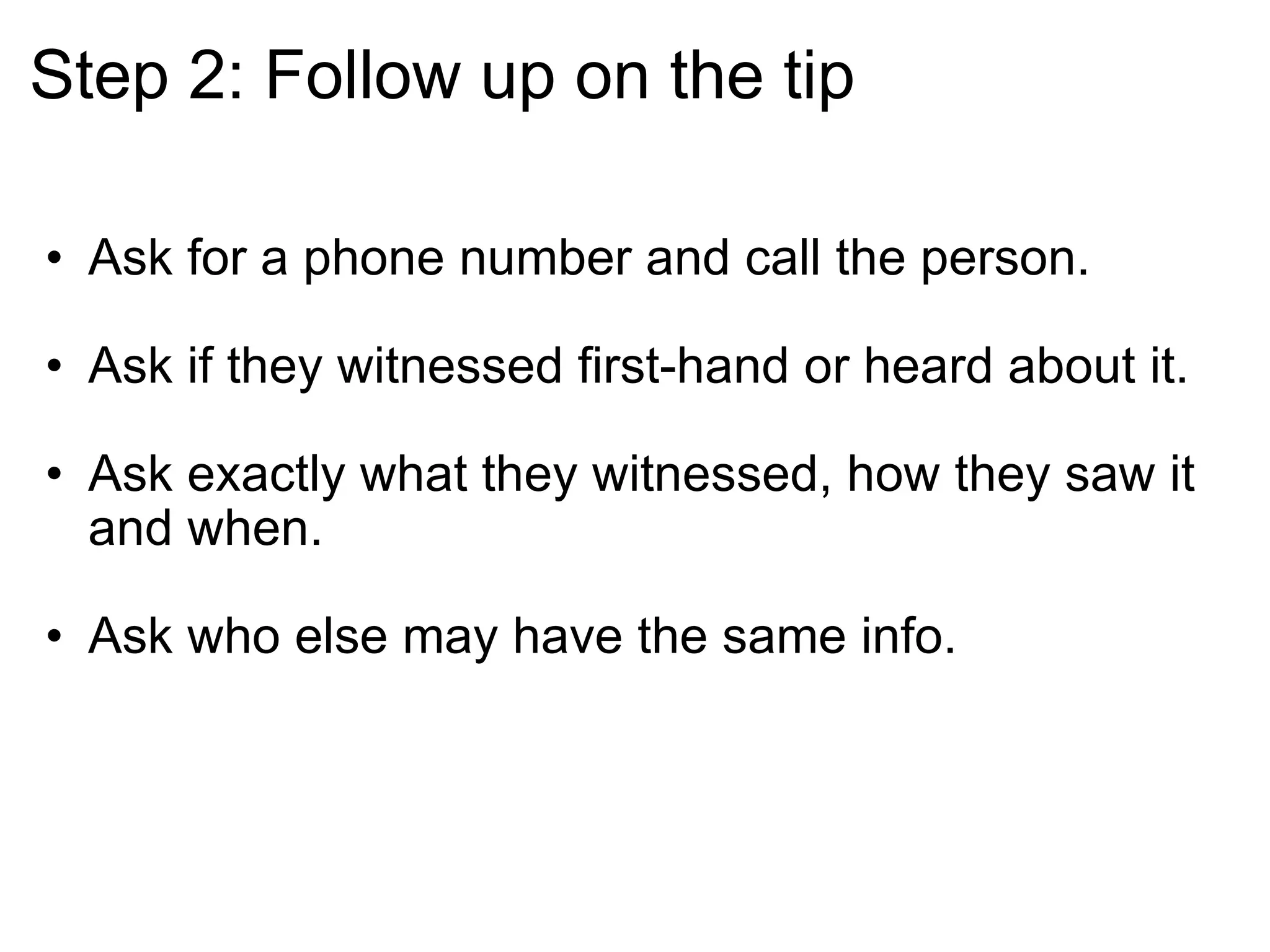
Step 2: Followup on the tip Ask for a phone number and call the person. Ask if they witnessed first-hand or heard about it. Ask exactly what they witnessed, how they saw it and when. Ask who else may have the same info.
9.
Step 3: Checkthe credibility of the info Check earlier tweets/updates: Anything leading up to the tip that makes sense? Do they indicate plans, location, etc.? Do follow up tweets/updates (or collection thereof) make sense in context? Does it read authentically? Misspellings, bad grammar, typos can also be a sign of a real person. If there’s an image attached, see if it has geolocation data or exif .
10.
Step 4: Corroboratethe story Check scanner, police sources to verify. Back it up on a Twitter search to see if other social accounts are reporting. Ask followers if they can help verify (a.k.a. The 'Andy Carvin method').
11.
Step 5: Evaluateyour options How urgent is this information? How important is the tip to the overall story? Is there a story without it? Is it worth the risk if it is wrong?
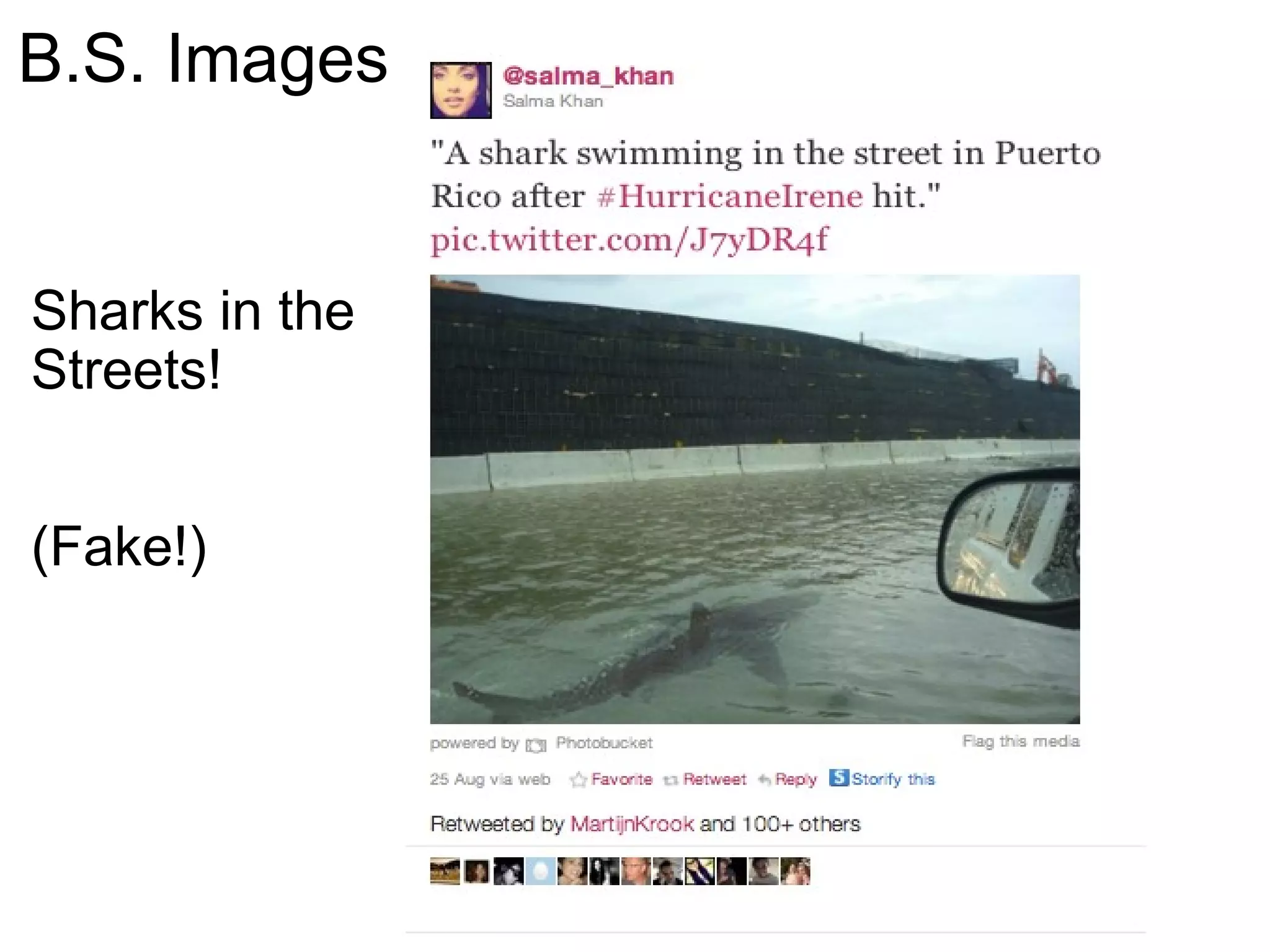
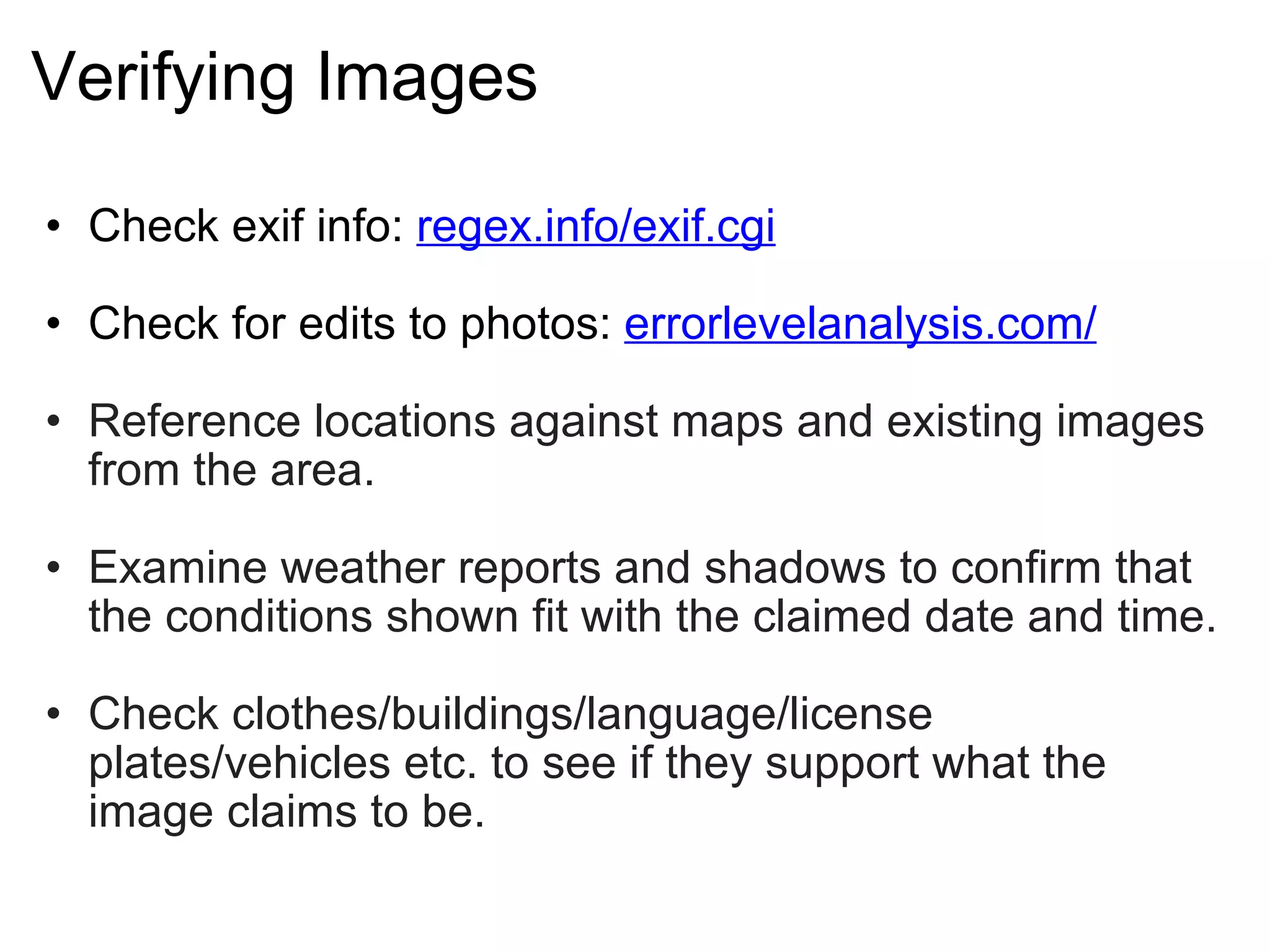
Verifying Images Checkexif info: regex.info/exif.cgi Check for edits to photos: errorlevelanalysis.com/ Reference locations against maps and existing images from the area. Examine weather reports and shadows to confirm that the conditions shown fit with the claimed date and time. Check clothes/buildings/language/license plates/vehicles etc. to see if they support what the image claims to be.
17.
Verifying Images Reviewthe uploader’s history/location to see if he/she has shared credible content in the past or may be 'scraping' content from others. Are there images before and after you can compare to? Get them on the phone/Skype to talk about the image. Beware of the amazing shot in a breaking news situation.
Verifying Web InfoWhois lookup on the domain. Check Internet archive and overall history of the site/organization/person. Check site's PageRank . Is clear and credible ownership/credit information offered? Footer information point to a real ownership entity? Does site/page have life? (Comments, likes, tweets, recent content, links in & out...)
20.
Verifying Web InfoDo blog and news searches to see if it/people/company has been talked about/covered already. Find the original source! Are people bookmarking it on Diigo or Delicious? Use the phone, send some emails before you publish anything. Check names. Do they have a personal history? Drawn from history or literature? Do the numbers add up?
21.
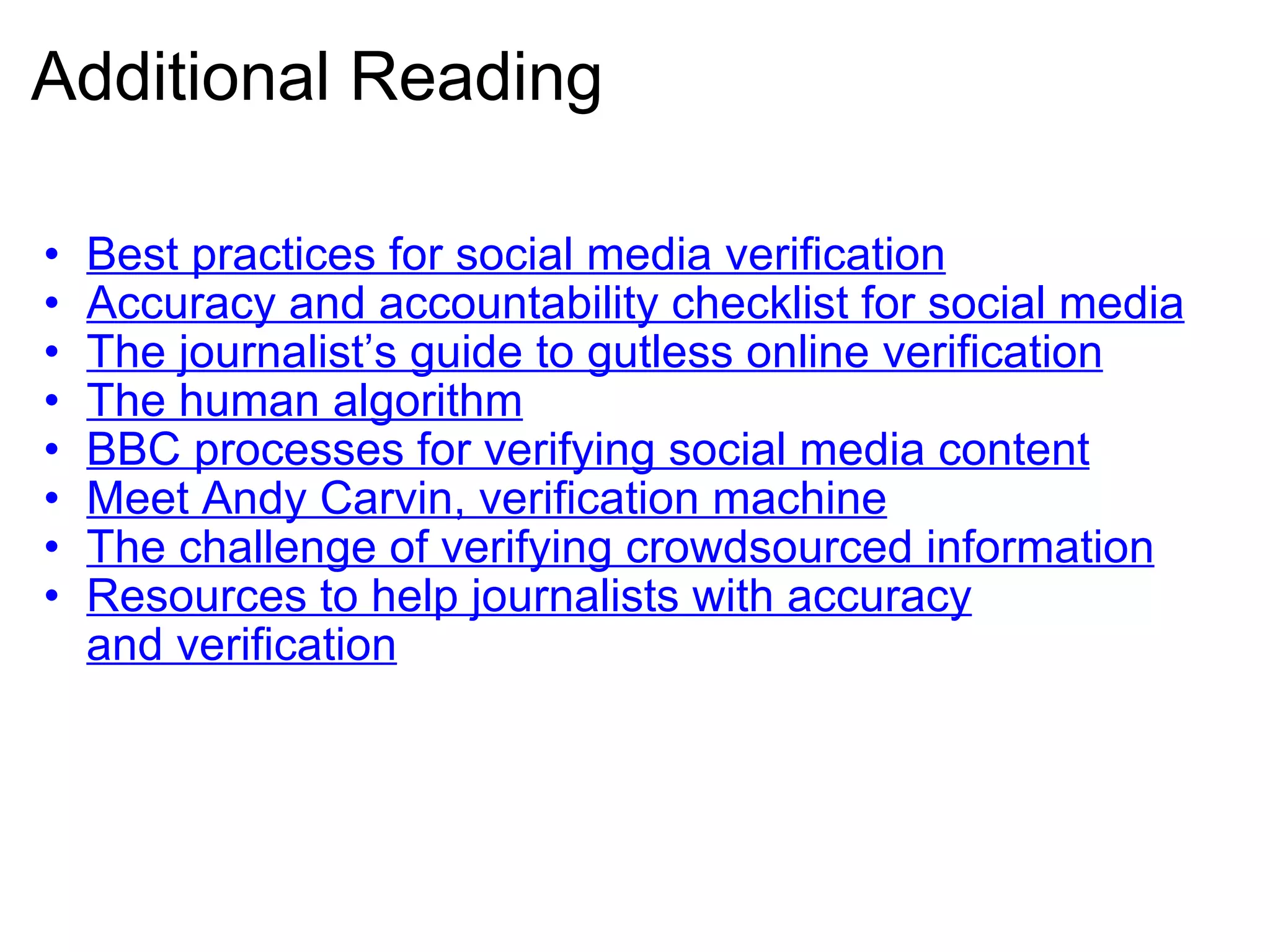
Additional Reading Bestpractices for social media verification Accuracy and accountability checklist for social media The journalist’s guide to gutless online verification The human algorithm BBC processes for verifying social media content Meet Andy Carvin, verification machine The challenge of verifying crowdsourced information Resources to help journalists with accuracy and verification