Crop Rotation
Dust Bowl, Irish Potato Famine linked to one crucial farming mistake: growing same crop in same piece of land year after yearDust Bowl – land depleted of nutrientsPotato Famine – disease stayed in soil
Rotating crops is ancient practiceFarmers in Ancient Rome, Africa and Egypt rotated their cropIn England in Middle Ages farmers used three-year crop rotation of rye, oats or barley and nothing the third year
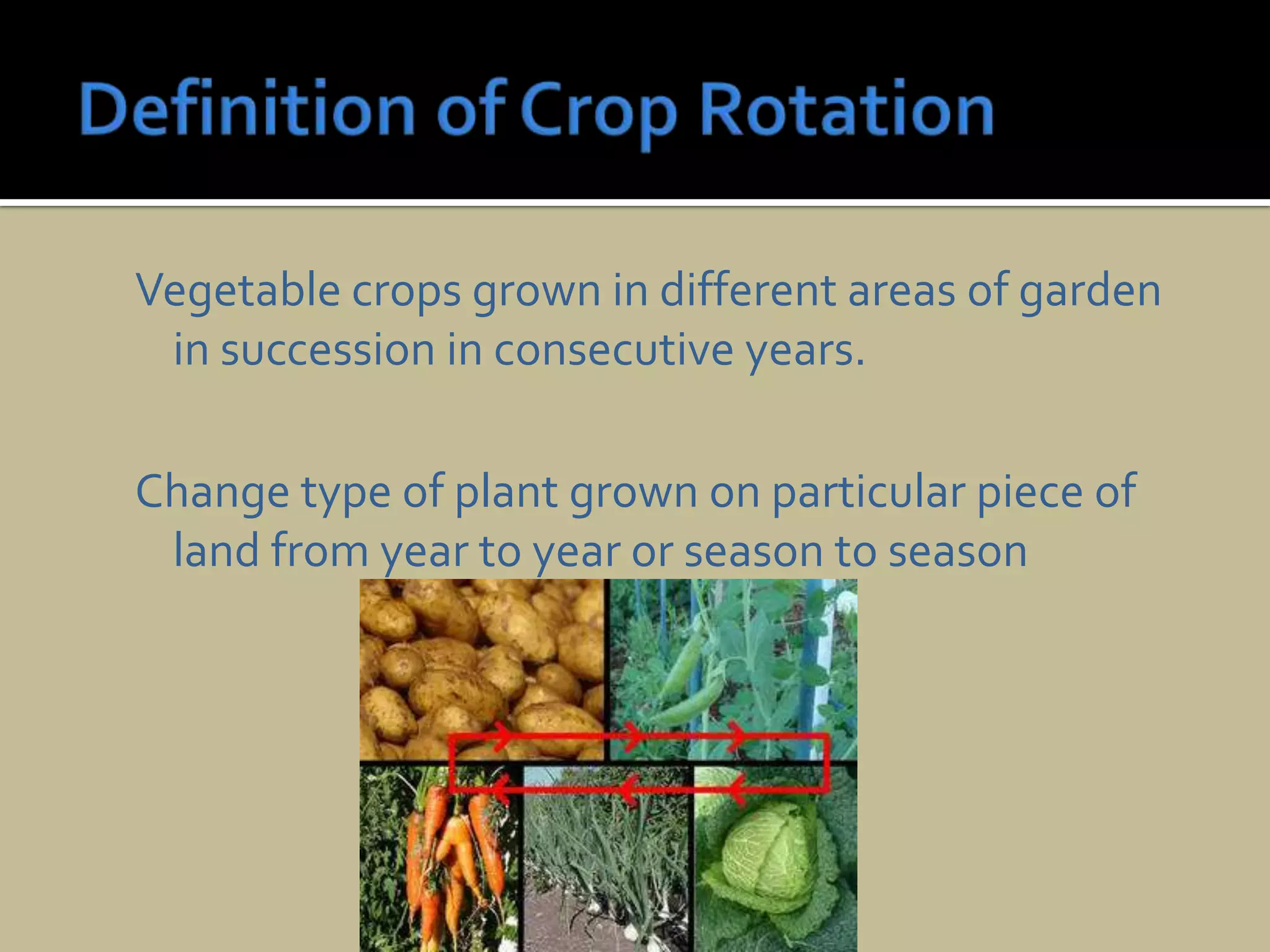
Definition of Crop RotationVegetable crops grown in different areas of garden in succession in consecutive years.Change type of plant grown on particular piece of land from year to year or season to season
Prevents buildup of soil-borne pests and diseases specific to one group of crops Prevents depletion of specific nutrients
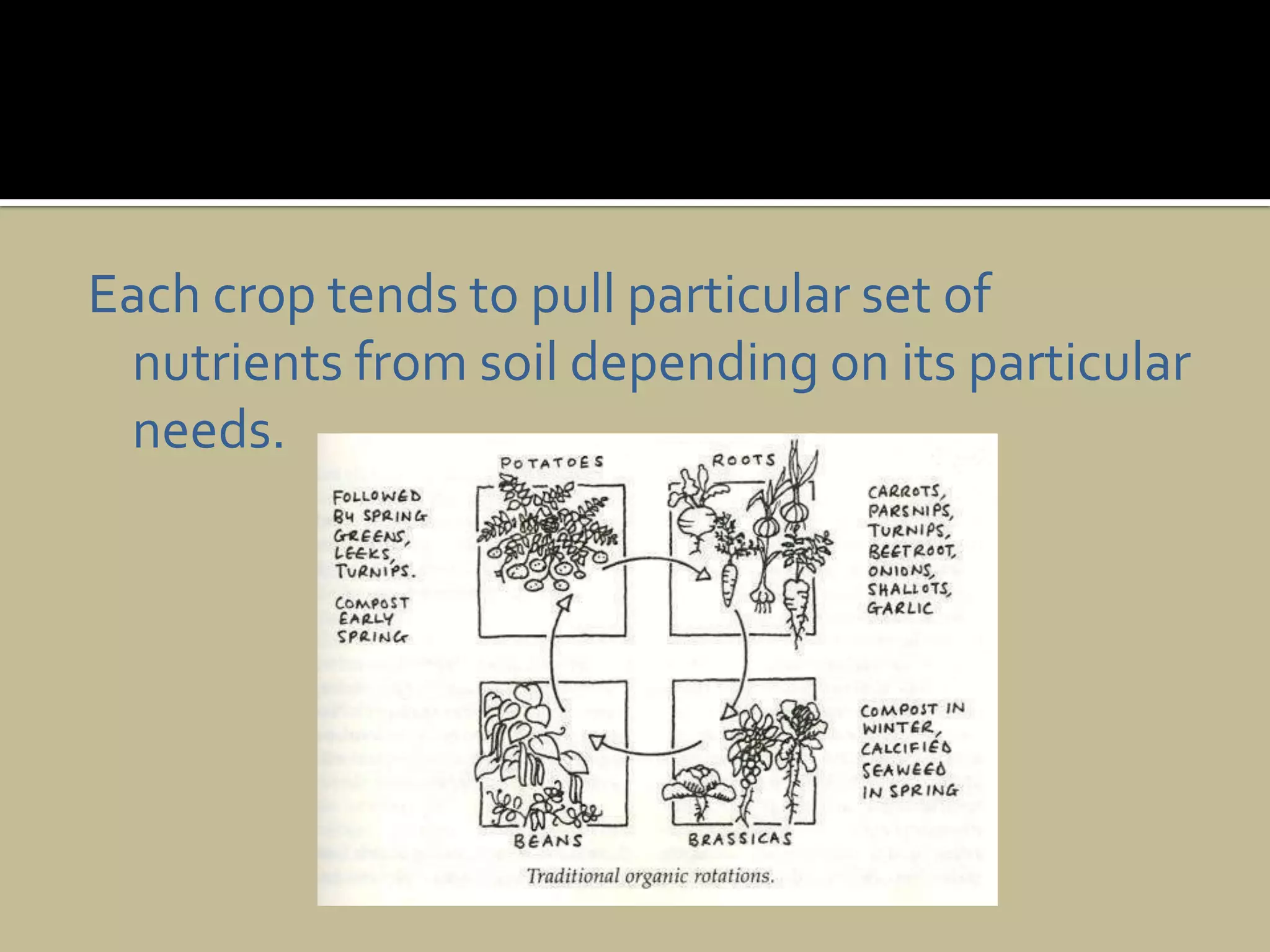
Eachcrop tends to pull particular set of nutrients from soil depending on its particular needs.
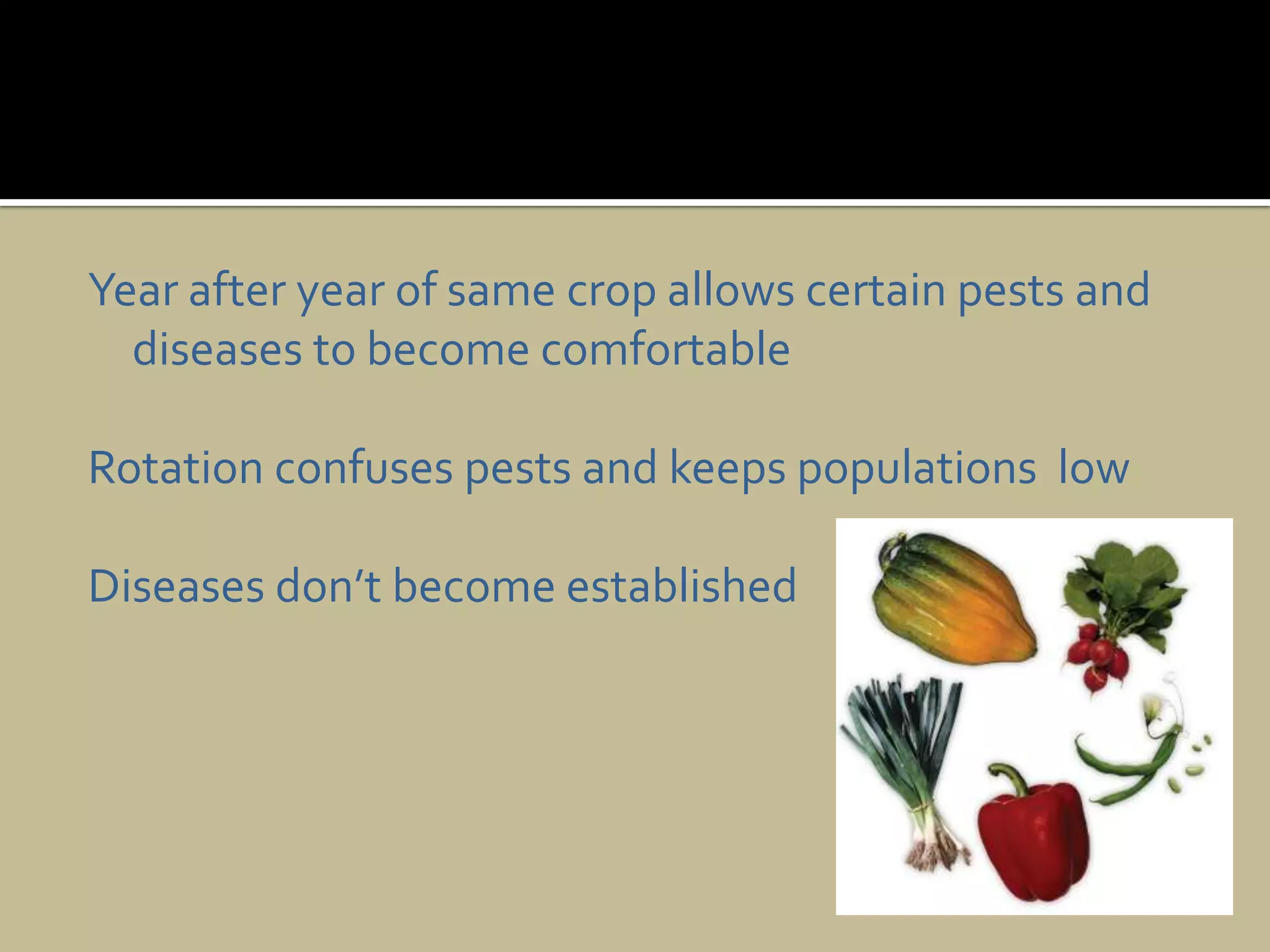
Year after year of same crop allows certain pests and diseases to become comfortable Rotation confuses pests and keeps populations  lowDiseases don’t become established
used to build organic matter and soil nutrients that certain plants use during their life cycle.
Not only individual plants, but certain families of plants are subject to same diseases and should not be planted in the same area more than once every 3 yearsPotatoes, tomatoes, peppers, eggplants
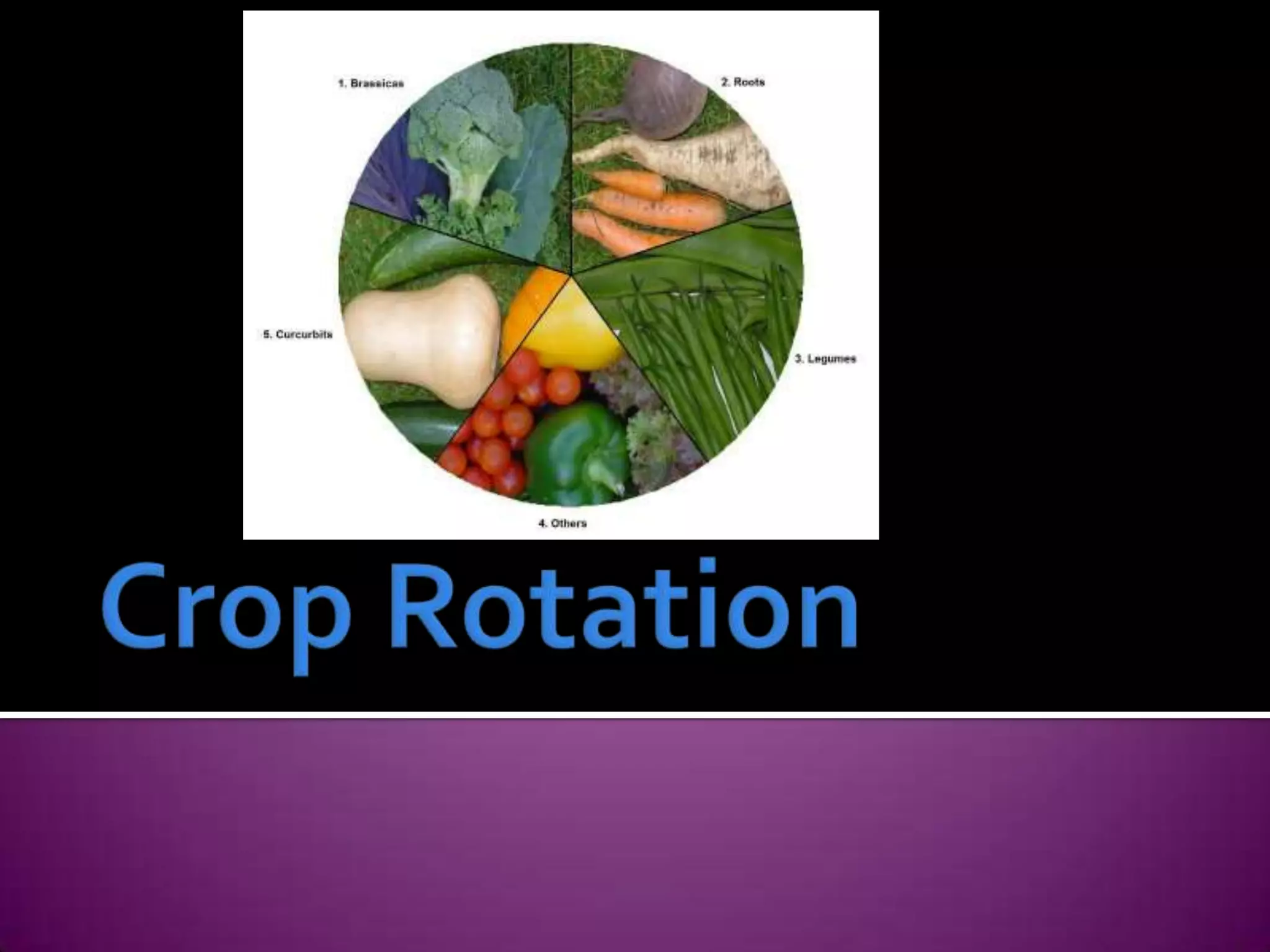
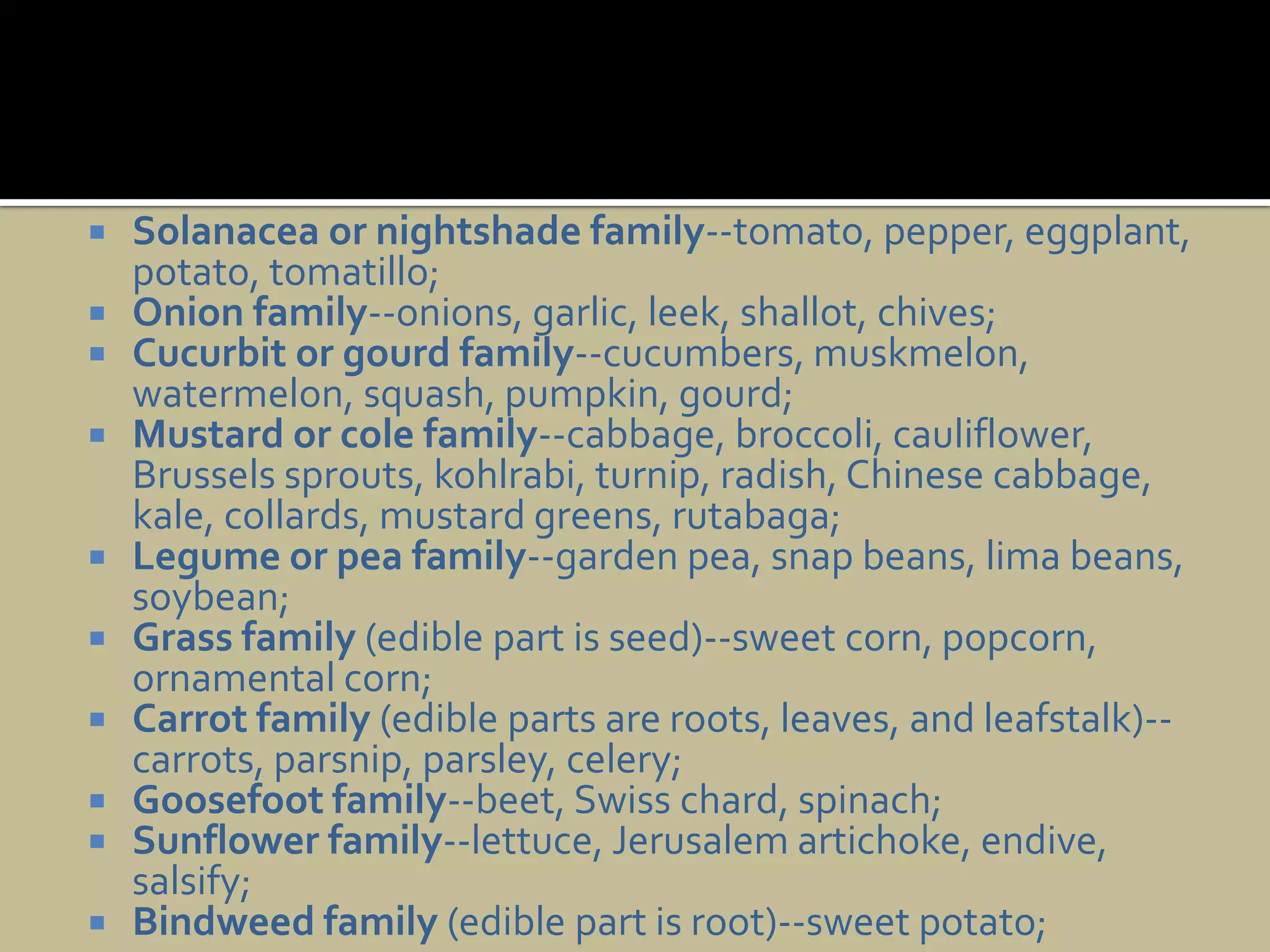
Solanacea or nightshade family--tomato, pepper, eggplant, potato, tomatillo;Onion family--onions, garlic, leek, shallot, chives;Cucurbit or gourd family--cucumbers, muskmelon, watermelon, squash, pumpkin, gourd;Mustard or cole family--cabbage, broccoli, cauliflower, Brussels sprouts, kohlrabi, turnip, radish, Chinese cabbage, kale, collards, mustard greens, rutabaga;Legume or pea family--garden pea, snap beans, lima beans, soybean;Grass family (edible part is seed)--sweet corn, popcorn, ornamental corn;Carrot family (edible parts are roots, leaves, and leafstalk)--carrots, parsnip, parsley, celery;Goosefoot family--beet, Swiss chard, spinach;Sunflower family--lettuce, Jerusalem artichoke, endive, salsify;Bindweed family (edible part is root)--sweet potato;
Rotation PlanCrops planted in Bed 1 are planted in Bed 2 the following year, and in Bed 3 the year after that, and then Bed 4 and back to 1 again.
Green Manuretraditional component of crop rotation is replenishment of nitrogen through the use of green manure crop
Crop rotation can also improve soil structure and fertility by alternating deep-rooted and shallow-rooted plants.
Irish Potato Famine could have been prevented by crop rotation to divert the spread of potato blight.
Vegetables usually divided into four groups to accommodate four-year rotation planhttp://www.yankeegardener.com/resource/croprotate.htmlhttp://www.letsgogardening.co.uk/Information/CropRotation.htm

Crop rotation

  • 1.
  • 2.
    Dust Bowl, IrishPotato Famine linked to one crucial farming mistake: growing same crop in same piece of land year after yearDust Bowl – land depleted of nutrientsPotato Famine – disease stayed in soil
  • 3.
    Rotating crops isancient practiceFarmers in Ancient Rome, Africa and Egypt rotated their cropIn England in Middle Ages farmers used three-year crop rotation of rye, oats or barley and nothing the third year
  • 4.
    Definition of CropRotationVegetable crops grown in different areas of garden in succession in consecutive years.Change type of plant grown on particular piece of land from year to year or season to season
  • 5.
    Prevents buildup ofsoil-borne pests and diseases specific to one group of crops Prevents depletion of specific nutrients
  • 6.
    Eachcrop tends topull particular set of nutrients from soil depending on its particular needs.
  • 7.
    Year after yearof same crop allows certain pests and diseases to become comfortable Rotation confuses pests and keeps populations lowDiseases don’t become established
  • 8.
    used to buildorganic matter and soil nutrients that certain plants use during their life cycle.
  • 9.
    Not only individualplants, but certain families of plants are subject to same diseases and should not be planted in the same area more than once every 3 yearsPotatoes, tomatoes, peppers, eggplants
  • 10.
    Solanacea or nightshadefamily--tomato, pepper, eggplant, potato, tomatillo;Onion family--onions, garlic, leek, shallot, chives;Cucurbit or gourd family--cucumbers, muskmelon, watermelon, squash, pumpkin, gourd;Mustard or cole family--cabbage, broccoli, cauliflower, Brussels sprouts, kohlrabi, turnip, radish, Chinese cabbage, kale, collards, mustard greens, rutabaga;Legume or pea family--garden pea, snap beans, lima beans, soybean;Grass family (edible part is seed)--sweet corn, popcorn, ornamental corn;Carrot family (edible parts are roots, leaves, and leafstalk)--carrots, parsnip, parsley, celery;Goosefoot family--beet, Swiss chard, spinach;Sunflower family--lettuce, Jerusalem artichoke, endive, salsify;Bindweed family (edible part is root)--sweet potato;
  • 11.
    Rotation PlanCrops plantedin Bed 1 are planted in Bed 2 the following year, and in Bed 3 the year after that, and then Bed 4 and back to 1 again.
  • 12.
    Green Manuretraditional componentof crop rotation is replenishment of nitrogen through the use of green manure crop
  • 13.
    Crop rotation canalso improve soil structure and fertility by alternating deep-rooted and shallow-rooted plants.
  • 14.
    Irish Potato Faminecould have been prevented by crop rotation to divert the spread of potato blight.
  • 15.
    Vegetables usually dividedinto four groups to accommodate four-year rotation planhttp://www.yankeegardener.com/resource/croprotate.htmlhttp://www.letsgogardening.co.uk/Information/CropRotation.htm