Contributor personality
development
DIV – R
I.C.
Prepared By:
140280117001
• Aditya
Vaishampayan
140280117014
• Tanishqa Jain
140280117020
• Abhishek
Khoyani
140280117027
• Jolly
Mishra
140280117038
• Ishan Patel
140280117044
• Dhruv Rahevar
Goal Of This Interaction :
To recognize “Contributor Qualities”
in action and understand why
contributors are valued so much in
work place?
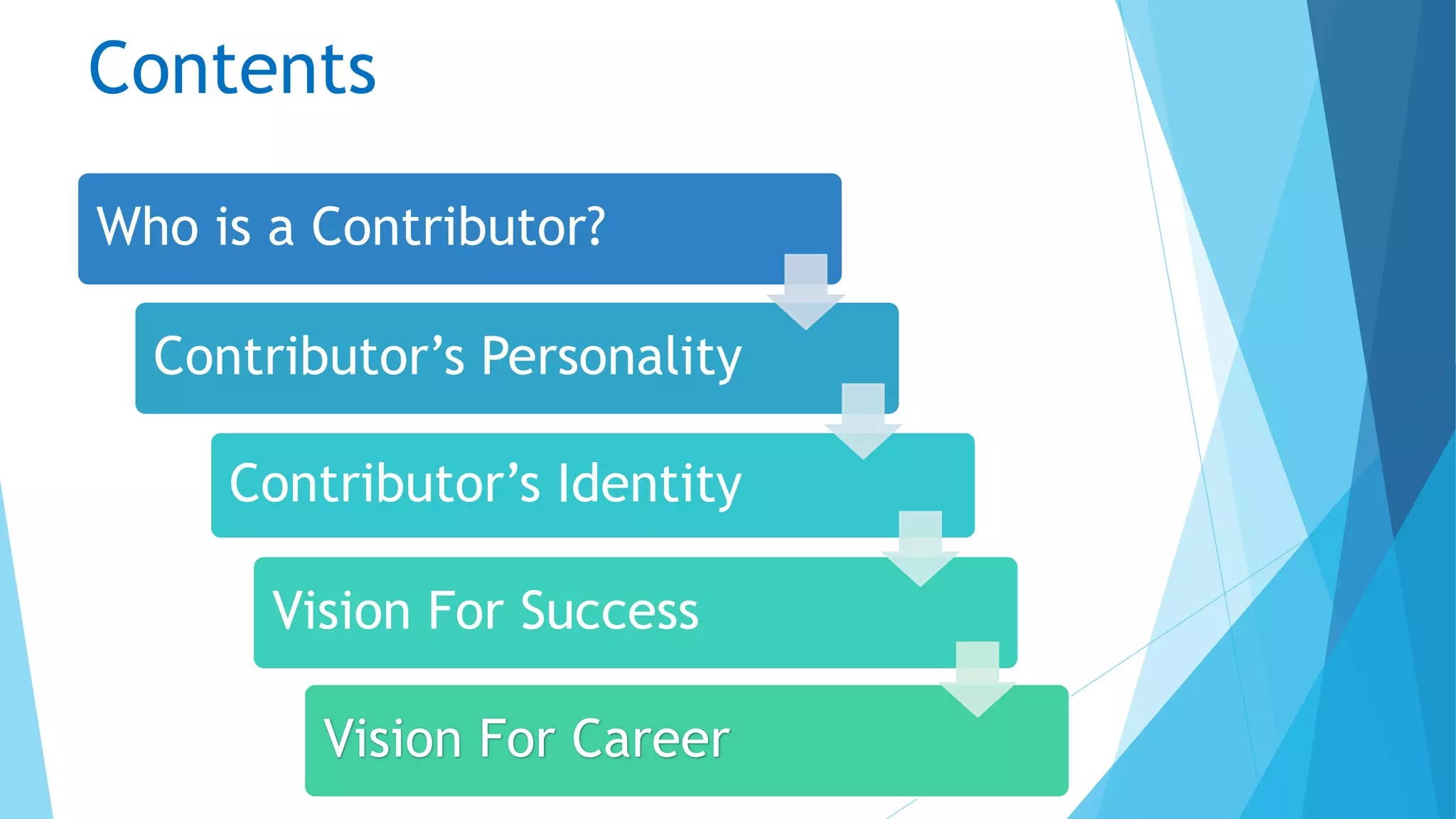
Who is a Contributor?
Contributor’s Personality
Contributor’s Identity
Vision For Success
Vision For Career
Contents
Who is a contributor???
 Contributors have both Human Values as well as
Functional Effectiveness.
 By Contributor, we mean someone who keeps the
Goals of the Organization at the centre and still
remains Creative.
 Leadership is a subset of Contribution.
 A Contributor is Outcome Oriented.
The contributors identity
 Identity is a term which needs to be defined properly.
 Identity does not mean Name, Family Name, Fathers Name,
your achievements, your qualifications etc. though this too is
known as a type of identity, it is not a true contributors
identity.
 The contributors identity is their vision, their potential to
contribute, their urge to contribute and their eagerness to
take responsibilities.
 A true Contributor is identified by such values.
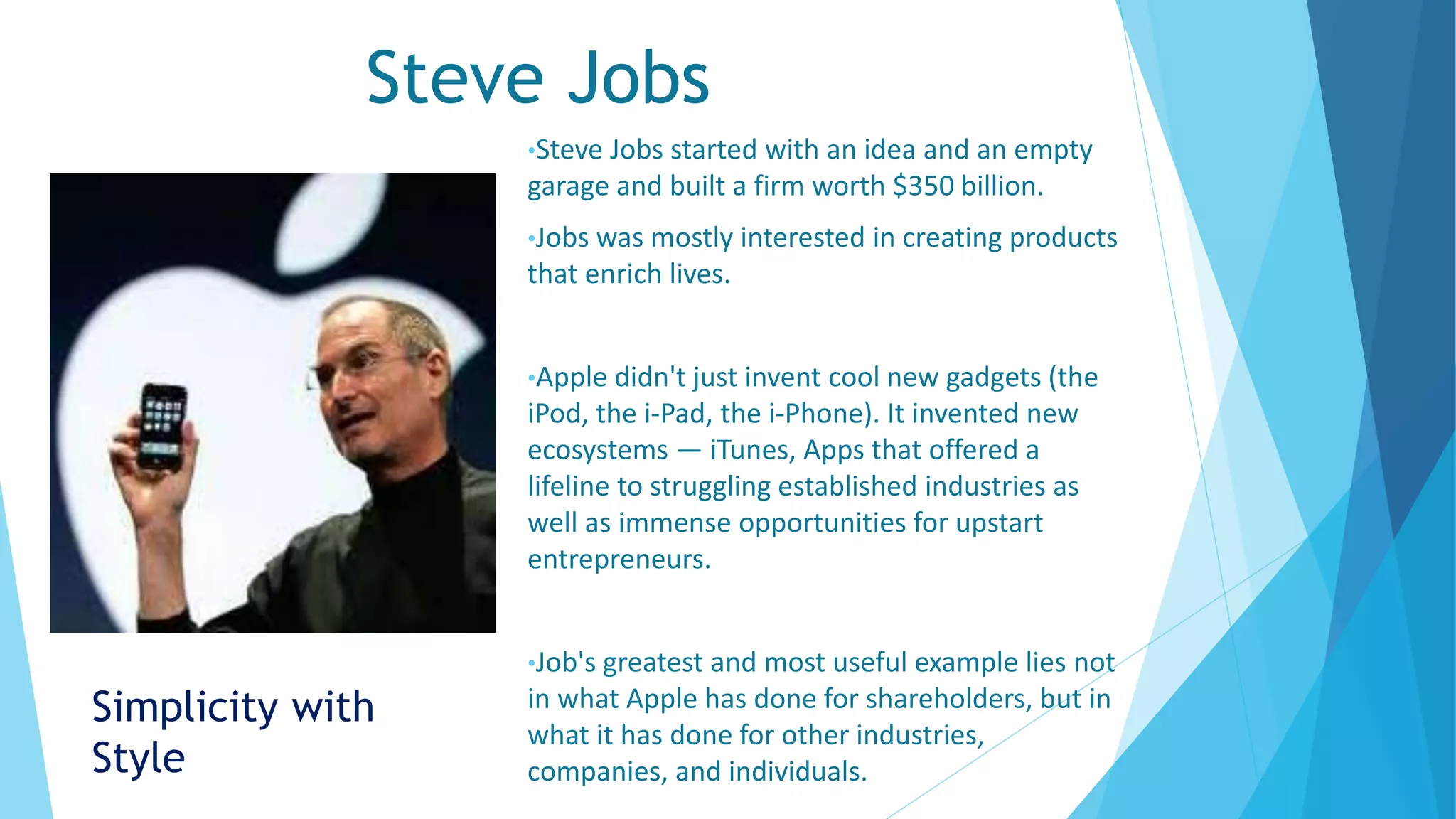
Steve Jobs
•Steve Jobs started with an idea and an empty
garage and built a firm worth $350 billion.
•Jobs was mostly interested in creating products
that enrich lives.
•Apple didn't just invent cool new gadgets (the
iPod, the i-Pad, the i-Phone). It invented new
ecosystems — iTunes, Apps that offered a
lifeline to struggling established industries as
well as immense opportunities for upstart
entrepreneurs.
•Job's greatest and most useful example lies not
in what Apple has done for shareholders, but in
what it has done for other industries,
companies, and individuals.
Simplicity with
Style
Their Quality of personality is
based on…..
 Performing work activities Well.
 Achieving the Goal.
 Being Ethical.
 Demonstrating human Concern.
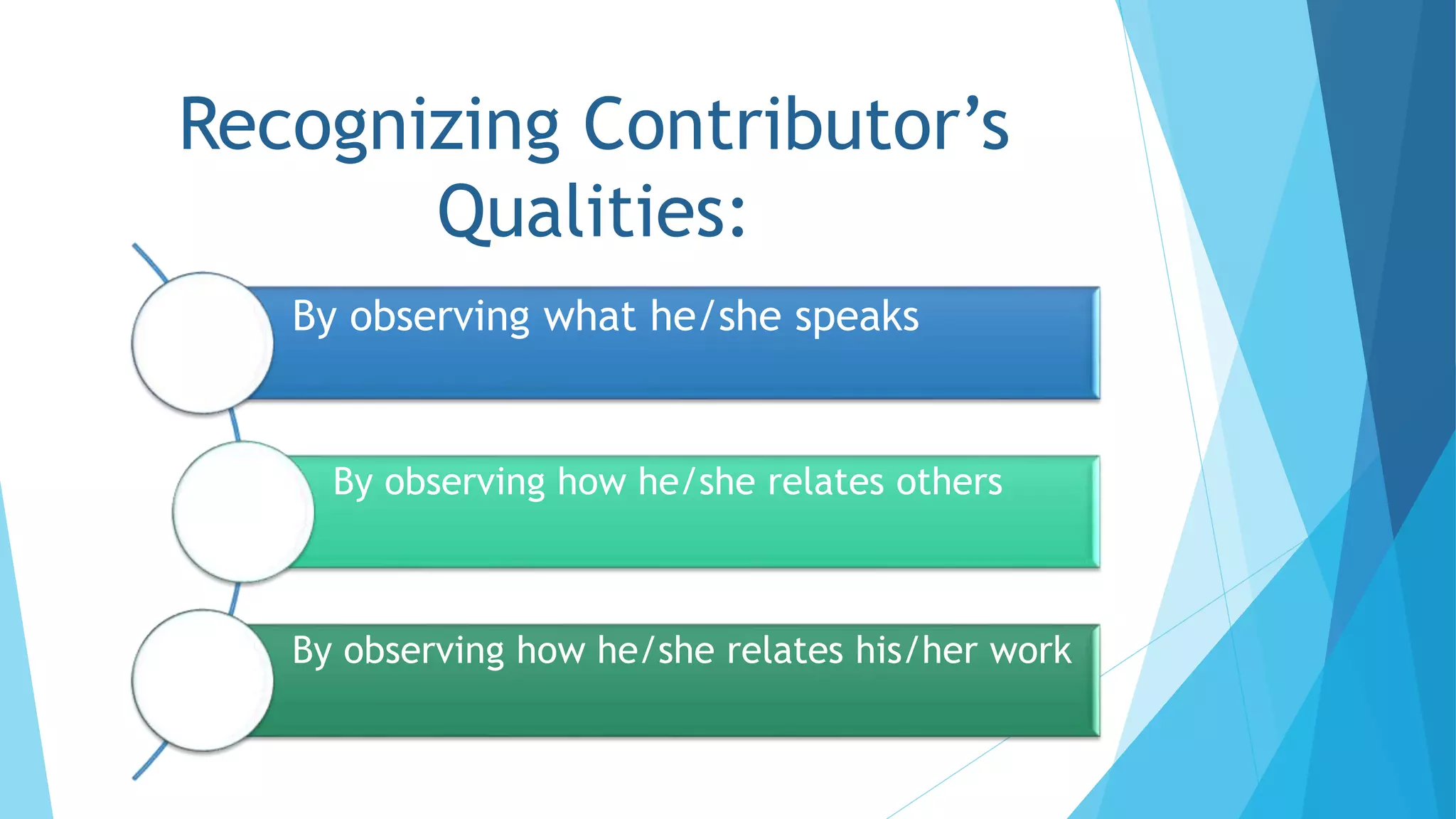
Recognizing Contributor’s
Qualities:
By observing what he/she speaks
By observing how he/she relates others
By observing how he/she relates his/her work
Types Of Identity:
Static Identity
Dynamic Identity
Types of Identity
The identity of a person is mainly divide into two
parts.
A. Static Identity : Such an identity is very short
seen, short lived and very shallow. The person with
such identity presents him self by his Position,
Awards, Qualification, Power, Contacts etc.
B. Dynamic Identity : This kind of Indentity is a
contributor identity which is very board, open and
person with such an identity presents himself by his
ability to contribute , to take responsibility etc.
Static Identity
 Non-contributors usually define themselves in terms of
what they have acquired in life (e.g. qualifications,
position, years of experience, etc.).
 This is a static identity, based on your past glories or past
failures.
 This static identity leaves you trapped in history
3
Dynamic Identity
 Contributors define themselves in terms of what they will
become or accomplish
 (e.g. capacity to deliver, commitment and ownership of the
organization’s purpose, etc.).
 This is a dynamic identity based on your “being” and
“becoming”.
 Such an identity lets you choose to live a better future.
Contributor’s Vision For Success:
 Contributors have a deeper and wider definition of success
than Non-Contributors.
 While Non-Contributors define success in terms of Material
Success, Achievement, External Impact, etc.
 Contributors are able to deepen and widen this definition of
success to include personal fulfilment, development of self-
esteem, ongoing development of personal capabilities, etc.
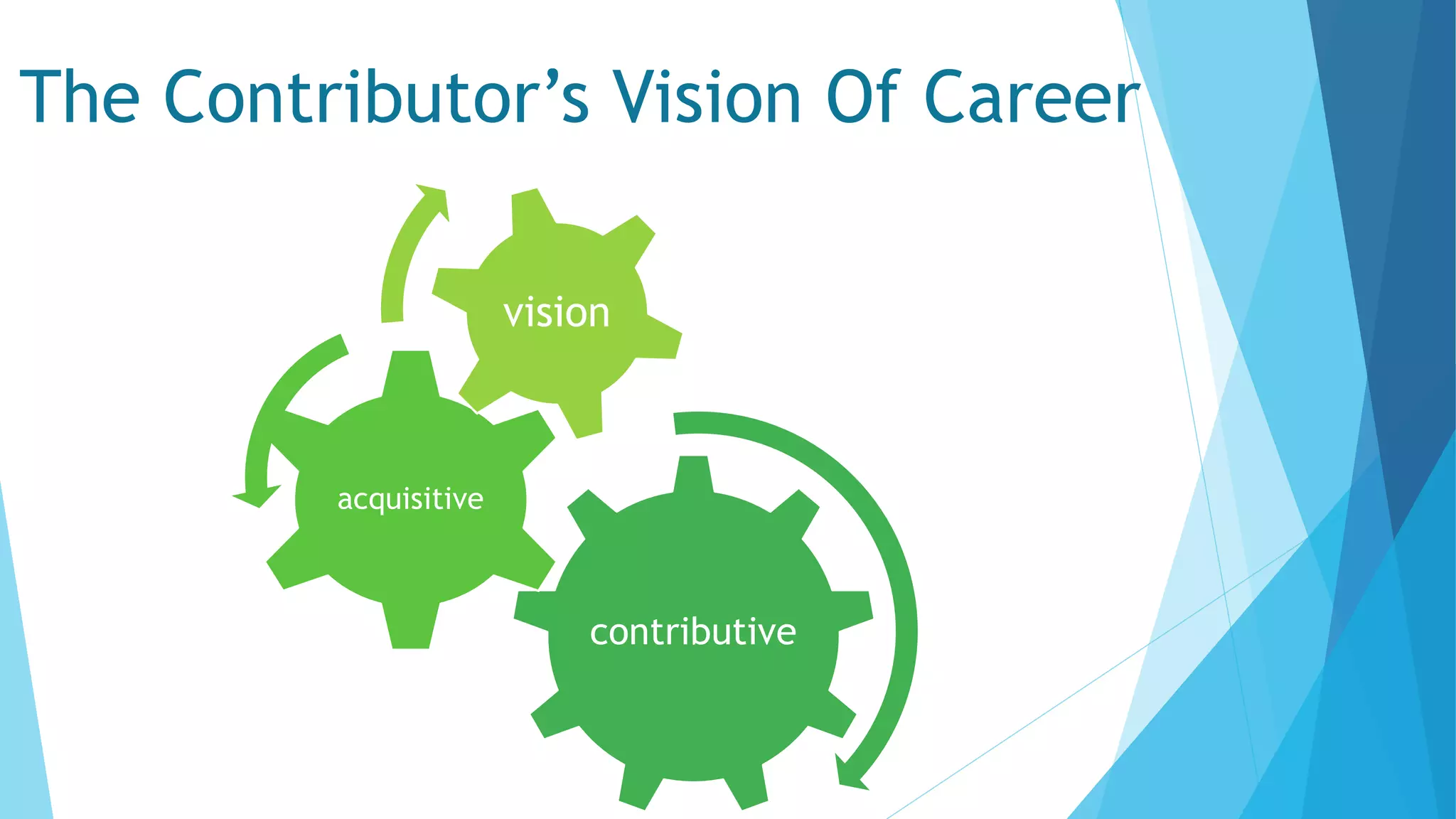
The Contributor’s Vision Of Career
contributive
acquisitive
vision
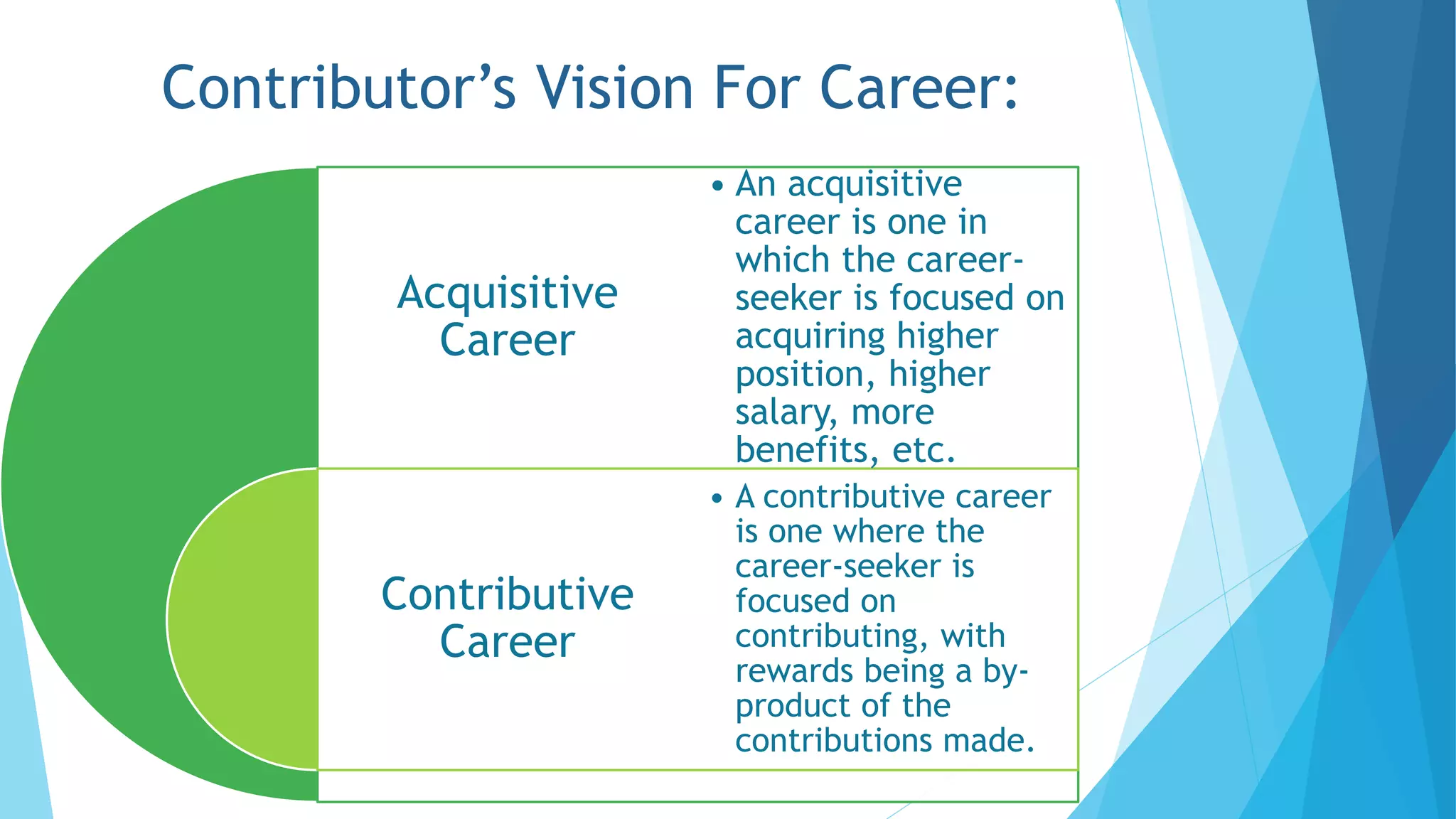
Contributor’s Vision For Career:
Acquisitive
Career
Contributive
Career
• An acquisitive
career is one in
which the career-
seeker is focused on
acquiring higher
position, higher
salary, more
benefits, etc.
• A contributive career
is one where the
career-seeker is
focused on
contributing, with
rewards being a by-
product of the
contributions made.
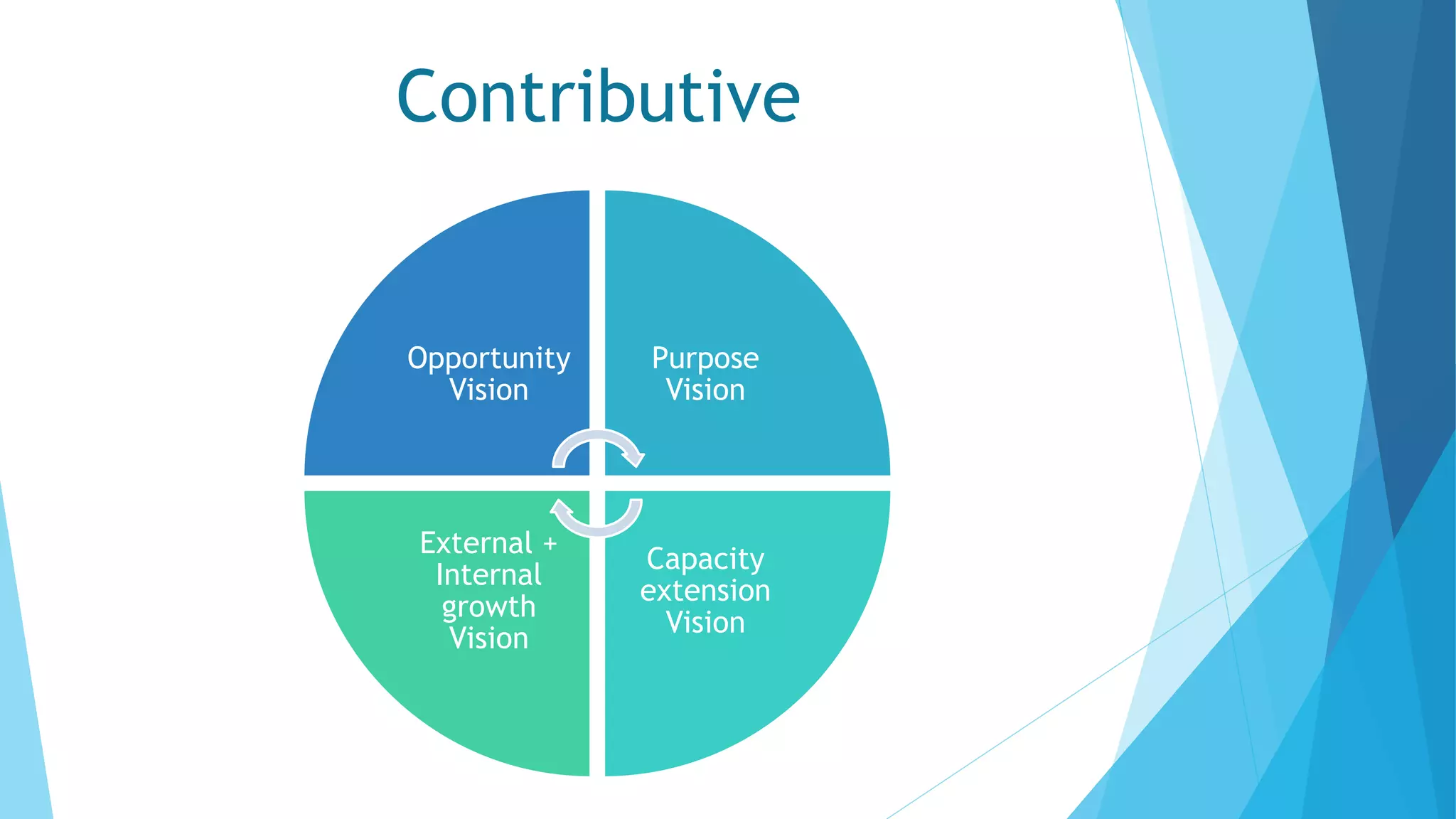
Contributive
Opportunity
Vision
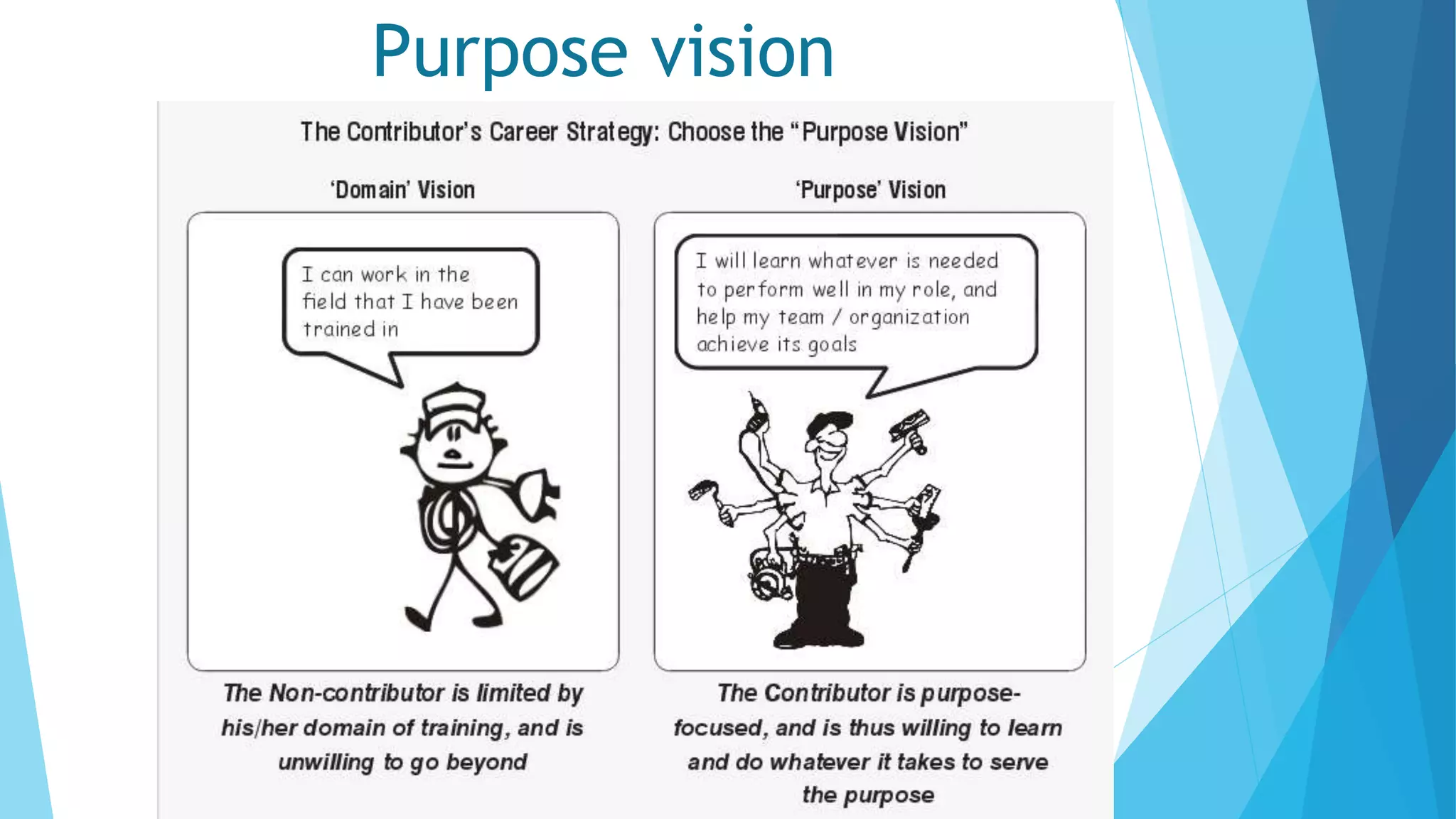
Purpose
Vision
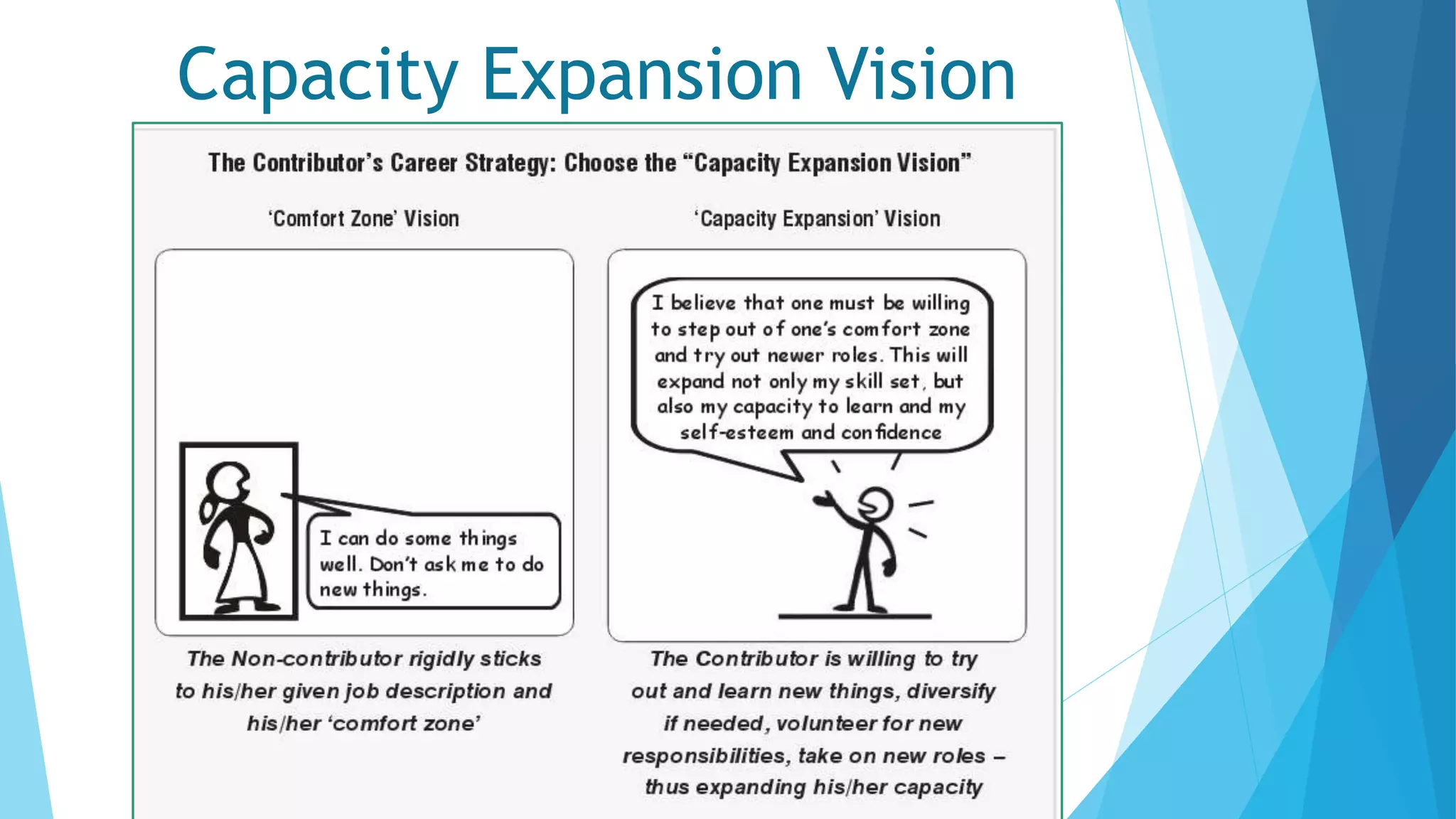
Capacity
extension
Vision
External +
Internal
growth
Vision
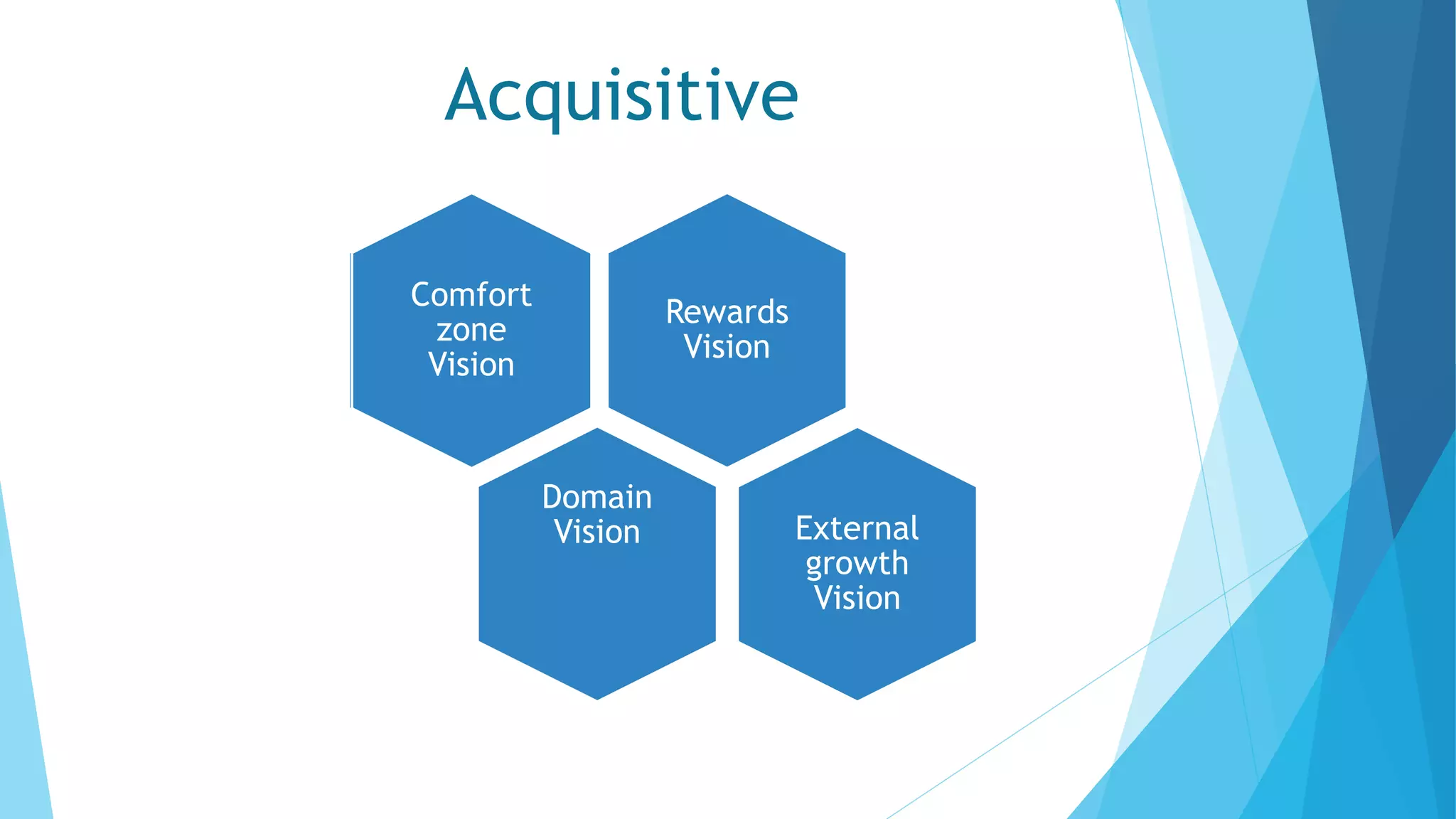
Acquisitive
Rewards
Vision
Domain
Vision
Comfort
zone
Vision
External
growth
Vision
Student-A is concerned only with
getting good marks to come first in
class and get new cycle from his
parents. He is marks oriented and so
he always ends up with chaos.
Student-B wants to know her own
capability and wants to learn her
course well so she worked hard for
exam. She got internal success as well
as external success too.
A B
Opportunity vision
Purpose vision
Capacity Expansion Vision
Contributor Career Strategies
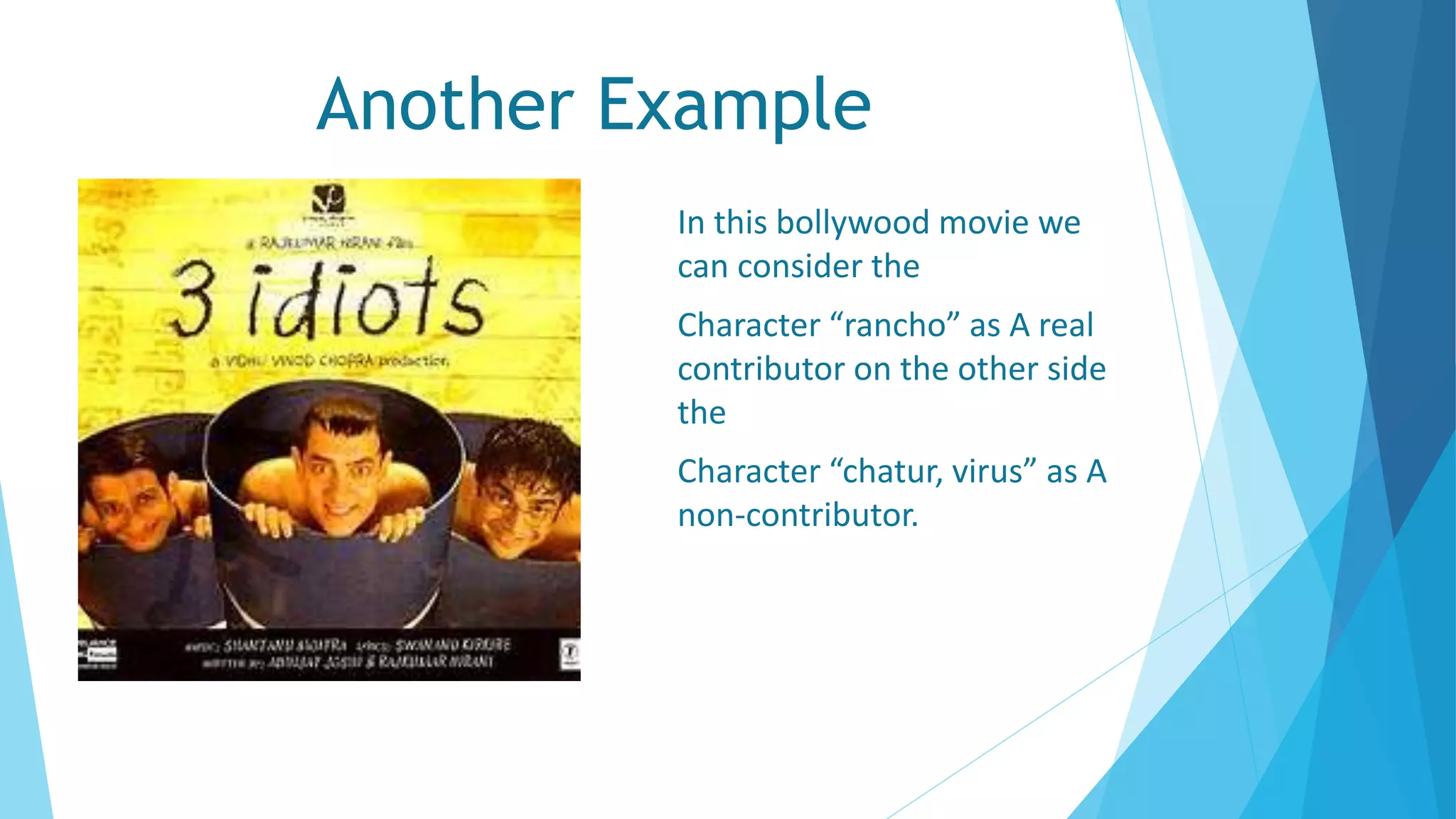
Another Example
In this bollywood movie we
can consider the
Character “rancho” as A real
contributor on the other side
the
Character “chatur, virus” as A
non-contributor.
Conclusion:
 Studying above all things we can conclude that if we
are trying our best to achieve internal success ,
external success will automatically come to us.
 And if on the other side we are just trying to get
only external success then our growth rate will
become very slow and will never reached to the top
position. Also we will be surrounded by limitations
which are created by us.
CPD CHAPTER ( 1 to 4)

CPD CHAPTER ( 1 to 4)

  • 1.
  • 2.
    Prepared By: 140280117001 • Aditya Vaishampayan 140280117014 •Tanishqa Jain 140280117020 • Abhishek Khoyani 140280117027 • Jolly Mishra 140280117038 • Ishan Patel 140280117044 • Dhruv Rahevar
  • 3.
    Goal Of ThisInteraction : To recognize “Contributor Qualities” in action and understand why contributors are valued so much in work place?
  • 4.
    Who is aContributor? Contributor’s Personality Contributor’s Identity Vision For Success Vision For Career Contents
  • 5.
    Who is acontributor???  Contributors have both Human Values as well as Functional Effectiveness.  By Contributor, we mean someone who keeps the Goals of the Organization at the centre and still remains Creative.  Leadership is a subset of Contribution.  A Contributor is Outcome Oriented.
  • 6.
    The contributors identity Identity is a term which needs to be defined properly.  Identity does not mean Name, Family Name, Fathers Name, your achievements, your qualifications etc. though this too is known as a type of identity, it is not a true contributors identity.  The contributors identity is their vision, their potential to contribute, their urge to contribute and their eagerness to take responsibilities.  A true Contributor is identified by such values.
  • 8.
    Steve Jobs •Steve Jobsstarted with an idea and an empty garage and built a firm worth $350 billion. •Jobs was mostly interested in creating products that enrich lives. •Apple didn't just invent cool new gadgets (the iPod, the i-Pad, the i-Phone). It invented new ecosystems — iTunes, Apps that offered a lifeline to struggling established industries as well as immense opportunities for upstart entrepreneurs. •Job's greatest and most useful example lies not in what Apple has done for shareholders, but in what it has done for other industries, companies, and individuals. Simplicity with Style
  • 9.
    Their Quality ofpersonality is based on…..  Performing work activities Well.  Achieving the Goal.  Being Ethical.  Demonstrating human Concern.
  • 10.
    Recognizing Contributor’s Qualities: By observingwhat he/she speaks By observing how he/she relates others By observing how he/she relates his/her work
  • 11.
    Types Of Identity: StaticIdentity Dynamic Identity
  • 12.
    Types of Identity Theidentity of a person is mainly divide into two parts. A. Static Identity : Such an identity is very short seen, short lived and very shallow. The person with such identity presents him self by his Position, Awards, Qualification, Power, Contacts etc. B. Dynamic Identity : This kind of Indentity is a contributor identity which is very board, open and person with such an identity presents himself by his ability to contribute , to take responsibility etc.
  • 13.
    Static Identity  Non-contributorsusually define themselves in terms of what they have acquired in life (e.g. qualifications, position, years of experience, etc.).  This is a static identity, based on your past glories or past failures.  This static identity leaves you trapped in history 3
  • 14.
    Dynamic Identity  Contributorsdefine themselves in terms of what they will become or accomplish  (e.g. capacity to deliver, commitment and ownership of the organization’s purpose, etc.).  This is a dynamic identity based on your “being” and “becoming”.  Such an identity lets you choose to live a better future.
  • 15.
    Contributor’s Vision ForSuccess:  Contributors have a deeper and wider definition of success than Non-Contributors.  While Non-Contributors define success in terms of Material Success, Achievement, External Impact, etc.  Contributors are able to deepen and widen this definition of success to include personal fulfilment, development of self- esteem, ongoing development of personal capabilities, etc.
  • 16.
    The Contributor’s VisionOf Career contributive acquisitive vision
  • 17.
    Contributor’s Vision ForCareer: Acquisitive Career Contributive Career • An acquisitive career is one in which the career- seeker is focused on acquiring higher position, higher salary, more benefits, etc. • A contributive career is one where the career-seeker is focused on contributing, with rewards being a by- product of the contributions made.
  • 18.
  • 19.
  • 20.
    Student-A is concernedonly with getting good marks to come first in class and get new cycle from his parents. He is marks oriented and so he always ends up with chaos. Student-B wants to know her own capability and wants to learn her course well so she worked hard for exam. She got internal success as well as external success too. A B
  • 21.
  • 22.
  • 23.
  • 24.
  • 25.
    Another Example In thisbollywood movie we can consider the Character “rancho” as A real contributor on the other side the Character “chatur, virus” as A non-contributor.
  • 27.
    Conclusion:  Studying aboveall things we can conclude that if we are trying our best to achieve internal success , external success will automatically come to us.  And if on the other side we are just trying to get only external success then our growth rate will become very slow and will never reached to the top position. Also we will be surrounded by limitations which are created by us.