The lime green ribbon cancer milestones and
the management guidelines
Noha El Baghdady
Outline
Hodgkin Lymphoma
I. Definition
II. Epidemiology
III. Risk factors
IV. Signs & Symptoms
V. Diagnosis
VI. Classification
VII. Treatment
Non- Hodgkin Lymphoma
I. Overview
II. Epidemiology
III. Etiology
IV. Classification
V. Follicular Lymphoma
VI. DLBCL
VII. Burkett lymphoma
VIII. Cutaneous cell lymphoma
IX. Peripheral T cell lymphoma
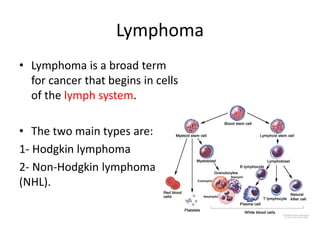
Lymphoma
• Lymphoma is a broad term
for cancer that begins in cells
of the lymph system.
• The two main types are:
1- Hodgkin lymphoma
2- Non-Hodgkin lymphoma
(NHL).
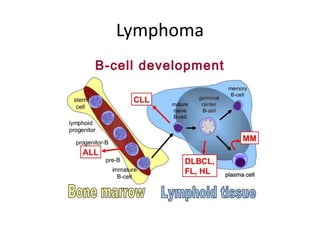
Lymphoma
Hodgkin Lymphoma(HL)
• HL most frequently
presents in lymph node
groups above the
diaphragm and/or in
mediastinal lymph
nodes.
Epidemiology
• Uncommon malignancy
in adults.
• Estimated new cases
and deaths from HL in
the United States in
2019:
• New cases: 8,110.
• Deaths: 1,000.
Risk Factors
• Early adulthood (aged 20–39 years) (most often) or
late adulthood (aged 65 years and older) (less
often).
• Male Gender.
• Having a previous infection with the Epstein-Barr
virus in the teenage years or early childhood.
• Having a first-degree relative with HL.
Signs and Symptoms
• These and other signs and symptoms
may be caused by adult HL or by
other conditions
• Painless, swollen lymph nodes in the
neck, axilla, or inguinal area.
• Fever
• Night sweats.
• Unexplained Weight loss of 10% or
more of baseline weight in the
previous 6 months.
• Pruritus, especially after bathing
• Fatigue.
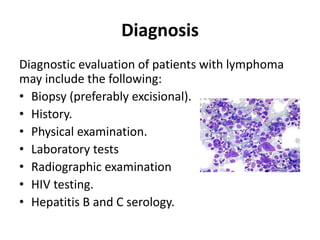
Diagnosis
Diagnostic evaluation of patients with lymphoma
may include the following:
• Biopsy (preferably excisional).
• History.
• Physical examination.
• Laboratory tests
• Radiographic examination
• HIV testing.
• Hepatitis B and C serology.
Hodgkin Lymphoma
The goal of treatment = CURE FOR ALL
PATIENTS.
Hodgkin Lymphoma
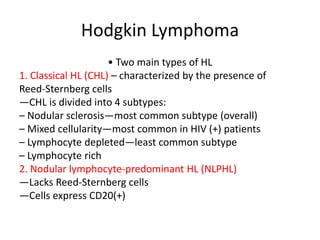
• Two main types of HL
1. Classical HL (CHL) – characterized by the presence of
Reed‐Sternberg cells
—CHL is divided into 4 subtypes:
– Nodular sclerosis—most common subtype (overall)
– Mixed cellularity—most common in HIV (+) patients
– Lymphocyte depleted—least common subtype
– Lymphocyte rich
2. Nodular lymphocyte‐predominant HL (NLPHL)
—Lacks Reed‐Sternberg cells
—Cells express CD20(+)
Hodgkin Lymphoma
Classical HL (CHL)
Treatment of CHL
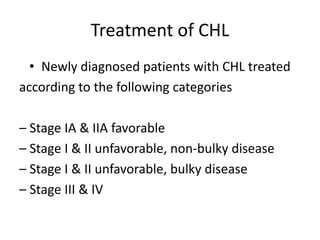
• Newly diagnosed patients with CHL treated
according to the following categories
– Stage IA & IIA favorable
– Stage I & II unfavorable, non‐bulky disease
– Stage I & II unfavorable, bulky disease
– Stage III & IV
Favorable and Unfavorable disease
• NCCN unfavorable risk factors:
1- Bulky mediastinal or >10 cm
disease
2- B symptoms
3- ESR ≥50 OR ESR ≥30 with B
symptoms
4- >3 nodal sites of disease.
B Symptoms
• All stages of adult HL can be subclassified into A and B
categories:
“B for those with defined general symptoms (described
below) and A for those without B symptoms.”
 The B symptoms
• Unexplained weight loss (more than 10% of body
weight in the 6 months before diagnosis).
• Unexplained fever with temperatures above 38°C.
• Drenching and recurrent night sweats.
The most-significant B symptoms are fevers and weight
loss.
Treatment Overview of CHL
• Treatment duration dependent upon stage and
size
– Stage IA & IIA favorable
—ABVD x 2 cycles + 20 Gy involved site
radiotherapy (ISRT)
– Stage I & II unfavorable, non‐bulky disease
—ABVD x 4 – 6 cycles ± ISRT
— ABVD alone or alternating with MOPP.
Treatment Overview of CHL
– Stage I & II unfavorable, bulky disease
—ABVD x 4 – 6 cycles + 30 Gy ISRT
–Chemotherapy alone is not recommended
The difference between stage I & II bulky versus
non‐bulky is that in the non‐bulky group, patients
can receive chemotherapy alone if PET scan is
negative
– Stage III & IV
—ABVD x 6 cycles ± ISRT
Protocols
• ABVD (doxorubicin, bleomycin, vinblastine,
and dacarbazine)
• Stanford V (doxorubicin, vinblastine,
mechlorethamine, etoposide, vincristine,
bleomycin, and prednisone)
• Escalated BEACOPP (bleomycin, etoposide,
doxorubicin, cyclophosphamide, vincristine,
procarbazine, and prednisone)
ABVD Regimen
• DOXOrubicin 25 mg /m² IV Days 1 & 15
• Bleomycin 10 units /m² IV Days 1 & 15
• VinBLAStine 6 mg /m² IV Days 1 & 15
• Dacarbazine 375 mg /m² IV Days 1 & 15
Repeated every 28 days
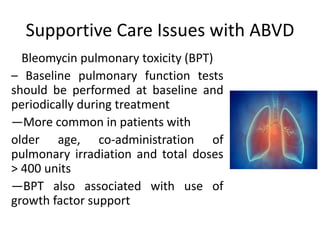
Supportive Care Issues with ABVD
Bleomycin pulmonary toxicity (BPT)
– Baseline pulmonary function tests
should be performed at baseline and
periodically during treatment
—More common in patients with
older age, co‐administration of
pulmonary irradiation and total doses
> 400 units
—BPT also associated with use of
growth factor support
Supportive Care Issues with ABVD
– Neutropenia is not an
indication for reduction in dose
intensity
— DOXOrubicin and vinblastine
should be adjusted according
to the liver function
— Bleomycin should be
adjusted according to the renal
functions
Extravasations
Anthracycline extravasations are most severe
• Apply cold or warm compresses
– Cold for anthracyclines
• Dexrazoxane is indicated
Relapsed/Refractory CHL
Treatment goal = CURE
• Relapsed disease is broken down into the
following categories:
– Second line chemotherapy + autologous HSCT
– Second line chemotherapy only (HSCT
contraindicated)
Relapsed/Refractory CHL
• Chemotherapy regimens include any of the following, as none have
emerged as preferred regimens
Brentuximab vedotin alone or in combination with the second-line
regimens below
• DHAP (dexamethasone, cisplatin, high-dose cytarabine)
• ESHAP (etoposide, methylprednisolone, high-dose cytarabine,
cisplatin)
• Gemcitabine/bendamustine/vinorelbine
• GVD (gemcitabine, vinorelbine, liposomal doxorubicin)
• ICE (ifosfamide, carboplatin, etoposide)
• IGEV (ifosfamide, gemcitabine, vinorelbine)
Bendamustine
- Single agent therapy
Relapsed CHL
Brentuximab Vedotin (Adcetris ®)
Administration
• DO NOT administer as an IV push or bolus.
• Reconstitute each 50 mg vial with 10.5 mL of SWFI to
yield a single-use 5 mg/mL solution.
• Gently swirl the vial to aid dissolution; do not shake
after reconstitution
• Add to an infusion bag containing at least 100ml
volume to achieve a final concentration of 0.4-
1.8 mg/mL and use within 24 hours.
• Can be diluted into normal saline, 5% dextrose or
lactated ringer's injection.
• Infuse IV over 30 min.
Interactions
• CYP3A4 inducers ● CYP3A4 inhibitors
• CYP3A4 inducers (i.e. phenytoin, rifampin, dexamethasone, carbamazepine,phenobarbital, St.
↓ exposure to MMAE (up to 46%) ↑ metabolism of MMAE Caution; monitor for efficacy
• CYP3A4 inhibitors (i.e. ketoconazole, clarithromycin, ritonavir, fruit or juice from
grapefruit, Seville oranges or starfruit)
Hodgkin Lymphoma
Nodular Lymphocyte‐Predominant
HD (NLPHD)
Nodular Lymphocyte‐Predominant HD
• No preferred chemotherapy regimen exists
• ABVD is often used based on data with CHL
• Consistently express the CD20 antigen ‐
• Rituximab can be considered as single‐agent
therapy or in combination with multidrug
chemotherapy regimens
Non-Hodgkin lymphomas (NHLs)
Tumors originating from
lymphoid tissues, mainly
of lymph nodes.
(originating in B-lymphocytes,
T-lymphocytes or natural killer
cells (NK))
Epidemiology
Incidence
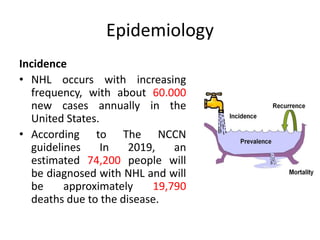
• NHL occurs with increasing
frequency, with about 60.000
new cases annually in the
United States.
• According to The NCCN
guidelines In 2019, an
estimated 74,200 people will
be diagnosed with NHL and will
be approximately 19,790
deaths due to the disease.
Etiology
1- Pathogens (Infections).
2- Immunodeficiency or
immune dysregulation.
3- Treatment related.
4- Environmental factors
(Toxins).
5- genetics (Chromosomal
translocations).
WHO / Revised European American Lymphoma
( REAL) Classification
B-cell lymphomas( 80% - 85%) T-cell lymphomas (15% - 20%)
• Diffuse large B-cell lymphoma
• Follicular lymphoma
• Chronic lymphocytic leukemia /small
lymphocytic lymphoma
• Mantle cell lymphoma
• Marginal zone B-cell lymphomas
• Burkitt lymphoma
• Lymphoplasmacytic lymphoma
(Waldenstrom macroglobulinemia)
• Hairy cell leukemia
• Primary central nervous system (CNS)
lymphoma
• Precursor T-lymphoblastic
lymphoma/leukemia
• Peripheral T-cell lymphomas
• Cutaneous T-cell lymphomas (mycosis
fungoides, Sezary syndrome, and others)
• Adult T-cell leukemia/lymphoma
• Angioimmunoblastic T-cell lymphoma
• Extranodal natural killer/T-cell
lymphoma, nasal type
• Enteropathy-associated intestinal T-cell
lymphoma (EATL)
• Anaplastic large cell lymphoma (ALCL)
• Peripheral T-cell lymphoma, unspecified
Non-Hodgkin lymphomas (NHLs)
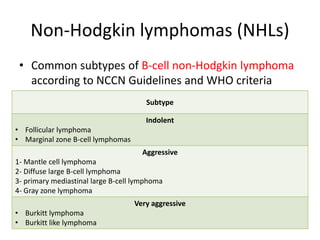
• Common subtypes of B-cell non-Hodgkin lymphoma
according to NCCN Guidelines and WHO criteria
Subtype
Indolent
• Follicular lymphoma
• Marginal zone B-cell lymphomas
Aggressive
1- Mantle cell lymphoma
2- Diffuse large B-cell lymphoma
3- primary mediastinal large B-cell lymphoma
4- Gray zone lymphoma
Very aggressive
• Burkitt lymphoma
• Burkitt like lymphoma
Non-Hodgkin lymphomas (NHLs)
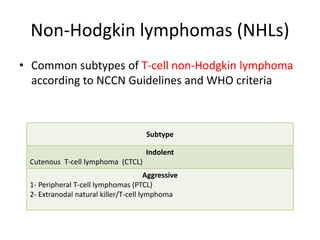
• Common subtypes of T-cell non-Hodgkin lymphoma
according to NCCN Guidelines and WHO criteria
Subtype
Indolent
Cutenous T-cell lymphoma (CTCL)
Aggressive
1- Peripheral T-cell lymphomas (PTCL)
2- Extranodal natural killer/T-cell lymphoma
The treatment of non-Hodgkin lymphoma (NHL)
varies greatly, depending on the following factors
• Tumor stage
• Phenotype (B-cell, T-cell or natural killer (NK)
cell/null-cell)
• Histology (i.e: low, intermediate, or high-grade)
• Symptoms
• Performance status (PS)
• Patient age
• Comorbidities
1- B-Cell NHL
A. Indolent
I. Follicular Lymphoma
Indolent or Low‐grade NHL: FL
• The most common indolent NHL & the second
most common NHL
• Accounts for ~22% of all newly diagnosed cases
• Median age of diagnosis: 60 years old
Goal of therapy = palliation
• Few patients achieve cure with therapy
regardless of stage
• Many patients go years without needing
treatment
Indolent or Low‐grade NHL: FL
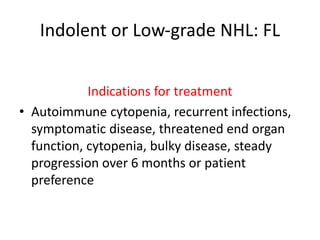
Indications for treatment
• Autoimmune cytopenia, recurrent infections,
symptomatic disease, threatened end organ
function, cytopenia, bulky disease, steady
progression over 6 months or patient
preference
Stage I & II, non‐bulky (Grade 1 – 2)
• Radiotherapy preferred
• Watch and wait may be appropriate in selected
cases.
When patient has indications for treatment (in
order of preference):
1. BR (Category 1)
2. R-CHOP (Category 1)
3. R-CVP (Category 1)
4. Rituximab x 4 weekly doses
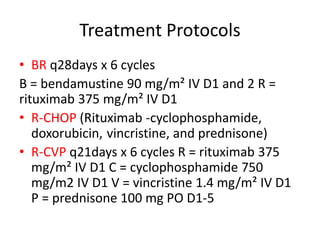
Treatment Protocols
• BR q28days x 6 cycles
B = bendamustine 90 mg/m² IV D1 and 2 R =
rituximab 375 mg/m² IV D1
• R-CHOP (Rituximab -cyclophosphamide,
doxorubicin, vincristine, and prednisone)
• R-CVP q21days x 6 cycles R = rituximab 375
mg/m² IV D1 C = cyclophosphamide 750
mg/m2 IV D1 V = vincristine 1.4 mg/m² IV D1
P = prednisone 100 mg PO D1-5
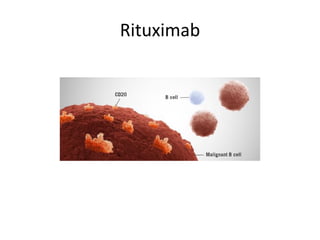
Rituximab
Preparation
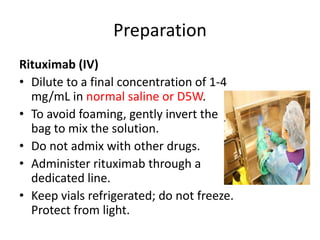
Rituximab (IV)
• Dilute to a final concentration of 1-4
mg/mL in normal saline or D5W.
• To avoid foaming, gently invert the
bag to mix the solution.
• Do not admix with other drugs.
• Administer rituximab through a
dedicated line.
• Keep vials refrigerated; do not freeze.
Protect from light.
Administration
Infusion rates:
• Consider a slower infusion rate or split dosing where
bulky disease present or WBC > 25 x 10⁹/L.
First infusion:
• Initial rate of 50 mg/h, then escalate rate in 50 mg/h
increments every 30 minutes, to a maximum of 400
mg/h (about 4.25 hours in total).
Subsequent infusions:
• Initial rate of 100 mg/h, then escalate rate in 100
mg/h increments every 30 minutes, to a maximum
of 400 mg/h as tolerated (about 3.25 hours in total).
• Published data suggest that a 90 minute infusion
(20% of the dose in the first 30 min then the
remaining 80% over 60 min)
Practice Tips
Rituximab & Hepatitis B Reactivation
• Baseline hepatitis panel
• Due to the possibility of viral reactivation, hepatitis B surface
antigen (HBsAg) and hepatitis B core antibody (HBcAb) should
performed on all patients receiving rituximab or other anti-CD20
monoclonal antibodies.
• Prophylactic antiviral therapy is recommended for any patient who
is HBsAg or HBcAb positive and receiving anti-lymphoma therapy,
regardless of viral load or presence of clinical manifestation of HBV
reactivation.
• Entecavir is preferred over lamivudine due to concerns of resistance
• Monitor viral load via PCR
• Continue prophylaxis for up to 12 months after treatment
completed
Bendamustine
Bendamustine
• Bendamustine is a mechlorethamine
derivative containing a purine-like
benzimidazole ring and is an alkylating agent.
Contraindications
• Patients with CrCl < 40ml/min
• moderate/severe hepatic impairment
• Sever infections
Preparation
• Bendamustine Injection: 100 mg
• DO NOT administer as an IV push or
bolus.
• Dilute with 20 ml SWFI to a final
concentration of 0.2 - 0.6 mg/mL in 500
mL infusion bag of 0.9% sodium
chloride or 2.5% dextrose/0.45%
sodium chloride.
• Reconstituted solution must be
transferred to infusion bag within 30
minutes of reconstitution.
• CLL: 30 min infusion, NHL: 60 min infusion
Interactions
• CYP1A2 inhibitors (e.g. ciprofloxacin)
• CYP1A2 inducers (e.g. omeprazole, smoking)
Stage II, Bulky ‐Stage III, IV (Grade 1or 2)
• Indicated for treatment
• Treatment Protocols:
1- BR
2- R-CHOP
3- R-CVP
Treatment Protocols
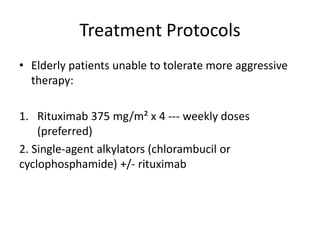
• Elderly patients unable to tolerate more aggressive
therapy:
1. Rituximab 375 mg/m² x 4 --- weekly doses
(preferred)
2. Single-agent alkylators (chlorambucil or
cyclophosphamide) +/- rituximab
Stage I ‐ IV (Grade 3A or 3B)
R- CHOP (cyclophosphamide, doxorubicin,
vincristine, and prednisone)
R- CHOP q21days (6-8 cycles)
-Rituximab 375 mg/m² D1
C = cyclophosphamide 750 mg/m² IV D1
H = doxorubicin 50 mg/m² IV D1
O = vincristine 1.4 mg/m² IV D1 (cap at 2mg)
P = prednisone 100 mg PO D1-5
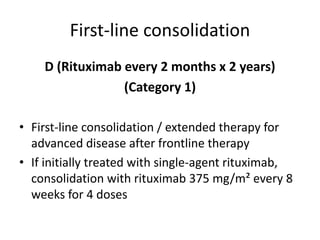
First-line consolidation
D (Rituximab every 2 months x 2 years)
(Category 1)
• First-line consolidation / extended therapy for
advanced disease after frontline therapy
• If initially treated with single-agent rituximab,
consolidation with rituximab 375 mg/m² every 8
weeks for 4 doses
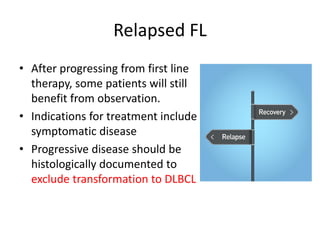
Relapsed FL
• After progressing from first line
therapy, some patients will still
benefit from observation.
• Indications for treatment include
symptomatic disease
• Progressive disease should be
histologically documented to
exclude transformation to DLBCL
1- B-Cell NHL
B. Aggressive
I. Diffuse Large B‐cell Lymphoma
Diffuse Large B‐cell Lymphoma
• Most common lymphoid neoplasm in adults
• Approximately 30% of all NHLs diagnosed annually
• The goal of treatment = CURE
• Survival is months if left untreated
• Newly diagnosed patients treated according to
the following categories:
– Stage I & II, non‐bulky disease
– Stage I & II, bulky disease
– Stage III & IV disease
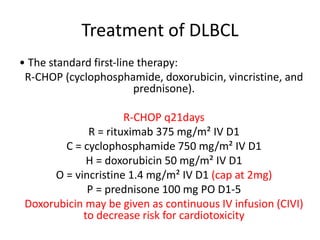
Treatment of DLBCL
• The standard first‐line therapy:
R-CHOP (cyclophosphamide, doxorubicin, vincristine, and
prednisone).
R-CHOP q21days
R = rituximab 375 mg/m² IV D1
C = cyclophosphamide 750 mg/m² IV D1
H = doxorubicin 50 mg/m² IV D1
O = vincristine 1.4 mg/m² IV D1 (cap at 2mg)
P = prednisone 100 mg PO D1-5
Doxorubicin may be given as continuous IV infusion (CIVI)
to decrease risk for cardiotoxicity
Treatment Overview of DLBCL
• Treatment duration dependent upon stage and
size
Stage I & II, non‐bulky disease
—R‐CHOP x 3 cycles + radiation therapy (RT)
Stage I & II, bulky disease
—R‐CHOP x 6 cycles ± RT
Stage III & IV disease
—R‐CHOP x 6 cycles ± RT
• No role for maintenance rituximab
DLBCL in the Elderly
Poor LVEF or frail
• R‐CEPP (Rituximab, cyclophosphamide, etoposide, procarbazine and
prednisone)
• R‐CDOP (R- CEOP = rituximab, cyclophosphamide, etoposide, vincristine and
prednisone)
• DA‐R‐EPOCH (Dose adjusted) (rituximab, etoposide, prednisone, vincristine,
cyclophosphamide and doxorubicin)
(doxorubicin maintained at base dose)
• R‐CEOP (rituximab, cyclophosphamide, etoposide, vincristine and
prednisone )
• R‐mini‐CHOP
Patients >80 years of age with co‐morbidities
• R‐mini‐CHOP
• R‐GCVP (rituximab, gemcitabine, cyclophosphamide, vincristine and
prednisolone. )
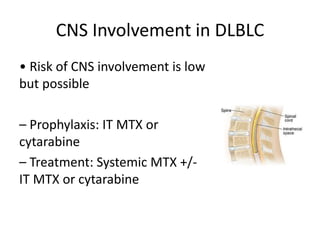
CNS Involvement in DLBLC
• Risk of CNS involvement is low
but possible
– Prophylaxis: IT MTX or
cytarabine
– Treatment: Systemic MTX +/‐
IT MTX or cytarabine
Relapsed DLBCL
• 40% of patients still experience early treatment failure
– Defined as refractory disease or relapse after
initial response to chemotherapy
—Particularly after treatment with R‐CHOP
• The goal of treatment = CURE
– Chemotherapy + autologous hematopoietic
stem cell transplant (HSCT)
– Chemotherapy alone
(Chemotherapy regimens include R‐Gem/Ox, B‐R,
lenalidomide + rituximab)
1- B- Cell NHL
C. Very Aggressive
I. Burkitt Lymphoma
Burkitt Lymphoma
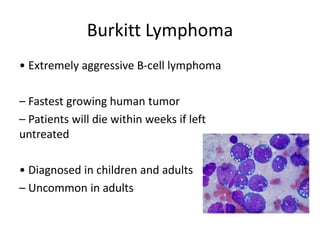
• Extremely aggressive B‐cell lymphoma
– Fastest growing human tumor
– Patients will die within weeks if left
untreated
• Diagnosed in children and adults
– Uncommon in adults
Treatment Overview of BL
Goal of treatment = CURE
CHOP or R‐CHOP is NOT ADEQUATE TREATMENT
• The difference between low-risk disease and high-risk disease is the
number of chemotherapy cycles that can be given.
• Treatment options include:
– CALGB 10002 regimen
– CODOX‐M +/‐ rituximab x 3 cycles
– DA‐R‐EPOCH (minimum of 3 cycles, with 1 additional cycle after CR)
– R‐HyperCVAD alternating with R‐Methotrexate/Ara‐C x 6 Cycles
All BL patient should receive intrathecal prophylaxis in addition to the specific
chemotherapy regimen
CODOX‐M +/‐ rituximab
• Day 1: Cyclophosphamide 800mg/m2 IV + doxorubicin 40mg/m2 IV
• Days 2–5: Cyclophosphamide 200mg/m2/day IV
• Days 1 and 3: Cytarabine 70mg intrathecally
• Days 1 and 8: Vincristine 1.5mg/m2 IV
• Day 10: Methotrexate 1,200mg/m2 IV over 1 hour, then 240mg/m2/hour
continuous IV infusion for the next 23 hours
• Day 11: Leucovorin 192mg/m2 IV 36 hours after initiation of MTX,
followed by leucovorin 12mg/m2 IV every 6 hours until MTX level <5 x10–
8 M
• Day 13: G-CSF 5µg/kg SC daily beginning 24 hours after initiation of
leucovorin until absolute granulocyte count ≥1 x 10⁹/L
• Day 15: Methotrexate 12mg intrathecally
• Day 16: Leucovorin 15mg orally given 24 hours after intrathecal MTX, ±
• Day 1: Rituximab 375mg/m2 IV.
• Repeat cycle every 21 days for 3 cycles.
Relapsed BL
• No definitive second‐line regimens exist
• Clinical trial preferred
• Limited data with:
– DA‐R‐EPOCH
– R‐IVAC
– R‐ICE
– R‐GDP
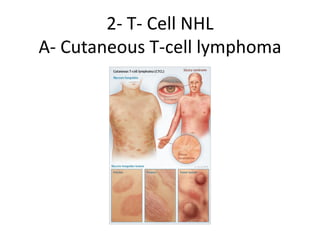
2- T- Cell NHL
A- Cutaneous T-cell lymphoma
Cutaneous T‐cell Lymphoma
• Early‐stage disease – skin directed therapies
– Topical corticosteroids, topical chemotherapy,
local radiation or topical retinoids
• Systemic therapies reserved for advanced
stages or failure of multiple skin‐directed
therapies
• The administration of sequential, single-agent
chemotherapy is preferred over combination
regimens.
Alemtuzumab(Cambath®)
• Anti-CD52 monoclonal antibody
• Escalate to 30 mg IV or subq 3 times per week
for up to 12 weeks (usually start with 3 mg for
dose 1, 10 mg for dose 2, 30 mg for dose 3.
• Toxicities: Cytopenias, infusion reactions,
infections (CMV), nausea, emesis, fatigue.
Supportive Care of CTCL
• Pruritis
– Topical moisturizers & emollients
– Systemic antihistamines, gabapentin
– Refractory symptoms: aprepitant, naloxone,
mirtazapine or SSRIs
• Infection prophylaxis (Staph aureus)
2- T- Cell NHL
B- Peripheral T-cell lymphoma
Peripheral T‐cell Lymphoma
• Arise from mature T‐cells of
post‐thymic origin
• Relatively uncommon – 10% of
NHL cases
• Prognosis is poor compared to
B‐cell NHL
– Lower response rates and less
durable responses to standard
combination chemotherapy
Treatment: PTCL
• Anthracycline‐based chemotherapy is
backbone
– CHOP ± radiotherapy
– CHOEP‐21
– DA‐EPOCH
• Rituximab is not given – T‐cells are typically
not CD20 (+)
THANK YOU 

Lymphoma

  • 1.
    The lime greenribbon cancer milestones and the management guidelines Noha El Baghdady
  • 2.
    Outline Hodgkin Lymphoma I. Definition II.Epidemiology III. Risk factors IV. Signs & Symptoms V. Diagnosis VI. Classification VII. Treatment Non- Hodgkin Lymphoma I. Overview II. Epidemiology III. Etiology IV. Classification V. Follicular Lymphoma VI. DLBCL VII. Burkett lymphoma VIII. Cutaneous cell lymphoma IX. Peripheral T cell lymphoma
  • 3.
    Lymphoma • Lymphoma isa broad term for cancer that begins in cells of the lymph system. • The two main types are: 1- Hodgkin lymphoma 2- Non-Hodgkin lymphoma (NHL).
  • 4.
  • 5.
  • 6.
    Hodgkin Lymphoma(HL) • HLmost frequently presents in lymph node groups above the diaphragm and/or in mediastinal lymph nodes.
  • 7.
    Epidemiology • Uncommon malignancy inadults. • Estimated new cases and deaths from HL in the United States in 2019: • New cases: 8,110. • Deaths: 1,000.
  • 8.
    Risk Factors • Earlyadulthood (aged 20–39 years) (most often) or late adulthood (aged 65 years and older) (less often). • Male Gender. • Having a previous infection with the Epstein-Barr virus in the teenage years or early childhood. • Having a first-degree relative with HL.
  • 9.
    Signs and Symptoms •These and other signs and symptoms may be caused by adult HL or by other conditions • Painless, swollen lymph nodes in the neck, axilla, or inguinal area. • Fever • Night sweats. • Unexplained Weight loss of 10% or more of baseline weight in the previous 6 months. • Pruritus, especially after bathing • Fatigue.
  • 10.
    Diagnosis Diagnostic evaluation ofpatients with lymphoma may include the following: • Biopsy (preferably excisional). • History. • Physical examination. • Laboratory tests • Radiographic examination • HIV testing. • Hepatitis B and C serology.
  • 11.
    Hodgkin Lymphoma The goalof treatment = CURE FOR ALL PATIENTS.
  • 12.
    Hodgkin Lymphoma • Twomain types of HL 1. Classical HL (CHL) – characterized by the presence of Reed‐Sternberg cells —CHL is divided into 4 subtypes: – Nodular sclerosis—most common subtype (overall) – Mixed cellularity—most common in HIV (+) patients – Lymphocyte depleted—least common subtype – Lymphocyte rich 2. Nodular lymphocyte‐predominant HL (NLPHL) —Lacks Reed‐Sternberg cells —Cells express CD20(+)
  • 13.
  • 14.
    Treatment of CHL •Newly diagnosed patients with CHL treated according to the following categories – Stage IA & IIA favorable – Stage I & II unfavorable, non‐bulky disease – Stage I & II unfavorable, bulky disease – Stage III & IV
  • 15.
    Favorable and Unfavorabledisease • NCCN unfavorable risk factors: 1- Bulky mediastinal or >10 cm disease 2- B symptoms 3- ESR ≥50 OR ESR ≥30 with B symptoms 4- >3 nodal sites of disease.
  • 16.
    B Symptoms • Allstages of adult HL can be subclassified into A and B categories: “B for those with defined general symptoms (described below) and A for those without B symptoms.”  The B symptoms • Unexplained weight loss (more than 10% of body weight in the 6 months before diagnosis). • Unexplained fever with temperatures above 38°C. • Drenching and recurrent night sweats. The most-significant B symptoms are fevers and weight loss.
  • 17.
    Treatment Overview ofCHL • Treatment duration dependent upon stage and size – Stage IA & IIA favorable —ABVD x 2 cycles + 20 Gy involved site radiotherapy (ISRT) – Stage I & II unfavorable, non‐bulky disease —ABVD x 4 – 6 cycles ± ISRT — ABVD alone or alternating with MOPP.
  • 18.
    Treatment Overview ofCHL – Stage I & II unfavorable, bulky disease —ABVD x 4 – 6 cycles + 30 Gy ISRT –Chemotherapy alone is not recommended The difference between stage I & II bulky versus non‐bulky is that in the non‐bulky group, patients can receive chemotherapy alone if PET scan is negative – Stage III & IV —ABVD x 6 cycles ± ISRT
  • 19.
    Protocols • ABVD (doxorubicin,bleomycin, vinblastine, and dacarbazine) • Stanford V (doxorubicin, vinblastine, mechlorethamine, etoposide, vincristine, bleomycin, and prednisone) • Escalated BEACOPP (bleomycin, etoposide, doxorubicin, cyclophosphamide, vincristine, procarbazine, and prednisone)
  • 20.
    ABVD Regimen • DOXOrubicin25 mg /m² IV Days 1 & 15 • Bleomycin 10 units /m² IV Days 1 & 15 • VinBLAStine 6 mg /m² IV Days 1 & 15 • Dacarbazine 375 mg /m² IV Days 1 & 15 Repeated every 28 days
  • 21.
    Supportive Care Issueswith ABVD Bleomycin pulmonary toxicity (BPT) – Baseline pulmonary function tests should be performed at baseline and periodically during treatment —More common in patients with older age, co‐administration of pulmonary irradiation and total doses > 400 units —BPT also associated with use of growth factor support
  • 22.
    Supportive Care Issueswith ABVD – Neutropenia is not an indication for reduction in dose intensity — DOXOrubicin and vinblastine should be adjusted according to the liver function — Bleomycin should be adjusted according to the renal functions
  • 23.
    Extravasations Anthracycline extravasations aremost severe • Apply cold or warm compresses – Cold for anthracyclines • Dexrazoxane is indicated
  • 24.
    Relapsed/Refractory CHL Treatment goal= CURE • Relapsed disease is broken down into the following categories: – Second line chemotherapy + autologous HSCT – Second line chemotherapy only (HSCT contraindicated)
  • 25.
    Relapsed/Refractory CHL • Chemotherapyregimens include any of the following, as none have emerged as preferred regimens Brentuximab vedotin alone or in combination with the second-line regimens below • DHAP (dexamethasone, cisplatin, high-dose cytarabine) • ESHAP (etoposide, methylprednisolone, high-dose cytarabine, cisplatin) • Gemcitabine/bendamustine/vinorelbine • GVD (gemcitabine, vinorelbine, liposomal doxorubicin) • ICE (ifosfamide, carboplatin, etoposide) • IGEV (ifosfamide, gemcitabine, vinorelbine) Bendamustine - Single agent therapy
  • 26.
  • 27.
    Administration • DO NOTadminister as an IV push or bolus. • Reconstitute each 50 mg vial with 10.5 mL of SWFI to yield a single-use 5 mg/mL solution. • Gently swirl the vial to aid dissolution; do not shake after reconstitution • Add to an infusion bag containing at least 100ml volume to achieve a final concentration of 0.4- 1.8 mg/mL and use within 24 hours. • Can be diluted into normal saline, 5% dextrose or lactated ringer's injection. • Infuse IV over 30 min.
  • 28.
    Interactions • CYP3A4 inducers● CYP3A4 inhibitors • CYP3A4 inducers (i.e. phenytoin, rifampin, dexamethasone, carbamazepine,phenobarbital, St. ↓ exposure to MMAE (up to 46%) ↑ metabolism of MMAE Caution; monitor for efficacy • CYP3A4 inhibitors (i.e. ketoconazole, clarithromycin, ritonavir, fruit or juice from grapefruit, Seville oranges or starfruit)
  • 29.
  • 30.
    Nodular Lymphocyte‐Predominant HD •No preferred chemotherapy regimen exists • ABVD is often used based on data with CHL • Consistently express the CD20 antigen ‐ • Rituximab can be considered as single‐agent therapy or in combination with multidrug chemotherapy regimens
  • 31.
  • 32.
    Non-Hodgkin lymphomas (NHLs) Tumorsoriginating from lymphoid tissues, mainly of lymph nodes. (originating in B-lymphocytes, T-lymphocytes or natural killer cells (NK))
  • 33.
    Epidemiology Incidence • NHL occurswith increasing frequency, with about 60.000 new cases annually in the United States. • According to The NCCN guidelines In 2019, an estimated 74,200 people will be diagnosed with NHL and will be approximately 19,790 deaths due to the disease.
  • 34.
    Etiology 1- Pathogens (Infections). 2-Immunodeficiency or immune dysregulation. 3- Treatment related. 4- Environmental factors (Toxins). 5- genetics (Chromosomal translocations).
  • 35.
    WHO / RevisedEuropean American Lymphoma ( REAL) Classification B-cell lymphomas( 80% - 85%) T-cell lymphomas (15% - 20%) • Diffuse large B-cell lymphoma • Follicular lymphoma • Chronic lymphocytic leukemia /small lymphocytic lymphoma • Mantle cell lymphoma • Marginal zone B-cell lymphomas • Burkitt lymphoma • Lymphoplasmacytic lymphoma (Waldenstrom macroglobulinemia) • Hairy cell leukemia • Primary central nervous system (CNS) lymphoma • Precursor T-lymphoblastic lymphoma/leukemia • Peripheral T-cell lymphomas • Cutaneous T-cell lymphomas (mycosis fungoides, Sezary syndrome, and others) • Adult T-cell leukemia/lymphoma • Angioimmunoblastic T-cell lymphoma • Extranodal natural killer/T-cell lymphoma, nasal type • Enteropathy-associated intestinal T-cell lymphoma (EATL) • Anaplastic large cell lymphoma (ALCL) • Peripheral T-cell lymphoma, unspecified
  • 36.
    Non-Hodgkin lymphomas (NHLs) •Common subtypes of B-cell non-Hodgkin lymphoma according to NCCN Guidelines and WHO criteria Subtype Indolent • Follicular lymphoma • Marginal zone B-cell lymphomas Aggressive 1- Mantle cell lymphoma 2- Diffuse large B-cell lymphoma 3- primary mediastinal large B-cell lymphoma 4- Gray zone lymphoma Very aggressive • Burkitt lymphoma • Burkitt like lymphoma
  • 37.
    Non-Hodgkin lymphomas (NHLs) •Common subtypes of T-cell non-Hodgkin lymphoma according to NCCN Guidelines and WHO criteria Subtype Indolent Cutenous T-cell lymphoma (CTCL) Aggressive 1- Peripheral T-cell lymphomas (PTCL) 2- Extranodal natural killer/T-cell lymphoma
  • 38.
    The treatment ofnon-Hodgkin lymphoma (NHL) varies greatly, depending on the following factors • Tumor stage • Phenotype (B-cell, T-cell or natural killer (NK) cell/null-cell) • Histology (i.e: low, intermediate, or high-grade) • Symptoms • Performance status (PS) • Patient age • Comorbidities
  • 39.
    1- B-Cell NHL A.Indolent I. Follicular Lymphoma
  • 40.
    Indolent or Low‐gradeNHL: FL • The most common indolent NHL & the second most common NHL • Accounts for ~22% of all newly diagnosed cases • Median age of diagnosis: 60 years old Goal of therapy = palliation • Few patients achieve cure with therapy regardless of stage • Many patients go years without needing treatment
  • 41.
    Indolent or Low‐gradeNHL: FL Indications for treatment • Autoimmune cytopenia, recurrent infections, symptomatic disease, threatened end organ function, cytopenia, bulky disease, steady progression over 6 months or patient preference
  • 42.
    Stage I &II, non‐bulky (Grade 1 – 2) • Radiotherapy preferred • Watch and wait may be appropriate in selected cases. When patient has indications for treatment (in order of preference): 1. BR (Category 1) 2. R-CHOP (Category 1) 3. R-CVP (Category 1) 4. Rituximab x 4 weekly doses
  • 43.
    Treatment Protocols • BRq28days x 6 cycles B = bendamustine 90 mg/m² IV D1 and 2 R = rituximab 375 mg/m² IV D1 • R-CHOP (Rituximab -cyclophosphamide, doxorubicin, vincristine, and prednisone) • R-CVP q21days x 6 cycles R = rituximab 375 mg/m² IV D1 C = cyclophosphamide 750 mg/m2 IV D1 V = vincristine 1.4 mg/m² IV D1 P = prednisone 100 mg PO D1-5
  • 44.
  • 45.
    Preparation Rituximab (IV) • Diluteto a final concentration of 1-4 mg/mL in normal saline or D5W. • To avoid foaming, gently invert the bag to mix the solution. • Do not admix with other drugs. • Administer rituximab through a dedicated line. • Keep vials refrigerated; do not freeze. Protect from light.
  • 46.
    Administration Infusion rates: • Considera slower infusion rate or split dosing where bulky disease present or WBC > 25 x 10⁹/L. First infusion: • Initial rate of 50 mg/h, then escalate rate in 50 mg/h increments every 30 minutes, to a maximum of 400 mg/h (about 4.25 hours in total). Subsequent infusions: • Initial rate of 100 mg/h, then escalate rate in 100 mg/h increments every 30 minutes, to a maximum of 400 mg/h as tolerated (about 3.25 hours in total). • Published data suggest that a 90 minute infusion (20% of the dose in the first 30 min then the remaining 80% over 60 min)
  • 47.
    Practice Tips Rituximab &Hepatitis B Reactivation • Baseline hepatitis panel • Due to the possibility of viral reactivation, hepatitis B surface antigen (HBsAg) and hepatitis B core antibody (HBcAb) should performed on all patients receiving rituximab or other anti-CD20 monoclonal antibodies. • Prophylactic antiviral therapy is recommended for any patient who is HBsAg or HBcAb positive and receiving anti-lymphoma therapy, regardless of viral load or presence of clinical manifestation of HBV reactivation. • Entecavir is preferred over lamivudine due to concerns of resistance • Monitor viral load via PCR • Continue prophylaxis for up to 12 months after treatment completed
  • 48.
  • 49.
    Bendamustine • Bendamustine isa mechlorethamine derivative containing a purine-like benzimidazole ring and is an alkylating agent. Contraindications • Patients with CrCl < 40ml/min • moderate/severe hepatic impairment • Sever infections
  • 50.
    Preparation • Bendamustine Injection:100 mg • DO NOT administer as an IV push or bolus. • Dilute with 20 ml SWFI to a final concentration of 0.2 - 0.6 mg/mL in 500 mL infusion bag of 0.9% sodium chloride or 2.5% dextrose/0.45% sodium chloride. • Reconstituted solution must be transferred to infusion bag within 30 minutes of reconstitution. • CLL: 30 min infusion, NHL: 60 min infusion
  • 51.
    Interactions • CYP1A2 inhibitors(e.g. ciprofloxacin) • CYP1A2 inducers (e.g. omeprazole, smoking)
  • 52.
    Stage II, Bulky‐Stage III, IV (Grade 1or 2) • Indicated for treatment • Treatment Protocols: 1- BR 2- R-CHOP 3- R-CVP
  • 53.
    Treatment Protocols • Elderlypatients unable to tolerate more aggressive therapy: 1. Rituximab 375 mg/m² x 4 --- weekly doses (preferred) 2. Single-agent alkylators (chlorambucil or cyclophosphamide) +/- rituximab
  • 54.
    Stage I ‐IV (Grade 3A or 3B) R- CHOP (cyclophosphamide, doxorubicin, vincristine, and prednisone) R- CHOP q21days (6-8 cycles) -Rituximab 375 mg/m² D1 C = cyclophosphamide 750 mg/m² IV D1 H = doxorubicin 50 mg/m² IV D1 O = vincristine 1.4 mg/m² IV D1 (cap at 2mg) P = prednisone 100 mg PO D1-5
  • 55.
    First-line consolidation D (Rituximabevery 2 months x 2 years) (Category 1) • First-line consolidation / extended therapy for advanced disease after frontline therapy • If initially treated with single-agent rituximab, consolidation with rituximab 375 mg/m² every 8 weeks for 4 doses
  • 56.
    Relapsed FL • Afterprogressing from first line therapy, some patients will still benefit from observation. • Indications for treatment include symptomatic disease • Progressive disease should be histologically documented to exclude transformation to DLBCL
  • 57.
    1- B-Cell NHL B.Aggressive I. Diffuse Large B‐cell Lymphoma
  • 58.
    Diffuse Large B‐cellLymphoma • Most common lymphoid neoplasm in adults • Approximately 30% of all NHLs diagnosed annually • The goal of treatment = CURE • Survival is months if left untreated • Newly diagnosed patients treated according to the following categories: – Stage I & II, non‐bulky disease – Stage I & II, bulky disease – Stage III & IV disease
  • 59.
    Treatment of DLBCL •The standard first‐line therapy: R-CHOP (cyclophosphamide, doxorubicin, vincristine, and prednisone). R-CHOP q21days R = rituximab 375 mg/m² IV D1 C = cyclophosphamide 750 mg/m² IV D1 H = doxorubicin 50 mg/m² IV D1 O = vincristine 1.4 mg/m² IV D1 (cap at 2mg) P = prednisone 100 mg PO D1-5 Doxorubicin may be given as continuous IV infusion (CIVI) to decrease risk for cardiotoxicity
  • 60.
    Treatment Overview ofDLBCL • Treatment duration dependent upon stage and size Stage I & II, non‐bulky disease —R‐CHOP x 3 cycles + radiation therapy (RT) Stage I & II, bulky disease —R‐CHOP x 6 cycles ± RT Stage III & IV disease —R‐CHOP x 6 cycles ± RT • No role for maintenance rituximab
  • 61.
    DLBCL in theElderly Poor LVEF or frail • R‐CEPP (Rituximab, cyclophosphamide, etoposide, procarbazine and prednisone) • R‐CDOP (R- CEOP = rituximab, cyclophosphamide, etoposide, vincristine and prednisone) • DA‐R‐EPOCH (Dose adjusted) (rituximab, etoposide, prednisone, vincristine, cyclophosphamide and doxorubicin) (doxorubicin maintained at base dose) • R‐CEOP (rituximab, cyclophosphamide, etoposide, vincristine and prednisone ) • R‐mini‐CHOP Patients >80 years of age with co‐morbidities • R‐mini‐CHOP • R‐GCVP (rituximab, gemcitabine, cyclophosphamide, vincristine and prednisolone. )
  • 62.
    CNS Involvement inDLBLC • Risk of CNS involvement is low but possible – Prophylaxis: IT MTX or cytarabine – Treatment: Systemic MTX +/‐ IT MTX or cytarabine
  • 63.
    Relapsed DLBCL • 40%of patients still experience early treatment failure – Defined as refractory disease or relapse after initial response to chemotherapy —Particularly after treatment with R‐CHOP • The goal of treatment = CURE – Chemotherapy + autologous hematopoietic stem cell transplant (HSCT) – Chemotherapy alone (Chemotherapy regimens include R‐Gem/Ox, B‐R, lenalidomide + rituximab)
  • 64.
    1- B- CellNHL C. Very Aggressive I. Burkitt Lymphoma
  • 65.
    Burkitt Lymphoma • Extremelyaggressive B‐cell lymphoma – Fastest growing human tumor – Patients will die within weeks if left untreated • Diagnosed in children and adults – Uncommon in adults
  • 66.
    Treatment Overview ofBL Goal of treatment = CURE CHOP or R‐CHOP is NOT ADEQUATE TREATMENT • The difference between low-risk disease and high-risk disease is the number of chemotherapy cycles that can be given. • Treatment options include: – CALGB 10002 regimen – CODOX‐M +/‐ rituximab x 3 cycles – DA‐R‐EPOCH (minimum of 3 cycles, with 1 additional cycle after CR) – R‐HyperCVAD alternating with R‐Methotrexate/Ara‐C x 6 Cycles All BL patient should receive intrathecal prophylaxis in addition to the specific chemotherapy regimen
  • 67.
    CODOX‐M +/‐ rituximab •Day 1: Cyclophosphamide 800mg/m2 IV + doxorubicin 40mg/m2 IV • Days 2–5: Cyclophosphamide 200mg/m2/day IV • Days 1 and 3: Cytarabine 70mg intrathecally • Days 1 and 8: Vincristine 1.5mg/m2 IV • Day 10: Methotrexate 1,200mg/m2 IV over 1 hour, then 240mg/m2/hour continuous IV infusion for the next 23 hours • Day 11: Leucovorin 192mg/m2 IV 36 hours after initiation of MTX, followed by leucovorin 12mg/m2 IV every 6 hours until MTX level <5 x10– 8 M • Day 13: G-CSF 5µg/kg SC daily beginning 24 hours after initiation of leucovorin until absolute granulocyte count ≥1 x 10⁹/L • Day 15: Methotrexate 12mg intrathecally • Day 16: Leucovorin 15mg orally given 24 hours after intrathecal MTX, ± • Day 1: Rituximab 375mg/m2 IV. • Repeat cycle every 21 days for 3 cycles.
  • 68.
    Relapsed BL • Nodefinitive second‐line regimens exist • Clinical trial preferred • Limited data with: – DA‐R‐EPOCH – R‐IVAC – R‐ICE – R‐GDP
  • 69.
    2- T- CellNHL A- Cutaneous T-cell lymphoma
  • 70.
    Cutaneous T‐cell Lymphoma •Early‐stage disease – skin directed therapies – Topical corticosteroids, topical chemotherapy, local radiation or topical retinoids • Systemic therapies reserved for advanced stages or failure of multiple skin‐directed therapies • The administration of sequential, single-agent chemotherapy is preferred over combination regimens.
  • 71.
    Alemtuzumab(Cambath®) • Anti-CD52 monoclonalantibody • Escalate to 30 mg IV or subq 3 times per week for up to 12 weeks (usually start with 3 mg for dose 1, 10 mg for dose 2, 30 mg for dose 3. • Toxicities: Cytopenias, infusion reactions, infections (CMV), nausea, emesis, fatigue.
  • 72.
    Supportive Care ofCTCL • Pruritis – Topical moisturizers & emollients – Systemic antihistamines, gabapentin – Refractory symptoms: aprepitant, naloxone, mirtazapine or SSRIs • Infection prophylaxis (Staph aureus)
  • 73.
    2- T- CellNHL B- Peripheral T-cell lymphoma
  • 74.
    Peripheral T‐cell Lymphoma •Arise from mature T‐cells of post‐thymic origin • Relatively uncommon – 10% of NHL cases • Prognosis is poor compared to B‐cell NHL – Lower response rates and less durable responses to standard combination chemotherapy
  • 75.
    Treatment: PTCL • Anthracycline‐basedchemotherapy is backbone – CHOP ± radiotherapy – CHOEP‐21 – DA‐EPOCH • Rituximab is not given – T‐cells are typically not CD20 (+)
  • 76.