BHIVA Guidelines for
HIV-associated
malignancies
Scope and purpose
 Provide guidance on best clinical practice
 Treatment and management of adults with HIV infection and
malignancy
 Do not address screening for malignancy in this population
Methodology
 Modified GRADE system for review of
evidence (Appendix 1)
 Multispecialty, multidisciplinary team – Oncology, Haematology,
HIV, CNS, Pharmacy
 Patient involvement
 Two patient representatives involved in all aspects of guideline
development
 Additional two meetings with patients and community
representatives before writing group consensus meeting and as
part of public consultation process
Summary
HIV-associated Malignancies
 Increased risk of:
 AIDS-defining malignancies
 Kaposi sarcoma
 High grade B cell non-Hodgkin lymphoma
 Invasive cervical cancer
 Other malignancies
 Anal cancer
 Hodgkin lymphoma
 Multicentric Castleman’s disease
 Testicular germ cell cancer
 Non-small cell lung cancer
 Hepatocellular cancer
 Other cancers
Summary
 For optimal care, need shared expertise and collaboration between
 Oncology, Haematology, HIV, Palliative Care physicians
 Clinical Nurse Specialists
 Pharmacists
 (see BHIVA Standards of Care for People Living with HIV 2013)
 Large centres of care with expertise and >5000 PLHIV
 Urgent referral of patients with suspected cancer, all to be seen
within 2 weeks in specialist unit
 Test all for HIV
 Start cART for all patients diagnosed with cancer
 All require opportunistic infection (OI) prophylaxis
3. Kaposi sarcoma (KS)
 Epidemiology
 KS is caused by KSHV/HHV-8 virus.
 Post-cART incidence of KS has decreased (0.3 vs 1.9/1000 person years,
hazard ratio 7), survival has increased
 Management
 Always confirm histologically (1C)
 Test for HIV
 CT, bronchoscopy, endoscopy only required if symptomatic (2D)
 Start cART for all patients with KS (1B)
3. Kaposi sarcoma (KS)
 Treatment
 T0 (early stage KS): cART ± local radiotherapy (RT) or intralesional
vinblastine for cosmesis (2C)
 T1 (advanced stage KS): cART and chemotherapy (1B)
 First line: liposomal anthracyclines
 Either liposomal daunorubicin (DaunoXomeTM
) 40 mg/m2
q14d or liposomal
doxorubicin (CaelyxTM
) 20 mg/m2
q21d (1A)
 Second line: if refractory to anthracycline
 Paclitaxel (TaxolTM
) 100mg/m2
q14d (1C)
 Consider clinical trial
4. Systemic AIDS-related
non-Hodgkin lymphoma (NHL)
 Epidemiology
 HIV increases risk of NHL
 Second commonest tumour in PLWH
 High-grade B cell NHL is an AIDS-defining illness
 Presentation: advanced stage, B symptoms, extranodal disease
including bone marrow is common
 cART reduces the risk of NHL
 Survival of NHL in PLWH is the now the same as that seen in
HIV-negative people
 Prognosis depends on histological subtype and stage
4. Systemic AIDS-related
non-Hodgkin lymphoma (NHL)
 Management
 Confirm histologically, requires expert review
 HIV test
 Clinical evaluation, bloods (Table 4.1), CT, bone marrow aspirate and
trephine, FDG-PET at diagnosis improves staging accuracy, CSF if CNS
symptoms or involvement of paranasal sinuses, breast, paraspinal
disease, testes, renal, epidural space, bone
4. NHL: systemic AIDS-related
diffuse large B-cell lymphoma
(DLBL)
 Treatment
 Start cART, opportunistic infection prophylaxis and chemotherapy (1B)
 First-line chemotherapy as for HIV-negative patients
 CHOP or EPOCH
 Add rituximab (1B) for CD20+ NHL
 If CD4 <50 cells/ml, close monitoring advised, OI prophylaxis, G-CSF and prompt OI
treatment
 If high risk of CNS relapse (high LDH, extranodal disease and high-risk sites
involved)
 CNS prophylaxis (intrathecal (IT) and/or IV methotrexate) as for HIV-negative
patients (1C)
4. NHL: Burkitt lymphoma (BL)
 High risk of CNS disease
 Treatment
 Start cART, opportunistic infection prophylaxis and
chemotherapy (1B)
 First-line chemotherapy
 CODOX-M/IVAC or DA-EPOCH (1B)
 Add rituximab (1C)
 Offer all BL patients prophylactic IT chemotherapy (1B)
4. NHL: relapsed/recurrent
systemic NHL
 Relapsed/aggressive NHL
 Second-line chemotherapy (1C) may contain platinum (2C)
 If response (CR or PR), consider high-dose therapy (HDT) with
autologous stem cell transplantation (ASCT)
5. NHL: primary CNS lymphoma (PCNSL)
 Epidemiology
 Poor prognosis
 cART reduces risk
 Diagnosis
 Presentation may be subacute/neuropsychiatric
 Craniospinal involvement only, no systemic involvement
 HIV test
 Clinical assessment, bloods including LDH, CT/MRI brain, CSF (if safe) include EBV PCR on CSF, CT CAP, USS testes
 Confirm histologically: brain biopsy is the only confirmatory test
 Treatment
 Start cART (1C)
 All patients with adequate performance status: consider treatment with regimen containing high-dose
methotrexate (1D)
 Use whole-brain radiotherapy (RT) for palliation for symptom control or, as alternative
to first-line treatment if risk of toxicity from high-dose IV agents unacceptable (1C)
6. NHL: primary effusion lymphoma (PEL)
 Epidemiology
 3% of HIV-associated NHL
 Poor prognosis
 Lymphomas immunostain for HHV8 (+/-EBV)
 Diagnosis
 Requires expert histopathology review
 Usually causes pleural or pericardial effusion or ascites without masses
 Rare extracavity PEL presents with solid masses rather than effusions
 Diagnosis from effusion: cellular morphology, immune phenotype, virology
 HIV test
 Treatment
 Chemotherapy plus cART and opportunistic infection prophylaxis (1C)
 CHOP-like regimens (2C)
 Consider clinical trial
7. NHL: plasmablastic lymphoma
 Epidemiology
 2.6% of HIV-associated lymphomas
 Three types: oral mucosal (EBV+ve); extra-oral (GIT, skin, nodal, splenic)
(EBV+ve); associated with multicentric Castleman’s disease (HHV8+ve)
 Requires expert histopathology review
 HIV test
 Treatment
 Chemotherapy plus cART and opportunistic infection
prophylaxis (1C)
 Chemotherapy: anthracycline-containing regimen (1C)
8. Cervical intraepithelial
neoplasia (CIN) and cervical
cancer
 Epidemiology
 Related to high-risk HPV (mostly 16 and 18)
 Cervical cancer preceded by CIN
 75% cases cervical cancer preventable by screening
 Smoking increases risk
 No change in risk of cervical cancer post cART
 Driven by HPV
 Increased risk of cervical cancer due to HIV much smaller than increase in HIV-related
KS/NHL
 Survival bias masks effect as PLWH population lives longer
 Modest decreased incidence of CIN post cART
 Increased incidence of CIN with low CD4 cell counts
 Screening
 All HIV-infected women have annual cytology (and initial colposcopy if resources
permit) (2C)
 Same age range as for HIV-negative women (1B)
8. Cervical intraepithelial
neoplasia (CIN) and cervical
cancer
 Management
 HIV test
 CIN 1
 Less severe grades than CIN2: no treatment as it represents persistent HPV
infection not pre-malignancy (2B)
 CIN 2/3
 Manage as per UK guidelines
 Excision: higher failure rate than in HIV-negative patients as high frequency
of compromised margins on excisional specimens; higher rates of
treatment failure
 Start cART: relapse less frequent with CD4 count >200cells/ml and
undetectable HIV viral load
 Invasive cervical cancer
 Manage as per UK guidelines for HIV-negative women within MDT
framework (1B)
9. Anal cancer
 Epidemiology
 Relative risk 40–50 in HIV-positive MSM
 Occurs at younger age in PLWH
 Associated with high-risk HPV (mostly 16 and 18)
 Incidence rising in post-cART era
 May be due to longer survival with HIV allowing time for progression
from HPV to AIN to invasive anal cancer
 Diagnosis
 Role of annual cytology and anoscopy not proven: patients
encouraged to check and report lumps in anal canal (BHIVA BASHH
FFPRHC 2008 guidelines on anal cancer in HIV)
 Patients may present with rectal bleeding, anal pain, incontinence, but
may be asymptomatic
 EUA anal canal and rectum, and biopsy all suspected cases (1D)
 Further staging CT CAP, MRI pelvis (1B)
9. Anal cancer
 Management
 HIV test
 Manage in specialist centres with experience (1C)
 Centres managing anal cancer should be able to provide high resolution
anoscopy (HRA) (2D)
 Treatment
 Start cART (1C)
 Start OI prophylaxis (1D)
 Chemoradiotherapy (CRT) with 5-flourouracil and mitomycin C (1A)
 Salvage surgery may be appropriate if loco-regional disease resistance or
relapse following CRT (2D)
 Best supportive care may be more appropriate if metastatic disease or
local relapse following salvage surgery (2D)
 Advocate surveillance for AIN by HRA (2D)
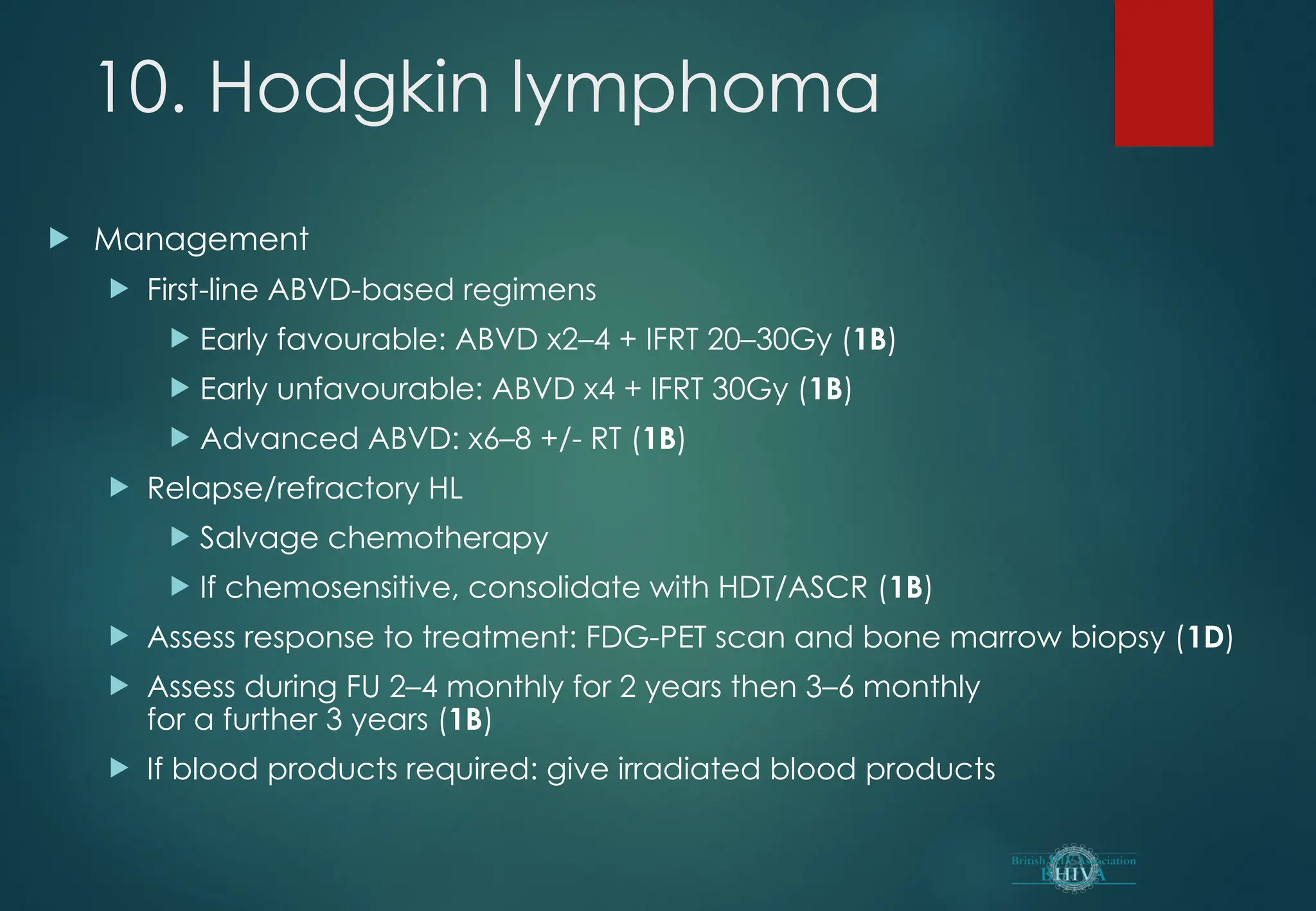
10. Hodgkin lymphoma
 Epidemiology
 Commoner in PLWH x10–20
 Post-cART rates for CR/overall survival/disease-free survival same as
for HIV-negative patients
 Increased incidence with CD4 <200 cells/ml, and CD4 count may
fall 1 year pre-HL diagnosis
 EBV-driven
 Diagnosis
 Presentation in HIV infection: advanced stage, more symptoms, extranodal
disease, poor performance status
 Histology EBV+ and mostly mixed cellularity (MC) or lymphocyte-depleted (LD),
rather than nodular sclerosis
 Management
 HIV test
 Start cART and opportunistic infection prophylaxis (1A)
 Avoid ritonavir: risk of vinblastine-mediated neuropathy and neutropenia (1D)
10. Hodgkin lymphoma
 Management
 First-line ABVD-based regimens
 Early favourable: ABVD x2–4 + IFRT 20–30Gy (1B)
 Early unfavourable: ABVD x4 + IFRT 30Gy (1B)
 Advanced ABVD: x6–8 +/- RT (1B)
 Relapse/refractory HL
 Salvage chemotherapy
 If chemosensitive, consolidate with HDT/ASCR (1B)
 Assess response to treatment: FDG-PET scan and bone marrow biopsy (1D)
 Assess during FU 2–4 monthly for 2 years then 3–6 monthly
for a further 3 years (1B)
 If blood products required: give irradiated blood products
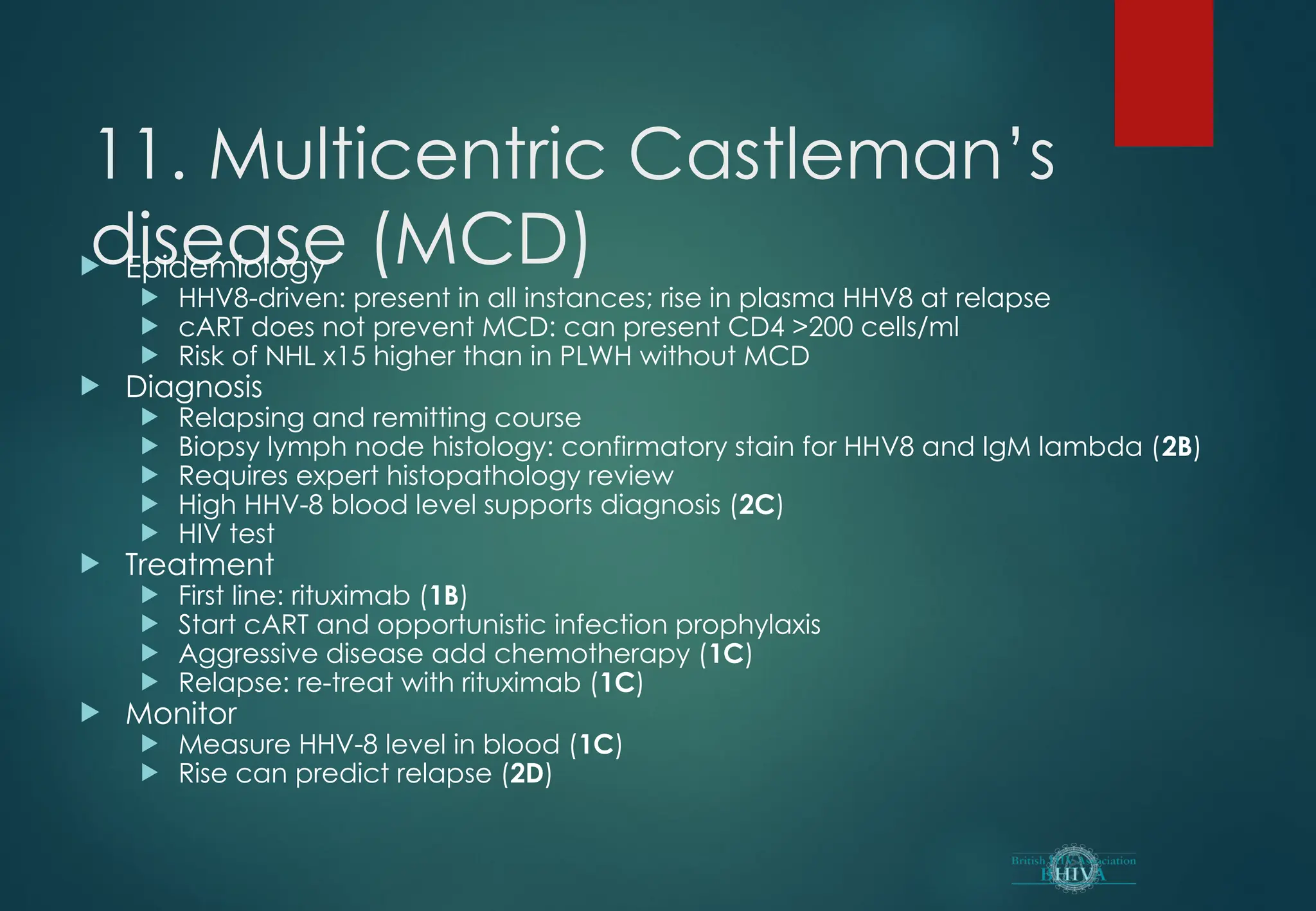
11. Multicentric Castleman’s
disease (MCD)
 Epidemiology
 HHV8-driven: present in all instances; rise in plasma HHV8 at relapse
 cART does not prevent MCD: can present CD4 >200 cells/ml
 Risk of NHL x15 higher than in PLWH without MCD
 Diagnosis
 Relapsing and remitting course
 Biopsy lymph node histology: confirmatory stain for HHV8 and IgM lambda (2B)
 Requires expert histopathology review
 High HHV-8 blood level supports diagnosis (2C)
 HIV test
 Treatment
 First line: rituximab (1B)
 Start cART and opportunistic infection prophylaxis
 Aggressive disease add chemotherapy (1C)
 Relapse: re-treat with rituximab (1C)
 Monitor
 Measure HHV-8 level in blood (1C)
 Rise can predict relapse (2D)
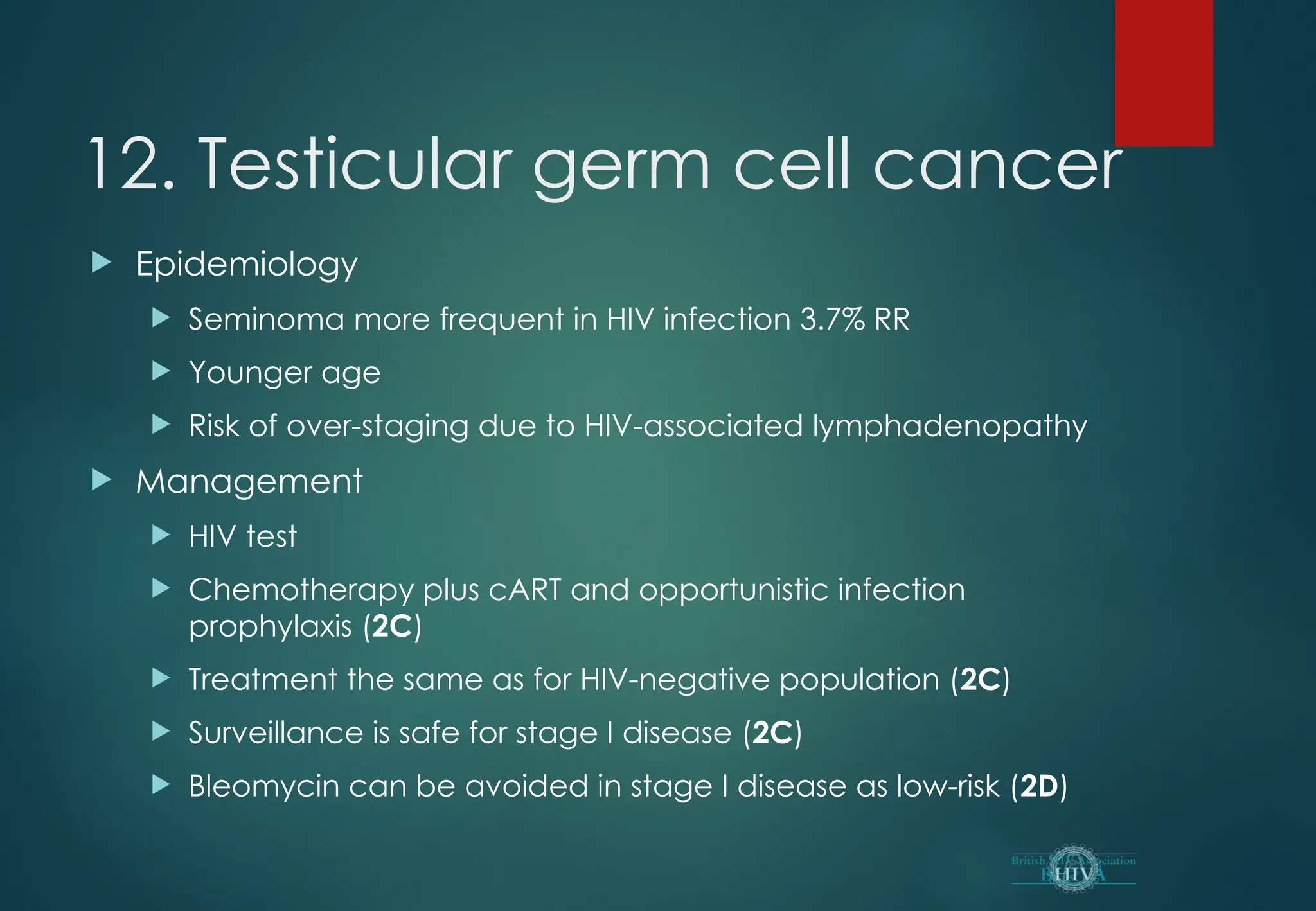
12. Testicular germ cell cancer
 Epidemiology
 Seminoma more frequent in HIV infection 3.7% RR
 Younger age
 Risk of over-staging due to HIV-associated lymphadenopathy
 Management
 HIV test
 Chemotherapy plus cART and opportunistic infection
prophylaxis (2C)
 Treatment the same as for HIV-negative population (2C)
 Surveillance is safe for stage I disease (2C)
 Bleomycin can be avoided in stage I disease as low-risk (2D)
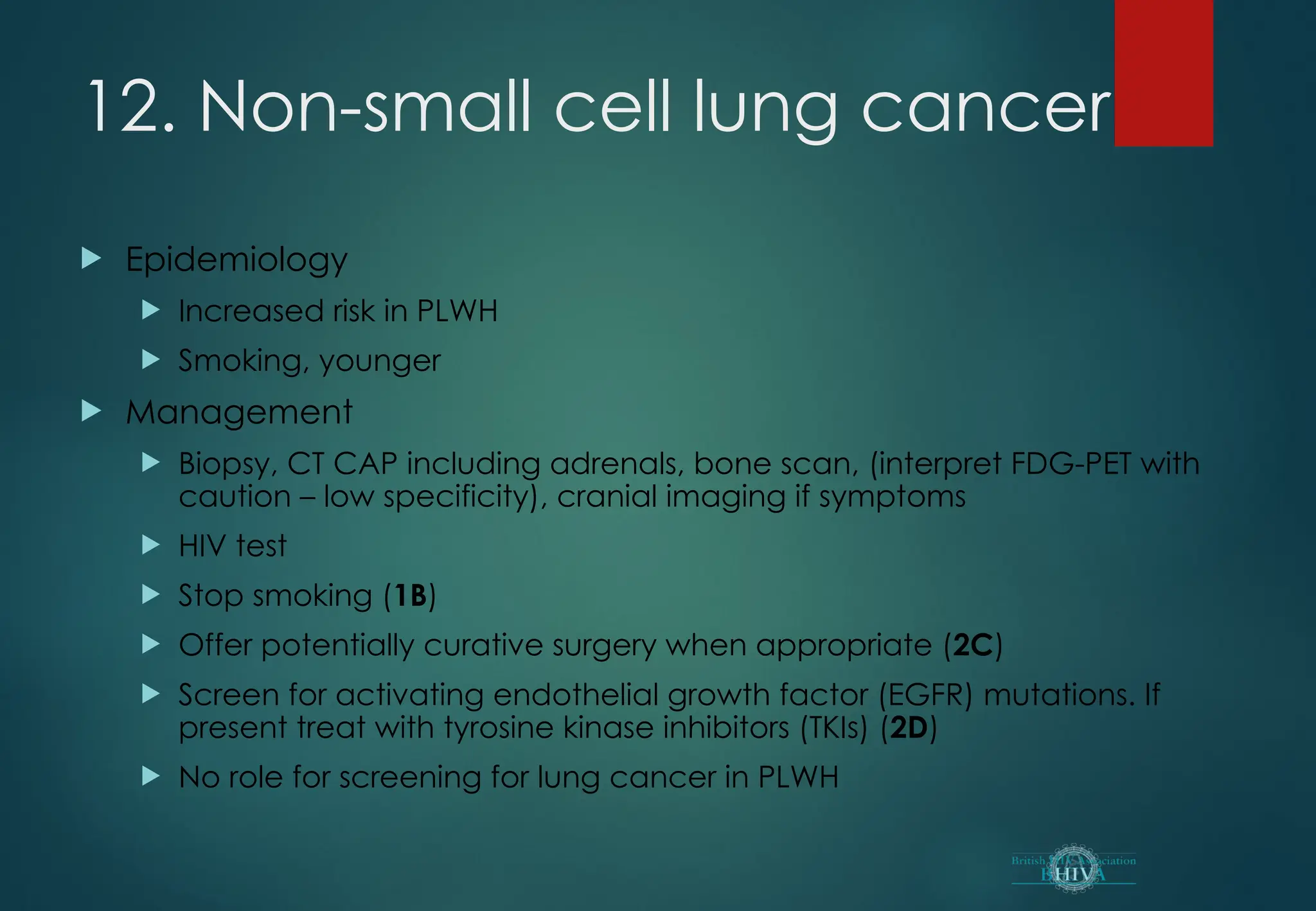
12. Non-small cell lung cancer
 Epidemiology
 Increased risk in PLWH
 Smoking, younger
 Management
 Biopsy, CT CAP including adrenals, bone scan, (interpret FDG-PET with
caution – low specificity), cranial imaging if symptoms
 HIV test
 Stop smoking (1B)
 Offer potentially curative surgery when appropriate (2C)
 Screen for activating endothelial growth factor (EGFR) mutations. If
present treat with tyrosine kinase inhibitors (TKIs) (2D)
 No role for screening for lung cancer in PLWH
12. Hepatocellular carcinoma
(HCC)
 Epidemiology
 Western world: 30% PLWH co-infected with hepatitis C (HCV) (75% IVDU)
 High hepatitis B (HBV) viral load: increased risk HCC
 Low CD4 cell count: increased risk hepatitis B-associated HCC
 Management
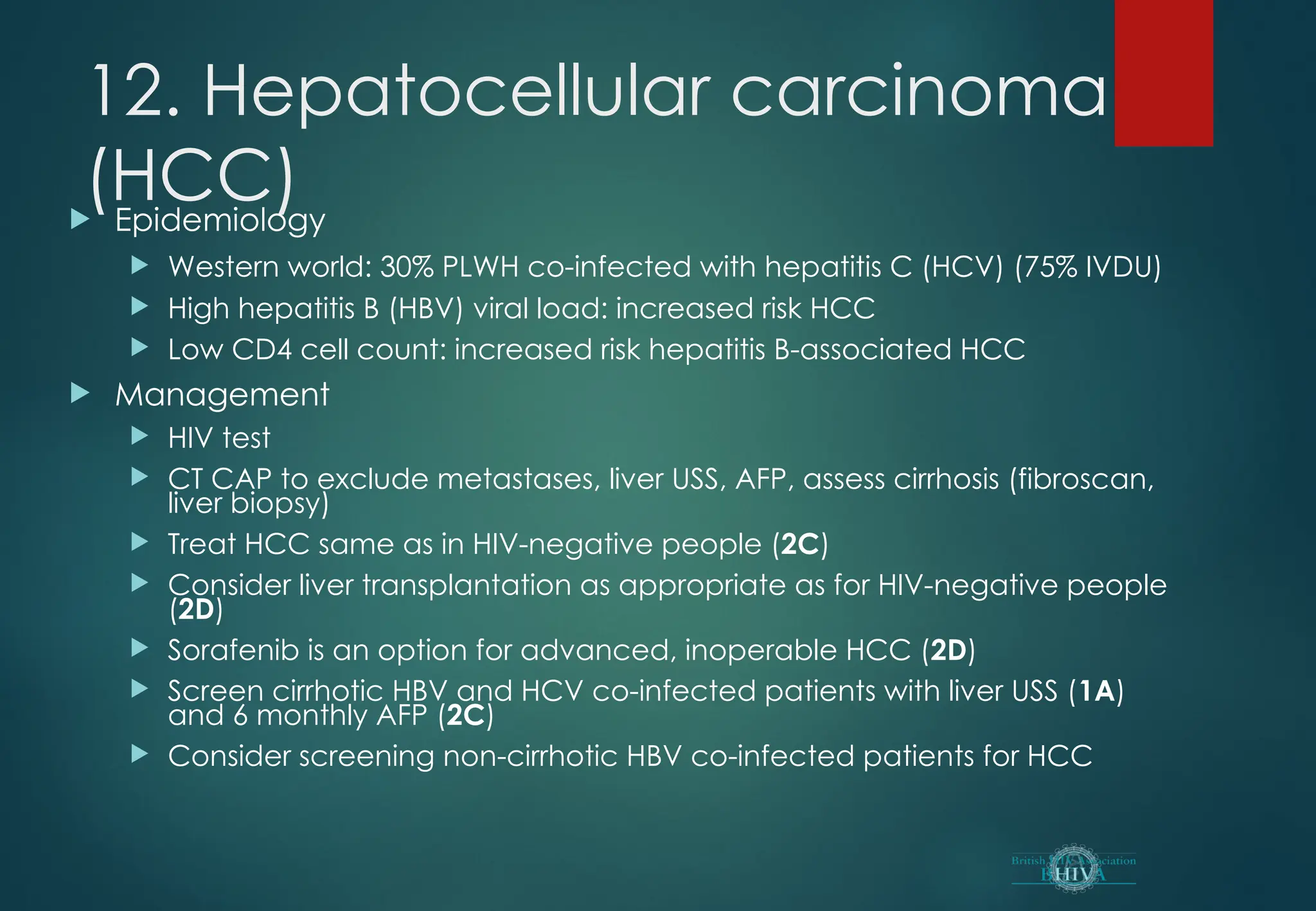
 HIV test
 CT CAP to exclude metastases, liver USS, AFP, assess cirrhosis (fibroscan,
liver biopsy)
 Treat HCC same as in HIV-negative people (2C)
 Consider liver transplantation as appropriate as for HIV-negative people
(2D)
 Sorafenib is an option for advanced, inoperable HCC (2D)
 Screen cirrhotic HBV and HCV co-infected patients with liver USS (1A)
and 6 monthly AFP (2C)
 Consider screening non-cirrhotic HBV co-infected patients for HCC
12. Other cancers
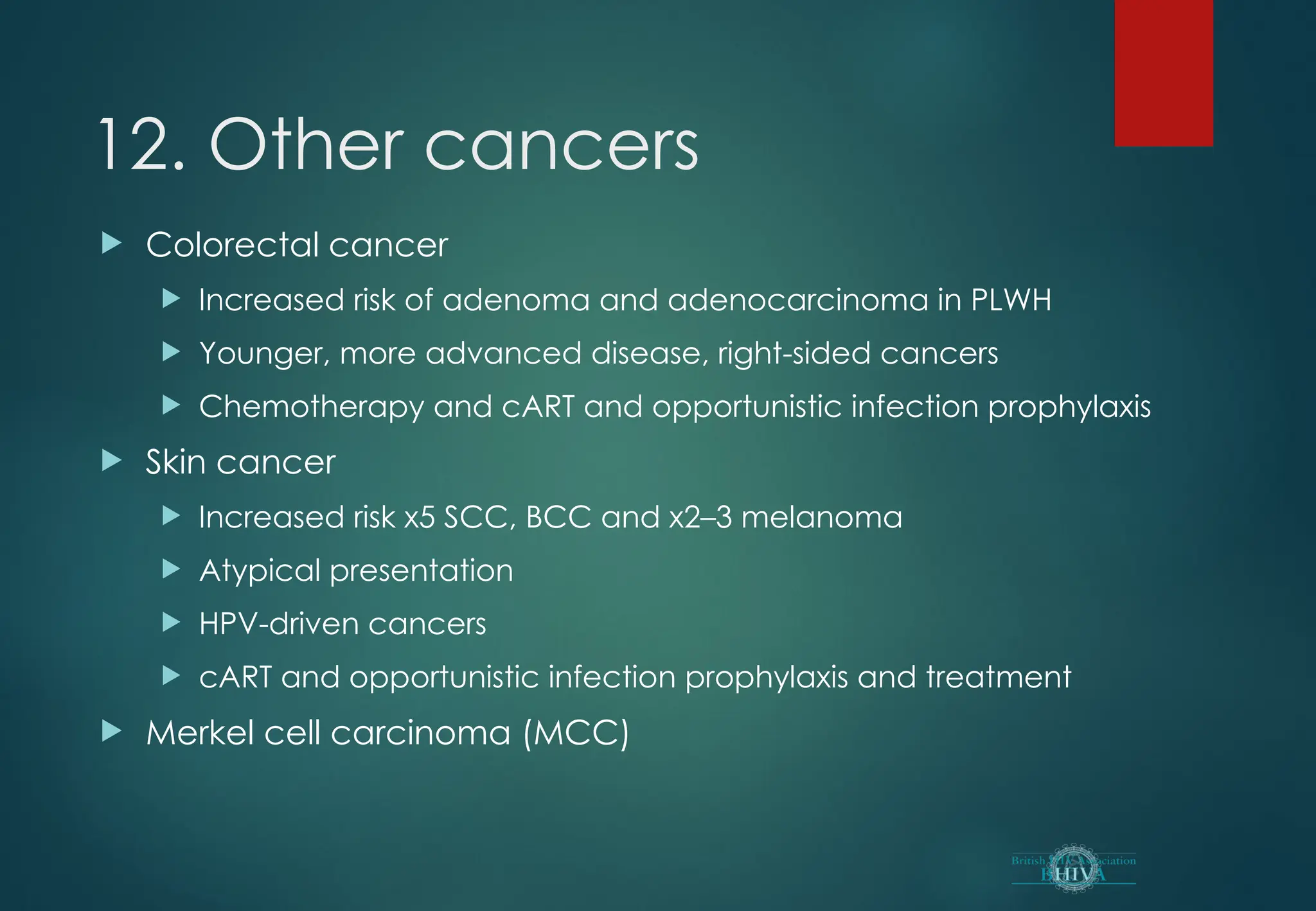
 Colorectal cancer
 Increased risk of adenoma and adenocarcinoma in PLWH
 Younger, more advanced disease, right-sided cancers
 Chemotherapy and cART and opportunistic infection prophylaxis
 Skin cancer
 Increased risk x5 SCC, BCC and x2–3 melanoma
 Atypical presentation
 HPV-driven cancers
 cART and opportunistic infection prophylaxis and treatment
 Merkel cell carcinoma (MCC)
12. Other cancers
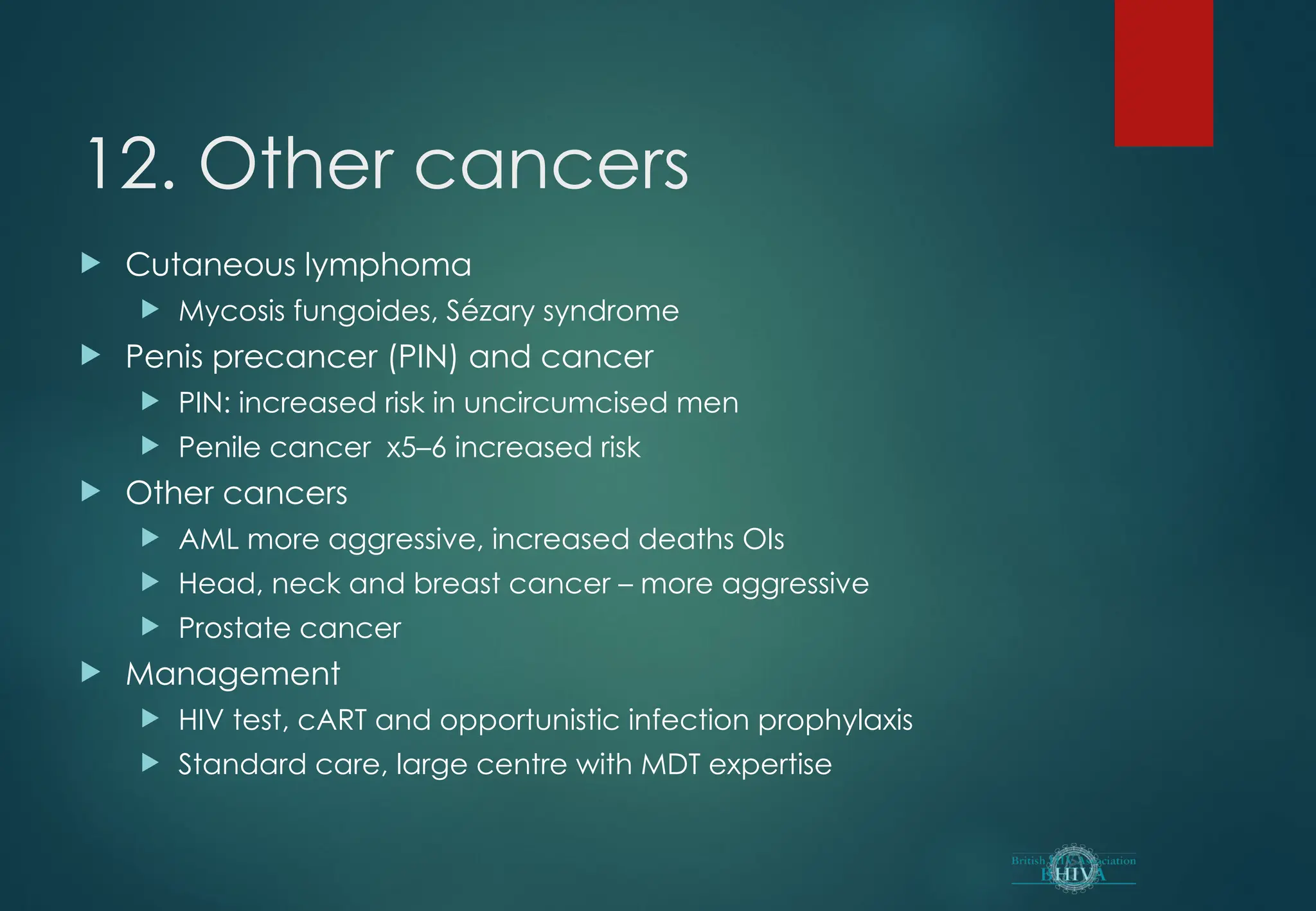
 Cutaneous lymphoma
 Mycosis fungoides, Sézary syndrome
 Penis precancer (PIN) and cancer
 PIN: increased risk in uncircumcised men
 Penile cancer x5–6 increased risk
 Other cancers
 AML more aggressive, increased deaths OIs
 Head, neck and breast cancer – more aggressive
 Prostate cancer
 Management
 HIV test, cART and opportunistic infection prophylaxis
 Standard care, large centre with MDT expertise
13. Opportunistic infection (OI)
prophylaxis
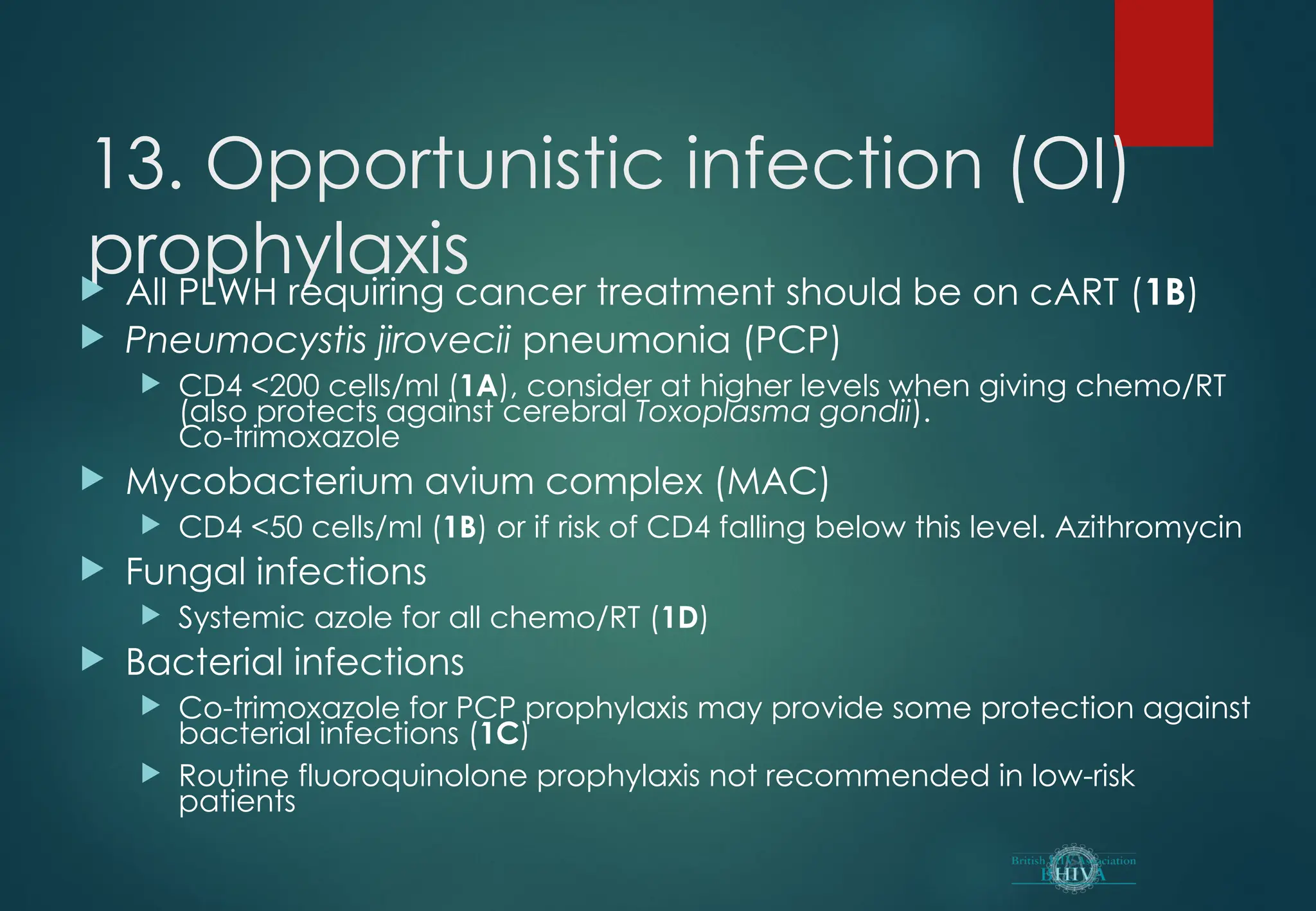
 All PLWH requiring cancer treatment should be on cART (1B)
 Pneumocystis jirovecii pneumonia (PCP)
 CD4 <200 cells/ml (1A), consider at higher levels when giving chemo/RT
(also protects against cerebral Toxoplasma gondii).
Co-trimoxazole
 Mycobacterium avium complex (MAC)
 CD4 <50 cells/ml (1B) or if risk of CD4 falling below this level. Azithromycin
 Fungal infections
 Systemic azole for all chemo/RT (1D)
 Bacterial infections
 Co-trimoxazole for PCP prophylaxis may provide some protection against
bacterial infections (1C)
 Routine fluoroquinolone prophylaxis not recommended in low-risk
patients
13. Opportunistic infection (OI)
prophylaxis
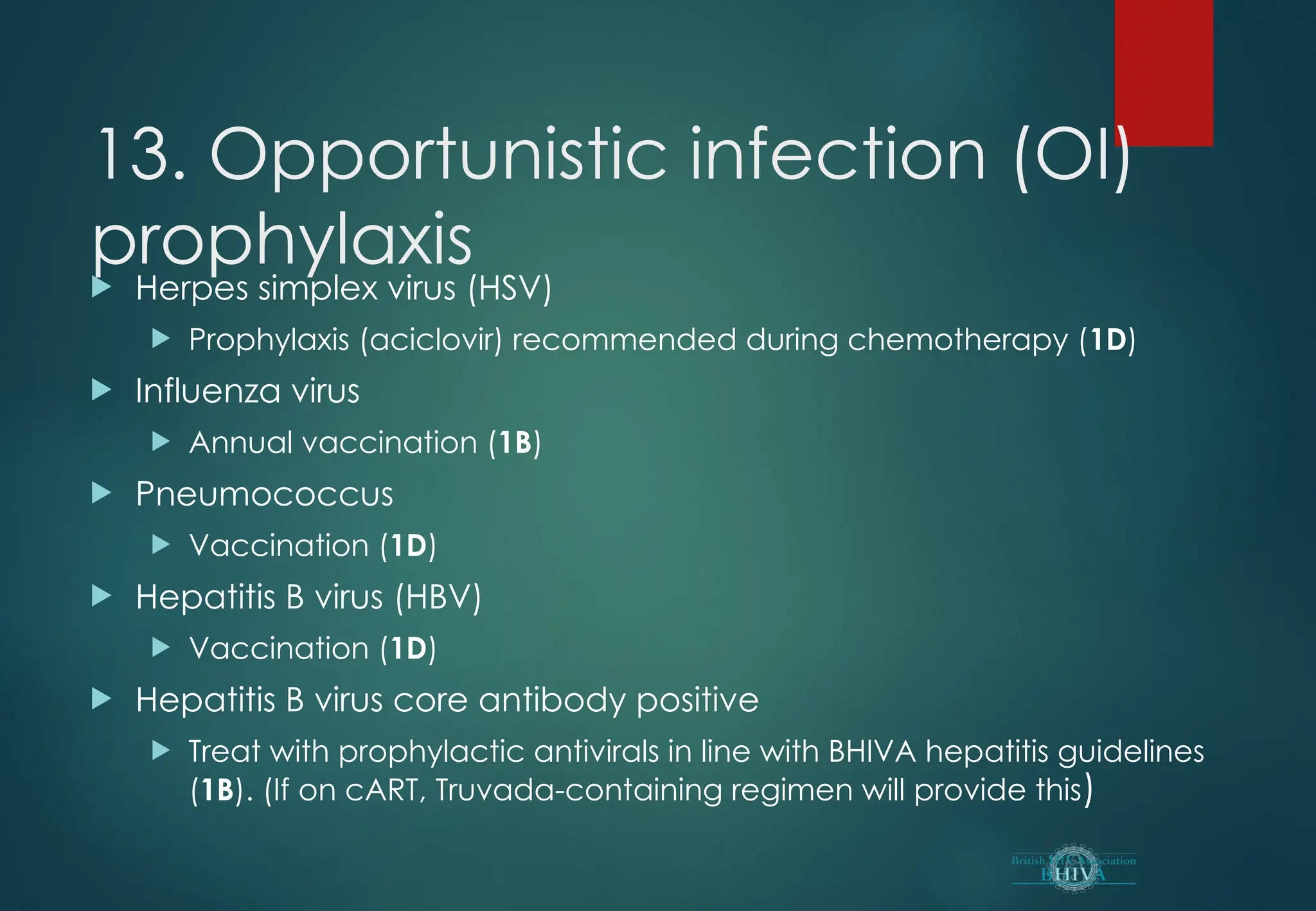
 Herpes simplex virus (HSV)
 Prophylaxis (aciclovir) recommended during chemotherapy (1D)
 Influenza virus
 Annual vaccination (1B)
 Pneumococcus
 Vaccination (1D)
 Hepatitis B virus (HBV)
 Vaccination (1D)
 Hepatitis B virus core antibody positive
 Treat with prophylactic antivirals in line with BHIVA hepatitis guidelines
(1B). (If on cART, Truvada-containing regimen will provide this)

Malignancy 2014(A term for diseases in which abnormal cells divide without control and can invade nearby tissues).ppt

  • 1.
  • 2.
    Scope and purpose Provide guidance on best clinical practice  Treatment and management of adults with HIV infection and malignancy  Do not address screening for malignancy in this population
  • 3.
    Methodology  Modified GRADEsystem for review of evidence (Appendix 1)  Multispecialty, multidisciplinary team – Oncology, Haematology, HIV, CNS, Pharmacy  Patient involvement  Two patient representatives involved in all aspects of guideline development  Additional two meetings with patients and community representatives before writing group consensus meeting and as part of public consultation process
  • 4.
    Summary HIV-associated Malignancies  Increasedrisk of:  AIDS-defining malignancies  Kaposi sarcoma  High grade B cell non-Hodgkin lymphoma  Invasive cervical cancer  Other malignancies  Anal cancer  Hodgkin lymphoma  Multicentric Castleman’s disease  Testicular germ cell cancer  Non-small cell lung cancer  Hepatocellular cancer  Other cancers
  • 5.
    Summary  For optimalcare, need shared expertise and collaboration between  Oncology, Haematology, HIV, Palliative Care physicians  Clinical Nurse Specialists  Pharmacists  (see BHIVA Standards of Care for People Living with HIV 2013)  Large centres of care with expertise and >5000 PLHIV  Urgent referral of patients with suspected cancer, all to be seen within 2 weeks in specialist unit  Test all for HIV  Start cART for all patients diagnosed with cancer  All require opportunistic infection (OI) prophylaxis
  • 6.
    3. Kaposi sarcoma(KS)  Epidemiology  KS is caused by KSHV/HHV-8 virus.  Post-cART incidence of KS has decreased (0.3 vs 1.9/1000 person years, hazard ratio 7), survival has increased  Management  Always confirm histologically (1C)  Test for HIV  CT, bronchoscopy, endoscopy only required if symptomatic (2D)  Start cART for all patients with KS (1B)
  • 7.
    3. Kaposi sarcoma(KS)  Treatment  T0 (early stage KS): cART ± local radiotherapy (RT) or intralesional vinblastine for cosmesis (2C)  T1 (advanced stage KS): cART and chemotherapy (1B)  First line: liposomal anthracyclines  Either liposomal daunorubicin (DaunoXomeTM ) 40 mg/m2 q14d or liposomal doxorubicin (CaelyxTM ) 20 mg/m2 q21d (1A)  Second line: if refractory to anthracycline  Paclitaxel (TaxolTM ) 100mg/m2 q14d (1C)  Consider clinical trial
  • 8.
    4. Systemic AIDS-related non-Hodgkinlymphoma (NHL)  Epidemiology  HIV increases risk of NHL  Second commonest tumour in PLWH  High-grade B cell NHL is an AIDS-defining illness  Presentation: advanced stage, B symptoms, extranodal disease including bone marrow is common  cART reduces the risk of NHL  Survival of NHL in PLWH is the now the same as that seen in HIV-negative people  Prognosis depends on histological subtype and stage
  • 9.
    4. Systemic AIDS-related non-Hodgkinlymphoma (NHL)  Management  Confirm histologically, requires expert review  HIV test  Clinical evaluation, bloods (Table 4.1), CT, bone marrow aspirate and trephine, FDG-PET at diagnosis improves staging accuracy, CSF if CNS symptoms or involvement of paranasal sinuses, breast, paraspinal disease, testes, renal, epidural space, bone
  • 10.
    4. NHL: systemicAIDS-related diffuse large B-cell lymphoma (DLBL)  Treatment  Start cART, opportunistic infection prophylaxis and chemotherapy (1B)  First-line chemotherapy as for HIV-negative patients  CHOP or EPOCH  Add rituximab (1B) for CD20+ NHL  If CD4 <50 cells/ml, close monitoring advised, OI prophylaxis, G-CSF and prompt OI treatment  If high risk of CNS relapse (high LDH, extranodal disease and high-risk sites involved)  CNS prophylaxis (intrathecal (IT) and/or IV methotrexate) as for HIV-negative patients (1C)
  • 11.
    4. NHL: Burkittlymphoma (BL)  High risk of CNS disease  Treatment  Start cART, opportunistic infection prophylaxis and chemotherapy (1B)  First-line chemotherapy  CODOX-M/IVAC or DA-EPOCH (1B)  Add rituximab (1C)  Offer all BL patients prophylactic IT chemotherapy (1B)
  • 12.
    4. NHL: relapsed/recurrent systemicNHL  Relapsed/aggressive NHL  Second-line chemotherapy (1C) may contain platinum (2C)  If response (CR or PR), consider high-dose therapy (HDT) with autologous stem cell transplantation (ASCT)
  • 13.
    5. NHL: primaryCNS lymphoma (PCNSL)  Epidemiology  Poor prognosis  cART reduces risk  Diagnosis  Presentation may be subacute/neuropsychiatric  Craniospinal involvement only, no systemic involvement  HIV test  Clinical assessment, bloods including LDH, CT/MRI brain, CSF (if safe) include EBV PCR on CSF, CT CAP, USS testes  Confirm histologically: brain biopsy is the only confirmatory test  Treatment  Start cART (1C)  All patients with adequate performance status: consider treatment with regimen containing high-dose methotrexate (1D)  Use whole-brain radiotherapy (RT) for palliation for symptom control or, as alternative to first-line treatment if risk of toxicity from high-dose IV agents unacceptable (1C)
  • 14.
    6. NHL: primaryeffusion lymphoma (PEL)  Epidemiology  3% of HIV-associated NHL  Poor prognosis  Lymphomas immunostain for HHV8 (+/-EBV)  Diagnosis  Requires expert histopathology review  Usually causes pleural or pericardial effusion or ascites without masses  Rare extracavity PEL presents with solid masses rather than effusions  Diagnosis from effusion: cellular morphology, immune phenotype, virology  HIV test  Treatment  Chemotherapy plus cART and opportunistic infection prophylaxis (1C)  CHOP-like regimens (2C)  Consider clinical trial
  • 15.
    7. NHL: plasmablasticlymphoma  Epidemiology  2.6% of HIV-associated lymphomas  Three types: oral mucosal (EBV+ve); extra-oral (GIT, skin, nodal, splenic) (EBV+ve); associated with multicentric Castleman’s disease (HHV8+ve)  Requires expert histopathology review  HIV test  Treatment  Chemotherapy plus cART and opportunistic infection prophylaxis (1C)  Chemotherapy: anthracycline-containing regimen (1C)
  • 16.
    8. Cervical intraepithelial neoplasia(CIN) and cervical cancer  Epidemiology  Related to high-risk HPV (mostly 16 and 18)  Cervical cancer preceded by CIN  75% cases cervical cancer preventable by screening  Smoking increases risk  No change in risk of cervical cancer post cART  Driven by HPV  Increased risk of cervical cancer due to HIV much smaller than increase in HIV-related KS/NHL  Survival bias masks effect as PLWH population lives longer  Modest decreased incidence of CIN post cART  Increased incidence of CIN with low CD4 cell counts  Screening  All HIV-infected women have annual cytology (and initial colposcopy if resources permit) (2C)  Same age range as for HIV-negative women (1B)
  • 17.
    8. Cervical intraepithelial neoplasia(CIN) and cervical cancer  Management  HIV test  CIN 1  Less severe grades than CIN2: no treatment as it represents persistent HPV infection not pre-malignancy (2B)  CIN 2/3  Manage as per UK guidelines  Excision: higher failure rate than in HIV-negative patients as high frequency of compromised margins on excisional specimens; higher rates of treatment failure  Start cART: relapse less frequent with CD4 count >200cells/ml and undetectable HIV viral load  Invasive cervical cancer  Manage as per UK guidelines for HIV-negative women within MDT framework (1B)
  • 18.
    9. Anal cancer Epidemiology  Relative risk 40–50 in HIV-positive MSM  Occurs at younger age in PLWH  Associated with high-risk HPV (mostly 16 and 18)  Incidence rising in post-cART era  May be due to longer survival with HIV allowing time for progression from HPV to AIN to invasive anal cancer  Diagnosis  Role of annual cytology and anoscopy not proven: patients encouraged to check and report lumps in anal canal (BHIVA BASHH FFPRHC 2008 guidelines on anal cancer in HIV)  Patients may present with rectal bleeding, anal pain, incontinence, but may be asymptomatic  EUA anal canal and rectum, and biopsy all suspected cases (1D)  Further staging CT CAP, MRI pelvis (1B)
  • 19.
    9. Anal cancer Management  HIV test  Manage in specialist centres with experience (1C)  Centres managing anal cancer should be able to provide high resolution anoscopy (HRA) (2D)  Treatment  Start cART (1C)  Start OI prophylaxis (1D)  Chemoradiotherapy (CRT) with 5-flourouracil and mitomycin C (1A)  Salvage surgery may be appropriate if loco-regional disease resistance or relapse following CRT (2D)  Best supportive care may be more appropriate if metastatic disease or local relapse following salvage surgery (2D)  Advocate surveillance for AIN by HRA (2D)
  • 20.
    10. Hodgkin lymphoma Epidemiology  Commoner in PLWH x10–20  Post-cART rates for CR/overall survival/disease-free survival same as for HIV-negative patients  Increased incidence with CD4 <200 cells/ml, and CD4 count may fall 1 year pre-HL diagnosis  EBV-driven  Diagnosis  Presentation in HIV infection: advanced stage, more symptoms, extranodal disease, poor performance status  Histology EBV+ and mostly mixed cellularity (MC) or lymphocyte-depleted (LD), rather than nodular sclerosis  Management  HIV test  Start cART and opportunistic infection prophylaxis (1A)  Avoid ritonavir: risk of vinblastine-mediated neuropathy and neutropenia (1D)
  • 21.
    10. Hodgkin lymphoma Management  First-line ABVD-based regimens  Early favourable: ABVD x2–4 + IFRT 20–30Gy (1B)  Early unfavourable: ABVD x4 + IFRT 30Gy (1B)  Advanced ABVD: x6–8 +/- RT (1B)  Relapse/refractory HL  Salvage chemotherapy  If chemosensitive, consolidate with HDT/ASCR (1B)  Assess response to treatment: FDG-PET scan and bone marrow biopsy (1D)  Assess during FU 2–4 monthly for 2 years then 3–6 monthly for a further 3 years (1B)  If blood products required: give irradiated blood products
  • 22.
    11. Multicentric Castleman’s disease(MCD)  Epidemiology  HHV8-driven: present in all instances; rise in plasma HHV8 at relapse  cART does not prevent MCD: can present CD4 >200 cells/ml  Risk of NHL x15 higher than in PLWH without MCD  Diagnosis  Relapsing and remitting course  Biopsy lymph node histology: confirmatory stain for HHV8 and IgM lambda (2B)  Requires expert histopathology review  High HHV-8 blood level supports diagnosis (2C)  HIV test  Treatment  First line: rituximab (1B)  Start cART and opportunistic infection prophylaxis  Aggressive disease add chemotherapy (1C)  Relapse: re-treat with rituximab (1C)  Monitor  Measure HHV-8 level in blood (1C)  Rise can predict relapse (2D)
  • 23.
    12. Testicular germcell cancer  Epidemiology  Seminoma more frequent in HIV infection 3.7% RR  Younger age  Risk of over-staging due to HIV-associated lymphadenopathy  Management  HIV test  Chemotherapy plus cART and opportunistic infection prophylaxis (2C)  Treatment the same as for HIV-negative population (2C)  Surveillance is safe for stage I disease (2C)  Bleomycin can be avoided in stage I disease as low-risk (2D)
  • 24.
    12. Non-small celllung cancer  Epidemiology  Increased risk in PLWH  Smoking, younger  Management  Biopsy, CT CAP including adrenals, bone scan, (interpret FDG-PET with caution – low specificity), cranial imaging if symptoms  HIV test  Stop smoking (1B)  Offer potentially curative surgery when appropriate (2C)  Screen for activating endothelial growth factor (EGFR) mutations. If present treat with tyrosine kinase inhibitors (TKIs) (2D)  No role for screening for lung cancer in PLWH
  • 25.
    12. Hepatocellular carcinoma (HCC) Epidemiology  Western world: 30% PLWH co-infected with hepatitis C (HCV) (75% IVDU)  High hepatitis B (HBV) viral load: increased risk HCC  Low CD4 cell count: increased risk hepatitis B-associated HCC  Management  HIV test  CT CAP to exclude metastases, liver USS, AFP, assess cirrhosis (fibroscan, liver biopsy)  Treat HCC same as in HIV-negative people (2C)  Consider liver transplantation as appropriate as for HIV-negative people (2D)  Sorafenib is an option for advanced, inoperable HCC (2D)  Screen cirrhotic HBV and HCV co-infected patients with liver USS (1A) and 6 monthly AFP (2C)  Consider screening non-cirrhotic HBV co-infected patients for HCC
  • 26.
    12. Other cancers Colorectal cancer  Increased risk of adenoma and adenocarcinoma in PLWH  Younger, more advanced disease, right-sided cancers  Chemotherapy and cART and opportunistic infection prophylaxis  Skin cancer  Increased risk x5 SCC, BCC and x2–3 melanoma  Atypical presentation  HPV-driven cancers  cART and opportunistic infection prophylaxis and treatment  Merkel cell carcinoma (MCC)
  • 27.
    12. Other cancers Cutaneous lymphoma  Mycosis fungoides, Sézary syndrome  Penis precancer (PIN) and cancer  PIN: increased risk in uncircumcised men  Penile cancer x5–6 increased risk  Other cancers  AML more aggressive, increased deaths OIs  Head, neck and breast cancer – more aggressive  Prostate cancer  Management  HIV test, cART and opportunistic infection prophylaxis  Standard care, large centre with MDT expertise
  • 28.
    13. Opportunistic infection(OI) prophylaxis  All PLWH requiring cancer treatment should be on cART (1B)  Pneumocystis jirovecii pneumonia (PCP)  CD4 <200 cells/ml (1A), consider at higher levels when giving chemo/RT (also protects against cerebral Toxoplasma gondii). Co-trimoxazole  Mycobacterium avium complex (MAC)  CD4 <50 cells/ml (1B) or if risk of CD4 falling below this level. Azithromycin  Fungal infections  Systemic azole for all chemo/RT (1D)  Bacterial infections  Co-trimoxazole for PCP prophylaxis may provide some protection against bacterial infections (1C)  Routine fluoroquinolone prophylaxis not recommended in low-risk patients
  • 29.
    13. Opportunistic infection(OI) prophylaxis  Herpes simplex virus (HSV)  Prophylaxis (aciclovir) recommended during chemotherapy (1D)  Influenza virus  Annual vaccination (1B)  Pneumococcus  Vaccination (1D)  Hepatitis B virus (HBV)  Vaccination (1D)  Hepatitis B virus core antibody positive  Treat with prophylactic antivirals in line with BHIVA hepatitis guidelines (1B). (If on cART, Truvada-containing regimen will provide this)

Editor's Notes

  • #6 Heading numbers relate to the sections in the printed guidelines