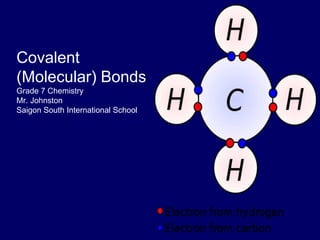



Covalent 
(Molecular) Bonds 
Grade 7 Chemistry 
Mr. Johnston 
Saigon South International School
Guiding Questions 
1. How are atoms held together in a covalent 
(molecular) bond? 
2. What are the properties of molecular 
(covalent) bond? 
3. How do bonded atoms become partially 
charged?
Key Vocabulary 
Covalent Bonds 
Molecule 
Double Bond 
Triple Bond 
Molecular Compound 
Non-Polar Bond 
Polar Bond
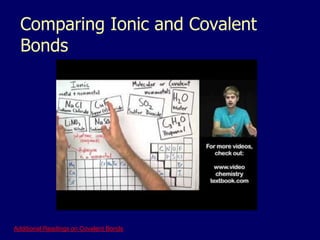
Comparing Ionic and Covalent 
Bonds 
Additional Readings on Covalent Bonds
COVALENT 
BONDbond formed by the sharing of 
electrons between 2 non-metals
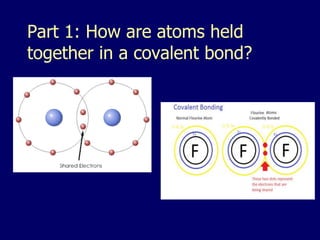
Part 1: How are atoms held 
together in a covalent bond?
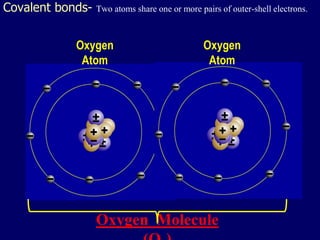
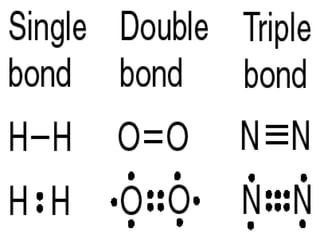
Covalent bonds- Two atoms share one or more pairs of outer-shell electrons. 
Oxygen 
Atom 
Oxygen 
Atom 
Oxygen Molecule 
(O)
What are the properties of of Molecular 
compounds? 
Unlike ionic compounds, molecular (covalent) 
compounds do not usually conduct electricity, 
when melted or dissolved in water. Also, 
compared to ionic compounds, molecular 
compounds generally have lower melting points 
and boiling points”
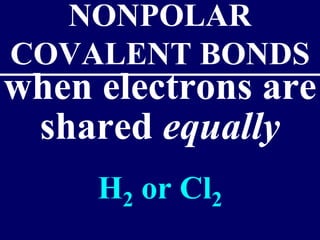
NONPOLAR 
COVALENT BONDS 
when electrons are 
shared equally 
H2 or Cl2
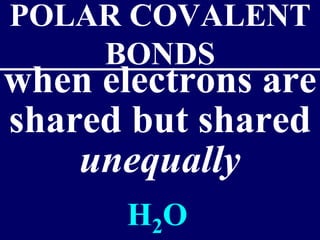
POLAR COVALENT 
BONDS 
when electrons are 
shared but shared 
unequally 
H2O
Way to remember a polar bond... 
The stronger, more stable atom pulls harder!
Exit interview on infuse learning!

Covalent bonds

  • 1.
    Covalent (Molecular) Bonds Grade 7 Chemistry Mr. Johnston Saigon South International School
  • 2.
    Guiding Questions 1.How are atoms held together in a covalent (molecular) bond? 2. What are the properties of molecular (covalent) bond? 3. How do bonded atoms become partially charged?
  • 3.
    Key Vocabulary CovalentBonds Molecule Double Bond Triple Bond Molecular Compound Non-Polar Bond Polar Bond
  • 4.
    Comparing Ionic andCovalent Bonds Additional Readings on Covalent Bonds
  • 5.
    COVALENT BONDbond formedby the sharing of electrons between 2 non-metals
  • 8.
    Part 1: Howare atoms held together in a covalent bond?
  • 9.
    Covalent bonds- Twoatoms share one or more pairs of outer-shell electrons. Oxygen Atom Oxygen Atom Oxygen Molecule (O)
  • 11.
    What are theproperties of of Molecular compounds? Unlike ionic compounds, molecular (covalent) compounds do not usually conduct electricity, when melted or dissolved in water. Also, compared to ionic compounds, molecular compounds generally have lower melting points and boiling points”
  • 12.
    NONPOLAR COVALENT BONDS when electrons are shared equally H2 or Cl2
  • 13.
    POLAR COVALENT BONDS when electrons are shared but shared unequally H2O
  • 14.
    Way to remembera polar bond... The stronger, more stable atom pulls harder!
  • 15.
    Exit interview oninfuse learning!