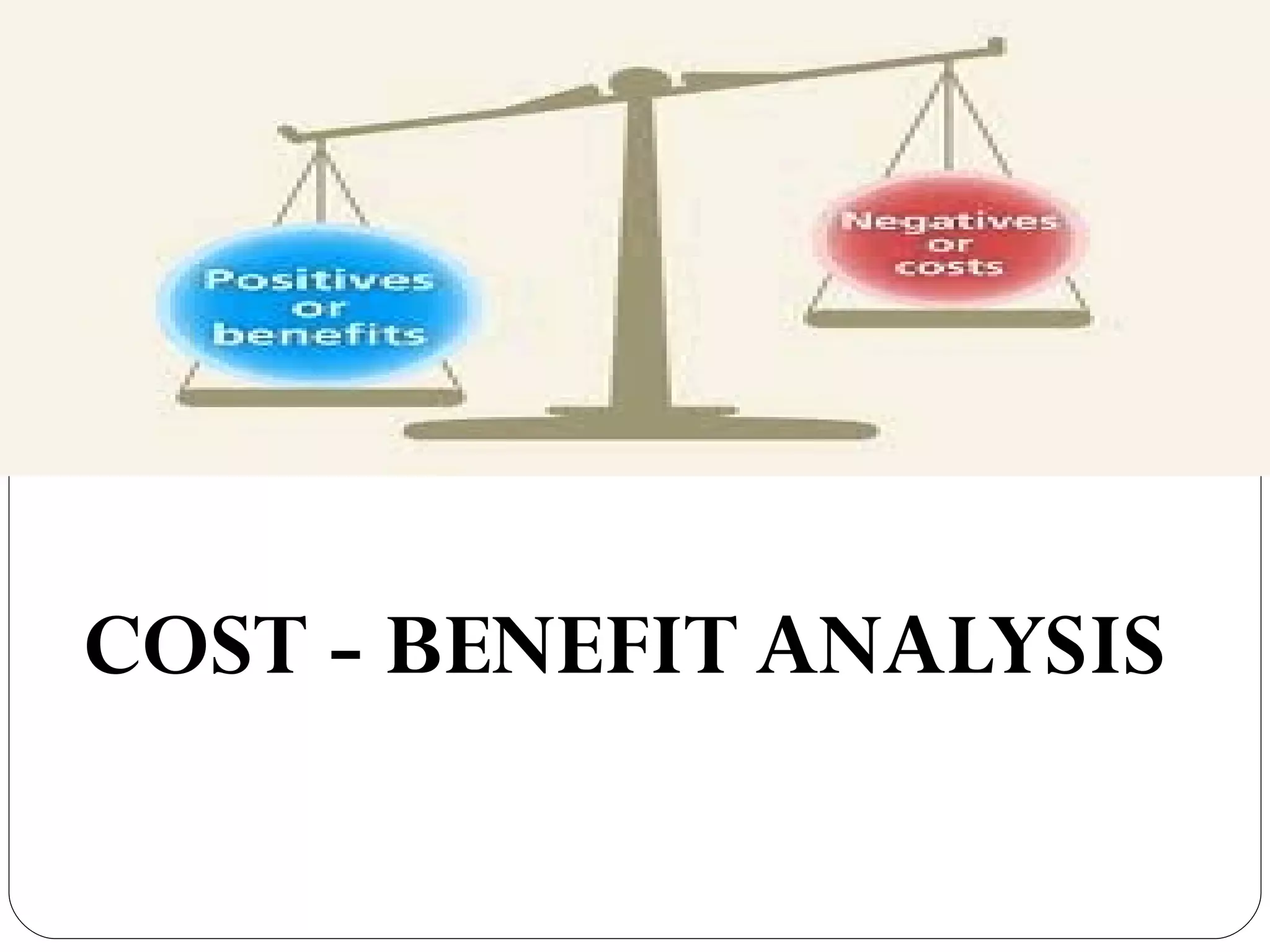
COST - BENEFIT ANALYSIS
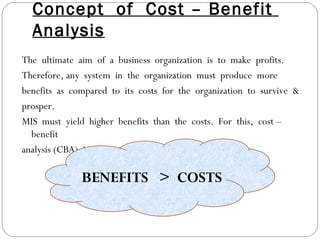
Concept  of  Cost – Benefit  Analysis The  ultimate  aim  of  a  business  organization  is  to  make  profits. Therefore, any  system  in  the  organization  must  produce  more benefits  as  compared  to  its  costs  for  the  organization  to  survive  & prosper.  MIS  must  yield  higher  benefits  than  the  costs.  For  this,  cost –benefit analysis (CBA)  is  important. BENEFITS  >  COSTS
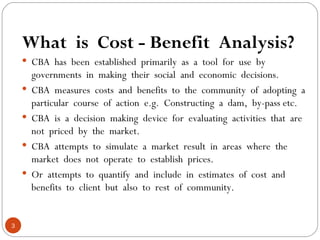
What  is  Cost - Benefit  Analysis? CBA  has  been  established  primarily  as  a  tool  for  use  by governments  in  making  their  social  and  economic  decisions. CBA  measures  costs  and  benefits  to  the  community  of  adopting  a particular  course  of  action  e.g.  Constructing  a  dam,  by-pass etc. CBA  is  a  decision  making  device  for  evaluating  activities  that  are not  priced  by  the  market. CBA  attempts  to  simulate  a  market  result  in  areas  where  the market  does  not  operate  to  establish  prices. Or  attempts  to  quantify  and  include  in  estimates  of  cost  and benefits  to  client  but  also  to  rest  of  community.
Cost  Benefit  Analysis Decision making is about choices For  an  individual They  might  rely  on  intuition,  a  “gut  feel”  for  the  right  choice.  They  decide  to do  an  analysis  of  the  choices  or  it  may  be  a  combination  of  both  of  these. For  a  company Being  concerned  with  the  profit  earning  capacity  and  income  flow,  they  may undertake  a  cash flow  analysis  or  a  full  financial  appraisal  of  the  project. For  the  Government Decision  making  for  governments  is  much  harder.  Not  only  are  they  expected  to  consider  the  profitability  (or  at  least  neutrality)  of  the  costing  but  must  also include  consideration  of  the  social  cost  and  benefits  of  their  choices.  They  are also  expected  to  act  within  the  political  environment  to  satisfy  the  political agenda  set  by  the  government  of  the  day  and  finally,  must  also  comply  with  environmental considerations.
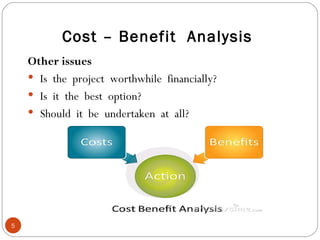
Cost – Benefit  Analysis Other issues Is  the  project  worthwhile  financially? Is  it  the  best  option? Should  it  be  undertaken  at  all?
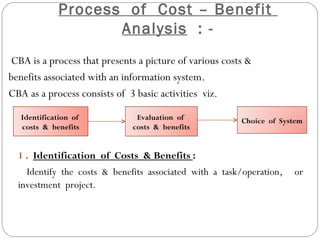
Process  of  Cost – Benefit  Analysis   : - CBA is a process that presents a picture of various costs & benefits associated with an information system. CBA as a process consists of  3 basic activities  viz. 1 .  Identification  of  Costs  & Benefits  :  Identify  the  costs  &  benefits  associated  with  a  task/operation,  or investment  project. Identification  of  costs  &  benefits Evaluation  of  costs  &  benefits Choice  of  System
2 .  Evaluation  of  costs ( tangible, intangible, fixed, variable,  direct, & indirect) &  benefits  associated  with  each  task/operation/investment  project.  Choice  of  system  :  Select  the  best  system  which  involves  least  cost  &  yields  maximum  benefits.
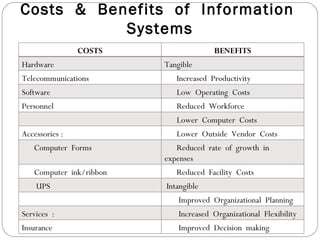
Costs  &  Benefits  of  Information  Systems COSTS BENEFITS Hardware Tangible Telecommunications Increased  Productivity Software Low  Operating  Costs Personnel Reduced  Workforce Lower  Computer  Costs Accessories : Lower  Outside  Vendor  Costs Computer  Forms Reduced  rate  of  growth  in  expenses Computer  ink/ribbon Reduced  Facility  Costs UPS Intangible Improved  Organizational  Planning Services  :  Increased  Organizational  Flexibility Insurance Improved  Decision  making
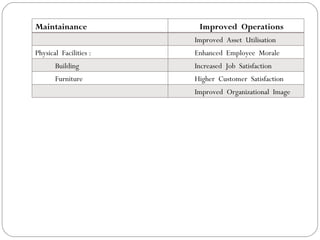
Maintainance Improved  Operations Improved  Asset  Utilisation Physical  Facilities : Enhanced  Employee  Morale Building  Increased  Job  Satisfaction Furniture Higher  Customer  Satisfaction Improved  Organizational  Image
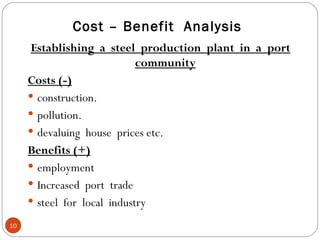
Establishing  a  steel  production  plant  in  a  port community Costs (-) construction. pollution. devaluing  house  prices etc. Benefits (+) employment Increased  port  trade steel  for  local  industry Cost – Benefit  Analysis
Cost - Benefit  Analysis Method Identify all possible alternatives. Prepare table showing life of the project i.e. year to year  basis. Establish Cost of project during the year including capital, operating and maintenance costs, social and other tangible costs Establish total benefits to be obtained from project by way of sales of goods and services including value of social benefits. Cost calculated at rate of interest such that NPV = Zero Ranking in order of [ benefit – cost ] or [ benefit / cost ]
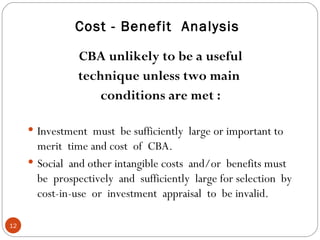
Cost - Benefit  Analysis CBA unlikely to be a useful technique unless two main  conditions are met : Investment  must  be sufficiently  large or important to merit  time and cost  of  CBA. Social  and other intangible costs  and/or  benefits must be  prospectively  and  sufficiently  large for selection  by cost-in-use  or  investment  appraisal  to  be invalid.
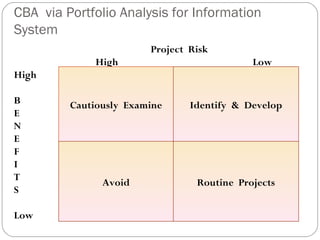
CBA  via Portfolio Analysis for Information System Project  Risk High  Low High   B E N E F I T S Low Cautiously  Examine Identify  &  Develop Avoid Routine  Projects
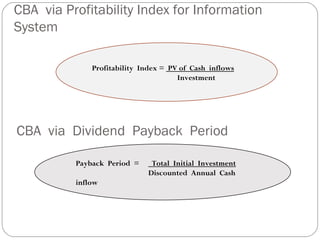
CBA  via Profitability Index for Information System CBA  via  Dividend  Payback  Period  Profitability  Index =  PV of  Cash  inflows Investment Payback  Period  =  Total  Initial  Investment Discounted  Annual  Cash inflow
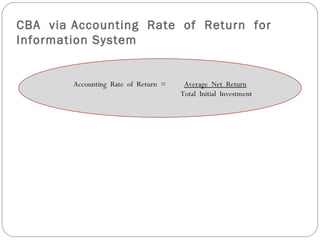
CBA  via Accounting  Rate  of  Return  for  Information System Accounting  Rate  of  Return  =  Average  Net  Return Total  Initial  Investment
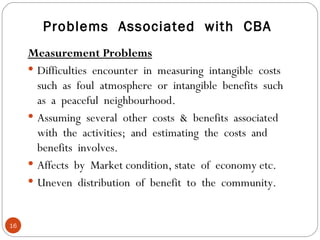
Problems  Associated  with  CBA Measurement Problems Difficulties  encounter  in  measuring  intangible  costs such  as  foul  atmosphere  or  intangible  benefits  such as  a  peaceful  neighbourhood. Assuming  several  other  costs  &  benefits  associated with  the  activities;  and  estimating  the  costs  and benefits  involves. Affects  by  Market condition, state  of  economy etc. Uneven  distribution  of  benefit  to  the  community.
Time Problems Tackling  future  time  problems  by  discounting  future costs  and  benefits. Or  calculating  the  correct  rate  for  future rupees value as well as  accounting  for  additional  benefits  and costs  associated.

Cost-Benefit Analysis

  • 1.
  • 2.
    Concept of Cost – Benefit Analysis The ultimate aim of a business organization is to make profits. Therefore, any system in the organization must produce more benefits as compared to its costs for the organization to survive & prosper. MIS must yield higher benefits than the costs. For this, cost –benefit analysis (CBA) is important. BENEFITS > COSTS
  • 3.
    What is Cost - Benefit Analysis? CBA has been established primarily as a tool for use by governments in making their social and economic decisions. CBA measures costs and benefits to the community of adopting a particular course of action e.g. Constructing a dam, by-pass etc. CBA is a decision making device for evaluating activities that are not priced by the market. CBA attempts to simulate a market result in areas where the market does not operate to establish prices. Or attempts to quantify and include in estimates of cost and benefits to client but also to rest of community.
  • 4.
    Cost Benefit Analysis Decision making is about choices For an individual They might rely on intuition, a “gut feel” for the right choice. They decide to do an analysis of the choices or it may be a combination of both of these. For a company Being concerned with the profit earning capacity and income flow, they may undertake a cash flow analysis or a full financial appraisal of the project. For the Government Decision making for governments is much harder. Not only are they expected to consider the profitability (or at least neutrality) of the costing but must also include consideration of the social cost and benefits of their choices. They are also expected to act within the political environment to satisfy the political agenda set by the government of the day and finally, must also comply with environmental considerations.
  • 5.
    Cost – Benefit Analysis Other issues Is the project worthwhile financially? Is it the best option? Should it be undertaken at all?
  • 6.
    Process of Cost – Benefit Analysis : - CBA is a process that presents a picture of various costs & benefits associated with an information system. CBA as a process consists of 3 basic activities viz. 1 . Identification of Costs & Benefits : Identify the costs & benefits associated with a task/operation, or investment project. Identification of costs & benefits Evaluation of costs & benefits Choice of System
  • 7.
    2 . Evaluation of costs ( tangible, intangible, fixed, variable, direct, & indirect) & benefits associated with each task/operation/investment project. Choice of system : Select the best system which involves least cost & yields maximum benefits.
  • 8.
    Costs & Benefits of Information Systems COSTS BENEFITS Hardware Tangible Telecommunications Increased Productivity Software Low Operating Costs Personnel Reduced Workforce Lower Computer Costs Accessories : Lower Outside Vendor Costs Computer Forms Reduced rate of growth in expenses Computer ink/ribbon Reduced Facility Costs UPS Intangible Improved Organizational Planning Services : Increased Organizational Flexibility Insurance Improved Decision making
  • 9.
    Maintainance Improved Operations Improved Asset Utilisation Physical Facilities : Enhanced Employee Morale Building Increased Job Satisfaction Furniture Higher Customer Satisfaction Improved Organizational Image
  • 10.
    Establishing a steel production plant in a port community Costs (-) construction. pollution. devaluing house prices etc. Benefits (+) employment Increased port trade steel for local industry Cost – Benefit Analysis
  • 11.
    Cost - Benefit Analysis Method Identify all possible alternatives. Prepare table showing life of the project i.e. year to year basis. Establish Cost of project during the year including capital, operating and maintenance costs, social and other tangible costs Establish total benefits to be obtained from project by way of sales of goods and services including value of social benefits. Cost calculated at rate of interest such that NPV = Zero Ranking in order of [ benefit – cost ] or [ benefit / cost ]
  • 12.
    Cost - Benefit Analysis CBA unlikely to be a useful technique unless two main conditions are met : Investment must be sufficiently large or important to merit time and cost of CBA. Social and other intangible costs and/or benefits must be prospectively and sufficiently large for selection by cost-in-use or investment appraisal to be invalid.
  • 13.
    CBA viaPortfolio Analysis for Information System Project Risk High Low High B E N E F I T S Low Cautiously Examine Identify & Develop Avoid Routine Projects
  • 14.
    CBA viaProfitability Index for Information System CBA via Dividend Payback Period Profitability Index = PV of Cash inflows Investment Payback Period = Total Initial Investment Discounted Annual Cash inflow
  • 15.
    CBA viaAccounting Rate of Return for Information System Accounting Rate of Return = Average Net Return Total Initial Investment
  • 16.
    Problems Associated with CBA Measurement Problems Difficulties encounter in measuring intangible costs such as foul atmosphere or intangible benefits such as a peaceful neighbourhood. Assuming several other costs & benefits associated with the activities; and estimating the costs and benefits involves. Affects by Market condition, state of economy etc. Uneven distribution of benefit to the community.
  • 17.
    Time Problems Tackling future time problems by discounting future costs and benefits. Or calculating the correct rate for future rupees value as well as accounting for additional benefits and costs associated.