Present by :
Pravin patel
M.S
PHARMACEUTICS
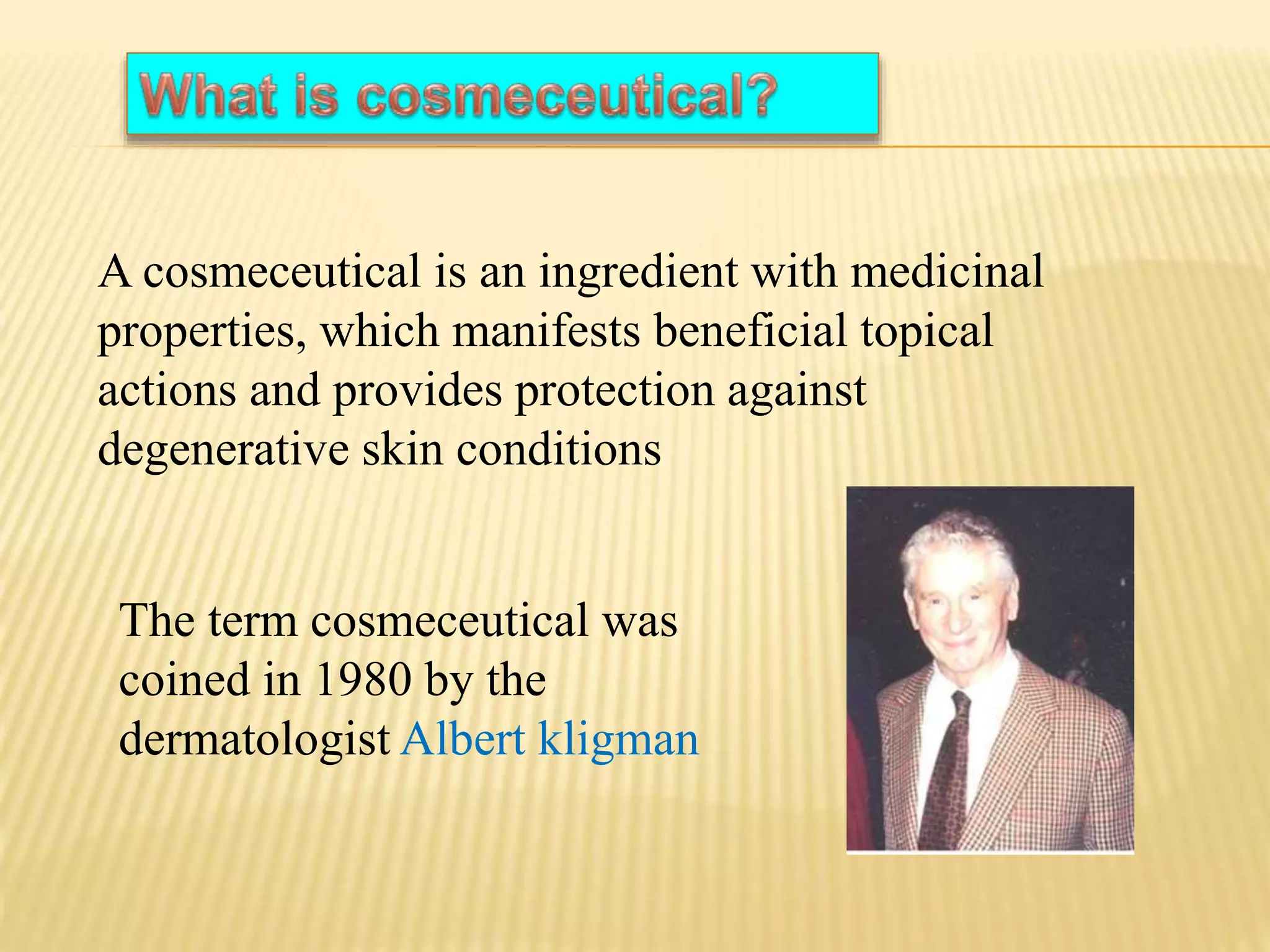
A cosmeceutical is an ingredient with medicinal
properties, which manifests beneficial topical
actions and provides protection against
degenerative skin conditions
The term cosmeceutical was
coined in 1980 by the
dermatologist Albert kligman
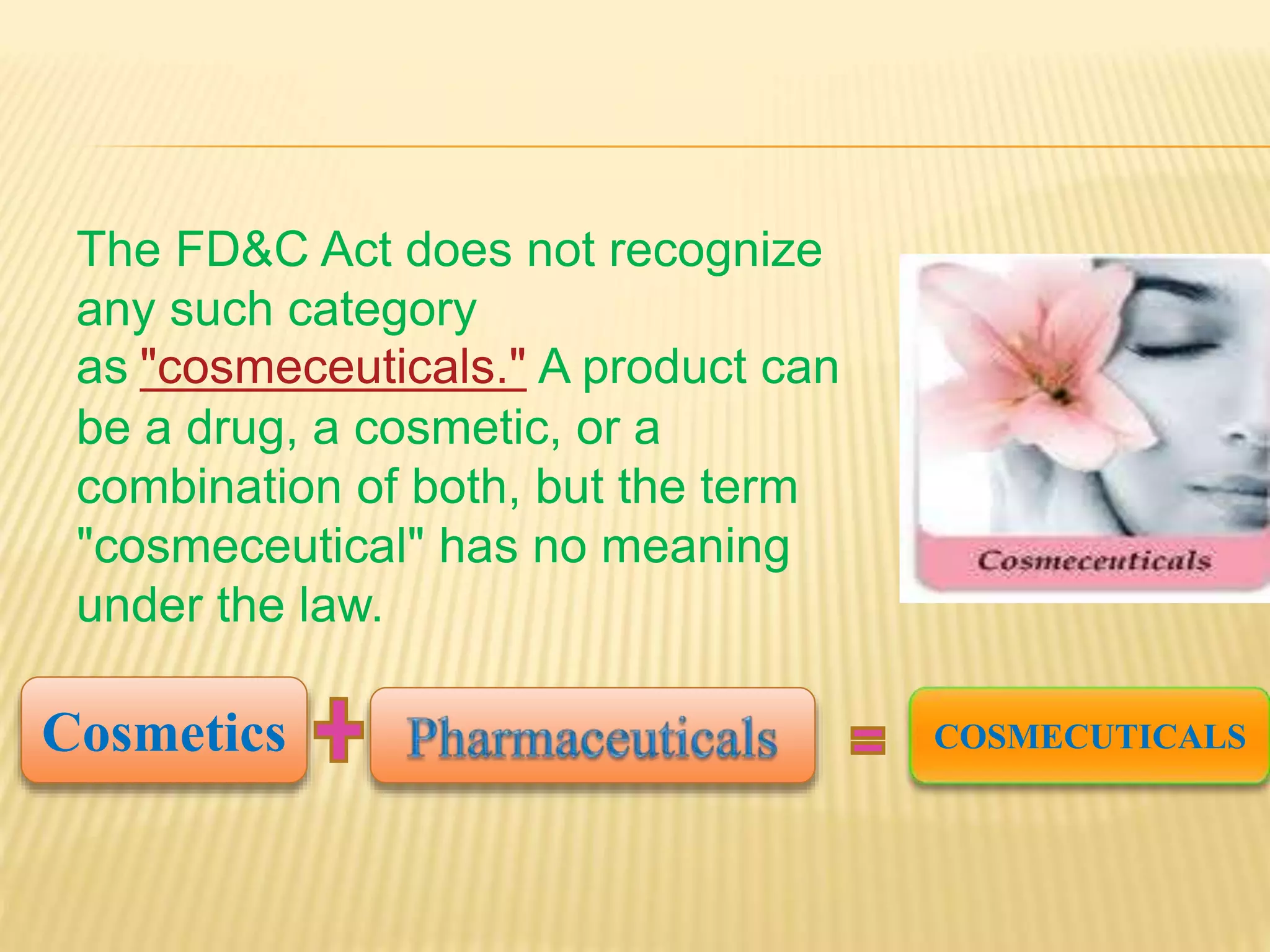
The FD&C Act does not recognize
any such category
as "cosmeceuticals." A product can
be a drug, a cosmetic, or a
combination of both, but the term
"cosmeceutical" has no meaning
under the law.
Cosmetics COSMECUTICALS
"articles intended to be rubbed, poured,
sprinkled, or sprayed on, introduced into, or
otherwise applied to the human body...for
cleansing, beautifying, promoting
attractiveness, or altering the appearance"
DRUG
"articles intended for use in the diagnosis, cure,
mitigation, treatment, or prevention of disease"
and "articles (other than food) intended to affect
the structure or any function of the body of man
or other animals
COSMETICS
According to FD&C Act.
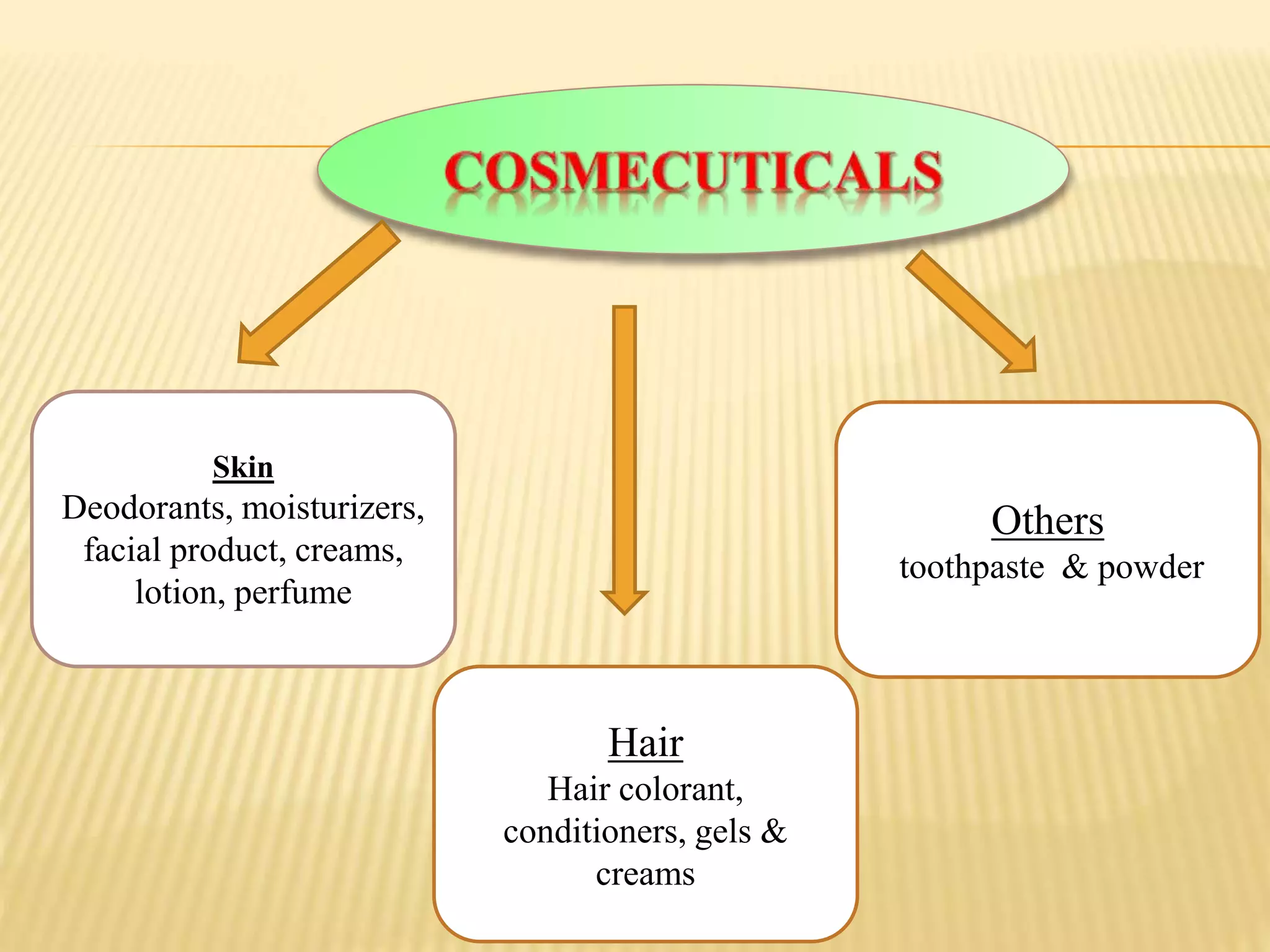
Skin
Deodorants, moisturizers,
facial product, creams,
lotion, perfume
Hair
Hair colorant,
conditioners, gels &
creams
Others
toothpaste & powder
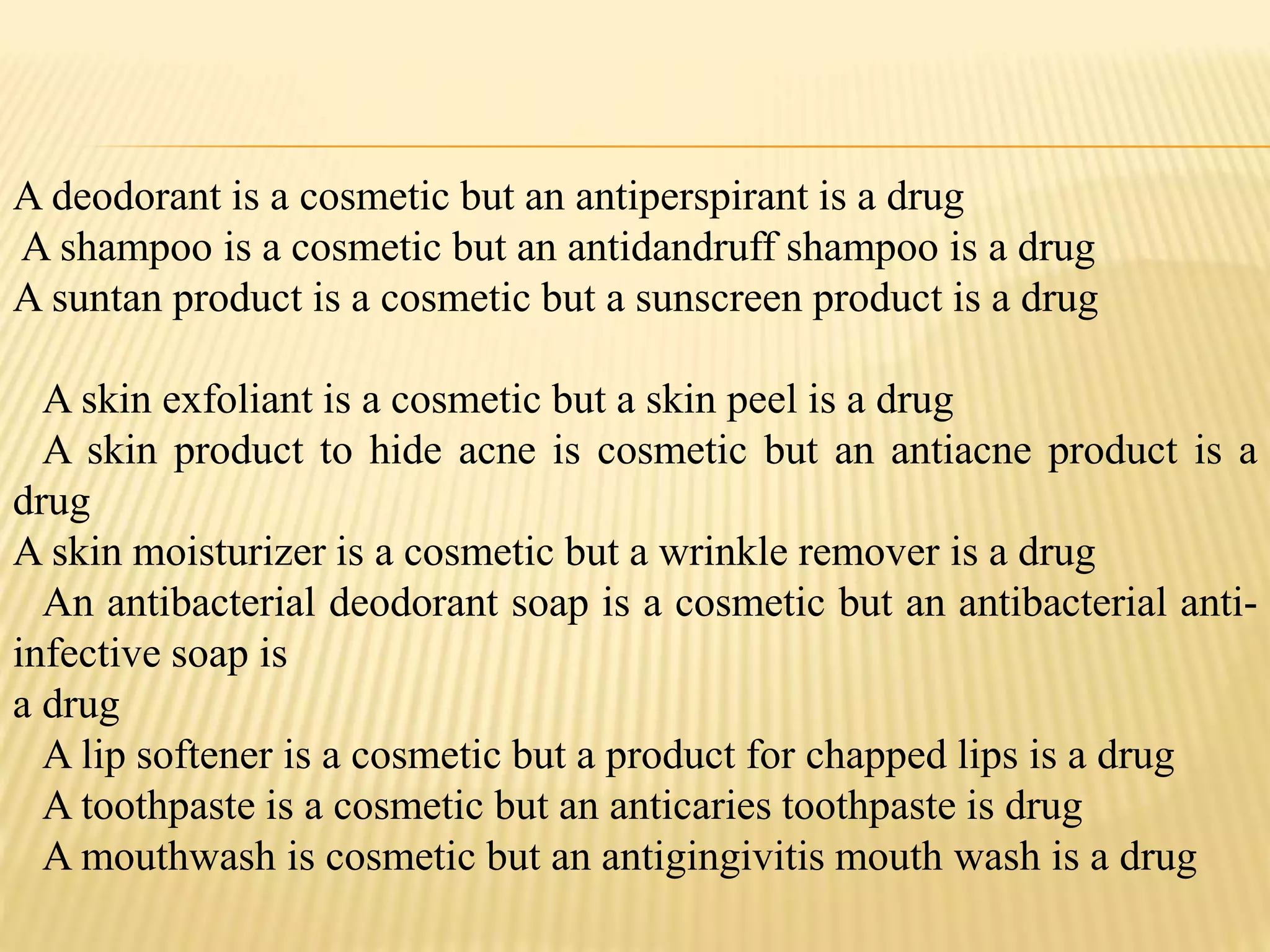
A deodorant is a cosmetic but an antiperspirant is a drug
A shampoo is a cosmetic but an antidandruff shampoo is a drug
A suntan product is a cosmetic but a sunscreen product is a drug
A skin exfoliant is a cosmetic but a skin peel is a drug
A skin product to hide acne is cosmetic but an antiacne product is a
drug
A skin moisturizer is a cosmetic but a wrinkle remover is a drug
An antibacterial deodorant soap is a cosmetic but an antibacterial anti-
infective soap is
a drug
A lip softener is a cosmetic but a product for chapped lips is a drug
A toothpaste is a cosmetic but an anticaries toothpaste is drug
A mouthwash is cosmetic but an antigingivitis mouth wash is a drug
•Uv protection
•Exfoliants
•Alpha hydroxy acids
Lactic acid
Glycolic acid
•Beta hydroxy acids
•Retinoids
•Moisturizers
•Antioxidants
•Peptides
•De-pigmenting agents
List of common ingredient used in cosmeceuticals
UVA wavelengths penetrate deeply into the dermis, causing
skin to wrinkle.
UVB radiation is associated with many skin cancers.
The SPF number on sun blockers only applies to UVB
protection and has no connection with UVA protection. A SPF
number of 30 is recommended for daily use.
Higher numbers do not proportionately increase protection.
•Uv protection
•Exfoliants
Exfoliants remove dead cells and the outer
layers of thickened skin, encouraging skin
turnover.
•Alpha hydroxy acids
Softens fine wrinkles, lightens pigmentation
spots, generally tightens and improves skin
texture. Makes skin look healthier and
more radiant
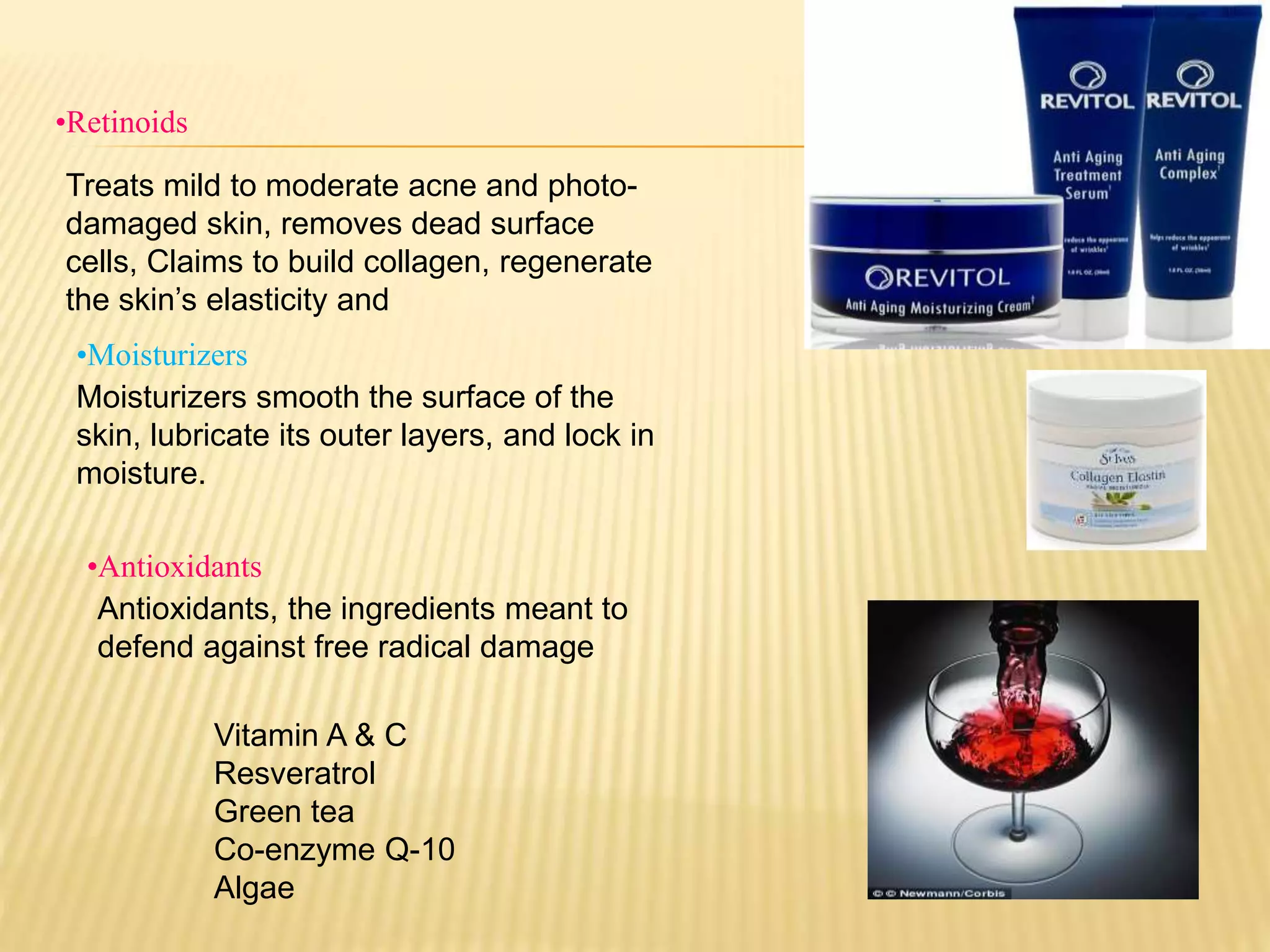
•Retinoids
Treats mild to moderate acne and photo-
damaged skin, removes dead surface
cells, Claims to build collagen, regenerate
the skin’s elasticity and
•Antioxidants
•Moisturizers
Moisturizers smooth the surface of the
skin, lubricate its outer layers, and lock in
moisture.
Antioxidants, the ingredients meant to
defend against free radical damage
Vitamin A & C
Resveratrol
Green tea
Co-enzyme Q-10
Algae
peptides that may stimulate skin
metabolism and repair, while others
may inhibit hyperpigmentation,
slow the breakdown of collagen
•Peptides
Eg: Argireline
Aging results from cumulative damage to tissues
that overwhelm the body's natural ability to repair
them. The tell tale signs of aging on the skin include
discoloration, wrinkles, and texture loss
These effects result from
•Genetically programmed chronological aging
•Photoaging - sun exposure
•Environmental and lifestyle factors –
damage by chemicals, pollutants, smoking,
etc.
Why Does Skin Age??
Certain synthetic organic substances or sunscreens have
molecular structures that are capable of "filtering out" the
harmful UV rays by mechanisms including absorption,
reflection or diffusion.
Examples include avobenzone, sulisobenzone, aminobenzoic
acid, titanium oxide, zinc oxide and others. Such ingredients
appear in the FDA monograph on sunscreen agents.
Sunscreens are regulated as over the counter drugs by the
FDA.
The efficacy of sunscreens is measured as SPF (sun
protection factor).
What are Sunscreens?
UV damage is manifested as
• sunburn,
• skin discoloration
•texture loss.
UV rays also trigger skin aging through:
Free radical reactions and oxidative stress.
Increased activity of enzymes such as collagenase
and elastase that are catalyzed by metal ions.
Effect of UV Rays
Photoaging - sun exposure
The results are:
 Abnormal cross linking of Collagen
fibers
 Scar tissue build up and visible
wrinkles and skin discoloration
 Ravages of chronological aging are
accelerated
Drug Name Concentration % Absorbance
Aminobenzoic acid up to 15 UVB
Avobenzone 2-3 UVA I
Cinoxate up to 3 UVB
Dioxybenzone II up to 3 UVB, UVA I & II
Homosalate up to 15 UVB
Menthyl anthranilate up to 5 UVA II
Octyl methoxycinnamate up to 7.5 UVB
Octisalate up to 5 UVB
Oxybenzone up to 5 UVB
Padimate O up to 8 UVB
Phenylbenzimidazole sulfonic acid up to 4 UVB
Sulisobenzone up to 10 UVB, UVA II
Titanium dioxide 2-25 Physical
Trolamine salicylate up to 12 UVB
Zinc oxide 2-20 Physical
The sunscreens listed in the FDA OTC monograph
Several natural extracts protect the skin from the
damaging effects of UV rays:
•Tetrahydrocurcuminoids
•SabiWhite
•Green tea Extract
•Sesame antioxidants
•Umbelliferin
•Xylosin
•Rosemary extract
•Rosmarinic acid
•Lupeol
•Arjunolic acid
•In vitro testing
•Cumulative Irritation testing
•Repeat Insult Patch Tests (RIPT)
•Sensitization
•Ocular Irritation
•Facial Sting
•Phototoxicity
•Photoallergy
•Comedogenicity
•Acnegenicity
Product Safety Testing
Testing needs are determined by the company
marketing the product .May include:
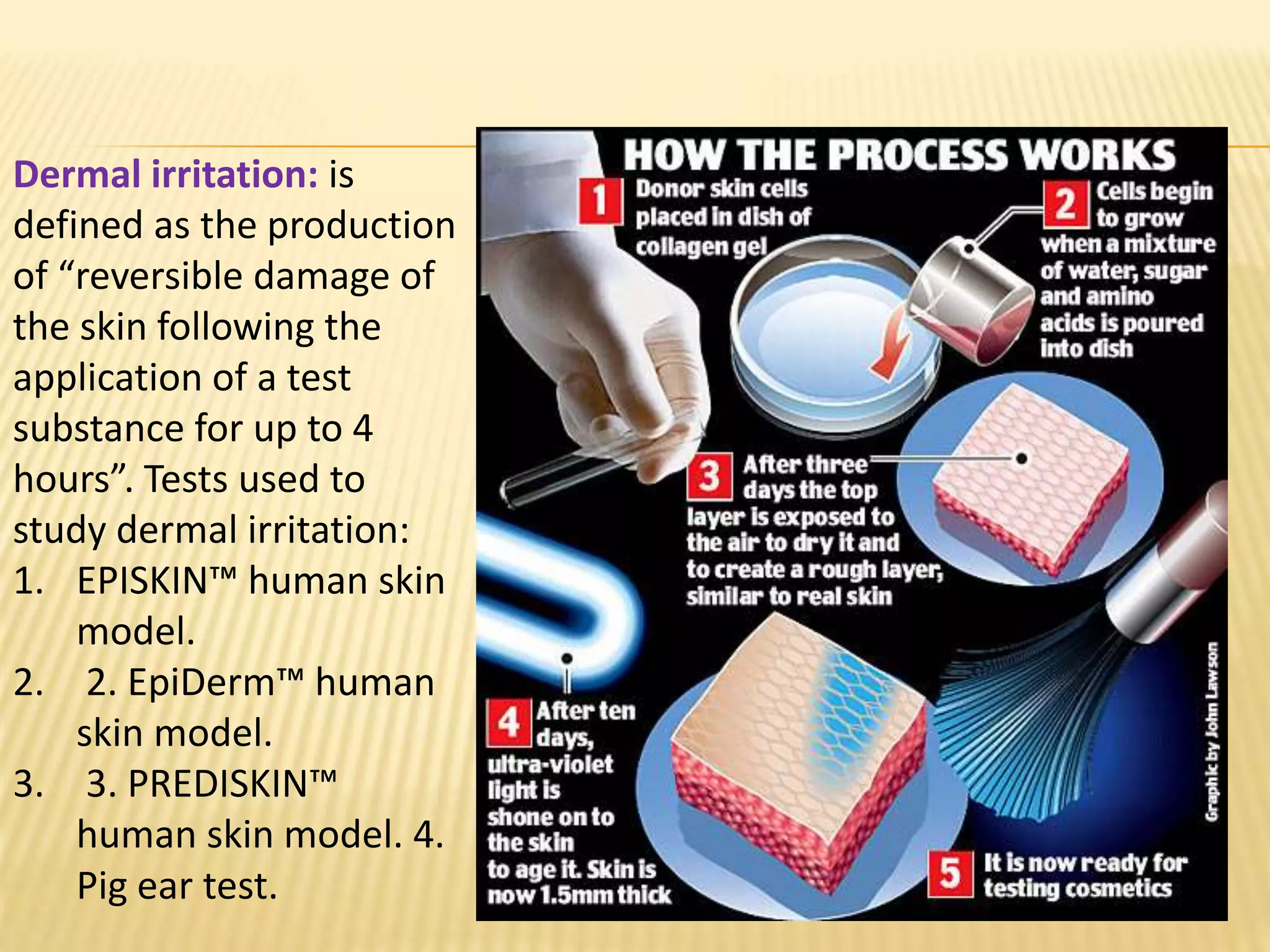
Dermal irritation: is
defined as the production
of “reversible damage of
the skin following the
application of a test
substance for up to 4
hours”. Tests used to
study dermal irritation:
1. EPISKIN™ human skin
model.
2. 2. EpiDerm™ human
skin model.
3. 3. PREDISKIN™
human skin model. 4.
Pig ear test.
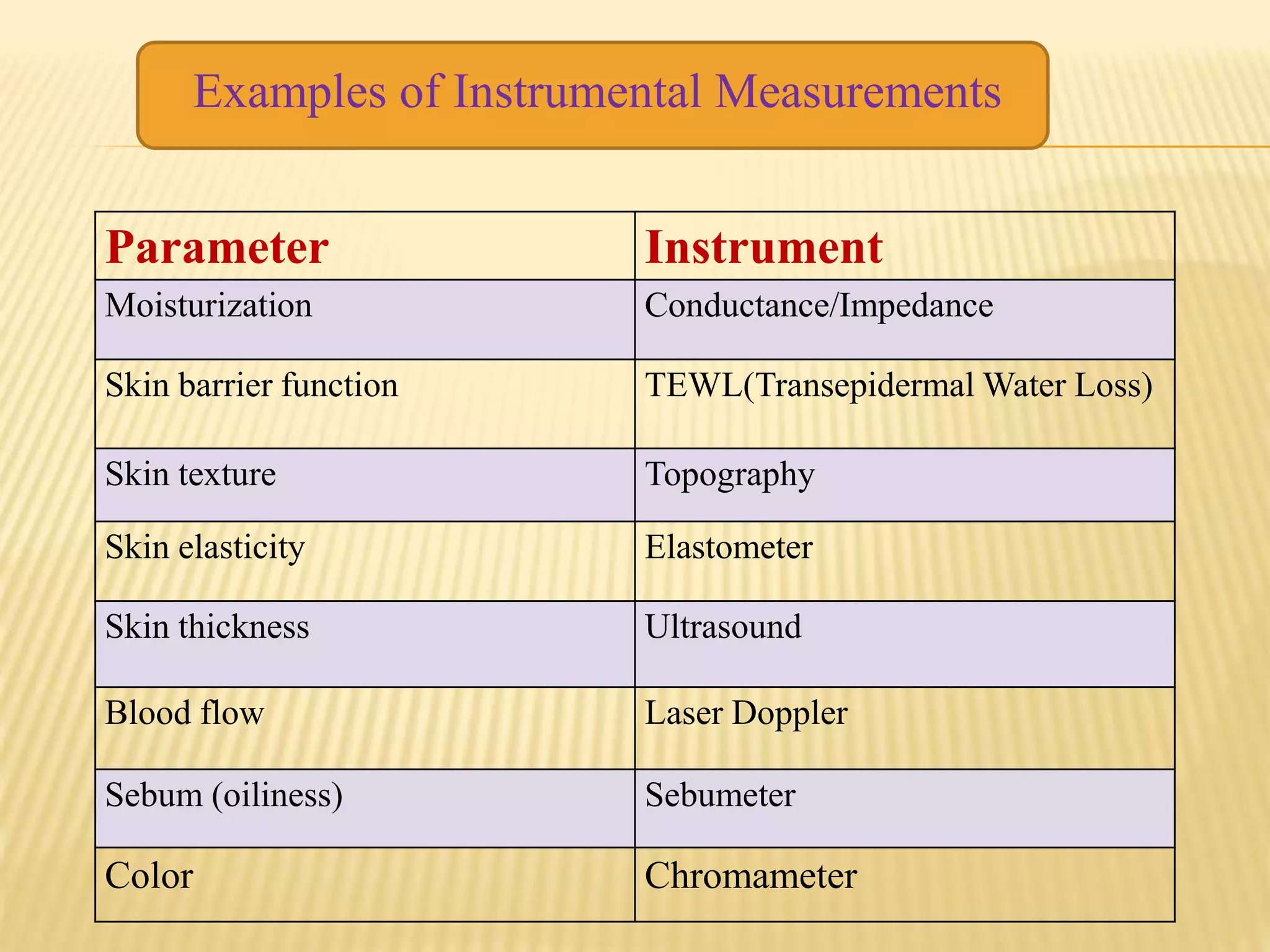
Examples of Instrumental Measurements
Parameter Instrument
Moisturization Conductance/Impedance
Skin barrier function TEWL(Transepidermal Water Loss)
Skin texture Topography
Skin elasticity Elastometer
Skin thickness Ultrasound
Blood flow Laser Doppler
Sebum (oiliness) Sebumeter
Color Chromameter
Moisturization → Conductance/Impedance
Skin barrier function → TEWL(Transepidermal Water Loss)
Skin texture → Topography
Skin elasticity → Elastometer
Skin thickness → Ultrasound
Skin surface characteristics → Microscopy
Temperature → Infrared Thermography
pH → Skin pH probe
Color → Chromameter
Blood flow→ Laser Doppler
Sebum (oiliness) → Sebumeter
Examples of Instrumental Measurements
•Safe for long-terms use
•Promote beauty throught health and wellness of skin
•cosmeceuticals with natural ingredients are preferred
Advantage of cosmeceuticals
1) Textbook of Industrial Pharmacy: Delivery Systems, &
Cosmetics & Herbal Technology. by Shobha Rani Hiremath,
Universities Press. Page no. 291- 301
2) Food & Drug Administration (FDA)
http://www.fda.gov/
3) Cosmetic, Toiletry, and Fragrance Association (CTFA)
http://www.ctfa.org
4) Thornfeldt C. Cosmeceuticals containing herbs: fact, fiction, and
future. Dermatol Surg. Jul 2005;31(7 Pt 2):873‐80;
REFERENCE
Cosmeceutical

Cosmeceutical

  • 1.
    Present by : Pravinpatel M.S PHARMACEUTICS
  • 2.
    A cosmeceutical isan ingredient with medicinal properties, which manifests beneficial topical actions and provides protection against degenerative skin conditions The term cosmeceutical was coined in 1980 by the dermatologist Albert kligman
  • 3.
    The FD&C Actdoes not recognize any such category as "cosmeceuticals." A product can be a drug, a cosmetic, or a combination of both, but the term "cosmeceutical" has no meaning under the law. Cosmetics COSMECUTICALS
  • 4.
    "articles intended tobe rubbed, poured, sprinkled, or sprayed on, introduced into, or otherwise applied to the human body...for cleansing, beautifying, promoting attractiveness, or altering the appearance" DRUG "articles intended for use in the diagnosis, cure, mitigation, treatment, or prevention of disease" and "articles (other than food) intended to affect the structure or any function of the body of man or other animals COSMETICS According to FD&C Act.
  • 5.
    Skin Deodorants, moisturizers, facial product,creams, lotion, perfume Hair Hair colorant, conditioners, gels & creams Others toothpaste & powder
  • 6.
    A deodorant isa cosmetic but an antiperspirant is a drug A shampoo is a cosmetic but an antidandruff shampoo is a drug A suntan product is a cosmetic but a sunscreen product is a drug A skin exfoliant is a cosmetic but a skin peel is a drug A skin product to hide acne is cosmetic but an antiacne product is a drug A skin moisturizer is a cosmetic but a wrinkle remover is a drug An antibacterial deodorant soap is a cosmetic but an antibacterial anti- infective soap is a drug A lip softener is a cosmetic but a product for chapped lips is a drug A toothpaste is a cosmetic but an anticaries toothpaste is drug A mouthwash is cosmetic but an antigingivitis mouth wash is a drug
  • 7.
    •Uv protection •Exfoliants •Alpha hydroxyacids Lactic acid Glycolic acid •Beta hydroxy acids •Retinoids •Moisturizers •Antioxidants •Peptides •De-pigmenting agents List of common ingredient used in cosmeceuticals
  • 8.
    UVA wavelengths penetratedeeply into the dermis, causing skin to wrinkle. UVB radiation is associated with many skin cancers. The SPF number on sun blockers only applies to UVB protection and has no connection with UVA protection. A SPF number of 30 is recommended for daily use. Higher numbers do not proportionately increase protection. •Uv protection •Exfoliants Exfoliants remove dead cells and the outer layers of thickened skin, encouraging skin turnover. •Alpha hydroxy acids Softens fine wrinkles, lightens pigmentation spots, generally tightens and improves skin texture. Makes skin look healthier and more radiant
  • 9.
    •Retinoids Treats mild tomoderate acne and photo- damaged skin, removes dead surface cells, Claims to build collagen, regenerate the skin’s elasticity and •Antioxidants •Moisturizers Moisturizers smooth the surface of the skin, lubricate its outer layers, and lock in moisture. Antioxidants, the ingredients meant to defend against free radical damage Vitamin A & C Resveratrol Green tea Co-enzyme Q-10 Algae
  • 10.
    peptides that maystimulate skin metabolism and repair, while others may inhibit hyperpigmentation, slow the breakdown of collagen •Peptides Eg: Argireline
  • 11.
    Aging results fromcumulative damage to tissues that overwhelm the body's natural ability to repair them. The tell tale signs of aging on the skin include discoloration, wrinkles, and texture loss These effects result from •Genetically programmed chronological aging •Photoaging - sun exposure •Environmental and lifestyle factors – damage by chemicals, pollutants, smoking, etc. Why Does Skin Age??
  • 12.
    Certain synthetic organicsubstances or sunscreens have molecular structures that are capable of "filtering out" the harmful UV rays by mechanisms including absorption, reflection or diffusion. Examples include avobenzone, sulisobenzone, aminobenzoic acid, titanium oxide, zinc oxide and others. Such ingredients appear in the FDA monograph on sunscreen agents. Sunscreens are regulated as over the counter drugs by the FDA. The efficacy of sunscreens is measured as SPF (sun protection factor). What are Sunscreens?
  • 13.
    UV damage ismanifested as • sunburn, • skin discoloration •texture loss. UV rays also trigger skin aging through: Free radical reactions and oxidative stress. Increased activity of enzymes such as collagenase and elastase that are catalyzed by metal ions. Effect of UV Rays Photoaging - sun exposure
  • 14.
    The results are: Abnormal cross linking of Collagen fibers  Scar tissue build up and visible wrinkles and skin discoloration  Ravages of chronological aging are accelerated
  • 15.
    Drug Name Concentration% Absorbance Aminobenzoic acid up to 15 UVB Avobenzone 2-3 UVA I Cinoxate up to 3 UVB Dioxybenzone II up to 3 UVB, UVA I & II Homosalate up to 15 UVB Menthyl anthranilate up to 5 UVA II Octyl methoxycinnamate up to 7.5 UVB Octisalate up to 5 UVB Oxybenzone up to 5 UVB Padimate O up to 8 UVB Phenylbenzimidazole sulfonic acid up to 4 UVB Sulisobenzone up to 10 UVB, UVA II Titanium dioxide 2-25 Physical Trolamine salicylate up to 12 UVB Zinc oxide 2-20 Physical The sunscreens listed in the FDA OTC monograph
  • 16.
    Several natural extractsprotect the skin from the damaging effects of UV rays: •Tetrahydrocurcuminoids •SabiWhite •Green tea Extract •Sesame antioxidants •Umbelliferin •Xylosin •Rosemary extract •Rosmarinic acid •Lupeol •Arjunolic acid
  • 17.
    •In vitro testing •CumulativeIrritation testing •Repeat Insult Patch Tests (RIPT) •Sensitization •Ocular Irritation •Facial Sting •Phototoxicity •Photoallergy •Comedogenicity •Acnegenicity Product Safety Testing Testing needs are determined by the company marketing the product .May include:
  • 18.
    Dermal irritation: is definedas the production of “reversible damage of the skin following the application of a test substance for up to 4 hours”. Tests used to study dermal irritation: 1. EPISKIN™ human skin model. 2. 2. EpiDerm™ human skin model. 3. 3. PREDISKIN™ human skin model. 4. Pig ear test.
  • 19.
    Examples of InstrumentalMeasurements Parameter Instrument Moisturization Conductance/Impedance Skin barrier function TEWL(Transepidermal Water Loss) Skin texture Topography Skin elasticity Elastometer Skin thickness Ultrasound Blood flow Laser Doppler Sebum (oiliness) Sebumeter Color Chromameter
  • 20.
    Moisturization → Conductance/Impedance Skinbarrier function → TEWL(Transepidermal Water Loss) Skin texture → Topography Skin elasticity → Elastometer Skin thickness → Ultrasound Skin surface characteristics → Microscopy Temperature → Infrared Thermography pH → Skin pH probe Color → Chromameter Blood flow→ Laser Doppler Sebum (oiliness) → Sebumeter Examples of Instrumental Measurements
  • 21.
    •Safe for long-termsuse •Promote beauty throught health and wellness of skin •cosmeceuticals with natural ingredients are preferred Advantage of cosmeceuticals
  • 22.
    1) Textbook ofIndustrial Pharmacy: Delivery Systems, & Cosmetics & Herbal Technology. by Shobha Rani Hiremath, Universities Press. Page no. 291- 301 2) Food & Drug Administration (FDA) http://www.fda.gov/ 3) Cosmetic, Toiletry, and Fragrance Association (CTFA) http://www.ctfa.org 4) Thornfeldt C. Cosmeceuticals containing herbs: fact, fiction, and future. Dermatol Surg. Jul 2005;31(7 Pt 2):873‐80; REFERENCE