Stent design aspects
        Part A – Overview

                                                                     Dr. Amir Kraitzer


The contents of materials available on this presentation are reserved. Content may not be reproduced,
published, or transferred except with the prior written permission of Dr. Amir Kraitzer
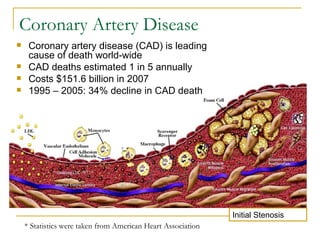
Coronary Artery Disease
    Coronary artery disease (CAD) is leading
     cause of death world-wide
    CAD deaths estimated 1 in 5 annually
    Costs $151.6 billion in 2007
    1995 – 2005: 34% decline in CAD death


                                                              Initial Stenosis
    * Statistics were taken from American Heart Association
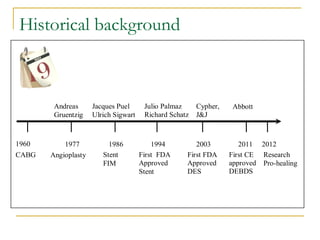
Historical background


          Andreas      Jacques Puel      Julio Palmaz     Cypher,    Abbott
          Gruentzig    Ulrich Sigwart    Richard Schatz   J&J


1960
  1977       1977           1986            1994         2003          2011 2012
CABG     Angioplasty      Stent         First FDA     First FDA     First CE Research
                          FIM           Approved      Approved      approved Pro-healing
                                        Stent         DES           DEBDS
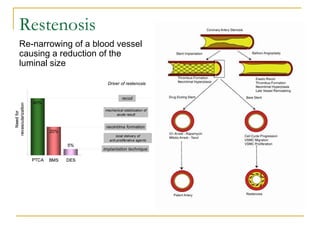
Restenosis
        Re-narrowing of a blood vessel
        causing a reduction of the
        luminal size

                                         Driver of restenosis


                                                  recoil
                    40%
revascularization


                                        mechanical stabilization of
    Need for


                                              acute result


                                        neointima formation
                           20%
                                               local delivery of
                                          anti-proliferative agents
                                 5%
                                       implantation technique

                    PTCA   BMS   DES
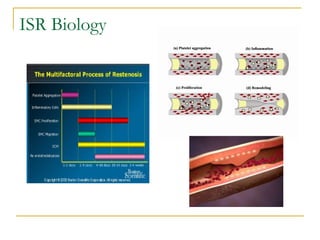
ISR Biology
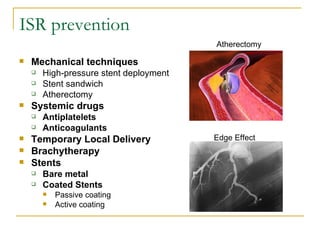
ISR prevention
                                         Atherectomy

   Mechanical techniques
       High-pressure stent deployment
       Stent sandwich
       Atherectomy
   Systemic drugs
       Antiplatelets
       Anticoagulants
   Temporary Local Delivery             Edge Effect
   Brachytherapy
   Stents
       Bare metal
       Coated Stents
           Passive coating
           Active coating
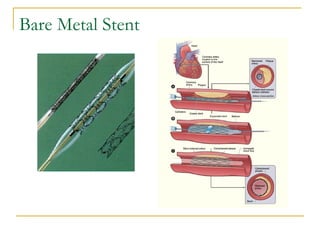
Bare Metal Stent
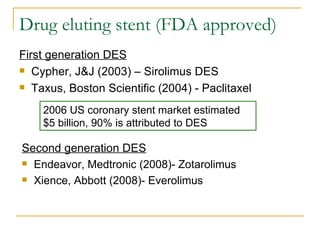
Drug eluting stent (FDA approved)
First generation DES
 Cypher, J&J (2003) – Sirolimus DES

 Taxus, Boston Scientific (2004) - Paclitaxel


    2006 US coronary stent market estimated
    $5 billion, 90% is attributed to DES

Second generation DES
 Endeavor, Medtronic (2008)- Zotarolimus

 Xience, Abbott (2008)- Everolimus
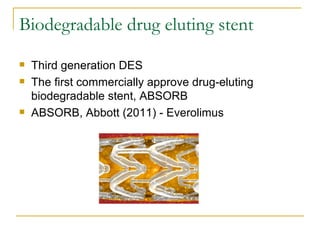
Biodegradable drug eluting stent
   Third generation DES
   The first commercially approve drug-eluting
    biodegradable stent, ABSORB
   ABSORB, Abbott (2011) - Everolimus
Current and Future Research

   Biodegradable Stents
   Pro-healing approach
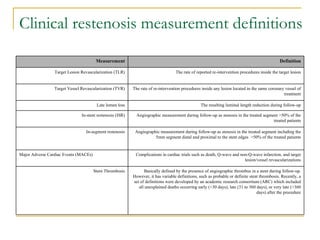
Clinical restenosis measurement definitions

                                        Measurement                                                                                           Definition

                 Target Lesion Revascularization (TLR)                             The rate of reported re-intervention procedures inside the target lesion


                 Target Vessel Revascularization (TVR)     The rate of re-intervention procedures inside any lesion located in the same coronary vessel of
                                                                                                                                                treatment

                                        Late lumen loss                                          The resulting luminal length reduction during follow-up

                               In-stent restenosis (ISR)     Angiographic measurement during follow-up as stenosis in the treated segment >50% of the
                                                                                                                                       treated patients

                                 In-segment restenosis      Angiographic measurement during follow-up as stenosis in the treated segment including the
                                                                      5mm segment distal and proximal to the stent edges >50% of the treated patients


Major Adverse Cardiac Events (MACEs)                        Complications in cardiac trials such as death, Q-wave and non-Q-wave infarction, and target
                                                                                                                        lesion/vessel revascularizations

                                       Stent Thrombosis          Basically defined by the presence of angiographic thrombus in a stent during follow-up.
                                                           However, it has variable definitions, such as probable or definite stent thrombosis. Recently, a
                                                           set of definitions were developed by an academic research consortium (ARC) which included
                                                              all unexplained deaths occurring early (<30 days), late (31 to 360 days), or very late (>360
                                                                                                                                  days) after the procedure

Coronary Stent - Part A - Overview

  • 1.
    Stent design aspects Part A – Overview Dr. Amir Kraitzer The contents of materials available on this presentation are reserved. Content may not be reproduced, published, or transferred except with the prior written permission of Dr. Amir Kraitzer
  • 2.
    Coronary Artery Disease  Coronary artery disease (CAD) is leading cause of death world-wide  CAD deaths estimated 1 in 5 annually  Costs $151.6 billion in 2007  1995 – 2005: 34% decline in CAD death Initial Stenosis * Statistics were taken from American Heart Association
  • 3.
    Historical background Andreas Jacques Puel Julio Palmaz Cypher, Abbott Gruentzig Ulrich Sigwart Richard Schatz J&J 1960 1977 1977 1986 1994 2003 2011 2012 CABG Angioplasty Stent First FDA First FDA First CE Research FIM Approved Approved approved Pro-healing Stent DES DEBDS
  • 4.
    Restenosis Re-narrowing of a blood vessel causing a reduction of the luminal size Driver of restenosis recoil 40% revascularization mechanical stabilization of Need for acute result neointima formation 20% local delivery of anti-proliferative agents 5% implantation technique PTCA BMS DES
  • 5.
  • 6.
    ISR prevention Atherectomy  Mechanical techniques  High-pressure stent deployment  Stent sandwich  Atherectomy  Systemic drugs  Antiplatelets  Anticoagulants  Temporary Local Delivery Edge Effect  Brachytherapy  Stents  Bare metal  Coated Stents  Passive coating  Active coating
  • 7.
  • 8.
    Drug eluting stent(FDA approved) First generation DES  Cypher, J&J (2003) – Sirolimus DES  Taxus, Boston Scientific (2004) - Paclitaxel 2006 US coronary stent market estimated $5 billion, 90% is attributed to DES Second generation DES  Endeavor, Medtronic (2008)- Zotarolimus  Xience, Abbott (2008)- Everolimus
  • 9.
    Biodegradable drug elutingstent  Third generation DES  The first commercially approve drug-eluting biodegradable stent, ABSORB  ABSORB, Abbott (2011) - Everolimus
  • 10.
    Current and FutureResearch  Biodegradable Stents  Pro-healing approach
  • 11.
    Clinical restenosis measurementdefinitions Measurement Definition Target Lesion Revascularization (TLR) The rate of reported re-intervention procedures inside the target lesion Target Vessel Revascularization (TVR) The rate of re-intervention procedures inside any lesion located in the same coronary vessel of treatment Late lumen loss The resulting luminal length reduction during follow-up In-stent restenosis (ISR) Angiographic measurement during follow-up as stenosis in the treated segment >50% of the treated patients In-segment restenosis Angiographic measurement during follow-up as stenosis in the treated segment including the 5mm segment distal and proximal to the stent edges >50% of the treated patients Major Adverse Cardiac Events (MACEs) Complications in cardiac trials such as death, Q-wave and non-Q-wave infarction, and target lesion/vessel revascularizations Stent Thrombosis Basically defined by the presence of angiographic thrombus in a stent during follow-up. However, it has variable definitions, such as probable or definite stent thrombosis. Recently, a set of definitions were developed by an academic research consortium (ARC) which included all unexplained deaths occurring early (<30 days), late (31 to 360 days), or very late (>360 days) after the procedure