Abbott’s Bioabsorbable-Everolimus Eluting Stents  The Future Of Coronary Stents Meghana Venkatesh, Sean Wadel,  Shirley Cai, Miki Stanikic & Abi Saiyanthan
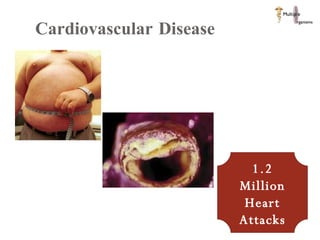
Cardiovascular Disease  1.2 Million Heart Attacks
Does the proposed fix:  Prove the improved safety and efficacy of the bioabsorbable stent over drug-eluting stents in a high risk population? Increase market share for the bioabsorbable stent?
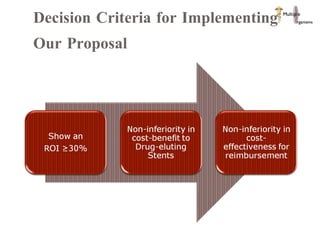
Decision Criteria for Implementing Our Proposal
Outline
Outline
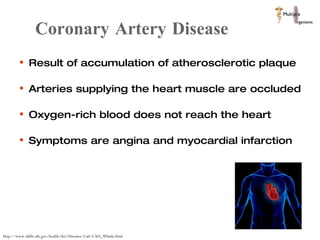
Coronary Artery Disease Result of accumulation of atherosclerotic plaque  Arteries supplying the heart muscle are occluded Oxygen-rich blood does not reach the heart Symptoms are angina and myocardial infarction  http://www.nhlbi.nih.gov/health/dci/Diseases/Cad/CAD_WhatIs.html
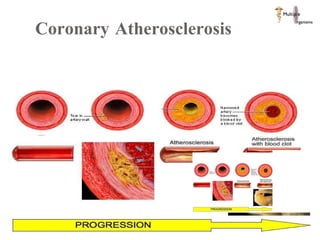
Coronary Atherosclerosis
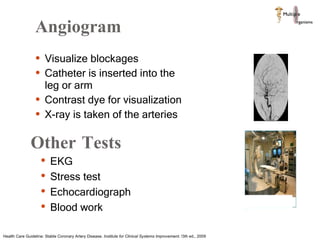
Angiogram Visualize blockages Catheter is inserted into the leg or arm Contrast dye for visualization X-ray is taken of the arteries Health Care Guideline: Stable Coronary Artery Disease.  Institute for Clinical Systems Improvement . !3th ed., 2009 Other Tests EKG Stress test Echocardiograph Blood work
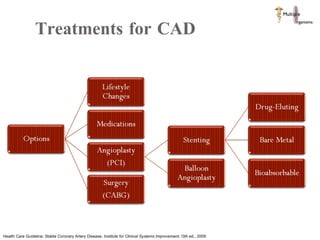
Treatments for CAD Health Care Guideline: Stable Coronary Artery Disease.  Institute for Clinical Systems Improvement . !3th ed., 2009
 
Video: Stenting Procedure  http://www.youtube.com/watch?v=gvRtP3wl_AY
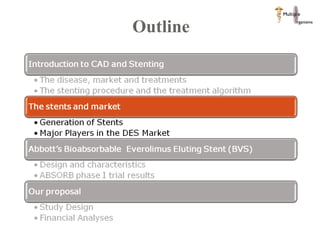
Outline
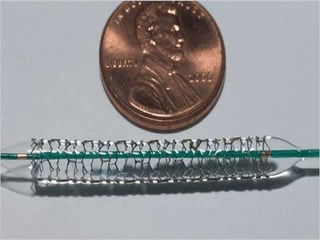
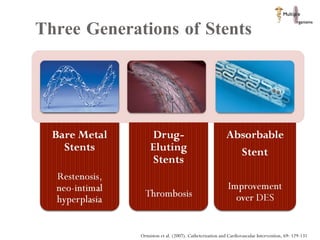
Three Generations of Stents  Ormiston et al. (2007). Catheterization and Cardiovascular Intervention, 69: 129-131
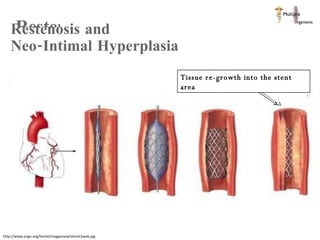
Restenosis  http://www.evgn.org/home/imagesnew/stentv2web.jpg Restenosis and  Neo-Intimal Hyperplasia  Tissue re-growth into the stent area
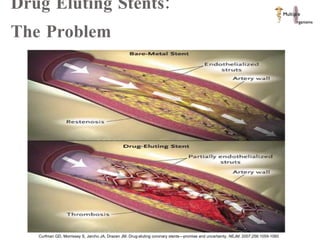
Drug Eluting Stents: The Problem Curfman GD, Morrissey S, Jarcho JA, Drazen JM. Drug-eluting coronary stents—promise and uncertainty.  NEJM . 2007;256:1059-1060
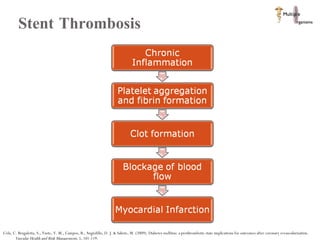
Stent Thrombosis Cola, C. Brugaletta, S., Yuste, V. M., Campos, B., Angiolillo, D. J. & Sabete, M. (2009). Diabetes mellitus: a prothrombotic state implications for outcomes after coronary revascularization.  Vascular Health and Risk Management , 5, 101-119.
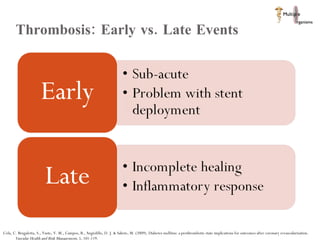
Thrombosis: Early vs. Late Events Cola, C. Brugaletta, S., Yuste, V. M., Campos, B., Angiolillo, D. J. & Sabete, M. (2009). Diabetes mellitus: a prothrombotic state implications for outcomes after coronary revascularization.  Vascular Health and Risk Management , 5, 101-119.
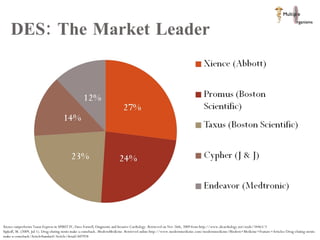
DES: The Market Leader  Xience outperforms Taxus Express in SPIRIT IV, Dave Fornell, Diagnostic and Invasive Cardiology. Retrieved on Nov 26th, 2009 from http://www.dicardiology.net/node/34463/3  Sipkoff, M. (2009, Jul 1). Drug-eluting stents make a comeback.  ModernMedicine.  Retrieved online http://www.modernmedicine.com/modernmedicine/Modern+Medicine+Feature+Articles/Drug-eluting-stents-make-a-comeback/ArticleStandard/Article/detail/607928
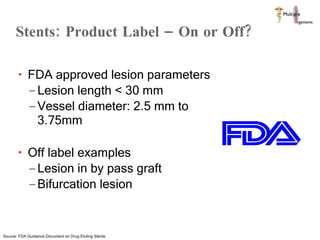
Stents: Product Label – On or Off?  FDA approved lesion parameters Lesion length < 30 mm Vessel diameter: 2.5 mm to 3.75mm Off label examples Lesion in by pass graft Bifurcation lesion Source: FDA Guidance Document on Drug Eluting Stents
Outline
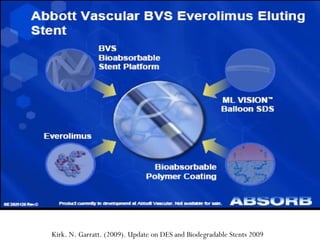
Kirk. N. Garratt. (2009). Update on DES and Biodegradable Stents 2009
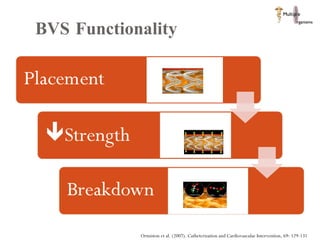
BVS Functionality Ormiston et al. (2007). Catheterization and Cardiovascular Intervention, 69: 129-131
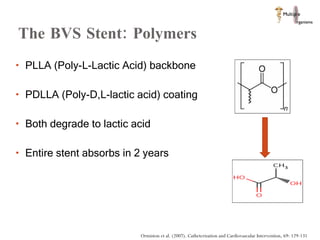
The BVS Stent: Polymers PLLA (Poly-L-Lactic Acid) backbone PDLLA (Poly-D,L-lactic acid) coating  Both degrade to lactic acid Entire stent absorbs in 2 years  Ormiston et al. (2007). Catheterization and Cardiovascular Intervention, 69: 129-131
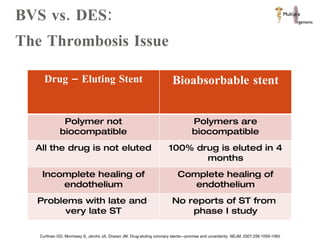
BVS vs. DES:  The Thrombosis Issue Curfman GD, Morrissey S, Jarcho JA, Drazen JM. Drug-eluting coronary stents—promise and uncertainty.  NEJM . 2007;256:1059-1060 Drug – Eluting Stent Bioabsorbable stent Polymer not biocompatible Polymers are biocompatible All the drug is not eluted 100% drug is eluted in 4 months Incomplete healing of endothelium Complete healing of endothelium Problems with late and  very late ST No reports of ST from  phase I study
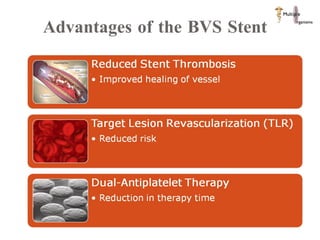
Advantages of the BVS Stent
ABSORB: First In-man Study 30 patients, single de novo lesions Composite endpoint:  Cardiac death, Myocardial Infarction, Target lesion revascularization (TLR) Secondary end points: In-stent late loss, late ST Results:  0% thrombosis, 0% TLR, MACE (3.3%) Ormiston et al. (2007). Catheterization and Cardiovascular Intervention, 69: 129-131
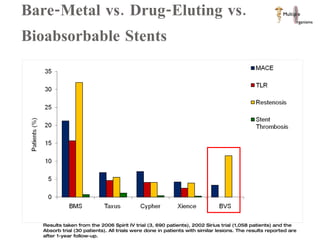
Bare-Metal vs. Drug-Eluting vs. Bioabsorbable Stents Results taken from the 2006 Spirit IV trial (3, 690 patients), 2002 Sirius trial (1,058 patients) and the Absorb trial (30 patients). All trials were done in patients with similar lesions. The results reported are after 1-year follow-up.
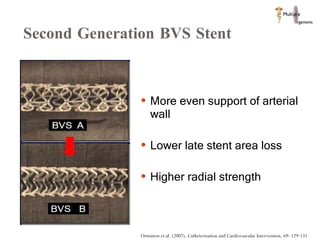
Second Generation BVS Stent More even support of arterial wall Lower late stent area loss Higher radial strength Ormiston et al. (2007). Catheterization and Cardiovascular Intervention, 69: 129-131
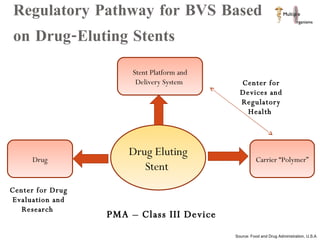
Regulatory Pathway for BVS Based on Drug-Eluting Stents  Drug Eluting Stent  Stent Platform and Delivery System  Drug Carrier “Polymer” PMA – Class III Device  Source: Food and Drug Administration, U.S.A Center for Devices and Regulatory Health  Center for Drug Evaluation and Research
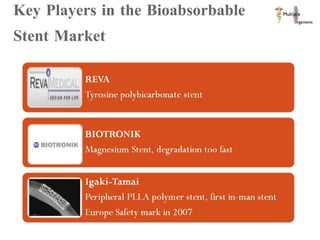
Key Players in the Bioabsorbable Stent Market
Outline
Diabetes Mellitus (DM)  Characteristics:  More progressive, diffuse and multi-vessel coronary disease  Complicated lesions in DM patients Pro-inflammatory and pro-thrombic states High platelet reactivity  Win, H. K., Caldera, A. E., Maresh, K., Lopez, J., Rihal, C. S., Parikh, M. A., Granada, J. F., Marulkar, S., Nassif, D., Cohen, D. J. & Kleiman, N. S. (2007). Clinical Outcomes and Stent Thrombosis Following Off-Label Use of Drug-Eluting Stents.  The Journal of the American Medical Association,  297(18), 2001-2009.
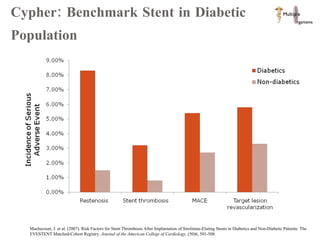
Cypher: Benchmark Stent in Diabetic Population Machecourt, J. et al. (2007). Risk Factors for Stent Thrombosis After Implantation of Sirolimus-Eluting Stents in Diabetics and Non-Diabetic Patients: The EVESTENT Matched-Cohort Registry.  Journal of the American College of Cardiology,  (50)6, 501-508
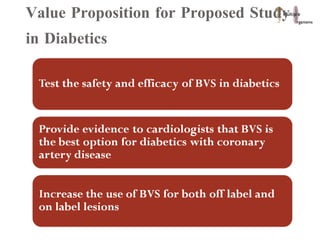
Value Proposition for Proposed Study in Diabetics
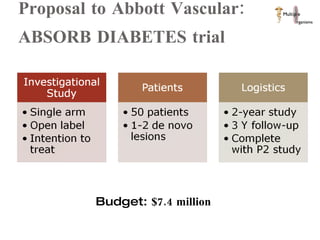
Proposal to Abbott Vascular: ABSORB DIABETES trial Budget:  $7.4 million
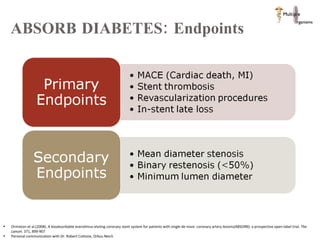
ABSORB DIABETES: Endpoints Ormiston et al.(2008). A bioabsorbable everolimus-eluting coronary stent system for patients with single de-novo  coronary artery lesions(ABSORB): a prospective open-label trial.  The Lancet . 371, 899-907 Personal communication with Dr. Robert Cottone, Orbus Neich
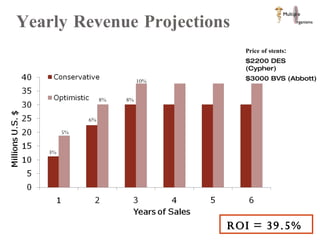
Yearly Revenue Projections ROI = 39.5%  3% 5% 10% 8% 8% 6% Price of stents : $2200 DES (Cypher)  $3000 BVS (Abbott)
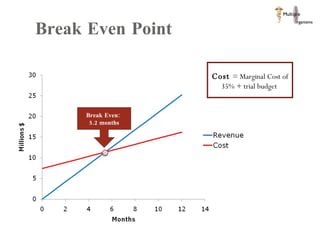
Break Even Point  Break Even:  5.2 months Cost  = Marginal Cost of 35% + trial budget
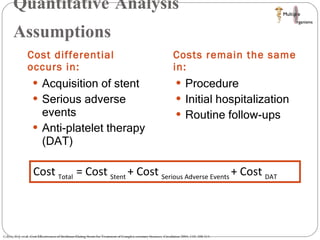
Quantitative Analysis Assumptions Costs remain the same in:  Cost differential occurs in:  Procedure Initial hospitalization Routine follow-ups Acquisition of stent Serious adverse events Anti-platelet therapy (DAT)  Cohen, D.J. et al. Cost Effectiveness of Sirolimus-Eluting Stents for Treatment of Complex coronary Stenoses. Circulation 2004; 110: 508-514. Cost  Total  = Cost  Stent  + Cost  Serious Adverse Events  + Cost  DAT
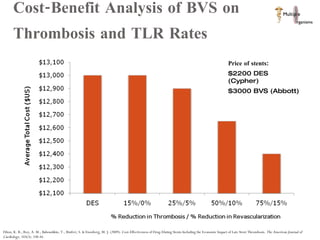
Cost-Benefit Analysis of BVS on Thrombosis and TLR Rates Filion, K. B., Roy, A. M., Baboushkin, T., Rinfret, S. & Eisenberg, M. J. (2009). Cost-Effectiveness of Drug-Eluting Stents Including the Economic Impact of Late Stent Thrombosis.  The American Journal of Cardiology,  103(3): 338-44.  Price of stents : $2200 DES (Cypher)  $3000 BVS (Abbott)
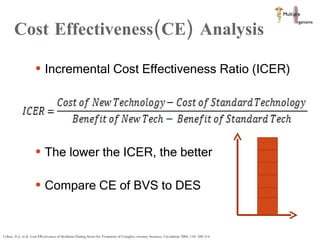
Cost Effectiveness(CE) Analysis  Incremental Cost Effectiveness Ratio (ICER) The lower the ICER, the better Compare CE of BVS to DES Cohen, D.J. et al. Cost Effectiveness of Sirolimus-Eluting Stents for Treatment of Complex coronary Stenoses. Circulation 2004; 110: 508-514.
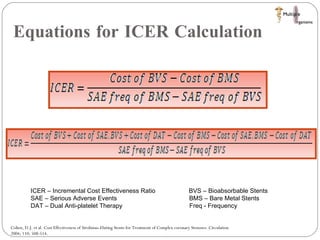
Equations for ICER Calculation  Cohen, D.J. et al. Cost Effectiveness of Sirolimus-Eluting Stents for Treatment of Complex coronary Stenoses. Circulation 2004; 110: 508-514. ICER – Incremental Cost Effectiveness Ratio  BVS – Bioabsorbable Stents SAE – Serious Adverse Events  BMS – Bare Metal Stents DAT – Dual Anti-platelet Therapy  Freq - Frequency
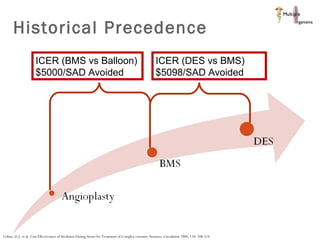
Historical Precedence ICER (BMS vs Balloon)  $5000/SAD Avoided  ICER (DES vs BMS)  $5098/SAD Avoided Cohen, D.J. et al. Cost Effectiveness of Sirolimus-Eluting Stents for Treatment of Complex coronary Stenoses. Circulation 2004; 110: 508-514.
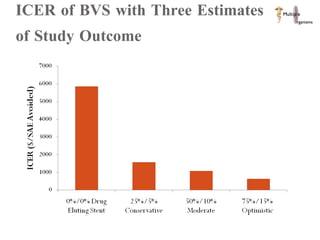
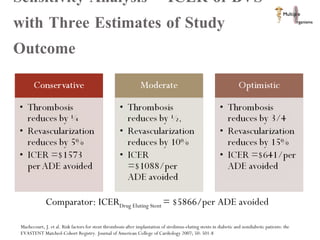
ICER of BVS with Three Estimates of Study Outcome
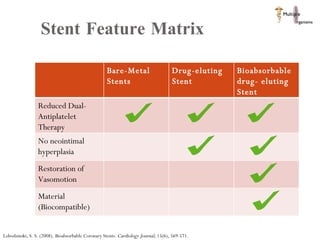
Stent Feature Matrix  Bare-Metal Stents Drug-eluting Stent Bioabsorbable drug- eluting Stent  Reduced Dual-Antiplatelet Therapy No neointimal hyperplasia  Restoration of Vasomotion Material (Biocompatible) Lobodzinski, S. S. (2008). Bioabsorbable Coronary Stents.  Cardiology Journal , 15(6), 569-571.
Conclusion  Large coronary stent market BVS improves on thrombosis Proposed trial : to demonstrate favourability of BVS over DES in diabetics  BVS has the potential to be economically feasible for device manufacturer and healthcare insurers
Acknowledgements Dr. Jayson Parker, M.Biotech Dr. Michael Kutryk, St. Michael’s Hospital Dr. Geoff Puley, Trillium Health Center Jennie Kim, Abbott Vascular, U.S.A Dr. Robert Cottone, Orbis Neich Dr. Janarthan Nikhil, Credit Valley Dr. Sidney Kremer, Credit Valley Dr. Kirandeep Nagi, Credit Valley Joanne Barrette, Abbott Vascular Margaret Chong, Abbott Vascular Dr.  Jeffrey Pang, Sunnybrook Health Sciences Center  Dr. Linda Mackeigan, Leslie Dan School of Pharmacy Dr. Peter Seidelin, Toronto General Hospital
Thank you for listening. Questions?
Supplementary Slides
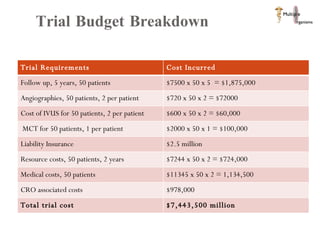
Trial Budget Breakdown Trial Requirements  Cost Incurred Follow up, 5 years, 50 patients $7500 x 50 x 5  = $1,875,000 Angiographies, 50 patients, 2 per patient $720 x 50 x 2 = $72000 Cost of IVUS for 50 patients, 2 per patient $600 x 50 x 2 = $60,000 MCT for 50 patients, 1 per patient $2000 x 50 x 1 = $100,000 Liability Insurance $2.5 million Resource costs, 50 patients, 2 years $7244 x 50 x 2 = $724,000 Medical costs, 50 patients $11345 x 50 x 2 = 1,134,500 CRO associated costs $978,000 Total trial cost $7,443,500 million
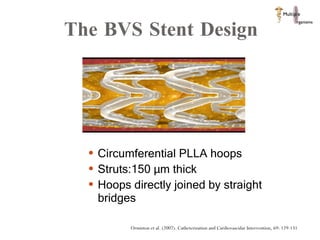
The BVS Stent Design Circumferential PLLA hoops Struts:150 µm thick Hoops directly joined by straight bridges Ormiston et al. (2007). Catheterization and Cardiovascular Intervention, 69: 129-131
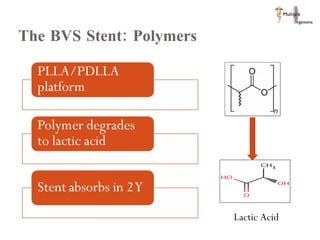
The BVS Stent: Polymers Lactic Acid
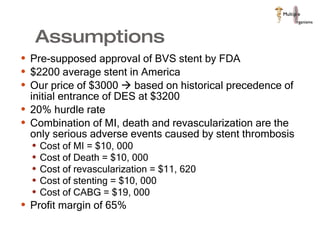
Assumptions Pre-supposed approval of BVS stent by FDA $2200 average stent in America  Our price of $3000    based on historical precedence of initial entrance of DES at $3200  20% hurdle rate Combination of MI, death and revascularization are the only serious adverse events caused by stent thrombosis  Cost of MI = $10, 000 Cost of Death = $10, 000 Cost of revascularization = $11, 620  Cost of stenting = $10, 000 Cost of CABG = $19, 000  Profit margin of 65%
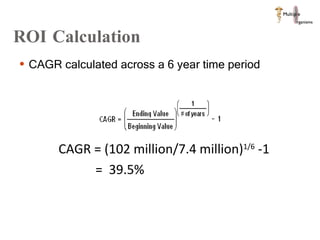
ROI Calculation CAGR calculated across a 6 year time period CAGR = (102 million/7.4 million) 1/6  -1 =  39.5%
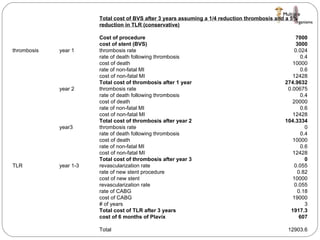
Total cost of BVS after 3 years assuming a 1/4 reduction thrombosis and a 5% reduction in TLR (conservative) Cost of procedure  7000 cost of stent (BVS) 3000 thrombosis year 1 thrombosis rate 0.024 rate of death following thrombosis 0.4 cost of death 10000 rate of non-fatal MI 0.6 cost of non-fatal MI 12428 Total cost of thrombosis after 1 year 274.9632 year 2  thrombosis rate 0.00675 rate of death following thrombosis 0.4 cost of death 20000 rate of non-fatal MI 0.6 cost of non-fatal MI 12428 Total cost of thrombosis after year 2  104.3334 year3 thrombosis rate 0 rate of death following thrombosis 0.4 cost of death 10000 rate of non-fatal MI 0.6 cost of non-fatal MI 12428 Total cost of thrombosis after year 3 0 TLR year 1-3 revascularization rate 0.055 rate of new stent procedure 0.82 cost of new stent 10000 revascularization rate 0.055 rate of CABG 0.18 cost of CABG 19000 # of years 3 Total cost of TLR after 3 years 1917.3 cost of 6 months of Plavix 607 Total 12903.6
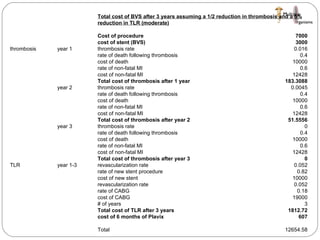
Total cost of BVS after 3 years assuming a 1/2 reduction in thrombosis and a 5% reduction in TLR (moderate) Cost of procedure  7000 cost of stent (BVS) 3000 thrombosis year 1 thrombosis rate 0.016 rate of death following thrombosis 0.4 cost of death 10000 rate of non-fatal MI 0.6 cost of non-fatal MI 12428 Total cost of thrombosis after 1 year 183.3088 year 2  thrombosis rate 0.0045 rate of death following thrombosis 0.4 cost of death 10000 rate of non-fatal MI 0.6 cost of non-fatal MI 12428 Total cost of thrombosis after year 2  51.5556 year 3 thrombosis rate 0 rate of death following thrombosis 0.4 cost of death 10000 rate of non-fatal MI 0.6 cost of non-fatal MI 12428 Total cost of thrombosis after year 3 0 TLR year 1-3 revascularization rate 0.052 rate of new stent procedure 0.82 cost of new stent 10000 revascularization rate 0.052 rate of CABG 0.18 cost of CABG 19000 # of years 3 Total cost of TLR after 3 years 1812.72 cost of 6 months of Plavix 607 Total 12654.58
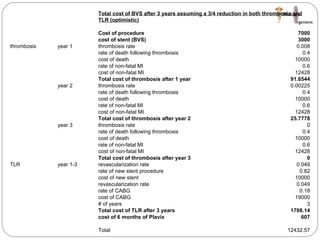
Total cost of BVS after 3 years assuming a 3/4 reduction in both thrombosis and TLR (optimistic) Cost of procedure  7000 cost of stent (BVS) 3000 thrombosis year 1 thrombosis rate 0.008 rate of death following thrombosis 0.4 cost of death 10000 rate of non-fatal MI 0.6 cost of non-fatal MI 12428 Total cost of thrombosis after 1 year 91.6544 year 2  thrombosis rate 0.00225 rate of death following thrombosis 0.4 cost of death 10000 rate of non-fatal MI 0.6 cost of non-fatal MI 12428 Total cost of thrombosis after year 2  25.7778 year 3 thrombosis rate 0 rate of death following thrombosis 0.4 cost of death 10000 rate of non-fatal MI 0.6 cost of non-fatal MI 12428 Total cost of thrombosis after year 3 0 TLR year 1-3 revascularization rate 0.049 rate of new stent procedure 0.82 cost of new stent 10000 revascularization rate 0.049 rate of CABG 0.18 cost of CABG 19000 # of years 3 Total cost of TLR after 3 years 1708.14 cost of 6 months of Plavix 607 Total 12432.57
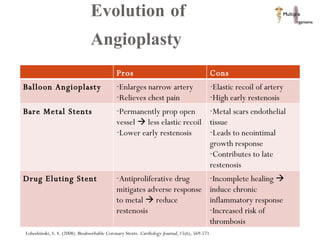
Evolution of Angioplasty Lobodzinski, S. S. (2008). Bioabsorbable Coronary Stents.  Cardiology Journal , 15(6), 569-571.  Pros Cons Balloon Angioplasty  Enlarges narrow artery Relieves chest pain  Elastic recoil of artery  High early restenosis  Bare Metal Stents Permanently prop open vessel    less elastic recoil Lower early restenosis  Metal scars endothelial tissue Leads to neointimal growth response Contributes to late restenosis Drug Eluting Stent Antiproliferative drug mitigates adverse response to metal    reduce restenosis  Incomplete healing    induce chronic inflammatory response  Increased risk of thrombosis
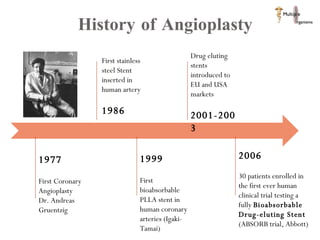
History of Angioplasty  First stainless steel Stent inserted in human artery 1986 2006   30 patients enrolled in the first ever human clinical trial testing a fully  Bioabsorbable Drug-eluting Stent  (ABSORB trial, Abbott) Drug eluting stents introduced to EU and USA markets 2001-2003 1999 First bioabsorbable PLLA stent in human coronary arteries (Igaki-Tamai) 1977 First Coronary Angioplasty Dr. Andreas Gruentzig
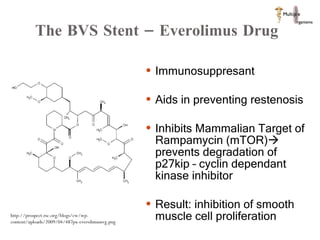
The BVS Stent – Everolimus Drug Immunosuppresant Aids in preventing restenosis Inhibits Mammalian Target of Rampamycin (mTOR)   prevents degradation of p27kip – cyclin dependant kinase inhibitor Result: inhibition of smooth muscle cell proliferation http://prospect.rsc.org/blogs/cw/wp-content/uploads/2009/04/487px-everolimussvg.png
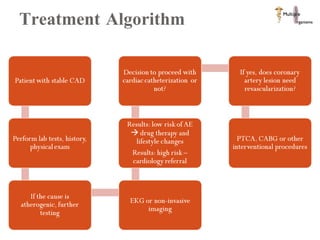
Treatment Algorithm
Sensitivity Analysis – ICER of BVS with Three Estimates of Study Outcome  Comparator: ICER Drug Eluting Stent  = $5866/per ADE avoided  Machecourt, J. et al. Risk factors for stent thrombosis after implantation of sirolimus-eluting stents in diabetic and nondiabetic patients: the EVASTENT Matched-Cohort Registry. Journal of American College of Cardiology 2007; 50: 501-8
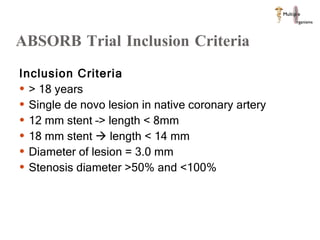
ABSORB Trial Inclusion Criteria Inclusion Criteria > 18 years Single de novo lesion in native coronary artery 12 mm stent –> length < 8mm 18 mm stent    length < 14 mm Diameter of lesion = 3.0 mm Stenosis diameter >50% and <100%
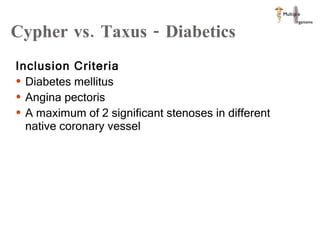
Cypher vs. Taxus - Diabetics Inclusion Criteria Diabetes mellitus Angina pectoris A maximum of 2 significant stenoses in different native coronary vessel
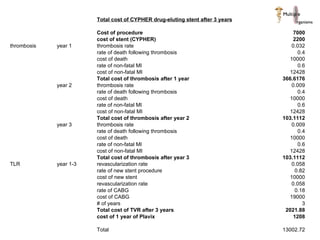
Total cost of CYPHER drug-eluting stent after 3 years Cost of procedure  7000 cost of stent (CYPHER) 2200 thrombosis year 1 thrombosis rate 0.032 rate of death following thrombosis 0.4 cost of death 10000 rate of non-fatal MI 0.6 cost of non-fatal MI 12428 Total cost of thrombosis after 1 year 366.6176 year 2  thrombosis rate 0.009 rate of death following thrombosis 0.4 cost of death 10000 rate of non-fatal MI 0.6 cost of non-fatal MI 12428 Total cost of thrombosis after year 2  103.1112 year 3 thrombosis rate 0.009 rate of death following thrombosis 0.4 cost of death 10000 rate of non-fatal MI 0.6 cost of non-fatal MI 12428 Total cost of thrombosis after year 3 103.1112 TLR year 1-3 revascularization rate 0.058 rate of new stent procedure 0.82 cost of new stent 10000 revascularization rate 0.058 rate of CABG 0.18 cost of CABG 19000 # of years 3 Total cost of TVR after 3 years 2021.88 cost of 1 year of Plavix 1208 Total 13002.72
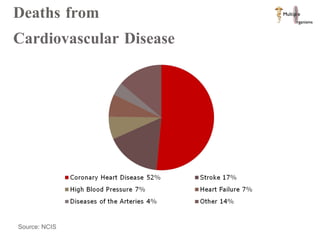
Deaths from  Cardiovascular Disease Source: NCIS
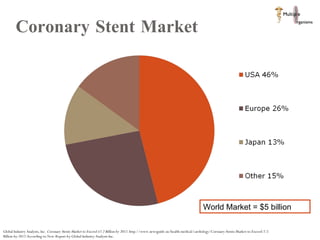
Coronary Stent Market Global Industry Analysts, Inc.  Coronary Stents Market to Exceed $7.2 Billion by 2012.  http://www.newsguide.us/health-medical/cardiology/Coronary-Stents-Market-to-Exceed-7-2-Billion-by-2012-According-to-New-Report-by-Global-Industry-Analysts-Inc .  World Market = $5 billion

Bioabsorbable Drug-Eluting Cardiac Stent Analysis

  • 1.
    Abbott’s Bioabsorbable-Everolimus ElutingStents The Future Of Coronary Stents Meghana Venkatesh, Sean Wadel, Shirley Cai, Miki Stanikic & Abi Saiyanthan
  • 2.
    Cardiovascular Disease 1.2 Million Heart Attacks
  • 3.
    Does the proposedfix: Prove the improved safety and efficacy of the bioabsorbable stent over drug-eluting stents in a high risk population? Increase market share for the bioabsorbable stent?
  • 4.
    Decision Criteria forImplementing Our Proposal
  • 5.
  • 6.
  • 7.
    Coronary Artery DiseaseResult of accumulation of atherosclerotic plaque Arteries supplying the heart muscle are occluded Oxygen-rich blood does not reach the heart Symptoms are angina and myocardial infarction http://www.nhlbi.nih.gov/health/dci/Diseases/Cad/CAD_WhatIs.html
  • 8.
  • 9.
    Angiogram Visualize blockagesCatheter is inserted into the leg or arm Contrast dye for visualization X-ray is taken of the arteries Health Care Guideline: Stable Coronary Artery Disease. Institute for Clinical Systems Improvement . !3th ed., 2009 Other Tests EKG Stress test Echocardiograph Blood work
  • 10.
    Treatments for CADHealth Care Guideline: Stable Coronary Artery Disease. Institute for Clinical Systems Improvement . !3th ed., 2009
  • 11.
  • 12.
    Video: Stenting Procedure http://www.youtube.com/watch?v=gvRtP3wl_AY
  • 13.
  • 14.
    Three Generations ofStents Ormiston et al. (2007). Catheterization and Cardiovascular Intervention, 69: 129-131
  • 15.
    Restenosis http://www.evgn.org/home/imagesnew/stentv2web.jpgRestenosis and Neo-Intimal Hyperplasia Tissue re-growth into the stent area
  • 16.
    Drug Eluting Stents:The Problem Curfman GD, Morrissey S, Jarcho JA, Drazen JM. Drug-eluting coronary stents—promise and uncertainty. NEJM . 2007;256:1059-1060
  • 17.
    Stent Thrombosis Cola,C. Brugaletta, S., Yuste, V. M., Campos, B., Angiolillo, D. J. & Sabete, M. (2009). Diabetes mellitus: a prothrombotic state implications for outcomes after coronary revascularization. Vascular Health and Risk Management , 5, 101-119.
  • 18.
    Thrombosis: Early vs.Late Events Cola, C. Brugaletta, S., Yuste, V. M., Campos, B., Angiolillo, D. J. & Sabete, M. (2009). Diabetes mellitus: a prothrombotic state implications for outcomes after coronary revascularization. Vascular Health and Risk Management , 5, 101-119.
  • 19.
    DES: The MarketLeader Xience outperforms Taxus Express in SPIRIT IV, Dave Fornell, Diagnostic and Invasive Cardiology. Retrieved on Nov 26th, 2009 from http://www.dicardiology.net/node/34463/3 Sipkoff, M. (2009, Jul 1). Drug-eluting stents make a comeback. ModernMedicine. Retrieved online http://www.modernmedicine.com/modernmedicine/Modern+Medicine+Feature+Articles/Drug-eluting-stents-make-a-comeback/ArticleStandard/Article/detail/607928
  • 20.
    Stents: Product Label– On or Off? FDA approved lesion parameters Lesion length < 30 mm Vessel diameter: 2.5 mm to 3.75mm Off label examples Lesion in by pass graft Bifurcation lesion Source: FDA Guidance Document on Drug Eluting Stents
  • 21.
  • 22.
    Kirk. N. Garratt.(2009). Update on DES and Biodegradable Stents 2009
  • 23.
    BVS Functionality Ormistonet al. (2007). Catheterization and Cardiovascular Intervention, 69: 129-131
  • 24.
    The BVS Stent:Polymers PLLA (Poly-L-Lactic Acid) backbone PDLLA (Poly-D,L-lactic acid) coating Both degrade to lactic acid Entire stent absorbs in 2 years Ormiston et al. (2007). Catheterization and Cardiovascular Intervention, 69: 129-131
  • 25.
    BVS vs. DES: The Thrombosis Issue Curfman GD, Morrissey S, Jarcho JA, Drazen JM. Drug-eluting coronary stents—promise and uncertainty. NEJM . 2007;256:1059-1060 Drug – Eluting Stent Bioabsorbable stent Polymer not biocompatible Polymers are biocompatible All the drug is not eluted 100% drug is eluted in 4 months Incomplete healing of endothelium Complete healing of endothelium Problems with late and very late ST No reports of ST from phase I study
  • 26.
  • 27.
    ABSORB: First In-manStudy 30 patients, single de novo lesions Composite endpoint: Cardiac death, Myocardial Infarction, Target lesion revascularization (TLR) Secondary end points: In-stent late loss, late ST Results: 0% thrombosis, 0% TLR, MACE (3.3%) Ormiston et al. (2007). Catheterization and Cardiovascular Intervention, 69: 129-131
  • 28.
    Bare-Metal vs. Drug-Elutingvs. Bioabsorbable Stents Results taken from the 2006 Spirit IV trial (3, 690 patients), 2002 Sirius trial (1,058 patients) and the Absorb trial (30 patients). All trials were done in patients with similar lesions. The results reported are after 1-year follow-up.
  • 29.
    Second Generation BVSStent More even support of arterial wall Lower late stent area loss Higher radial strength Ormiston et al. (2007). Catheterization and Cardiovascular Intervention, 69: 129-131
  • 30.
    Regulatory Pathway forBVS Based on Drug-Eluting Stents Drug Eluting Stent Stent Platform and Delivery System Drug Carrier “Polymer” PMA – Class III Device Source: Food and Drug Administration, U.S.A Center for Devices and Regulatory Health Center for Drug Evaluation and Research
  • 31.
    Key Players inthe Bioabsorbable Stent Market
  • 32.
  • 33.
    Diabetes Mellitus (DM) Characteristics: More progressive, diffuse and multi-vessel coronary disease Complicated lesions in DM patients Pro-inflammatory and pro-thrombic states High platelet reactivity Win, H. K., Caldera, A. E., Maresh, K., Lopez, J., Rihal, C. S., Parikh, M. A., Granada, J. F., Marulkar, S., Nassif, D., Cohen, D. J. & Kleiman, N. S. (2007). Clinical Outcomes and Stent Thrombosis Following Off-Label Use of Drug-Eluting Stents. The Journal of the American Medical Association, 297(18), 2001-2009.
  • 34.
    Cypher: Benchmark Stentin Diabetic Population Machecourt, J. et al. (2007). Risk Factors for Stent Thrombosis After Implantation of Sirolimus-Eluting Stents in Diabetics and Non-Diabetic Patients: The EVESTENT Matched-Cohort Registry. Journal of the American College of Cardiology, (50)6, 501-508
  • 35.
    Value Proposition forProposed Study in Diabetics
  • 36.
    Proposal to AbbottVascular: ABSORB DIABETES trial Budget: $7.4 million
  • 37.
    ABSORB DIABETES: EndpointsOrmiston et al.(2008). A bioabsorbable everolimus-eluting coronary stent system for patients with single de-novo coronary artery lesions(ABSORB): a prospective open-label trial. The Lancet . 371, 899-907 Personal communication with Dr. Robert Cottone, Orbus Neich
  • 38.
    Yearly Revenue ProjectionsROI = 39.5% 3% 5% 10% 8% 8% 6% Price of stents : $2200 DES (Cypher) $3000 BVS (Abbott)
  • 39.
    Break Even Point Break Even: 5.2 months Cost = Marginal Cost of 35% + trial budget
  • 40.
    Quantitative Analysis AssumptionsCosts remain the same in: Cost differential occurs in: Procedure Initial hospitalization Routine follow-ups Acquisition of stent Serious adverse events Anti-platelet therapy (DAT) Cohen, D.J. et al. Cost Effectiveness of Sirolimus-Eluting Stents for Treatment of Complex coronary Stenoses. Circulation 2004; 110: 508-514. Cost Total = Cost Stent + Cost Serious Adverse Events + Cost DAT
  • 41.
    Cost-Benefit Analysis ofBVS on Thrombosis and TLR Rates Filion, K. B., Roy, A. M., Baboushkin, T., Rinfret, S. & Eisenberg, M. J. (2009). Cost-Effectiveness of Drug-Eluting Stents Including the Economic Impact of Late Stent Thrombosis. The American Journal of Cardiology, 103(3): 338-44. Price of stents : $2200 DES (Cypher) $3000 BVS (Abbott)
  • 42.
    Cost Effectiveness(CE) Analysis Incremental Cost Effectiveness Ratio (ICER) The lower the ICER, the better Compare CE of BVS to DES Cohen, D.J. et al. Cost Effectiveness of Sirolimus-Eluting Stents for Treatment of Complex coronary Stenoses. Circulation 2004; 110: 508-514.
  • 43.
    Equations for ICERCalculation Cohen, D.J. et al. Cost Effectiveness of Sirolimus-Eluting Stents for Treatment of Complex coronary Stenoses. Circulation 2004; 110: 508-514. ICER – Incremental Cost Effectiveness Ratio BVS – Bioabsorbable Stents SAE – Serious Adverse Events BMS – Bare Metal Stents DAT – Dual Anti-platelet Therapy Freq - Frequency
  • 44.
    Historical Precedence ICER(BMS vs Balloon) $5000/SAD Avoided ICER (DES vs BMS) $5098/SAD Avoided Cohen, D.J. et al. Cost Effectiveness of Sirolimus-Eluting Stents for Treatment of Complex coronary Stenoses. Circulation 2004; 110: 508-514.
  • 45.
    ICER of BVSwith Three Estimates of Study Outcome
  • 46.
    Stent Feature Matrix Bare-Metal Stents Drug-eluting Stent Bioabsorbable drug- eluting Stent Reduced Dual-Antiplatelet Therapy No neointimal hyperplasia Restoration of Vasomotion Material (Biocompatible) Lobodzinski, S. S. (2008). Bioabsorbable Coronary Stents. Cardiology Journal , 15(6), 569-571.
  • 47.
    Conclusion Largecoronary stent market BVS improves on thrombosis Proposed trial : to demonstrate favourability of BVS over DES in diabetics BVS has the potential to be economically feasible for device manufacturer and healthcare insurers
  • 48.
    Acknowledgements Dr. JaysonParker, M.Biotech Dr. Michael Kutryk, St. Michael’s Hospital Dr. Geoff Puley, Trillium Health Center Jennie Kim, Abbott Vascular, U.S.A Dr. Robert Cottone, Orbis Neich Dr. Janarthan Nikhil, Credit Valley Dr. Sidney Kremer, Credit Valley Dr. Kirandeep Nagi, Credit Valley Joanne Barrette, Abbott Vascular Margaret Chong, Abbott Vascular Dr. Jeffrey Pang, Sunnybrook Health Sciences Center Dr. Linda Mackeigan, Leslie Dan School of Pharmacy Dr. Peter Seidelin, Toronto General Hospital
  • 49.
    Thank you forlistening. Questions?
  • 50.
  • 51.
    Trial Budget BreakdownTrial Requirements Cost Incurred Follow up, 5 years, 50 patients $7500 x 50 x 5 = $1,875,000 Angiographies, 50 patients, 2 per patient $720 x 50 x 2 = $72000 Cost of IVUS for 50 patients, 2 per patient $600 x 50 x 2 = $60,000 MCT for 50 patients, 1 per patient $2000 x 50 x 1 = $100,000 Liability Insurance $2.5 million Resource costs, 50 patients, 2 years $7244 x 50 x 2 = $724,000 Medical costs, 50 patients $11345 x 50 x 2 = 1,134,500 CRO associated costs $978,000 Total trial cost $7,443,500 million
  • 52.
    The BVS StentDesign Circumferential PLLA hoops Struts:150 µm thick Hoops directly joined by straight bridges Ormiston et al. (2007). Catheterization and Cardiovascular Intervention, 69: 129-131
  • 53.
    The BVS Stent:Polymers Lactic Acid
  • 54.
    Assumptions Pre-supposed approvalof BVS stent by FDA $2200 average stent in America Our price of $3000  based on historical precedence of initial entrance of DES at $3200 20% hurdle rate Combination of MI, death and revascularization are the only serious adverse events caused by stent thrombosis Cost of MI = $10, 000 Cost of Death = $10, 000 Cost of revascularization = $11, 620 Cost of stenting = $10, 000 Cost of CABG = $19, 000 Profit margin of 65%
  • 55.
    ROI Calculation CAGRcalculated across a 6 year time period CAGR = (102 million/7.4 million) 1/6 -1 = 39.5%
  • 56.
    Total cost ofBVS after 3 years assuming a 1/4 reduction thrombosis and a 5% reduction in TLR (conservative) Cost of procedure 7000 cost of stent (BVS) 3000 thrombosis year 1 thrombosis rate 0.024 rate of death following thrombosis 0.4 cost of death 10000 rate of non-fatal MI 0.6 cost of non-fatal MI 12428 Total cost of thrombosis after 1 year 274.9632 year 2 thrombosis rate 0.00675 rate of death following thrombosis 0.4 cost of death 20000 rate of non-fatal MI 0.6 cost of non-fatal MI 12428 Total cost of thrombosis after year 2 104.3334 year3 thrombosis rate 0 rate of death following thrombosis 0.4 cost of death 10000 rate of non-fatal MI 0.6 cost of non-fatal MI 12428 Total cost of thrombosis after year 3 0 TLR year 1-3 revascularization rate 0.055 rate of new stent procedure 0.82 cost of new stent 10000 revascularization rate 0.055 rate of CABG 0.18 cost of CABG 19000 # of years 3 Total cost of TLR after 3 years 1917.3 cost of 6 months of Plavix 607 Total 12903.6
  • 57.
    Total cost ofBVS after 3 years assuming a 1/2 reduction in thrombosis and a 5% reduction in TLR (moderate) Cost of procedure 7000 cost of stent (BVS) 3000 thrombosis year 1 thrombosis rate 0.016 rate of death following thrombosis 0.4 cost of death 10000 rate of non-fatal MI 0.6 cost of non-fatal MI 12428 Total cost of thrombosis after 1 year 183.3088 year 2 thrombosis rate 0.0045 rate of death following thrombosis 0.4 cost of death 10000 rate of non-fatal MI 0.6 cost of non-fatal MI 12428 Total cost of thrombosis after year 2 51.5556 year 3 thrombosis rate 0 rate of death following thrombosis 0.4 cost of death 10000 rate of non-fatal MI 0.6 cost of non-fatal MI 12428 Total cost of thrombosis after year 3 0 TLR year 1-3 revascularization rate 0.052 rate of new stent procedure 0.82 cost of new stent 10000 revascularization rate 0.052 rate of CABG 0.18 cost of CABG 19000 # of years 3 Total cost of TLR after 3 years 1812.72 cost of 6 months of Plavix 607 Total 12654.58
  • 58.
    Total cost ofBVS after 3 years assuming a 3/4 reduction in both thrombosis and TLR (optimistic) Cost of procedure 7000 cost of stent (BVS) 3000 thrombosis year 1 thrombosis rate 0.008 rate of death following thrombosis 0.4 cost of death 10000 rate of non-fatal MI 0.6 cost of non-fatal MI 12428 Total cost of thrombosis after 1 year 91.6544 year 2 thrombosis rate 0.00225 rate of death following thrombosis 0.4 cost of death 10000 rate of non-fatal MI 0.6 cost of non-fatal MI 12428 Total cost of thrombosis after year 2 25.7778 year 3 thrombosis rate 0 rate of death following thrombosis 0.4 cost of death 10000 rate of non-fatal MI 0.6 cost of non-fatal MI 12428 Total cost of thrombosis after year 3 0 TLR year 1-3 revascularization rate 0.049 rate of new stent procedure 0.82 cost of new stent 10000 revascularization rate 0.049 rate of CABG 0.18 cost of CABG 19000 # of years 3 Total cost of TLR after 3 years 1708.14 cost of 6 months of Plavix 607 Total 12432.57
  • 59.
    Evolution of AngioplastyLobodzinski, S. S. (2008). Bioabsorbable Coronary Stents. Cardiology Journal , 15(6), 569-571. Pros Cons Balloon Angioplasty Enlarges narrow artery Relieves chest pain Elastic recoil of artery High early restenosis Bare Metal Stents Permanently prop open vessel  less elastic recoil Lower early restenosis Metal scars endothelial tissue Leads to neointimal growth response Contributes to late restenosis Drug Eluting Stent Antiproliferative drug mitigates adverse response to metal  reduce restenosis Incomplete healing  induce chronic inflammatory response Increased risk of thrombosis
  • 60.
    History of Angioplasty First stainless steel Stent inserted in human artery 1986 2006 30 patients enrolled in the first ever human clinical trial testing a fully Bioabsorbable Drug-eluting Stent (ABSORB trial, Abbott) Drug eluting stents introduced to EU and USA markets 2001-2003 1999 First bioabsorbable PLLA stent in human coronary arteries (Igaki-Tamai) 1977 First Coronary Angioplasty Dr. Andreas Gruentzig
  • 61.
    The BVS Stent– Everolimus Drug Immunosuppresant Aids in preventing restenosis Inhibits Mammalian Target of Rampamycin (mTOR)  prevents degradation of p27kip – cyclin dependant kinase inhibitor Result: inhibition of smooth muscle cell proliferation http://prospect.rsc.org/blogs/cw/wp-content/uploads/2009/04/487px-everolimussvg.png
  • 62.
  • 63.
    Sensitivity Analysis –ICER of BVS with Three Estimates of Study Outcome Comparator: ICER Drug Eluting Stent = $5866/per ADE avoided Machecourt, J. et al. Risk factors for stent thrombosis after implantation of sirolimus-eluting stents in diabetic and nondiabetic patients: the EVASTENT Matched-Cohort Registry. Journal of American College of Cardiology 2007; 50: 501-8
  • 64.
    ABSORB Trial InclusionCriteria Inclusion Criteria > 18 years Single de novo lesion in native coronary artery 12 mm stent –> length < 8mm 18 mm stent  length < 14 mm Diameter of lesion = 3.0 mm Stenosis diameter >50% and <100%
  • 65.
    Cypher vs. Taxus- Diabetics Inclusion Criteria Diabetes mellitus Angina pectoris A maximum of 2 significant stenoses in different native coronary vessel
  • 66.
    Total cost ofCYPHER drug-eluting stent after 3 years Cost of procedure 7000 cost of stent (CYPHER) 2200 thrombosis year 1 thrombosis rate 0.032 rate of death following thrombosis 0.4 cost of death 10000 rate of non-fatal MI 0.6 cost of non-fatal MI 12428 Total cost of thrombosis after 1 year 366.6176 year 2 thrombosis rate 0.009 rate of death following thrombosis 0.4 cost of death 10000 rate of non-fatal MI 0.6 cost of non-fatal MI 12428 Total cost of thrombosis after year 2 103.1112 year 3 thrombosis rate 0.009 rate of death following thrombosis 0.4 cost of death 10000 rate of non-fatal MI 0.6 cost of non-fatal MI 12428 Total cost of thrombosis after year 3 103.1112 TLR year 1-3 revascularization rate 0.058 rate of new stent procedure 0.82 cost of new stent 10000 revascularization rate 0.058 rate of CABG 0.18 cost of CABG 19000 # of years 3 Total cost of TVR after 3 years 2021.88 cost of 1 year of Plavix 1208 Total 13002.72
  • 67.
    Deaths from Cardiovascular Disease Source: NCIS
  • 68.
    Coronary Stent MarketGlobal Industry Analysts, Inc. Coronary Stents Market to Exceed $7.2 Billion by 2012. http://www.newsguide.us/health-medical/cardiology/Coronary-Stents-Market-to-Exceed-7-2-Billion-by-2012-According-to-New-Report-by-Global-Industry-Analysts-Inc . World Market = $5 billion

Editor's Notes

  • #2 Coronary atherosclerotic disease remains the leading cause of mortality in the industrialized world. One American dies from coronary heart disease (CHD) every minute, with an estimated 1.2 million MIs occurring annually in the United States. 1 With the epidemic of obesity in this country and Americans&apos; increasingly sedentary lifestyle, more patients are at risk of developing CHD than ever before (jaapa article) Need better treatments A million Americans undergo procedures to treat blocked arteries every year
  • #6 Decision to be made and decision criteria
  • #7 Decision to be made and decision criteria
  • #11 -expand on CABG Stents improve the diameter of the arteries  add link to procedure after here:
  • #14 Decision to be made and decision criteria
  • #15 http://www.topnews.in/files/Drug-eluting22.jpg , http://graphics8.nytimes.com/images/2005/08/18/business/stent.span.jpg , http://www.dicardiology.net/files/D0909_Abbott_ABSORB%20BVS%20stent.jpg Bare Metal Stents No coating Mesh-like tube of wire Drug-Eluting Stents Metal stent platform Polymer coating + drug Bioabsorbable stents Polymer stent platform Polymer coating + drug
  • #17 Incomplete healing Raw sub-endothelial layer  platelet activating Platalet aggregation  thrombotic event Also, 90% of drug locked in leaches out over time in small amounts preventing healing  late thrombosis DAT given for 1 yr  after DAT period, risk of thrombosis increases
  • #20 Late-stent thrombosis issues – decline following head-to-head trials – increase in market again Xience V by Abbott – current market leader DES : 90% of market by ‘06 Decline to 60% in ‘07 Increased to 70% by ‘09
  • #22 Decision to be made and decision criteria
  • #25 http://www.medgadget.com/archives/img/56675trii.jpg
  • #27 Use these as features that are used Improved Lesion Imaging Angiography – GOLD standard but high cost and invasive CT – improved resolution and high negative predictive value
  • #28 What is non Q wave? – look it up
  • #29 **change TLR to 0%
  • #30 More uniform strut distribution Unchanged: Material thickness Strut thickness
  • #33 Decision to be made and decision criteria
  • #34 Benefits from BVS: Lower thrombosis – 0% from phase I trials Decreased time on antiplatelet therapy Decreased inflammation due to polymer compatibility Stenestrand, U., James, S. K., Lindback, J., Frobert, O., Carlsson, J., Schersten, F., Nilsson, T. &amp; Lagerqvist, B. (2009). Safety and efficacy of drug-eluting vs. bare metal stents in patients with diabetes mellitus: long-term of follow-up in the Swedish Coronary Angiography and Angioplasty Registry (SCAAR). Cola, C. Brugaletta, S., Yuste, V. M., Campos, B., Angiolillo, D. J. &amp; Sabete, M. (2009). Diabetes mellitus: a prothrombotic state implications for outcomes after coronary revascularization. Vascular Health and Risk Management , 5, 101-119.
  • #35 Explain clearly Risk of in-stent thrombosis for Diabetics: Hazard ratio of 2.28 (95% CI 1.29-4.03
  • #36 Point 2. We are hoping that with our study, interv. Cardio. Will prescribe BVS stent as opposed to a typical DES such as Cypher.
  • #37 Cardiac death – anyone who dies is put under the category of cardiac death unless proven otherwise MI – confirmed by measured troponin and creatine kinase levels for non Q wave MI or through ECG readings for a Q wave MI Repeat revacsularization – to quantify it as a repeat, requires functional evidence of ischaemia and
  • #38 Angiography, IVUS at baseline, 180 days and 2 years OCT at baseline, 180 days and 2 years MSCT at 18 months Coronary Vasomotion Test at 2 years
  • #40 Discounted Revenue from First Year of Sales 35% marginal costs Break even at 5.2 months
  • #41 This is evidenced by comparable value of the above-mentioned cost associated with drug eluting stents and bare metal stents in studies compiled and compared the individual billing information of patients on drug eluting stents and bare metal stents.  New equations from Shirley
  • #42 -mention stent price is assumed for BVS Second price point same slide Literature of comparison for these #s
  • #43 Analytical tool used by insurance agencies for reimbursement
  • #44 This is evidenced by comparable value of the above-mentioned cost associated with drug eluting stents and bare metal stents in studies compiled and compared the individual billing information of patients on drug eluting stents and bare metal stents.  New equations from Shirley
  • #47 Neointimal Growth Response  changed to positive growth response, meanin
  • #49 Need to put M biotech logo as well a
  • #53 http://www.medgadget.com/archives/img/56675trii.jpg
  • #54 The PDLLA coating holds and elutes the drug. Both polymers degrade to lactic acid which then enters the Krebs Cycle.
  • #60 Change title Steup differently and identify categories of these features that are being studied Then refer back to this each time a category feature is talked about
  • #61 -delete  talk about instead
  • #68 Most common form of Cardiovascular disease 1/20 Americans have CAD Coronary artery disease can block blood flow, causing chest pain (angina) or a heart attack (also called myocardial infarction, or MI). Development of Atherosclerosis Oxygen-rich blood cannot reach the heart muscle Result in angina, fatigue and MI
  • #69 $5 billion global market 2008 Growth rate of 6%