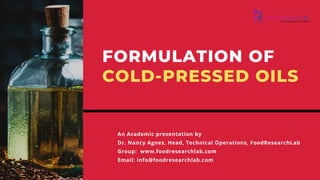
FORMULATION OF
COLD-PRESSED OILS
An Academic presentation by
Dr. Nancy Agnes, Head, Technical Operations, FoodResearchLab
Group:  www.foodresearchlab.com
Email: info@foodresearchlab.com
Introduction
Cold Pressed Oils and their Difference to Refined Oils
Advantages of Cooking with Cold-Pressed Oils
Disadvantages of Cold-Pressed Oil
Today's Discussion
OUTLINE
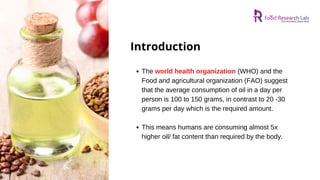
The world health organization (WHO) and the
Food and agricultural organization (FAO) suggest
that the average consumption of oil in a day per
person is 100 to 150 grams, in contrast to 20 -30
grams per day which is the required amount.
This means humans are consuming almost 5x
higher oil/ fat content than required by the body.
Introduction
Cold Pressed Oils and their
Difference to Refined Oils
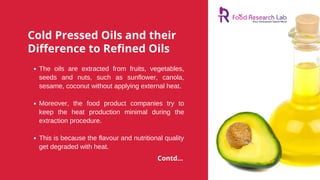
The oils are extracted from fruits, vegetables,
seeds and nuts, such as sunflower, canola,
sesame, coconut without applying external heat.
Moreover, the food product companies try to
keep the heat production minimal during the
extraction procedure.
This is because the flavour and nutritional quality
get degraded with heat.
Contd...
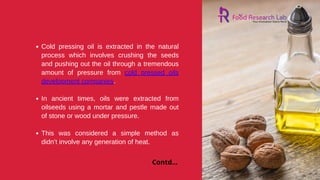
Cold pressing oil is extracted in the natural
process which involves crushing the seeds
and pushing out the oil through a tremendous
amount of pressure from cold pressed oils
development companies.
In ancient times, oils were extracted from
oilseeds using a mortar and pestle made out
of stone or wood under pressure.
This was considered a simple method as
didn’t involve any generation of heat.
Contd...
Due to frictional and mechanical energy
dissipated the extraction technique utilizes
very little heat; however, this temperature
does not exceed 49 °C, retaining all the
beneficial properties with natural flavour.
This method is expensive as it takes a longer
time for extraction and produces a lower yield;
however, it is the safest and natural extraction
method during a new product development.
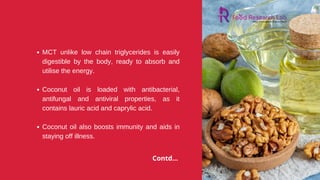
Coconut oil is rich in medium-chain
triglycerides (MCT).
Contd...
MCT unlike low chain triglycerides is easily
digestible by the body, ready to absorb and
utilise the energy.
Coconut oil is loaded with antibacterial,
antifungal and antiviral properties, as it
contains lauric acid and caprylic acid.
Coconut oil also boosts immunity and aids in
staying off illness.
Contd...
Contd...
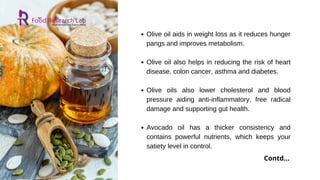
Olive oil aids in weight loss as it reduces hunger
pangs and improves metabolism.
Olive oil also helps in reducing the risk of heart
disease, colon cancer, asthma and diabetes.
Olive oils also lower cholesterol and blood
pressure aiding anti-inflammatory, free radical
damage and supporting gut health.
Avocado oil has a thicker consistency and
contains powerful nutrients, which keeps your
satiety level in control.
Contd...
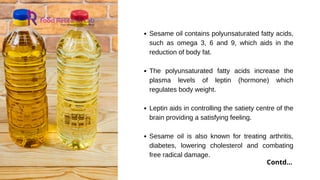
Sesame oil contains polyunsaturated fatty acids,
such as omega 3, 6 and 9, which aids in the
reduction of body fat.
The polyunsaturated fatty acids increase the
plasma levels of leptin (hormone) which
regulates body weight.
Leptin aids in controlling the satiety centre of the
brain providing a satisfying feeling.
Sesame oil is also known for treating arthritis,
diabetes, lowering cholesterol and combating
free radical damage.
Contd...
In contrast, refining is a process of oil
purification, which uses high heat and
chemical solvents, which damaged the
beneficial properties present in the oil such as
bioactive compounds.
Manufacturers choose the double refining
method as their yield is significantly higher
compared to cold pressing.
Contd...
To make the oil presentable and attractive, an
external heat of 200 ℃ is applied along with
neutralized for acidity, bleached with chemicals
such as acetic acid and hexane to removing
colours and finally deodorized, to remove
natural aroma.
This results in removing all gums, proteins,
phospholipids from oil resulting in nothing but
pure empty calories.
Contd...
Moreover, high trans-fat directly equates to
the amount of bad cholesterol and additional
additives are added to improve shelf-life,
boost colour and odour which are harmful
upon continuous consumption.
Scientists recommend cold-pressed oils as
they are healthier compared to refined oils,
containing antioxidants, cholesterol-free and
do not contain harmful solvent residues such
as bleach.
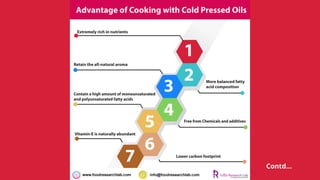
Advantages of Cooking with
Cold-Pressed Oils
The antioxidants fight against infections
1. Cold pressed oil extremely rich in nutrients,
containing higher levels of phenolic acid, and
retaining most of proteins, phospholipids, vitamins,
antioxidants and lecithin.
2. Best Cold-pressed oils retain the all-natural aroma,
flavour, and antioxidant properties making them
great for cooking as well as skincare requirements.
and tumours.
Contd...
These fats lower the risk of heart conditions by
lowering low-density lipoproteins and overall
cholesterol levels.
These monounsaturated fatty acids also improved
the functions of blood vessels and aid in
controlling blood sugar levels.
3. Olive oil, pistachio oil and avocado oil contain a
high amount of monounsaturated fatty acids.
Contd...
Omega 3 fatty acids are good for heart conditions
and omega 6 fatty acids aid in controlling blood
sugar levels, reducing the risk of diabetes.
as cooking.
4. Sesame, grape seed, flaxseed oil contain a high
amount of polyunsaturated fatty acids, such as
omega 3 and omega 6 fatty acids.
5. Nutritionists recommend sesame, sunflower and
coconut oils to be topped on salads, bread and
cooked meat to gain maximum benefit and they
don’t react well to high heat conditions such
Contd...
Vitamin E is beneficial for the skin, heart, brain,
hair due to their powerful antioxidants.
and bleaching agents.
6. Vitamin E is naturally present in oilseeds and is
available in abundance in cold-pressed oils.
7. The fatty acid composition of cold-pressed oils is
more balanced and better suited for human
consumptions.
8. Cold pressed oils are free from chemicals like
hexane, sodium hydroxide, sodium bicarbonate
Contd...
Contd...
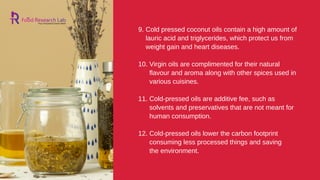
the environment.
9. Cold pressed coconut oils contain a high amount of
lauric acid and triglycerides, which protect us from
weight gain and heart diseases.
10. Virgin oils are complimented for their natural
flavour and aroma along with other spices used in
various cuisines.
11. Cold-pressed oils are additive fee, such as
solvents and preservatives that are not meant for
human consumption.
12. Cold-pressed oils lower the carbon footprint
consuming less processed things and saving
Disadvantages of Cold-
Pressed Oil
The shelf-life can be improved by storing in dark
bottles with refrigeration.
1. There a few disadvantages of cold-pressed oils
even being free of chemicals and preservatives,
these oils have a short shelf life, with a maximum
of 6 months.
Contd...
They can also be stored in clay containers
which extend the shelf life by almost a year.
2. Customers need to be aware of the source of oil
as it would be preferable to obtain organic source
to gain maximum benefits.
+44- 74248 10299
UNITED KINGDOM
+91 9566299022
EMAIL
INDIA
info@foodresearchlab.com
Contact Us

Cooking with cold pressed oils

  • 1.
    FORMULATION OF COLD-PRESSED OILS AnAcademic presentation by Dr. Nancy Agnes, Head, Technical Operations, FoodResearchLab Group:  www.foodresearchlab.com Email: info@foodresearchlab.com
  • 2.
    Introduction Cold Pressed Oilsand their Difference to Refined Oils Advantages of Cooking with Cold-Pressed Oils Disadvantages of Cold-Pressed Oil Today's Discussion OUTLINE
  • 3.
    The world healthorganization (WHO) and the Food and agricultural organization (FAO) suggest that the average consumption of oil in a day per person is 100 to 150 grams, in contrast to 20 -30 grams per day which is the required amount. This means humans are consuming almost 5x higher oil/ fat content than required by the body. Introduction
  • 5.
    Cold Pressed Oilsand their Difference to Refined Oils The oils are extracted from fruits, vegetables, seeds and nuts, such as sunflower, canola, sesame, coconut without applying external heat. Moreover, the food product companies try to keep the heat production minimal during the extraction procedure. This is because the flavour and nutritional quality get degraded with heat. Contd...
  • 6.
    Cold pressing oilis extracted in the natural process which involves crushing the seeds and pushing out the oil through a tremendous amount of pressure from cold pressed oils development companies. In ancient times, oils were extracted from oilseeds using a mortar and pestle made out of stone or wood under pressure. This was considered a simple method as didn’t involve any generation of heat. Contd...
  • 7.
    Due to frictionaland mechanical energy dissipated the extraction technique utilizes very little heat; however, this temperature does not exceed 49 °C, retaining all the beneficial properties with natural flavour. This method is expensive as it takes a longer time for extraction and produces a lower yield; however, it is the safest and natural extraction method during a new product development. Coconut oil is rich in medium-chain triglycerides (MCT). Contd...
  • 8.
    MCT unlike lowchain triglycerides is easily digestible by the body, ready to absorb and utilise the energy. Coconut oil is loaded with antibacterial, antifungal and antiviral properties, as it contains lauric acid and caprylic acid. Coconut oil also boosts immunity and aids in staying off illness. Contd...
  • 9.
  • 10.
    Olive oil aidsin weight loss as it reduces hunger pangs and improves metabolism. Olive oil also helps in reducing the risk of heart disease, colon cancer, asthma and diabetes. Olive oils also lower cholesterol and blood pressure aiding anti-inflammatory, free radical damage and supporting gut health. Avocado oil has a thicker consistency and contains powerful nutrients, which keeps your satiety level in control. Contd...
  • 11.
    Sesame oil containspolyunsaturated fatty acids, such as omega 3, 6 and 9, which aids in the reduction of body fat. The polyunsaturated fatty acids increase the plasma levels of leptin (hormone) which regulates body weight. Leptin aids in controlling the satiety centre of the brain providing a satisfying feeling. Sesame oil is also known for treating arthritis, diabetes, lowering cholesterol and combating free radical damage. Contd...
  • 12.
    In contrast, refiningis a process of oil purification, which uses high heat and chemical solvents, which damaged the beneficial properties present in the oil such as bioactive compounds. Manufacturers choose the double refining method as their yield is significantly higher compared to cold pressing. Contd...
  • 13.
    To make theoil presentable and attractive, an external heat of 200 ℃ is applied along with neutralized for acidity, bleached with chemicals such as acetic acid and hexane to removing colours and finally deodorized, to remove natural aroma. This results in removing all gums, proteins, phospholipids from oil resulting in nothing but pure empty calories. Contd...
  • 14.
    Moreover, high trans-fatdirectly equates to the amount of bad cholesterol and additional additives are added to improve shelf-life, boost colour and odour which are harmful upon continuous consumption. Scientists recommend cold-pressed oils as they are healthier compared to refined oils, containing antioxidants, cholesterol-free and do not contain harmful solvent residues such as bleach.
  • 15.
    Advantages of Cookingwith Cold-Pressed Oils The antioxidants fight against infections 1. Cold pressed oil extremely rich in nutrients, containing higher levels of phenolic acid, and retaining most of proteins, phospholipids, vitamins, antioxidants and lecithin. 2. Best Cold-pressed oils retain the all-natural aroma, flavour, and antioxidant properties making them great for cooking as well as skincare requirements. and tumours. Contd...
  • 16.
    These fats lowerthe risk of heart conditions by lowering low-density lipoproteins and overall cholesterol levels. These monounsaturated fatty acids also improved the functions of blood vessels and aid in controlling blood sugar levels. 3. Olive oil, pistachio oil and avocado oil contain a high amount of monounsaturated fatty acids. Contd...
  • 17.
    Omega 3 fattyacids are good for heart conditions and omega 6 fatty acids aid in controlling blood sugar levels, reducing the risk of diabetes. as cooking. 4. Sesame, grape seed, flaxseed oil contain a high amount of polyunsaturated fatty acids, such as omega 3 and omega 6 fatty acids. 5. Nutritionists recommend sesame, sunflower and coconut oils to be topped on salads, bread and cooked meat to gain maximum benefit and they don’t react well to high heat conditions such Contd...
  • 18.
    Vitamin E isbeneficial for the skin, heart, brain, hair due to their powerful antioxidants. and bleaching agents. 6. Vitamin E is naturally present in oilseeds and is available in abundance in cold-pressed oils. 7. The fatty acid composition of cold-pressed oils is more balanced and better suited for human consumptions. 8. Cold pressed oils are free from chemicals like hexane, sodium hydroxide, sodium bicarbonate Contd...
  • 19.
  • 20.
    the environment. 9. Coldpressed coconut oils contain a high amount of lauric acid and triglycerides, which protect us from weight gain and heart diseases. 10. Virgin oils are complimented for their natural flavour and aroma along with other spices used in various cuisines. 11. Cold-pressed oils are additive fee, such as solvents and preservatives that are not meant for human consumption. 12. Cold-pressed oils lower the carbon footprint consuming less processed things and saving
  • 21.
    Disadvantages of Cold- PressedOil The shelf-life can be improved by storing in dark bottles with refrigeration. 1. There a few disadvantages of cold-pressed oils even being free of chemicals and preservatives, these oils have a short shelf life, with a maximum of 6 months. Contd...
  • 22.
    They can alsobe stored in clay containers which extend the shelf life by almost a year. 2. Customers need to be aware of the source of oil as it would be preferable to obtain organic source to gain maximum benefits.
  • 23.
    +44- 74248 10299 UNITEDKINGDOM +91 9566299022 EMAIL INDIA info@foodresearchlab.com Contact Us