The coconut it’s not a nut, but something called a drupe.
A drupe is a fruit – one which has a hard stony covering
encasing the seed (other examples of drupes include olives,
cherries and peaches).
More specifically, it is a fibrous one-seeded drupe. All drupes
are formed of three layers: the exocarp (typically smooth and
green, outer layer), the mesocarp (fleshy, middle layer), and
the endocarp (the tough, woody layer surrounding the seed).
There are 2 types of saturated fat: from animal source (fat in meat,
butter, dairy fats that contains long chain fatty acids (LCFAs); from
plant source – coconut oil that contains medium chain fatty
acids (MCFAs).
They are totally different: LCFAs are considered bad for your
health, because these long chains fatty acids take longer and
harder to digest, they enter the bloodstream before going to the
liver and they require enzymes for digestion.
In comparison, the chemical formula of MCFAs is small in size so
the food gets digested faster, they rapidly absorbed in the digestive
tract and go directly to the liver where they are quickly converted to
energy therefore they do not require digestive enzymes to be
broken down.
Chemical Extraction Method
The coconut flesh is immersed into a chemical bath which separates
the oil from the flesh. While this method is very cheap, the oil has to
be refined by filtering and bleaching. This results in a product inferior
in purity, taste and quality.
Expeller Pressed Method
It’s a chemical free method which literally squeezes the oil from the
coconut flesh in a press. While the press does not apply any heat,
the force of friction applied by the press to the coconut shell will raise
the temperature of the oil as it is extracted. This risks compromising
the quality of the oil that is extracted.
Cold Pressed Extraction Method
This is the best one!
The method of extraction, like with expeller pressing, is a mechanical
one. The important difference is that the presses used are sited in a
strictly temperature-controlled environment. The temperature
controlled environment negates the effects of friction induced heat,
ensuring that the coconut oil is not exposed to temperatures in
excess of 120 degrees Fahrenheit. The absence of heat guarantees
that the oil will retain its natural flavours, aroma, colour and nutrition.
Coconut Oil can, and should be substituted 1-1 for that regular oil. It
so much more healthy than regular oils – it’s a rich source of Lauric
Acid, the major medium-chain fatty acid which is also found in
human mother’s milk).
It is very stable too, great for high temperature cooking and
unlike regular oils is unlikely to go rancid.
Unrefined Coconut Oil is a solid at room temperature (unless your
room is warmer than 24°C) and while it need not to be stored in
your fridge, it is best left out of direct sunlight.
In fact, it’s not until you begin cooking with Coconut Oil that you
might appreciate just how versatile it is.
Baked foods typically contain large amounts of butter, together
with its attendant saturated fat and salt. When baking, virgin
coconut oil can be a substitute for shortening, butter,
margarine, or vegetable oil.
It is acknowledged by experts to:
Promote your heart health; Promote weight loss;
Support your immune system health; Support a healthy
metabolism; Provide you with an immediate energy source; Keep
your skin healthy and youthful looking; Support the proper
functioning of your thyroid gland, etc.
The type of fat you use for frying counts for a lot; some oils are
much more healthy than others – and frying with coconut oil is
the healthiest way of them all!
It has what is called a high “smoke-point”. The smoke-point is
the temperature that an oil can be raised to before it begins to
burn. It’s smoke-point is 350 Fahrenheit, meaning that is easily
stable enough to fry meat, poultry, eggs and omelettes
provided that the heat is kept moderate so as not to exceed its
smoke-point.
Only cold pressed (under 40⁰C) virgin coconut oil can be
classified as raw.
A raw organic diet naturally offers the essential nutrients for
maximum vitality. Raw foods can decrease sensitivity reactions
and help to lower blood pressure and cholesterol levels.
Eating raw food provides 100% nutrition whereas the same
food in cooked form can have up to 85% lower nutritional value.
Raw food provides us with all the enzymes, catalysts and an
excellent source of unadulterated natural fibre that help to
digest our food better.
An allergy to milk products includes all dairy products such as
cheese, butter, yogurt, cream etc.
Avoiding milk products involves more than just leaving the cheese
off your sandwich. It may also mean leaving off the deli meat if it
was cut with the same equipment used to slice the cheese.
Coconut oil is a dairy-free excellent butter substitute and
healthier to cook with. It has excellent heat resistance and is
both cholesterol and trans-fat free.
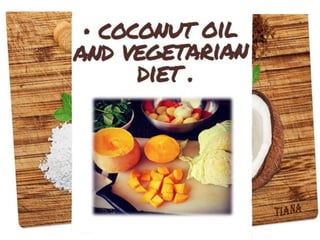
A plant-based diet is naturally high in fibre and rich in important
health promoting nutrients, which has been linked to lowering the
risk of certain types of diseases.
Oils and fats are very important for a healthy balanced diet and
Coconut oil is vegetarian and vegan, naturally saturated from a
plant source.
The big difference with saturated fat from animal source fats is that
coconut oil is composed of medium chain fatty acids (MCFAs) that
are absorbed, distributed and metabolised differently from long
chains fatty acids (LCFAs).
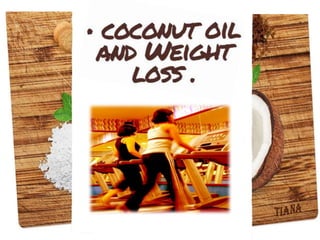
The restriction of carbohydrates is the basis of many weight-loss
diets. Low-carbohydrate diet advocates recommend reducing
nutritive carbohydrates (commonly referred to as “net carbs).
If you eat foods that are high in carbohydrates, especially
processed and refined foods, your body metabolism will work
very slowly and therefore cannot metabolise all this food into
energy. When you eat carbohydrate food it is turned into glucose
and not burned for energy, which then is stored as body fat.
Coconut flour and coconut oil are a great solution for a low-
carbohydrate coconut diet.
The consensus among nutrition experts is that carbohydrates
should account for the bulk of calories in an athlete’s diet (about
60%) – while fat intake should be limited to no more than 20% of
total calorie intake. When greater amounts of fat are consumed,
they argue, athletic performance may be hampered. It is true that
the quantity of fat in the diet is important, but it is the quality of the
fat which is even more important.
If you participate in any kind of sports, or keep fit at a gym, then,
like an athlete, your diet should be rich in whole grains, fruits and
vegetables, nuts and lean meats, and include a quality Raw
Coconut Oil.
The causes of Alzheimer’s disease are still unknown and there is
no treatment that will stop this condition. Numerous research has
shown that using the highest quality and nutrition Raw Virgin
Coconut Oil may help with conditions such as Alzheimer’s and
Parkinson’s diseases, as shown in recent studies and news articles.
Research shows that when we eat certain foods containing medium
chain fatty acids, such as raw virgin coconut oil, these medium
chain fatty acids are converted in the liver to Ketons, which can be
used by the brain as fuel. Ketons are utilised by cells that can use
them, including those in the brain and it is here that they serve as
an alternative fuel for cells that are unable to use glucose
effectively.
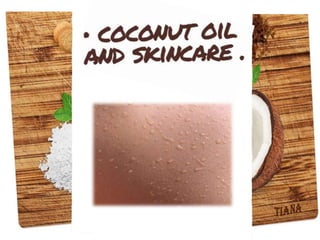
Dry skin results from a deficiency in the oil and moisture that are
required to keep the skin lubricated and this deficiency can result in
flaking, scaling and cracking. Coconut oil is an effective multi-
functional product for redressing this deficiency and restoring your
natural beauty!
Coconut Oil it’s also nature’s richest source of Lauric Acid,
wonderful as a skin cosmetic and hair treatment. The quality of
coconut oil in a organic moisturiser will make a great impact on its
moisturising effects, therefore try to choose one that it is raw cold
pressed.
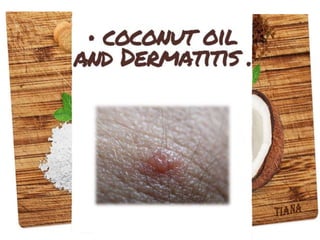
While there is no known cure for dermatitis, it can in many cases be
managed. Conventional treatment of Dermatitis involves the
application of moisturisers and steroid creams.
Recent research indicates that Coconut Oil is effective as a
treatment against dermatitis!
On 2013 The International Society of Dermatology published a
research paper, which concluded:
“…among pediatric patients with mild to moderate AD, topical
application of VCO (Virgin coconut Oil) for eight weeks was
superior to that of mineral oil based on clinical (SCORAD) and
instrumental (TEWL, skin capacitance) assessments…”
The benefits of using coconut oil for hair are well known nowadays.
Coconut Oil has been used for hair treatment for centuries in many
Far East countries and is widely known for its properties of keeping
the hair strong and healthy.
It’s perfect for repairing damaged hair. Your hair will also feel the
softest and silkiest with a lovely glossy shine – results that rival top
hair salons!
It is important to note that not all coconut oil is the same. Many
coconut oils used in cosmetic applications are produced using high
temperatures and chemicals; such oils are produced and sold at a
lower cost but are also of a vastly reduced quality.
Recent research both agree that oil pulling seems to be an
effective means of improving dental health. It is said to strengthen
the teeth and the gums and to reduce the chance of plaque and
gum disease forming.
Oil Pulling with Coconut Oil is a self-help, get well method, and
it is a very simple one at that; just take a small amount of oil into
the mouth and as with a mouthwash, swish the oil around the
teeth and gums. Unlike a mouthwash though, the oil should be
kept in the mouth for up to 20 minutes to give the best effect. The
oil should not be swallowed.
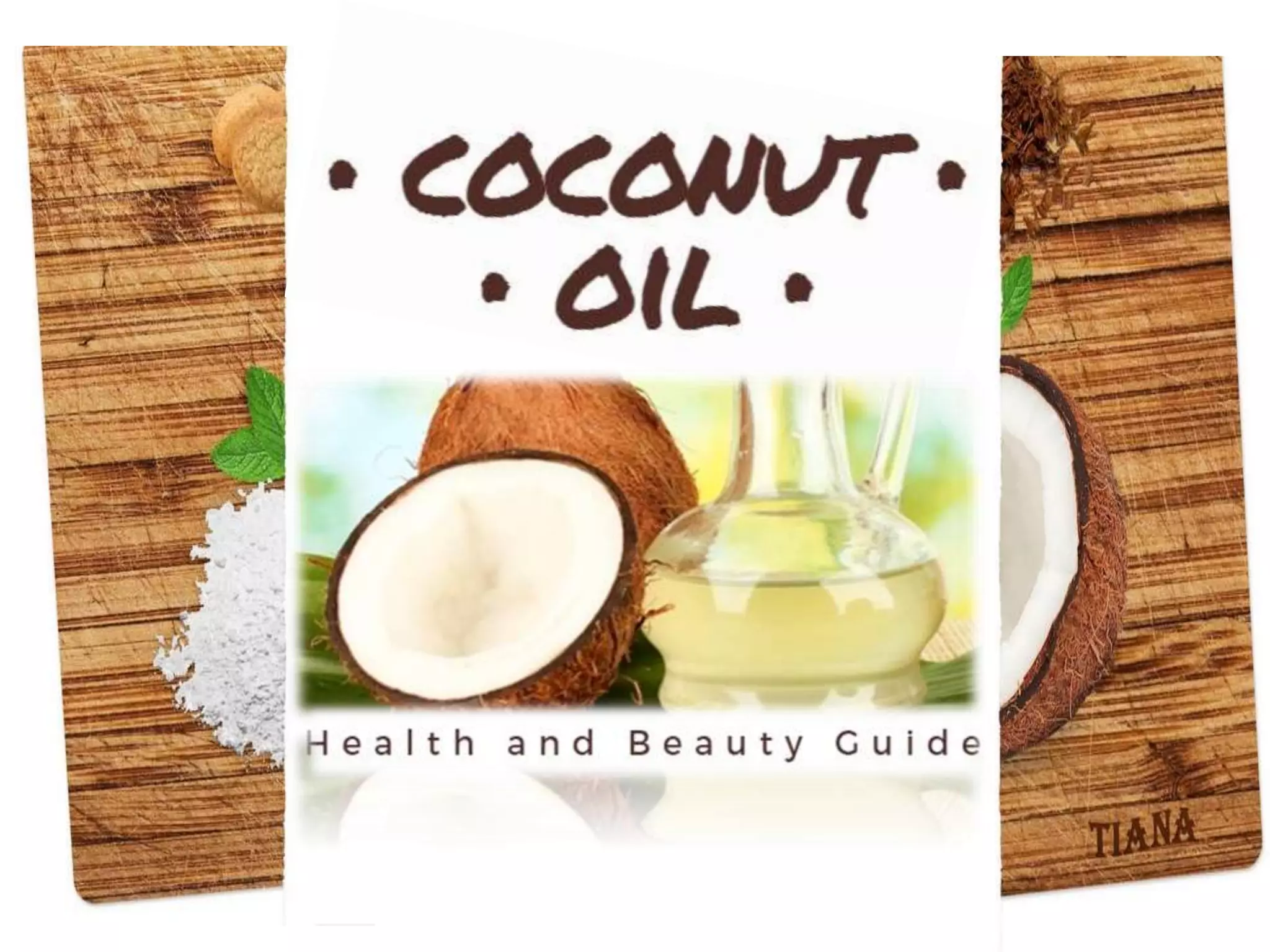
Coconut Oil - Health and Beauty Guide

Coconut Oil - Health and Beauty Guide

  • 2.
    The coconut it’snot a nut, but something called a drupe. A drupe is a fruit – one which has a hard stony covering encasing the seed (other examples of drupes include olives, cherries and peaches). More specifically, it is a fibrous one-seeded drupe. All drupes are formed of three layers: the exocarp (typically smooth and green, outer layer), the mesocarp (fleshy, middle layer), and the endocarp (the tough, woody layer surrounding the seed).
  • 3.
    There are 2types of saturated fat: from animal source (fat in meat, butter, dairy fats that contains long chain fatty acids (LCFAs); from plant source – coconut oil that contains medium chain fatty acids (MCFAs). They are totally different: LCFAs are considered bad for your health, because these long chains fatty acids take longer and harder to digest, they enter the bloodstream before going to the liver and they require enzymes for digestion. In comparison, the chemical formula of MCFAs is small in size so the food gets digested faster, they rapidly absorbed in the digestive tract and go directly to the liver where they are quickly converted to energy therefore they do not require digestive enzymes to be broken down.
  • 4.
    Chemical Extraction Method Thecoconut flesh is immersed into a chemical bath which separates the oil from the flesh. While this method is very cheap, the oil has to be refined by filtering and bleaching. This results in a product inferior in purity, taste and quality. Expeller Pressed Method It’s a chemical free method which literally squeezes the oil from the coconut flesh in a press. While the press does not apply any heat, the force of friction applied by the press to the coconut shell will raise the temperature of the oil as it is extracted. This risks compromising the quality of the oil that is extracted.
  • 5.
    Cold Pressed ExtractionMethod This is the best one! The method of extraction, like with expeller pressing, is a mechanical one. The important difference is that the presses used are sited in a strictly temperature-controlled environment. The temperature controlled environment negates the effects of friction induced heat, ensuring that the coconut oil is not exposed to temperatures in excess of 120 degrees Fahrenheit. The absence of heat guarantees that the oil will retain its natural flavours, aroma, colour and nutrition.
  • 7.
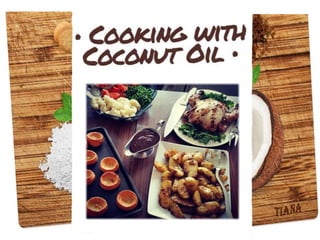
    Coconut Oil can,and should be substituted 1-1 for that regular oil. It so much more healthy than regular oils – it’s a rich source of Lauric Acid, the major medium-chain fatty acid which is also found in human mother’s milk). It is very stable too, great for high temperature cooking and unlike regular oils is unlikely to go rancid. Unrefined Coconut Oil is a solid at room temperature (unless your room is warmer than 24°C) and while it need not to be stored in your fridge, it is best left out of direct sunlight. In fact, it’s not until you begin cooking with Coconut Oil that you might appreciate just how versatile it is.
  • 9.
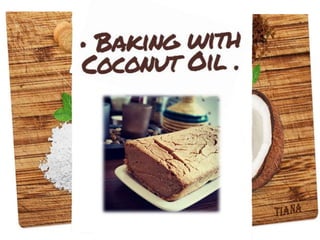
    Baked foods typicallycontain large amounts of butter, together with its attendant saturated fat and salt. When baking, virgin coconut oil can be a substitute for shortening, butter, margarine, or vegetable oil. It is acknowledged by experts to: Promote your heart health; Promote weight loss; Support your immune system health; Support a healthy metabolism; Provide you with an immediate energy source; Keep your skin healthy and youthful looking; Support the proper functioning of your thyroid gland, etc.
  • 11.
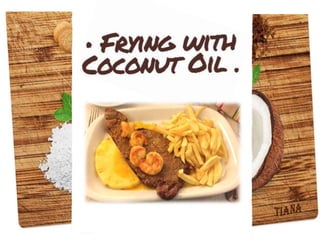
    The type offat you use for frying counts for a lot; some oils are much more healthy than others – and frying with coconut oil is the healthiest way of them all! It has what is called a high “smoke-point”. The smoke-point is the temperature that an oil can be raised to before it begins to burn. It’s smoke-point is 350 Fahrenheit, meaning that is easily stable enough to fry meat, poultry, eggs and omelettes provided that the heat is kept moderate so as not to exceed its smoke-point.
  • 14.
    Only cold pressed(under 40⁰C) virgin coconut oil can be classified as raw. A raw organic diet naturally offers the essential nutrients for maximum vitality. Raw foods can decrease sensitivity reactions and help to lower blood pressure and cholesterol levels. Eating raw food provides 100% nutrition whereas the same food in cooked form can have up to 85% lower nutritional value. Raw food provides us with all the enzymes, catalysts and an excellent source of unadulterated natural fibre that help to digest our food better.
  • 16.
    An allergy tomilk products includes all dairy products such as cheese, butter, yogurt, cream etc. Avoiding milk products involves more than just leaving the cheese off your sandwich. It may also mean leaving off the deli meat if it was cut with the same equipment used to slice the cheese. Coconut oil is a dairy-free excellent butter substitute and healthier to cook with. It has excellent heat resistance and is both cholesterol and trans-fat free.
  • 18.
    A plant-based dietis naturally high in fibre and rich in important health promoting nutrients, which has been linked to lowering the risk of certain types of diseases. Oils and fats are very important for a healthy balanced diet and Coconut oil is vegetarian and vegan, naturally saturated from a plant source. The big difference with saturated fat from animal source fats is that coconut oil is composed of medium chain fatty acids (MCFAs) that are absorbed, distributed and metabolised differently from long chains fatty acids (LCFAs).
  • 20.
    The restriction ofcarbohydrates is the basis of many weight-loss diets. Low-carbohydrate diet advocates recommend reducing nutritive carbohydrates (commonly referred to as “net carbs). If you eat foods that are high in carbohydrates, especially processed and refined foods, your body metabolism will work very slowly and therefore cannot metabolise all this food into energy. When you eat carbohydrate food it is turned into glucose and not burned for energy, which then is stored as body fat. Coconut flour and coconut oil are a great solution for a low- carbohydrate coconut diet.
  • 22.
    The consensus amongnutrition experts is that carbohydrates should account for the bulk of calories in an athlete’s diet (about 60%) – while fat intake should be limited to no more than 20% of total calorie intake. When greater amounts of fat are consumed, they argue, athletic performance may be hampered. It is true that the quantity of fat in the diet is important, but it is the quality of the fat which is even more important. If you participate in any kind of sports, or keep fit at a gym, then, like an athlete, your diet should be rich in whole grains, fruits and vegetables, nuts and lean meats, and include a quality Raw Coconut Oil.
  • 24.
    The causes ofAlzheimer’s disease are still unknown and there is no treatment that will stop this condition. Numerous research has shown that using the highest quality and nutrition Raw Virgin Coconut Oil may help with conditions such as Alzheimer’s and Parkinson’s diseases, as shown in recent studies and news articles. Research shows that when we eat certain foods containing medium chain fatty acids, such as raw virgin coconut oil, these medium chain fatty acids are converted in the liver to Ketons, which can be used by the brain as fuel. Ketons are utilised by cells that can use them, including those in the brain and it is here that they serve as an alternative fuel for cells that are unable to use glucose effectively.
  • 26.
    Dry skin resultsfrom a deficiency in the oil and moisture that are required to keep the skin lubricated and this deficiency can result in flaking, scaling and cracking. Coconut oil is an effective multi- functional product for redressing this deficiency and restoring your natural beauty! Coconut Oil it’s also nature’s richest source of Lauric Acid, wonderful as a skin cosmetic and hair treatment. The quality of coconut oil in a organic moisturiser will make a great impact on its moisturising effects, therefore try to choose one that it is raw cold pressed.
  • 28.
    While there isno known cure for dermatitis, it can in many cases be managed. Conventional treatment of Dermatitis involves the application of moisturisers and steroid creams. Recent research indicates that Coconut Oil is effective as a treatment against dermatitis! On 2013 The International Society of Dermatology published a research paper, which concluded: “…among pediatric patients with mild to moderate AD, topical application of VCO (Virgin coconut Oil) for eight weeks was superior to that of mineral oil based on clinical (SCORAD) and instrumental (TEWL, skin capacitance) assessments…”
  • 30.
    The benefits ofusing coconut oil for hair are well known nowadays. Coconut Oil has been used for hair treatment for centuries in many Far East countries and is widely known for its properties of keeping the hair strong and healthy. It’s perfect for repairing damaged hair. Your hair will also feel the softest and silkiest with a lovely glossy shine – results that rival top hair salons! It is important to note that not all coconut oil is the same. Many coconut oils used in cosmetic applications are produced using high temperatures and chemicals; such oils are produced and sold at a lower cost but are also of a vastly reduced quality.
  • 32.
    Recent research bothagree that oil pulling seems to be an effective means of improving dental health. It is said to strengthen the teeth and the gums and to reduce the chance of plaque and gum disease forming. Oil Pulling with Coconut Oil is a self-help, get well method, and it is a very simple one at that; just take a small amount of oil into the mouth and as with a mouthwash, swish the oil around the teeth and gums. Unlike a mouthwash though, the oil should be kept in the mouth for up to 20 minutes to give the best effect. The oil should not be swallowed.