BELOW KNEE PROSTHESIS
&
ABOVE KNEE PROSTHESIS
MANAGEMENT
TAPAS P. BEHERA
PDUNIPPD, New Delhi
Below-elbow Harness and Control system
The mechanism of single control system
• one cable controlling the terminal device
Below-elbow Harness and Control system
The mechanism of single control system
• one cable controlling the terminal device
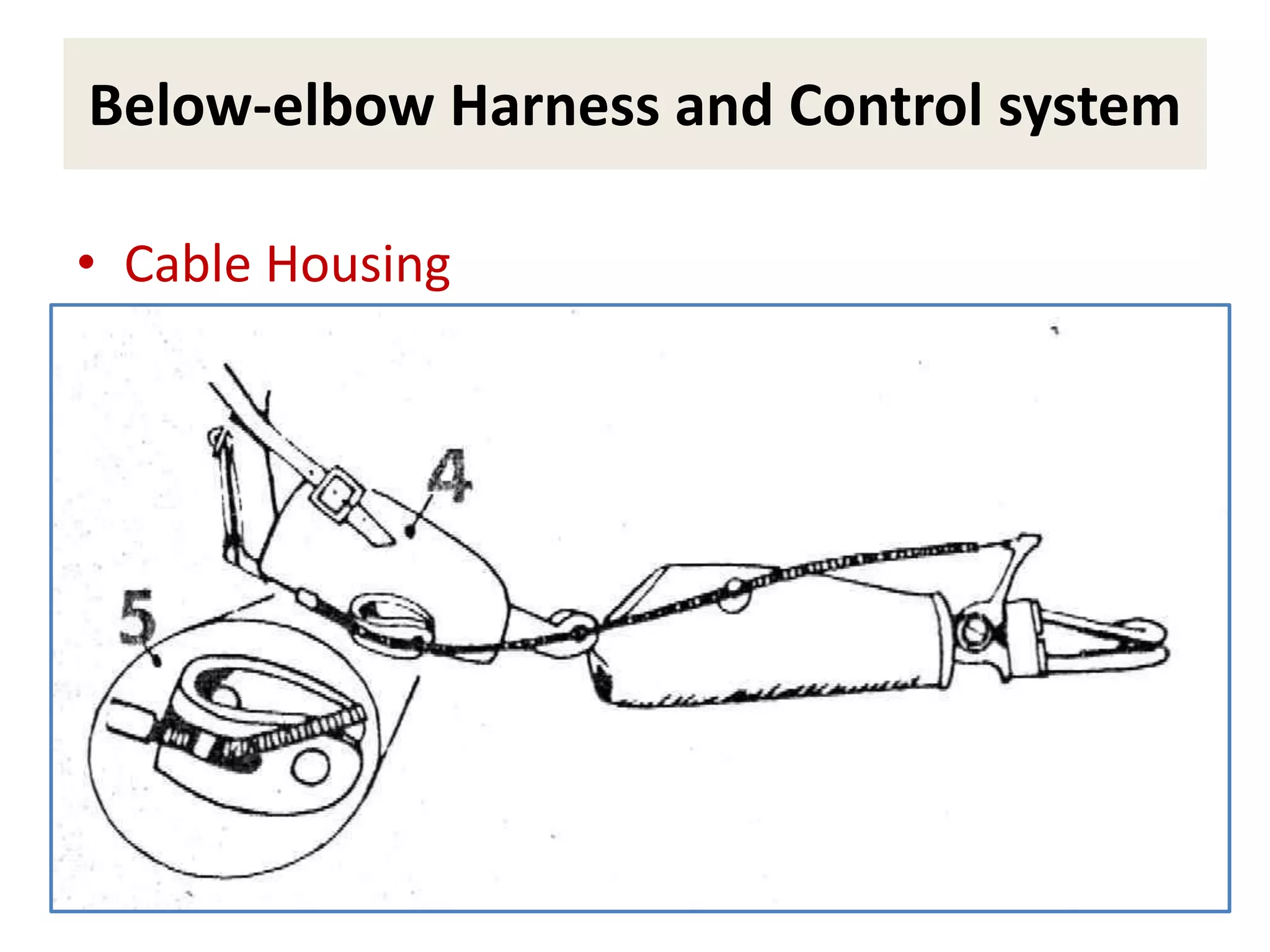
Cable Housing
• The control cable passes through a continuous
stainless steel housing or tunnel
• The housing is fastened to the triceps pad by “cross
bar assembly”
• The housing is attached to the fore arm part by a base
plate retainer
Below-elbow Harness and Control system
• Cable Housing
Below-elbow Harness and Control system
• Cable Housing
Below-elbow Harness and Control system
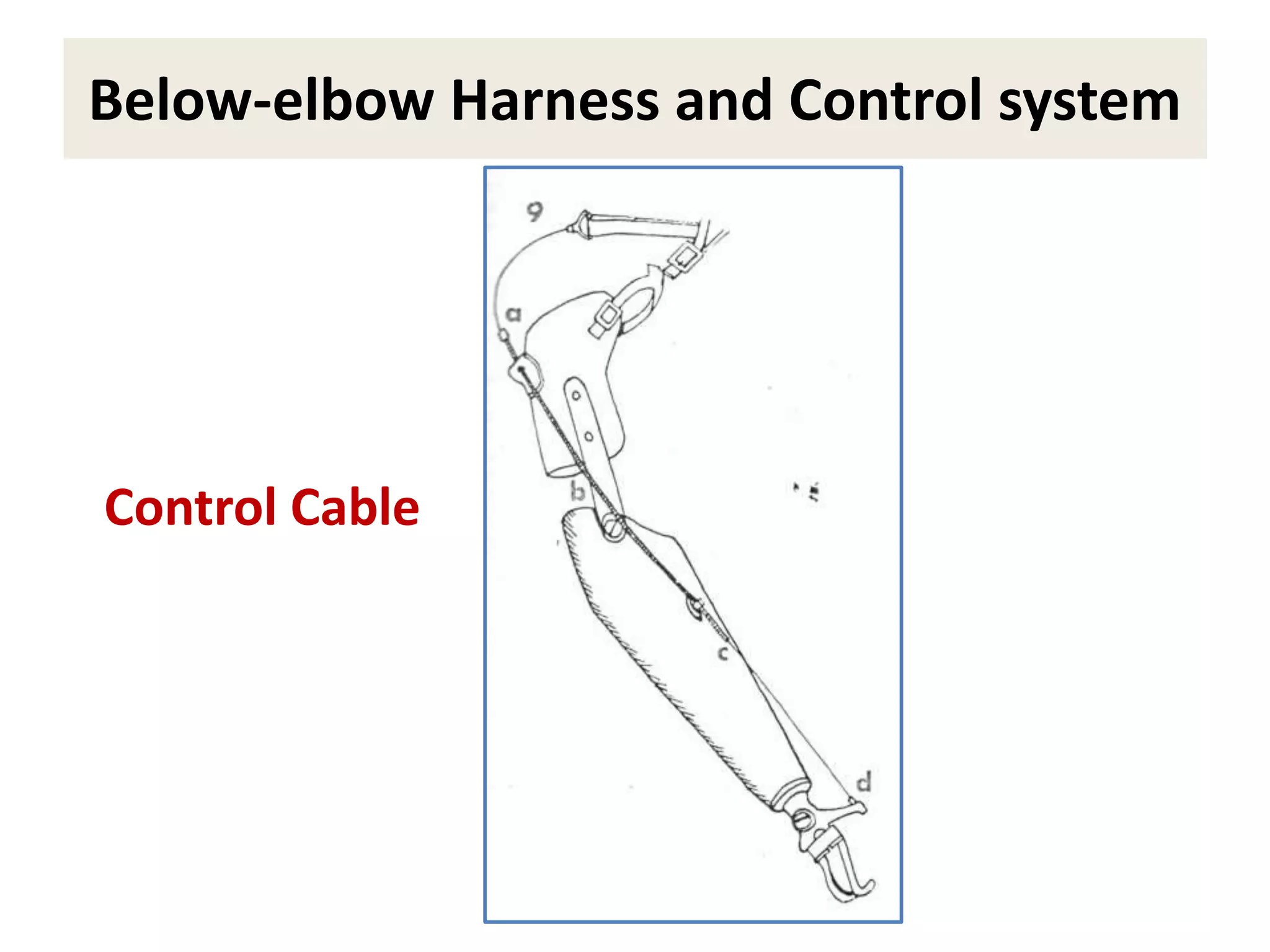
Control Cable
Below-elbow Harness and Control system
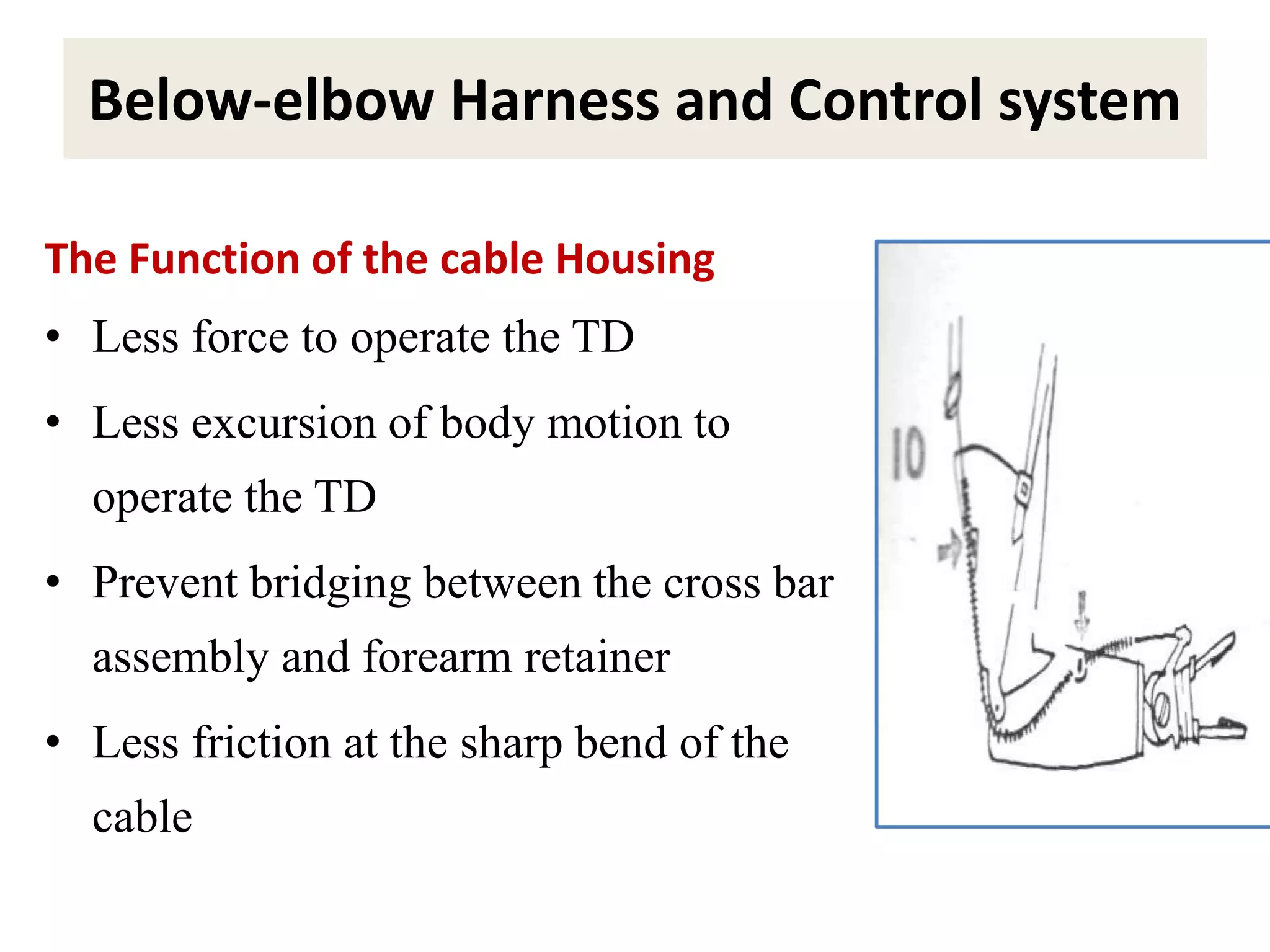
The Function of the cable Housing
• Less force to operate the TD
• Less excursion of body motion to
operate the TD
• Prevent bridging between the cross bar
assembly and forearm retainer
• Less friction at the sharp bend of the
cable
Below-elbow Harness and Control system
The BE Harness
• To provide for operation of the TD
• To retain prosthesis securely in different
operating positions
Below-elbow Harness and Control system
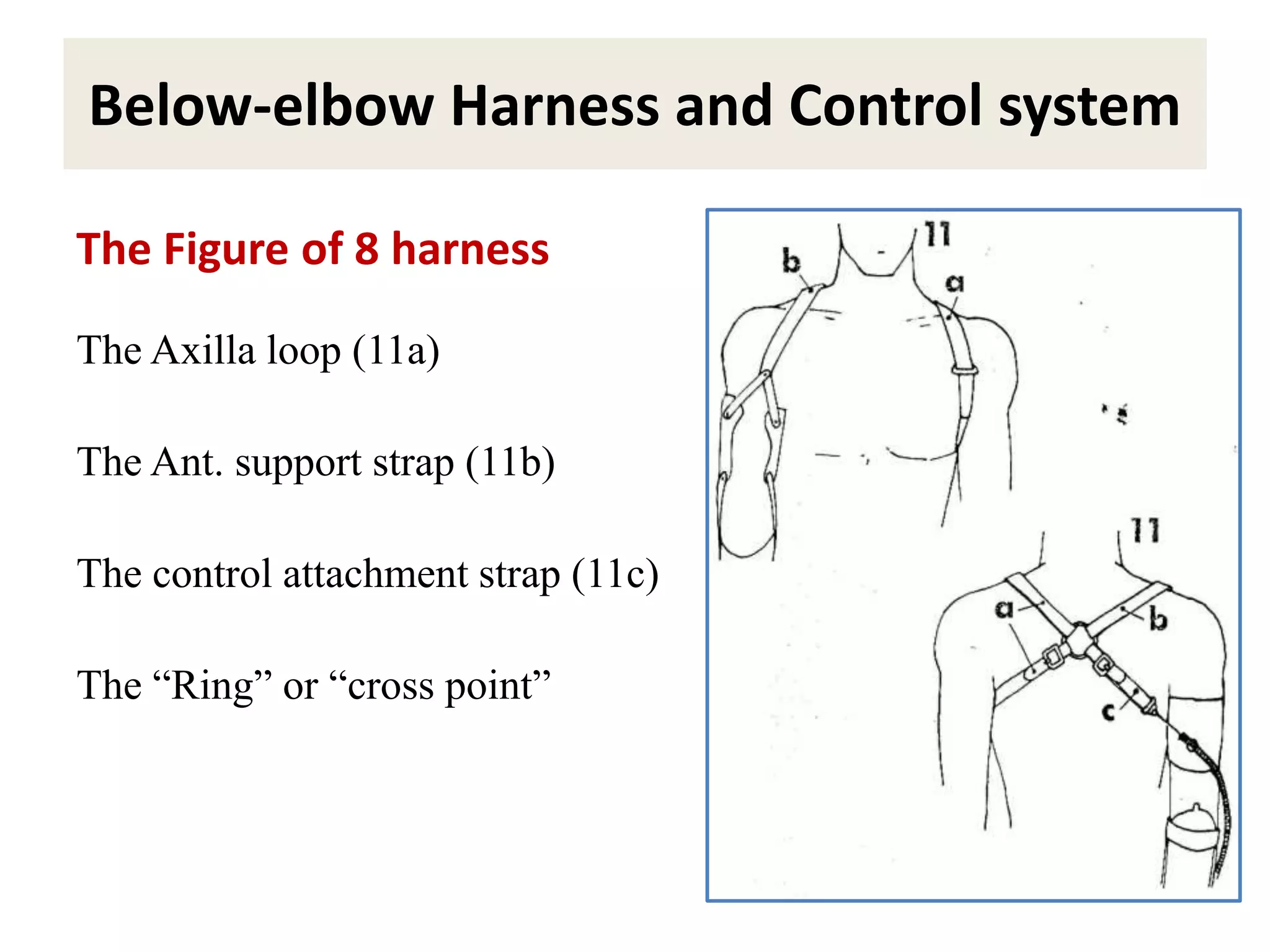
The Figure of 8 harness
The Axilla loop (11a)
The Ant. support strap (11b)
The control attachment strap (11c)
The “Ring” or “cross point”
Below-elbow Harness and Control system
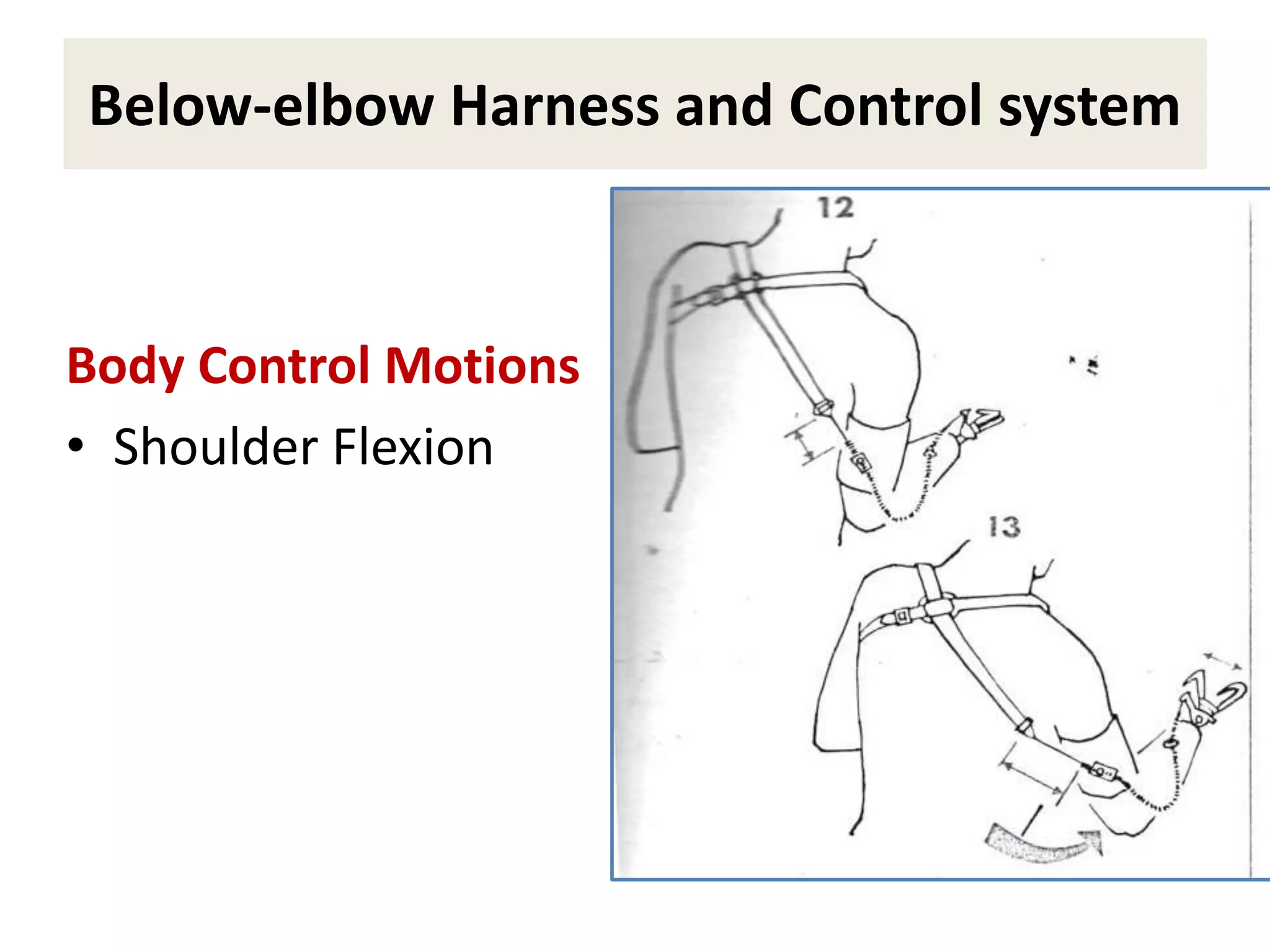
Body Control Motions
• Shoulder Flexion
Below-elbow Harness and Control system
Body Control Motions
• Bilateral scapular abduction
Below-elbow Harness and Control system
The operating sequence
• The anatomical elbow joint is also to place the TD in the
desired position of function
• Shoulder flexion and scapular abduction operates the TD
• Relaxing the shoulder allows the TD to return to starting
position ( for VO, to be closed by rubber bands)
Below-elbow Harness and Control system
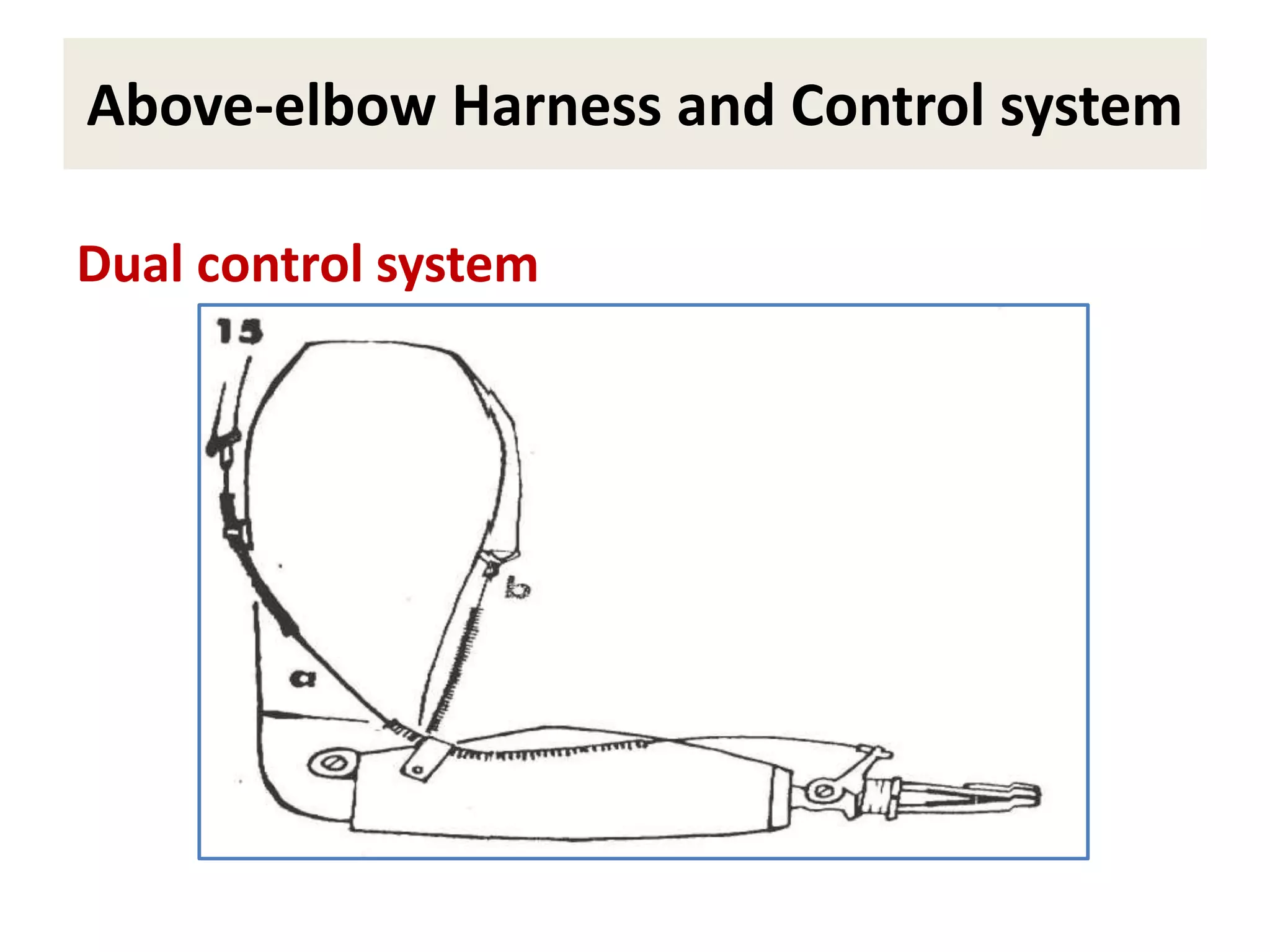
The mechanism of two cable system
(Dual control system)
• One cable is used to both flex the prosthetic elbow
joint and operate the TD
• The second cable is used to luck and unlock the
prosthetic elbow
Above-elbow Harness and Control system
Dual control system
Above-elbow Harness and Control system
Cable Housing
• Split housing
Above-elbow Harness and Control system
The cable control for elbow flexion and TD
Above-elbow Harness and Control system
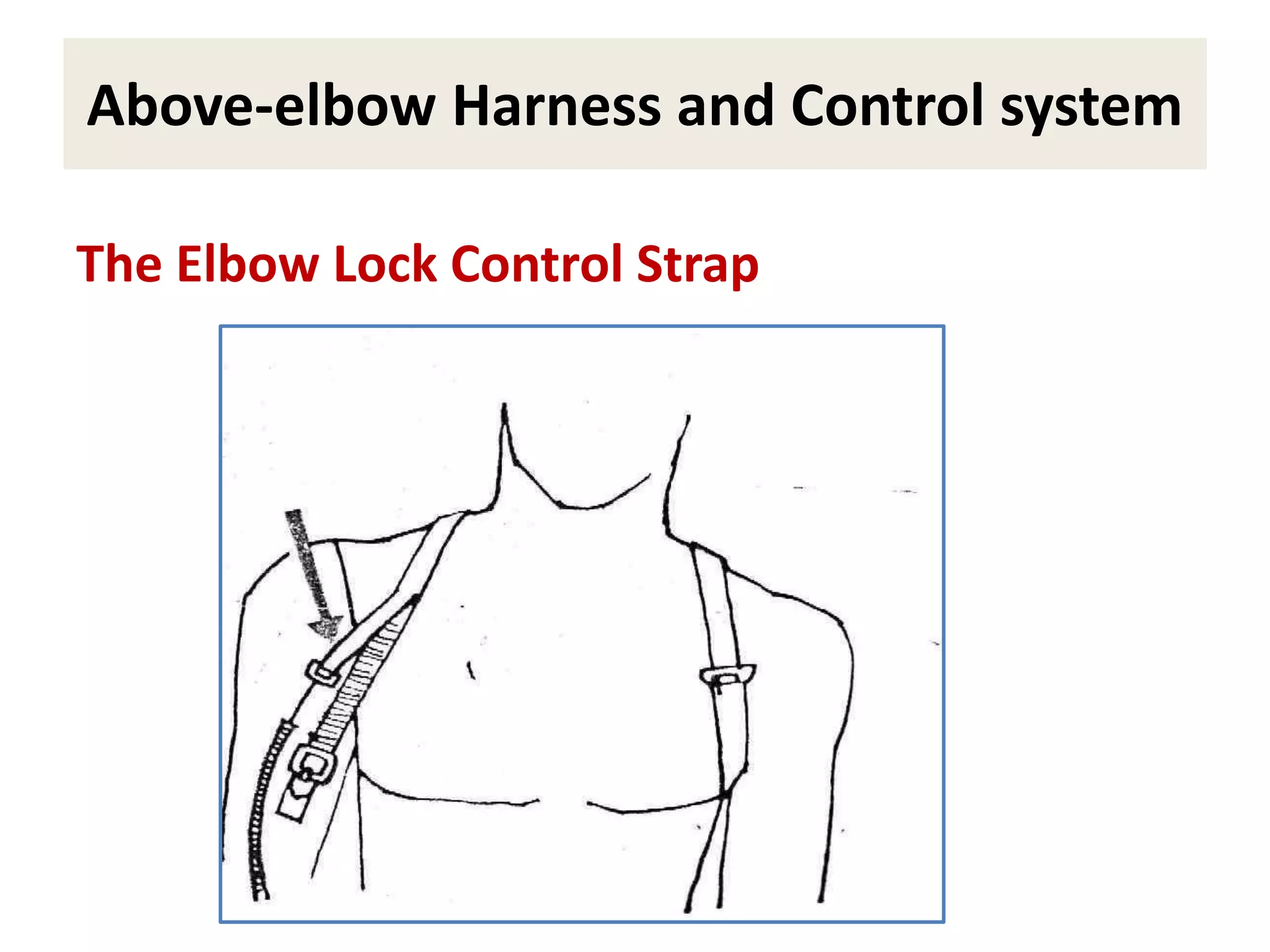
The Elbow Lock control cable
• The lock works on an alternator principle
• The sequence is “lock-Unlock-Lock-Unlock-….”
• ¾ inch excursion and force of ~ 2 Lb are necessary to
cycle the elbow unit
Above-elbow Harness and Control system
The control system
• Tension on the elbow flexion/TD
first flexes the Prosthetic elbow
• Pulling and releasing the elbow lock
control strap locks the elbow
• Tension on the elbow flexion /TD
then causes the TD to operate
Above-elbow Harness and Control system
Location of Elbow Flexion Attachment
Above-elbow Harness and Control system
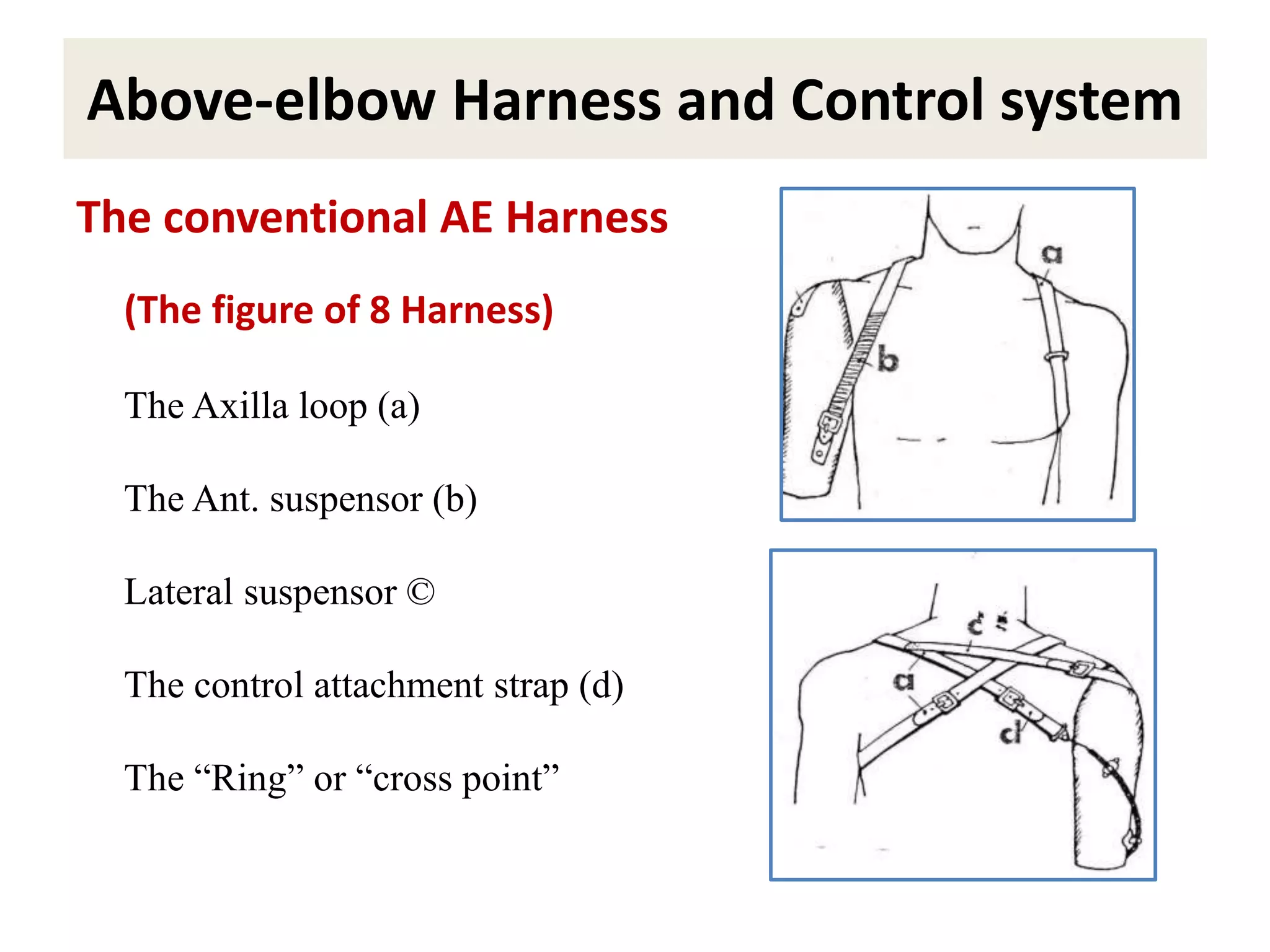
The conventional AE Harness
(The figure of 8 Harness)
The Axilla loop (a)
The Ant. suspensor (b)
Lateral suspensor ©
The control attachment strap (d)
The “Ring” or “cross point”
Above-elbow Harness and Control system
The Elbow Lock Control Strap
Above-elbow Harness and Control system
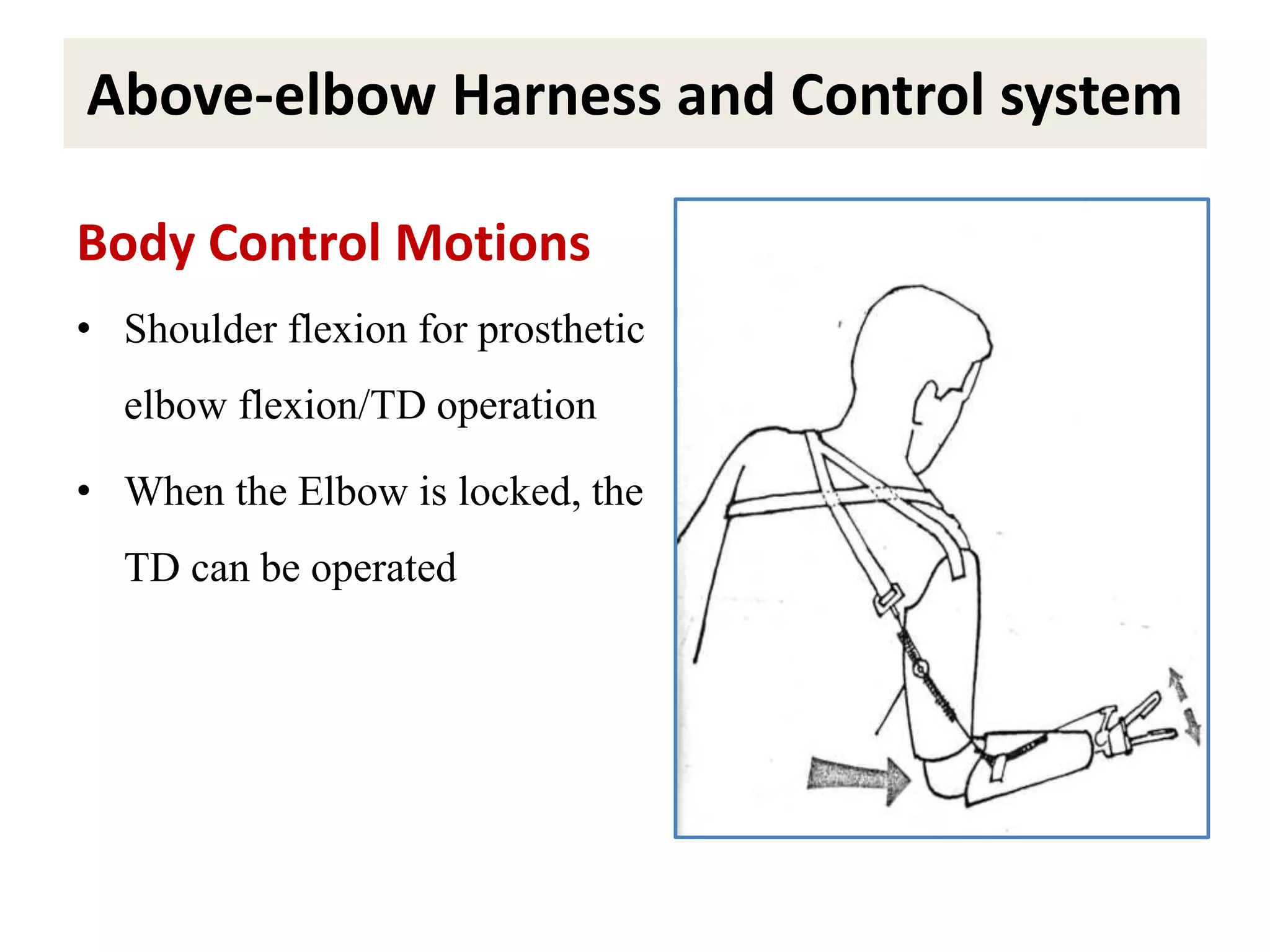
Body Control Motions
• Shoulder flexion for prosthetic
elbow flexion/TD operation
• When the Elbow is locked, the
TD can be operated
Above-elbow Harness and Control system
Body Control Motions
• Scapular abduction for
additional cable excursion
• Scapular abduction to
operate the TD close to
the body
Above-elbow Harness and Control system
Elbow lock control Motions
• Complex shoulder motion
involving
1. Downward rotation of scapula
2. Simultaneous abduction of
shoulder joint
3. Simultaneous extension of
shoulder joint
Above-elbow Harness and Control system
The Operating Sequences
 The forearm is raised by shoulder flexion and/or
scapular abduction
 The TD is operated by the shoulder flexion and or
scapular abduction
Above-elbow Harness and Control system
Control and harness sysrem for be and ae prosthetic management

Control and harness sysrem for be and ae prosthetic management

  • 1.
    BELOW KNEE PROSTHESIS & ABOVEKNEE PROSTHESIS MANAGEMENT TAPAS P. BEHERA PDUNIPPD, New Delhi
  • 2.
    Below-elbow Harness andControl system The mechanism of single control system • one cable controlling the terminal device
  • 3.
    Below-elbow Harness andControl system The mechanism of single control system • one cable controlling the terminal device
  • 4.
    Cable Housing • Thecontrol cable passes through a continuous stainless steel housing or tunnel • The housing is fastened to the triceps pad by “cross bar assembly” • The housing is attached to the fore arm part by a base plate retainer Below-elbow Harness and Control system
  • 5.
    • Cable Housing Below-elbowHarness and Control system
  • 6.
    • Cable Housing Below-elbowHarness and Control system
  • 7.
  • 8.
    The Function ofthe cable Housing • Less force to operate the TD • Less excursion of body motion to operate the TD • Prevent bridging between the cross bar assembly and forearm retainer • Less friction at the sharp bend of the cable Below-elbow Harness and Control system
  • 9.
    The BE Harness •To provide for operation of the TD • To retain prosthesis securely in different operating positions Below-elbow Harness and Control system
  • 10.
    The Figure of8 harness The Axilla loop (11a) The Ant. support strap (11b) The control attachment strap (11c) The “Ring” or “cross point” Below-elbow Harness and Control system
  • 11.
    Body Control Motions •Shoulder Flexion Below-elbow Harness and Control system
  • 12.
    Body Control Motions •Bilateral scapular abduction Below-elbow Harness and Control system
  • 13.
    The operating sequence •The anatomical elbow joint is also to place the TD in the desired position of function • Shoulder flexion and scapular abduction operates the TD • Relaxing the shoulder allows the TD to return to starting position ( for VO, to be closed by rubber bands) Below-elbow Harness and Control system
  • 14.
    The mechanism oftwo cable system (Dual control system) • One cable is used to both flex the prosthetic elbow joint and operate the TD • The second cable is used to luck and unlock the prosthetic elbow Above-elbow Harness and Control system
  • 15.
    Dual control system Above-elbowHarness and Control system
  • 16.
    Cable Housing • Splithousing Above-elbow Harness and Control system
  • 17.
    The cable controlfor elbow flexion and TD Above-elbow Harness and Control system
  • 18.
    The Elbow Lockcontrol cable • The lock works on an alternator principle • The sequence is “lock-Unlock-Lock-Unlock-….” • ¾ inch excursion and force of ~ 2 Lb are necessary to cycle the elbow unit Above-elbow Harness and Control system
  • 19.
    The control system •Tension on the elbow flexion/TD first flexes the Prosthetic elbow • Pulling and releasing the elbow lock control strap locks the elbow • Tension on the elbow flexion /TD then causes the TD to operate Above-elbow Harness and Control system
  • 20.
    Location of ElbowFlexion Attachment Above-elbow Harness and Control system
  • 21.
    The conventional AEHarness (The figure of 8 Harness) The Axilla loop (a) The Ant. suspensor (b) Lateral suspensor © The control attachment strap (d) The “Ring” or “cross point” Above-elbow Harness and Control system
  • 22.
    The Elbow LockControl Strap Above-elbow Harness and Control system
  • 23.
    Body Control Motions •Shoulder flexion for prosthetic elbow flexion/TD operation • When the Elbow is locked, the TD can be operated Above-elbow Harness and Control system
  • 24.
    Body Control Motions •Scapular abduction for additional cable excursion • Scapular abduction to operate the TD close to the body Above-elbow Harness and Control system
  • 25.
    Elbow lock controlMotions • Complex shoulder motion involving 1. Downward rotation of scapula 2. Simultaneous abduction of shoulder joint 3. Simultaneous extension of shoulder joint Above-elbow Harness and Control system
  • 26.
    The Operating Sequences The forearm is raised by shoulder flexion and/or scapular abduction  The TD is operated by the shoulder flexion and or scapular abduction Above-elbow Harness and Control system