Contrast Agents dr shabeel pn
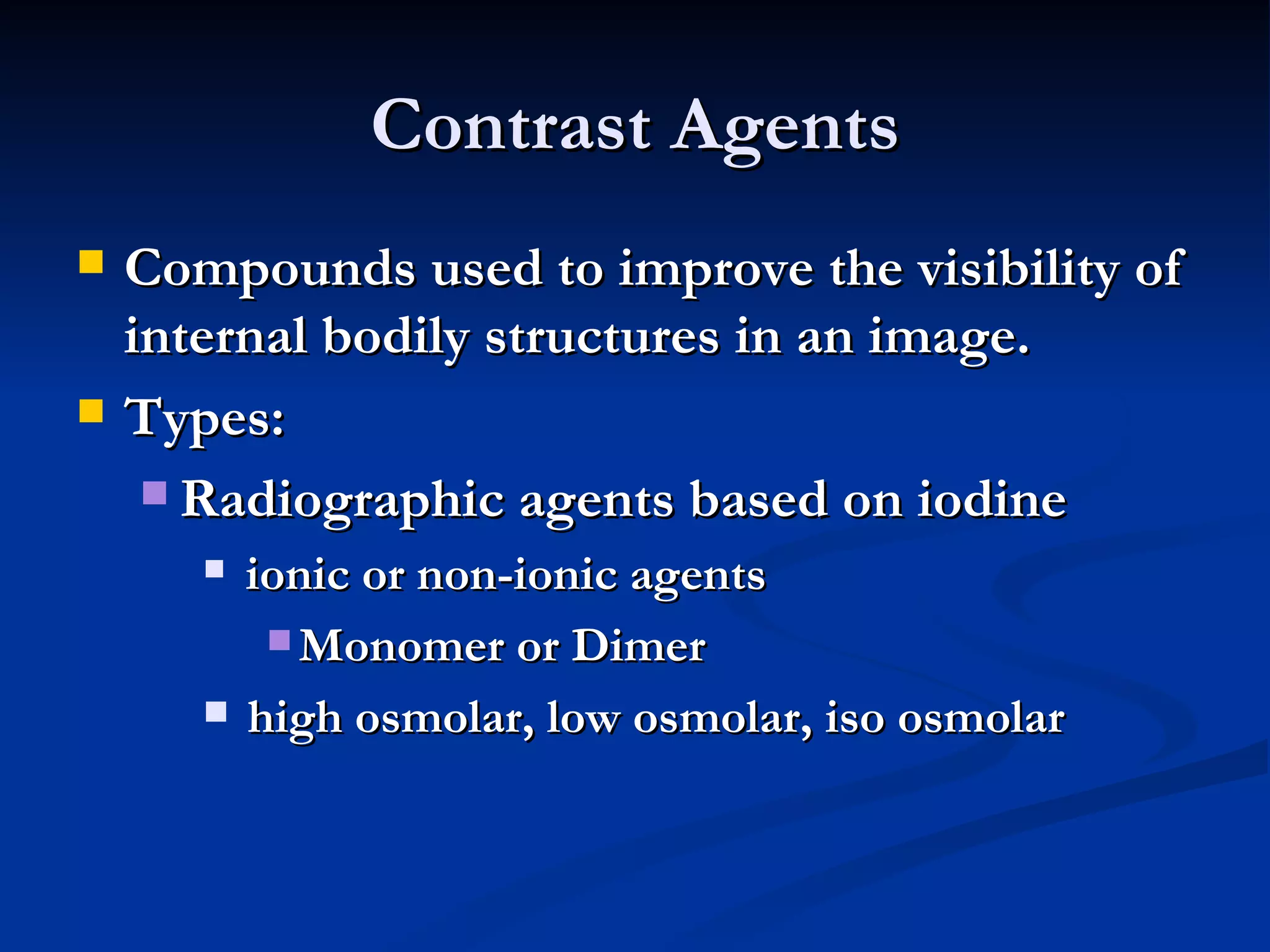
Contrast Agents Compounds used to improve the visibility of internal bodily structures in an image. Types: Radiographic agents based on iodine ionic or non-ionic agents Monomer or Dimer high osmolar, low osmolar, iso osmolar
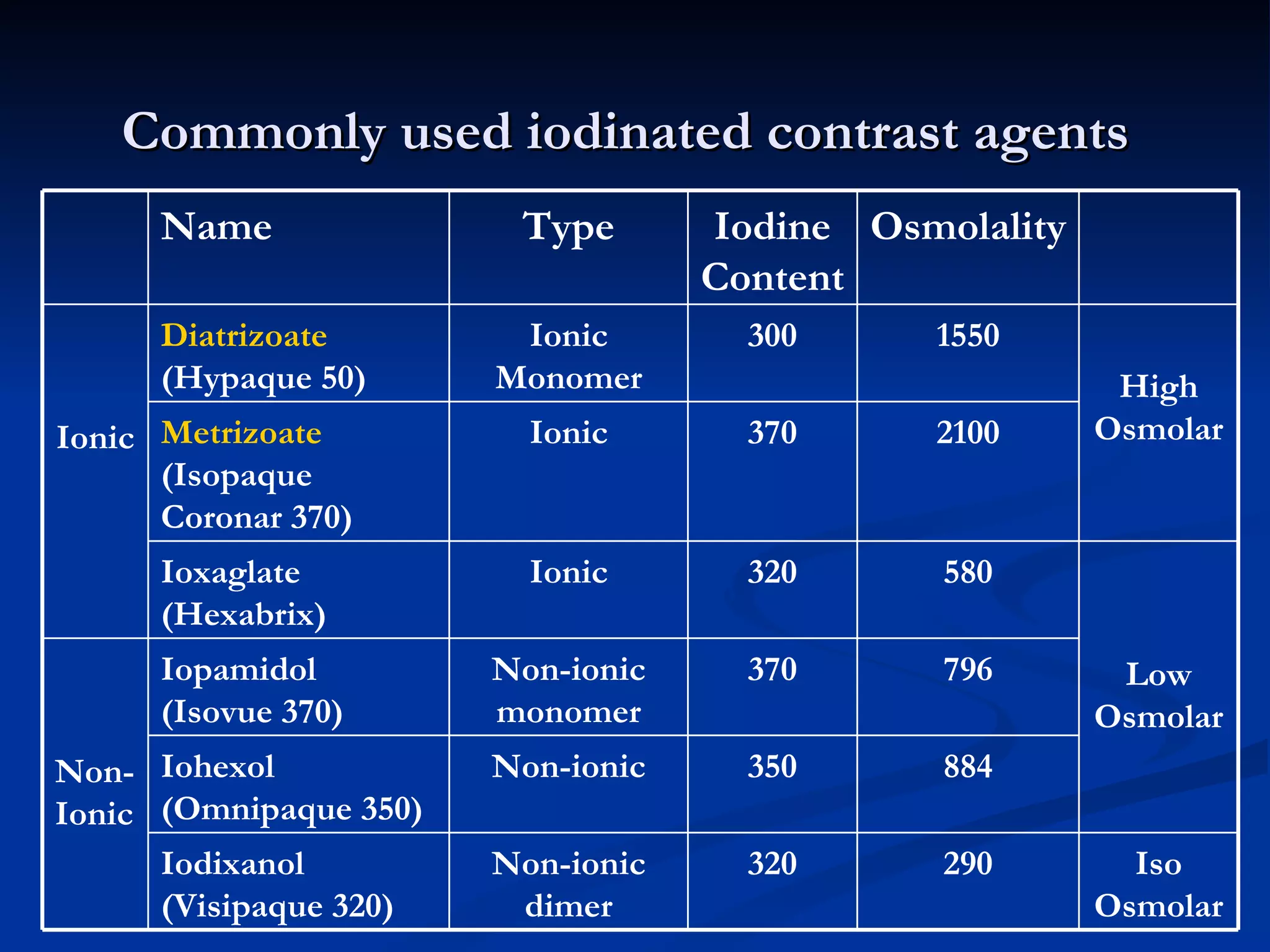
Commonly used iodinated contrast agents   Iso Osmolar 290 320 Non-ionic dimer Iodixanol (Visipaque 320) 884 350 Non-ionic Iohexol (Omnipaque 350) 796 370 Non-ionic monomer Iopamidol (Isovue 370) Non-Ionic Low Osmolar 580 320 Ionic Ioxaglate (Hexabrix) 2100 370 Ionic Metrizoate  (Isopaque Coronar 370)  High Osmolar 1550 300 Ionic Monomer Diatrizoate  (Hypaque 50) Ionic Osmolality Iodine Content Type Name
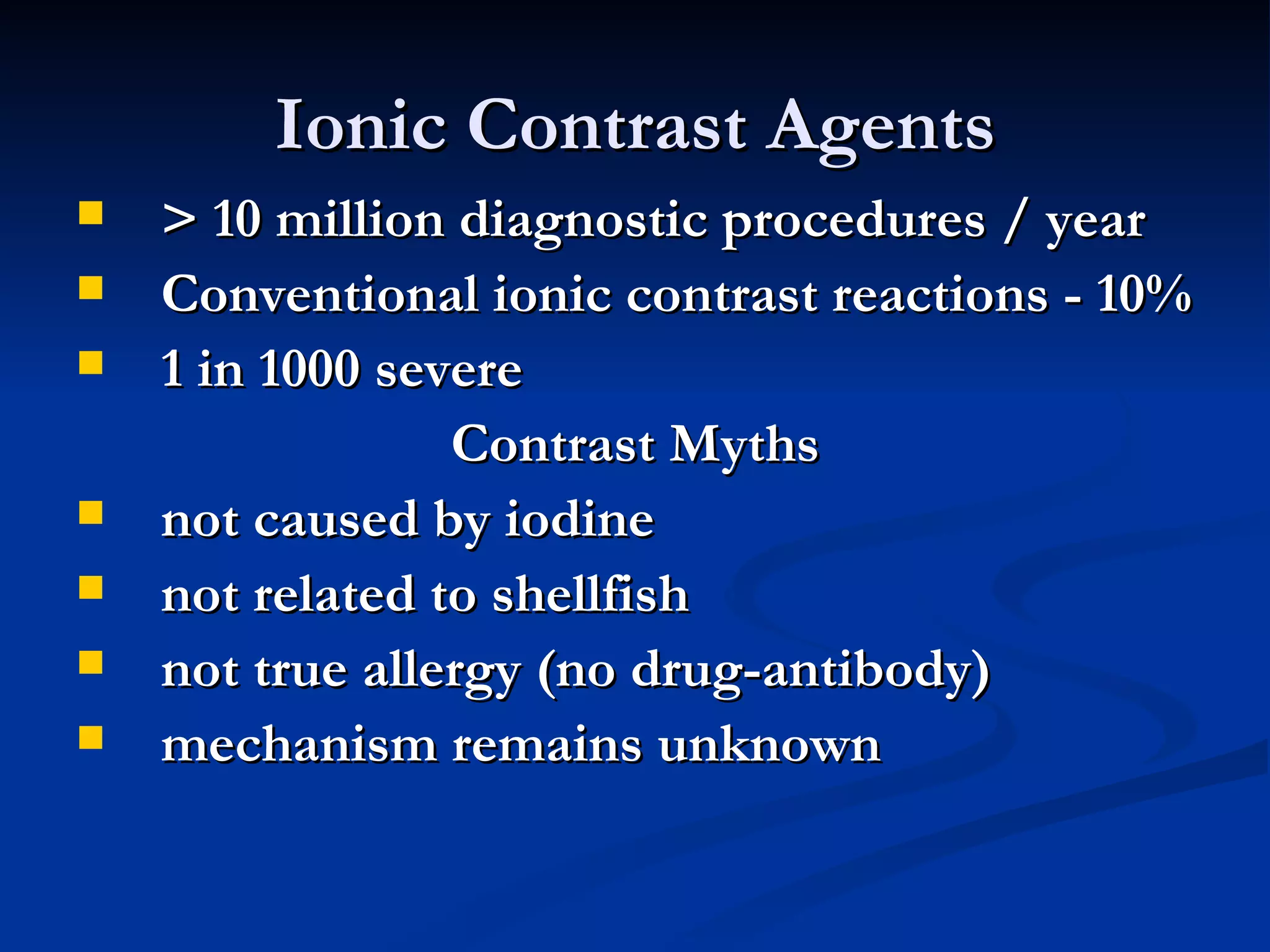
Ionic Contrast Agents > 10 million diagnostic procedures / year  Conventional ionic contrast reactions - 10%  1 in 1000 severe Contrast Myths not caused by iodine  not related to shellfish  not true allergy (no drug-antibody)  mechanism remains unknown
Anaphylactoid (idiosyncratic) unpredictable  dose independent  prevalence 1-2% (0.04 - 0.22% severe)  fatal 1 in 75,000
Chemotoxic predictable  dose dependent  due to osmolality or ionic composition Nonionic vs Ionic Contrast reactions decreased 5 fold  Fatalities unchanged
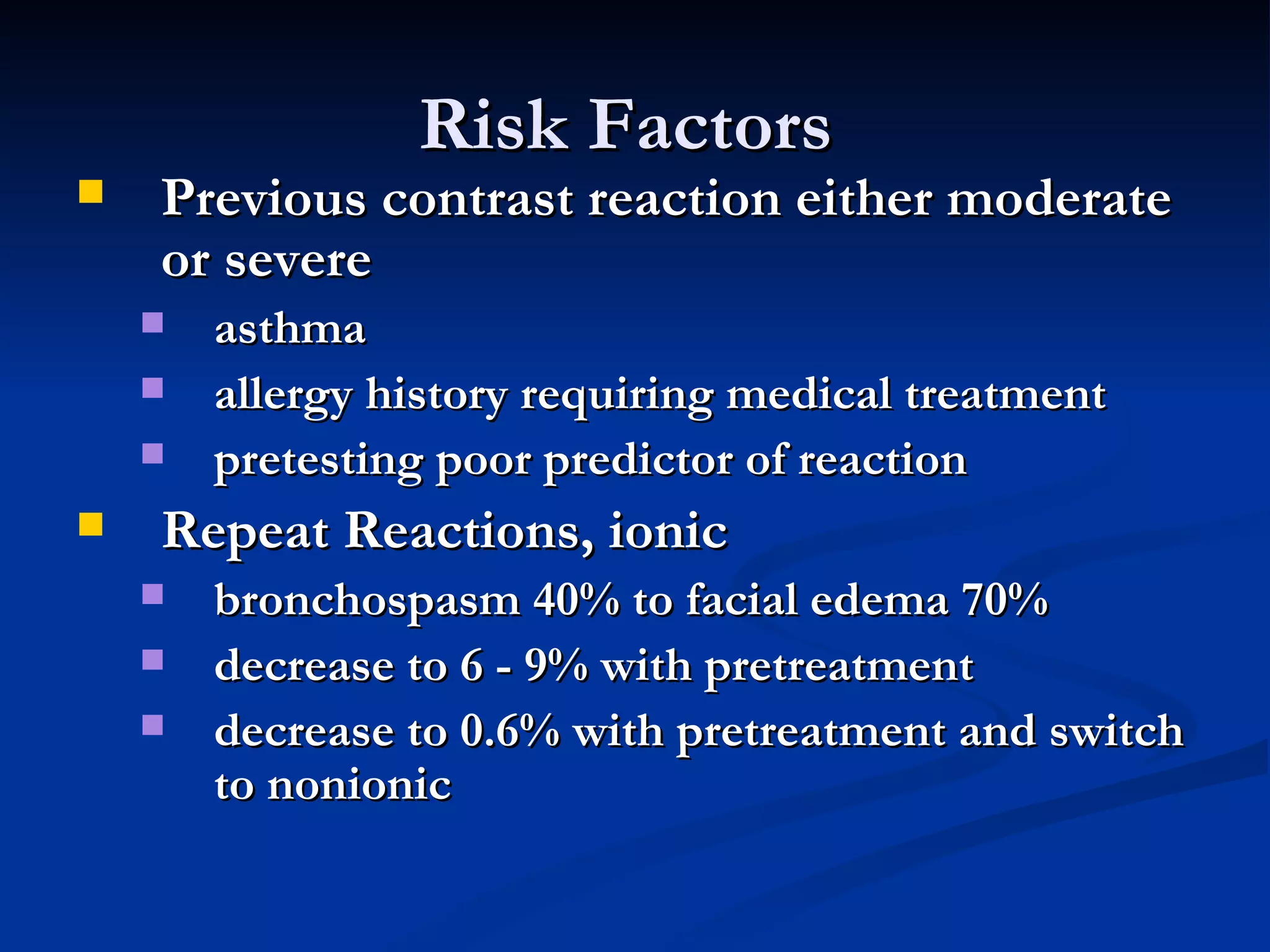
Risk Factors  Previous contrast reaction either moderate or severe asthma  allergy history requiring medical treatment  pretesting poor predictor of reaction  Repeat Reactions, ionic bronchospasm 40% to facial edema 70%  decrease to 6 - 9% with pretreatment  decrease to 0.6% with pretreatment and switch to nonionic
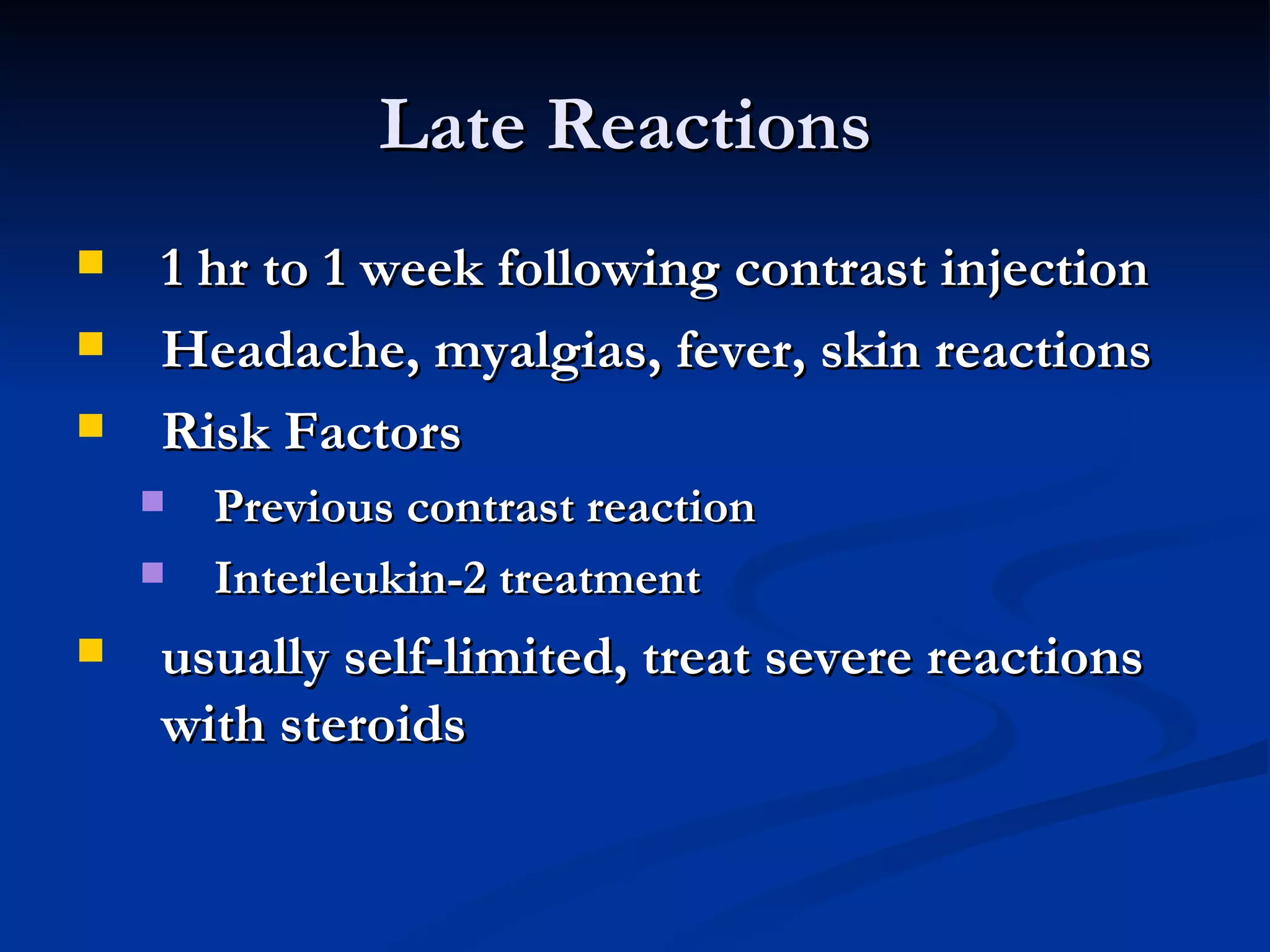
Late Reactions  1 hr to 1 week following contrast injection  Headache, myalgias, fever, skin reactions  Risk Factors  Previous contrast reaction  Interleukin-2 treatment  usually self-limited, treat severe reactions with steroids
Severity of Reactions - Minor  Nausea & vomiting  Urticaria  Pruritis  Diaphoresis
Severity of Reactions - Moderate  Faintness  Facial edema  Laryngeal edema  Bronchospasm
Severity of Reactions - Severe  Pulmonary edema  Respiratory arrest  Cardiac arrest  Seizures
Renal Toxicity  (increased serum creatinine by more than 25% or > 0.5 mg%)   2-7%  Risk Factors  5 - 10 fold increase with pre-existing renal insufficiency (increased creatinine)  Dehydration  CHF  Age > 70  Taking nephrotoxic drugs (nonsteroidal inflammatory agents, gentomycin etc.)
Renal Toxicity  (increased serum creatinine by more than 25% or > 0.5 mg%)   direct relationship between serum creatinine and likelihood nephrotoxicity  Hydrate 100 ml/hr Normal saline 4 hrs prior to procedure, continue for 24 hours  Those on hemodialysis do not need extra sessions or dialysis immediately following contrast administration
Metformin (Glucophage)  oral diabetic agent  patients with renal insufficiency may develop lactic acidosis  withhold drug for 48 hrs after contrast administration in all patients taking this drug
Screening Creatinine  Which patients need screening creatinine? Consider if patient has one of the following risk factors: Known renal insufficiency  Diabetes mellitus  Lasix or nephrotoxic drugs  Solitary kidney
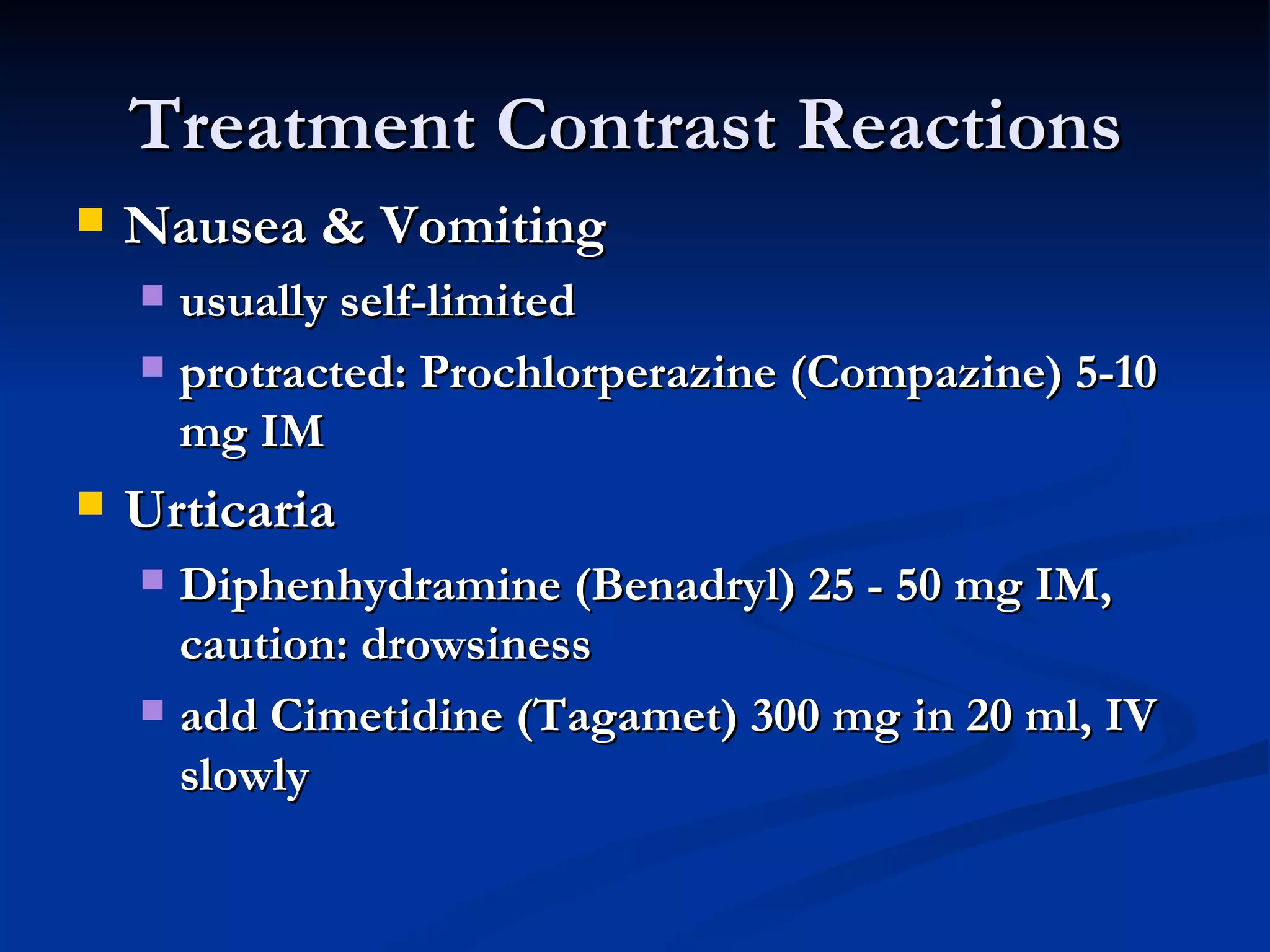
Treatment Contrast Reactions  Nausea & Vomiting usually self-limited  protracted: Prochlorperazine (Compazine) 5-10 mg IM  Urticaria Diphenhydramine (Benadryl) 25 - 50 mg IM, caution: drowsiness  add Cimetidine (Tagamet) 300 mg in 20 ml, IV slowly
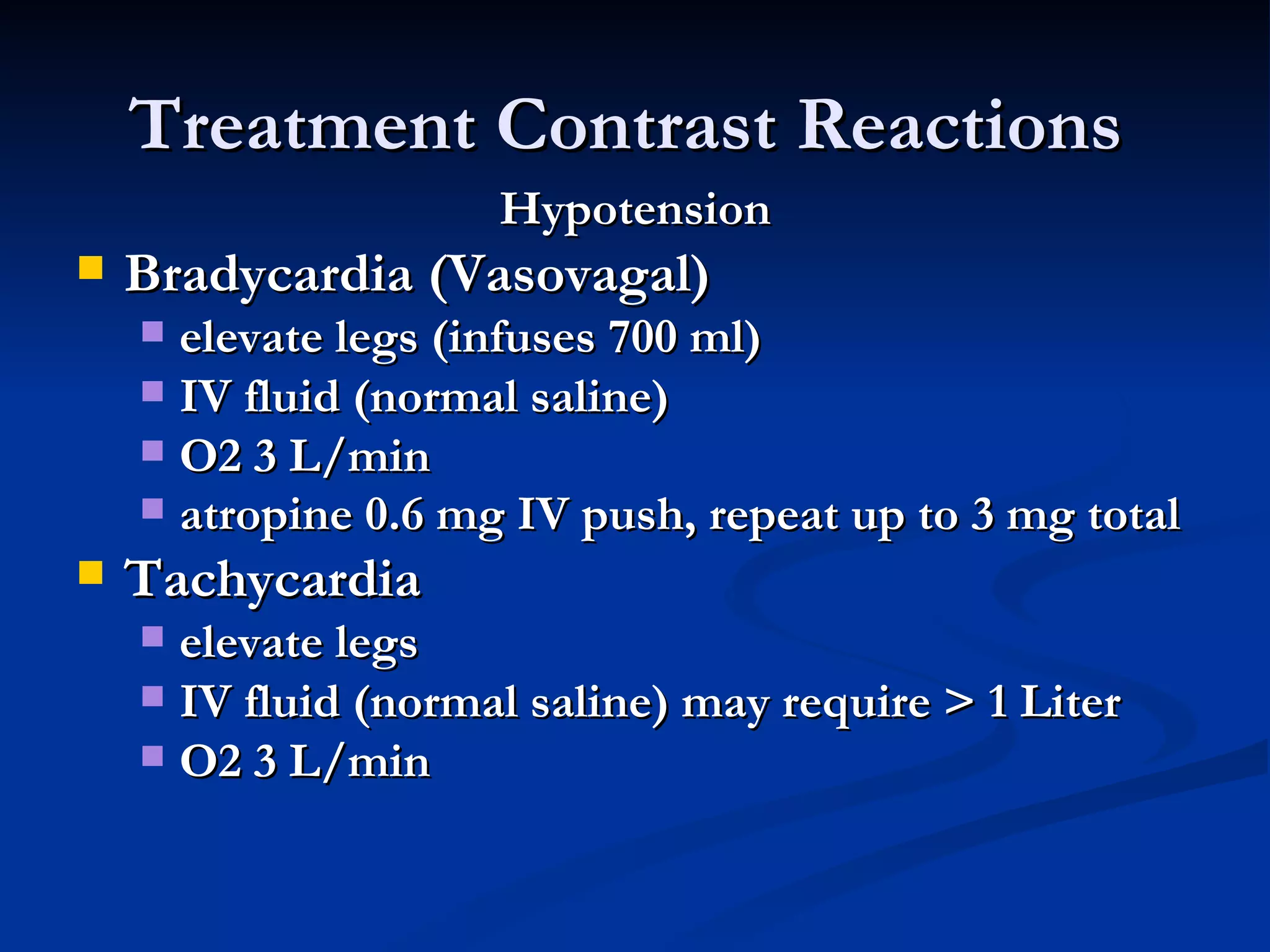
Treatment Contrast Reactions  Hypotension Bradycardia (Vasovagal) elevate legs (infuses 700 ml)  IV fluid (normal saline)  O2 3 L/min  atropine 0.6 mg IV push, repeat up to 3 mg total   Tachycardia elevate legs  IV fluid (normal saline) may require > 1 Liter  O2 3 L/min
Treatment Contrast Reactions Bronchospasm or laryngeal edema O2 3 L/min  Epinephrine 1:1000 (0.1 - 0.2 ml subq) or 1:10,000 1 ml IV over 3 min  Beta 2 agonist 2 -3 puffs  albuterol (Proventyl)  metaproterenol (Alupent)  terbutaline (Brethaine)
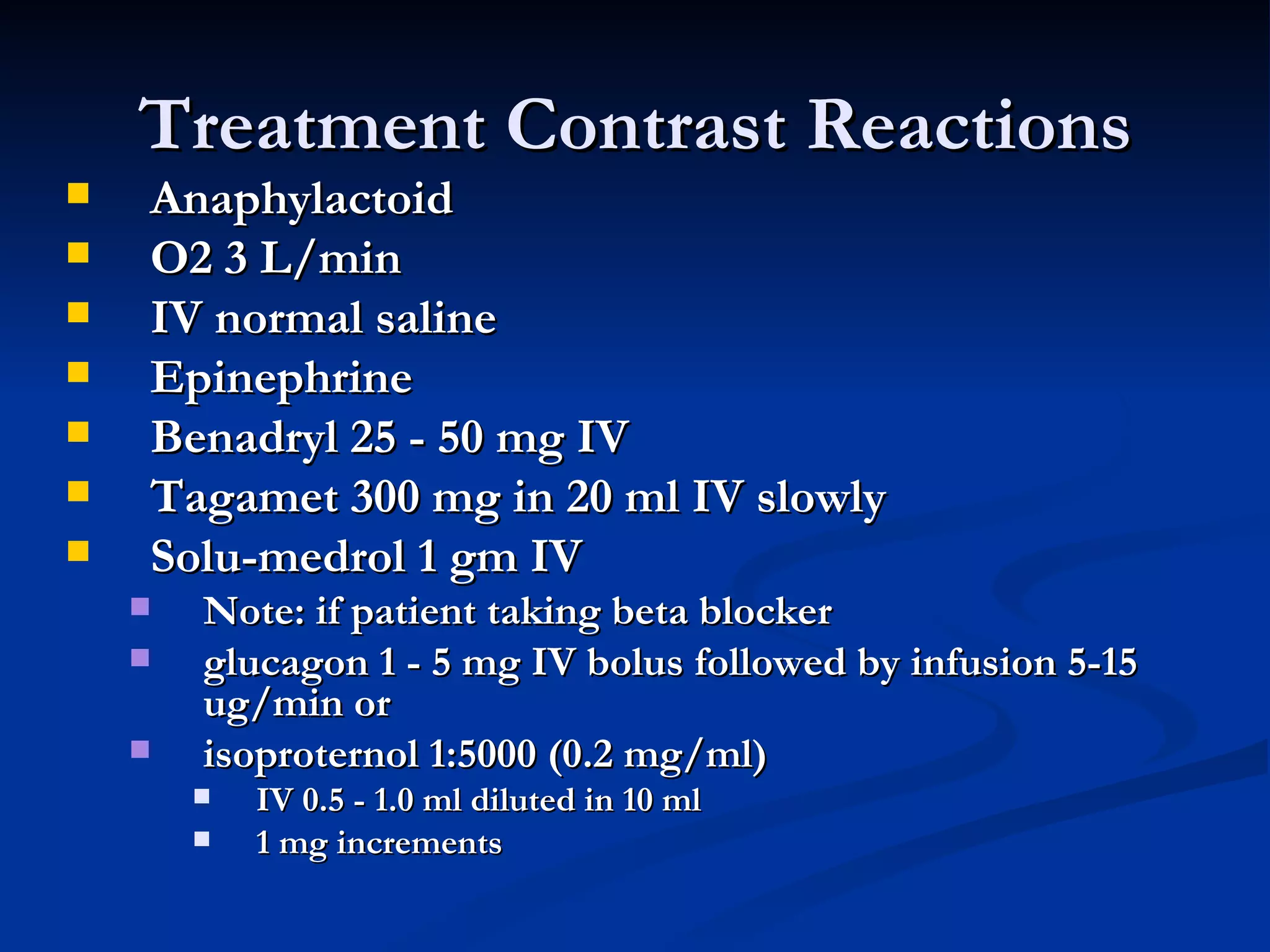
Treatment Contrast Reactions Anaphylactoid   O2 3 L/min  IV normal saline  Epinephrine  Benadryl 25 - 50 mg IV  Tagamet 300 mg in 20 ml IV slowly  Solu-medrol 1 gm IV  Note: if patient taking beta blocker  glucagon 1 - 5 mg IV bolus followed by infusion 5-15 ug/min or  isoproternol 1:5000 (0.2 mg/ml)  IV 0.5 - 1.0 ml diluted in 10 ml  1 mg increments
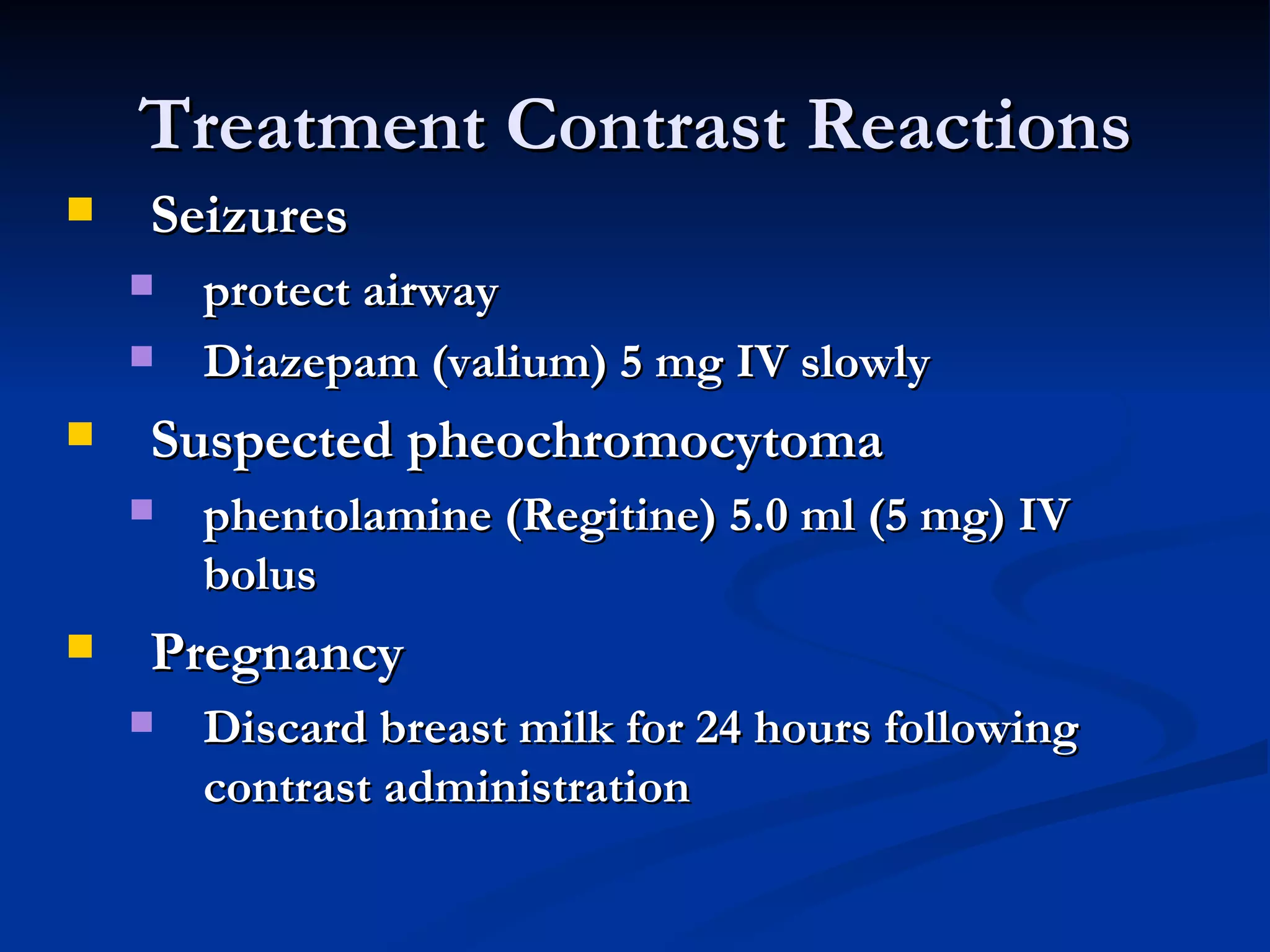
Treatment Contrast Reactions Seizures   protect airway  Diazepam (valium) 5 mg IV slowly Suspected pheochromocytoma   phentolamine (Regitine) 5.0 ml (5 mg) IV bolus   Pregnancy Discard breast milk for 24 hours following contrast administration
Extravasation Elevate extremity  Ice pack 3x day  Observe for 2-4 hours if volume > 5ml
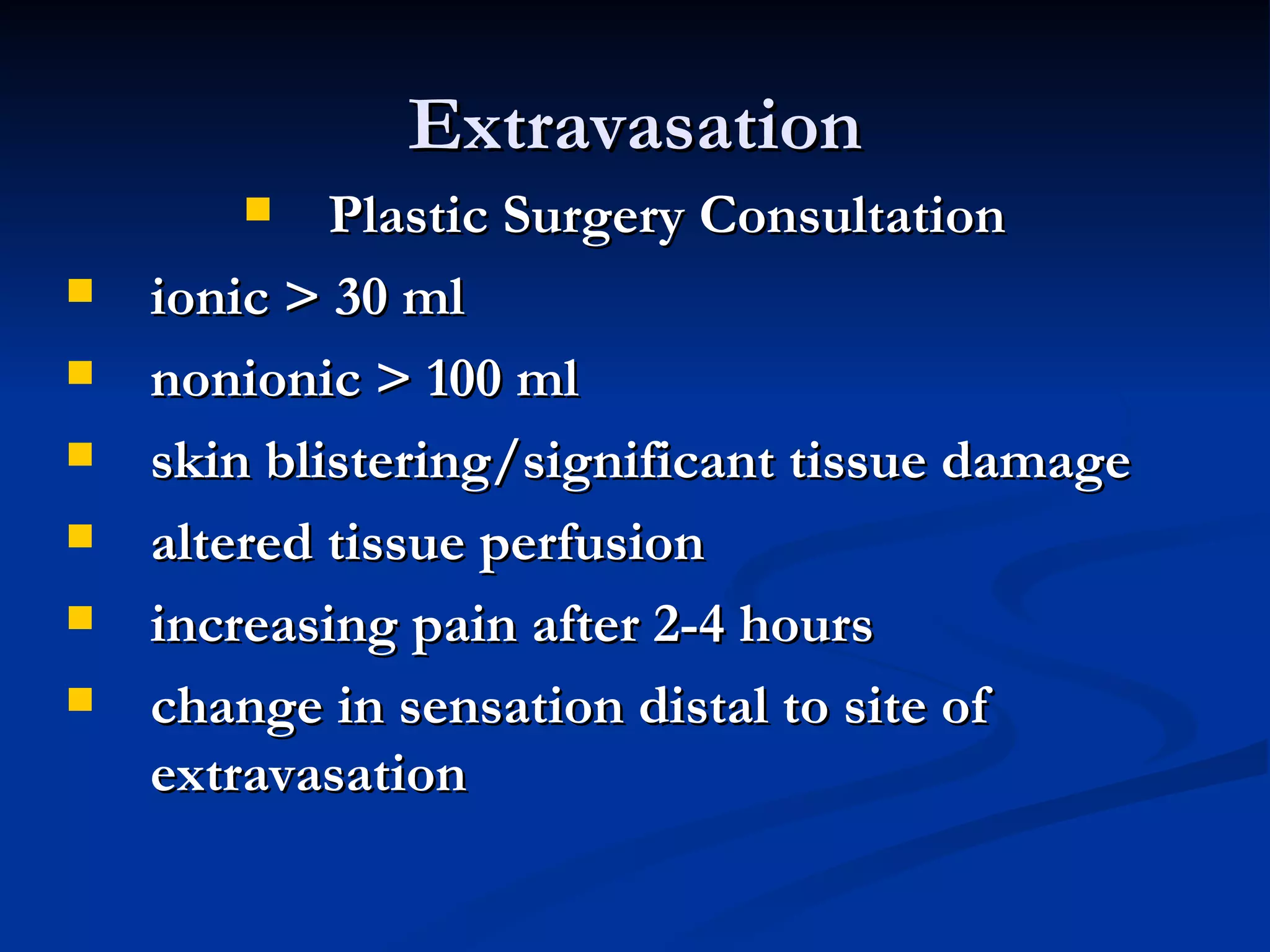
Extravasation Plastic Surgery Consultation ionic > 30 ml  nonionic > 100 ml  skin blistering/significant tissue damage altered tissue perfusion  increasing pain after 2-4 hours  change in sensation distal to site of extravasation
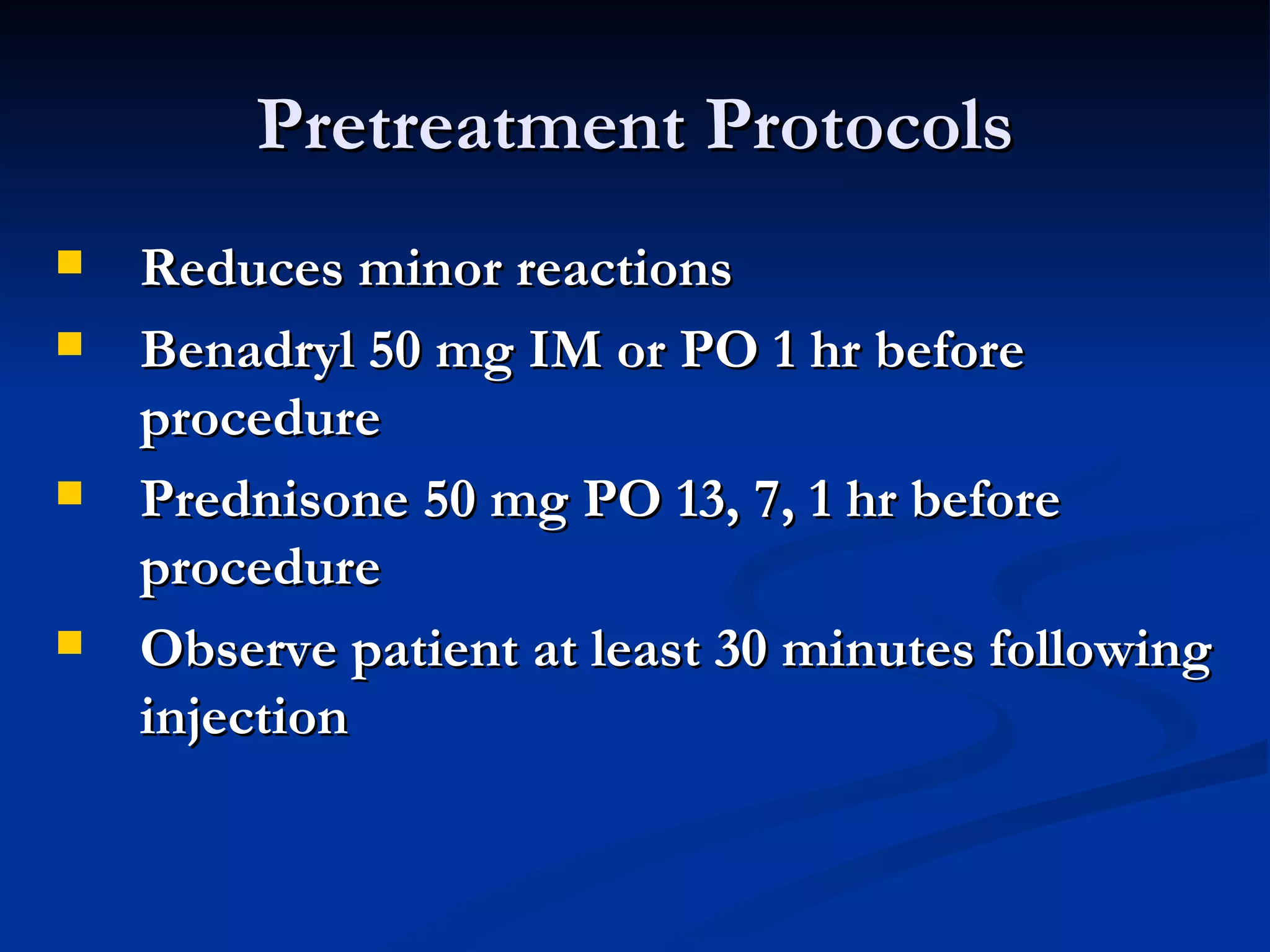
Pretreatment Protocols Reduces minor reactions Benadryl 50 mg IM or PO 1 hr before procedure  Prednisone 50 mg PO 13, 7, 1 hr before procedure  Observe patient at least 30 minutes following injection
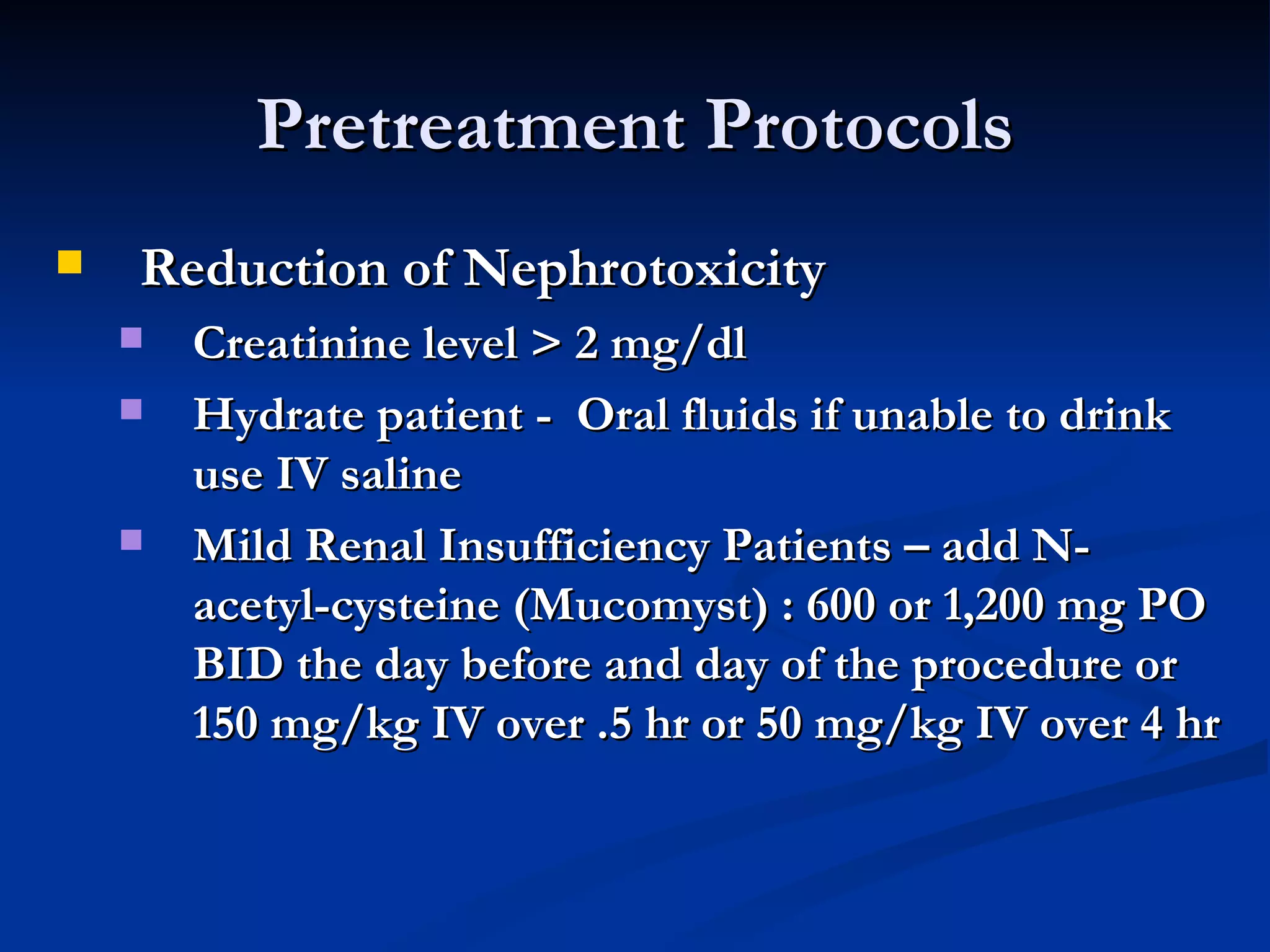
Pretreatment Protocols Reduction of Nephrotoxicity Creatinine level > 2 mg/dl Hydrate patient -  Oral fluids if unable to drink use IV saline Mild Renal Insufficiency Patients – add N-acetyl-cysteine (Mucomyst) : 600 or 1,200 mg PO BID the day before and day of the procedure or 150 mg/kg IV over .5 hr or 50 mg/kg IV over 4 hr
Risk of Nephropathy A recent meta analysis: Radiology: Volume 239: May 2006 p.392-397: Drs Rao & Newhouse Properly controlled clinical studies of IV administered radiographic contrast media fail to demonstrate renal damage.
ACR Manual on Contrast Media  guide for radiologists in the use of iodinated contrast media h ttp:// www.acr.org/s_acr/sec.asp?CID =2131&DID=16687
References of Interest Guidelines for Contrast Media from the European Society of Urogenial Radiology: AJR:181, December 2003 p. 1463 – 1471. Minimizing Adverse Reactions to Contrast Agents: Radiology Rounds, Massachusetts General Hospital, Volume 1, Issue 5 Oct 2003.

Contrast Agents In Radiology

  • 1.
  • 2.
    Contrast Agents Compoundsused to improve the visibility of internal bodily structures in an image. Types: Radiographic agents based on iodine ionic or non-ionic agents Monomer or Dimer high osmolar, low osmolar, iso osmolar
  • 3.
    Commonly used iodinatedcontrast agents Iso Osmolar 290 320 Non-ionic dimer Iodixanol (Visipaque 320) 884 350 Non-ionic Iohexol (Omnipaque 350) 796 370 Non-ionic monomer Iopamidol (Isovue 370) Non-Ionic Low Osmolar 580 320 Ionic Ioxaglate (Hexabrix) 2100 370 Ionic Metrizoate (Isopaque Coronar 370) High Osmolar 1550 300 Ionic Monomer Diatrizoate (Hypaque 50) Ionic Osmolality Iodine Content Type Name
  • 4.
    Ionic Contrast Agents> 10 million diagnostic procedures / year Conventional ionic contrast reactions - 10% 1 in 1000 severe Contrast Myths not caused by iodine not related to shellfish not true allergy (no drug-antibody) mechanism remains unknown
  • 5.
    Anaphylactoid (idiosyncratic) unpredictable dose independent prevalence 1-2% (0.04 - 0.22% severe) fatal 1 in 75,000
  • 6.
    Chemotoxic predictable dose dependent due to osmolality or ionic composition Nonionic vs Ionic Contrast reactions decreased 5 fold Fatalities unchanged
  • 7.
    Risk Factors Previous contrast reaction either moderate or severe asthma allergy history requiring medical treatment pretesting poor predictor of reaction Repeat Reactions, ionic bronchospasm 40% to facial edema 70% decrease to 6 - 9% with pretreatment decrease to 0.6% with pretreatment and switch to nonionic
  • 8.
    Late Reactions 1 hr to 1 week following contrast injection Headache, myalgias, fever, skin reactions Risk Factors Previous contrast reaction Interleukin-2 treatment usually self-limited, treat severe reactions with steroids
  • 9.
    Severity of Reactions- Minor Nausea & vomiting Urticaria Pruritis Diaphoresis
  • 10.
    Severity of Reactions- Moderate Faintness Facial edema Laryngeal edema Bronchospasm
  • 11.
    Severity of Reactions- Severe Pulmonary edema Respiratory arrest Cardiac arrest Seizures
  • 12.
    Renal Toxicity (increased serum creatinine by more than 25% or > 0.5 mg%) 2-7% Risk Factors 5 - 10 fold increase with pre-existing renal insufficiency (increased creatinine) Dehydration CHF Age > 70 Taking nephrotoxic drugs (nonsteroidal inflammatory agents, gentomycin etc.)
  • 13.
    Renal Toxicity (increased serum creatinine by more than 25% or > 0.5 mg%) direct relationship between serum creatinine and likelihood nephrotoxicity Hydrate 100 ml/hr Normal saline 4 hrs prior to procedure, continue for 24 hours Those on hemodialysis do not need extra sessions or dialysis immediately following contrast administration
  • 14.
    Metformin (Glucophage) oral diabetic agent patients with renal insufficiency may develop lactic acidosis withhold drug for 48 hrs after contrast administration in all patients taking this drug
  • 15.
    Screening Creatinine Which patients need screening creatinine? Consider if patient has one of the following risk factors: Known renal insufficiency Diabetes mellitus Lasix or nephrotoxic drugs Solitary kidney
  • 16.
    Treatment Contrast Reactions Nausea & Vomiting usually self-limited protracted: Prochlorperazine (Compazine) 5-10 mg IM Urticaria Diphenhydramine (Benadryl) 25 - 50 mg IM, caution: drowsiness add Cimetidine (Tagamet) 300 mg in 20 ml, IV slowly
  • 17.
    Treatment Contrast Reactions Hypotension Bradycardia (Vasovagal) elevate legs (infuses 700 ml) IV fluid (normal saline) O2 3 L/min atropine 0.6 mg IV push, repeat up to 3 mg total Tachycardia elevate legs IV fluid (normal saline) may require > 1 Liter O2 3 L/min
  • 18.
    Treatment Contrast ReactionsBronchospasm or laryngeal edema O2 3 L/min Epinephrine 1:1000 (0.1 - 0.2 ml subq) or 1:10,000 1 ml IV over 3 min Beta 2 agonist 2 -3 puffs albuterol (Proventyl) metaproterenol (Alupent) terbutaline (Brethaine)
  • 19.
    Treatment Contrast ReactionsAnaphylactoid O2 3 L/min IV normal saline Epinephrine Benadryl 25 - 50 mg IV Tagamet 300 mg in 20 ml IV slowly Solu-medrol 1 gm IV Note: if patient taking beta blocker glucagon 1 - 5 mg IV bolus followed by infusion 5-15 ug/min or isoproternol 1:5000 (0.2 mg/ml) IV 0.5 - 1.0 ml diluted in 10 ml 1 mg increments
  • 20.
    Treatment Contrast ReactionsSeizures protect airway Diazepam (valium) 5 mg IV slowly Suspected pheochromocytoma phentolamine (Regitine) 5.0 ml (5 mg) IV bolus Pregnancy Discard breast milk for 24 hours following contrast administration
  • 21.
    Extravasation Elevate extremity Ice pack 3x day Observe for 2-4 hours if volume > 5ml
  • 22.
    Extravasation Plastic SurgeryConsultation ionic > 30 ml nonionic > 100 ml skin blistering/significant tissue damage altered tissue perfusion increasing pain after 2-4 hours change in sensation distal to site of extravasation
  • 23.
    Pretreatment Protocols Reducesminor reactions Benadryl 50 mg IM or PO 1 hr before procedure Prednisone 50 mg PO 13, 7, 1 hr before procedure Observe patient at least 30 minutes following injection
  • 24.
    Pretreatment Protocols Reductionof Nephrotoxicity Creatinine level > 2 mg/dl Hydrate patient - Oral fluids if unable to drink use IV saline Mild Renal Insufficiency Patients – add N-acetyl-cysteine (Mucomyst) : 600 or 1,200 mg PO BID the day before and day of the procedure or 150 mg/kg IV over .5 hr or 50 mg/kg IV over 4 hr
  • 25.
    Risk of NephropathyA recent meta analysis: Radiology: Volume 239: May 2006 p.392-397: Drs Rao & Newhouse Properly controlled clinical studies of IV administered radiographic contrast media fail to demonstrate renal damage.
  • 26.
    ACR Manual onContrast Media guide for radiologists in the use of iodinated contrast media h ttp:// www.acr.org/s_acr/sec.asp?CID =2131&DID=16687
  • 27.
    References of InterestGuidelines for Contrast Media from the European Society of Urogenial Radiology: AJR:181, December 2003 p. 1463 – 1471. Minimizing Adverse Reactions to Contrast Agents: Radiology Rounds, Massachusetts General Hospital, Volume 1, Issue 5 Oct 2003.