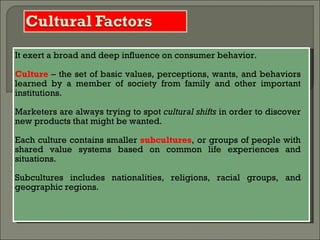
It exert a broad and deep influence on consumer behavior. Culture  – the set of basic values, perceptions, wants, and behaviors learned by a member of society from family and other important institutions. Marketers are always trying to spot  cultural shifts  in order to discover new products that might be wanted. Each culture contains smaller  subcultures , or groups of people with shared value systems based on common life experiences and situations. Subcultures includes nationalities, religions, racial groups, and geographic regions.
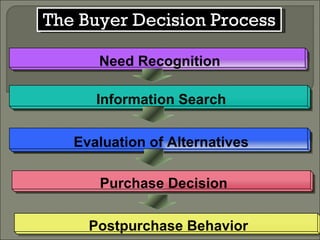
The Buyer Decision Process Need Recognition Information Search Evaluation of Alternatives Purchase Decision Postpurchase Behavior
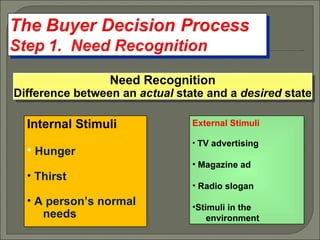
External Stimuli TV advertising Magazine ad Radio slogan Stimuli in the  environment Internal Stimuli Hunger Thirst A person’s normal  needs Need Recognition Difference between an  actual  state and a  desired  state
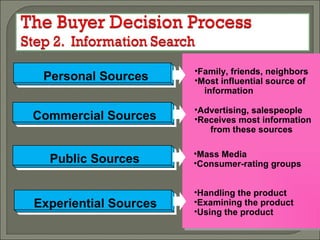
Family, friends, neighbors Most influential source of information Advertising, salespeople Receives most information  from these sources Mass Media Consumer-rating groups Handling the product Examining the product Using the product Personal Sources Commercial Sources Public Sources Experiential Sources
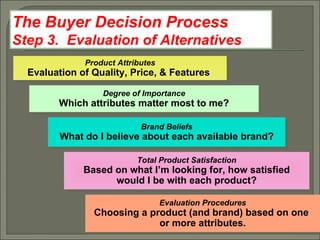
The Buyer Decision Process Step 3.  Evaluation of Alternatives Product Attributes Evaluation of Quality, Price, & Features  Degree of Importance Which attributes matter most to me? Brand Beliefs What do I believe about each available brand? Total Product Satisfaction Based on what I’m looking for, how satisfied would I be with each product? Evaluation Procedures Choosing a product (and brand) based on one  or more attributes.
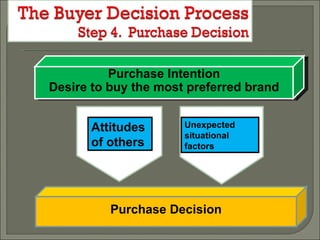
Purchase Intention Desire to buy the most preferred brand Purchase Decision Attitudes of others Unexpected situational factors
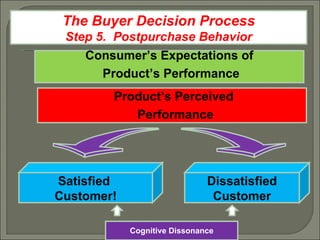
The Buyer Decision Process Step 5.  Postpurchase Behavior Consumer’s Expectations of  Product’s Performance Dissatisfied Customer Satisfied  Customer! Product’s Perceived Performance Cognitive Dissonance

consumer decision making process

  • 1.
    It exert abroad and deep influence on consumer behavior. Culture – the set of basic values, perceptions, wants, and behaviors learned by a member of society from family and other important institutions. Marketers are always trying to spot cultural shifts in order to discover new products that might be wanted. Each culture contains smaller subcultures , or groups of people with shared value systems based on common life experiences and situations. Subcultures includes nationalities, religions, racial groups, and geographic regions.
  • 2.
    The Buyer DecisionProcess Need Recognition Information Search Evaluation of Alternatives Purchase Decision Postpurchase Behavior
  • 3.
    External Stimuli TVadvertising Magazine ad Radio slogan Stimuli in the environment Internal Stimuli Hunger Thirst A person’s normal needs Need Recognition Difference between an actual state and a desired state
  • 4.
    Family, friends, neighborsMost influential source of information Advertising, salespeople Receives most information from these sources Mass Media Consumer-rating groups Handling the product Examining the product Using the product Personal Sources Commercial Sources Public Sources Experiential Sources
  • 5.
    The Buyer DecisionProcess Step 3. Evaluation of Alternatives Product Attributes Evaluation of Quality, Price, & Features Degree of Importance Which attributes matter most to me? Brand Beliefs What do I believe about each available brand? Total Product Satisfaction Based on what I’m looking for, how satisfied would I be with each product? Evaluation Procedures Choosing a product (and brand) based on one or more attributes.
  • 6.
    Purchase Intention Desireto buy the most preferred brand Purchase Decision Attitudes of others Unexpected situational factors
  • 7.
    The Buyer DecisionProcess Step 5. Postpurchase Behavior Consumer’s Expectations of Product’s Performance Dissatisfied Customer Satisfied Customer! Product’s Perceived Performance Cognitive Dissonance