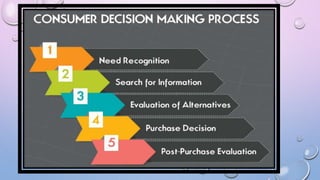
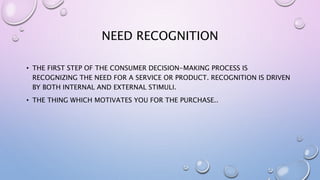
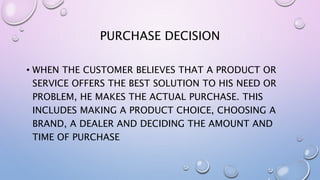
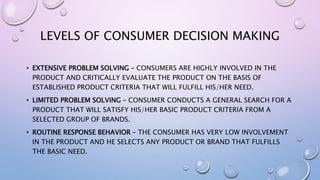
This document summarizes the consumer decision making process. It involves 5 stages: need recognition, information search, alternatives evaluation, purchase decision, and post-purchase evaluation. In need recognition, internal or external stimuli motivate a need. In information search, consumers gather information from recommendations, experiences, and risk management. Alternatives are then evaluated based on factors like price, benefits, availability. The purchase decision involves choosing a product, brand, dealer, amount and time. Post-purchase involves evaluating performance versus expectations. Decision making can be extensive problem solving, limited problem solving, or routine response behavior based on involvement level.