ACI 224.3R Joints in Concrete 
Construction (Non-Contractual) 
Chapter 3 - Buildings 
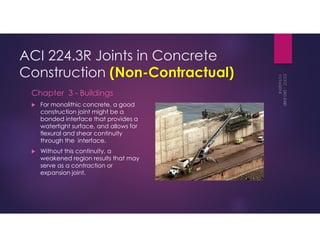
 For monolithic concrete, a good 
construction joint might be a 
bonded interface that provides a 
watertight surface, and allows for 
flexural and shear continuity 
through the interface. 
 Without this continuity, a 
weakened region results that may 
serve as a contraction or 
expansion joint.
ACI 224.3R 
3.2.1 Joint construction 
To achieve a well-bonded watertight interface, a few 
conditions should be met before the placement of fresh 
concrete. 
The hardened concrete is usually specified to be clean 
and free of laitance (ACI 311.1R). Older joints need 
additional surface preparation. Concrete that has set 
should be prepared using a wet sand blast or ultra-high 
pressure water jet (ACI 311.1R). 
ACI 318 states that existing concrete should be moistened 
thoroughly before placement of fresh concrete. Concrete 
that has dried out may require saturation for a day or 
more, but concrete that has been placed recently will 
not require additional water. 
Only if a few hours elapse between successive 
placements, a visual check is needed to be sure that 
loose particles, dirt, and laitance are removed. The new 
concrete will be adequately bonded to the hardened 
green concrete, provided that the new concrete is 
vibrated thoroughly. Cleaning by an air-water jet or wire 
brooming can be done when the concrete is still soft 
enough that laitance can be removed, but hard enough 
to prevent aggregate from loosening. 
Other methods may also be useful for preparing a 
construction joint for new concrete.
ACI 224.3R 
3.2.1 Joint construction 
3.2.2.2 Vertical Elements —Although placements with a depth of 
30 ft (10 m) have been made with conventional formwork, it is 
general practice to limit concrete placements to a height of one 
story. Horizontal Construction joint should be located at the 
undersides of footings. Construction joints are provided at the top 
of floor slabs for capitals should be placed monolithically with the 
Pile Cap. 
The placement of fresh concrete on a horizontal surface can 
affect structural integrity of the joint. 
Although it is not always necessary, common practice has been 
to provide a bedding layer of mortar, of the same proportions as 
that in the concrete, before placement of new concrete above 
the joint. ACI 311.1R recommends using a bedding layer of 
concrete with somewhat more cement, sand, and water than the 
design mix for the structure. Aggregate less than 3/4 in. (20 mm) 
can be left in the bedding layer, but larger aggregate should be 
removed. This mixture should be placed 4 to 6 in. (100 to 150 mm) 
deep and vibrated thoroughly with the regular mixture placed 
above. 
Shear transfer and bending at Horizontal joints should be 
addressed in much the same way it is for beams and slabs. The 
reinforcement should continue through the joint, with adequate 
length to ensure a complete splice. If the joint is subject to lateral 
shear, load transfer by shear friction or dowel action is added.
ACI 224.3R 
CHAPTER 10—MASS 
CONCRETE 
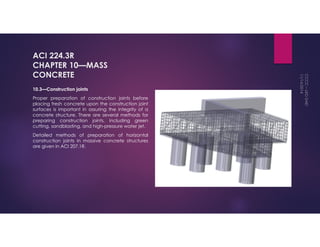
10.3—Construction joints 
Proper preparation of construction joints before 
placing fresh concrete upon the construction joint 
surfaces is important in assuring the integrity of a 
concrete structure. There are several methods for 
preparing construction joints, including green 
cutting, sandblasting, and high-pressure water jet. 
Detailed methods of preparation of horizontal 
construction joints in massive concrete structures 
are given in ACI 207.1R.
ACI 207.1R-05 Guide to Mass 
Concrete (Non-Contractual) 
Mass Concrete: 
 ACI 116R defines mass concrete as 
“any volume of concrete with 
dimensions large enough to 
require that measures be taken to 
cope with generation of heat from 
hydration of the cement and 
attendant volume change to 
minimize cracking.”
ACI 207.1R-05 
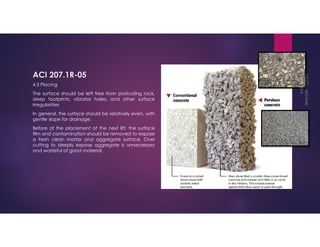
4.3 Placing 
The surface should be left free from protruding rock, 
deep footprints, vibrator holes, and other surface 
irregularities 
In general, the surface should be relatively even, with 
gentle slope for drainage. 
Before of the placement of the next lift, the surface 
film and contamination should be removed to expose 
a fresh clean mortar and aggregate surface. Over 
cutting to deeply expose aggregate is unnecessary 
and wasteful of good material.
ACI 207.1R-05 
4.3 Placing 
Strength of bond is accomplished by cement grains, not by 
protruding coarse aggregate. Usually removal of a few 
millimeters of inferior material will reveal a satisfactory surface. 
The best methods of obtaining such clean surface are by means 
of wet sandblasting or high-pressure water jet of at least 6000 psi. 
This has the advantage of being able to clean concrete of any 
age. The water-jet method may not work as efficiently after the 
concrete is more than a week old. 
The initially acceptable surface may become dull with lime 
coatings or can become contaminated to such an extent that it 
may be necessary to use sandblasting or high-pressure water jets 
to re-clean it.
Recommendations upon 
placement 
ACI 224.3R: 3.2.1 Joint construction 
 Pools of water should not be left standing on 
the wetted surface at the time of 
placement; the surface should just be 
damp. Free surface water will increase the 
water-cement ratio of new concrete at the 
interface and weaken the bond strength. 
 Form construction plays an important role in 
the quality of a joint. It is essential to minimize 
the leakage of grout from under bulkheads 
(Hunter, 1953). If the placement is deeper 
than 6 in. (150 mm), the possibility of leakage 
increases due to the greater pressure head 
of the wet concrete. Grout that escapes 
under a bulkhead will form a thin wedge of 
material, which must be cut away before 
the next placement. If not removed, this 
wedge will not adhere to the fresh concrete, 
and, under load, deflection in the element 
will cause this joint to open. 
ACI 207.1R: 4.3 Placing 
 The concrete surface should be 
approaching dryness and be free 
from surface moisture at the time 
new concrete is placed on it.

Construction joints

  • 1.
    ACI 224.3R Jointsin Concrete Construction (Non-Contractual) Chapter 3 - Buildings For monolithic concrete, a good construction joint might be a bonded interface that provides a watertight surface, and allows for flexural and shear continuity through the interface. Without this continuity, a weakened region results that may serve as a contraction or expansion joint.
  • 2.
    ACI 224.3R 3.2.1Joint construction To achieve a well-bonded watertight interface, a few conditions should be met before the placement of fresh concrete. The hardened concrete is usually specified to be clean and free of laitance (ACI 311.1R). Older joints need additional surface preparation. Concrete that has set should be prepared using a wet sand blast or ultra-high pressure water jet (ACI 311.1R). ACI 318 states that existing concrete should be moistened thoroughly before placement of fresh concrete. Concrete that has dried out may require saturation for a day or more, but concrete that has been placed recently will not require additional water. Only if a few hours elapse between successive placements, a visual check is needed to be sure that loose particles, dirt, and laitance are removed. The new concrete will be adequately bonded to the hardened green concrete, provided that the new concrete is vibrated thoroughly. Cleaning by an air-water jet or wire brooming can be done when the concrete is still soft enough that laitance can be removed, but hard enough to prevent aggregate from loosening. Other methods may also be useful for preparing a construction joint for new concrete.
  • 3.
    ACI 224.3R 3.2.1Joint construction 3.2.2.2 Vertical Elements —Although placements with a depth of 30 ft (10 m) have been made with conventional formwork, it is general practice to limit concrete placements to a height of one story. Horizontal Construction joint should be located at the undersides of footings. Construction joints are provided at the top of floor slabs for capitals should be placed monolithically with the Pile Cap. The placement of fresh concrete on a horizontal surface can affect structural integrity of the joint. Although it is not always necessary, common practice has been to provide a bedding layer of mortar, of the same proportions as that in the concrete, before placement of new concrete above the joint. ACI 311.1R recommends using a bedding layer of concrete with somewhat more cement, sand, and water than the design mix for the structure. Aggregate less than 3/4 in. (20 mm) can be left in the bedding layer, but larger aggregate should be removed. This mixture should be placed 4 to 6 in. (100 to 150 mm) deep and vibrated thoroughly with the regular mixture placed above. Shear transfer and bending at Horizontal joints should be addressed in much the same way it is for beams and slabs. The reinforcement should continue through the joint, with adequate length to ensure a complete splice. If the joint is subject to lateral shear, load transfer by shear friction or dowel action is added.
  • 4.
    ACI 224.3R CHAPTER10—MASS CONCRETE 10.3—Construction joints Proper preparation of construction joints before placing fresh concrete upon the construction joint surfaces is important in assuring the integrity of a concrete structure. There are several methods for preparing construction joints, including green cutting, sandblasting, and high-pressure water jet. Detailed methods of preparation of horizontal construction joints in massive concrete structures are given in ACI 207.1R.
  • 5.
    ACI 207.1R-05 Guideto Mass Concrete (Non-Contractual) Mass Concrete: ACI 116R defines mass concrete as “any volume of concrete with dimensions large enough to require that measures be taken to cope with generation of heat from hydration of the cement and attendant volume change to minimize cracking.”
  • 6.
    ACI 207.1R-05 4.3Placing The surface should be left free from protruding rock, deep footprints, vibrator holes, and other surface irregularities In general, the surface should be relatively even, with gentle slope for drainage. Before of the placement of the next lift, the surface film and contamination should be removed to expose a fresh clean mortar and aggregate surface. Over cutting to deeply expose aggregate is unnecessary and wasteful of good material.
  • 7.
    ACI 207.1R-05 4.3Placing Strength of bond is accomplished by cement grains, not by protruding coarse aggregate. Usually removal of a few millimeters of inferior material will reveal a satisfactory surface. The best methods of obtaining such clean surface are by means of wet sandblasting or high-pressure water jet of at least 6000 psi. This has the advantage of being able to clean concrete of any age. The water-jet method may not work as efficiently after the concrete is more than a week old. The initially acceptable surface may become dull with lime coatings or can become contaminated to such an extent that it may be necessary to use sandblasting or high-pressure water jets to re-clean it.
  • 8.
    Recommendations upon placement ACI 224.3R: 3.2.1 Joint construction Pools of water should not be left standing on the wetted surface at the time of placement; the surface should just be damp. Free surface water will increase the water-cement ratio of new concrete at the interface and weaken the bond strength. Form construction plays an important role in the quality of a joint. It is essential to minimize the leakage of grout from under bulkheads (Hunter, 1953). If the placement is deeper than 6 in. (150 mm), the possibility of leakage increases due to the greater pressure head of the wet concrete. Grout that escapes under a bulkhead will form a thin wedge of material, which must be cut away before the next placement. If not removed, this wedge will not adhere to the fresh concrete, and, under load, deflection in the element will cause this joint to open. ACI 207.1R: 4.3 Placing The concrete surface should be approaching dryness and be free from surface moisture at the time new concrete is placed on it.