Bellwork: October 5
 This picture is a clue to what we will be
learning about. Make a prediction about
today’s lesson.
3.4 NOTES
THE RACE FOR
EMPIRES
Standards
 European countries established colonies in
North America as a means of increasing
wealth and power
 Competition for control of territory and
resources in North America led to conflicts
among colonizing powers.
Essential Question
 What impact did the settlements of France,
Spain, Great Britain, Sweden, and the
Netherlands have on North America?
French Settlement
 In the early 1500’s, Spain and France competed for
colonies and settlements in the Americas.
 The French tried to establish colonies in Florida,
and were driven out by the Spanish
 Due to the explorations of Jacques Cartier and
Samuel de Champlain, the French began to settle in
present-day eastern Canada.
 The French soon began to establish small trading
communities and fishing villages along the
northeastern coast of North America.
French Settlement
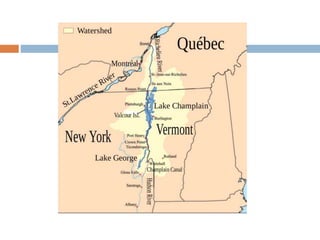
 Samuel de Champlain traveled along the St.
Lawrence River and the Great Lakes.
o He also founded Quebec
o He explored areas in present day New York and
Vermont
 Lake Champlain in Vermont is named after him
 The Great Lakes were valuable to France because
of the fur trade
o Europeans used animal furs (especially beaver pelts) to
make hats and coats
French Settlement
 The French also traded tools, jewelry, and cloth
with Native Americans in exchange for furs
 The French began using Native American clothing
and customs in order to survive the harsh winter
weather
o The French used Indian canoes and snowshoes in order
to travel more efficiently.
 The French generally treated American Indians
with more respect than other Europeans, because of
the relationship they built through trade.
Expansion of the French
Empire
 Eventually, the French began spreading out from
the Great Lakes region
 Fur traders, explorers, and missionaries headed
south toward New Spain
 French missionaries also traveled along the
Mississippi River towards present-day Arkansas
Expansion of the French
Empire
 René-Robert de La Salle – claimed the
Mississippi Valley for King Louis XIV of France.
o He named this territory Louisiana, after the king.
 The French territory in the Americas was called
New France.
o While the number of settlers were not large, only about
12,000, there were a number of outposts established
such as Detroit and New Orleans
The Dutch (country called the
Netherlands)
 The Dutch came to America in search of
trade
 Henry Hudson’s exploration gave the Dutch a
claim to land in N.A. that they called New
Netherland
 This is modern day New York, New Jersey,
Connecticut, and Delaware
 New Amsterdam is what is now New York City
Sweden and Denmark
 Also had small colonies in N.A., but were not
successful
English Settlements
 The English also decided to start their own North
American colonies
 Sir Walter Raleigh paid for an expedition that
landed in present-day Virginia and North Carolina
 He named the entire area Virginia.
English Settlement
 He also established a colony on Roanoke Island,
which failed
o The English colonists had a difficult life, as they
constantly would fight with Native Americans and had
trouble finding and growing food.
o Most of the settlers returned to England.
 John White resettled a colony on Roanoke Island.
o His granddaughter, Virginia Dare, was the first English
child born in the present-day United States
English Settlement
 White returned to England, and did not return to the
colony until 3 years later.
 Upon his return, he found the buildings still
standing, but the colony deserted
 White searched for the settlers and his
granddaughter, but he never found them
 Historians are still not certain just what happened
to the colony.
Essential Question
 What impact did the settlements of France,
Spain, Great Britain, Sweden, and the
Netherlands have on North America?
Cornell Notes
From yesterday’s notes, circle
focus words and highlight 5-7
main topics
Create questions in the margin
of your notes about these
topics.
Empires Map
 You are to show how European Empires are taking over
Territory in North and South America
 Show territory from
 New Spain,
 New France and
 British Colonies
 Use the following resources to help:
 Class wikipage (2 maps available)
 New Spain – p. 75 in textbook
 New France – p.150 in textbook
 British/English Colonies – p. 117 & 150 in textbook
 Key illustrating all colors used
Graphic Summary Options
 Option 1:Storyboard
 Divide your paper into
3 sections
 French Settlement
 Dutch Settlement
 English Settlement
 Each section should
have a subtitle, a
summary, a higher
level question, and a
picture
 Use the samples to
help.
 Option 2: Describing
a Historical Event
 Create a graphic
organizer of the entire
Competing Empires
Notes
 “Competing Empires”
in the middle
 Who, When, Where,
Why, How,
Significance
 You may use
additional specific
headings (see
examples)
Graphic Summary
 Review your Cornell Notes, questions and
summary from yesterday’s class
 Create a graphic summary of the notes
 Option 1:Storyboard
 Divide your paper into 3 sections
 French Settlement
 Dutch Settlement
 English Settlement
 Each section should have a subtitle, a summary, a
higher level question, and a picture
 Use the samples to help.
Graphic Summary
 Option 2: Describing a Historical Event
 Create a graphic organizer of the entire
Competing Empires Notes
 “Competing Empires” in the middle
 Who, When, Where, Why, How, Significance
 You may use additional specific headings (see
examples)
 Use the samples to help.

3.4notes

  • 1.
    Bellwork: October 5 This picture is a clue to what we will be learning about. Make a prediction about today’s lesson.
  • 2.
    3.4 NOTES THE RACEFOR EMPIRES
  • 3.
    Standards  European countriesestablished colonies in North America as a means of increasing wealth and power  Competition for control of territory and resources in North America led to conflicts among colonizing powers.
  • 4.
    Essential Question  Whatimpact did the settlements of France, Spain, Great Britain, Sweden, and the Netherlands have on North America?
  • 5.
    French Settlement  Inthe early 1500’s, Spain and France competed for colonies and settlements in the Americas.  The French tried to establish colonies in Florida, and were driven out by the Spanish  Due to the explorations of Jacques Cartier and Samuel de Champlain, the French began to settle in present-day eastern Canada.  The French soon began to establish small trading communities and fishing villages along the northeastern coast of North America.
  • 6.
    French Settlement  Samuelde Champlain traveled along the St. Lawrence River and the Great Lakes. o He also founded Quebec o He explored areas in present day New York and Vermont  Lake Champlain in Vermont is named after him  The Great Lakes were valuable to France because of the fur trade o Europeans used animal furs (especially beaver pelts) to make hats and coats
  • 8.
    French Settlement  TheFrench also traded tools, jewelry, and cloth with Native Americans in exchange for furs  The French began using Native American clothing and customs in order to survive the harsh winter weather o The French used Indian canoes and snowshoes in order to travel more efficiently.  The French generally treated American Indians with more respect than other Europeans, because of the relationship they built through trade.
  • 9.
    Expansion of theFrench Empire  Eventually, the French began spreading out from the Great Lakes region  Fur traders, explorers, and missionaries headed south toward New Spain  French missionaries also traveled along the Mississippi River towards present-day Arkansas
  • 10.
    Expansion of theFrench Empire  René-Robert de La Salle – claimed the Mississippi Valley for King Louis XIV of France. o He named this territory Louisiana, after the king.  The French territory in the Americas was called New France. o While the number of settlers were not large, only about 12,000, there were a number of outposts established such as Detroit and New Orleans
  • 11.
    The Dutch (countrycalled the Netherlands)  The Dutch came to America in search of trade  Henry Hudson’s exploration gave the Dutch a claim to land in N.A. that they called New Netherland  This is modern day New York, New Jersey, Connecticut, and Delaware  New Amsterdam is what is now New York City Sweden and Denmark  Also had small colonies in N.A., but were not successful
  • 12.
    English Settlements  TheEnglish also decided to start their own North American colonies  Sir Walter Raleigh paid for an expedition that landed in present-day Virginia and North Carolina  He named the entire area Virginia.
  • 13.
    English Settlement  Healso established a colony on Roanoke Island, which failed o The English colonists had a difficult life, as they constantly would fight with Native Americans and had trouble finding and growing food. o Most of the settlers returned to England.  John White resettled a colony on Roanoke Island. o His granddaughter, Virginia Dare, was the first English child born in the present-day United States
  • 14.
    English Settlement  Whitereturned to England, and did not return to the colony until 3 years later.  Upon his return, he found the buildings still standing, but the colony deserted  White searched for the settlers and his granddaughter, but he never found them  Historians are still not certain just what happened to the colony.
  • 15.
    Essential Question  Whatimpact did the settlements of France, Spain, Great Britain, Sweden, and the Netherlands have on North America?
  • 16.
    Cornell Notes From yesterday’snotes, circle focus words and highlight 5-7 main topics Create questions in the margin of your notes about these topics.
  • 17.
    Empires Map  Youare to show how European Empires are taking over Territory in North and South America  Show territory from  New Spain,  New France and  British Colonies  Use the following resources to help:  Class wikipage (2 maps available)  New Spain – p. 75 in textbook  New France – p.150 in textbook  British/English Colonies – p. 117 & 150 in textbook  Key illustrating all colors used
  • 18.
    Graphic Summary Options Option 1:Storyboard  Divide your paper into 3 sections  French Settlement  Dutch Settlement  English Settlement  Each section should have a subtitle, a summary, a higher level question, and a picture  Use the samples to help.  Option 2: Describing a Historical Event  Create a graphic organizer of the entire Competing Empires Notes  “Competing Empires” in the middle  Who, When, Where, Why, How, Significance  You may use additional specific headings (see examples)
  • 19.
    Graphic Summary  Reviewyour Cornell Notes, questions and summary from yesterday’s class  Create a graphic summary of the notes  Option 1:Storyboard  Divide your paper into 3 sections  French Settlement  Dutch Settlement  English Settlement  Each section should have a subtitle, a summary, a higher level question, and a picture  Use the samples to help.
  • 20.
    Graphic Summary  Option2: Describing a Historical Event  Create a graphic organizer of the entire Competing Empires Notes  “Competing Empires” in the middle  Who, When, Where, Why, How, Significance  You may use additional specific headings (see examples)  Use the samples to help.