Social media and open practices:
two sides of a coin
Gráinne Conole
Bath Spa University
SIRikt conference, Slovenia
28th May 2015
National
Teaching
Fellow 2012 Ascilite fellow 2012EDEN fellow 2013
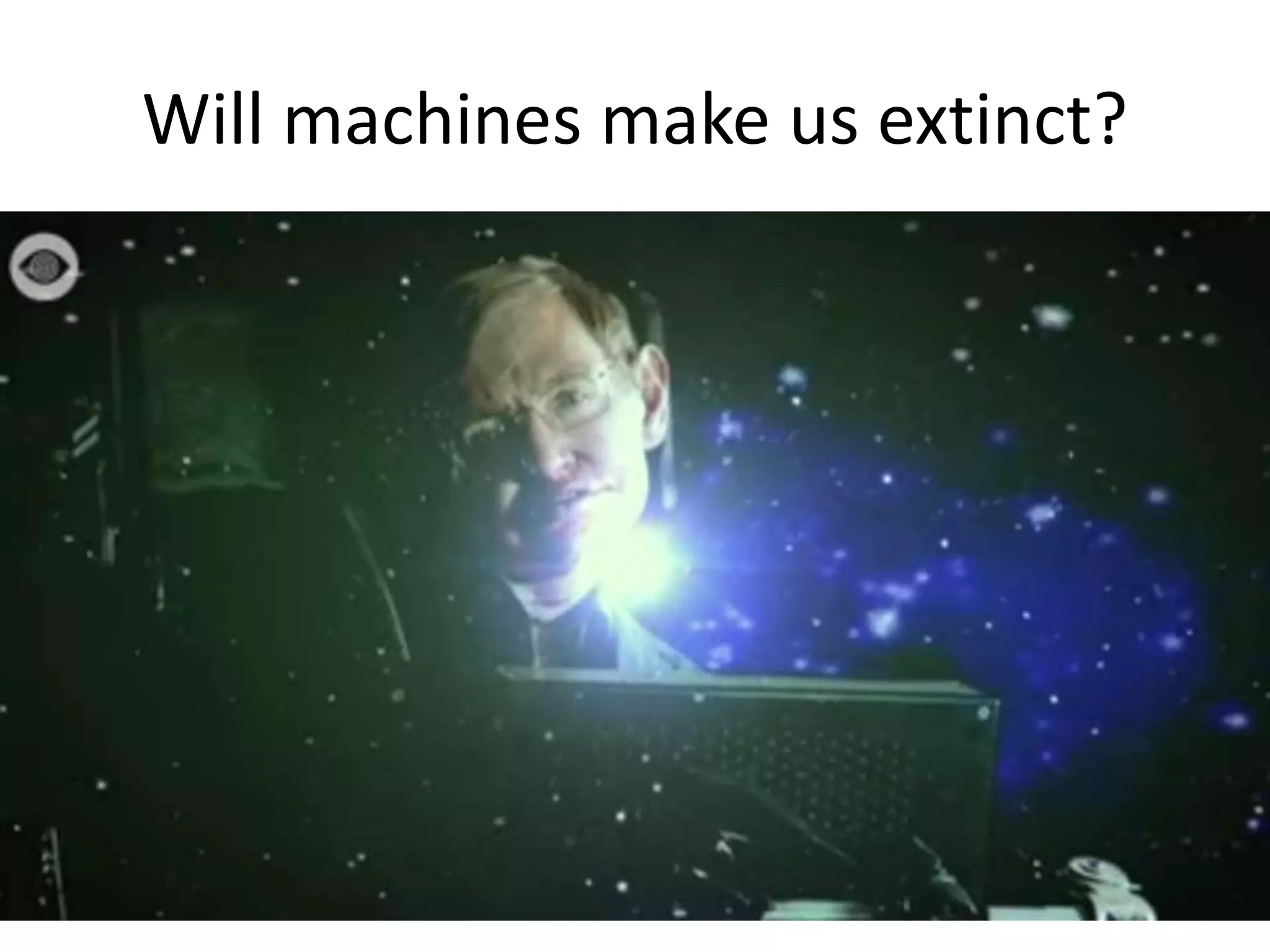
Will machines make us extinct?
Outline
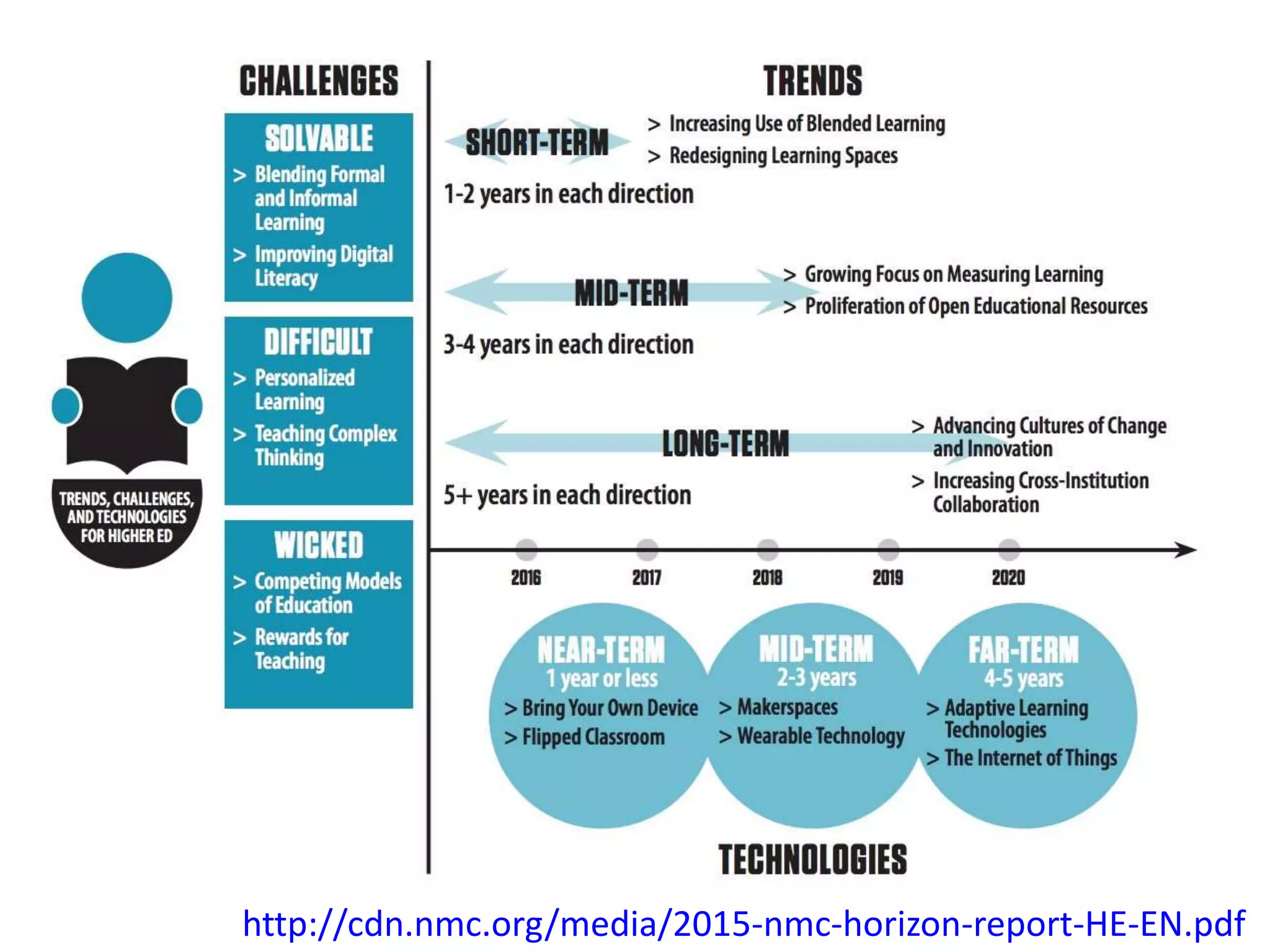
• A glimpse into the future
• Two sides of a coin
– Openness
– Mobile learning
– Social media
– Digital identity
– Distributed cognition
http://cdn.nmc.org/media/2015-nmc-horizon-report-HE-EN.pdf
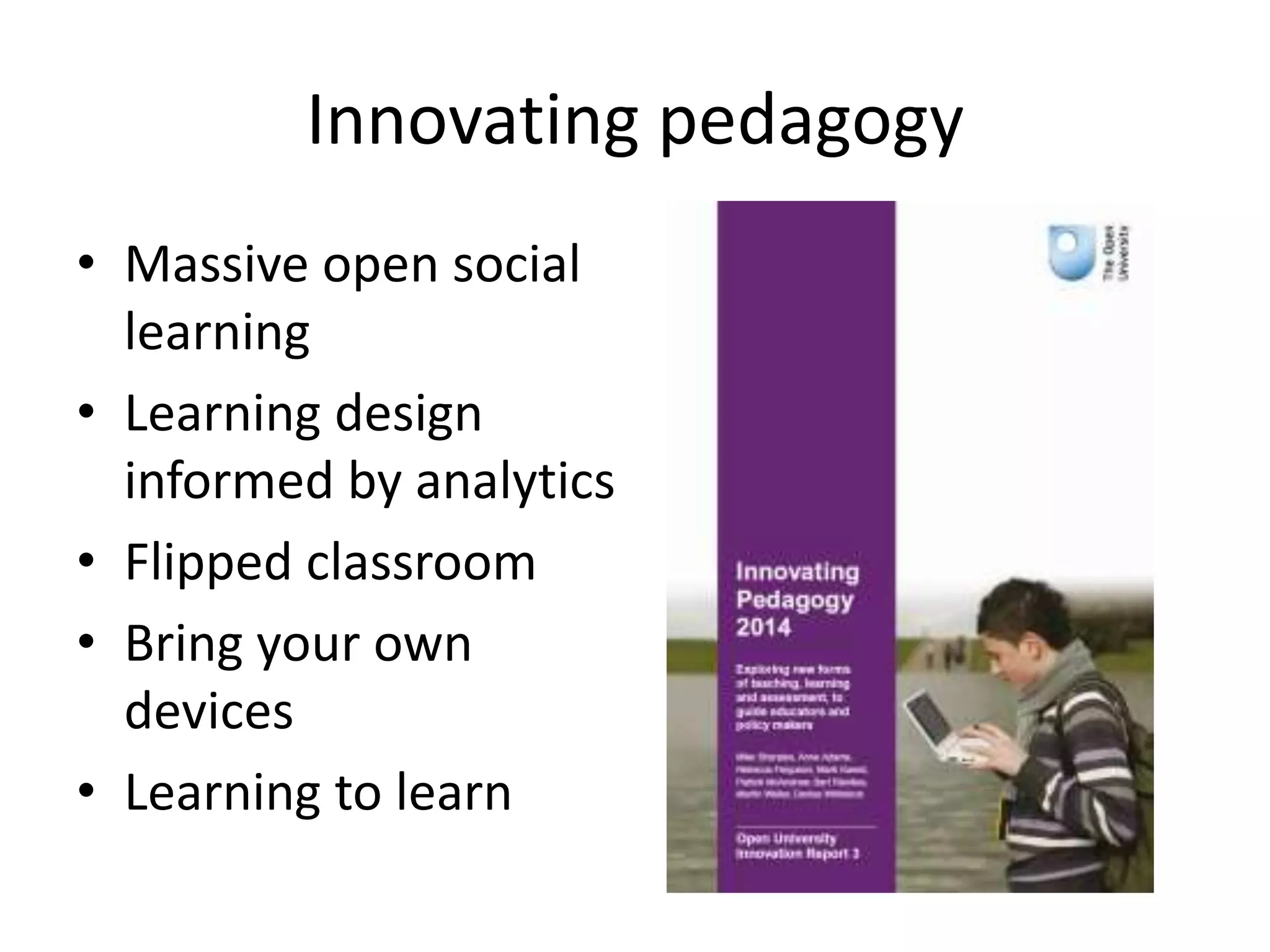
Innovating pedagogy
• Massive open social
learning
• Learning design
informed by analytics
• Flipped classroom
• Bring your own
devices
• Learning to learn
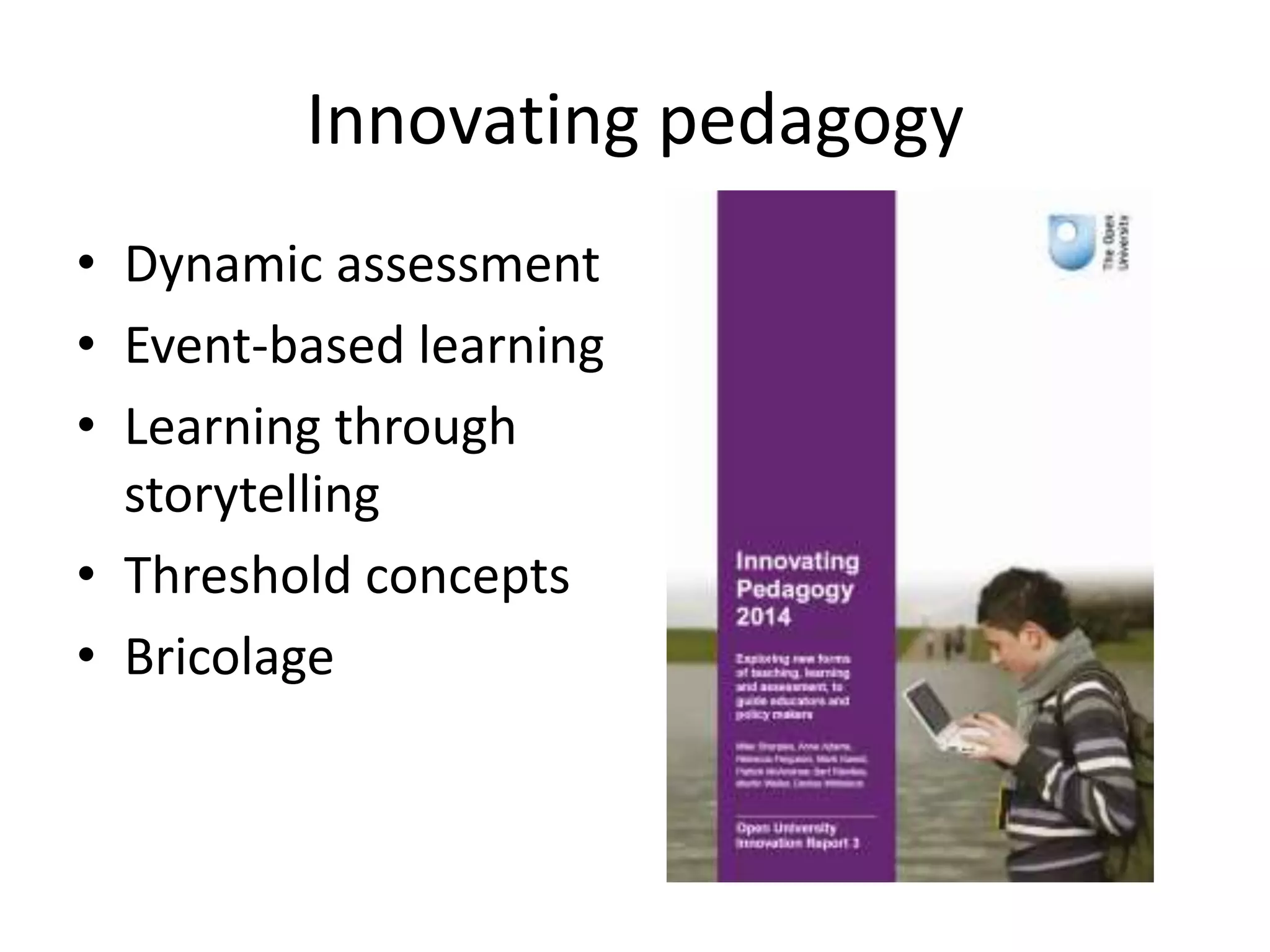
Innovating pedagogy
• Dynamic assessment
• Event-based learning
• Learning through
storytelling
• Threshold concepts
• Bricolage
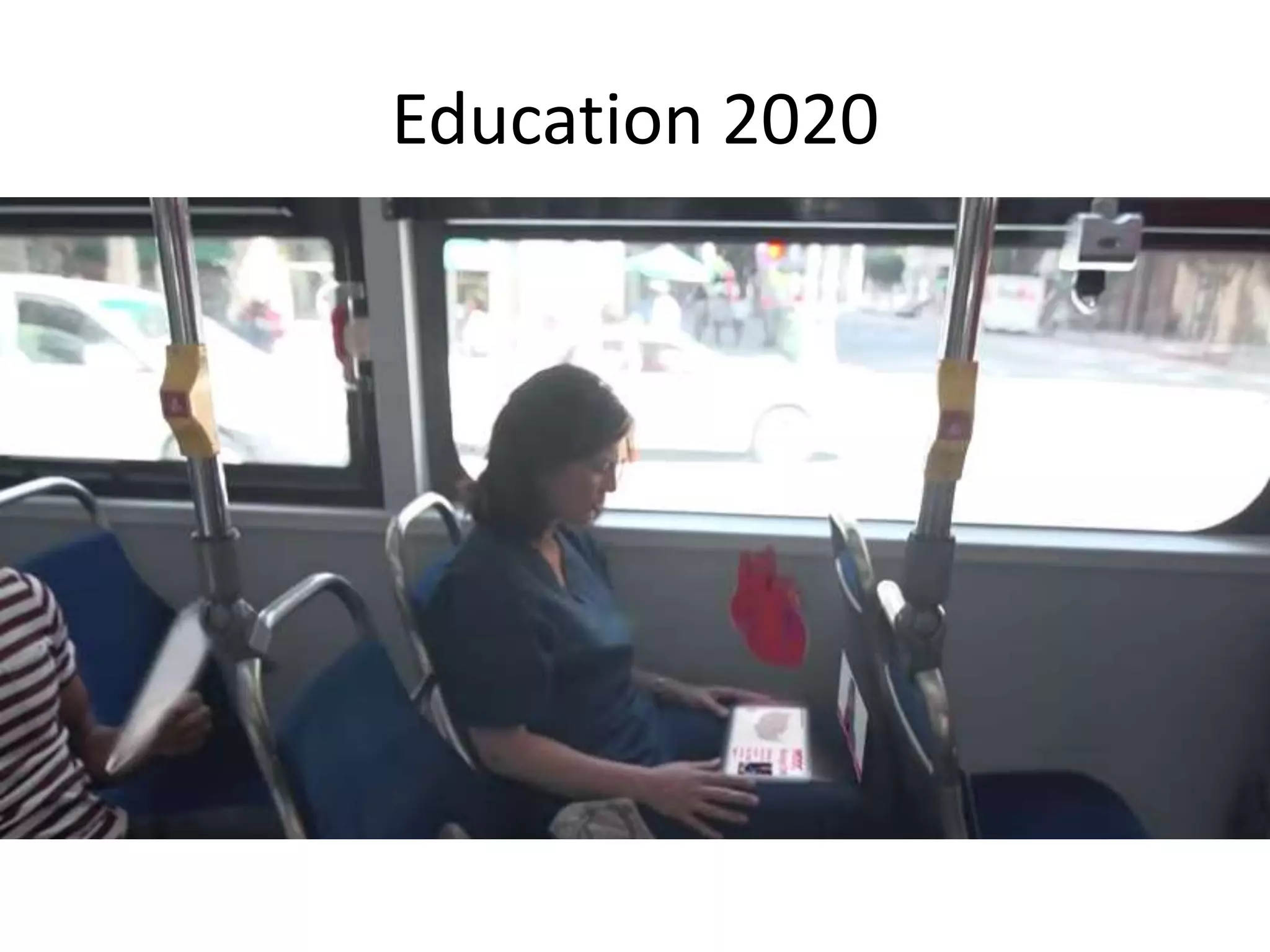
Education 2020
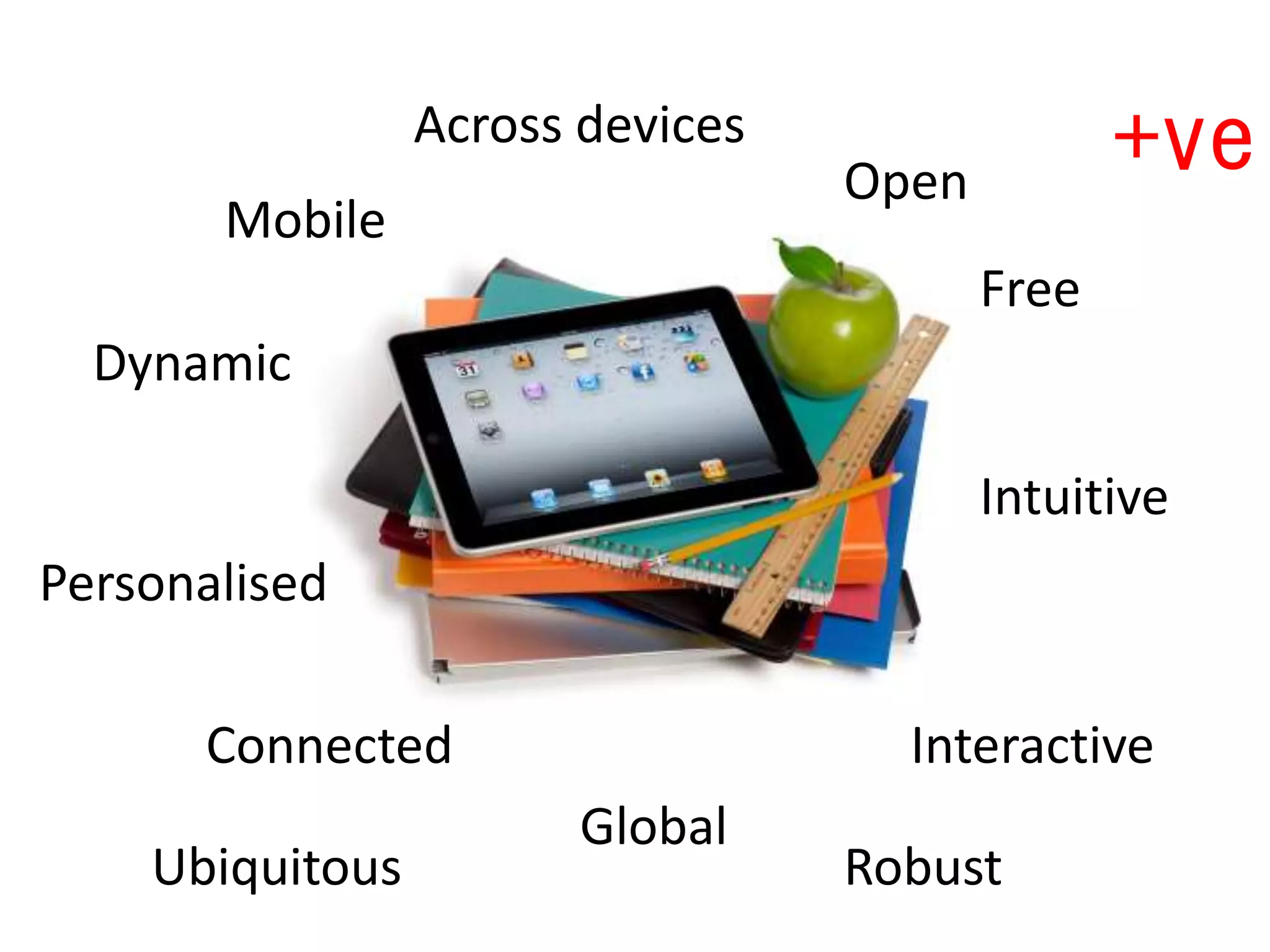
Mobile
Across devices
Dynamic
Personalised
Connected
Free
Interactive
Intuitive
Global
Open
RobustUbiquitous
+ve
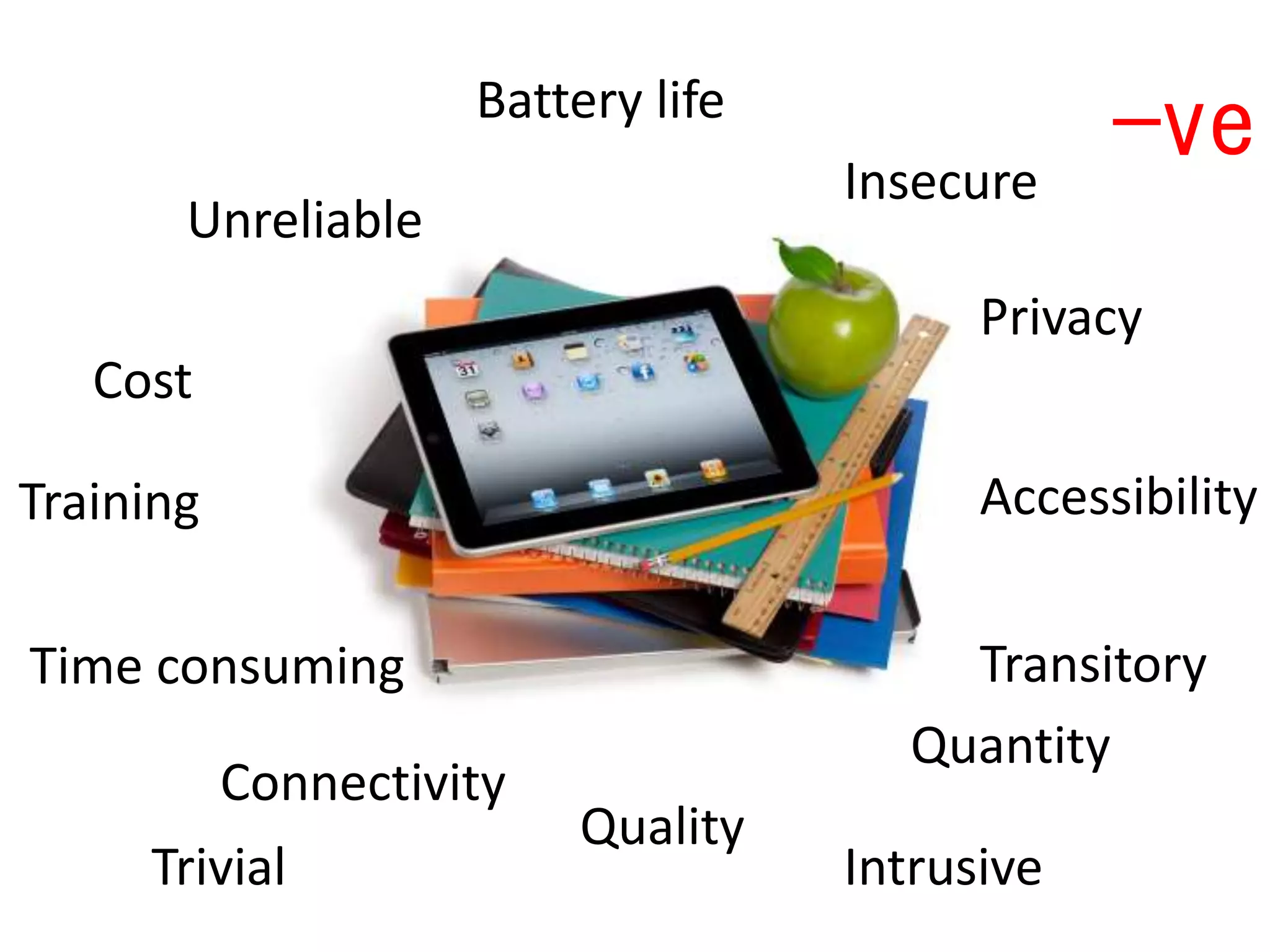
Unreliable
Battery life
Cost
Training
Time consuming
Privacy
Quantity
Accessibility
Quality
Insecure
IntrusiveTrivial
Connectivity
Transitory
−ve
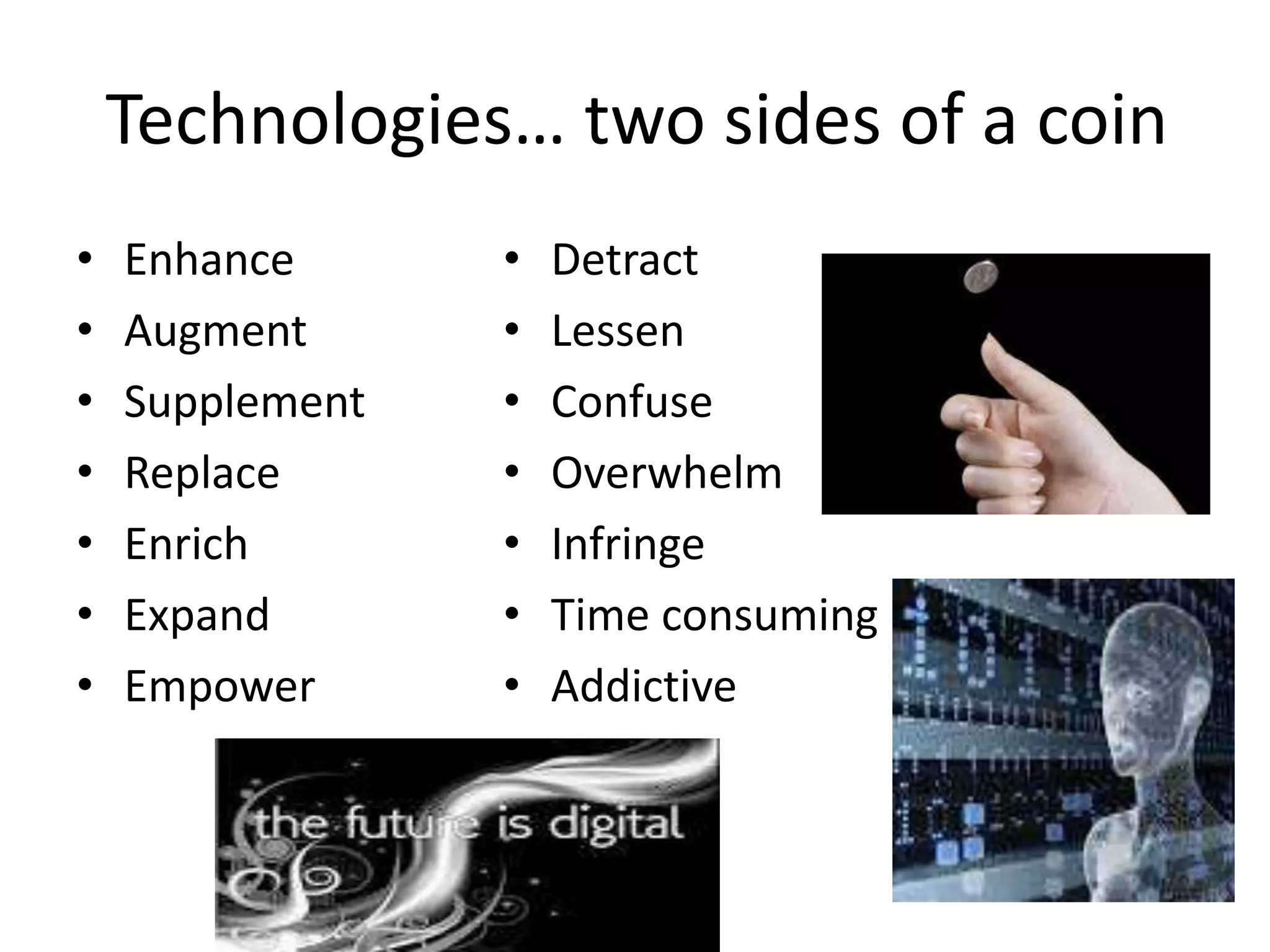
Technologies… two sides of a coin
• Enhance
• Augment
• Supplement
• Replace
• Enrich
• Expand
• Empower
• Detract
• Lessen
• Confuse
• Overwhelm
• Infringe
• Time consuming
• Addictive
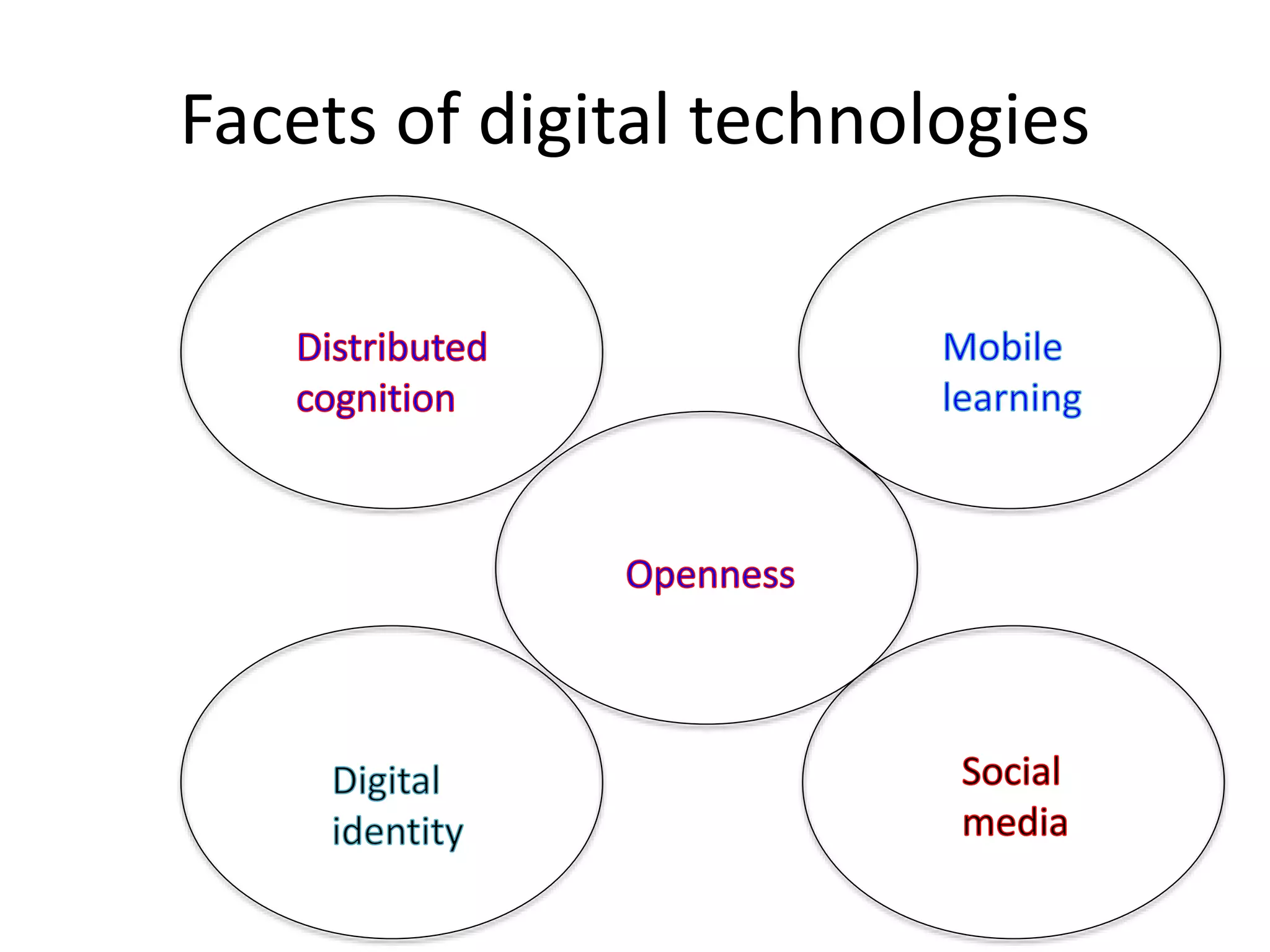
Facets of digital technologies
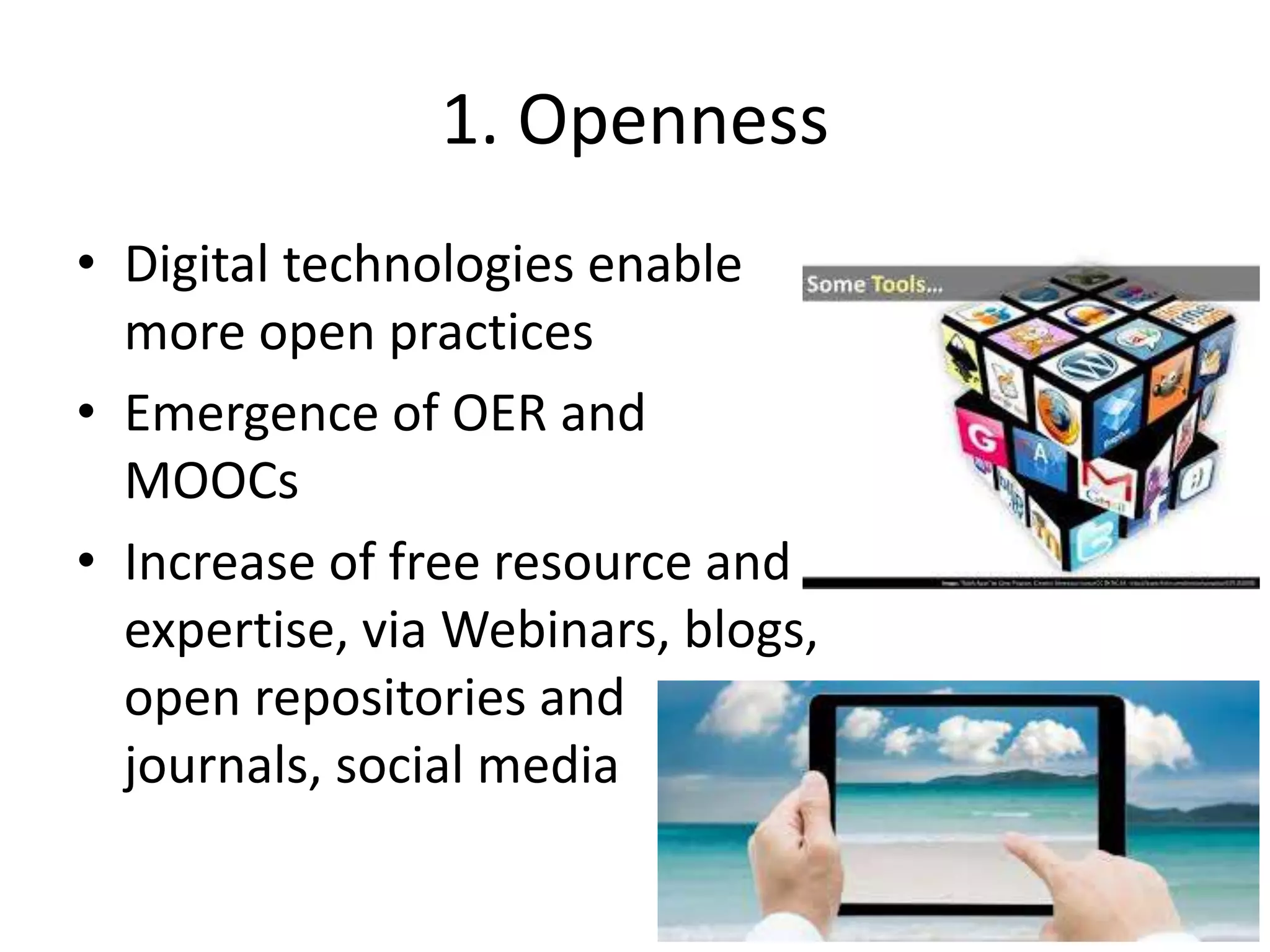
1. Openness
• Digital technologies enable
more open practices
• Emergence of OER and
MOOCs
• Increase of free resource and
expertise, via Webinars, blogs,
open repositories and
journals, social media
The good and the bad…
• Transparency
• Greater reach
• Equity and social
inclusion
• Challenging existing
business models
• Disaggregation of
education
• “Laying yourself bare”
• Surveillance
• Misuse of data
• Misinterpretation
• Issues re quality and
accreditation
• Ownership
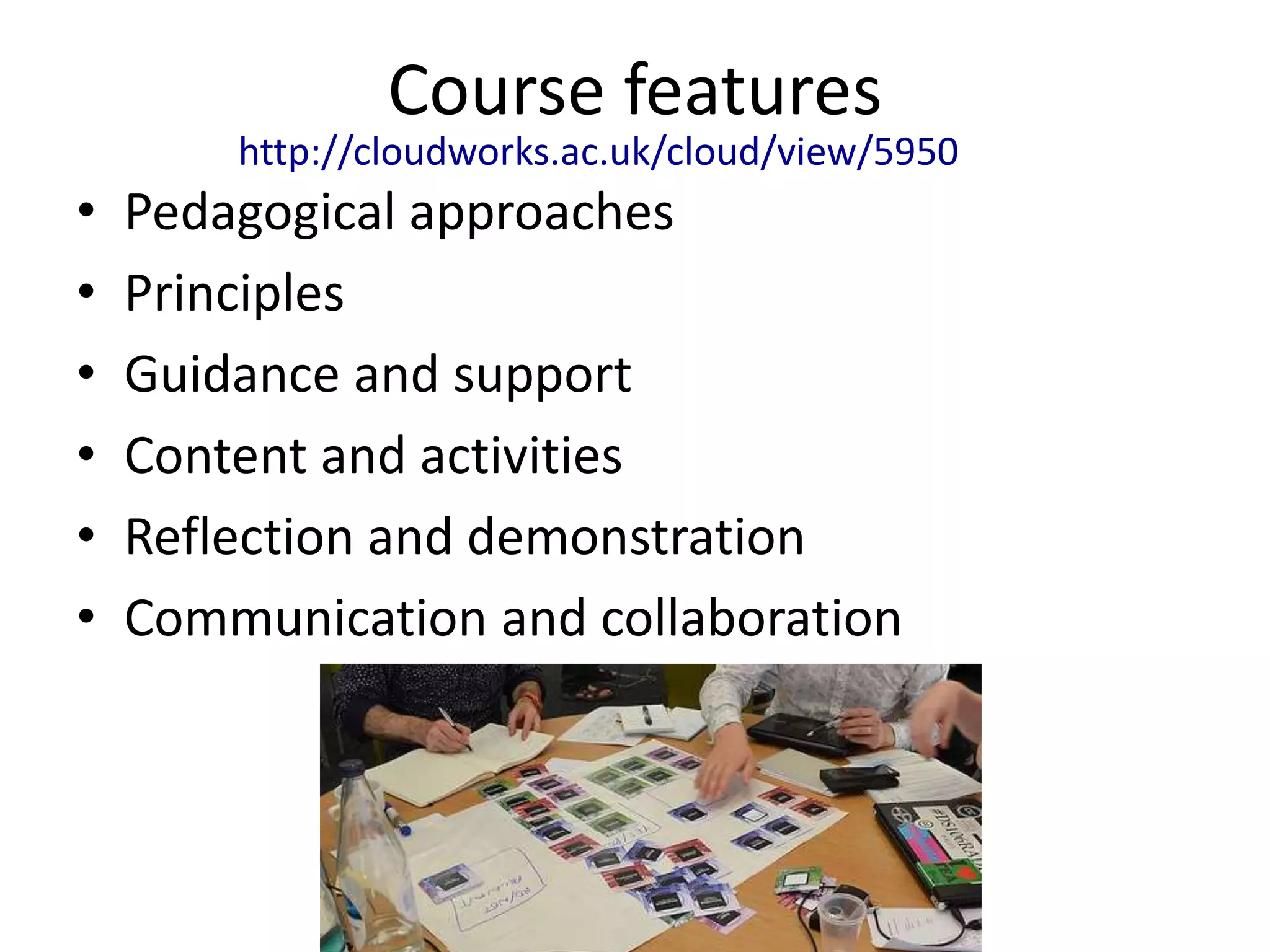
The 7Cs of Learning Design
Conceptualise
Vision
CommunicateCreate ConsiderCollaborate
Activities
Combine
Synthesis
Consolidate
Implementation
http://www2.le.ac.uk/projects/oer/oers/beyond-distance-research-alliance/7Cs-toolkit
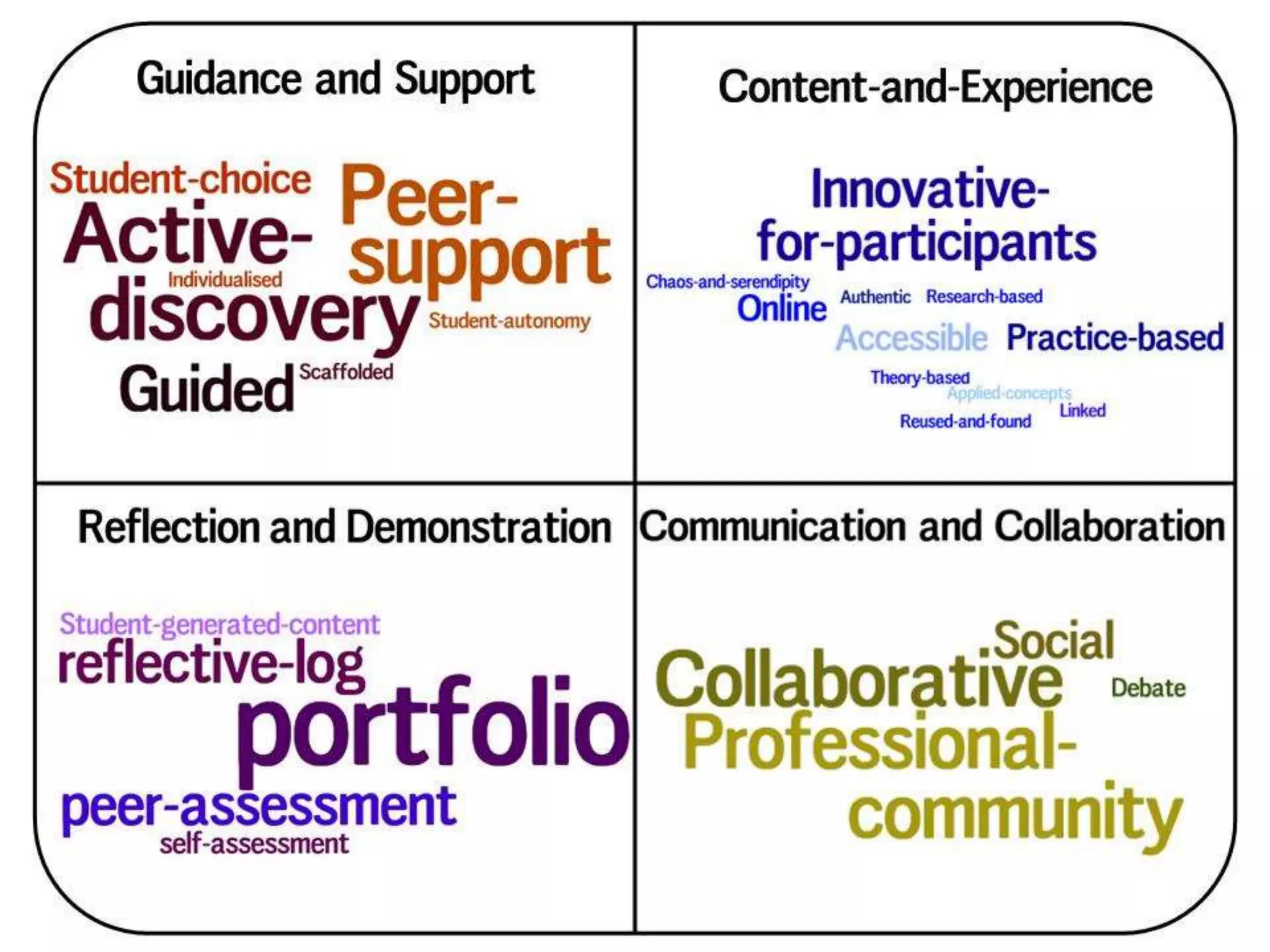
Course features
• Pedagogical approaches
• Principles
• Guidance and support
• Content and activities
• Reflection and demonstration
• Communication and collaboration
http://cloudworks.ac.uk/cloud/view/5950
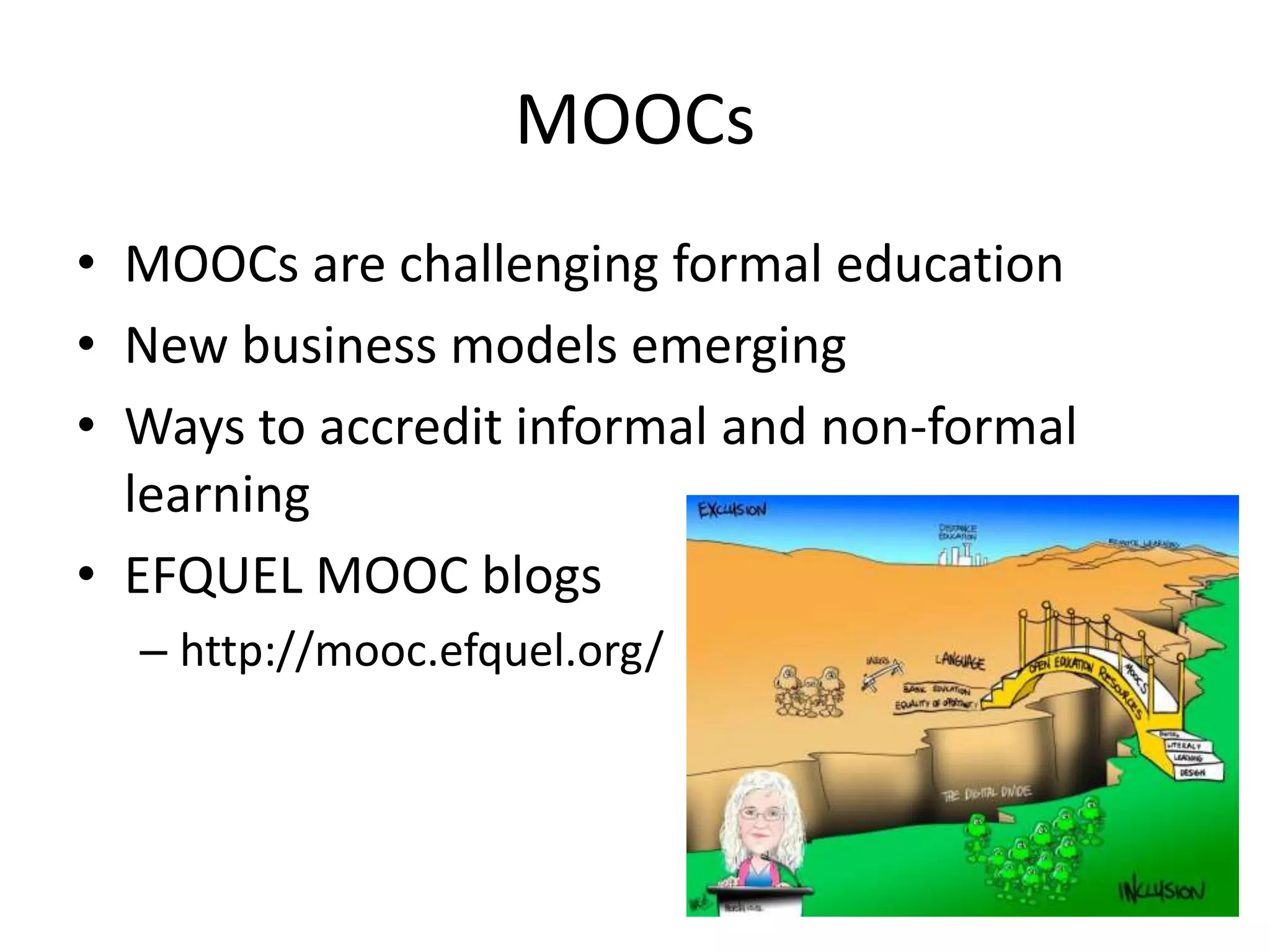
MOOCs
• MOOCs are challenging formal education
• New business models emerging
• Ways to accredit informal and non-formal
learning
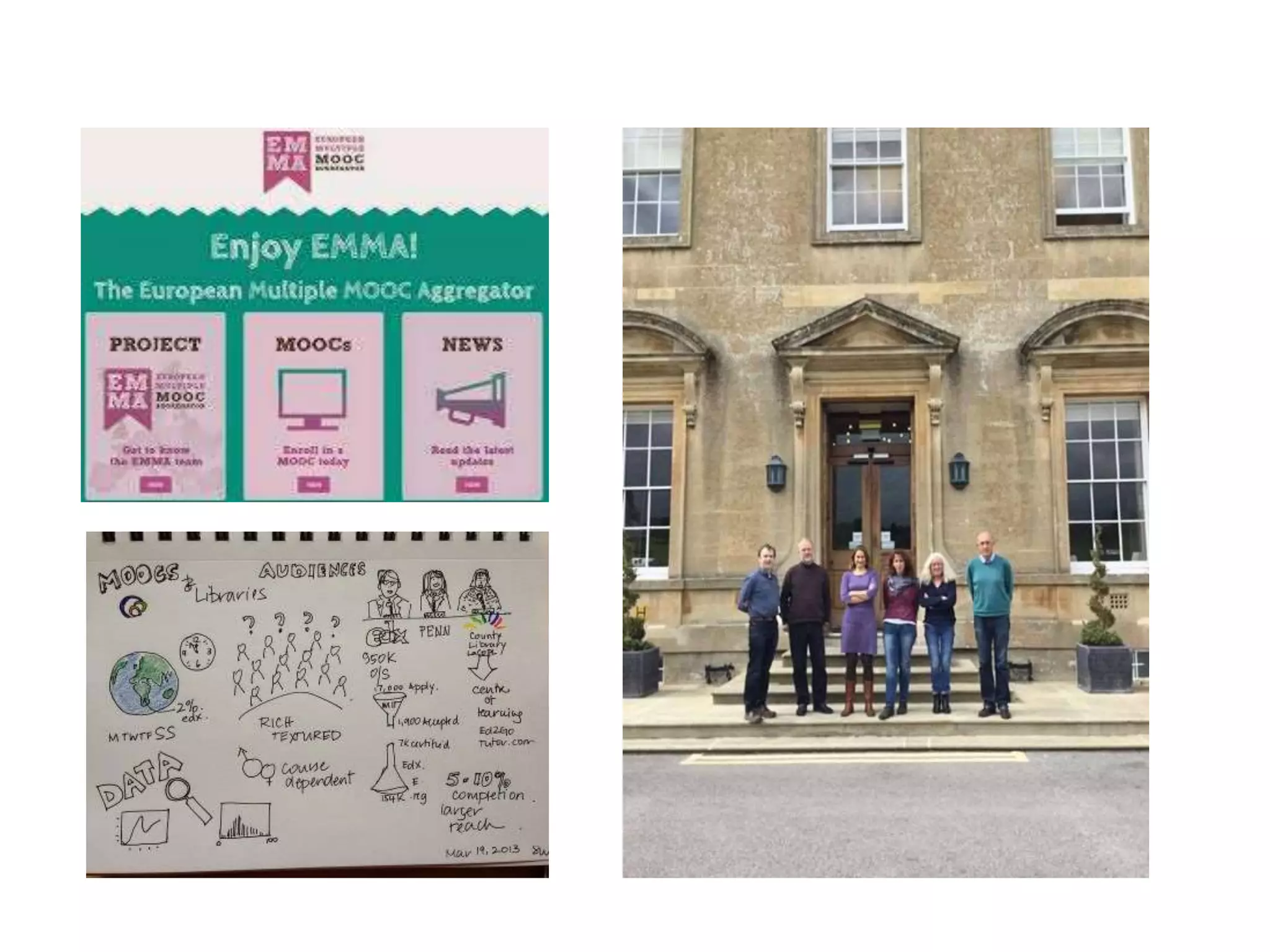
• EFQUEL MOOC blogs
– http://mooc.efquel.org/
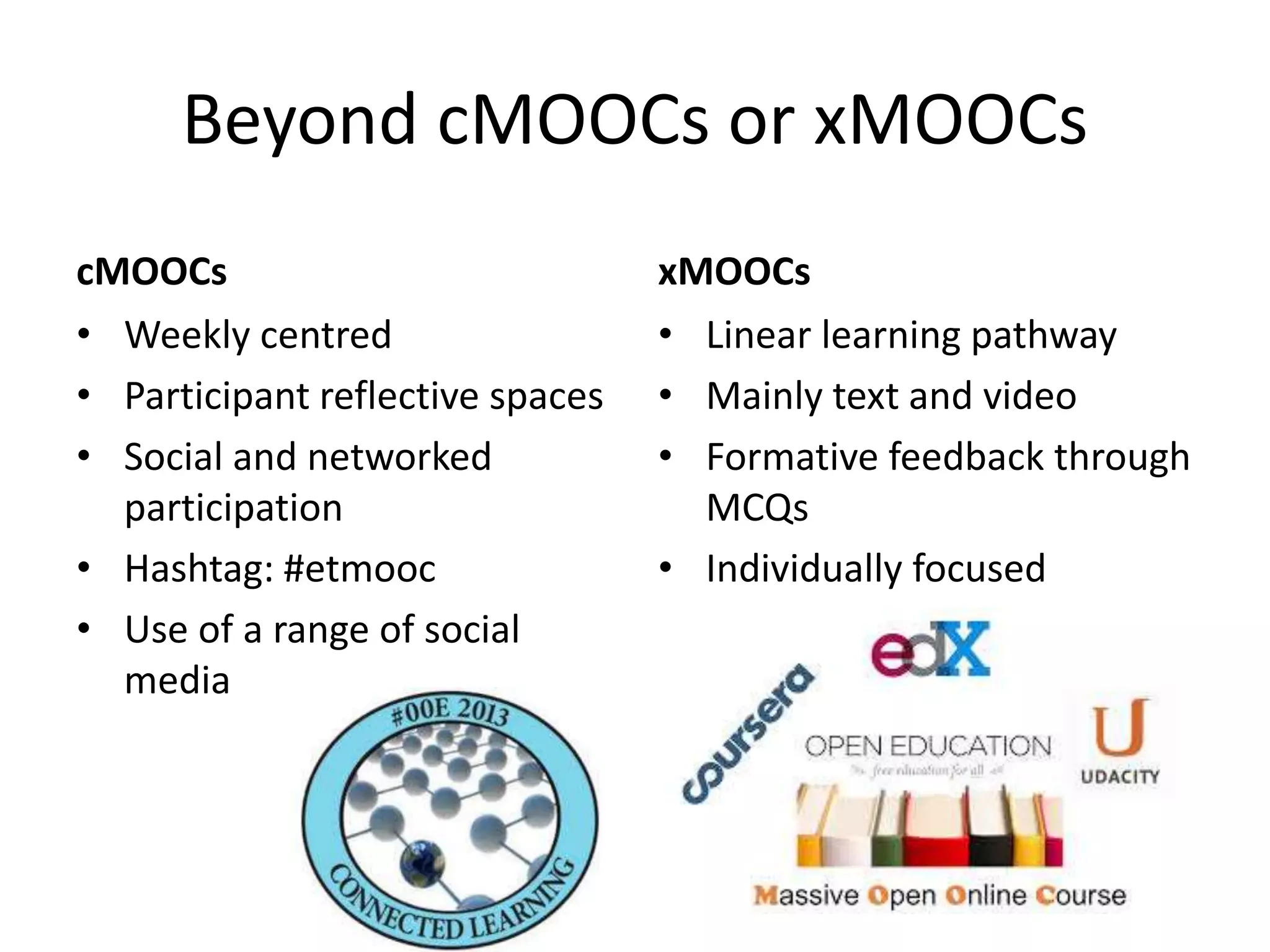
Beyond cMOOCs or xMOOCs
cMOOCs
• Weekly centred
• Participant reflective spaces
• Social and networked
participation
• Hashtag: #etmooc
• Use of a range of social
media
xMOOCs
• Linear learning pathway
• Mainly text and video
• Formative feedback through
MCQs
• Individually focused
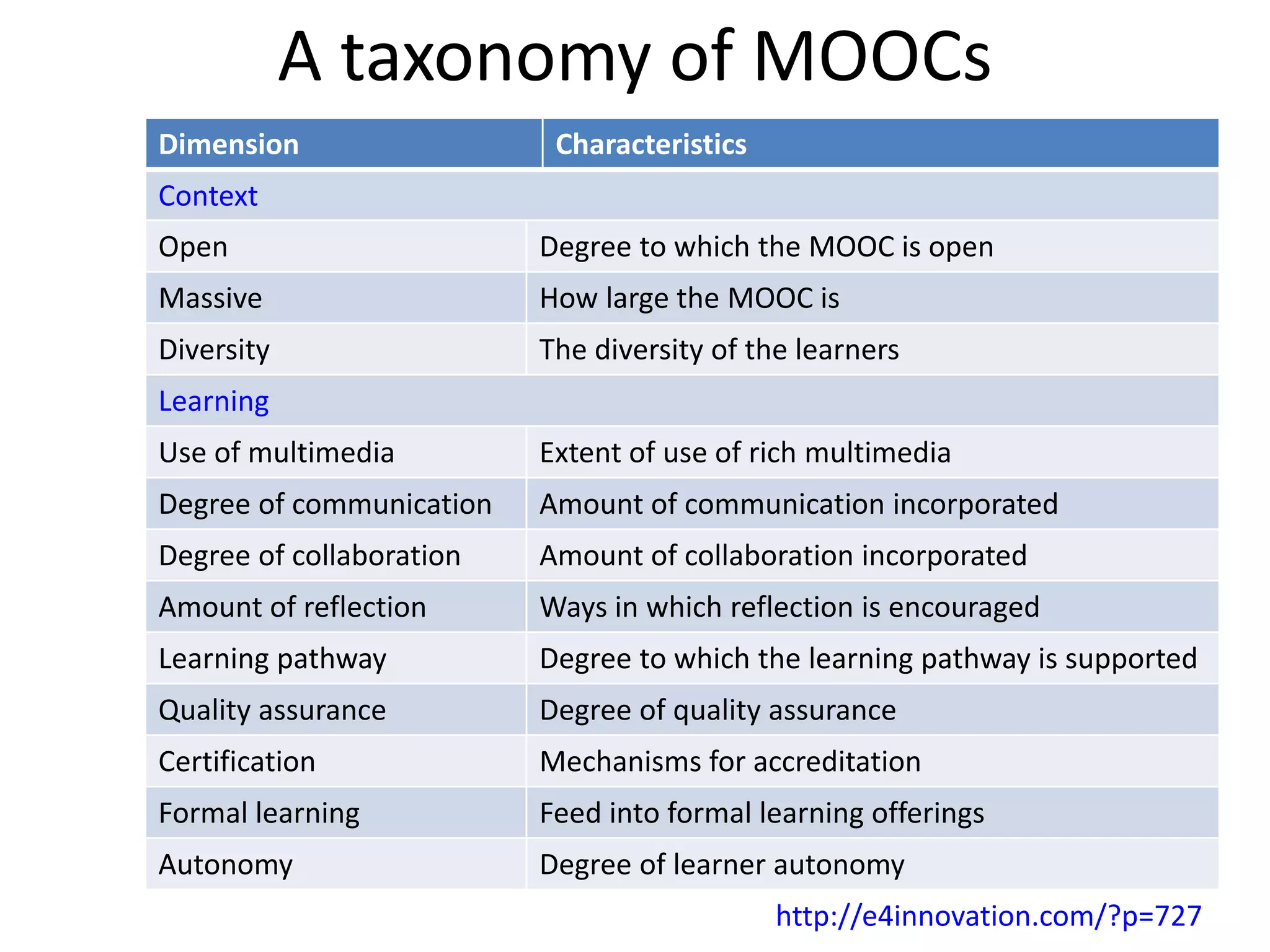
Dimension Characteristics
Context
Open Degree to which the MOOC is open
Massive How large the MOOC is
Diversity The diversity of the learners
Learning
Use of multimedia Extent of use of rich multimedia
Degree of communication Amount of communication incorporated
Degree of collaboration Amount of collaboration incorporated
Amount of reflection Ways in which reflection is encouraged
Learning pathway Degree to which the learning pathway is supported
Quality assurance Degree of quality assurance
Certification Mechanisms for accreditation
Formal learning Feed into formal learning offerings
Autonomy Degree of learner autonomy
A taxonomy of MOOCs
http://e4innovation.com/?p=727
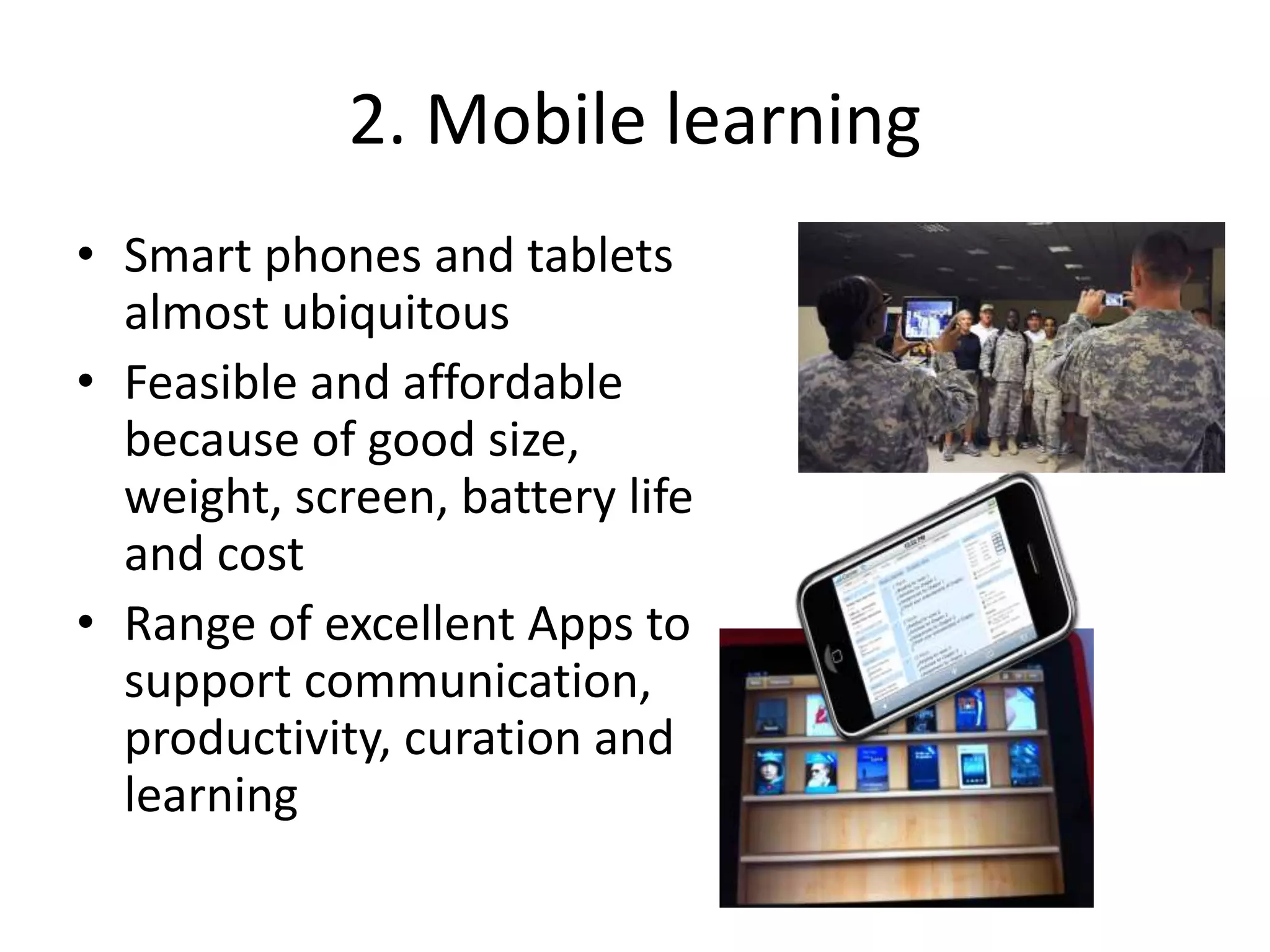
2. Mobile learning
• Smart phones and tablets
almost ubiquitous
• Feasible and affordable
because of good size,
weight, screen, battery life
and cost
• Range of excellent Apps to
support communication,
productivity, curation and
learning
The good and the bad…
• Learning anywhere,
anytime
• Mobile ready websites
and Apps
• Learning across
contexts and devices
• Ubiquitous connectivity
• Social inclusion
• No ‘down time’
• Dependency
• Info in the Cloud
• Battery life
• Lack of digital literacy
skills to use effectively
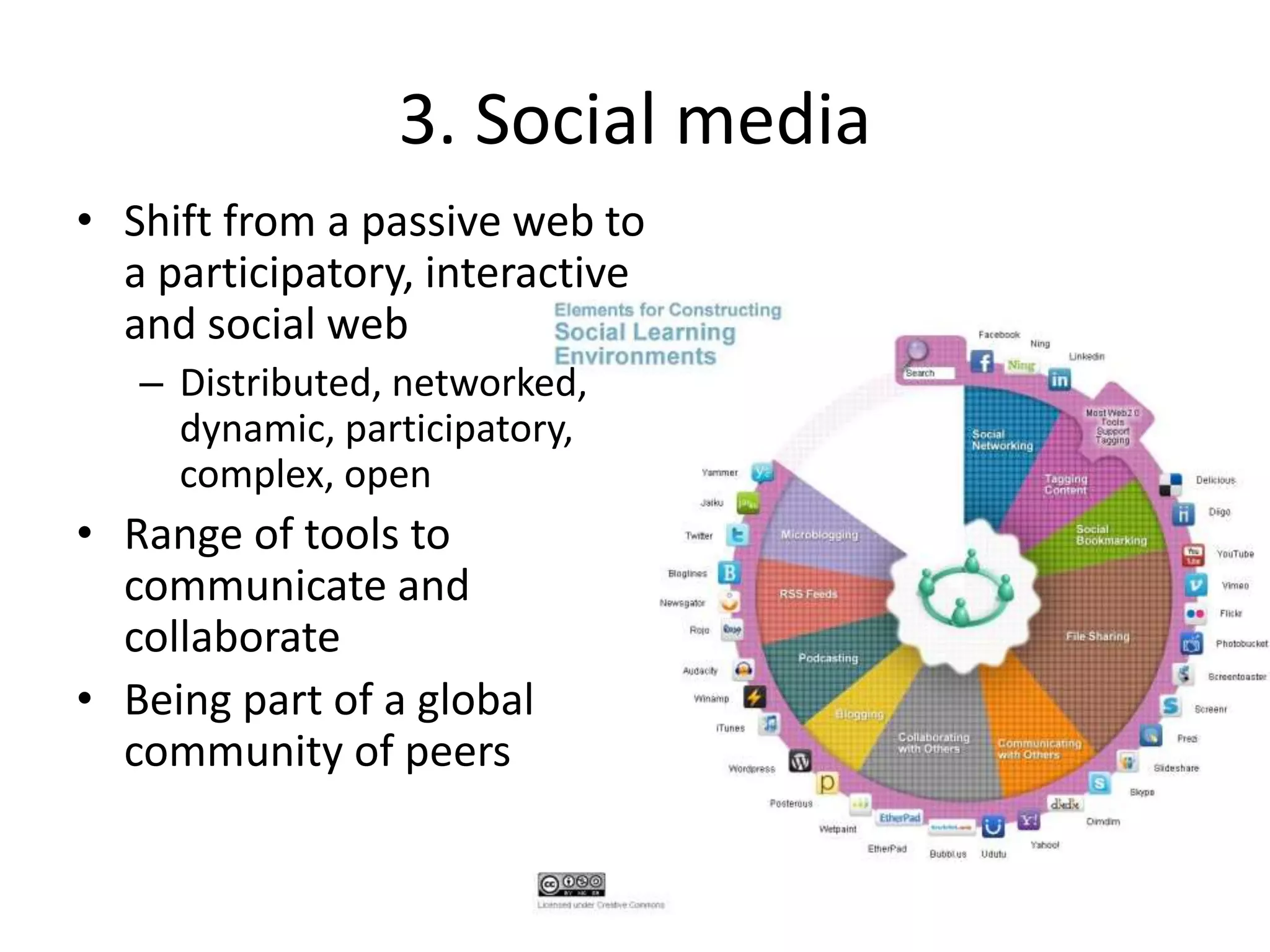
3. Social media
• Shift from a passive web to
a participatory, interactive
and social web
– Distributed, networked,
dynamic, participatory,
complex, open
• Range of tools to
communicate and
collaborate
• Being part of a global
community of peers
The good and the bad…
• Rich ways to communicate
and collaborate
• Part of a global community
of peers
• Access to vast amount of
information
• Rapid dissemination of
information
• Crowd sourcing
• Lack of privacy
• Negative digital traces
• Misuse of data
• Cyberbulling and trolling
• Privacy and security
• Corporate control
• Time consuming
• Addictive
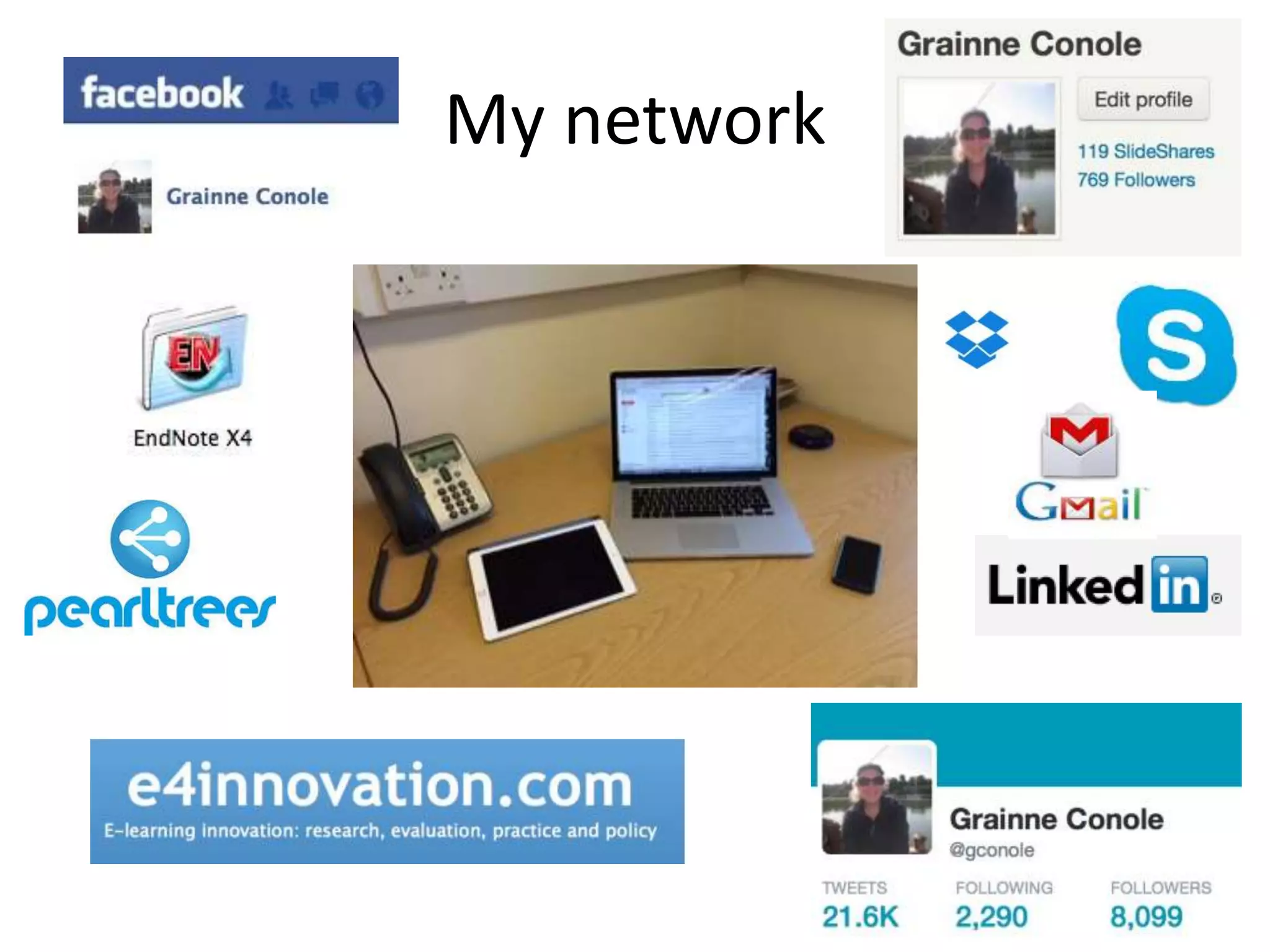
My network
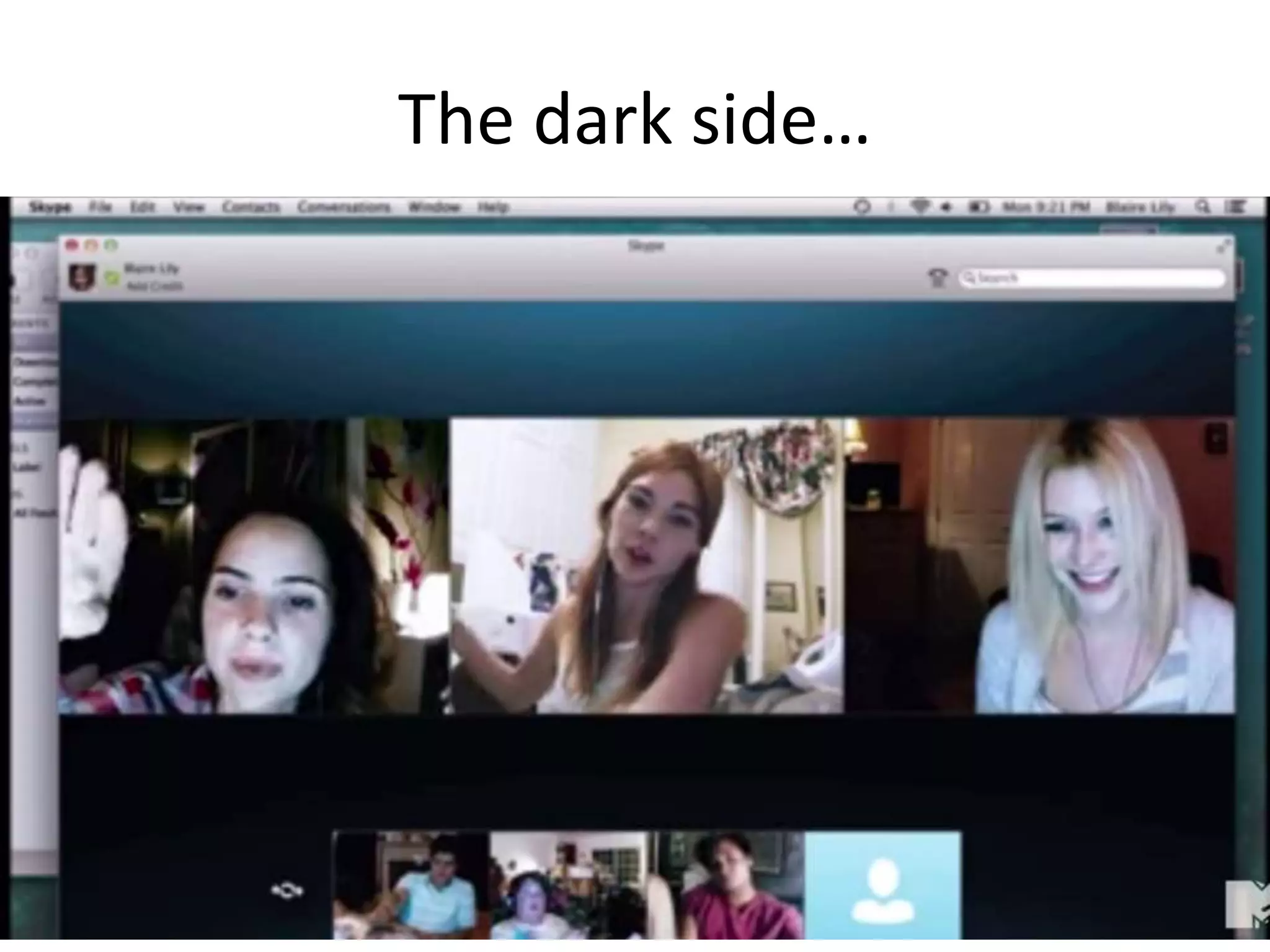
The dark side…
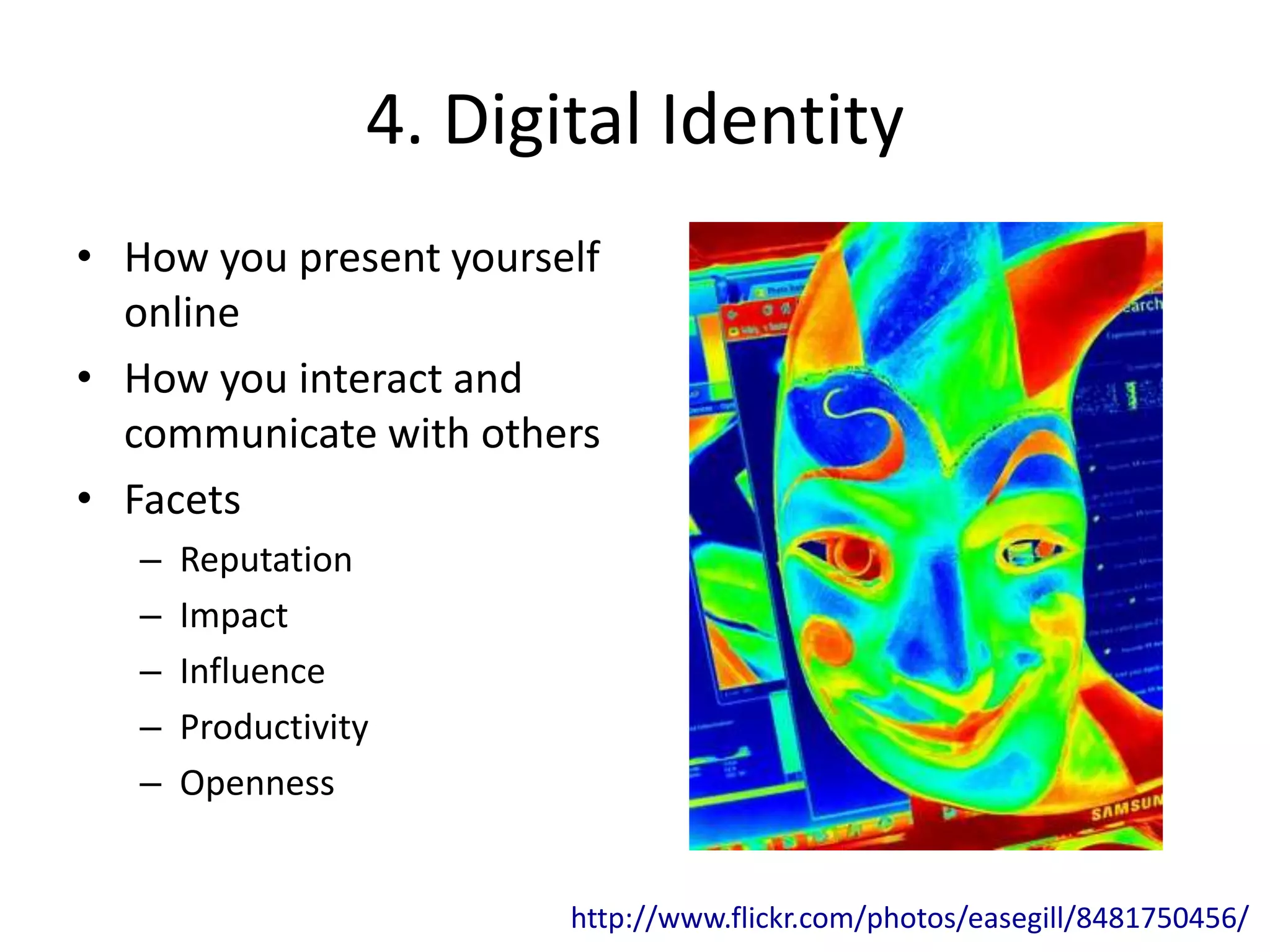
4. Digital Identity
• How you present yourself
online
• How you interact and
communicate with others
• Facets
– Reputation
– Impact
– Influence
– Productivity
– Openness
http://www.flickr.com/photos/easegill/8481750456/
Presence
• Presence (markchilds.wordpress.com)
– Mediated presence
• “being there”
• immersion
– Social presence
• projection of ourselves
• perception of others
– Copresence
• being somewhere with others
– Self presence
• or embodiment
http://www.flickr.com/photos/deadair/4250153736/
The good and the bad…
• Extension of ‘real’ self –
can be the same or
different
• Extended reach
• Exploiting the medium
• “Laying yourself bare”
• Misinterpretation of
identity
• Cyber-stalking
• Identity theft
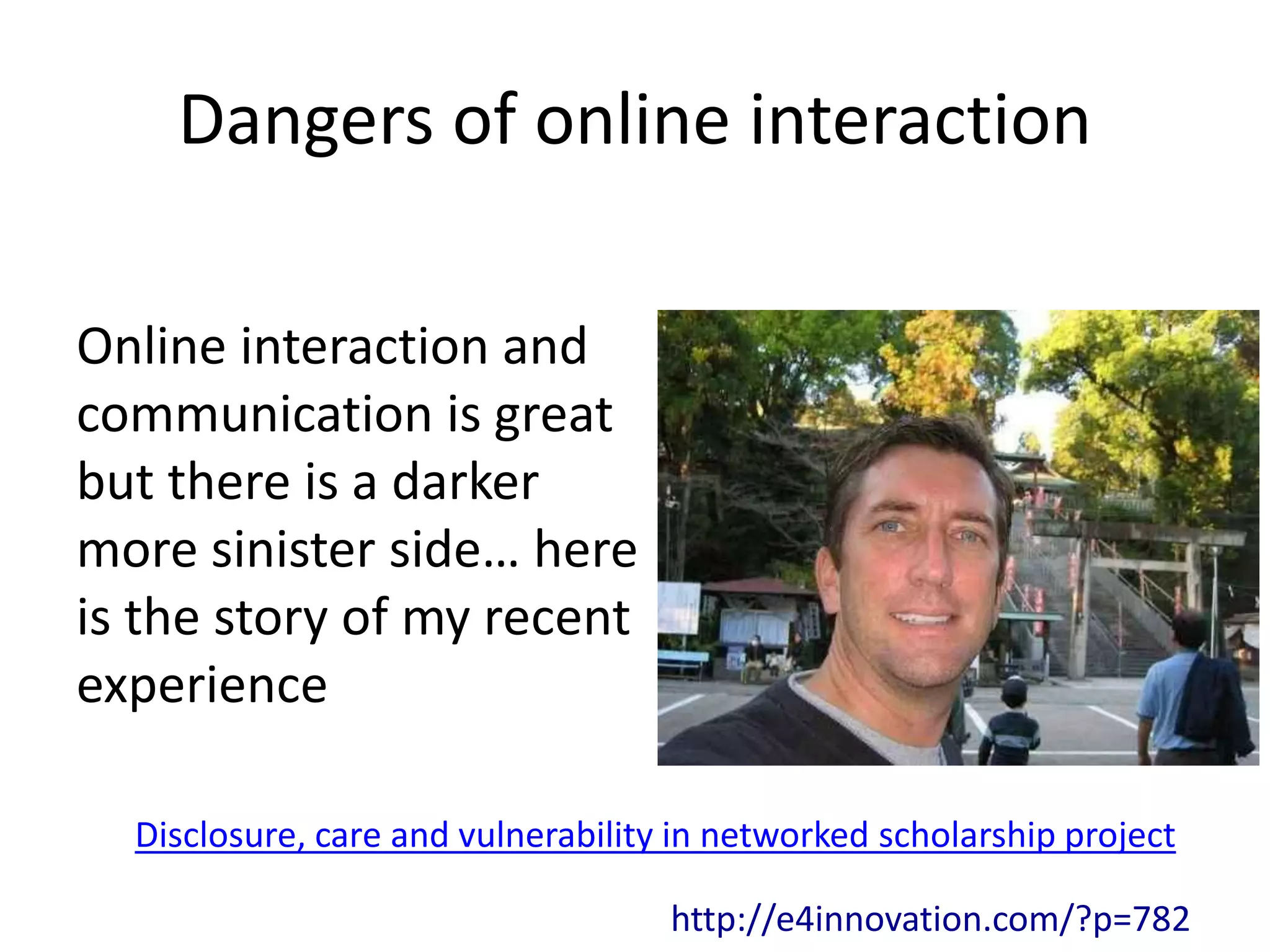
Dangers of online interaction
http://e4innovation.com/?p=782
Online interaction and
communication is great
but there is a darker
more sinister side… here
is the story of my recent
experience
Disclosure, care and vulnerability in networked scholarship project
5. Distributed cognition
The good and the bad…
• “Person-Plus”
• Exploiting vast amount
of information
• Tools to curate,
manage, filter
• Enhanced capacity
• Greater cognition
• Lack of digital literacy
skills to use effectively
• Easy to get lost and
confused
• Lack of permanency
• Machines taking over..
• Over dependency
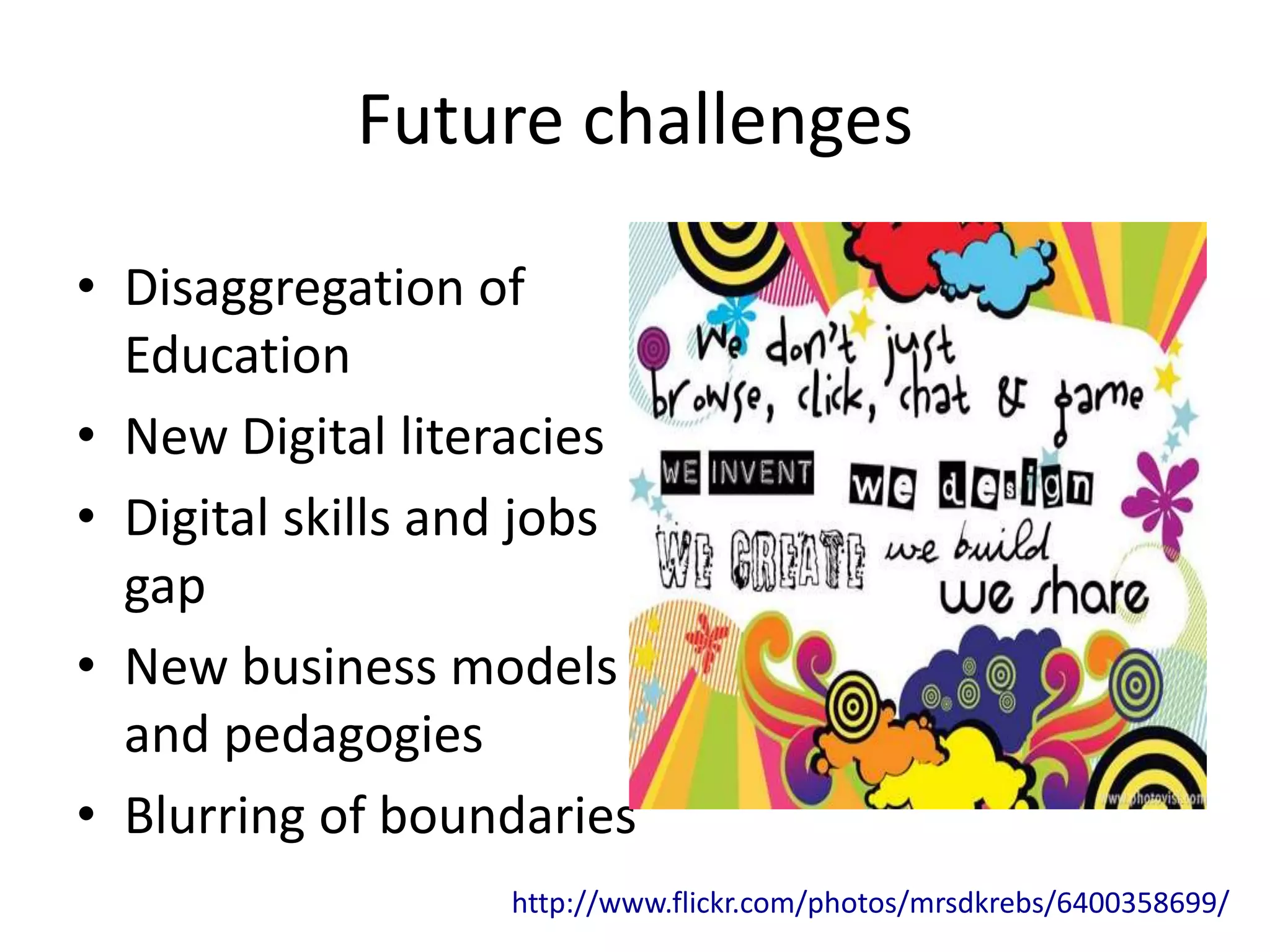
Future challenges
• Disaggregation of
Education
• New Digital literacies
• Digital skills and jobs
gap
• New business models
and pedagogies
• Blurring of boundaries
http://www.flickr.com/photos/mrsdkrebs/6400358699/
The information bomb….
• Technologies cannot
exist without accidents
• Technologies separate
us from real time and
space
• When, not if
technologies fail….
http://www.slideshare.net/GrainneConole
g.conole@bathspa.ac.uk
http://e4innovation.com
@gconole

Conole plenary

  • 1.
    Social media andopen practices: two sides of a coin Gráinne Conole Bath Spa University SIRikt conference, Slovenia 28th May 2015 National Teaching Fellow 2012 Ascilite fellow 2012EDEN fellow 2013
  • 3.
    Will machines makeus extinct?
  • 4.
    Outline • A glimpseinto the future • Two sides of a coin – Openness – Mobile learning – Social media – Digital identity – Distributed cognition
  • 5.
  • 6.
    Innovating pedagogy • Massiveopen social learning • Learning design informed by analytics • Flipped classroom • Bring your own devices • Learning to learn
  • 7.
    Innovating pedagogy • Dynamicassessment • Event-based learning • Learning through storytelling • Threshold concepts • Bricolage
  • 8.
  • 9.
  • 10.
  • 11.
    Technologies… two sidesof a coin • Enhance • Augment • Supplement • Replace • Enrich • Expand • Empower • Detract • Lessen • Confuse • Overwhelm • Infringe • Time consuming • Addictive
  • 12.
    Facets of digitaltechnologies
  • 13.
    1. Openness • Digitaltechnologies enable more open practices • Emergence of OER and MOOCs • Increase of free resource and expertise, via Webinars, blogs, open repositories and journals, social media
  • 14.
    The good andthe bad… • Transparency • Greater reach • Equity and social inclusion • Challenging existing business models • Disaggregation of education • “Laying yourself bare” • Surveillance • Misuse of data • Misinterpretation • Issues re quality and accreditation • Ownership
  • 15.
    The 7Cs ofLearning Design Conceptualise Vision CommunicateCreate ConsiderCollaborate Activities Combine Synthesis Consolidate Implementation http://www2.le.ac.uk/projects/oer/oers/beyond-distance-research-alliance/7Cs-toolkit
  • 16.
    Course features • Pedagogicalapproaches • Principles • Guidance and support • Content and activities • Reflection and demonstration • Communication and collaboration http://cloudworks.ac.uk/cloud/view/5950
  • 18.
    MOOCs • MOOCs arechallenging formal education • New business models emerging • Ways to accredit informal and non-formal learning • EFQUEL MOOC blogs – http://mooc.efquel.org/
  • 19.
    Beyond cMOOCs orxMOOCs cMOOCs • Weekly centred • Participant reflective spaces • Social and networked participation • Hashtag: #etmooc • Use of a range of social media xMOOCs • Linear learning pathway • Mainly text and video • Formative feedback through MCQs • Individually focused
  • 20.
    Dimension Characteristics Context Open Degreeto which the MOOC is open Massive How large the MOOC is Diversity The diversity of the learners Learning Use of multimedia Extent of use of rich multimedia Degree of communication Amount of communication incorporated Degree of collaboration Amount of collaboration incorporated Amount of reflection Ways in which reflection is encouraged Learning pathway Degree to which the learning pathway is supported Quality assurance Degree of quality assurance Certification Mechanisms for accreditation Formal learning Feed into formal learning offerings Autonomy Degree of learner autonomy A taxonomy of MOOCs http://e4innovation.com/?p=727
  • 22.
    2. Mobile learning •Smart phones and tablets almost ubiquitous • Feasible and affordable because of good size, weight, screen, battery life and cost • Range of excellent Apps to support communication, productivity, curation and learning
  • 23.
    The good andthe bad… • Learning anywhere, anytime • Mobile ready websites and Apps • Learning across contexts and devices • Ubiquitous connectivity • Social inclusion • No ‘down time’ • Dependency • Info in the Cloud • Battery life • Lack of digital literacy skills to use effectively
  • 24.
    3. Social media •Shift from a passive web to a participatory, interactive and social web – Distributed, networked, dynamic, participatory, complex, open • Range of tools to communicate and collaborate • Being part of a global community of peers
  • 25.
    The good andthe bad… • Rich ways to communicate and collaborate • Part of a global community of peers • Access to vast amount of information • Rapid dissemination of information • Crowd sourcing • Lack of privacy • Negative digital traces • Misuse of data • Cyberbulling and trolling • Privacy and security • Corporate control • Time consuming • Addictive
  • 26.
  • 27.
  • 28.
    4. Digital Identity •How you present yourself online • How you interact and communicate with others • Facets – Reputation – Impact – Influence – Productivity – Openness http://www.flickr.com/photos/easegill/8481750456/
  • 29.
    Presence • Presence (markchilds.wordpress.com) –Mediated presence • “being there” • immersion – Social presence • projection of ourselves • perception of others – Copresence • being somewhere with others – Self presence • or embodiment http://www.flickr.com/photos/deadair/4250153736/
  • 30.
    The good andthe bad… • Extension of ‘real’ self – can be the same or different • Extended reach • Exploiting the medium • “Laying yourself bare” • Misinterpretation of identity • Cyber-stalking • Identity theft
  • 31.
    Dangers of onlineinteraction http://e4innovation.com/?p=782 Online interaction and communication is great but there is a darker more sinister side… here is the story of my recent experience Disclosure, care and vulnerability in networked scholarship project
  • 32.
  • 33.
    The good andthe bad… • “Person-Plus” • Exploiting vast amount of information • Tools to curate, manage, filter • Enhanced capacity • Greater cognition • Lack of digital literacy skills to use effectively • Easy to get lost and confused • Lack of permanency • Machines taking over.. • Over dependency
  • 34.
    Future challenges • Disaggregationof Education • New Digital literacies • Digital skills and jobs gap • New business models and pedagogies • Blurring of boundaries http://www.flickr.com/photos/mrsdkrebs/6400358699/
  • 35.
    The information bomb…. •Technologies cannot exist without accidents • Technologies separate us from real time and space • When, not if technologies fail….
  • 36.

Editor's Notes