CONNECT(ORS)(ING)(TIONS)
Alexandra Deschamps-Sonsino
@iotwatch
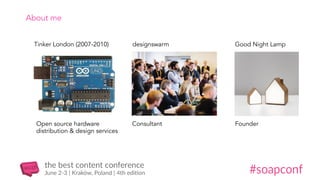
Open source hardware
distribution & design services
Consultant Founder
Tinker London (2007-2010) designswarm Good Night Lamp
About me
London Internet of Things Meetup
(2011-)
8K members
11 events / year
meetup.com/iotlondon
Design-led exploration of the future
of home living.
thegoodhome.org
The Good Home
Side projects
What I’d like to talk about today
Why designers decided to disengage from
the internet of things.
Why design & user needs are at the bottom of the list.
Why we need you back, fast.
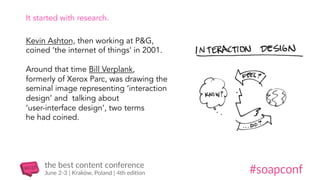
It started with research.
Kevin Ashton, then working at P&G,
coined ‘the internet of things’ in 2001.
Around that time Bill Verplank,
formerly of Xerox Parc, was drawing the
seminal image representing ‘interaction
design’ and talking about
‘user-interface design’, two terms
he had coined.
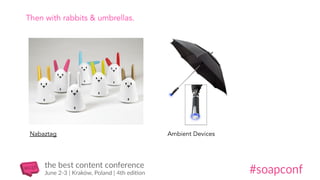
Then with rabbits & umbrellas.
Nabaztag Ambient Devices
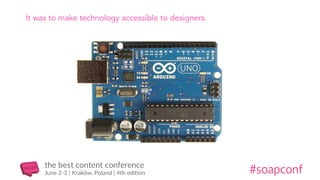
It was to make technology accessible to designers.
For designers, with designers.
The Arduino was aimed at media, art, design students.
The assumption was that you would come with a great idea, already
researched, that you needed to prototype.
And you had no money.
It became political act to ‘make’ and ‘hack’.
Open source hardware (Arduino, Wiring)
Open source software (Arduino IDE, Processing, VVVV, Openframeworks)
Open Design (Ronan Kadushin)
The Open Internet of Things Assembly (iot.london)
But in 2007, designers got a bit distracted.
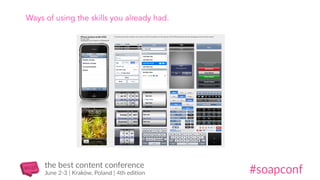
Ways of using the skills you already had.
And everyone else got into ‘making’.
Electronics engineers.
Business students.
Developers.
Retired engineers.
R&D departments of corporations.
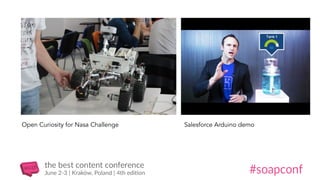
Open Curiosity for Nasa Challenge Salesforce Arduino demo
It’s not about whether it’s useful, it’s about
whether it’s possible.
Making became a reward in itself.
Then came crowdfunding.
And then it was about money.
An explosion of ideas entered the consumer market.
Many of them not driven by designers, but driven by a new democratic
idea of entrepreneurship:
Anyone with an idea could make something and bring it to the market.
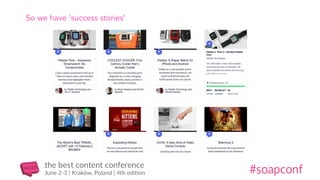
So we have ‘success stories’
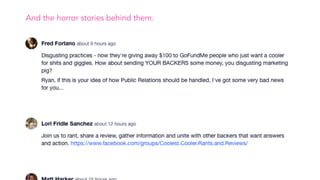
And the horror stories behind them.
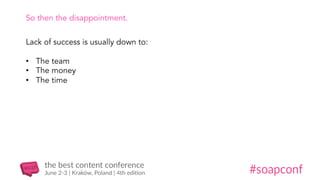
So then the disappointment.
Lack of success is usually down to:
•  The team
•  The money
•  The time
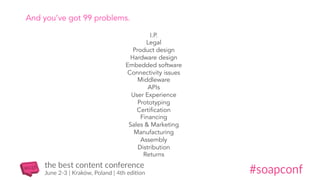
And you’ve got 99 problems.
I.P.
Legal
Product design
Hardware design
Embedded software
Connectivity issues
Middleware
APIs
User Experience
Prototyping
Certification
Financing
Sales & Marketing
Manufacturing
Assembly
Distribution
Returns
I.P.
Legal
Product design
Hardware design
Embedded software
Connectivity issues
Middleware
APIs
User Experience
Prototyping
Certification
Financing
Sales & Marketing
Manufacturing
Assembly
Distribution
Returns
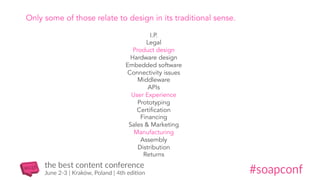
Only some of those relate to design in its traditional sense.
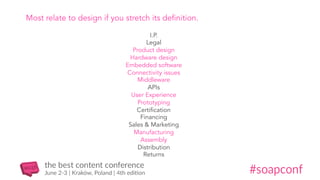
Most relate to design if you stretch its definition.
I.P.
Legal
Product design
Hardware design
Embedded software
Connectivity issues
Middleware
APIs
User Experience
Prototyping
Certification
Financing
Sales & Marketing
Manufacturing
Assembly
Distribution
Returns
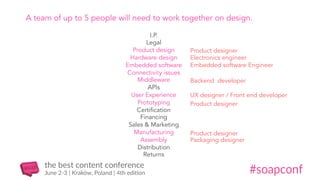
A team of up to 5 people will need to work together on design.
I.P.
Legal
Product design
Hardware design
Embedded software
Connectivity issues
Middleware
APIs
User Experience
Prototyping
Certification
Financing
Sales & Marketing
Manufacturing
Assembly
Distribution
Returns
Product designer
Electronics engineer
Embedded software Engineer
UX designer / Front end developer
Packaging designer
Product designer
Product designer
Backend developer
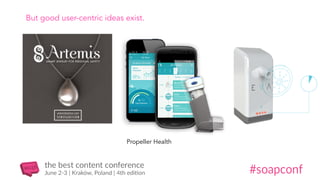
But good user-centric ideas exist.
Propeller Health
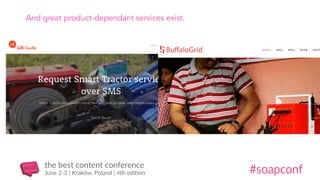
And great product-dependant services exist.
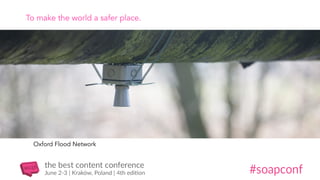
To make the world a safer place.
Oxford Flood Network
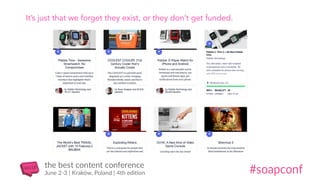
It’s just that we forget they exist, or they don’t get funded.
It’s still not about whether it’s useful, it’s about
whether it’s possible, fundable, attractive to
a particular middle-class audience.
You can change this.
How?
Go meet some startups in your area.
Do some mentoring for startups at the early stages, even remote.
Attend (or start) an #iot meetup.
Show your organisation what is going on and introduce them to
companies who need help.
Read some books (iot.london/bookshelf)
The market for your ideas, talent and support is there.
But you have to reach out to them first and
create a meaningful connection.
Good luck.
Alexandra Deschamps-Sonsino
@iotwatch
@gnlamp
@iotlondon
@knowcards
@goodhomeproject
alex@designswarm.com

Connectors, Connecting, Connections.

  • 1.
  • 2.
    Open source hardware distribution& design services Consultant Founder Tinker London (2007-2010) designswarm Good Night Lamp About me
  • 3.
    London Internet ofThings Meetup (2011-) 8K members 11 events / year meetup.com/iotlondon Design-led exploration of the future of home living. thegoodhome.org The Good Home Side projects
  • 4.
    What I’d liketo talk about today Why designers decided to disengage from the internet of things. Why design & user needs are at the bottom of the list. Why we need you back, fast.
  • 5.
    It started withresearch. Kevin Ashton, then working at P&G, coined ‘the internet of things’ in 2001. Around that time Bill Verplank, formerly of Xerox Parc, was drawing the seminal image representing ‘interaction design’ and talking about ‘user-interface design’, two terms he had coined.
  • 6.
    Then with rabbits& umbrellas. Nabaztag Ambient Devices
  • 7.
    It was tomake technology accessible to designers.
  • 8.
    For designers, withdesigners. The Arduino was aimed at media, art, design students. The assumption was that you would come with a great idea, already researched, that you needed to prototype. And you had no money.
  • 9.
    It became politicalact to ‘make’ and ‘hack’. Open source hardware (Arduino, Wiring) Open source software (Arduino IDE, Processing, VVVV, Openframeworks) Open Design (Ronan Kadushin) The Open Internet of Things Assembly (iot.london)
  • 10.
    But in 2007,designers got a bit distracted.
  • 11.
    Ways of usingthe skills you already had.
  • 12.
    And everyone elsegot into ‘making’. Electronics engineers. Business students. Developers. Retired engineers. R&D departments of corporations.
  • 13.
    Open Curiosity forNasa Challenge Salesforce Arduino demo
  • 14.
    It’s not aboutwhether it’s useful, it’s about whether it’s possible. Making became a reward in itself.
  • 15.
    Then came crowdfunding. Andthen it was about money. An explosion of ideas entered the consumer market. Many of them not driven by designers, but driven by a new democratic idea of entrepreneurship: Anyone with an idea could make something and bring it to the market.
  • 16.
    So we have‘success stories’
  • 17.
    And the horrorstories behind them.
  • 18.
    So then thedisappointment. Lack of success is usually down to: •  The team •  The money •  The time
  • 19.
    And you’ve got99 problems. I.P. Legal Product design Hardware design Embedded software Connectivity issues Middleware APIs User Experience Prototyping Certification Financing Sales & Marketing Manufacturing Assembly Distribution Returns
  • 20.
    I.P. Legal Product design Hardware design Embeddedsoftware Connectivity issues Middleware APIs User Experience Prototyping Certification Financing Sales & Marketing Manufacturing Assembly Distribution Returns Only some of those relate to design in its traditional sense.
  • 21.
    Most relate todesign if you stretch its definition. I.P. Legal Product design Hardware design Embedded software Connectivity issues Middleware APIs User Experience Prototyping Certification Financing Sales & Marketing Manufacturing Assembly Distribution Returns
  • 22.
    A team ofup to 5 people will need to work together on design. I.P. Legal Product design Hardware design Embedded software Connectivity issues Middleware APIs User Experience Prototyping Certification Financing Sales & Marketing Manufacturing Assembly Distribution Returns Product designer Electronics engineer Embedded software Engineer UX designer / Front end developer Packaging designer Product designer Product designer Backend developer
  • 23.
    But good user-centricideas exist. Propeller Health
  • 24.
  • 25.
    To make theworld a safer place. Oxford Flood Network
  • 26.
    It’s just thatwe forget they exist, or they don’t get funded.
  • 27.
    It’s still notabout whether it’s useful, it’s about whether it’s possible, fundable, attractive to a particular middle-class audience.
  • 28.
  • 29.
    How? Go meet somestartups in your area. Do some mentoring for startups at the early stages, even remote. Attend (or start) an #iot meetup. Show your organisation what is going on and introduce them to companies who need help. Read some books (iot.london/bookshelf)
  • 30.
    The market foryour ideas, talent and support is there. But you have to reach out to them first and create a meaningful connection.
  • 31.