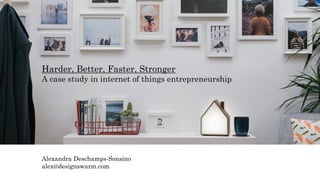
Harder, Better, Faster, Stronger
A case study in internet of things entrepreneurship
Alexandra Deschamps-Sonsino
alex@designswarm.com
About me
Industrial & interaction design education
First UK distributor of the Arduino
London Internet of things meetup organiser since 2011
#iot strategy consultant
Writing a book on smart homes for Apress
Founder of Good Night Lamp
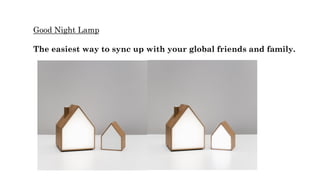
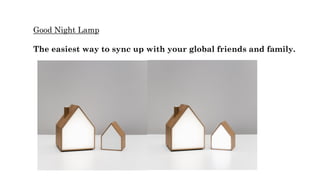
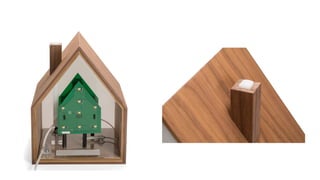
Good Night Lamp
The easiest way to sync up with your global friends and family.
What I will talk about
A lesson in what not to do but also
the importance of being pig-headed.
(Reminder: I’m running an all-day workshop tomorrow
that tells you a little about everything you need to know
about developing a connected product)
Good Night Lamp
The easiest way to sync up with your global friends and family.
My need (2005)
My mom used to call me in the middle of the afternoon.
Now as a widow, she doesn’t call enough.
She ‘doesn’t want to bother me’.
I end up calling a lot less than I’d like.
An open need (2017)
Working parents
Children in boarding schools
Long-distance relationships & friendships
Social media anxiety
Cross-generational family rituals (reading before going to bed)
Elderly parents who need care
Work colleagues
Born in 2005
The Good Night Lamp was a response to a brief set by Droog design
(Dutch art & design collective) to think about what living on your own
in the future might look like.
First prototype
The Good Night Lamp was a drawing on a wall during a
brainstorm session at the Interaction Design Institute Ivrea
in 2005.
I built a prototype hacking a remote controlled car for our presentation
and bent acrylic from the workshop.
First barrier
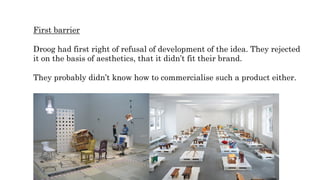
Droog had first right of refusal of development of the idea. They rejected
it on the basis of aesthetics, that it didn’t fit their brand.
They probably didn’t know how to commercialise such a product either.
Lesson 1
Academic industrial support is rarely adequate.
Traditional retailers don’t know how to engage with
these new products.
Pause (2006-2012)
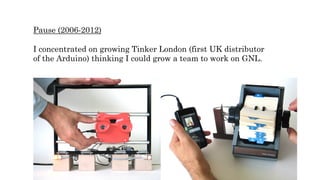
I concentrated on growing Tinker London (first UK distributor
of the Arduino) thinking I could grow a team to work on GNL.
Lesson 2
You can’t run a service company & commercialise
a product at the same time.
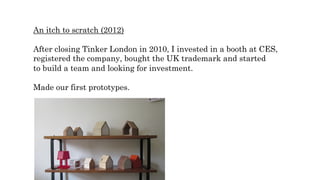
An itch to scratch (2012)
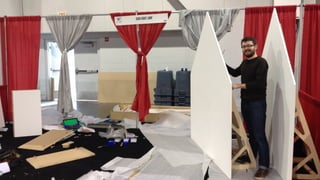
After closing Tinker London in 2010, I invested in a booth at CES,
registered the company, bought the UK trademark and started
to build a team and looking for investment.
Made our first prototypes.
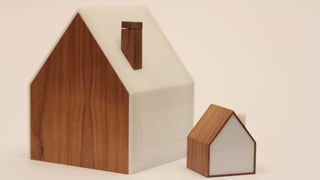
Lesson 3
That’s not what it looks like now.
Lesson 4
Don’t invest in CES until you’re ready to ship to the US.
Lesson 5
There is no investment for #iot in the UK.
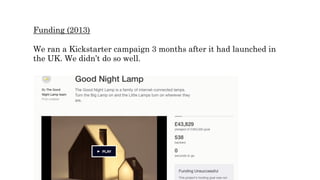
Funding (2013)
We ran a Kickstarter campaign 3 months after it had launched in
the UK. We didn’t do so well.
Lesson 6
Crowdfunding is for marketing, not funding.
Keep calm & carry on (2013-5)
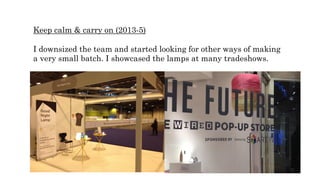
I downsized the team and started looking for other ways of making
a very small batch. I showcased the lamps at many tradeshows.
Lesson 7
Listen to what people like and what people don’t like.
Partnership (2014)
I downsized the team and started looking for other ways of making
a very small batch.
Lesson 8
Create the best condition for success, not the fastest.
Minimum viable customer base (2014)
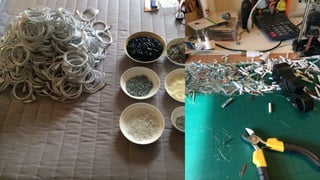
I started a Shopify account and got people to pre-order
200 units in September 2014.
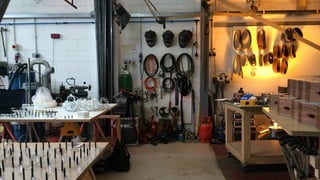
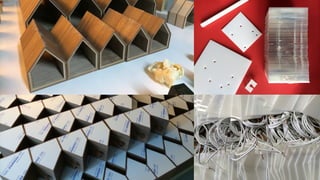
We worked with Tom Cecil Studio to manufacture them in London.
Lesson 9
Cutting corners will always come back to haunt you.
We get an email (2017)
Spent some time negociating with a US company on the use of the
trademark in the US.
The nice people at FoxWilliams worked with me to defend my position
but it’s slowed US activities down.
Lesson 10
IP protection is expensive but necessary.
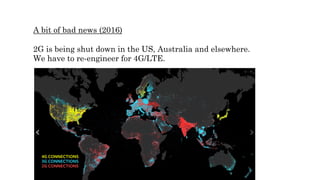
A bit of bad news (2016)
2G is being shut down in the US, Australia and elsewhere.
We have to re-engineer for 4G/LTE.
Lesson 11
You’re at the mercy of your technology choices
and partners.
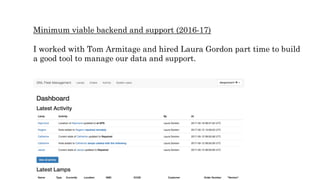
Minimum viable backend and support (2016-17)
I worked with Tom Armitage and hired Laura Gordon part time to build
a good tool to manage our data and support.
Lesson 12
You’re going to work with great people and learn a lot.
What now?
We’re going back to crowdfunding to help cover our 4G/LTE
re-engineering for the North American market.
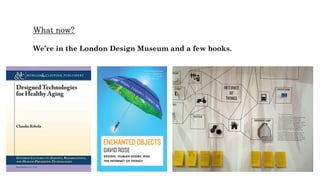
What now?
We’re in the London Design Museum and a few books.
Lessons I shared today
1.  Academic industrial support is rarely adequate.
2.  You can’t run a service company & commercialise a product at the same time.
3.  That’s not what it looks like now.
4.  Don’t invest in CES until you’re ready to ship to the US.
5.  There is no investment for #iot in the UK.
6.  Crowdfunding is for marketing, not funding.
7.  Listen to what people like and what people don’t like.
8.  Create the best condition for success, not the fastest.
9.  Cutting corners will always come back to haunt you.
10.  IP protection is expensive but necessary.
11.  You’re at the mercy of your technology choices and partners.
12.  You will work with great people and learn a lot.
The realities of the early days
1.  Most companies will have failed after a crowdfunding campaign
2.  Most companies will have burnt out after an incubator
3.  Too much pressure is put on companies to follow a Silicon
Valley speed of development.
What we need to build
1.  Early stage funding
2.  Affordable on-demand talent
3.  Specialised entrepreneurship education & training
Or come to tomorrow’s Masterclass
A 3 day workshop compressed into a 1 day
workshop breaking down what you’ll have
to think about to build a connected product.
Lesson 13
Good news! You’re bound to do better than I did.
Thank you and good luck!
Alexandra Deschamps-Sonsino
alex@designswarm.com

Harder, Better, Faster, Stronger

  • 1.
    Harder, Better, Faster,Stronger A case study in internet of things entrepreneurship Alexandra Deschamps-Sonsino alex@designswarm.com
  • 2.
    About me Industrial &interaction design education First UK distributor of the Arduino London Internet of things meetup organiser since 2011 #iot strategy consultant Writing a book on smart homes for Apress Founder of Good Night Lamp
  • 3.
    Good Night Lamp Theeasiest way to sync up with your global friends and family.
  • 4.
    What I willtalk about A lesson in what not to do but also the importance of being pig-headed. (Reminder: I’m running an all-day workshop tomorrow that tells you a little about everything you need to know about developing a connected product)
  • 5.
    Good Night Lamp Theeasiest way to sync up with your global friends and family.
  • 6.
    My need (2005) Mymom used to call me in the middle of the afternoon. Now as a widow, she doesn’t call enough. She ‘doesn’t want to bother me’. I end up calling a lot less than I’d like.
  • 7.
    An open need(2017) Working parents Children in boarding schools Long-distance relationships & friendships Social media anxiety Cross-generational family rituals (reading before going to bed) Elderly parents who need care Work colleagues
  • 8.
    Born in 2005 TheGood Night Lamp was a response to a brief set by Droog design (Dutch art & design collective) to think about what living on your own in the future might look like.
  • 9.
    First prototype The GoodNight Lamp was a drawing on a wall during a brainstorm session at the Interaction Design Institute Ivrea in 2005. I built a prototype hacking a remote controlled car for our presentation and bent acrylic from the workshop.
  • 10.
    First barrier Droog hadfirst right of refusal of development of the idea. They rejected it on the basis of aesthetics, that it didn’t fit their brand. They probably didn’t know how to commercialise such a product either.
  • 11.
    Lesson 1 Academic industrialsupport is rarely adequate. Traditional retailers don’t know how to engage with these new products.
  • 12.
    Pause (2006-2012) I concentratedon growing Tinker London (first UK distributor of the Arduino) thinking I could grow a team to work on GNL.
  • 13.
    Lesson 2 You can’trun a service company & commercialise a product at the same time.
  • 14.
    An itch toscratch (2012) After closing Tinker London in 2010, I invested in a booth at CES, registered the company, bought the UK trademark and started to build a team and looking for investment. Made our first prototypes.
  • 16.
    Lesson 3 That’s notwhat it looks like now.
  • 18.
    Lesson 4 Don’t investin CES until you’re ready to ship to the US.
  • 19.
    Lesson 5 There isno investment for #iot in the UK.
  • 20.
    Funding (2013) We rana Kickstarter campaign 3 months after it had launched in the UK. We didn’t do so well.
  • 21.
    Lesson 6 Crowdfunding isfor marketing, not funding.
  • 22.
    Keep calm &carry on (2013-5) I downsized the team and started looking for other ways of making a very small batch. I showcased the lamps at many tradeshows.
  • 23.
    Lesson 7 Listen towhat people like and what people don’t like.
  • 24.
    Partnership (2014) I downsizedthe team and started looking for other ways of making a very small batch.
  • 25.
    Lesson 8 Create thebest condition for success, not the fastest.
  • 26.
    Minimum viable customerbase (2014) I started a Shopify account and got people to pre-order 200 units in September 2014. We worked with Tom Cecil Studio to manufacture them in London.
  • 27.
    Lesson 9 Cutting cornerswill always come back to haunt you.
  • 32.
    We get anemail (2017) Spent some time negociating with a US company on the use of the trademark in the US. The nice people at FoxWilliams worked with me to defend my position but it’s slowed US activities down.
  • 33.
    Lesson 10 IP protectionis expensive but necessary.
  • 34.
    A bit ofbad news (2016) 2G is being shut down in the US, Australia and elsewhere. We have to re-engineer for 4G/LTE.
  • 35.
    Lesson 11 You’re atthe mercy of your technology choices and partners.
  • 36.
    Minimum viable backendand support (2016-17) I worked with Tom Armitage and hired Laura Gordon part time to build a good tool to manage our data and support.
  • 37.
    Lesson 12 You’re goingto work with great people and learn a lot.
  • 38.
    What now? We’re goingback to crowdfunding to help cover our 4G/LTE re-engineering for the North American market.
  • 39.
    What now? We’re inthe London Design Museum and a few books.
  • 40.
    Lessons I sharedtoday 1.  Academic industrial support is rarely adequate. 2.  You can’t run a service company & commercialise a product at the same time. 3.  That’s not what it looks like now. 4.  Don’t invest in CES until you’re ready to ship to the US. 5.  There is no investment for #iot in the UK. 6.  Crowdfunding is for marketing, not funding. 7.  Listen to what people like and what people don’t like. 8.  Create the best condition for success, not the fastest. 9.  Cutting corners will always come back to haunt you. 10.  IP protection is expensive but necessary. 11.  You’re at the mercy of your technology choices and partners. 12.  You will work with great people and learn a lot.
  • 41.
    The realities ofthe early days 1.  Most companies will have failed after a crowdfunding campaign 2.  Most companies will have burnt out after an incubator 3.  Too much pressure is put on companies to follow a Silicon Valley speed of development. What we need to build 1.  Early stage funding 2.  Affordable on-demand talent 3.  Specialised entrepreneurship education & training
  • 42.
    Or come totomorrow’s Masterclass A 3 day workshop compressed into a 1 day workshop breaking down what you’ll have to think about to build a connected product.
  • 43.
    Lesson 13 Good news!You’re bound to do better than I did.
  • 44.
    Thank you andgood luck! Alexandra Deschamps-Sonsino alex@designswarm.com