Connective Tissue Cells
Matrix
Location Function
Ground
Substance
Fibers
PROPER
DENSE
Regular or
Collagenous
(Fibrous)
Fibroblasts- makes
ground substance
Fibrocytes- absorbs
ground substance
Gel-like
Mostly
collagen
Tendons and
ligaments
Attaches muscle to bone or other
muscle, withstands stress in one
plane
Irregular
Gel-like
Mostly
collagen
Dermis, around
organs
Withstands stress in all 3 planes
Elastic
very few
open spaces
Mostly
elastic
walls of large
arteries, trachea
and bronchi
Allows recoil of tissue following
stretching
maintains pulsatile strength
LOOSE
Areolar
Fibroblasts- makes
ground substance
Fibrocytes- absorbs
ground substance
Immune cells
Adipocyte
Gel-like
Elastic,
Reticular,
Collagen
Dermis, around
organs
Stretch and shock absorption
Reticular
Mostly
reticular
Spleen, organs,
and lymph
nodes, liver,
kidney, bone
marrow
Makes cell supporting frame.
Adipose Adipocytes
Gel like but
sparse
Similar to
areolar,
but very
sparse
Under skin
(hypodermis),
around kidneys
and eyeballs
Provides reserve food fuel,
insulates against heat loss, and
supports and protects organs
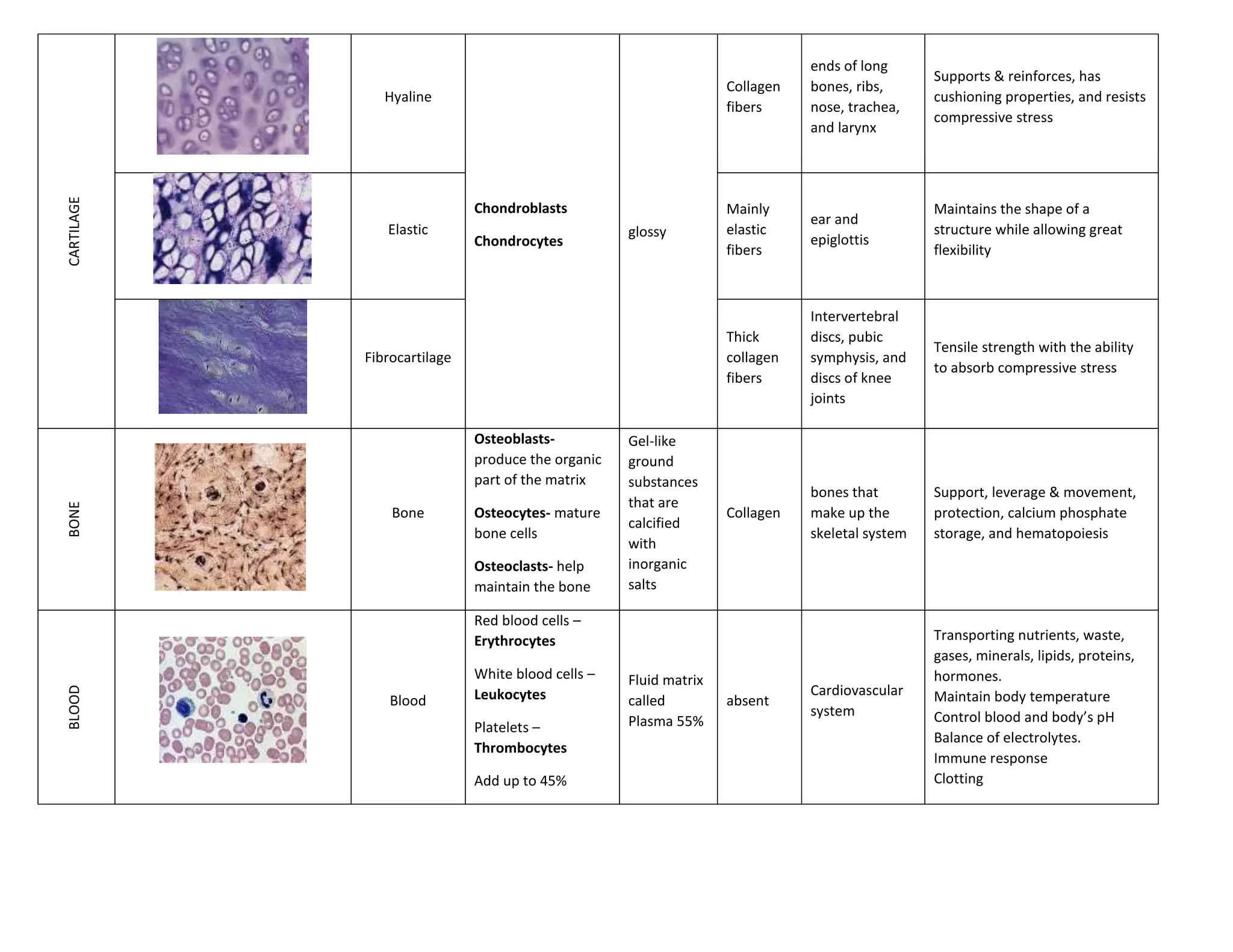
CARTILAGE
Hyaline
Chondroblasts
Chondrocytes
glossy
Collagen
fibers
ends of long
bones, ribs,
nose, trachea,
and larynx
Supports & reinforces, has
cushioning properties, and resists
compressive stress
Elastic
Mainly
elastic
fibers
ear and
epiglottis
Maintains the shape of a
structure while allowing great
flexibility
Fibrocartilage
Thick
collagen
fibers
Intervertebral
discs, pubic
symphysis, and
discs of knee
joints
Tensile strength with the ability
to absorb compressive stress
BONE
Bone
Osteoblasts-
produce the organic
part of the matrix
Osteocytes- mature
bone cells
Osteoclasts- help
maintain the bone
Gel-like
ground
substances
that are
calcified
with
inorganic
salts
Collagen
bones that
make up the
skeletal system
Support, leverage & movement,
protection, calcium phosphate
storage, and hematopoiesis
BLOOD
Blood
Red blood cells –
Erythrocytes
White blood cells –
Leukocytes
Platelets –
Thrombocytes
Add up to 45%
Fluid matrix
called
Plasma 55%
absent
Cardiovascular
system
Transporting nutrients, waste,
gases, minerals, lipids, proteins,
hormones.
Maintain body temperature
Control blood and body’s pH
Balance of electrolytes.
Immune response
Clotting

Connective Tissue Table.docx

  • 1.
    Connective Tissue Cells Matrix LocationFunction Ground Substance Fibers PROPER DENSE Regular or Collagenous (Fibrous) Fibroblasts- makes ground substance Fibrocytes- absorbs ground substance Gel-like Mostly collagen Tendons and ligaments Attaches muscle to bone or other muscle, withstands stress in one plane Irregular Gel-like Mostly collagen Dermis, around organs Withstands stress in all 3 planes Elastic very few open spaces Mostly elastic walls of large arteries, trachea and bronchi Allows recoil of tissue following stretching maintains pulsatile strength LOOSE Areolar Fibroblasts- makes ground substance Fibrocytes- absorbs ground substance Immune cells Adipocyte Gel-like Elastic, Reticular, Collagen Dermis, around organs Stretch and shock absorption Reticular Mostly reticular Spleen, organs, and lymph nodes, liver, kidney, bone marrow Makes cell supporting frame. Adipose Adipocytes Gel like but sparse Similar to areolar, but very sparse Under skin (hypodermis), around kidneys and eyeballs Provides reserve food fuel, insulates against heat loss, and supports and protects organs
  • 2.
    CARTILAGE Hyaline Chondroblasts Chondrocytes glossy Collagen fibers ends of long bones,ribs, nose, trachea, and larynx Supports & reinforces, has cushioning properties, and resists compressive stress Elastic Mainly elastic fibers ear and epiglottis Maintains the shape of a structure while allowing great flexibility Fibrocartilage Thick collagen fibers Intervertebral discs, pubic symphysis, and discs of knee joints Tensile strength with the ability to absorb compressive stress BONE Bone Osteoblasts- produce the organic part of the matrix Osteocytes- mature bone cells Osteoclasts- help maintain the bone Gel-like ground substances that are calcified with inorganic salts Collagen bones that make up the skeletal system Support, leverage & movement, protection, calcium phosphate storage, and hematopoiesis BLOOD Blood Red blood cells – Erythrocytes White blood cells – Leukocytes Platelets – Thrombocytes Add up to 45% Fluid matrix called Plasma 55% absent Cardiovascular system Transporting nutrients, waste, gases, minerals, lipids, proteins, hormones. Maintain body temperature Control blood and body’s pH Balance of electrolytes. Immune response Clotting