SYNCHRONIZED CONTROL OF TWO MOTOR
    SYSTEM USING FUZZY PI CONTROLLER


PRESENTED BY                SUPERVISIOR
S.VIJAI                     Mrs.P.GOMATHI
PG SCHOLAR                  ASSOCIATE PROFESSOR
DEPARMENT OF EIE            DEPARMENT OF EEE
KONGU ENGINEERING COLLEGE   KONGU ENGINEERING COLLEGE
OBJECTIVE:

 To synchronize speed control of two motor system using
  Optimized KP,KI values.
PROPOSED METHODOLOGY

 This paper will demonstrate the improvement in the motor
  drive performance using Fuzzy logic based PI Control
STATEMENT OF THE PROBLEM

 It is also affected by drive performance miss match, load
  disturbance, Noise and many other factors This is because the
  dynamic performance of each motor is different.
 It is due to the influence of some disturb factors from load and
  noise
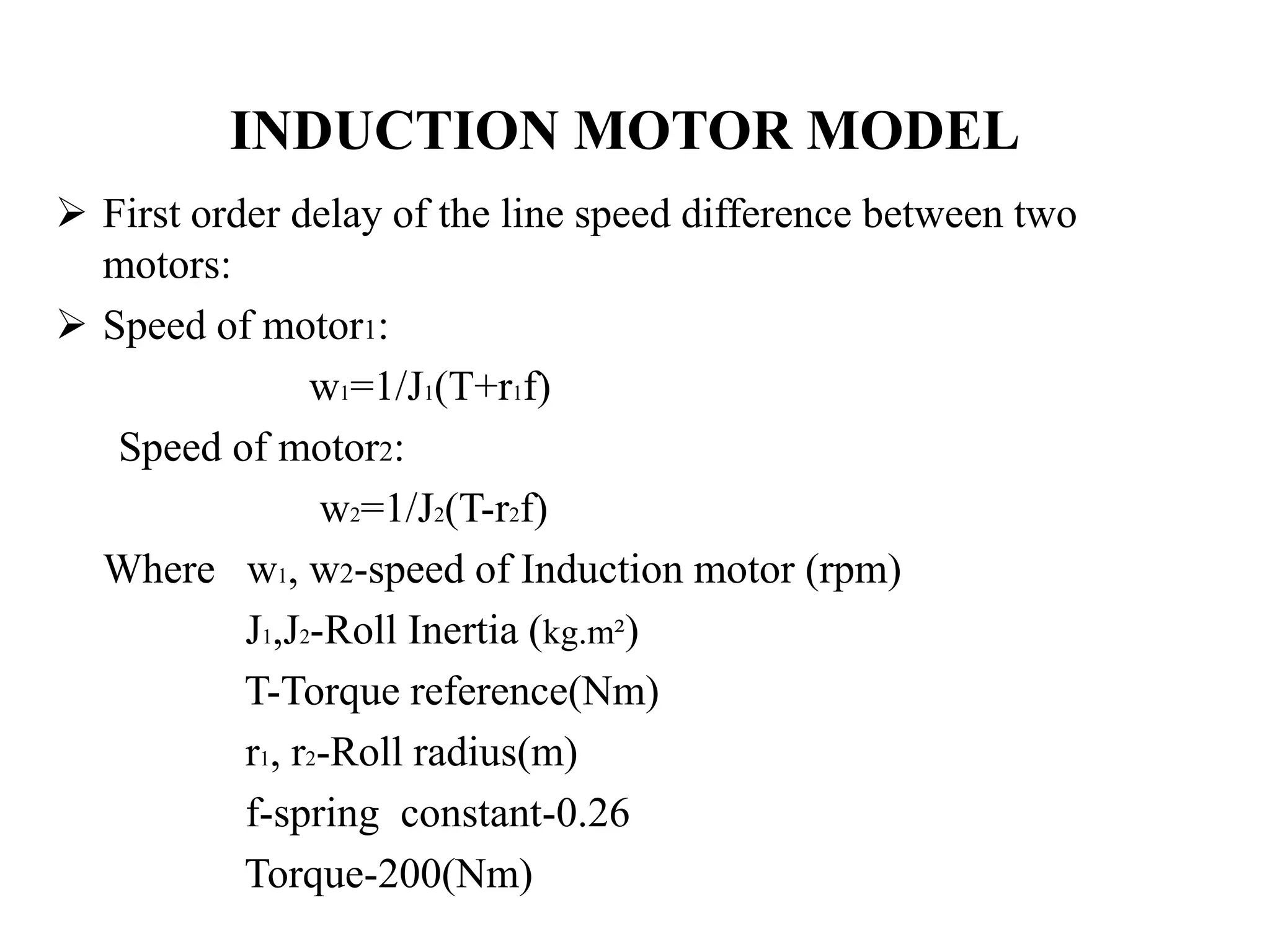
INDUCTION MOTOR MODEL
 First order delay of the line speed difference between two
  motors:
 Speed of motor1:
                w1=1/J1(T+r1f)
   Speed of motor2:
                 w2=1/J2(T-r2f)
  Where w1, w2-speed of Induction motor (rpm)
           J1,J2-Roll Inertia (kg.m²)
           T-Torque reference(Nm)
           r1, r2-Roll radius(m)
           f-spring constant-0.26
           Torque-200(Nm)
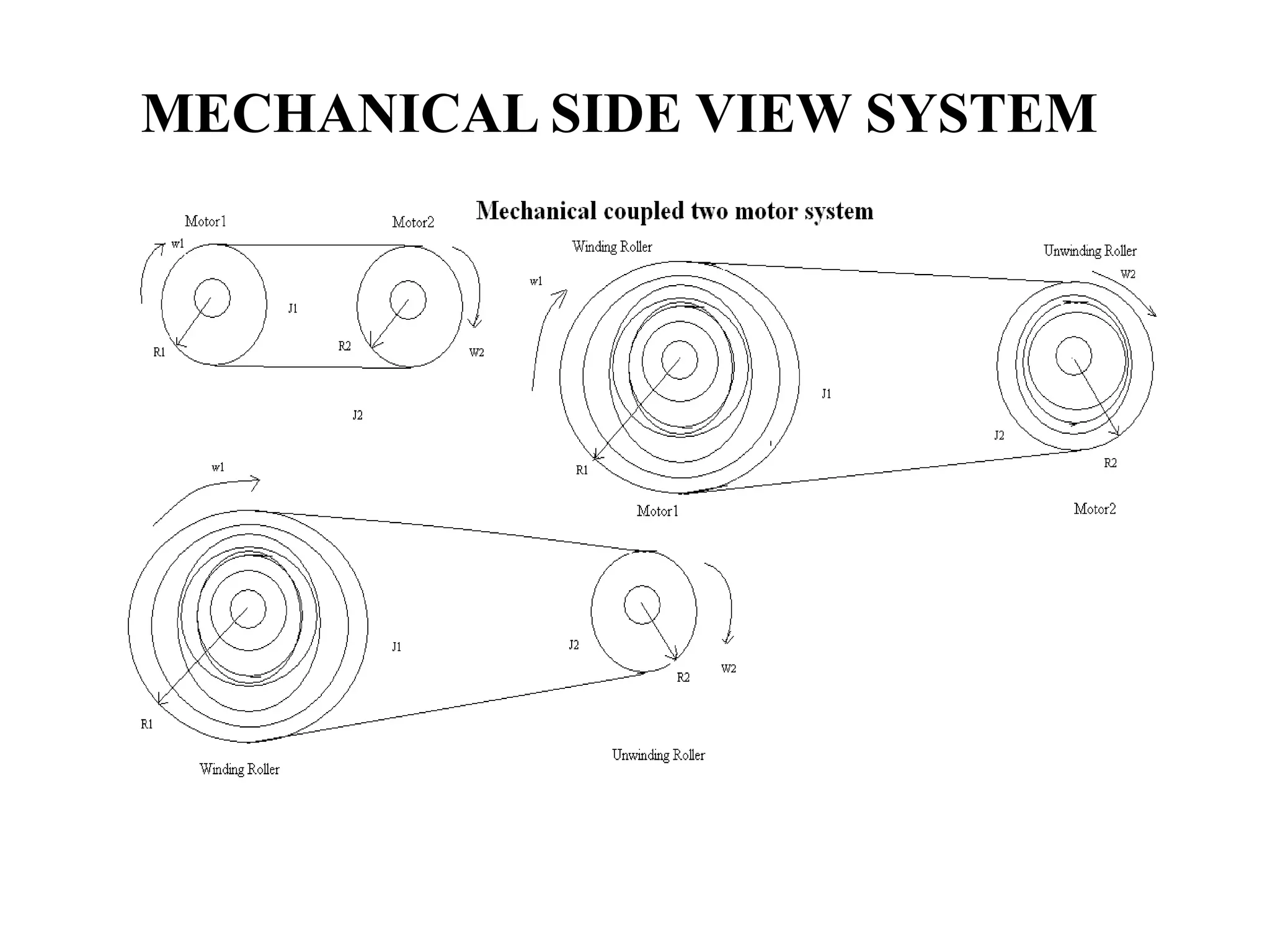
MECHANICAL SIDE VIEW SYSTEM
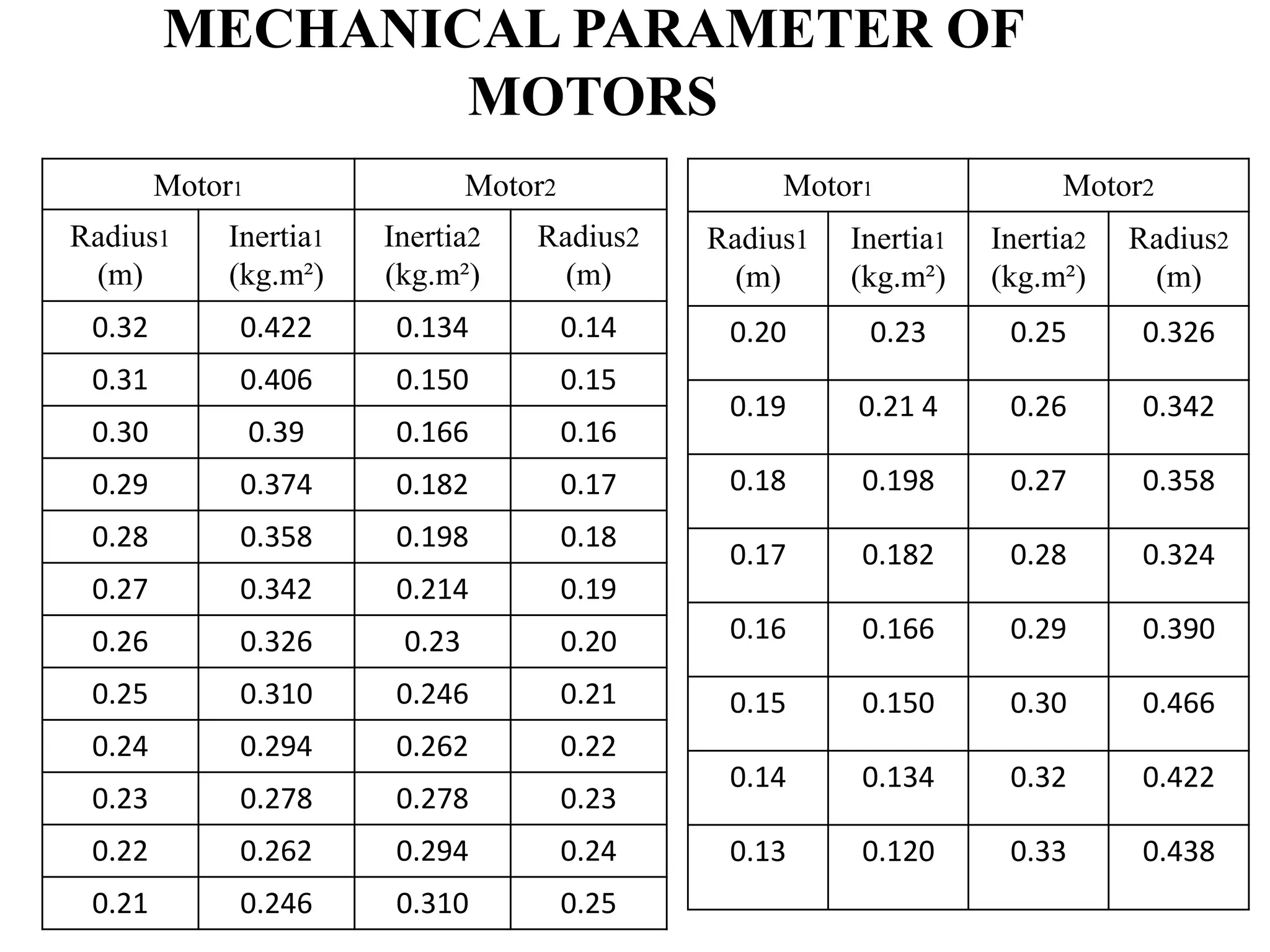
MECHANICAL PARAMETER OF
                MOTORS
        Motor1                  Motor2               Motor1                Motor2
Radius1      Inertia1   Inertia2    Radius2     Radius1   Inertia1   Inertia2   Radius2
 (m)         (kg.m²)    (kg.m²)       (m)         (m)     (kg.m²)    (kg.m²)     (m)
 0.32        0.422       0.134           0.14    0.20      0.23       0.25      0.326
 0.31        0.406       0.150           0.15
                                                 0.19     0.21 4      0.26      0.342
 0.30            0.39    0.166           0.16
 0.29        0.374       0.182           0.17    0.18     0.198       0.27      0.358
 0.28        0.358       0.198           0.18
                                                 0.17     0.182       0.28      0.324
 0.27        0.342       0.214           0.19
 0.26        0.326       0.23            0.20    0.16     0.166       0.29      0.390

 0.25        0.310       0.246           0.21    0.15     0.150       0.30      0.466
 0.24        0.294       0.262           0.22
                                                 0.14     0.134       0.32      0.422
 0.23        0.278       0.278           0.23
 0.22        0.262       0.294           0.24    0.13     0.120       0.33      0.438
 0.21        0.246       0.310           0.25
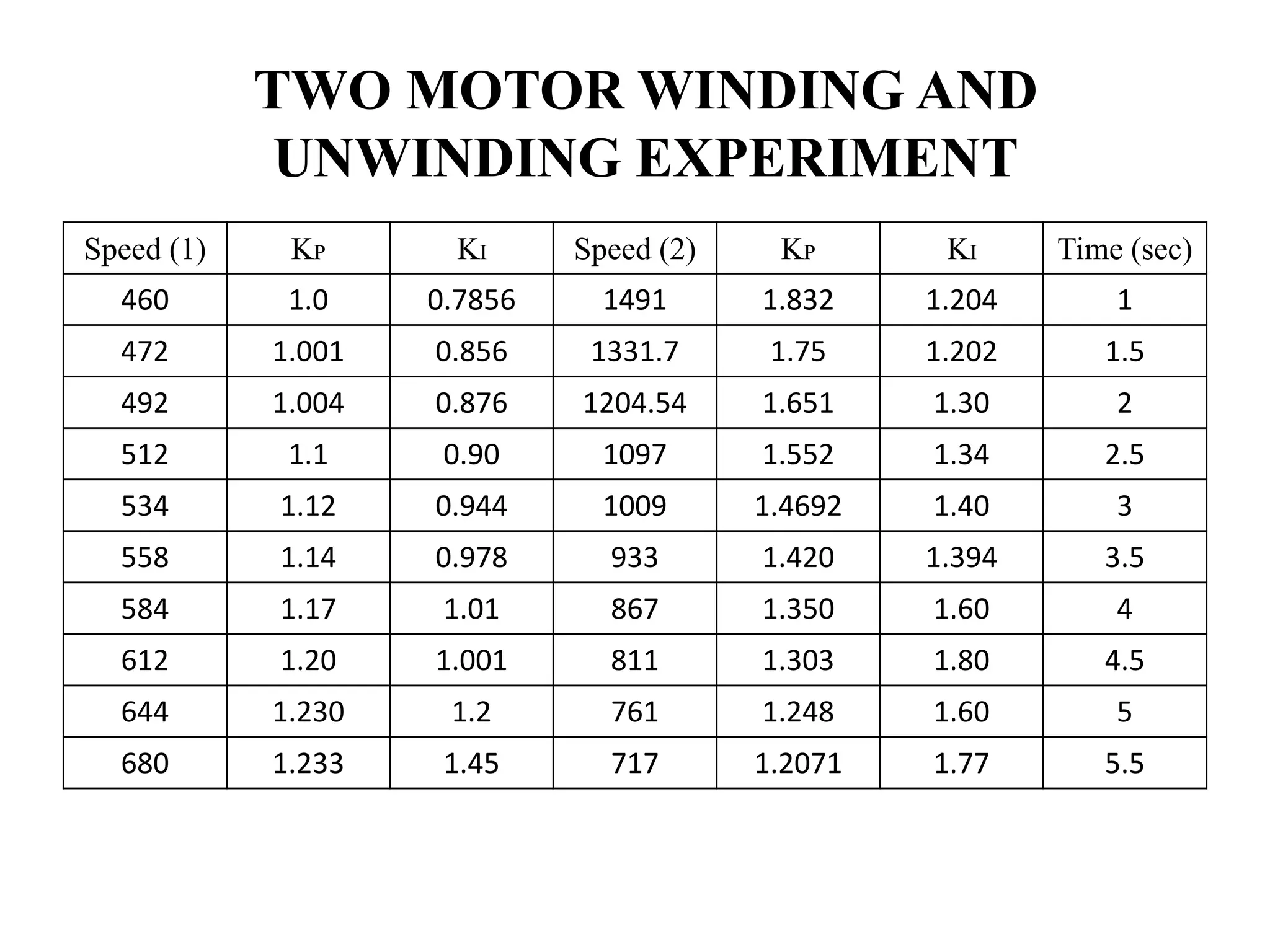
TWO MOTOR WINDING AND
             UNWINDING EXPERIMENT
Speed (1)    KP       KI     Speed (2)    KP       KI     Time (sec)
  460        1.0    0.7856     1491      1.832    1.204       1
  472       1.001   0.856     1331.7      1.75    1.202      1.5
  492       1.004   0.876    1204.54     1.651    1.30        2
  512        1.1     0.90      1097      1.552    1.34       2.5
  534       1.12    0.944      1009      1.4692   1.40        3
  558       1.14    0.978      933       1.420    1.394      3.5
  584       1.17     1.01      867       1.350    1.60        4
  612       1.20    1.001      811       1.303    1.80       4.5
  644       1.230    1.2       761       1.248    1.60        5
  680       1.233    1.45      717       1.2071   1.77       5.5
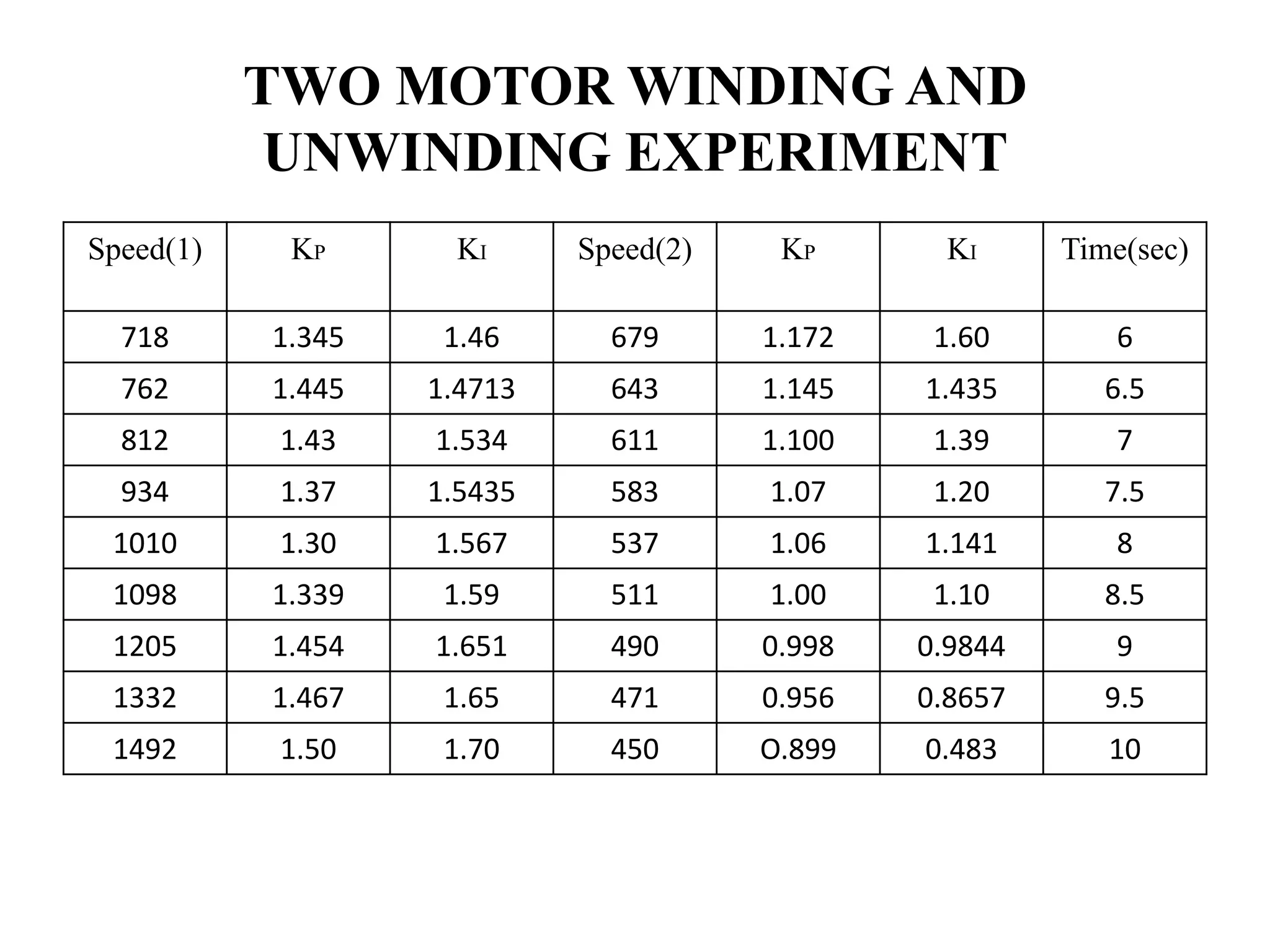
TWO MOTOR WINDING AND
            UNWINDING EXPERIMENT
Speed(1)    KP       KI     Speed(2)    KP       KI     Time(sec)

  718      1.345    1.46      679      1.172    1.60       6
  762      1.445   1.4713     643      1.145   1.435       6.5
  812      1.43    1.534      611      1.100    1.39       7
  934      1.37    1.5435     583      1.07     1.20       7.5
 1010      1.30    1.567      537      1.06    1.141       8
 1098      1.339    1.59      511      1.00     1.10       8.5
 1205      1.454   1.651      490      0.998   0.9844      9
 1332      1.467    1.65      471      0.956   0.8657      9.5
 1492      1.50     1.70      450      O.899   0.483       10
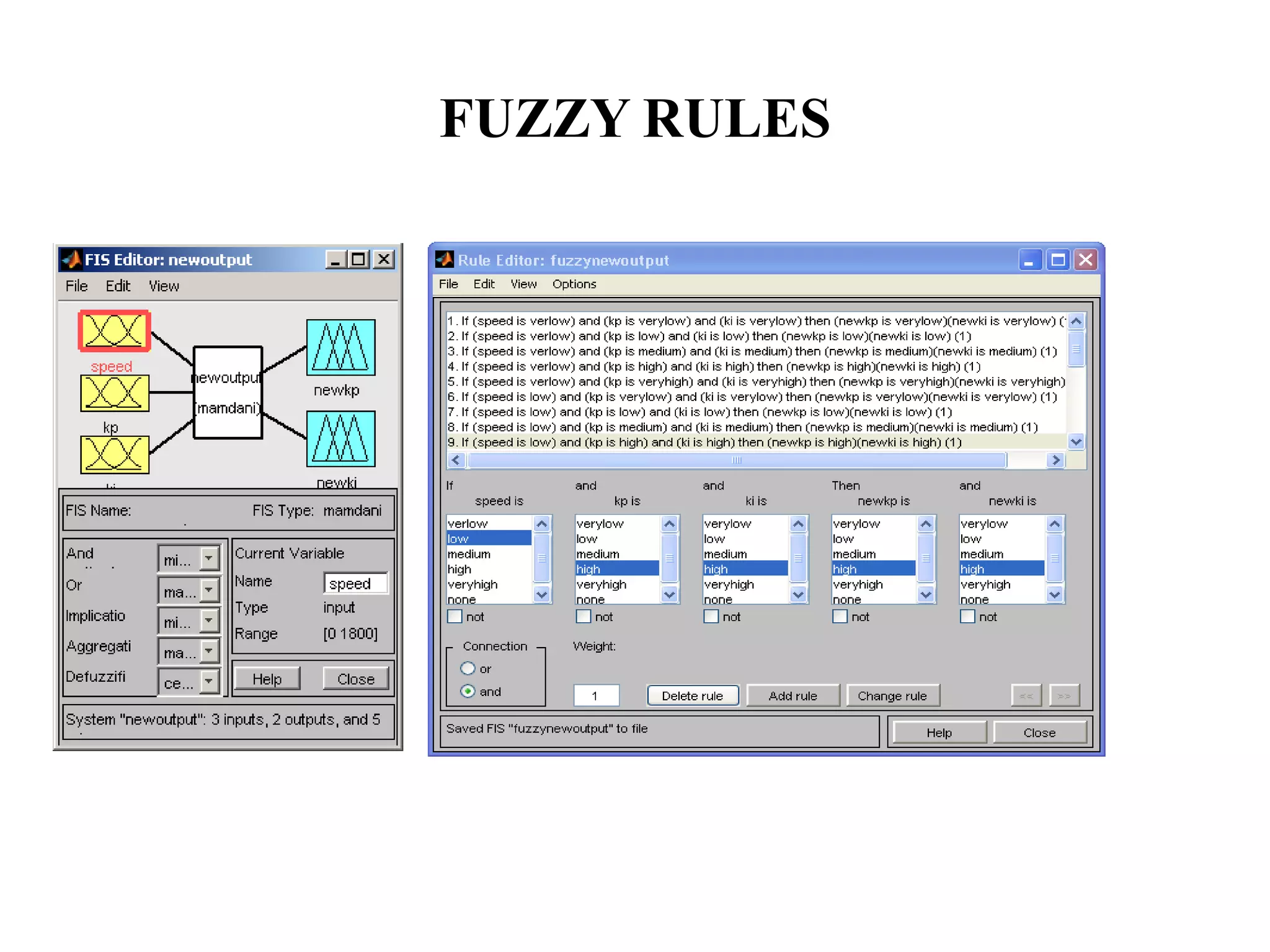
FUZZY RULES
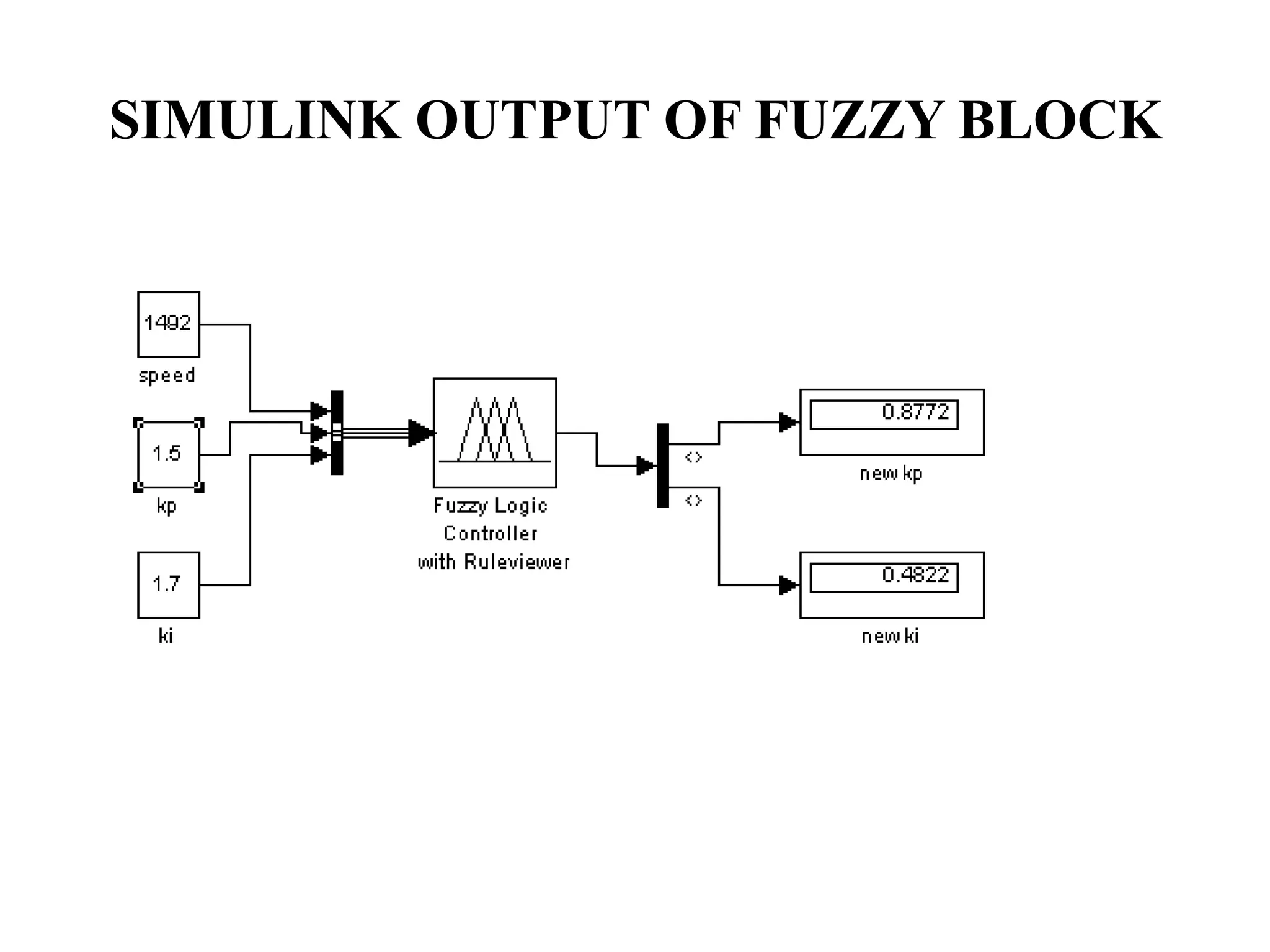
SIMULINK OUTPUT OF FUZZY BLOCK
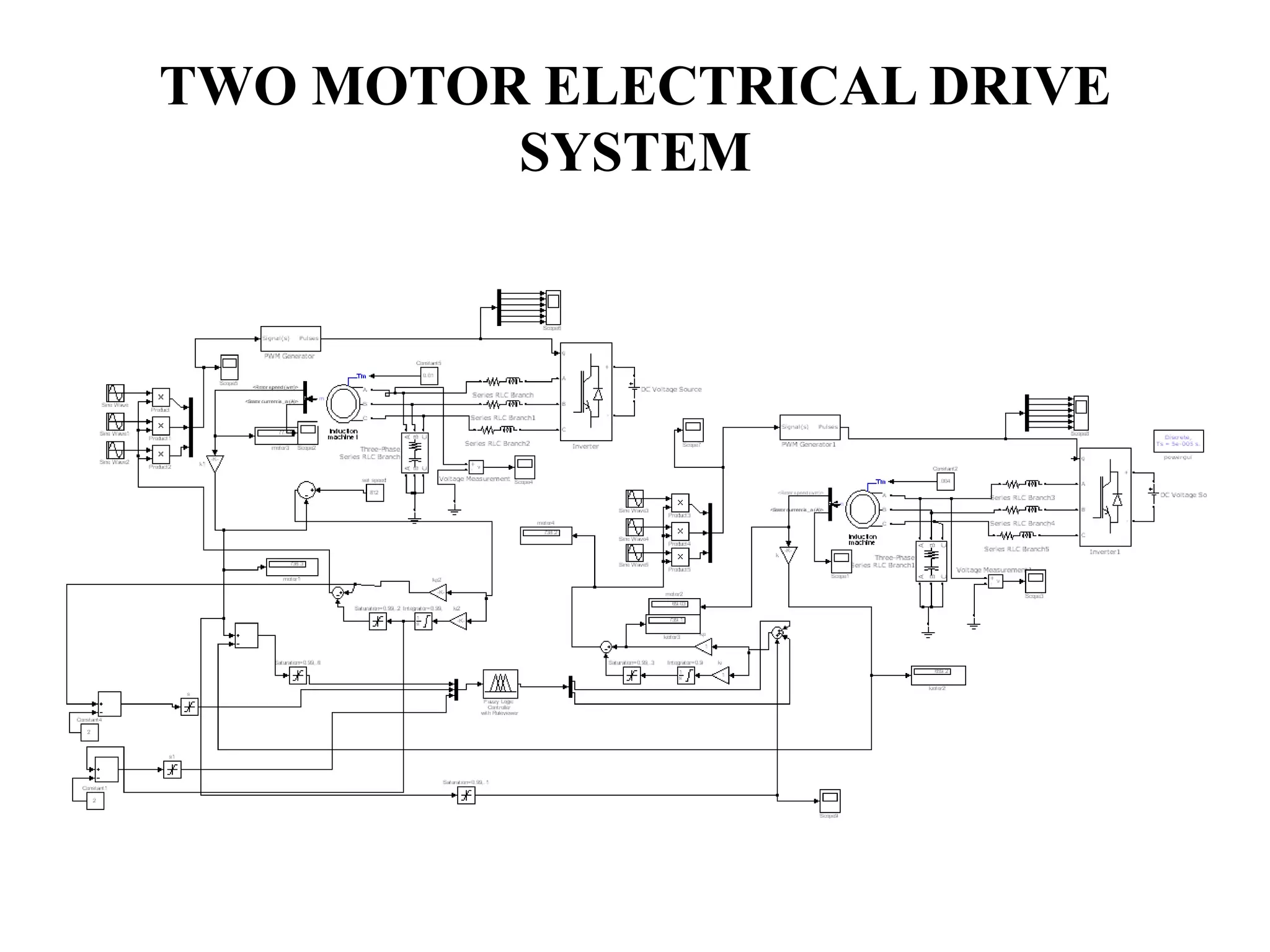
TWO MOTOR ELECTRICAL DRIVE
         SYSTEM
MOTOR SPEED, KP, KI VALUES
                Very low   Low          Medium       High         Very High

Speed           [0-592]    [400-845]    [750-1200]   [960-1421]   [1405-1500]


Proportional    [0-0.48]   [0.12-1.2]   [1.08-1.6]   [1.5-1.9]    [1.6-2.5]
gain

Integral gain   [0-0.7]    [0.5-0.9]    [0.8-1.3]    [1.2-1.6]    [1.4-1.9]
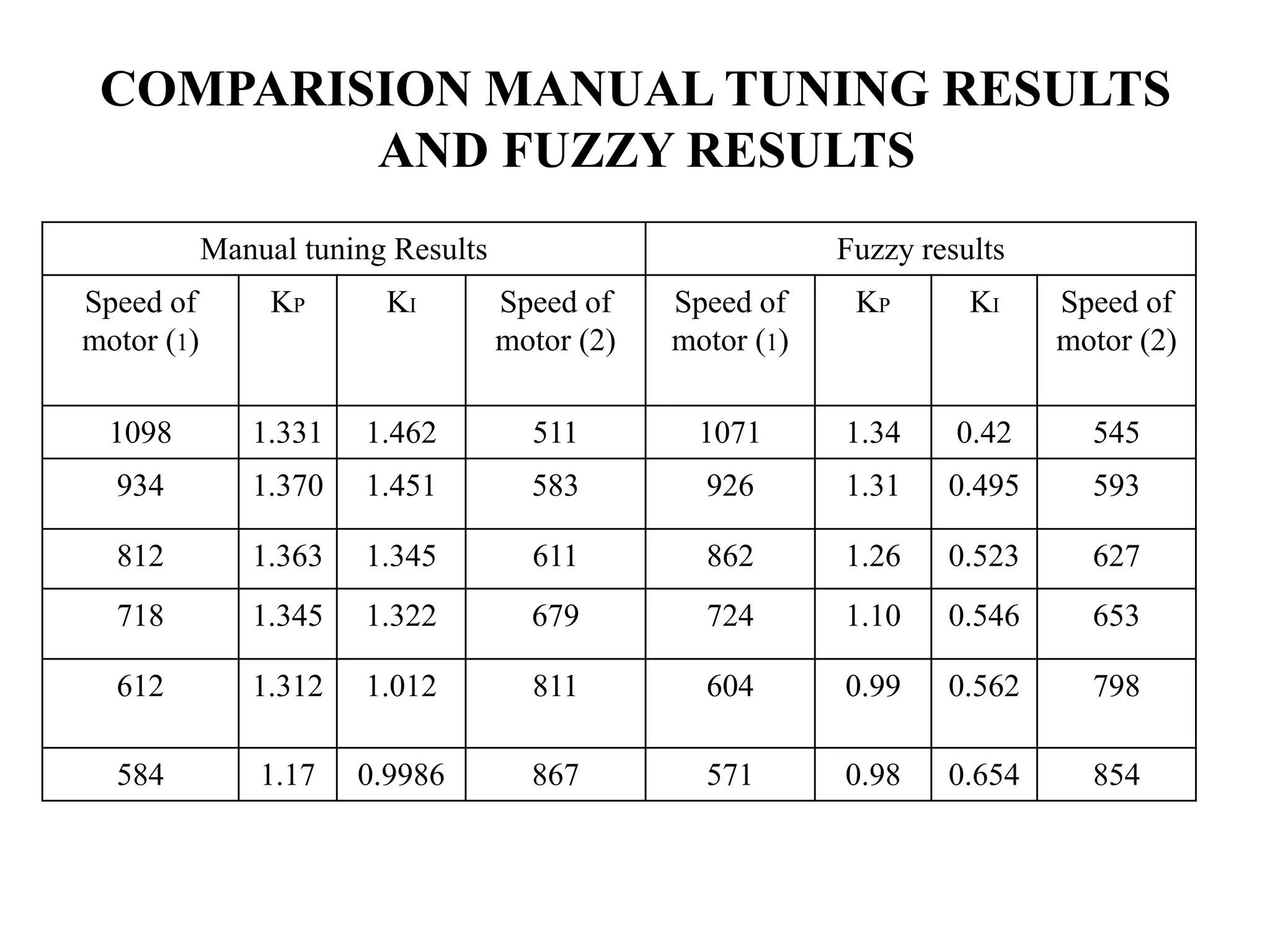
COMPARISION MANUAL TUNING RESULTS
         AND FUZZY RESULTS
            Manual tuning Results                           Fuzzy results
Speed of         KP      KI         Speed of    Speed of     KP       KI    Speed of
motor (1)                           motor (2)   motor (1)                   motor (2)

  1098         1.331    1.462         511         1071      1.34     0.42     545
  934          1.370    1.451         583         926       1.31    0.495     593

  812          1.363    1.345         611         862       1.26    0.523     627
  718          1.345    1.322         679         724       1.10    0.546     653

  612          1.312    1.012         811         604       0.99    0.562     798

  584           1.17   0.9986         867         571       0.98    0.654     854
CONCLUSION

 The two motor system speed control by using fuzzy
  KP,KI values and Optimization the motor speed was
  obtained.
REFERENCE

 Seung-ho song and seung-ki sul,fellow, A New Tension controller for
  continuous strip processing line IEEE Transaction on Industry
  Applications,Vol.36NO.2,page(633-639)March/April.

 Chen Chong, Liu Xing-qiao (2010) “Three-motor synchronous speed-
  regulation” First ACIS International Symposium on Cryptography, and
  Network Security, Data Mining and Knowledge Discovery, E-
  Commerce and Its Applications, and Embedded Systems.

 Dezong Zhao, Chunwen Li, and Jun Ren (2009) “Speed
  Synchronization of Multiple Induction Motors with Adjacent Cross
  Coupling Control” Joint 48th IEEE Conference on Decision and
  Control and 28th Chinese Control Conference Shanghai, P.R.
  China, December 16-18.
Condt,

 Dong Sun, Xiaoyin Shao (2007) “A Model-Free Cross-Coupled Control
  for Position Synchronization of Multi-Axis Motions Theory and
  Experiments” IEEE Transactions on control systems technology, vol.
  15, no. 2.
 Guohai Liu Jinzhao Zhang (2008) “Identification of speed and tension for
  multi-motor synchronous system based on LMN” IEEE Pacific-Asia
  Workshop on Computational Intelligence and Industrial Application.

 Jinzhao Zhang, Taibin Cao (2009)“ An Improved Method for Synchronous
  Control of Complex Multi-motor System” IEEE International Conference
  on Electrical and Control Engineering.
THANK YOU

Conference ppt

  • 1.
    SYNCHRONIZED CONTROL OFTWO MOTOR SYSTEM USING FUZZY PI CONTROLLER PRESENTED BY SUPERVISIOR S.VIJAI Mrs.P.GOMATHI PG SCHOLAR ASSOCIATE PROFESSOR DEPARMENT OF EIE DEPARMENT OF EEE KONGU ENGINEERING COLLEGE KONGU ENGINEERING COLLEGE
  • 2.
    OBJECTIVE:  To synchronizespeed control of two motor system using Optimized KP,KI values.
  • 3.
    PROPOSED METHODOLOGY  Thispaper will demonstrate the improvement in the motor drive performance using Fuzzy logic based PI Control
  • 4.
    STATEMENT OF THEPROBLEM  It is also affected by drive performance miss match, load disturbance, Noise and many other factors This is because the dynamic performance of each motor is different.  It is due to the influence of some disturb factors from load and noise
  • 5.
    INDUCTION MOTOR MODEL First order delay of the line speed difference between two motors:  Speed of motor1: w1=1/J1(T+r1f) Speed of motor2: w2=1/J2(T-r2f) Where w1, w2-speed of Induction motor (rpm) J1,J2-Roll Inertia (kg.m²) T-Torque reference(Nm) r1, r2-Roll radius(m) f-spring constant-0.26 Torque-200(Nm)
  • 6.
  • 7.
    MECHANICAL PARAMETER OF MOTORS Motor1 Motor2 Motor1 Motor2 Radius1 Inertia1 Inertia2 Radius2 Radius1 Inertia1 Inertia2 Radius2 (m) (kg.m²) (kg.m²) (m) (m) (kg.m²) (kg.m²) (m) 0.32 0.422 0.134 0.14 0.20 0.23 0.25 0.326 0.31 0.406 0.150 0.15 0.19 0.21 4 0.26 0.342 0.30 0.39 0.166 0.16 0.29 0.374 0.182 0.17 0.18 0.198 0.27 0.358 0.28 0.358 0.198 0.18 0.17 0.182 0.28 0.324 0.27 0.342 0.214 0.19 0.26 0.326 0.23 0.20 0.16 0.166 0.29 0.390 0.25 0.310 0.246 0.21 0.15 0.150 0.30 0.466 0.24 0.294 0.262 0.22 0.14 0.134 0.32 0.422 0.23 0.278 0.278 0.23 0.22 0.262 0.294 0.24 0.13 0.120 0.33 0.438 0.21 0.246 0.310 0.25
  • 8.
    TWO MOTOR WINDINGAND UNWINDING EXPERIMENT Speed (1) KP KI Speed (2) KP KI Time (sec) 460 1.0 0.7856 1491 1.832 1.204 1 472 1.001 0.856 1331.7 1.75 1.202 1.5 492 1.004 0.876 1204.54 1.651 1.30 2 512 1.1 0.90 1097 1.552 1.34 2.5 534 1.12 0.944 1009 1.4692 1.40 3 558 1.14 0.978 933 1.420 1.394 3.5 584 1.17 1.01 867 1.350 1.60 4 612 1.20 1.001 811 1.303 1.80 4.5 644 1.230 1.2 761 1.248 1.60 5 680 1.233 1.45 717 1.2071 1.77 5.5
  • 9.
    TWO MOTOR WINDINGAND UNWINDING EXPERIMENT Speed(1) KP KI Speed(2) KP KI Time(sec) 718 1.345 1.46 679 1.172 1.60 6 762 1.445 1.4713 643 1.145 1.435 6.5 812 1.43 1.534 611 1.100 1.39 7 934 1.37 1.5435 583 1.07 1.20 7.5 1010 1.30 1.567 537 1.06 1.141 8 1098 1.339 1.59 511 1.00 1.10 8.5 1205 1.454 1.651 490 0.998 0.9844 9 1332 1.467 1.65 471 0.956 0.8657 9.5 1492 1.50 1.70 450 O.899 0.483 10
  • 10.
  • 11.
    SIMULINK OUTPUT OFFUZZY BLOCK
  • 12.
  • 13.
    MOTOR SPEED, KP,KI VALUES Very low Low Medium High Very High Speed [0-592] [400-845] [750-1200] [960-1421] [1405-1500] Proportional [0-0.48] [0.12-1.2] [1.08-1.6] [1.5-1.9] [1.6-2.5] gain Integral gain [0-0.7] [0.5-0.9] [0.8-1.3] [1.2-1.6] [1.4-1.9]
  • 14.
    COMPARISION MANUAL TUNINGRESULTS AND FUZZY RESULTS Manual tuning Results Fuzzy results Speed of KP KI Speed of Speed of KP KI Speed of motor (1) motor (2) motor (1) motor (2) 1098 1.331 1.462 511 1071 1.34 0.42 545 934 1.370 1.451 583 926 1.31 0.495 593 812 1.363 1.345 611 862 1.26 0.523 627 718 1.345 1.322 679 724 1.10 0.546 653 612 1.312 1.012 811 604 0.99 0.562 798 584 1.17 0.9986 867 571 0.98 0.654 854
  • 15.
    CONCLUSION  The twomotor system speed control by using fuzzy KP,KI values and Optimization the motor speed was obtained.
  • 16.
    REFERENCE  Seung-ho songand seung-ki sul,fellow, A New Tension controller for continuous strip processing line IEEE Transaction on Industry Applications,Vol.36NO.2,page(633-639)March/April.  Chen Chong, Liu Xing-qiao (2010) “Three-motor synchronous speed- regulation” First ACIS International Symposium on Cryptography, and Network Security, Data Mining and Knowledge Discovery, E- Commerce and Its Applications, and Embedded Systems.  Dezong Zhao, Chunwen Li, and Jun Ren (2009) “Speed Synchronization of Multiple Induction Motors with Adjacent Cross Coupling Control” Joint 48th IEEE Conference on Decision and Control and 28th Chinese Control Conference Shanghai, P.R. China, December 16-18.
  • 17.
    Condt,  Dong Sun,Xiaoyin Shao (2007) “A Model-Free Cross-Coupled Control for Position Synchronization of Multi-Axis Motions Theory and Experiments” IEEE Transactions on control systems technology, vol. 15, no. 2.  Guohai Liu Jinzhao Zhang (2008) “Identification of speed and tension for multi-motor synchronous system based on LMN” IEEE Pacific-Asia Workshop on Computational Intelligence and Industrial Application.  Jinzhao Zhang, Taibin Cao (2009)“ An Improved Method for Synchronous Control of Complex Multi-motor System” IEEE International Conference on Electrical and Control Engineering.
  • 18.