CONCEPTUALIZED SCHOOL
(PROJECT IN COGNATE 209CURRICULUM DEVELOPMENT
AND RECENT TRENDS)

LAGUNA STATE POLYTECHNIC UNIVERSITY
SAN PABLO CITY CAMPUS
SAN PABLO CITY, LAGUNA
SUMMER 2013
ST. FRANCIS OF ASSISI MONTESSORI
*Type of School/ Institution
•
St. Francis of Assisi Montessori is a non-sectarian
private school.
*Course Offering
•
St. Francis of Assisi Montessori offers courses
such as complete pre-school and elementary education
with basic computer literacy program.
*Vision of SFAM
•
St. Francis of Assisi Montessori is a center of
excellence in the basic educational endeavor.
*Mission of SFAM
•

St. Francis of Assisi Montessori
strives to imbue its learners with the
highest ideals of life and living, and to
expose them to a well-balanced
physical, intellectual, social and moral
education, with constantly updates
educational program responsive to the
needs of the nation.
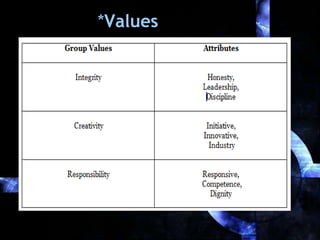
*Values
*Philosophy of SFAM
• St. Francis of Assisi Montessori is
dedicated to the pursuit of
“Truth, Wisdom and Knowledge
for the Service of God, Country
and Humanity”.
*Goals of SFA
• These are the goals of SFAM:
• To imbue the learners with the highest ideals of
life
• To prepare the learners for responsible citizenship
and for enlightened leadership
• To strive for excellence that will lead to the
development of the holistic personality of the
learners.
*Objectives of SFAM
These are the objectives of SFAM:
• To provide the learners with a well-integrated program
that will lead to the development of the total-person, the
harmonious development of their physical, mental, social,
emotional and spiritual maturity
• To foster values and attitudes among the learners that
would assist them to grow and effect growth as
responsible, responsive, functional and concerned
members of society
• To develop critical thinking among the students so that
they may be able to come up with a logical choice and
wise decisions in whatever situation they face
• To enable the learners to communicate effectively with
due respect to the dignity of the person they are relating
with
• To produce a graduate pupils who are adequately equipped
with relevant knowledge, values, skills and attitudes for
secondary education
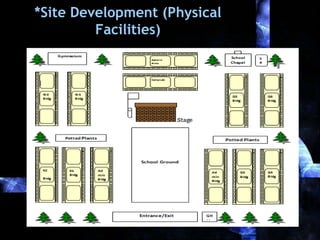
*Site Development (Physical
Facilities)
*Number of Classroom
• There are twenty-four rooms used by the
pupils, per grade level has three classrooms in
order to learn well plus three computer
laboratory rooms for the attainment of pupils’
basic computer literacy program of the school.
There are five rooms which serve as the
administration building that includes office of
the principal, faculty room, guidance room,
registrar and cashier. There are some other
buildings which serve as clinic, library,
gymnasium, school chapel, guard house,
storage room and canteen which are all used
for the common good of the faculty and the
learners themselves.
*Number of Teachers
• There are twenty-four classroom teachers
intended for every grade levels plus three
computer teachers for computer literacy
program. There are also some administrative
personnel and non-teaching staff which
includes one guidance counselor, one cashier,
two registrars, one canteen manager, one
school head/principal, one librarian, one
school dentist, one school nurse, two canteen
helpers, one security guard and two utility
workers.
*Qualification of Teachers
• A four-year degree is a pre-requisite for
admission to teach. He/ She must be a
licensed professional who manifest pride in the
nobility of the teaching profession. He/ She
keep himself/herself physically, mentally and
morally fit. He/ She must demonstrate
devotion to duty, honesty, punctuality and
efficiency. He/ She must possess dignity and
reputation with high moral values as well as
technical and professional competence. He/
She must do his/ her best to implement the
educational policies for the attainment of the
school goals, vision, mission, values and
philosophy.
*Curriculum Design
• The design of the curriculum used is
based on the influence of John Dewey
who believe that “education is life”,
Rouseau who introduced the childcentered education, Pestallozi who said
that “the aim of education is to secure a
happier and virtuous life for every
individual and Froebel who insisted that
“education is the process of development
of inborn capacities and powers of the
individual” which is known as the learnercentered curriculum design.
• This curriculum design is anchored on the needs
and interests of the child. In this curriculum, the
learner is not considered as a passive individual
but as one who engages with his/her
environment. The learners actively create,
construct meanings and understandings. The
learners interact with the teachers and the
environment, thus there is a collaborative effort
on both sides to plan lessons, select content and
do activities together. Therefore, learning is a
product of the child interaction with the
teachers and the environment.
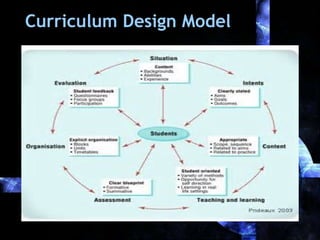
Curriculum Design Model
• Thank you for Listening!

»
»
»
»

Prepared by:
Ms. Jemimah L. Ulan
Ms. Matea Perla U. Ruño
Ms. Ma. Cristina A. Vergara

Conceptualized school

  • 1.
    CONCEPTUALIZED SCHOOL (PROJECT INCOGNATE 209CURRICULUM DEVELOPMENT AND RECENT TRENDS) LAGUNA STATE POLYTECHNIC UNIVERSITY SAN PABLO CITY CAMPUS SAN PABLO CITY, LAGUNA SUMMER 2013
  • 2.
    ST. FRANCIS OFASSISI MONTESSORI
  • 3.
    *Type of School/Institution • St. Francis of Assisi Montessori is a non-sectarian private school. *Course Offering • St. Francis of Assisi Montessori offers courses such as complete pre-school and elementary education with basic computer literacy program. *Vision of SFAM • St. Francis of Assisi Montessori is a center of excellence in the basic educational endeavor.
  • 4.
    *Mission of SFAM • St.Francis of Assisi Montessori strives to imbue its learners with the highest ideals of life and living, and to expose them to a well-balanced physical, intellectual, social and moral education, with constantly updates educational program responsive to the needs of the nation.
  • 5.
  • 6.
    *Philosophy of SFAM •St. Francis of Assisi Montessori is dedicated to the pursuit of “Truth, Wisdom and Knowledge for the Service of God, Country and Humanity”.
  • 7.
    *Goals of SFA •These are the goals of SFAM: • To imbue the learners with the highest ideals of life • To prepare the learners for responsible citizenship and for enlightened leadership • To strive for excellence that will lead to the development of the holistic personality of the learners.
  • 8.
    *Objectives of SFAM Theseare the objectives of SFAM: • To provide the learners with a well-integrated program that will lead to the development of the total-person, the harmonious development of their physical, mental, social, emotional and spiritual maturity • To foster values and attitudes among the learners that would assist them to grow and effect growth as responsible, responsive, functional and concerned members of society
  • 9.
    • To developcritical thinking among the students so that they may be able to come up with a logical choice and wise decisions in whatever situation they face • To enable the learners to communicate effectively with due respect to the dignity of the person they are relating with • To produce a graduate pupils who are adequately equipped with relevant knowledge, values, skills and attitudes for secondary education
  • 10.
  • 11.
    *Number of Classroom •There are twenty-four rooms used by the pupils, per grade level has three classrooms in order to learn well plus three computer laboratory rooms for the attainment of pupils’ basic computer literacy program of the school. There are five rooms which serve as the administration building that includes office of the principal, faculty room, guidance room, registrar and cashier. There are some other buildings which serve as clinic, library, gymnasium, school chapel, guard house, storage room and canteen which are all used for the common good of the faculty and the learners themselves.
  • 12.
    *Number of Teachers •There are twenty-four classroom teachers intended for every grade levels plus three computer teachers for computer literacy program. There are also some administrative personnel and non-teaching staff which includes one guidance counselor, one cashier, two registrars, one canteen manager, one school head/principal, one librarian, one school dentist, one school nurse, two canteen helpers, one security guard and two utility workers.
  • 13.
    *Qualification of Teachers •A four-year degree is a pre-requisite for admission to teach. He/ She must be a licensed professional who manifest pride in the nobility of the teaching profession. He/ She keep himself/herself physically, mentally and morally fit. He/ She must demonstrate devotion to duty, honesty, punctuality and efficiency. He/ She must possess dignity and reputation with high moral values as well as technical and professional competence. He/ She must do his/ her best to implement the educational policies for the attainment of the school goals, vision, mission, values and philosophy.
  • 14.
    *Curriculum Design • Thedesign of the curriculum used is based on the influence of John Dewey who believe that “education is life”, Rouseau who introduced the childcentered education, Pestallozi who said that “the aim of education is to secure a happier and virtuous life for every individual and Froebel who insisted that “education is the process of development of inborn capacities and powers of the individual” which is known as the learnercentered curriculum design.
  • 15.
    • This curriculumdesign is anchored on the needs and interests of the child. In this curriculum, the learner is not considered as a passive individual but as one who engages with his/her environment. The learners actively create, construct meanings and understandings. The learners interact with the teachers and the environment, thus there is a collaborative effort on both sides to plan lessons, select content and do activities together. Therefore, learning is a product of the child interaction with the teachers and the environment.
  • 16.
  • 17.
    • Thank youfor Listening! » » » » Prepared by: Ms. Jemimah L. Ulan Ms. Matea Perla U. Ruño Ms. Ma. Cristina A. Vergara