CONCEPT OF POPULATION
AND SAMPLE
BY- SUJIT KUMAR BHOI
WHAT IS POPULATION ?
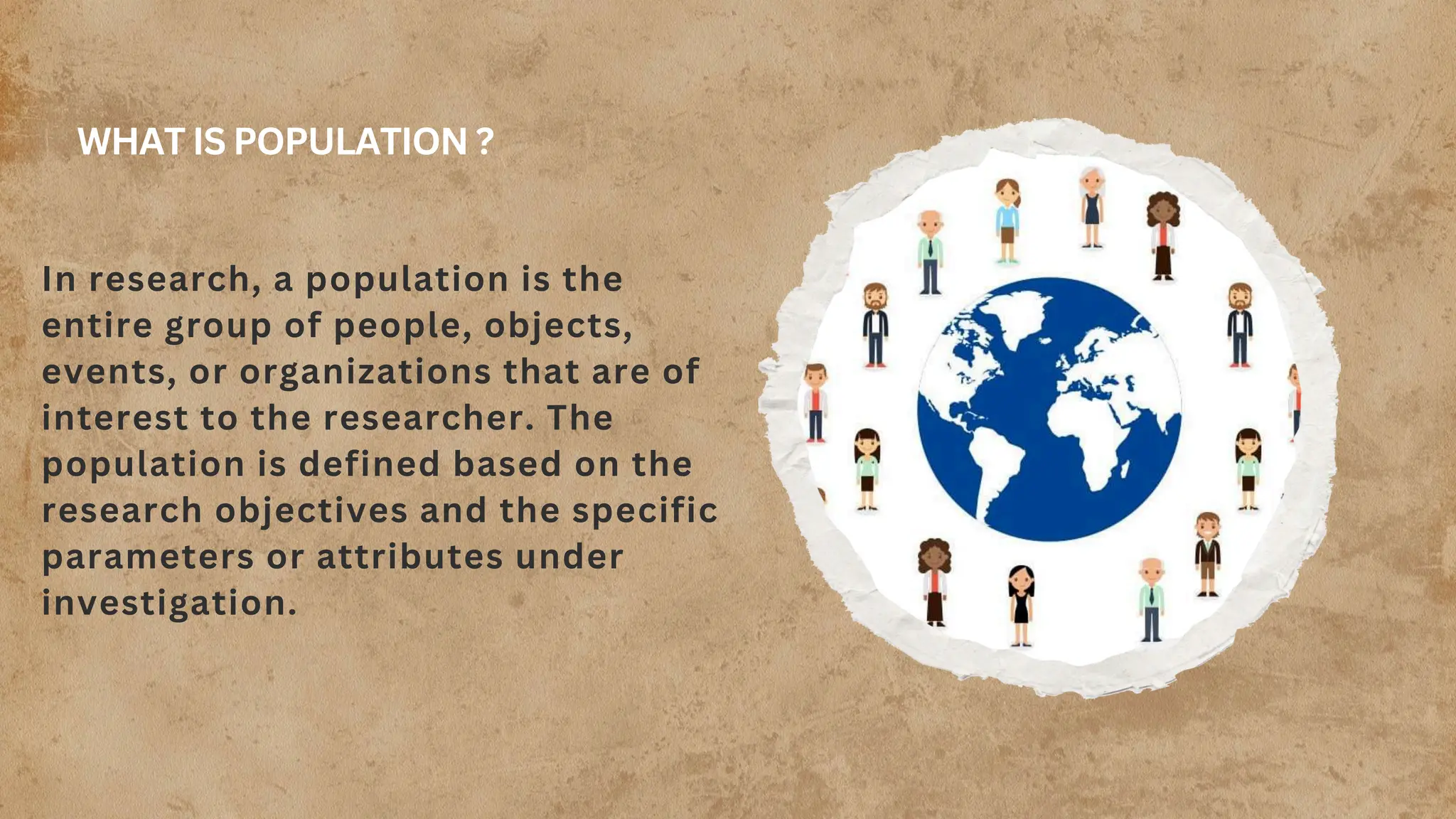
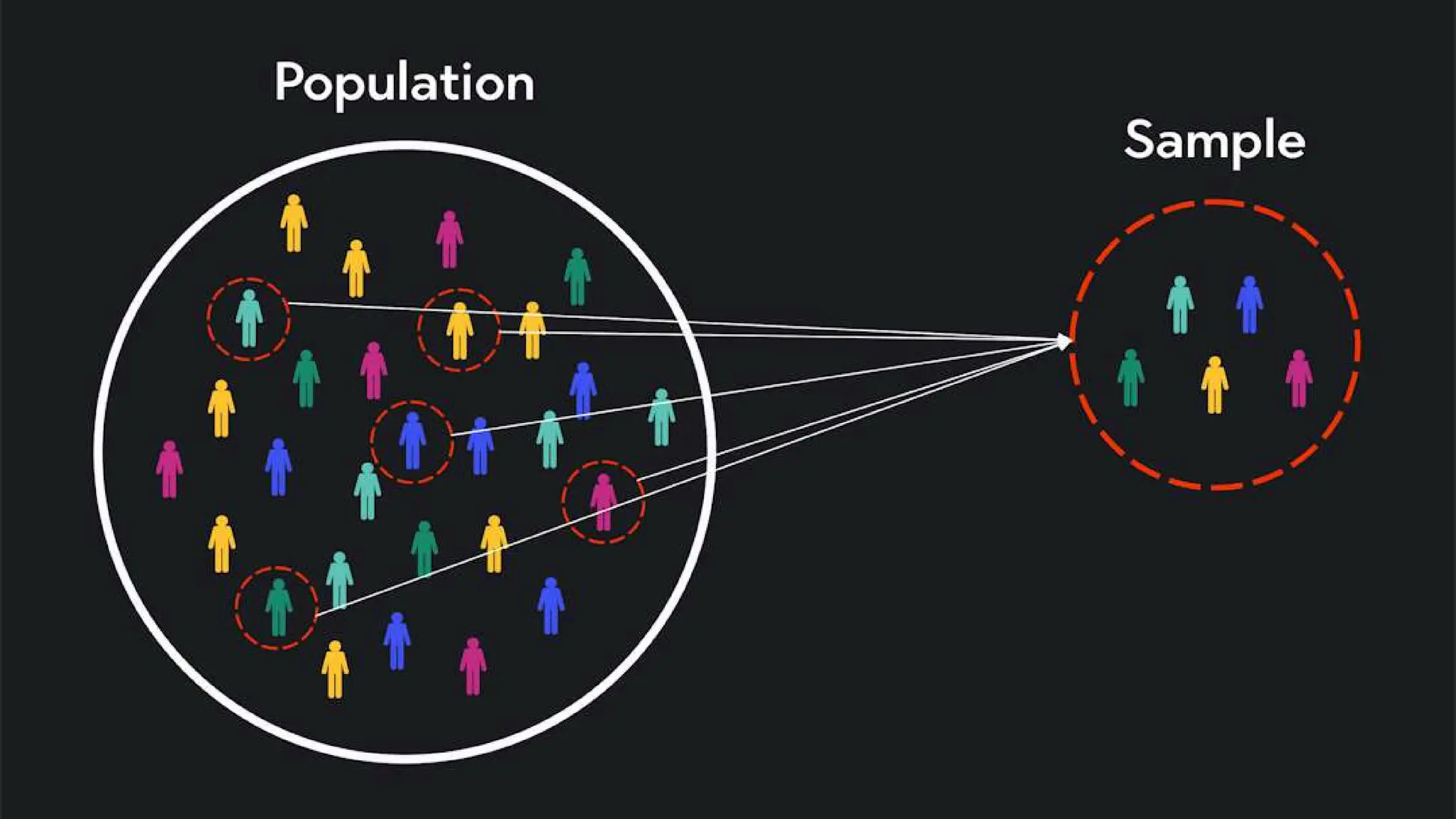
In research, a population is the
entire group of people, objects,
events, or organizations that are of
interest to the researcher. The
population is defined based on the
research objectives and the specific
parameters or attributes under
investigation.
WHAT IS SAMPLE?
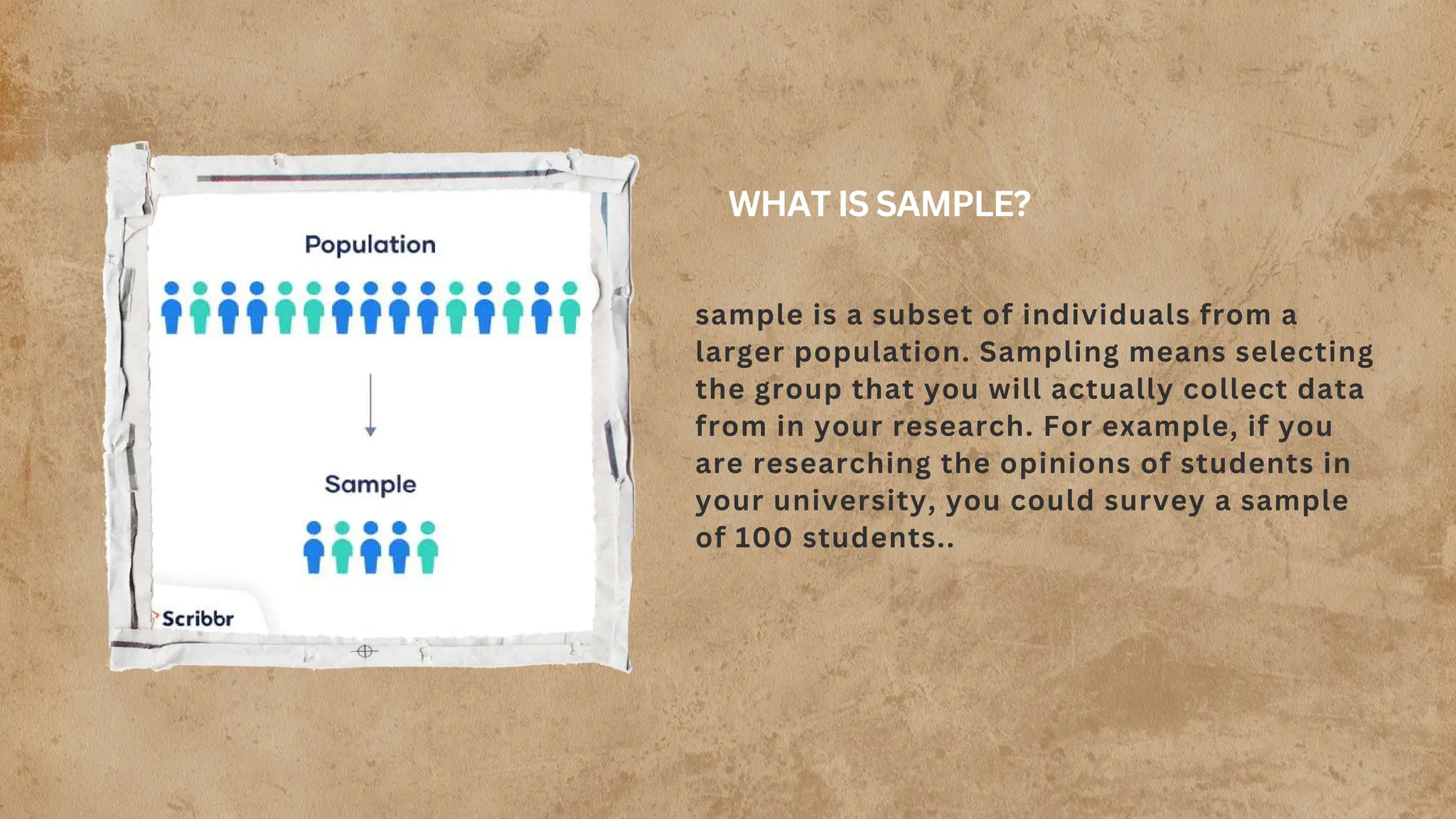
sample is a subset of individuals from a
larger population. Sampling means selecting
the group that you will actually collect data
from in your research. For example, if you
are researching the opinions of students in
your university, you could survey a sample
of 100 students..
PROBHABILITY SAMPLING
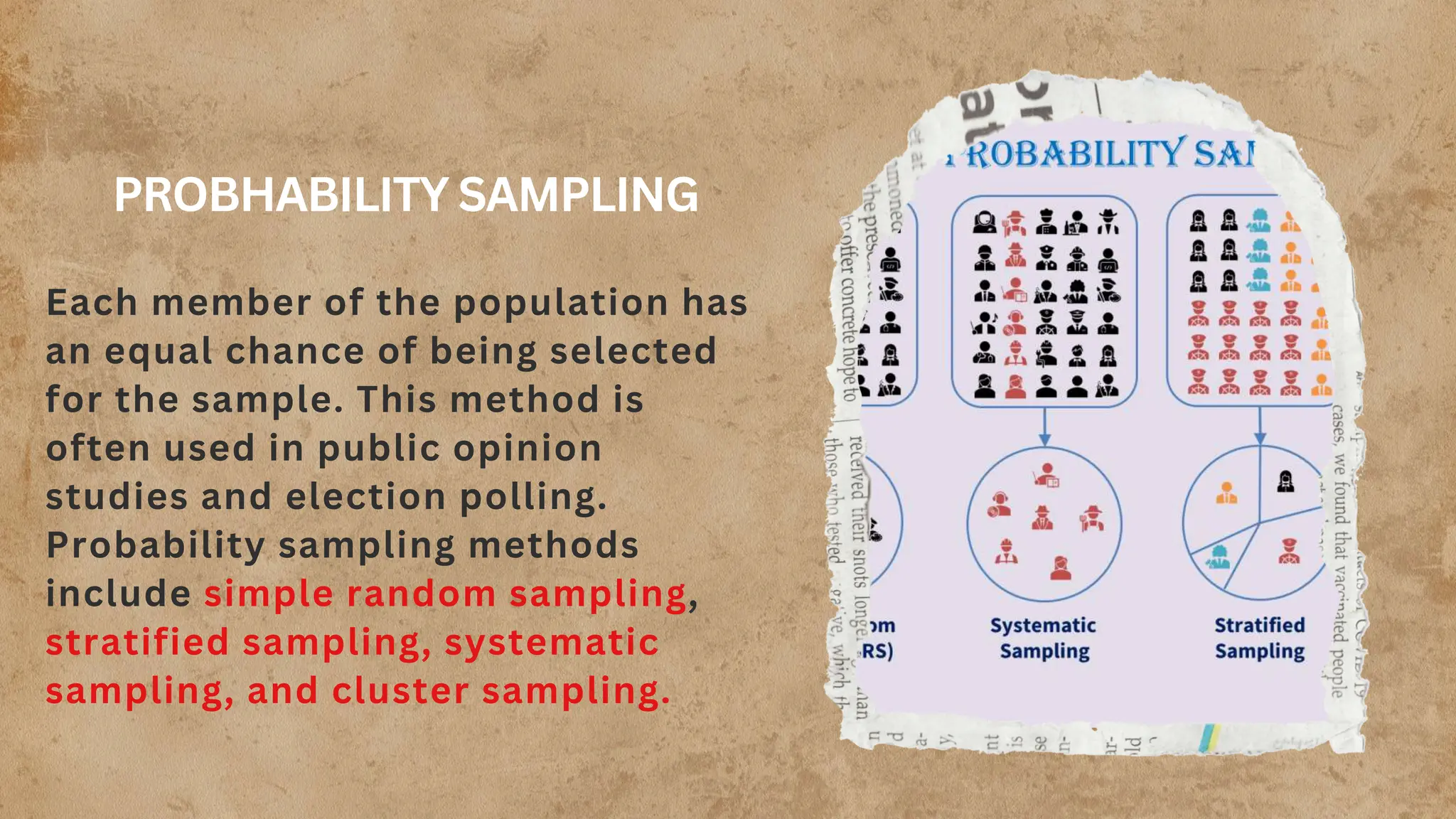
Each member of the population has
an equal chance of being selected
for the sample. This method is
often used in public opinion
studies and election polling.
Probability sampling methods
include simple random sampling,
stratified sampling, systematic
sampling, and cluster sampling.
NON PROBABILITY
SAMPLING
Nonprobability sampling is a method
of selecting a sample group from a
population that doesn't use random
sampling techniques. It's a quick,
inexpensive way to gather data, but
it can lead to biased results
CONTINUE
Convenience sampling, where participants are
selected based on their availability and
convenience
Quota sampling
Purposeful sampling, which includes
heterogeneity sampling, homogeneous
sampling, deviant sampling, and expert
sampling
CONCLUSION
The sample must be representative of the
population. A representative sample is a
subset of the population that reflects the
characteristics of the population. A
sample is biased if it systematically favors
a certain outcome. Random selection
eliminates bias.
THANK YOU
VERY MUCH!

Concept of Population and Sample / Research methodology

  • 1.
    CONCEPT OF POPULATION ANDSAMPLE BY- SUJIT KUMAR BHOI
  • 2.
    WHAT IS POPULATION? In research, a population is the entire group of people, objects, events, or organizations that are of interest to the researcher. The population is defined based on the research objectives and the specific parameters or attributes under investigation.
  • 3.
    WHAT IS SAMPLE? sampleis a subset of individuals from a larger population. Sampling means selecting the group that you will actually collect data from in your research. For example, if you are researching the opinions of students in your university, you could survey a sample of 100 students..
  • 6.
    PROBHABILITY SAMPLING Each memberof the population has an equal chance of being selected for the sample. This method is often used in public opinion studies and election polling. Probability sampling methods include simple random sampling, stratified sampling, systematic sampling, and cluster sampling.
  • 7.
    NON PROBABILITY SAMPLING Nonprobability samplingis a method of selecting a sample group from a population that doesn't use random sampling techniques. It's a quick, inexpensive way to gather data, but it can lead to biased results
  • 8.
    CONTINUE Convenience sampling, whereparticipants are selected based on their availability and convenience Quota sampling Purposeful sampling, which includes heterogeneity sampling, homogeneous sampling, deviant sampling, and expert sampling
  • 9.
    CONCLUSION The sample mustbe representative of the population. A representative sample is a subset of the population that reflects the characteristics of the population. A sample is biased if it systematically favors a certain outcome. Random selection eliminates bias.
  • 10.